Beirut’s music has been described as “ghostly,” “drunken,” and “gypsy-like,” but the core sentiment is that his songs are consistent, creative, and enjoyable. The Flying Club Cup is filled with photographic lyrics and colorful instrumentation, where standouts “La Banlieu,” “The Penalty,” and “Cherbourg” all benefit from the cohesive clamor and engaging arrangements. Bandleader Zach Condon’s narratives of faraway sceneries are vivid, while French horns, accordions, and grueling drums compliment his words. But it’s the album’s apex, “Nantes,” that best showcases the group’s chemistry and attention to detail. Overall, it’s a more polished effort, but no less personal; The Flying Club Cup illustrates this young band’s progress and its seemingly endless potential.
Notch Up Another Hit

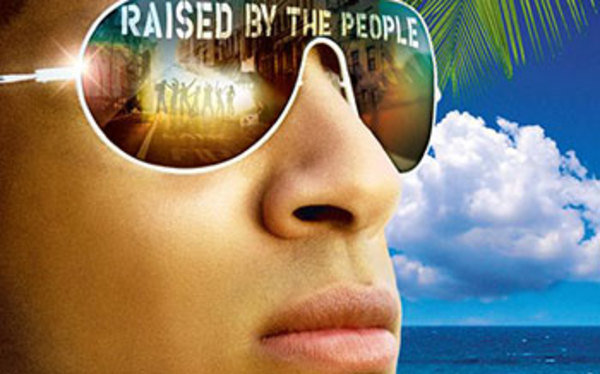
Silky reggae vocalist Notch, from ‘90s dancehall duo Born Jamericans, has been making the rounds on his own for the past several years, and going solo hasn’t hurt him one bit. As his new album, Raised By The People (on Cinco Por CInco), testifies, the honey-throated crooner is both artistically versatile and vocally pitch-perfect.
Notch went solo in 1998 after recording two albums on Delicious Vinyl with partner Headly Shine as Born Jamericans. After the duo went their separate ways, Notch continued to rack up hits such as “Nuttin No Go So,” on Tony Kelly’s Buy Out riddim, and “V.I.P.,” on Black Chiney’s Kopa riddim.
Notch revisited his D.C. stomping grounds (where he attended high school and formed Born Jamericans) in 2002 to record the title track on Thievery Corp’s album The Richest Man In Babylon (ESL). Since then, he’s embraced the Latin market with several huge reggaeton hits, including 2004’s Spanish radio smash “Hay Que Bueno.” Not surprising from an artist whose own multicultural background provided a blueprint for his globetrotting sound.
Notch’s music is a reflection of his eclectic background. He was born to an African-American mother of Portuguese, Native American, and Caribbean descent who always encouraged him to pursue his talent, and a Jamaican father with Afro-Cuban and French blood, who, as a professional bass player, introduced Notch to the world of reggae music and encouraged him to tap into his Latin roots. He’s done both masterfully on the recently released Raised By The People.
“Dale Pa’ Tra,” featuring Yaviah, is the lead single from the album, an acoustic guitar-led reggaeton track that alternates between Spanish and English lyrics, and bouncy beats with lots of dips and drops. Just as infectious is the uptempo “Que Te Pica,” a merengue-influenced reggaeton track that unexpectedly bursts into a frantic 4/4 beat. The Latin material is every bit as lively and well-sung as Notch’s dancehall work. He keeps ragga heads happy with tracks like the SupaDupes-produced “Bun Out Bad Mind.”
The combination of Latin reggaeton, Caribbean rhythms, and Jamaican dancehall sounds make Raised By The People one of 2007’s most innovative and genre-hopping world fusion recordings. Notch puts it best: “I’m an artist that’s committed to becoming one of many musical bridges, connecting cultures of the world together.”
Tusia Beridze: The Next Bjork?

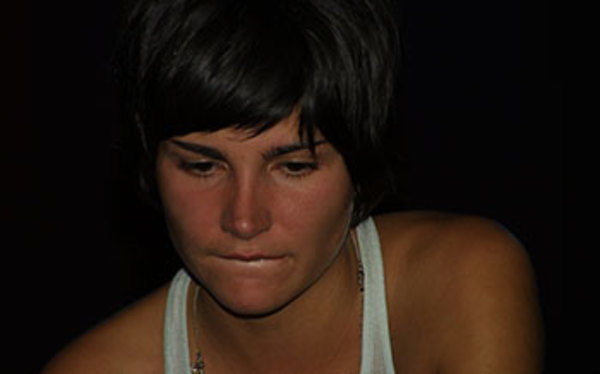
Natalie Beridze, also known as Tusia Beridze, or TBA, doesn’t spend a lot of time worrying about her many aliases. Instead, she’s been literally holed up in a bunker-based studio in the former Soviet republic of Georgia making evocative, often heartbreaking glitchy techno. With three previous, critically-acclaimed albums on Thomas Brinkmann’s Max.Ernst label, Beridze has once again eclipsed her own best work on her most dazzling recording to date, The Other.
With Beridze’s subtle, expressive singing getting equal space alongside The Other’s sparse but beautiful instrumentals, comparisons to great experimental divas like Laurie Anderson, Liz Frasier, or Bjork are inevitable. The Other is stocked with the type of memorable, melancholy songs that could propel Beridze to Homogenic heights.
A member of Tbilisi, Georgia-based art collective Goslab, Beridze’s experimental textures, which recall Aphex Twin, Seefeel, and Thomas Fehlmann, are tempered by superb pop melodies. “Into Lost Moments” sounds as fresh as early O.M.D. or Depeche Mode tracks, as soft, clicky electro-rhythms bloom into a darkly emotional ballad. Likewise, “Water From Ur Eyes” is a bittersweet, glitch-pop number reminiscent of Radiohead’s recent techno-oriented tracks.
The eastern classical music-influenced instrumental track “Break,” commissioned for Ryuichi Sakamoto’s Chain Music label, reportedly made the Yellow Magic Orchestra founder cry. Pluramon’s Markus Schmickler adds vocals to “Beam Plaster,” while “Love U” is a thrilling instrumental that feels like running through the forest under a full moon. With The Other, Tusia Beridze steps into the spotlight with more acclaim for her equally engaging production and vocal talents.
Tracklisting
1. After Me In Soft Poles
2. Beam Plaster – (with Marcus Schmickler)
3. Into The Lost Moments
4. Kid
5. Stay On Watch
6. Weeksends
7. Water From Ur Eyes
8. Break
9. Love U
10. Hero
11. Somewhere There’s A Father
12. X.It Snow
13. Blue Shadow
G&W: The Onement

When Dudley Perkins met Georgia Anne Muldrow at a BBQ in Los Angeles more than two years ago, she was basking in the glow of her recently released 2004 debut, Worthnothings. Entirely self-produced, its dark yet hopeful mix of hip-hop and deep soul captured her as a larva struggling to metamorphose into a butterfly. “Cool in this nothingness/I’m on my way I guess/Freedom and emptiness/Glad to be on my own,” she sang on “Nothingness.”
A lot has changed since that grill-out. Perkins, a hip-hop veteran with several albums to his credit, and Muldrow, one of the most evocative and challenging soul artists to emerge in recent years, have become romantic and musical partners. They have a new label, ePistrophik Peach Sound. This fall, they’ll release their first full-fledged collaboration together, The Message Uni Versa, as G&D. And they say they’re on a mission to spark a global love revolution. No, seriously.
“Music is a very spiritual creation,” says Perkins at home in Las Vegas, where he and Georgia recently moved. In a conversation where they trade the phone receiver back and forth and issue quasi-religious proclamations, the two announce that they’ve embarked on a spiritual and physical diet together.
“We’re trying to be more pure in our expression,” says Muldrow. “We stopped drinking, and we stopped smoking [cigarettes]. Last year was a compromise. We started getting ourselves to health, and a lot of things started opening up. The whole sound started opening up.”
Do they still smoke weed? “Of course! Every day!” she quickly answers.
Two Travellers
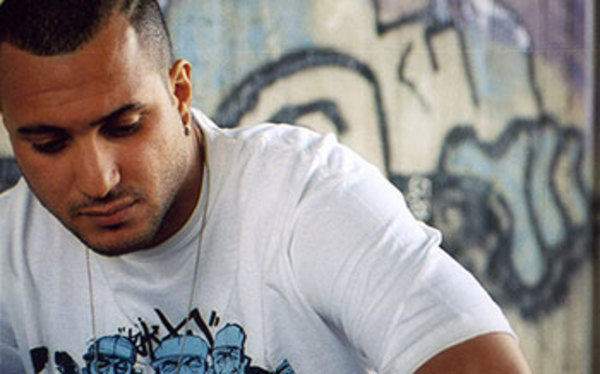
They make for an intriguing power couple, this prince and princess of avant-garde soul. On his 2006 album Expressions (2012 a.u.), Perkins railed against apathy, preached love, and warned of Armageddon in an impressionistic sing-song as Madlib’s emotionally resonant tracks flowed underneath. An inaugural member of Madlib’s Invazion, Perkins has known the brilliant producer/MC since they were kids growing up in Oxnard, CA. Madlib contributed to several of Perkins’ projects as Declaime, from the 1999 EP Illmindmuzik to the 2001 album Andsoitissaid. It wasn’t until the 7-inch “Flowers,” however, that Perkins discovered his talent for singing in a rough but emotive croon filled with intense feeling. He evolved from a straight-ahead rapper into a maker of what he calls “expressions.”
Muldrow, meanwhile, specializes in a gumbo of free jazz, neo-soul, and grungy weed-hop. After brisk sales of her self-released Worthnothings EP on CD Baby and kudos from Jneiro Jarel, Osunlade, and Sa-Ra Creative Partners, she became the first female in the Stones Throw camp in 2006. Four months after reissuing the EP, the label released her crazily brilliant follow-up, Olesi: Fragments of an Earth. On the back cover, she’s lighting up a bowl of herbs, almost as if she were preparing her listeners for the deliriously freeform journey within.
Both Perkins and Muldrow are unapologetic provocateurs. Their talents avoid pithy descriptions and easy analysis. Muldrow’s Olesi is a masterwork of fiery political statements, cryptic rhymes, and chanted phrases. From the primal scream of “New Orleans” to the magical “Because,” its ruddy topography can take several listens to map. “I was trying to send a message of love to those who wanted to receive it,” she says of the album. “I can’t worry about [those] who don’t like what I’m doing, ’cause that only stops your own production. It’s a blessing that those who care do care.”
Missed Messages
Perkins has his own haters. “I get a lot of critics in magazines and stuff, saying, ‘Oh, that dude can’t sing.’ And you know what I say back to all them critics who criticize me? You can’t either,” he says, breaking into laughter.
For all his bravado and philosophizing, however, Perkins seems conflicted about his work with Madlib. As Stones Throw arguably grew into one of hip-hop’s most important labels, he became frustrated that his two albums, 2003’s A Lil Light and 2006’s Expressions (2012 a.u.), drew little attention. Critics argued that he couldn’t sing, and that he just sounded weeded out, confirming his belief that the albums were marketed to the wrong audience. It hurt him because, like a modern-day soothsayer, he believes his words were given to him by God.
“For some reason, mysteriously, my music got to no black people when it was a very focused, black, powerful, African rhythmist music. And it didn’t get there. It got to surfers and grunge dudes’ guess, people who wear crazy clothes and tight pants and shirts and stuff,” says Perkins.
In an essay commemorating Stones Throw’s 10-year anniversary for RE:Up magazine, label head Peanut Butter Wolf compared Dudley to oft-sampled R&B/funk veteran Eugene McDaniels. “Dudley was inventing his own brand of music here. You can’t really put it in an R&B category and it’s not neo-soul. I think that’s why his albums with Madlib don’t get the same attention that, say, a Jaylib or Madvillain would. I’m confident that they’ll stand the test of time though.”
Far Out
Despite the partnership, both remain prolific, recording a dizzying amount of music alone and together for an array of international imprints. There is Sagala, a surreal and vivid excursion into psychedelic funk Muldrow made under the guise Pattie Blingh & the Akebulan 5. (Perkins and Muldrow trade rhymes on “Rebelyouthwithskill.”) Less successfully, they united with producer and UK DMC champion DJ 2Tall for Beautiful Mindz, spontaneously dropping winsome platitudes over 2Tall’s rangy and uneven beats.
Like hippie radicals transplanted from the early ’70s, Perkins and Muldrow can seem flaky. But you can’t doubt their sincerity. They truly believe that their music has revolutionary potential. Even when their work, particularly the 2Tall collaboration, sounds monotonous and undeveloped, it possesses emotional honesty.
“This year’s a new thing,” says Perkins. “We’re taking over this music with God involved. God said move with it like this, and He’s assimilated an army for me, a powerful army. Not no underground army… We hit the Earth now.”
“I believe in his message. I think that people really need to learn how to love each other,” says Muldrow. “We try to bring the best of ourselves to the music, and let it speak for itself.”
With Muldrow, Dudley Perkins has found a fellow traveler whom he respects and empathizes with. “Georgia Anne Muldrow is a very special gift. She’s cranking them out right now,” says Perkins, who calls Muldrow “Miss One.”
“It’s the mothership!” says Muldrow, comparing her pairing with Perkins to a cosmic, funk-imbued adventure. “I think it’s very special. His message is brilliant. The person that he is is brilliant. He’s a special human being and I admire him very much, so I do my best to make it funky for him and make sure it’s something that he can spread his message and love with.”
One Love
With ePistrophik Peach Sound, the two hope to present their collective vision to the world. Earlier this year they quietly issued “America,” a 12-inch single by L.A. singer Jimetta Rose. Upcoming releases include recordings from New York singer Eagle Nebula (Cosmic Headphones), LMNO (Funk Verses), and Perkins’ 16-year-old daughter Ms. Dezy (Hip Hop Education School) with Muldrow as the in-house producer.
“I only see better things happening from now on. The people that are down with us, the people that understand–the fellow musicians that we know–it’s just wonderful that they’re willing to work with us,” she says. “I just get to be in service all the time. And it’s a beautiful feeling.”
Muldrow and Perkins’ G&D project is the jump-off. The Message Uni Versa is suffused with optimism, sublimating the anguished yearning of their solo efforts for bouncy keyboard-funk tracks. Metaphysical musings and calls for self-improvement lace the lyrics. “G&D is such an important project because I see that as a project where we both opened up to ourselves,” says Muldrow. “Olesi was me rambling about myself. But G&D is about bringing the message of life to your speakers, promoting healing, understanding, listening, and all of that.”
“Dudley/Declaime has got the new thing. Georgia Anne–Miss One–has got the new thing. We are down with One-ment,” says Perkins. “If they sleeping on it, they sleeping on God real hard. But that’s cool. Everyone wakes up eventually.”

Singles Update: Matthew Dear, Still Going, Loco Dice

Still Going “Still Going Theme” DFA
Rub-N-Tug’s Eric Duncan and Manthraxx’s Oliver Spencer churn out a minimal, space-charged disco theme for the new millennium. Utilizing organic piano leads, clean acoustic percussion, and lots of spread-out arpeggios, these two New Yorker’s may have just produced the most mature DFA single to date. If Carl Craig’s remix of Delia Gonzalez and Gavin Russom rocked your boat, grab this now.
Matthew Dear “Don and Sherri” Ghostly
Matthew Dear’s vocal snippets have become some of the most recognizable–and completely irritating sounds in modern pop-techno. But “Don and Sherri” is one of the few tracks with layered vocals that are completely subtle and totally infectious. Hot Chip and M.A.N.D.Y.’s electrified remixes of the track are the EP’s strongest offerings. Ghostly’s done it again.
Kevin Saunderson/Inner City “History Elevate 1” Planet E
Two remixes of early-’90s Detroit mayhem via Kevin “Reese” Saunderson and Inner City. Loco Dice turns Saunderson’s thumper, “Bassline,” into a minimalist acid-trip freak-out. Bloops, bleeps, and the constant repetition of a burly kick make the nine-minute techno opus that floors have been waiting for. Including Carl Craig’s vocal-friendly remake of IC’s “Till We Meet Again,” this EP is a reminder of why the ’90s weren’t so shitty after all.
Nathan Fake “You Are Here” Border Community
Featuring a string of remixes from Fake’s Drowning in a Sea of Love, “You Are Here” is more of the pop-ambient techno we’ve come to love from this kid. Including a surprisingly shuffling (and heavy) mix from Four Tet and a few “live” mixes from Fake himself, “You Are Here” will convert any hater of the techno genre.
Gucci Soundsystem “Acarpenter” Death From Abroad
Despite this London-based duo’s awful name, these two notorious party-throwers have got the whole disco-by-way-of-nu-electro game on lock. If you think the distorted sounds of the Ed Banger crew have become played-out, this three-track single will surely remind you that gritty dance music is alive and well. Oh, and there’s a killer Joakim remix to boot. That’s right.
The Beautiful Club “Scary Relationship”

Back in 2006, brother/sister duo The Beautiful Club put some tracks on MySpace and suddenly found themselves on the radar of established artists like Seiji (of Bugz in the Attic), Ty, Eliot Lipp, and Black Spade. The sudden attention seems rightly deserved. The Detroit-based duo pulls from an array of genres, including house, techno, and hip-hop, to make tracks whose production is tightly-crafted, with just a hint of gloss that embellishes rather than overdoes the job.
Baby Elephant Turn My Teeth Up!

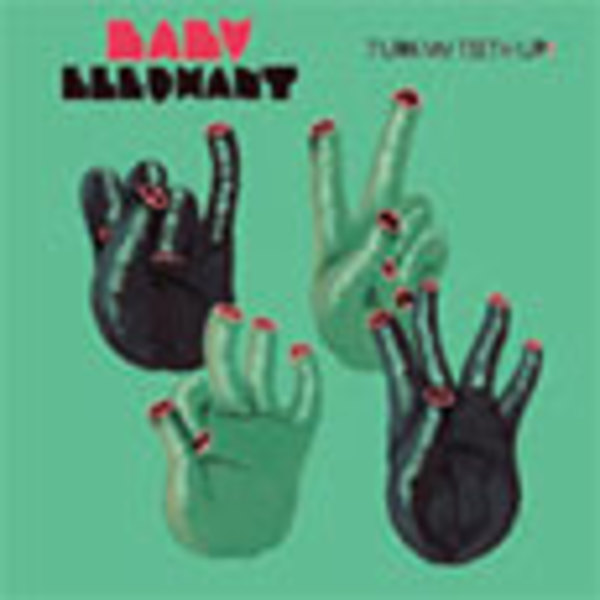
Back in ’89, Prince Paul blazed a new direction for hip-hop by repurposing Bernie Worrell’s synth work from Funkadelic’s “(Not Just) Knee Deep” into De La Soul’s classic “Me, Myself & I.” Now Paul has teamed with Worrell and Don Newkirk for Baby Elephant. On Turn My Teeth Up!, the Elephants bring the P-Funk (“Fred Berry”) but with a little hip-hop and R&B thrown in. Like the similarly constructed Gnarls Barkley and Gorillaz, tracks like the David Byrne-featuring “How Does the Brain Wave” achieve a feel that’s simultaneously pop and avant-garde. While not the masterpiece one might expect from these two, fans of P-Funk and P-Paul should find much to chew on.
The Tuss Rushup Edge

Is that Master Richard James I hear? The Tuss is supposedly Karen Tregaskin, but AFX-ian elements are smudged everywhere here. Acid synth squelches swordfight a cornered drum machine on “Synthacon 9,” and there is the telltale “Goodbye Rute,” where gelatinous beats try to interrupt a symphonic melody that delivers flowers to a graveyard. “Shiz Ko E” resembles a Prince jaunt that’s anxious to go home, and “Death Fuck Mental Beats” is a cranky breakcore number that pauses for a glum piano recital before throwing another tantrum. Whether it’s James behind the curtain or not, Rushup Edge returns to ground already broken a decade ago, but it still outshines his rather conservative, Analord acid nostalgia show.
Les Savy Fav’s Serious Style
“Now, this is something I’d actually wear,” says Les Savy Fav guitarist Seth Jabber, as he steps out of a Beacon’s Closet dressing room in an ultra-soft T-shirt featuring a baby-blue tie-dye background and a tiger with black and white stripes.
“Oh wait, this is one of those companies that makes ‘vintage-like shirts,'” he adds, looking at the top’s tag. “That kinda takes all the fun out of it, doesn’t it?”
Indeed it does, especially when the whole point of us being at this hangar-sized Brooklyn store is finding creative outfits for one of Les Savy Fav’s infamous stage shows–a performance-art spectacle rather than a simple concert, featuring the ADD-addled stage antics and shirt-shedding costume changes of Fav frontman Tim Harrington.
Speaking of indie rock’s gentlest grizzly bear, he’s having a hell of a time sifting through potential “WTF?” wardrobe pairings in the women’s section right now. He’s donning stuff most people would never think of putting together, from gigantic Elton John glasses to neon-hued scarves to the kind of flow-y, Summer of Love tops Devendra Banhart wears without a hint of irony.
“Style needs to be singular,” explains Harrington, “something that defines itself. You can be completely insane and still have style. Hell, then you have a little something called panache! Like, there’s this one guy in the neighborhood that always dresses like a goth school teacher from the Victorian days. He wears an Amish-looking hat, a stopwatch, a black blazer, knickers, and fancy shoes, and he carries all his books around wrapped in leather. He’s got so much more style than someone that’s completely trendy, wearing a soft foam cap and having a San Francisco skater thing going on.”
To Harrington, style isn’t just about clothes, either. For musicians, it includes everything from elaborate packaging to, you know, the music.
“The worst thing is when a band is like, ‘The reason why our album sounds like The Cure is we were trying to sound like The Cure,'” says Harrington. “Eh, why didn’t you guys try to sound like something more intense or different? That’s how you make up new things or stumble upon an impossible pastiche–out of total nothingness, which is what our band usually does.”
Les Savy Fav’s latest LP, Let’s Stay Friends (French Kiss), does all of the above, jumping across genres (twitchy post-punk, morose and melancholic synth-pop, Pixy Stix rock) without ever adhering to any specific aesthetic. This is just what the band’s been doing since they met at a Rhode Island art college in 1995 and recorded their first album (3/5, which was remastered and reissued last year) with future DFA/LCD Soundsystem don, James Murphy.
Hoping for some insights into how Harrington stays singular in an Urban Outfitters/Hot Topic age of mass-marketed looks and attitudes–including his own accessories line, Deadly Squire–we asked him to share some general style tips in between searching for “the ultimate buckskin outfit.”
1. Don’t try to look like a ‘hipster,’ at least how it’s been defined in magazine stories (see a recent cover of Time Out New York) and movies.
That style is such a mild one. Look, if you love politics, you don’t want to see everyone happy and shaking hands. You want to see everyone going for each other’s throats. If you like sports, you want a fight. The same thing applies to fashion.
The only time I thought a lot of dip-shits were walking around looking ridiculous–being different because they were told to–was in 2000 or so, when someone invented electroclash. You know what, though? Punky Brewster is cool. Having a little flair and a little flash is a good thing. I really like when someone shows up to a party looking all My Little Pony-like.
2. If you’re in a band, don’t let your bottom line get in the way of your art.
I’m really into elaborate band t-shirts. That’s why we always design our own. If we want to make a shirt that has 10 colors and sparkles, we’re going to make a shirt that has 10 colors and sparkles, even if it’s a little more expensive. I’d rather make something nice and not make a profit on it than make something shitty and sell it at a high cost. When a band becomes something that’s useful for paying the rent, [they ‘ll] always think twice about making a shirt for $19 and selling it for $20. It’s more like, “Let’s make a shirt that costs 50 cents and sell it for $20.”
3. One other band tip: Don’t let your fashion sense define your sound.
I hate when bands use fashion as a shorthand way of saying “We sound like this.” Like when they dress up in eyeliner and all black, clearly ready to open for Interpol in front of bright white lights. So what if you don’t have a 28-inch waist! My biggest problem is my bulk. I’d probably go with a more extreme style if I had a slight build. When I find something I like and it fits me, though, it’s great. If everything were accessible, that’d ruin the needle-in-a-haystack fun of it anyway.
Also, remember this: The worst ideas sometimes turn out to be the best ones. Like this one time I bought a wide-brimmed, floppy summer hat for women; I got that as a joke but I was really into it the next year.
4.Don’t be afraid to splurge on a unique piece.
Sometimes style costs money, and it’s worth it. I don’t buy that many clothes anymore, but when I do, I sometimes stop by a proper designer store because I consider what they do art as much as I consider what I do art. It’s worth it if there’s a legitimate value to it, you know? Even if it’s just the aesthetic of one person–that can be as cool as crawling through a pile of vintage clothes.
I remember the first time I bought something nice. My sister was like, “Look at you. You’re buying clothes now, you New York person, you. I remember when you used to wear anything!” Except I didn’t wear ‘just anything.’ I’d spend 10 hours a week going through thrift stores. I may have not had a lot of money, but I was still picky. I’m really specific about what I like. That’s part of why I don’t buy that much anymore. I’m kinda waiting for [all trends] to die. After touring the country 20 times and hitting a thrift store in every city, eventually you’ll have enough amazing t-shirts. I mean, how can you beat a blue shirt with puffy letters that says, “Please Feed Me?”
Asthmatic Kitty Presents Unusual Animal Parties, Signs Deerhoof Side Project

After touring relentlessly with Bay Area noise-rockers Deerhoof and releasing Calamity (Asthmatic Kitty) with his new full-time band, The Curtains, Oakland, CA-based Chris Cohen is ready to give his side project du jour, Cryptacize, some attention. Featuring former Curtains collaborator (and well-recognized solo artist in her own right) Nedelle, Cryptacize is a melancholic drift toward the outer orbits of indie. Fusing flamenco-esque percussion and raw electric-guitar lines, the band’s creepy pop template will surely have coffee houses and dive bars in awe.
Asthmatic Kitty is celebrating its newest signing with another series of Unusual Animal parties, with nights in Portland and Houston on October 20. The label has already showcased its roster in Brooklyn, Indianapolis, and at the 2007 South by Southwest festival, and now it’s time for the series’ second round. The Houston party will showcase Cryptacize, Future Rapper, Hearts of Animals, The Wiggins, Space City Gamelan, and Austin-based Moth Fight. Portland will feature Half-handed Cloud, The Beauty, Upsidedown Cat, and Kelli Schaefer.
Tour Dates
10/13 Oakland, CA: Mama Buzz Cafe
10/14 Los Angeles, CA: Spaceland
10/18 Phoenix, AZ: The Trunk Space
10/19 Austin, TX: Okay Mountain Gallery
10/20 Houston, TX: Diverseworks
10/21 Birmingham, AL: The Bottletree
10/22 Knoxville, TN: The Pilot Light
10/23 Williamsburg, VA: College of William and Mary
10/24 Baltimore, MD: Floristree Space
10/26 Philadelphia, PA: The Vacuum
10/27 Queens, NY: The Silent Barn
10/28 Somerville, MA: P.A.’s Lounge
10/29 Middletown, CT: Eclectic House/Wesleyan University
10/30 Oberlin, OH: Oberlin College
10/31 Indianapolis, IN: Harrison Center for the Arts
11/01 Chicago, IL: The Empty Bottle
11/02 Grinnell, IA: Grinnell College
11/03 Denver, CO: Rhinoceropolis
11/04 Salt Lake City, UT: Kilby Court
11/05 Santa Barbara, CA: Muddy Waters Cafe
11/06 Los Angeles, CA: The Echo