Various Artists EV Records Presents: Everything

Everything is more than a mere label compilation. This 14-track collection from Chicago’s rapidly ascending EV Records showcases how well its artists play with others-a tradition that in-house producer Copperpot sparked when he began working with London MCs years ago. True to the disc’s title, there’s an expansive range of styles on display here from EV artists and their collaborators. Fans of hardcore hip-hop will revel in Copperpot’s sinister key-driven beat and Pacewon’s cautionary street-level narratives on “Here We Go.” Meanwhile lyric fiends will dig the metaphorical battle raps of Diverse and Illogic on the peculiar, Overflo-produced “Vintage.” But EV’s own LongShot proves to be the backbone of Everything, appearing on three standout cuts, including “Learn,” an inspiring black-empowerment anthem featuring Michigan’s One Be Lo. With more material like this, ‘Shot and his brethren could very well rise to the top of the indie hip-hop ranks.

Various Artists The Kings Of Reggae

No matter how much we evolve with digital technologies, nothing can replace the fuzzy, warm, analog sounds of classic reggae-which is why collections like this will always be welcome. Old-school reggae DJ David Rodigan knew this music in its heyday and fills Disc One with certified fist-raisers, à la Junior Murvin, The Congos, and Burning Spear. Shaggy producer Sting International moves to the more obscure and dubby, showcasing Dennis Brown and Coco Tea-equally warm though less anthemic. Overall, the 24 tracks play like most any Trojan compilation, so there’s nothing new here, but it’s enjoyable nonetheless.

Somewhere: Stockholm, Sweden

Neither Arctic chill nor a buttoned-down reputation has kept a healthy homegrown hip-hop scene from taking root in Stockholm. The capital city teems with record stores, where you can pick up the latest from local labels like JuJu Records, DvsG (David vs. Goliath), and Raw Fusion, which has successfully exported beat-makers like Up Hygh and Freddie Cruger to the US. Numerous American acts have performed here, especially at now-defunct clubs like Fatmilk and the Jump-Off. You can even check out the “hip-hop school” in the suburb of Farsa, where students learn breakdancing and beat-making.

Sweden’s first hip-hop records were reputedly released in the mid-’80s, adapting American style and slang and setting a template for the genre’s development. Artists rapped predominantly in English until the early ’90s–spurred on by a long-running hip-hop video program called 1200–until The Latin Kings (TLK), a group of Venezuelan and Chilean immigrants from the Stockholm suburb of Botkyrka, started spitting in Swedish, recording their hit album, Välkommen Till Förorten (Welcome to the Suburbs), in a slang dialect known as Rinkeby (named after the highly African-populated suburb of the same name). Stockholm hip-hop names like ADL and Petter followed suit; the latter’s 1999 album, Mitt Sjätte Sinne (My Sixth Sense), helping to usher in a huge expansion in the country’s hip-hop community. Now, rappers like Ison & Fille and Promoe and producers like Drumz, DJ Large, Embee, Breakmechanix, and Soul Supreme are redefining Swedish hip-hop.

Besides Stockholm, the cities of Gothenburg and Malmö both have sizable scenes, but despite differences in dialect, each region doesn’t have a signature sound. “There aren’t huge divides in styles,” says Aaron Phiri of the duo Hearin’ Aid, which puts out soulful beats with a dirty J Dilla edge to them. “You get your Swedish East Coast right next to your Swedish Dirty South right next to your Swedish Detroit!”

Hip-hop encourages a blunt form of proletariat journalism, and Swedish rap is no exception. Timbuktu–whose reggae-tinged Alla Vill Till Himmelen (Everybody Wants to Go to Heaven) was a huge hit in ’05–explains that social changes over the last 20 years have given kids plenty of material. As the right-wing government increasingly deconstructs educational and welfare systems, and immigrants continue to arrive from Middle East, Somalia, and Eastern Europe, previously unknown race and class issues have come to the forefront of Swedish culture.

“You can see lots of social tension and class differences,” says Timbuktu. “It’s a microcosm of the U.S. and England. You can see how poor people end up in high-rise buildings, called förort, outside of the city core.”

Despite language and cultural barriers, hip-hop’s promise of giving a voice to the disenfranchised still translates in Sweden. And hell, Swedes love to tugga (“chill”), kicka (“smoke”), and gendish (“get drunk”) as much as anybody else.

Forward Ever Picks of the Week

Former XLR8R editor and undisputed music connoisseur Tomas shares some of the latest cuts from broken beat, future jazz, reggae, and more. You can also check out a brand new mix (and keep up to date on music gigs, news, and opinions) at his website.

Forward Ever Charts

Future Jazz Top 10
Bittersweet “Moving Forward (At:jazz Remix)” (Quango)
Isoul8 “On My Heart Dub My Dub” feat. Paul Randolph (Still Music)
4hero “Look Inside” (Milan)
Stance Brothers “Steve McQueen” (Ricky Tick)
Nicola Kramer “Last Time” (TrebleO)
Circus “I Know You” feat. Lyric L & Motet (Sunshine Enterprises)
Real “Never Never (MdCL remix)” (CDr)
Quasimode “Lev Amorelo (Spiritual South Mix)” (CDr)
Zaman 8 & Hafez Modir “Ketu” (Six Degrees)
Square One “Vesuvius (Justin Martin’s ‘I Hope It Doesn’t Blow’ Mix)” (Freerange)

Reggae Top Tunes
Richie Spice “Brown Skin” (Don Corleon)
Morgan Heritage “Brooklyn & Jamaica” (Juke Boxx)
Rsonist “Revolution” (Heatmakerz)
Collie Budz “Come Around” (Massive B/Epic)
Shaggy “Reggae Vibes” (Big Yard)
Mr. Easy “Rude Boys & Police” (pre)
Buju Banton “Better Days” (Daseca)

Hip-Hop/R&B 5
Consequence “Callin Me”
Big Rich “That’s The Business”
Daz “Weekend” feat. Johnta Austin
Lloyd Banks “Help” feat. Keri Hilson
Kellis “Trilogy”

Various Artists Hyphy Hitz

Although “ghost riding the whip” made Fox News freak out, don’t think the Bay Area’s hyphy music movement is headed for the trend trashcan. Hyphy Hitz proves that a national audience is curious about the West’s latest rap maneuvers. As on TVT’s Crunk Hits series, radio favorites like Keak’s “Super Hyphy,” Mistah F.A.B.’s “Super Sic wit It,” and The Team’s “Hyphy Juice” rub shoulders with new tracks by Dem Hoodstarz, Furious, and Shake Da Mayor. Major Bay acts like Mac Dre, E-40, San Quinn, and Sky Balla also gas, break, and dip it here. Watch thizz go!

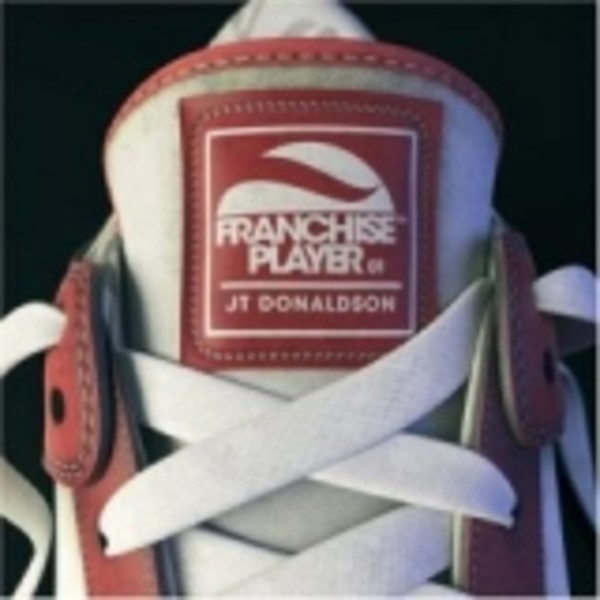
Various Artists JT Donaldson: Franchise Player 01

On Franchise Player 01, former Dallas resident and Fair Park Records cofounder/in-house producer JT Donaldson rides again, with mostly predictable results. This time the influence of Chicago house bubbles up through jackin’ beats and blurpy basslines that chuff away then dive spooky deep. Flanging and pitch-bending effects thrive in tracks by Blacksoul, White Lotus Society, Greenskeepers, and JT himself, with remixes included from Derrick Carter, Yoruba Soul, and Bob Sinclair. Mark Farina calls “DJ JD” his fave house producer-Franchise Player 01 demonstrates why.

Various Artists Ed Rec Vol. 1

Nu-French Touch label Ed Banger had a hell of a 2006, with Mr. Flash, Justice, and Uffie coming on full-force in Europe and the U.S. Vice Recordings has capitalized on the label’s growing Stateside popularity by issuing the download-only Ed Rec Vol. 1, and there’s no better an introduction to the bass-heavy catalog than this set. Banner tracks like Uffie’s icy, vocoder-smart “Pop the Glock” and Justice’s crunchy “Waters of Nazareth” come standard, but for a bit more electro-infused fun, try the DJ Mehdi-Chromeo collabo “I Am Somebody” or Krazy Baldhead’s chopped-and-screwed grime take “Crazy Mothafuckers.

Panther Unleashes New Album

They call him the one-man disaster squad, and he’s been known to scream “Muthafucka!” into a cardboard cellphone, so we anticipated that the debut album from Panther would be a nutty ride. Finally, after a long wait, Charlie Salas-Humara, as he’s more commonly known, is ready to unleash Secret Lawns. If that means nothing to you, think fractured soul, broken synths, manic lyrics sung entirely in falsetto, spastic dance moves, and you’ll get the idea.

The album is all over the musical map, with Humara playing most of the instruments himself when he’s not screaming indecipherable–but funny–lyrics into the mic. Give it a couple listens and you’ll agree that this guy is the definition of the word catharsis. Let’s hope he stays that way.

The first 1000 copies of the album will feature limited-edition packaging and a DVD with several videos and the debut of “Floor Dancing.”

Secret Lawns is out March 6, 2007 on Fryk Beat.

Tracklisting
1. Use Your Mouth Your Breath to Breath
2. Here We Stand
3. How Does It Feel?
4. Rely on Scent
5. How Well Can You Swim
6. Take Us Out
7. You Don’t Want Your Nails Done
8. Your Pants Are Creased Familiarly
9. Telephone Wire
10. Tennis Lesson
11. Chanzz
12. Talk for Tuesday
13. Tigers Touch

Bole 2 Harlem: And Back Again

Haile Selassie–the long-reigning Ethiopian king and, to Jamaican Rastafarians, incarnation of God on Earth–stared down at David Schommer from the walls of his childhood home. In his youth, Schommer would leave his mandatory piano and dance lessons at the local community center and sneak into an upstairs room to learn hand drumming from a Guinean teacher. But while Africa, and Ethiopia in particular, was close to his family’s heart, it was far from their home in the collegiate Chicago suburb of Evanston, IL.

“It always seemed natural for me to learn African drums [and] African dance,” says Schommer. “My father lived in Ethiopia from 1950 to 1958, and helped found the first university in Addis Ababa. He had a great life experience there, and I grew up with those stories.”

Schommer has spent his life as a professional musician, going from pit orchestras and the cast of Stomp to drum & bass productions as Duke Mushroom to writing, producing, and engineering for a string of major-label artists. But with the release of Bole 2 Harlem–a Schommer-produced collaboration between Ethiopian and American rappers, instrumentalists, and singers–Schommer has made his own contribution to Ethiopian culture–one that you can hear any night of the week, blasting from the taxi cabs of Addis Ababa.

“There’s probably about 100,000 taxi drivers in Addis Ababa,” says Schommer, “and [the album is] popular with them. They don’t exactly have [Neilsen] SoundScan over there, but I guess it’s sold well–on cassette, of course!” Bole 2 Harlem isn’t exactly a mainstream American recording. The Amharic lyrics (by rapper Maki Siraj) and titles, the wild plucking of Balla Tounkara’s kora, and the wailing and undulating vocals of Tigist Shibabaw make Bole 2 Harlem distinctively African, even as its hip-hop, funk, and electro beats audibly link the disc to New York City. Bole 2 Harlem can partially thank some strange bedfellows for its existence–it was productions for artists such as Carole King and the Baha Men that gave Schommer the financial independence to turn his Harlem studio into a cross-cultural stomping ground. “When I was doing the major label thing”d get new artists through every day,” he says. “Labels would say, ‘There’s this girl, just like Christina Aguilera, but she’s only 14! We’ve got a 10-million-dollar- and 19-year development contract, but we want her to write.’ We’d end up writing the songs for her, because what the hell does she know about suffering, struggle, and rejoicing–the things I think songs are about?”

On Bole 2 Harlem, the artists “know who they are,” says Schommer. Songs such as “Amet Bale,” which simply describes a man borrowing his brother’s clothes and car for a night out, offers a grounded worldview not found too often in popular music. “We wanted the perspective to be from [regular] people,” says Schommer. “If you point out that everyday experiences are valuable and poignant, it might be as small as a dragonfly landing on a pond, but that ripple effect is there.”

OOIOO Makes Rare U.S. Appearances

There are lots of reasons to go and see Japanese band OOIOO when they make some rare and highly anticipated U.S. appearances this spring. Here’s just a few:

1. The band hasn’t toured in the U.S. since 2005.
2. It came into being as a fictitious outfit for a magazine in ’96 and had opened for Sonic Youth by ’97.
3. It’s still unclear exactly how one should pronounce the name “OOIOO,” which gives it mystique.
4. These four women are merciless with themselves about making their sound progress, so you never quite know what to expect from album to album.
5. The band’s latest release, Taiga (Thrill Jockey, 2006), is full of catchy noise-pop experiments that stay fresh throughout the album, and demand your undivided attention. We expect Yoshimi P and crew will do no less during the live shows.

Tour Dates
03/20 New York, NY: Knitting Factory
03/21 Chicago, IL: The Empty Bottle
03/23 Seattle, WA: Chop Suey
03/24 Portland, OR: Doug Fir
03/26 San Francisco, CA: The Independent
03/27 Los Angeles, CA: Echo

Page 3248 of 3781
1 3,246 3,247 3,248 3,249 3,250 3,781