The Knife: Dark Times

It’s been a while since “faceless techno bollocks” ruled electronic music; aside from a few renegades like Narod Niki and Rex the Dog, most dance-music artists seem to have torn off their masks sometime around the rise of the superstar DJ. But with their new album Silent Shout (Mute), The The Knife has revived the ideology of anonymity, converting themselves from an unsettlingly chirpy electro-pop duo into one of the more darkly intriguing propositions in post-techno.

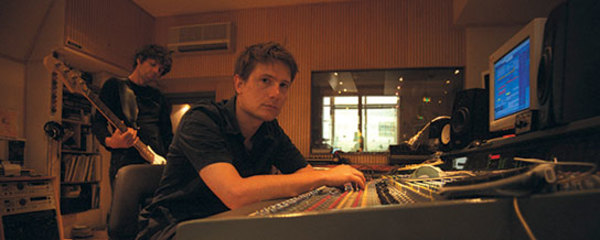
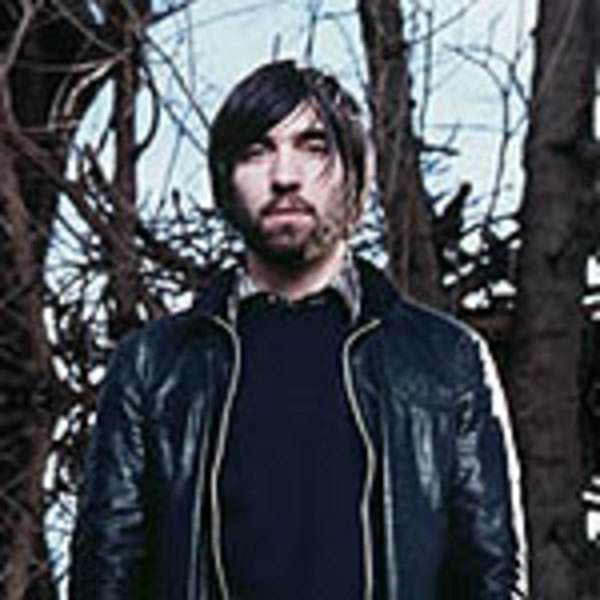
To be sure, the Swedish act isn’t anonymous–it’s a brother-sister duo, he six years the younger, with a growing indie label, Rabid, and budding solo careers to boot–but despite the intriguing back story, Silent Shout throws a veil of mystery over Karin and Olof Dreier, from the crow masks worn in their press photos to their diversionary media tactics. (Olof has been known to conduct his interviews speaking through a vocoder.) Despite the ultra-modernity of their sound–arpeggios glisten and drum patches ring like struck glass, thanks to meticulous FM synthesis and the hot analog spark of the MachineDrum, their preferred drum unit–there’s something both vintage and timeless as well. It’s a confused kind of myth-time, conjuring sea shanties and forest families, robotic steel drums and the grumbling of the earth itself. Taken alongside its accompanying videos and live show, Silent Shout feels less like a mere album and more like an ancient song cycle at the heart of some vast, multimedia fairytale where a modern-day Hansel and Gretel walk hand-in-hand from the glassy, bureaucratic world of the contemporary EU into a magic wood where monsters still live–and only synthesizers can slay them.

In Too Deep
The Knife’s last album, 2003’s Deep Cuts, was far different. Best known for the single “Heartbeats”–famously remixed by Rex the Dog and even more famously featured, in an acoustic cover by José Gonzalez, in a Sony Bravia commercial–Deep Cuts sounded more or less in line with early ’00s electro-pop, though odd instrumentation, cryptic lyrics, and Karin’s tortured inflections suggested that The Knife was far more than just another shaving off electroclash’s metal blade. It was a relatively sunny affair, though repeated listens revealed something unsettling beneath the Europop sheen, especially when Karin’s vocals vaulted from pop sloganeering into the realm of coded manifestos: “We are the people who’ve come here today/I don’t like it easy, I don’t like it the straight way/We’re in the middle of something, we’re here to stay/And we raise our heads/For the color red…”

Deep Cuts was much more about social questions,” explains Karin. “But this time we wanted to get inside our heads and do something about how society affects you inside. We wanted to work in a more mental way.” Lyrics like those to “Forest Families” bear this out. Over a galloping, virtually beatless trance arpeggio–one that has the strange effect of making trance seem like a good idea, for once–Karin recounts facts so banal they could be culled from a documentary: “So far away from the city/Some kids left on their own.” As she continues, surrealism quickly takes over: “They say we had a Communist in the family/I had to wear a mask.” With every new, unnamed character, the scene becomes more and more Kafkaesque. “I saw her by the organ/She was laughing while pressing the keys/She said my favorite book was dirty and/You should not show you can read.” It’s hard to say exactly what the song is… Psychodrama? Political thriller?

“I think it’s quite singer/songwritery, really,” says Karin. “In all songs, you go into some kind of character. You have some story you want to tell, and you try to find that specific person who tells it best. When you find the voice, that’s when you finish the lyrics as well.” Interestingly, Karin cites The Pixies’ Frank Black as one of her favorite lyricists, which makes sense when you consider the tangled yarns he spins, syllables often trumping strict interpretation. “He writes in a way that takes very strange turns on you,” says Karin. “As a Swedish person, you don’t really understand all the words when you first hear them–but they sound really good.”

Hearing Voices
Much of Silent Shout‘s curious, ominous sound is achieved by copious vocal processing, harmonizing, and multitracking of Karin’s voice, eroding the idea of a single voice, or even one identifiable as male or female. The strategy isn’t purely sonic. “With the choirs we tried to do something to maximize expression–sometimes you need to use as many voices as you can,” says Karin, suggesting that social theory is as important as knob-twisting in defining The Knife’s idiosyncratic sound.

“I think first we really want to work with the voice as an instrument,” continues Karin. “And when you use modern techniques there are no limits. But at the same time I think it’s quite interesting for me as a woman to sing in very different ways–as a man sometimes, or very androgynous sometimes. Normally a woman is not really allowed or accepted to use her voice in so many ways; it’s either singer/songwriter or punk.” The Knife, in contrast, manages not only to slice through neat binaries but to dice them into a million little pieces.

Maybe it’s for this reason that Olof resists critics’ categorization of The Knife as sinister or spooky. “I don’t see [our music] as so dark,” he says. “For me it’s quite normal. I see it as more melancholic, more like a deserted, empty kind of feeling–and quite close to nature, with almost a new age touch to it. Sometimes the voice can sound scary, but we just try to create these characters [that] you can’t really tell where they are or what they are like. I don’t really have enough distance from the album yet, but I don’t know if it’s so dark…I think it’s more white.” Which sounds like a contradiction, until you consider something like Swans’ White Light from the Mouth of Infinity, which similarly explodes shadowy inner space into a kind of collective sublime. Even more relevant might be the “white blindness” that affects the characters in José Saramago’s novel Blindness, crippling the world in a chain reaction of private whiteouts.

Myth Makers
The Knife does follow a fairly strict division of labor, however. “From the beginning, the main partition has always been that Karin writes the lyrics and sings,” explains Olof, and Karin verifies his assessment. “I’ve never written any lyrics,” he continues. “I don’t even understand the content of Karin’s. She’s never done a beat”–though Karin, notably, is quicker to reel off the list of the band’s gear. “But everything in between, we do together. When we started with the first album and Deep Cuts we worked very equally, choosing sounds and making sounds together. On Deep Cuts we wanted to have very democratic sounds that everyone can have. But on the new album the division isn’t so equal, it’s more like I’ve nerded into the sounds a bit more and Karin has been off on her own, writing.”

Indeed, one gets the sense that The Knife’s double blade is peeling apart. Olof recently relocated to Berlin to pursue a solo career DJing and crafting straightforward techno, while Karin remains in Sweden–though the duo’s recent spate of arresting multimedia live shows gave them plenty of time together, rehearsing and touring. The shows will continue–when promoters can afford the band’s surround-sound, audio/visual, theatrical setup–but after the remainder of Silent Shout‘s singles and remixes, the music may run dry for a bit. “I think we’ll have a break of about five years,” says Olof. “We’ve worked together quite intensely for seven years, and we’ve always had three years between albums–so it’s not such a big step to go up to five.”

Speaking to The Knife–each member in different cities, each one taking a 20-minute, solo phone-interview slot–one senses that their internal push-and-pull is part of what makes the music work so well, part of what instills it with such delicious (and disturbing) friction. “It’s okay,” says Olof of working in a brother/sister duo. “You know each other very well, but at the same time you don’t; it’s easy to forget to be polite. And politeness is kind of a part of you when you meet other people.” Of course, “polite” is the last thing you’d think to call The Knife’s music, which is precisely its strong point. The sounds and voices come from everywhere at once, a constantly mutating din always verging on chaos. Civil perhaps, and certainly sympathetic–in the best European socialist tradition–but above all quietly anarchic, Silent Shout creates a world to which each listener belongs, re-shaping its myth with every replay.

This Knife Cuts Rugs
Techno’s finest turn out the band’s most banging remixes.

With an enviable compositional focus and ability, The Knife crafts not mere tracks but killer songs. But that hasn’t kept their music from fueling adventurous dancefloors over the past several years, especially in remixed form.

Heartbeats (Rex the Dog Remix) (Rabid)
Hollowing out the track to a minimalist bump, London’s faceless canine speeds up The Knife’s most famous tune to an electro-disco grind, loops Karin’s vocals in cl-cl-classic old-skool style, and saves the big guns–the original song’s steely sheets of synth–for the last euphoric minute.

Pass This On (M.A.N.D.Y. Knifer Remix) (Rabid)
This Deep Cuts track started life as a lazy, steel-drum-belted roller; Get Physical’s M.A.N.D.Y. injects it with a healthy dose of electro, amps up the stabs and arpeggios, and piles on starry-eyed synth lines that sound like a player piano run amok.

Silent Shout (Troy Pierce Barado en Locombia Mix) (V2 Records)
Berlin-based minimalist Troy Pierce comes up with his strongest remix to date, swaddling the track in a mesh of brittle, crystalline beats while keeping all the acidic urgency of the original. Arpeggios fire without regard for collateral damage and in the new context, Karin’s vocal processing draws a direct line back to Plastikman.

We Share Our Mothers’ Health (Trentemøller Remix) (Rabid)
Trentemøller does the impossible by turning Silent Shout‘s most plodding, unruly cut–blasted with bent stabs, its vox detuned to drag-king extremes–into a lithe, focused groove that’s part Border Community, part children’s TV show, and 100% mental.

Mouse on Mars In The Studio

Jan St. Werner makes electronic music so abstract and overloaded with ideas that it seems “post-everything.” In his solo work as Lithops and in collaboration with Andi Toma as Mouse on Mars, he is best known for translating postmodern concepts, dance rhythms, ambient excursions, and digital tomfooler into music that sounds like child’s play, as if the sounds are being thrown against walls to see if they break. Their brand of mutant techno can be heard in the mind-altering streaks on Mouse on Mars’ upcoming album, Varcharz, and the new Lithops record, Mound Magnetic, which St. Werner describes as “retro-futuristic, electro-acoustic, speed-improv” music. Along with his musical projects, St. Werner is the artistic director of Amsterdam’s Steim Institute, where electronic instruments and programs are researched and built.

XLR8R: What software programs does Mouse on Mars typically use?

Jan St. Werner: We use what everyone is using these days, which is a bit of Logic and then some Native [Instruments] packages. Native is a company we’ve worked with for a long time and we have a good relationship with them so they usually give us the latest tools or something that has not been fully finished yet. We try all of their gear.

What about analog gear?

There are a couple of MXR [analog delays] that we like. We have a lot of flangers, pedals, and a lot of Electro-Harmonix stuff and ring modulators, of course. We have compressors and EQs like DBX [120A Subharmonic Synthesizer], which [acts] like an extra bass and is a reason to add sub-bass to a bass drum, or even a synth or a bass guitar. And then we have fantastic tools like a Massenburg–an equalizer and a compressor. If you have that you don’t need much more.

What type of microphones do you favor?

Neumann U87, AKG C414, Shure, Sennheiser… We really love microphones. Andi is a microphone fanatic. He mics up everything. We bought some Radio Shack surface microphones–they have a flat, metal plate with a contact mic [inside that] detects the audio from a surface. It’s really good to mic up the drums to give them a spatial edge. Usually when we’re on tour in the US, in thrift stores we find some weird, old microphones. The weirdest is when you find a really good tool for cheap like a [Roland TB-] 303 for $30, and that’s what happened to us in France. Or like an Electro-Harmonix Doctor Q [pedal] we found for $50 in the US.

Do you use new studio techniques or instruments on the new Mouse on Mars record?

No. It’s more like the procedure of recording sounds, playing them, having some bits played like guitar and bass, and then editing them again, cutting them into pieces, and putting it all together again so it sounds like a band, but a virtual band. We did it with a rock attitude for the first time. It’s not because we wanted to sound like a rock band, but it [was inspired by] those live concerts as a trio and as a duo. We wanted to have a much more immediate, direct energy… But then of course, everything would be reconstructed again and reedited. It’s always this play with what is real or what is life, or what is a band or what is a studio thing, or what is electronic music or acoustic music. I think [it ‘s] these stereotypes that challenge us to twist things.

Can the ideas and material that you and Andi create in the studio become overwhelming at times?

It is overwhelming all the time; that’s what we look for. It’s like when people try to climb an even higher mountain or reach ground where no one has been before. We always find challenges that we haven’t had before, and that’s why we basically do it. We’re like this extreme team or something.

For the future, what are some ideas that you and Andi are playing with?

I think that the next thing we want to do is a real dancefloor album with a noisy side that brings a certain metallic-funk noise attitude into the clubs. We are quite far in this project and it’s something that you should expect for early next year, which is a real change for Mouse on Mars [laughs]. For us, it’s the most important thing to always come up with a change that is a surprise and hits you in the back of your head.

The Album Leaf Gear Up For New Release

As this week’s Top Ten Albums column on xlr8r.com says, “Jimmy LaValle is one hell of a talented musician.” After all, the man better known as The Album Leaf did lock himself away in his house for six months to take on the bulk of the instrumental and vocal duties for the new album, record it in a converted bar outside Seattle, and manage to produce one of Sub Pop’s most compelling releases this year. While we could go on about the various drum programming techniques and piano melodies on Into The Blue Again, we’d rather you check it out for yourself, so as not to miss this truly genuine piece of music.

Into The Blue Again is out September 12, 2006 on Sub Pop.

The Knife Tour The US

They’ve only confirmed a few dates so far, but expect many more to follow for the brother-sister electro-rock duo Karin and Olof Dreijer, aka The Knife. This will be the first ever tour on US soil for the duo, following much acclaim by fans and critics for their recent release Silent Shout, and if witnesses of past shows are anything to go by, expect total performance art involving sound, audiovisuals, and full set design. If that’s not enough to get you over to the ticket booth, then maybe it’s worth knowing their debut performance at London’s Scala Theatre sold out in two days…along with every other show in Europe.

Confirmed Tour Dates
9/1, New York, Webster Hall
9/3, San Francisco, Mezzanine
9/4, Los Angeles, El Ray Theater

Check out The Knife in the August Issue of XLR8R, on newsstands now.

Apocalypse Wow Hits The Airwaves

Staff writer Roy Dank brings his monthly XLR8R column Apocalypse Wow to the airwaves every Tuesday night on eastvillageradio.com. Airing at 12mid – 2 am EST, 9 – 11pm PST, 6am – 8am CET, 5am – 7am GMT, the Dankman traverses time and space in his eternal quest for oddball dance goodies. Expect to hear wacky disco, punk funk, classic house, deep dub, quirky techno, sleazy electro-funk, and the occasional outlandish moment.

Check out Apocalypse Wow in the August Issue of XLR8R, on newsstands now.

Sunshine: A Kingston Matriarch

“I’m your Sunshine girl. Lock and come in. I’ll be keeping things irie all afternoon.” At 2 p.m. every Wednesday, Thursday, and Friday, DJ Sunshine’s upbeat introduction rings out across the island and the internet on Irie FM, Jamaica’s first 24/7 reggae-only radio station.

Irie is known as “the people’s station.” Launched in 1990, its reggae-only formula was predicted to fail by the American-culture-obsessed middle class that dominates the Jamaican media. Its huge success in just a few months flipped the script of Jamaican broadcasting, paving the way for local music and culture to finally get official recognition.

Playing on Irie FM is a huge privilege, and on-air personality Sunshine puts a sublime spin on the honor. The Jam–her three-hour-long selection of old school dancehall and current hits–is a refreshing take on the genre, one that ditches its trademark machismo and self-aggrandizing prattle.

In addition to riding the airwaves, Sunshine (born Katrina Irons) is also the only female to have achieved any success in the testosterone-charged world of dancehall/reggae production–tracks on her firing Sunblock, Justice, and Real Life riddims have hit top 10 in global reggae charts. But where are all the other ladies?

“There are other female radio jocks but it’s male-dominated,” reasons 33-year-old Sunshine. “Production-wise, more are there, they’re just not getting breaks. Studio life is nightlife. If you have a boyfriend or children, it’s gonna be hard.

“And,” she raises her eyebrow confidentially, “the artists aren’t professional. They don’t show up and it burns up your studio time. When they do come, they want to vibe. A guy can flex with an artist, smoke and drink. Women are either not invited to do that with them, or aren’t prepared to do that, so the waiting around is very frustrating.”

Although she won’t divulge any names, Sunshine once waited five hours for a well-known Boboshanti deejay to turn up to voice. When he arrived, she expressed her frustrations and the artist promptly took off. “I’ve learnt to hold it down until after a session. Get the recording, bun them for being late after.”

Despite her international kudos as an Irie FM DJ, getting artists to voice atop her Sunblock riddim was particularly hard. “They thought I was hustling,” she recalls. “That I wasn’t serious about it and it was something I’d take up today and drop tomorrow. For women without any introduction into the business, it’s 100 times harder still.”

But Sunshine has an enterprising flair. “You have to have your hand in many pies,” she explains. “I’m a radio DJ, club DJ, producer, artist manager, and owner of a clothing store. To be a success in Jamaica you need dogged determination. You can’t just be good at what you do, but [you have to be] exceptional at that, and 10 other things. That’s Jamaica.”

Lady Sovereign Album Date Set

The self-proclaimed “biggest midget in the game” Lady Sovereign stormed the North American coast last year with Vertically Challenged, a release that not only schooled the American population in the basics of grime, but also opened the door for a true media stampede. Having now appeared in every magazine from XLR8R to Elle, as well as taken her cheeky rhymes and rhythms to all four corners of the globe, it looks like Sov is ready to step things up even further with Public Warning, her first major label release. Already causing a stir in several circles with the single “Love Me or Hate Me” (due out later this month), the album looks like just the beginning of another busy season for this 19-year old MC.

Public Warning is out October 3 on Def Jam.

ladysovereign.com

Sao Necessary: Brazil’s Best

Every year, American music fans are hoodwinked into listening to the newest crop of over-hyped UK bands, slavishly championed by NME and rarely worth the time. Looking for some more deserving audio imports? Follow Diplo’s lead to Brazil, where a rich heritage of tropicália, samba, and funk has mutated into myriad new styles and songs. A new generation of artists is kicking out more than just baile funk–take your eyes off the Carnaval dancers and focus on these six acts.

Cansei De Ser Sexy(“Tired of Being Sexy”)
Latest Release: Self-titled debut on Sub Pop
How They Party: Over-sexed Brazilian art school students from Sao Paulo pump out snarky, sweaty electro-pop tracks like “Art Bitch” and “Meeting Paris Hilton.”
Interesting pop reference: “Let’s Make Love and Listen to Death From Above” is about getting busy to DFA1979.

Seu Jorge
Latest Release:The Life Aquatic Studio Sessions (Hollywood)
How He Parties: A folksy singer-songwriter (who takes hairstyling cues from Coolio) with a strong samba influence, Rio-based Jorge pens sparse tracks that highlight his rich, deep voice.
Interesting Cover: He anointed himself the Brazilian Bowie after covering the legend’s songs in filmmaker Wes Anderson’s The Life Aquatic.

Curumin(“Little Boy”)
Latest Release:Achados E Perdidos (Quannum)
How He Parties: Born Luciano Nakata Albuquerque, this baby-faced musical prodigy updates swaying ’70s Brazilian sounds with flourishes of hip-hop and electronic composition.
Interesting Cover: A version of Stevie Wonder’s protest track “You Haven’t Done Nothing”

Bonde do Role(“The Rollercoaster Band”)
Latest Release: Self-titled EP on Diplo’s Mad Decent label
How They Party: The trio of DJ/MC Rodrigo Gorky, MC Marina Ribatski, and MC Pedro D’eyrot–hailing from Curitiba, in Southern Brazil–drops relentless speak ‘n’ shout Portuguese lyrics over boisterous beats and borrowed guitar riffs.
Interesting Pop Reference: They sampled Alice in Chains on the song “Melo Do Tabaco.”

Cibelle
Latest Release: The Shine of Dried Electric Leaves (Six Degrees)
How She Parties: Originally from Sao Paulo (now living in London), this cute and challenging chanteuse pairs nightclub-ready vocals with languid strings and atmospheric, Tom Waits-like production.
Interesting Cover: She performed Caetano Veloso’s “London London” with freak-folk king Devendra Banhart on last album.

Tetine
Latest Release:L.I.C.K. My Favela (Slum Dunk)
How They Party: Also living in London, ex-pat performance art punks Bruno Verner and Eliete Mejorado (who head up the Slum Dunk collective) mix baile funk beats with fat and filthy synthesizer squelches.
Interesting Pop Reference: They compiled The Sexual Life of the Savages, a set of ’80s Brazilian post-punk, for the Soul Jazz label.

The XLR8R Office Top Ten Album Picks, August 4

Nicolay Here BBE
Straight from the Netherlands comes hip-hop’s biggest up-and-coming producer, Nicolay. Here is the debut that’s had the hip-hop world buzzing and there’s no denying the hype. Having already collaborated with underground icons Little Brother, Nicolay is sure to make some noise stateside with this LP.

F.S. BlummSummer KlinMorr Music
Somehow, F.S. Blumm’s mellow pastoral songs gravitate above the threshold of ambience and melodic-IDM that’s often present in a majority of Morr releases. With roots in free jazz and even a little folk, this is a great addition to the label’s ever-expanding catalog.

Alias & TarsierPlane That Draws A White LineAnticon
Is it possible for experimental hip-hop’s most unpredictable producer to create anything ordinary? If you’re waiting, don’t hold your breath. Alias & Tarsier’s new EP contains an ethereal blend of rainy beats and soothing vocals that seemingly come from nowhere. Featuring remixes from Odd Nosdam and Boom-Bip, these art songs shred.

Robin GuthrieEverlastingDarla
Following his very well-received full-length Continental, Guthrie’s new EP glistens with the same melancholic textures present on his work with the Cocteau Twins, Harold Budd, et al., but this time around, he’s brought some newfound epic power. At times heavy, dissonant, and discordant, this is a truly charming EP.

London SinfoniettaWarp Works & Twentieth Century MastersWarp
Over the past few years, the acclaimed London Sinfonietta has performed sell-out collaborative performances with artists that have transcended time and conventions, turning their electronic tracks into avant-classical compositions. Featuring custom tampered pianos and profound live energy, this two-disc set is nothing short of impressive. Check the Aphex covers first.

Benoit PioulardPrécisKranky
Given Benoit Piolard’s history for atmospheric electronics, his use of acoustics on Précis leaves us floored with an unexpected, but totally realized dark folk record. Utilizing a host of different analog (or at least analog-sounding) effects, Pioulard has mastered his craft and style.

DamselDistressedTemporary Residence
Hella’s Zach Hill has taken to collaborations like nobody’s business. This time the math-rock master has found his match with avant-jazz guitarist Nels Cline (Wilco). Comprised of four extremely noisy, cluttered, and jazzy percussive compositions, Distressed has inched its way under the XLR8R staff’s skin, for the better.

VisionariesWe Are The Ones (We’ve Been Waiting For)Up Above
Once again 2Mex, LMNO, and crew showcase their eclectic lyrical skills over the head-nodding, soulful beats of Rhetmatic. Killer songs that sound like summer abound; this is by far the group’s most matured collective effort.

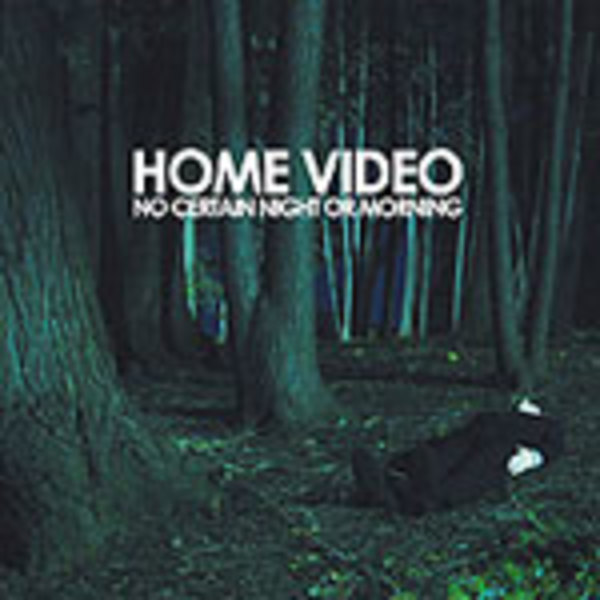
Home VideoNo Certain Night Or MorningDefend Music
Blending the charming guitar stylings of Pulp and the like, Home Video’s minimal electro Brit-pop is infectious, to say the least. At times reminiscent of really poppy new wave, No Certain Night Or Morning is destined to stick in our heads for some time to come.

The Album LeafInto The Blue AgainSub Pop (pictured)
Jimmy LaVelle is one hell of a talented musician. Having collaborated with Sigur Ros, The Black Heart Procession, and a whole bunch of post-punk bands (to say nothing of his turn in Tristeza), Into The Blue Again finds the songwriter at his most intimate and comfortable. Serene piano leads and Boards of Canada-esque drum programming make this one of Sub pop’s best releases this year.

Tragedy: Real-Life Tragedy

While documenting the bloody Liberian civil war, guerrilla filmmaker Booker Sim found himself obsessed with Capone-N-Noreaga’s The War Report, a hip-hop album that drew complex parallels between crime in New York City’s housing projects and third-world geopolitics. “That album was a way to not just have other people look at the ‘hood but to get people in the ‘hood to look at the rest of the world, and start connecting it thematically,” says the 32-year-old Ottawa, ON native.

Drawn to New York in the late ’90s by the promise of a possible feature film project with Prodigy of Mobb Deep, Sim instead emerged more than five years later with a documentary about another legendary Queensbridge rapper–and the actual architect of CNN’s The War ReportTragedy (a.k.a. Tragedy Khadafi). Shot over the course of two years, Tragedy: The Story of Queensbridge tells the story of the world’s largest housing project–and the home of one of hip-hop’s richest legacies–hrough the troubled life of the seminal but largely unsung MC.

Though not as revered as other QB rappers like Nas, Mobb Deep, or even Craig G, Trag’s life was made for cinema. His hustler father was murdered before he was born and his mother became a crack addict, leading a pre-pubescent Tragedy to fend for himself before being stabbed and thrown in the East River by local gangsters. After hooking up with Marley Marl, he was sent to Rikers Island at 16, just as the Juice Crew was becoming New York’s pre-eminent hip-hop unit. Though he scored a few successes, like his 1990 LP as Intelligent Hoodlum, life-threatening situations and missed opportunities (a dispute with NORE ended his CNN affiliation following The War Report) have been far more typical.

“Tragedy probably knows 50-80 people who have been murdered,” Sim explains. “He lived the whole ’80s thug life that a lot of these other QB artists–who were barely eating cookies then–rap about.”

But telling the elusive rapper’s story proved difficult: Tragedy was busted (while patching things up with NORE in Union Square) and thrown in jail right before filming was set to start. Although Trag appears in jailhouse interviews and a handful of other scenes, Sim was forced to tell the story largely through the eyes of longtime acquaintances like Clarence “Uncle La” Shack (uncle of Mobb Deep’s Havoc) and Poppa Mobb, a QB OG who took in young Tragedy as a son.

While Sim received some flack for not showing Queensbridge in a more positive light, he plans to continue documenting the community via The Legacy, a TV series about the next generation of QB rappers he’s developing with Uncle La and Peter Spirer, director of Beef and Rhyme and Reason.

Page 3332 of 3781
1 3,330 3,331 3,332 3,333 3,334 3,781