
Somewhere in the backwoods of Vermont there is an asylum for kids the ’80s forgot: the boy who played so much Qbert he started seeing everything as a series of blocks, the girl who ingested the hair of 100,000 troll dolls, the gay twins who (after huffing too much hot pink tempera paint) turned a McDonald’s Hamburglar toy into a fierce killing machine. Required reading at this place-where, despite being adults by now, everyone still wears shrunken Tetris t-shirts and crazy-patterned Zoobas wrestling pants-is the new book, BJ and Da Dogs (softcover; Picture Box Inc., $29.95). Emerging from the Technicolor loins of Pittsburgh/Western Massachusetts-based design trio Paper Rad, said book is a post-traumatic electronic childhood acid trip extended and remixed over 224 pages of eye-ripping illustrations, photos, poems printed with Mac SE fonts and comics featuring triangle-nosed insomniacs and gay computers. When the kids read it, they get strangely agitated, but in a good way. And somewhere in the background, Timbuk 3’s “The Future’s So Bright I Gotta Wear Shades” softly weeps.
Animal Collective: Wild Things
A pride of lions. A parliament of owls. A school of fish. A flock of seagulls. Each of these collective nouns implies an assemblage of animals (or, in the case of flock of seagulls, an assemblage of righteously bad hair). But study the quartet Animal Collective and you will discover four contrarians that feel no need to always run as a pack, though they are prone to indulge a wild hair or 10.
Living, jamming and recording in various configurations since 1996 (and under the Animal Collective umbrella since 1999), Noah “Panda Bear” Lennox, Dave “Avey Tare” Portner, Josh “Deakin” Dibb and Brian “Geologist” Weitz have charted topography from frenzied psychedelia (2003’s tumultuously recorded Here Comes the Indian) to fevered electro-acoustics (2001’s congested, challenging Danse Manatee). While those albums were valleys of knotty, loose-ended sounds, Animal Collective hit a critical peak with last year’s Sung Tongs, a more rustic than ritualistic album recorded solely by Panda Bear and Avey Tare.
With Animal Collective’s new album, Feels (Fat Cat), however, the entire humble, heady foursome has convened for a powwow of the now, moving beyond lysergically-laced campfire ballads into a more condensed, giddily generated album of “love songs.”
Bond Traders
“A bunch of us have been in serious relationships these last few years, but we didn’t necessarily get there easily, so we wanted to record songs about the different feelings of being in relationships,” says Geologist over a French dip sandwich one evening near southeast Washington, D.C. where, when not donning his indie rock guise, he has worked in environmental policy.
Wearing baggy clothes, sporting a beard and carrying a shoulder pouch, Geologist looks like the kind of person who would be happy to roam the world engaging in musical anthropology. Scope the rest of Animal Collective and you’ll see similarly lived-in attire and relaxed attitudes-a far cry from the feral creatures or hyper-saturated shamans their early albums and videos made them out to be.
By Geologist’s account, the members of Animal Collective are equal parts pragmatists and pleasers exploring Kodachrome dichotomies: they enjoy a good fart joke as well as fielding philosophical questions, they balance musical frivolity with professional careers and they temper their communal, at times hippie-like ethos with allowing each other plenty of space to breathe and grow. While members no longer cohabitate together-they’ve followed musical whimsy to spheric locales including backwoods Maryland, Brooklyn, an Arizona biodome and Portugal-you can hardly tell it from their collective “banshee beat.”
“All Animal Collective albums have been about where different relationships are at, whatever immediate frustrations or elation whoever is recording feels,” continues Geologist. “It’s been this way since we were 14 or 15-we agreed to leave Animal Collective an open-ended thing in order to allow each other the freedom to experience other people and things filtering these attitudes and aesthetics into the music.”
Maximum Joy
Introduced in a Northern Baltimore County high school, the members of Animal Collective found common ground in the musique concrète of vintage horror movie soundtracks, Can and the Grateful Dead’s improvisational segues, the oblique, shambolic imagery of Pavement and Syd Barrett and laughing until it was hard to breathe. A blue collar-tough town full of warehouses, church basements and union halls available for $50 rent, Baltimore provided a congruent DIY scene for ambitious kids. But it was following college and a convergence to Brooklyn that Animal Collective’s quirky sprawl really began to coalesce.
“People were looking for something to break out of ’90s indie rock,” says Geologist. “Bands like Tortoise weren’t my thing. It was polite, academic, reserved. We wanted music to be more emotional and physical, not as cerebral. Us, Black Dice, Gang Gang Dance, The Rapture-we all shared practice spaces and I think we all brought energy to what we did that people in other parts of the country responded to. We tried to make our shows as joyous and hyper as possible.”
Indeed, catch an Animal Collective show and you’ll wonder if you walked into a helium-filled revival tent full of fresh scrubbed teens doing a rousing rendition of “If you’re happy and you know it clap your hands.” This is especially evident during the semi-regular set closer “Purple Bottle” (a song recorded for Feels but performed live for some time). Animal Collective’s instrumentation is chimeric, expanding and contracting, and hands and voices remain constant totems. Anything the band can get its hands on is fair game for its contorted chorales and darting yelps, which recall Mercury Rev and cLOUDDEAD informed by the Incredible String Band and Roky Erickson. For Feels, however, Animal Collective turned to producer Scott Colburn (of Sun City Girls) to help them further widen their vocabulary and move them away from being mislabeled “prophets of rural nature boy music,” says Geologist.
Folk Off
Sequestered in Seattle during a harmonious March, the foursome lived and worked with Colburn, participating in what could almost be described as breathing exercises for sound. Often recordings were channeled through computer back into a room and recorded with ceiling mics to tightly mesh the overall recording. Feels is less autumnal, devoid of bristly squalls save for the calliope huffs of “Turn Into Something,” but it loses nothing by often opting for a jaunty aesthetic rather than a jumbled one. Warbling guitars, dulcimers, bucolic found sounds hand-manipulated from Mini-disc and piano played by Múm’s Kristín Anna Valtysdóttir are just some hues of Animal Collective’s emulsion.
The most immediate deviation from previous Animal Collective material, however, is in the toning down of acoustic guitar. “I think we’re going to get a lot of people saying we’re intentionally not using acoustic guitars just to break away from the ‘freak folk’ thing, but it really wasn’t the case,” says Geologist. “We decided not to use acoustic guitars simply because Sung Tongs, which we finished in 2003, was an acoustic record and even before the ‘freak folk’ label we were already ready to come back to the table with something more electric, rock-based or whatever. Noah wanted to play drums, the others wanted to play electric guitar. We didn’t try to separate ourselves from that ‘movement.’ It’s not like we’re all friends or have acoustic orgies. The only ‘movement’ we’ve ever been interested in anyway is our own.”
Nathan Fake: Heating Up Prog-House
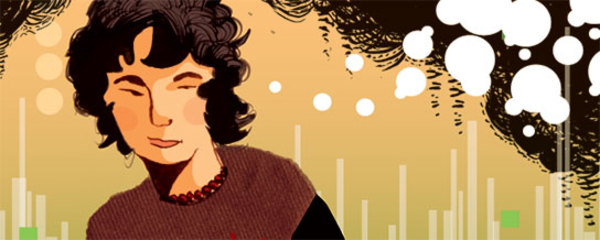
“Yes, my name really is Nathan Fake,” confirms the UK-based wunderkind and “country bumpkin” whose beguiling, mildly pastoral take on techno has seduced the likes of Superpitcher, Adam Beyer and Rob Da Bank (into the inclusion of his tracks on mix albums), as well as Kompakt’s Michael Mayer, Steve Barnes and Dominik Eulberg (into remixing him). Far from aiming to deceive, a series of charming 12″s for James Holden’s Border Community, Satoshi Tomiie’s Saw Recordings and the Cologne-based Traum have been strangely heartfelt, revealing the history of the youthful music maker.
The “Watlington Street” EP (Saw Recordings) was named after the Reading, UK street that Fake lived on at the time of the five tracks’ creation, while its gnarly opening track, “Adam Edge,” finds Fake referencing a childhood mate. “Adam Edge is a dear friend of mine from Norfolk,” clarifies Fake. “It was one of the first proper tunes I ever made. I thought it’d be nice to name a track after him as he’s a good lad. He’s a policeman now.” Meanwhile, a track named “Overdraft” seems self-explanatory for this music production student.
Perhaps Fake’s most seductive number of all is “The Sky Was Pink” (Border Community); its four versions are cut through with trace elements of My Bloody Valentine, M83 and Boards of Canada, but it is equally a club record. The track’s origins, however, are far removed from any dancefloors. “It comes from when we used to camp out in fields when I was younger,” recalls Fake of the inspiration for the blissed-out bit. Meanwhile, a clicky, drone-infused Icelandic mix of “The Sky Was Pink” could easily be taken for an homage to Múm and Sigur Rós. Not so. “‘Icelandic’ is just the name of the brand of tent we slept in,” claims Fake. “That version of the song was just meant to be something else to put on the vinyl, like a more DJ-friendly version of the original.”
On the subject of DJing, Fake’s website resolutely states the he is “not a DJ, never has been and probably never will be.” “It’s nothing against DJs,” shrugs Fake. “It’s just that when my first record came out’ suddenly got of lot of DJ gig offers, which I found a bit weird. I wrote that on my website so that people would stop emailing me [about] DJ gigs. I keep meaning to take it down.”
Best of 2005
The final issue of 2005 features the best of the year in music, art and culture. Jamie Lidell, the hands-down leader, gets psychedelic treatment by Burlesque Design. Arcade Fire, Her Space Holiday, Andy Mueller from The Quiet Life, Cody Hudson of Struggle Inc., and Mathew Jonson give their personal “Best of” lists. Also featured: Ghostface, Animal Collective, Lady Sovereign, Jo Jackson, Tom Vek, and more.
Ghostface: Ghetting Ghost
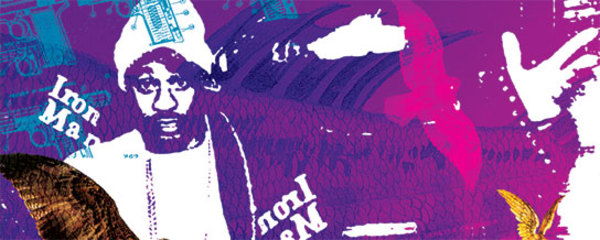
It’s been about a decade since the Wu-Tang’s most shadowy warrior revealed his face, turning Raekwon’s Only Built 4 Cuban Linx into a surreal, coke deal-fueled coming out party before staking his claim as the Clan’s rawest talent on his solo debut, Ironman. A half-decade later-with hip-hop in a slump and an inventive major label rap record seeming as plausible as Ralph Nader for president-Ghost made the new millennium’s first ghetto classic: Supreme Clientele.
Sure, 2002’s Bulletproof Wallets was somewhat of a misstep and last year’s Pretty Toney, while one of the year’s best albums in any genre, has been cited as more of a commercial disappointment then a classic. But as other rappers of his age group and epoch have settled into retirement or followed trends set by the younger generation, no one rips through 16 bars these days with more hunger than the Wallabee-wearing chairman of Starks Enterprises. Perennially toeing the line between savant-like enlightenment and seeming absurdity, often shifting on a dime from poignant and poetic to hateful and overly simplistic, his patented torrent of observations and emotions continues to set the standard for freeform lyrical dexterity.
“I’m just being Ghost,” a low-key Killah says inside the basement at Manhattan’s S.O.B.’s, where he’s about to perform with Theodore Unit, a crew from his hometown of Stapleton in Staten Island with whom he made last year’s 718 (An album with Theodore Unit crewmember Trife da God, called 718: From Stapleton to Somalia, was released in October). A black baseball hat low on his head and a golden basketball sneaker dangling from his neck, Ghost-who stands about 6′ 4″ with broad, fullback-like shoulders-is one of a few larger-than-life rappers who actually appear bigger in person than they do on TV or in magazines. “Not a lot of artists these days (are) comfortable with doing themselves so they go out and do what they think they supposed to do, but they ain’t doing nothing, really. I’m fittin’ to take things back to the promise land with this next record, though.”
That would be Fish Scale, his fifth LP and second since signing with Def Jam. Titled after an expensive strain of impossibly hardened cocaine-the insides of which, when cut open, resemble the scales of a fish-Fish Scale is, as Ghost says, “the rawest, hardest shit that be out on the streets.”
“I don’t like to sit on the same shit-I like to move around a lot,” says the man born Dennis Coles. “That’s why I let them niggas keep that block shit. I could have stayed talking on slinging crack like all these other cats but I’ve been done that since heaven and hell, nahmean? I’m taking care of babies in Africa. I got families that I look after there. But I had to take it back to that other shit here ’cause niggas respect violence.”
Things look promising. Not only does Ghost, perennially hindered by failed sample clearance and improper promotion, have an invaluable front office ally in new Def Jam president Jay-Z, but he’s brought MF Doom and Pete Rock (who crafted lead single “Be Easy”) on to produce much of the album and capture the classic soul samples that are his calling card.
“That’s where I get my shit from, that old soul music,” says Ghost, whose live show often finds him just singing along to records from artists like Curtis Mayfield. In a similar vein, the self-produced Pretty Tony highlight “Holla” found him rhyming over The Delfonics’ “La La (Means I Love You)”-not a loop, but the entire track. It was a bold, bizarre and somewhat lazy move that proved to be a stroke of irresistible genius. “People who don’t got no soul don’t understand when I do something like that,” Ghost says. “I prefer that shit to hip-hop any day. That’s the nucleus of all this.”
Reached at his home in Atlanta by phone, MF Doom provides some insight into his recent studio activity with the Ironman. “It is bonkers when I tell you!” Doom says with an enthusiasm rarely heard from such a grizzled veteran. “He’s coming with what needs to be heard right now, information-wise, style-wise. He could rhyme to the sound of traffic or tapping on a table but I gave him some tunes like ”Damn, what would he do on that beat?” and he flipped it in a way that made me want to run back and get on it.”
While Metal Face doesn’t rhyme on Fish Scale, both he and Ghostface promise to match flows on an as yet untitled LP, for which several tracks have already been recorded. “It was bound to happen,” says Doom. “It was almost like a cousin that you’ve heard about but you didn’t meet yet, but you can tell that it’s your aunt’s son. Wu-Tang breathing new life into the game is what brought me back out. Actually, when Starks came out as Ironman that kinda made me mad. I already had the Doom concept so I was like ‘Damn, he beat me to the punch.’ It worked out, though.”
For fans of free-form lyricism and cinematic hip-hop soundscapes, the Doom-meets-Ghost pairing will undoubtedly be a match made in heaven. But even though both draw from a comics- and cartoon-obsessed childhood and a sponge-like absorption of pop culture, don’t expect a corny concept album.
“I just write to the beat,” Ghost summarizes. “Sometimes I wouldn’t have even thought about something before I went into that studio but the beat just brings something out of me. That’s why I pick my beats so carefully. It’s like picking a woman. It’s personal.”
Pal Joey Just The Way You Are
New York City darling Pal Joey continues the Loop D’ Loop legacy with a four-track EP that touches on the many sides of dance music, as well as using the tightest hats, crunchiest claps, dopest snares and most fucked up bass. The classic vibe of “Play Time” will have the old-schoolers raisin’ the roof and the quirkiness of “Just The Way You Are” will keep those who like to jack jackin’!
Dirty 30 Red Temple Balls
Damn, this record’s ill! The first release from Toronto’s spanking new Truffle label brings three spaced-out Afro-disco numbers full of live instrumentation and hard ass rhythms. Flip it over and let Brennan Green’s “One Night Stand Disco Mix” use you like the sleazy disco slut you know you want to be. Fuck yes!
Supersystem Miracle
Okay, if I was 15 years old and my parents were out of town but accidentally left the keys to the liquor cabinet and I had all my friends over, this record would probably blow our minds. The second 12″ single from Supersystem’s full-length Always Never Again comes with an electrofied re-stomp by everyone’s favorite punk-dancers, The Rapture. No matter how old you are, it’s time to party.
Alex Under Dispositivos De Mi Granja
Finally, Spain has arrived as a techno power with Alex Under’s Dispositivos De Mi Granja. Coming on like John Tejada–if he were raised on Chain Reaction’s back catalog–Under creates some of this decade’s most mesmerizing and charmingly quirky minimal techno. The 10 tracks here boast elegant melodies and coast on relentless rhythms of sensual, hypnotic grace. Under’s ebullient, texturally fascinating cuts will keep floors grooving without cheesing them up. He possesses the rare ability to uplift with sublimely chilled understatement. Dispositivos is one of the most accomplished debuts in recent memory.
AFX Hangable Auto Bulb
With original vinyl copies of Hangable Auto Bulb and HAB Volume 2 undoubtedly changing hands for absurd figures on eBay, the time is ripe for a CD reissue to thwart collector scum-and to mark the EPs’ 10-year anniversary. These tracks by AFX (Aphex Twin, Richard D. James) epitomize that brief moment when IDM icons were madly mutating drum & bass into crazy-angled grotesqueries that knotted any limbs attempting to move to them. HAB is the jape that eluded throwaway kitschness and became a touchstone for unfettered mindfuckery in the studio, by any pharmaceutical means necessary.
