Q&A: Dâm-Funk

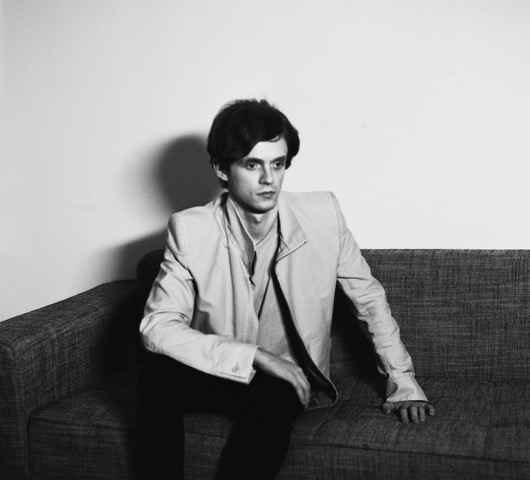
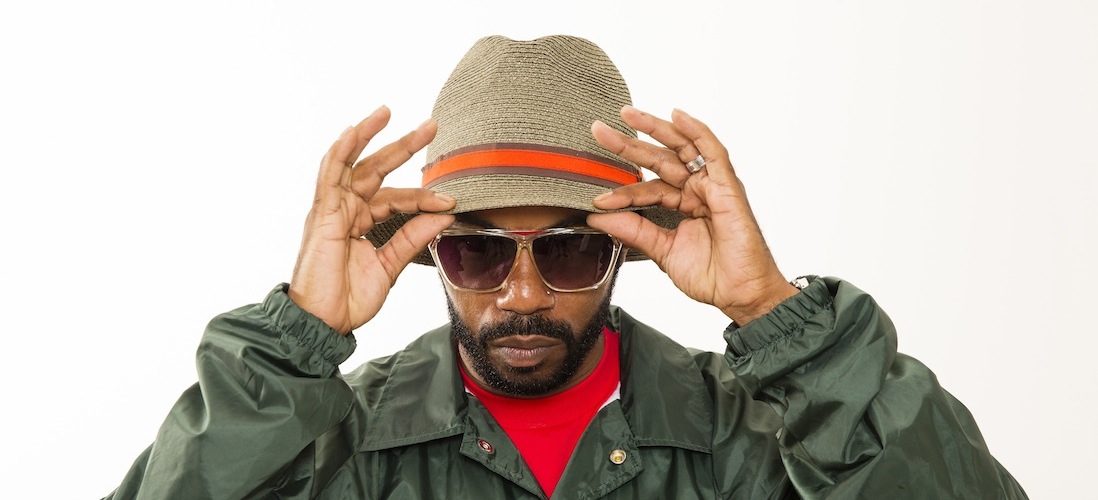
The spoken-word intro that leads off Invite the Light, the latest full-length missive from Dâm-Funk, comes with a proclamation: “If we invite the light, it will surely come to us,” a processed, distorted voice informs us; “if we invite the funk, it will never let us down.” The words themselves tell of the pure positivity that funk holds for the man born Damon Riddick—but its the source of that voice that truly shows how serious a matter funk is for the LA producer. It belongs to Junie Morrison, the near-legendary producer, musician and songwriter of the Ohio Players, who later served as the music director of George Clinton‘s P-Funk ensemble.

It’s a sign, one of many embedded in Invite the Light, that funk is more than just another rhythmic option for Riddick. The album, released on Stones Throw, references the likes of Prince, Parliament-Funkadelic, Jam & Lewis, the Zapp Band, Brass Construction and countless funk and and R&B artists from days gone by, but it doesn’t exactly copy any of them—this is funk filtered through Riddick’s slightly skewed vision, one that puts a unique stamp on the genre while still paying homage to what’s come before. It’s also an incredibly heartfelt album, forgoing the depressingly-common tendency to treat funk as a period piece—or worse, to treat it as a prop of sorts, something to use as an aural punchline to a stale joke. Instead, he’s fully internalized the funk: It’s a part of his ethos and his life, something that infuses everything about him—especially his music.
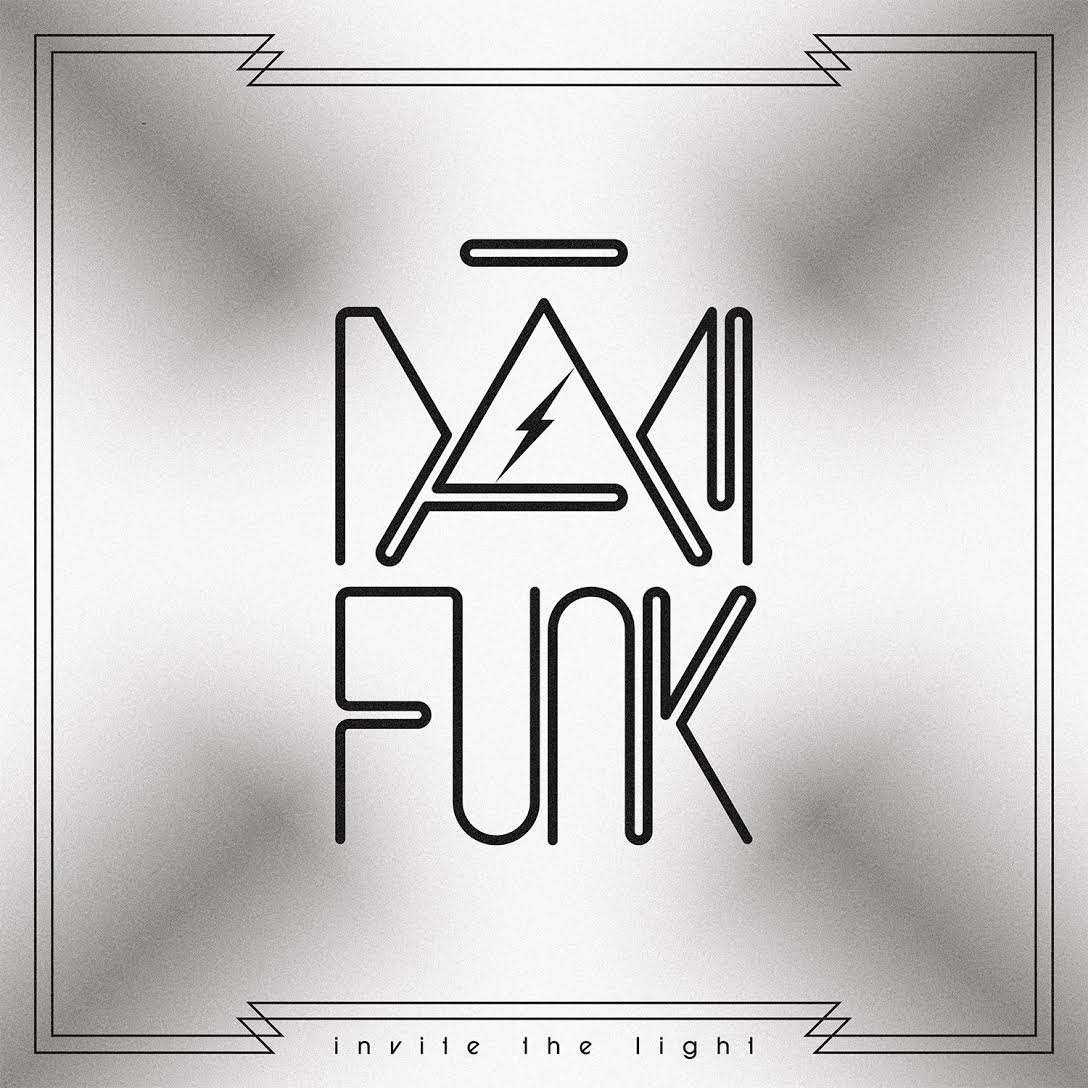
Invite the Light—a 20-track, 80-minute, years-in-the-making groove machine—is something of an all-star funk affair. Besides Morrison, the album features contributions from Leon Sylvers III, the in-house producer for the vastly influential SOLAR label who also served time as a member of family funk combo the Sylvers (“Hot Line,” “Boogie Fever,” et.al.); his son, Leon Sylver IV, also appears. There are hip-hop icons Snoop Dogg, who worked with Riddick on 2013’s 7 Days of Funk LP, and Q-Tip of A Tribe Called Quest; R&B chanteuse Jody Watley and rapper Kid Sister; and a slew of slightly more left-field guest spots, from the likes of Flea, Ariel Pink, Computer Jay, Novena Carmel (Sly Stone’s daughter, among other claims to fame) and Nite Jewel. Riddick is currently in the midst of a tour that’s taking him from Denver to Tokyo (with stops throughout Europe and the Middle East in between), but he had enough time to stop and chat with XLR8R at Brooklyn’s Wythe Hotel.

Can you explain the significance of the album’s title, Invite the Light?
It’s based on inviting good energy—positive energy—into your life. We all go through a lot of things in life, ups and downs and peaks and valleys. But in the end, if you invite the light inside of your mind, body and soul, you’ll be okay.

The album kicks off with a funk manifesto of sorts, voiced by Junie Morrison.
Yeah, he came up with all that. I had invited him to be on the record, and he was like, “I got something for you, man.” Of course, I said, “Cool, send it over.” And it just fit so perfectly. He actually did another song, with this great solo that we didn’t put on the album. I’m gonna save that for a b-side. He’s shredding.

He’s one of the all-time kings of funk.
Definitely. People don’t even know that this guy is still destroying it, but he has this underground monk status with the people who do know. Just to have him on the record is such an honor, and I thought it would be something for the funk purists. Maybe if they see that Junie Morrison is aboard, they’ll be like, “Oh, this Dâm-Funk dude is real,” and its not just some funk fan-boy type situation—that there’s some real shit going on.

Well, you’ve been living the funk life yourself for quite a while. You basically grew up with this music, right?
Yeah, that’s true, and this really is my life.

“To me, funk is like a smile with a tear—and that’s the kind of funk that I make.”

It seems like that throughout your career, you’ve been moving closer and closer towards what your own vision of funk is.
That sounds right. I mean, I respect all the funk that came before me—but for a while, it almost got sort of comedy-based, like “shake your booty” type stuff all the time. And there’s so much more to funk. Funk is sadness, it’s happiness, and it’s everything in between. It’s not just a party. What I was trying to do with this record, and with my career so far, is to bring in all these different moods, and not just have it be a “get on the good foot” vibe. To me, funk is like a smile with a tear—and that’s the kind of funk that I make.

When you think of the great funk songwriters and performers, they do manage to combine all the emotions, from ecstasy to pathos.
Definitely, and the main thing that’s disappointed me in the past few years in regards to funk are things like the Dave Chappelle skits—“I’m Rick James, bitch.” I mean, that was cool—and I love Dave—but that kind of mockery tends to lessen the respect for funk. “Cocaine’s a hell of a drug”…eh, that’s not quite really what funk is. I’m just trying to give a facelift to the visuals and the sound of funk, and continue the tradition more progressive-type funk. Mtume, Change, Loose Ends…the kind of stuff before hip-hop kind of took over what people’s ideas of funk was, and before the labels started releasing only that one expression of funk, that one black expression of art. Other than jazz—and that got watered down, too! Anyway, I’m trying to make sure that people of all backgrounds and races know that funk is still alive, and you can still experiment with it and do new things with it. That’s why I came up with the term “modern funk” to describe what I do.
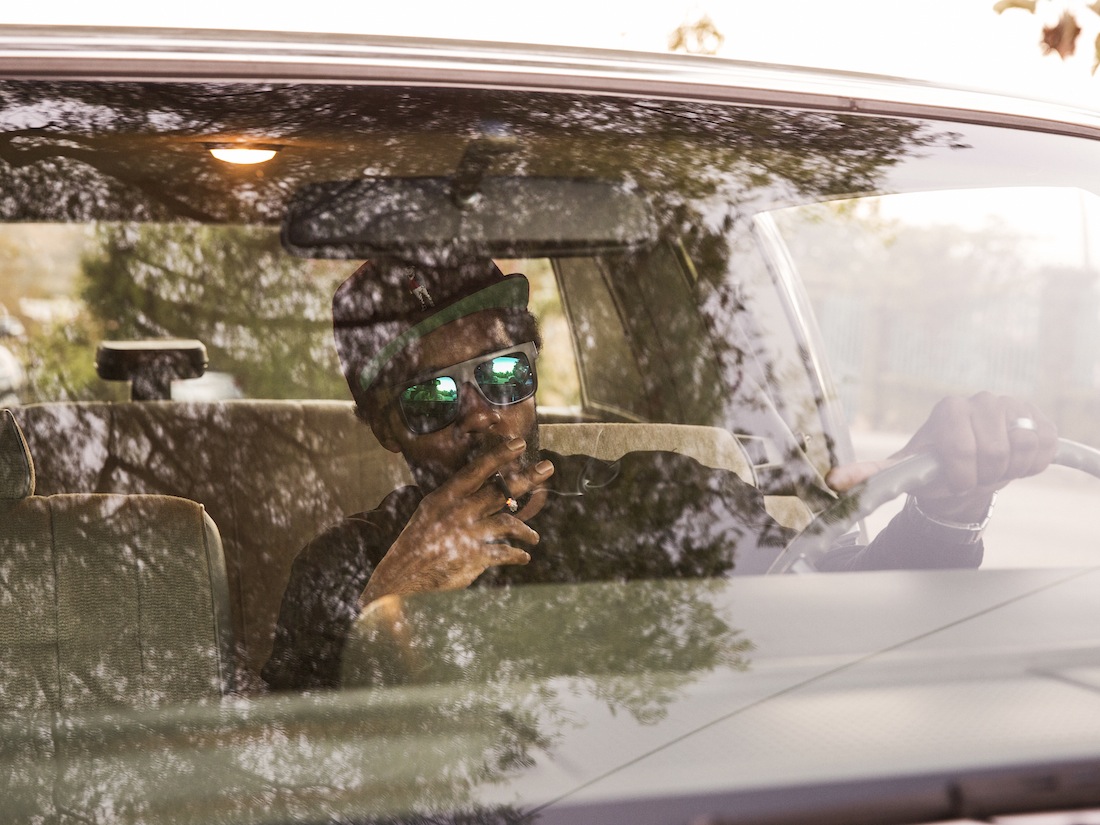
In past interviews, you’ve cited Funkadelic’s “(Not Just) Knee Deep” as one of your formative songs. Are there any others that really stood out for you?
Well, there’s Prince’s whole catalog. [laughs] The 1999 album is what made me start doing my own music. Slave’s “Just a Touch of Love”; Change’s “Paradise”; Mtume’s “Prime Time”; Loose Ends’ “Gonna Make You Mine”—that kind of stuff. These aren’t necessarily well-known songs, but they really resonated with me and helped me develop my sound.

You can definitely hear a bit of Mtume in that song with the Sylvers, “Glyde 2nyte.”
Yeah, for sure. That’s exactly the vibe I was trying to create—that kind of two-step vibe that would get Chicago cats doing that couples-dance thing. And you can just glide to it.

Hence the name.
Exactly. The spelling’s a little weird, of course. [laughs] I have to tell you, Leon is just incredible.

Leon Sylvers III’s been something of a mentor to you, hasn’t he?
He took me under his wing right when I got out of high school, talking to me about the business and everything he went through. A lot of people don’t realize that SOLAR was the precursor to Death Row Records. SOLAR was Dick Griffey and Leon Sylvers; then it was Suge Knight and Doctor Dre. It was all out of the same building and everything. Anyway, Leon told me the kinds of things I should watch out for—and a lot of studio techniques, too. Of course, I wasn’t in a big studio like he was, but I would take the things I would learn from him and take them to my bedroom studio. That’s how the bedroom recording and the big-production thing meshed for me. After that, I just kind of struck out on my own. Instead of going apeshit over sports, I really delved into music and started working with a lot of West Coast G-Funk kinds of things.

Speaking of G-Funk…you’ve worked with Snoop before, and he appears on the new album. How is he to work with?
Oh, man, he’s a great guy. I wouldn’t bullshit you—he’s really cool and laid-back. And he’s very smart, but he makes himself relatable, so you don’t even always notice what a smart guy he is. He’s got a really positive energy. We have a lot of respect for each other. When he came over to my house to do “Hit Da Pavement,” the first song from 7 Days of Funk, he just pulled up to my house with his cousin, and we were just jammin’ in my bedroom. He just put the microphone up to his mouth and just did it. He’s so down to earth, and he abides by the G code. He’s just a good guy.

I’ve heard you DJ, and I get the feeling that you’re definition of funk is a pretty wide-open one.
Yeah, cats like Larry Heard and Theo Parrish will always be in the mix. Larry Heard…he is just so good! I’m into a lot of styles, really—that’s why my music sounds the way it does, and isn’t just straight slap-funk. I try to mix in beautiful chords, interesting drum machines, and all kinds of stuff.

That range shows in your choice of guests on the new album. Somewhere between the Q-Tip and Snoop cuts, you have a song with Ariel Pink, for instance.
Ariel Pink is one of my favorite new artists—really. And there’s Nite Jewel, and Computer Jay, too. These are all people I know. I operate on a pretty organic vibe. Like Q-Tip…I just know him from seeing him backstage, saying, “Hey, what’s up man.” I had this song called “I’m Just Tryna Survive (In the Big City),” and I thought of him—and I had his number, so I just hit him up. I sent him the music—and he sent it back the very next day.

“I’m comfortable with what I have—being able to make music, getting it to people with like minds, and having that music become part of their lives.”

Wow.
Yeah, that’s what I said. Sometimes I wonder if people are paying attention to me, or even know who I am. But when things like that happen, it shows me that I must be doing something right.

I don’t think you have to worry about that; there seems to be a lot of respect for you among your peers.
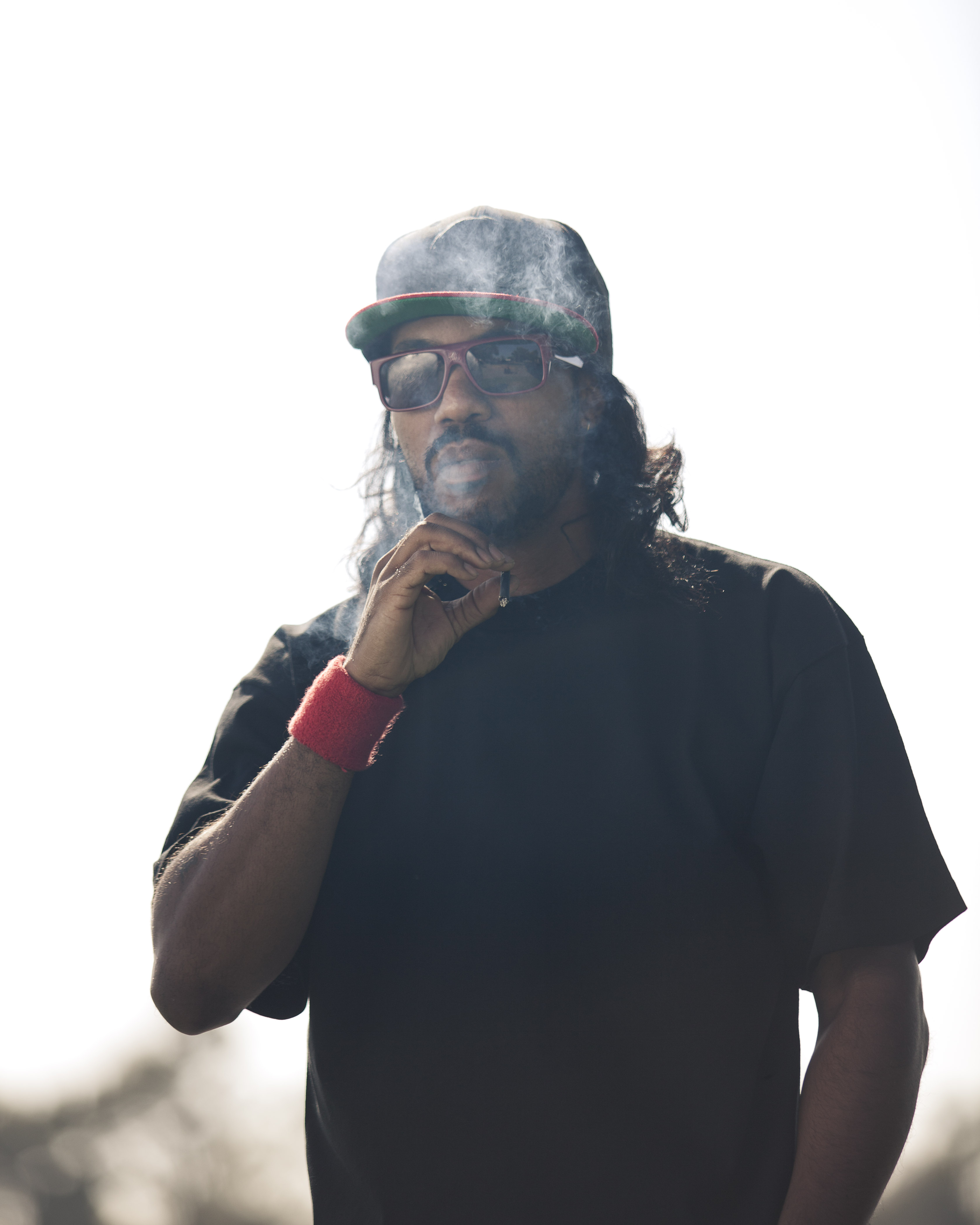
 Photo: Matthew Scott

I’ve based my career on trying to keep my integrity and not selling out. And for someone like Q-Tip to do something that fast and that good for me, it does show that the respect is there. I guess it’s like with Larry Heard—some of us know and respect this guy, but he might never know, because there’s no easy way for me or you to express it to him. So I just have to sit and believe that there are people out there, even though I’m walking around wondering if people even know who I am. But once in a while, I’m reminded that people know my music, and that the most important thing. That’s what makes me happy. I’m comfortable with what I have—being able to make music, getting it to people with like minds, and having that music become part of their lives.

Dâm-Funk’s Invite the Light is available now through Stones Throw Records.
Medlar Returns to Wolf Music

Medlar returns to Wolf Music in October for his first solo release since his debut album, Sleep.

WOLFEP030 follows a collaboration on Delusions of Grandeur with Dan Shake, and a remix of Andreya Triana for Ninja Tune, with four intricate and varied cuts. The rolling, sci-fi synth work of “Loon” kicks off the EP, before rolling into the beautifully organic “Paradise,” the jazz-tinged “Dawn Chorus,” and the EP closer “Angel Race,” a gorgeous, almost ambient cut.

WOLFEP030 will be out via Wolf Music on October 5.

Blank Slate Teases New 12″ from Michal Wolski

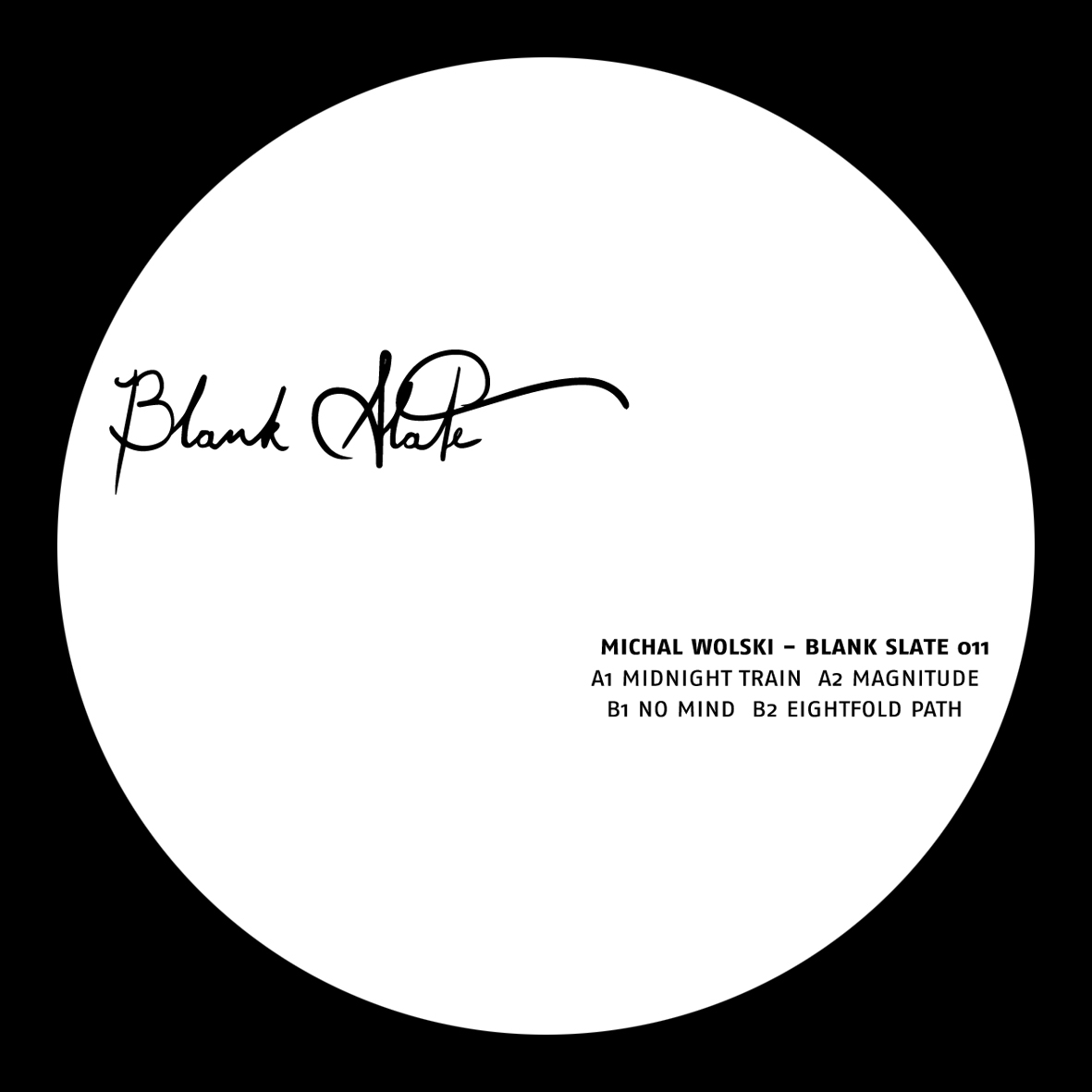
Michal Wolski rejoins the Blank Slate syndicate next month with issue no. 11. The Warsaw veteran debuted on Kamal Naeem’s specialist techno label—which has also overseen releases from Arnaldo, White Visitation, and Shcaa—last year, and his forthcoming 011 promises to extend his signature take on dubby, minimalist techno. Opening with the airy “Midnight Train,” which was originally released on cassette via Wolski’s own Minicromusic imprint, all four tracks are said to play off their creators’ patience, subtlety, and ability to “summon thick, hypnotic ambience.” Stream snippets below before Blank Slate 011 lands on October 3.

Stream a Track from INIT’s Debut Album on Hivern Discs

John Talabot’s Hivern Discs label starts afresh in 2015 by announcing the release of its first full length LP, coming from the duo known as INIT and entitled Two Pole Resonance.

Hailing from Frankfurt’s Rhein-Main region, INIT is comprised of Nadia D’Alò and Benedikt Frey, both of whom were featured on the title track of Massimiliano Pagliara’s 2014 LP on Live At Robert Johnson.

To mark today’s album release, Shake Off Dust can be streamed in full below.

Premiere: Hear a Track From Trust Image’s New Album for 1080p

Later this month, Canadian imprint 1080p will release Trust Image‘s Rory’s World.

The nine-track album follows on from Trust Images’s previous “Metalheadz-inspired” cassette, with the NYC producer expanding his palette and taking the listener on a journey through old-school breaks, rave-tinged warehouse jams, and raw, lo-fi house. Raw, multi-colored, and packed full of good vibes, Rory’s World feels like you’ve just stumbled across an old dust-covered gem, one that somehow flew under the radar.

Rory’s World will be out digitally, and on cassette, on September 18 via 1080p. Ahead of the release, you can stream the soon-to-classic cut “Doing You Wrong” in full below.

Review: Novation Launchpad and Launchkey 61

Novation’s Launchpad—which has now expanded to Pro, Mini, and app versions—has been a staple in the Ableton world (and the rest of the DAW world, for that matter) for many years now. Aiming at Ableton’s session view, and with a simplistic approach to clip launching, control, and integration, the unit quickly became a must-have device for producers and live performers; the very modest retail price was the icing on the cake. In 2013, Novation then introduced its Launchkey range, featuring a Mini version, as well as the 25, 49, and 61-key units. The Launchkeys are a hybrid of sorts, fusing pads, keys, knobs, and faders for an altogether more complete unit. This year, Novation decided to give them all a revamp, with all the previously mentioned units now featuring RGB LED backlit pads.

How they Look

Upon unboxing, I noticed that both the Launchpad and the Launchkey 61 are made of a quite sturdy, albeit very light, plastic—the Launchpad weighs in at 1.5 pounds, with the Launchkey 61 at around 20 pounds. Both units feel right at home sitting on a desk, they both have molded rubber bottoms which sit perfectly flat and stick to most surfaces, causing very minimal movement when in use. One problem with the Launchkey—and this would relate to most bedroom producers—was its length. At nearly 40 inches, the unit didn’t leave much room for anything else on a standard size desk. The Launchpad, on the other hand, sits at a very portable and small, 9.5 x 9.5 inches, allowing for easy transportation and storage.

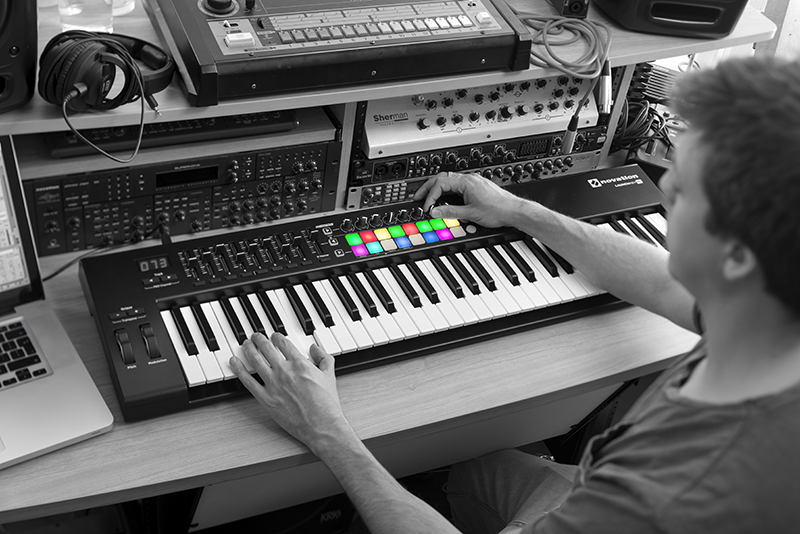
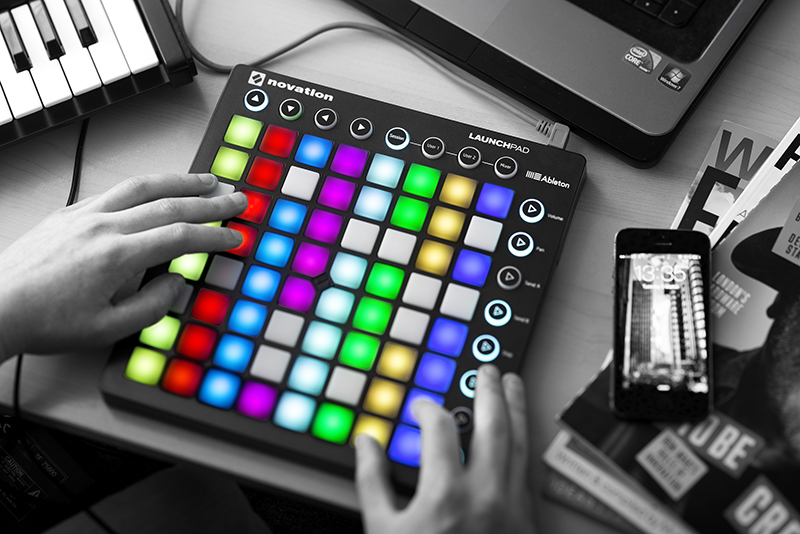
Once plugged in via the USB bus powers, you’ll immediately notice that both unit’s eye-catching RGB LEDs light up, giving a glimpse into the possibilities available when playing live. The Launchpad features an 8×8 grid of pads, which can be used to launch clips, play drum racks and instruments, and control mixer settings, and with the RGB update, the pads now match, color for color, the clips in your Ableton session. This also applies to the Launchkey’s 16 pads, taking the both unit’s integration with Ableton even further and allowing for easy experimentation with arrangements and instruments—the RGB update, when color coded correctly, is a godsend when playing live, drastically minimizing the risk of hitting the wrong clip, not to mention allowing for a more engrossing show for the audience.

How they work

Both units are completely class-compliant, which means that you can just “plug and play” with no installation necessary on any Mac or Windows—the units also work seamlessly with iOS, although a powered USB hub is needed, as well as a camera connection kit or a lightning to USB camera adapter. The Launchpad and Launchkey are also exclusively connected and powered by USB. This definitely isn’t a deal breaker, but it would be a nice inclusion for the units to include five-pin MIDI sockets for the possibility of controlling hardware.

Although the two units do share overlapping functions, there are clear areas where each stand out. The Launchpad’s 8 non-assignable function buttons running horizontally across the top of the unit act as its control center, allowing for fast, responsive, and easy access to the session view, mixer controls, and the two user modes. Its primary use, and where it really excels, is in Ableton’s session view launching clips. In mixer mode, the Launchpad allows you to control volume, panning, and sends and returns—although, when controlling the volume, it’s not as accurate as a fader would be, with the volume taking rather large steps up or down. The Launchpad’s two user modes feature the most flexibility, sending MIDI data and allowing you to play drum racks and instruments, MIDI-map to control effects, and sequence and control mostly any Max4Live device. The only gripe in regards to the user modes is that the pads are not velocity sensitive, but again, it’s not definitely not a deal breaker.

The very small downfalls of the Launchpad were made completely irrelevant when used in conjunction with the Launchkey, its main functions stepping in to create a true production hub. The 16 pads on the Launchkey are velocity sensitive and, like the Launchpad, are used for instrument control or launching clips. Novation’s “InControl” feature takes the Launchkey’s functionality much deeper. When on, “InControl” automatically maps its pads, faders, and knobs to the corresponding clips, track volume faders, and the selected instrument/effect controls, respectively. When “InControl” is off, the pads, faders, and knobs can be mapped to whatever you see fit. It can also be toggled on or off mid recording, which essentially doubles the control features available at any one time. The synth-style keyboard’s action is light and fast, and the semi-weighted keys are also velocity sensitive, but with no aftertouch. The knobs and faders feel solid and smooth, and a small LED display shows the value of the current parameter being controlled.

Both units come bundled with extras, including Ableton Live Lite, Novation’s Bass Station and V-Station VSTs, and a good chunk of samples from Loopmasters.

The Bottom Line

Both units are well made, well thought-out controllers for modern DAWS and the update to RGB pads only accentuates this. It’s hard to go past the Launchpad for its price, ease of use, and functionality in the live space. And if you’re looking for the perfect all-in-one production hub, the Launchkey is a safe and sure bet although, in my opinion, the 61 is too long to be compatible for most home-studio set ups. The Launchkey 41 has exactly the same features—and at 10 inches shorter, is much more practical.

Launchpad MSRP $219.99

Launchkey 61 MSRP $299.99

Pioneer Introduces First Hardware Controllers for Rekordbox

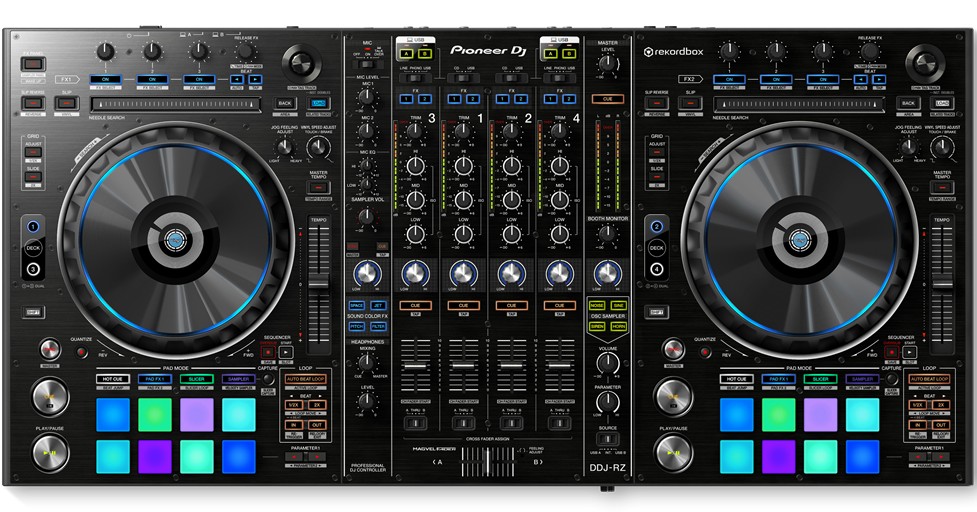
Today, Pioneer announced the launch of the DDJ-RZ and DDJ-RX controllers – the first hardware to deliver native control of rekordbox dj performance software. The controllers give rekordbox DJs the ability to prepare tracks in Rekordbox and then get plug-and-play performance with the software, directly from a laptop. The DDJ-RZ and DDJ-RX mirror the layout of the software precisely to enable intuitive creative performances. The controller also features low latency jog wheels with On Jog Display, multi-coloured Performance Pads and a four-channel mixer to deliver highly responsive control. New to these controllers are the beat parameter buttons, Sampler Cue mode, and the Sequencer mode – which lets you record and loop sample sequences on the fly.

The DDJ-RZ shares all the features of the DDJ-RX, plus a club-quality magnetic crossfader and large jog wheels inherited from the top-flight CDJ-2000NXS. The OSC Sampler gives you the freedom to trigger and manipulate pre-set oscillator samples—or load your own in rekordbox dj. Two USB sound cards and ports with a top-loaded input switcher enable smooth DJ transitions.

For more information on these two brand new controllers from Pioneer, check out the video they just released over on their website.

Ruff Cherry “Endless World”

Launched in April 2014, Midgar Records is a Berlin-based label pushing a deep and texturally rich techno sound. Its influences are evident in the latest release from Ruff Cherry, whose Ritual EP presents a sound that is as indebted to deep ambient tones as it is to dancefloor-focused techno. Ritual is the first EP from the Irish producer since 2013, when he released his Section 31 EP on A Sagittariun’s imprint Elastic Dreams. In support of the EP, Ruff Cherry and Midgar have passed along the exclusive cut “Endless World,” which, like its name, features an endless world of textures to get lost in. Wrapping itself around a syncopated rhythm, the track winds its way through dub-tinged bass tones, skittering percussion and haunting ambience, gathering momentum throughout, before slowing to a crawl at the end. Ritual is out this month, and “Endless World” can be download for free below.

Endless World

Helios Yume

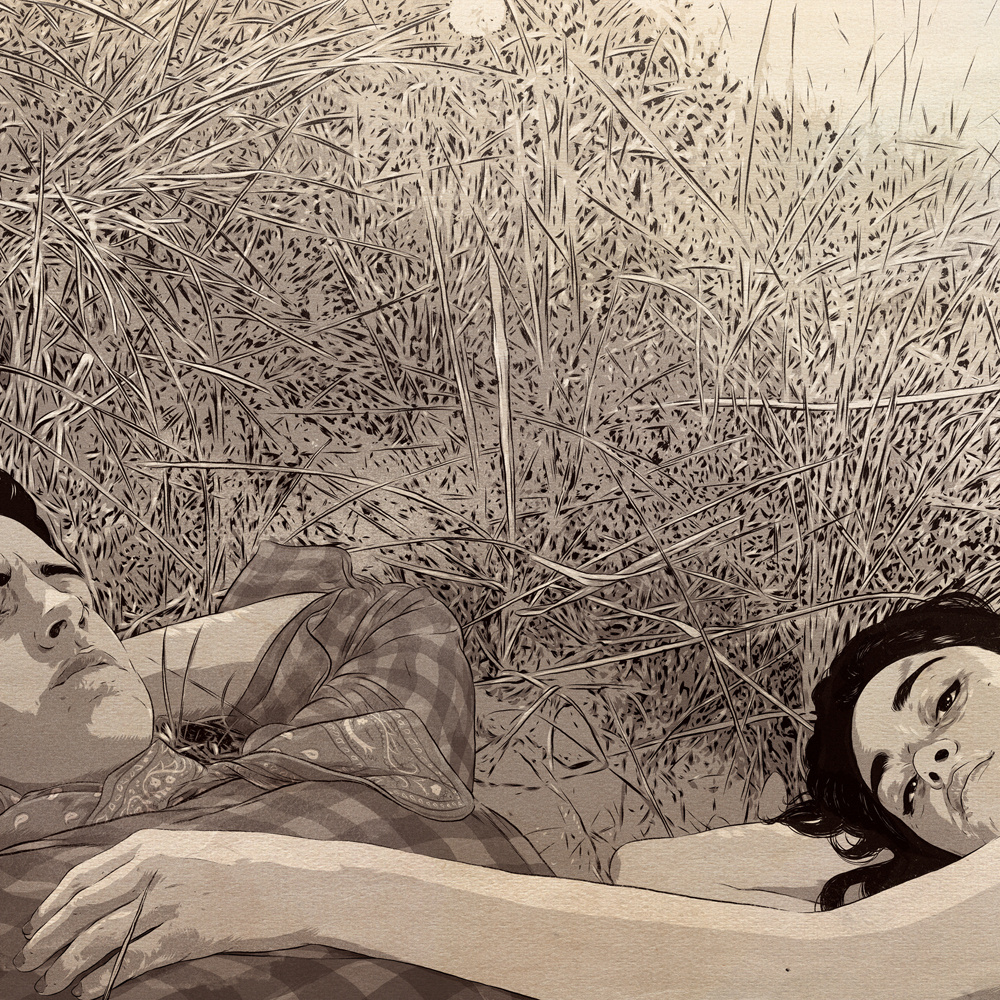
For a little over a decade, Keith Kenniff’s output as Helios has taken us into calm and pastoral surroundings. Since 2004, the Berklee College of Music percussion major and Portland, Oregon resident’s albums have been consistently soundtracking listeners’ cozy mornings as they watch sunbeams stream through curtains, stroll in the woods after a fresh rain, and take part in similarly contemplative moments. But Kenniff’’s work is far from new-age muzak or Buddha Bar chill-out drivel. Rather, it’s a serenely unpretentious mix of intricate electronic compositions accented by acoustic instrumentation—folktronica by another name—a sound that Kenniff unwittingly pioneered.

Although that awkward genre term (which encompass anything from folky IDM, to artists like Four Tet, Bibio or Caribou and postrock bands Mice Parade or The Album Leaf) hardly seems apt to describe Kenniff’s music these days, it does hint at the depth and craft that he applies on this album. Kenniff, who also moonlights in neoclassical project Goldmund and as half of shoegaze pop duo Mint Julep, delivers a tremendously satisfying creation—all instrumentals, all saturated with blissful notes and chords.

Each piece on Yume (Japanese for “dream”) is delicately stitched together, like silk through a weaving loom, producing soft and colorfully patterned songs. Throughout, Kenniff’s frequent but unobtrusive use of guitars and piano add a distinctly human touch to the gentle and melodic synth atmospherics. Additionally, cellist Amos Cochran and violist Ben Davis add nuance to songs like “Skies Minus” and “The Roots”; their strings sit in the background, shimmering through the waves ever so subtly. Thankfully, there are no melodramatic orchestral flourishes; instead, the instrumentation, including some unexpected sonic sources, is blended and arranged to lead from one complementary section to the next.

While bird songs, creaking floors and other environmental “found sounds” have been incorporated in previous works, they’re more thoroughly integrated on Yume. You hear these sampled elements notably on “Sonora Lac,” where they form an evocative percussive backdrop that scrapes and rattles along like a mule pulling a wagon along a dirt road. Songs like “Pearls” and “Every Passing Hour,” which recalls the placid majesty of “The Toy Garden” from ‘06 release Eingya, feature more traditional drum loops and percussion.

Balancing the proceedings are gorgeous percussion-free, ambient numbers “Again” and “Embrace,” which feel like being drenched in rose petals or floating through clouds. In the end, Kenniff’s compositions journey out into natural green landscapes, and bring us back to wherever we call home. The world is a hectic place. It’s nice to know you can retreat to Yume for refuge and restoration.

Premiere: Hear Audion remix Ghost Culture’s “Lucky”

The third single from Ghost Culture‘s self-titled debut, featuring a remix from Audion, is out today on Phantasy Sound.

The critically acclaimed debut album was released back in January on Phantasy. The haunting, vocal-led cut “Lucky” now gets the remix treatment by none other than Matthew Dear’s Audion, who twists the vocals and analog-driven sounds of the original into a swirling, dancefloor bomb.

The remix is available today via the Phantasy webstore, with the track also streaming in full below; along with upcoming tour dates.

TOUR DATES

Sept 11 Bestival – Jagerhouse, Isle of White, UK

Sept 23 CORSICA STUDIOS – LONDON, UK

Oct 08 Le Sucre – Lyon, FR

Oct 09 Paloma – Nimes, FR

Oct 10 Le Confort Moderne – Poitiers, FR

Oct 17 XOYO – London, UK (DJ)

Nov 07 MIRA Festival – Barcelona, ES

Nov 13 Les Inrocks at Le Grand Mix – Lille, FR

Nov 14 Les Inrocks at La Cigale – Paris, FR

Nov 15 Les Inrocks at Stereolux – Nantes, FR

Nov 17 Les Inrocks at Le Bikini – Toulouse, FR

Nov 19 I.boat – Bordeaux, FR

Nov 20 L’Ubu – Rennes, FR

Nov 21 Le 106 – Rouen, FR

Page 1000 of 3781
1 998 999 1,000 1,001 1,002 3,781