After saving a young woman’s life at a concert in 2012, Werdna Namde (a.k.a. SNKNGL) became deeply affected by the incident, and immediately began seeking out different ways that he could process this experience into something he could use to positively impact the people around him. Werdna creates tracks that directly express his attitude towards the human condition, and his desire to enjoy every bit of his new found passion for life. With an ever changing arsenal of mysterious aliases under his belt, Namde now offers up a download of his new track “Selles.” Futuristic and raw in sound, the arrangement chugs towards a slow burn that is reminiscent of a pitched down Chicago house record, inside of ambulance on its way to extinguish a five-alarm warehouse fire. The track also includes original cover artwork by Nicholas Treadway.
Dark Entries, the West Coast label largely dedicated to obscure and industrial synth-pop, has detailed a run of forthcoming reissues from Australian post-punk pioneers Severed Heads. Clifford Darling, Please Don’t Live in the Past was originally released in 1985 via Ink and combines “live recordings, raw demos, unreleased studio recordings, and solo pieces” from the band’s first five years together. Arriving at the same time—on October 8—is the Petrol EP, which offers multiple versions of the ’86 single.
Severed Heads kick off a tour in San Francisco on September 18. To revisit XLR8R’s 2014 profile of Dark Entries, head here, and stream clips of both forthcoming records below.
Following the release of the beautiful Part 1 EP, Landside, the electronic music project consisting of Italian producers Hunter/Game and the Icelandic band Kúra, is set to release the Part II EP this week.
In advance it’s release via Hunter/Game’s Just This imprint on September 18, the Part II EP can be exclusively streamed in full below.
Tracklisting:
A1 – Wasteland A2 – Lost Soul B1 – Wasteland (Extrawelt Remix) B2 – Lost Soul (Avatism Remix)
Digital Bonustrack: Wasteland (Extrawelt Fidgety River Remix)
The first Trackman EP went out on Ideal Trax in 1995, a six-track, two-vinyl EP spanning trippy, classic acid cuts, Detroit and Chicago influences, Sheffield Bleep and Manchester Hacienda rave era overtones—many of which still get played out regularly by top-tier selectors today.
The EP has now been lovingly remastered and re-issued on Function’s Infrastructure label, with a bonus track Paradise included, which featured later on the 1996 “Don’t Stop” EP—also a classic in it’s own right.
Ahead of the EP’s September 18 release, XLR8R spoke exclusively with Mark Archer and Function to learn more about the release, with snippets available to stream below.
_____
XLR8R:
Back in 1995 when these tracks were originally released, what was the energy? What was your inspiration for these tracks?
Mark Archer:
In 1995 I’d kind of lost touch with the techno scene having gone headlong into the whole UK hardcore thing with Altern 8 and then had been working more of a US house sound with the Slo Moshun project and Dansa records alongside Danny Taurus—so when Neil Macey asked me to record some tracks for the first release on the label I wasn’t totally sure what he wanted. I asked for a description of the style that he wanted rather than hearing anything and being influenced that way—he said it was sort of techno with housey drums and jacking acid house so that’s just what I did.
XLR8R:
How do you think the significance of these tracks, and their impact is able to adapt to techno in 2015?
Mark Archer:
Techno has and always will (hopefully) be timeless—a music of the future. A lot of it doesn’t date unless it’s made for the now. On the odd occasion I’ve been to techno events I’ve always heard old tracks dropped in the middle of sets to great effect and hopefully the reissue of the Trackman double-pack will be received in the same way by people who know it and possibly seen as something new by people who have never heard it before.
I was actually recently asked if I was an up and coming breaks/fidget DJ after playing a set of old hardcore classics by someone who was too young to have been born when the tracks were made.
XLR8R:
What sparked your decision to re-release Trackman’s double-EP from 1995? What significance does this record have to you and your musical career?
Function:
I met Mark for the first time at a gig in Edinburgh in 2011 and we quickly connected. We were at the hotel before the show talking about his early days as Nexus 21 and Altern 8 with Chris Peat and his later solo work as Trackman.
Nexus 21 tracks like Self-Hypnosis and Real Love; and Altern 8 tracks like Move My Body, Frequency, Armageddon and Infiltrate 202 had a huge impact on me growing up, circa ’90-’92. They were a real sign of the times. Then a few years later Surgeon turned me on to the Trackman double pack—both on Ideal Trax—and said it was one of the guys from Altern 8. I was totally blown away by the record because it was more straight, acid-house, techno and bass and bleep oriented, which I think has helped the record remain timeless. But you can still hear Nexus 21 and Altern 8 in there.
Anyway, as we got into talking, I asked about the Trackman double-pack, he mentioned that he still had all of the original tapes and got the rights back. I asked if he would be up for reissuing it and said he was up for it. It took a while to get it out but we’re finally here and think it’s the perfect time. The record sounds as fresh as ever and I love how we’ve added Paradise to the release. More than anything though, Mark’s such a lovely guy and I’m such a huge fan—we’re honored to be giving the record a second release.
Following on from Timothy Blake’s The Stormy Search EP, AUS Music will release Fold’s Netflix & Chill EP on October 16.
Joining recent new signees such as Timothy Blake, Geeman and Escape, Fold follows releases on Man Make Music and Electric Minds with his debut on Will Saul’s revered label. Spread across three hip-hop influenced tracks, and a remix by shadowy Workshop mainstay Kassem Mosse, Netflix & Chill is a gritty and refreshing take on house. As usual, Mosse applies his foggy magic to the aptly title “Dreamscape,” rounding out another brilliant notch in the AUS Music belt.
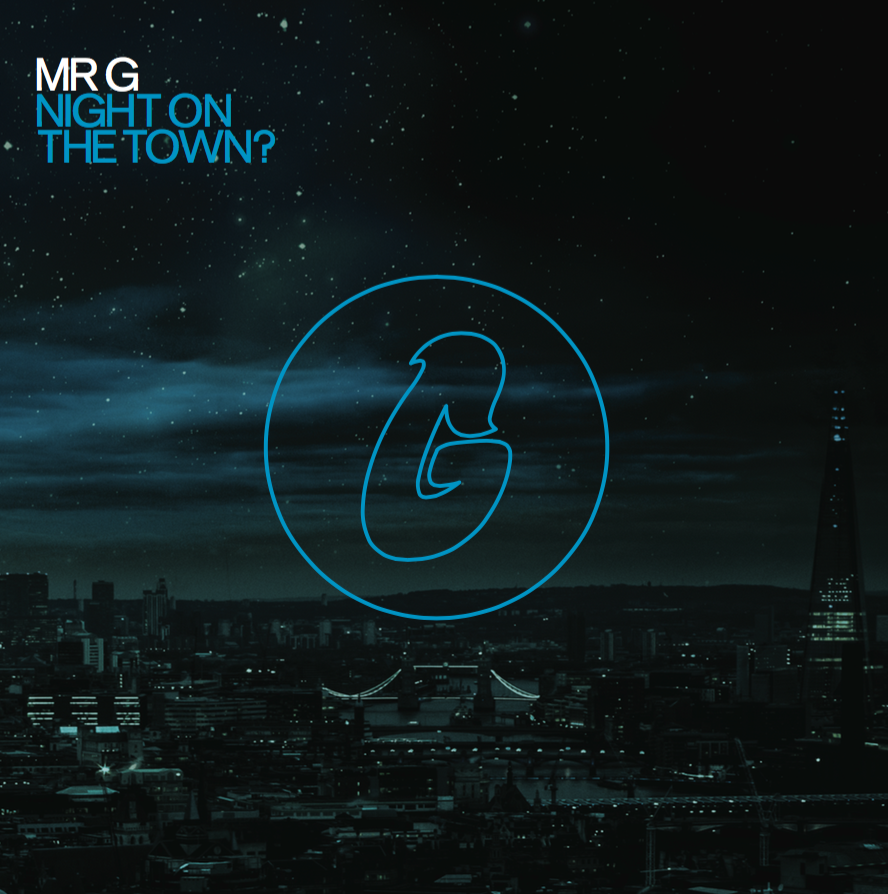
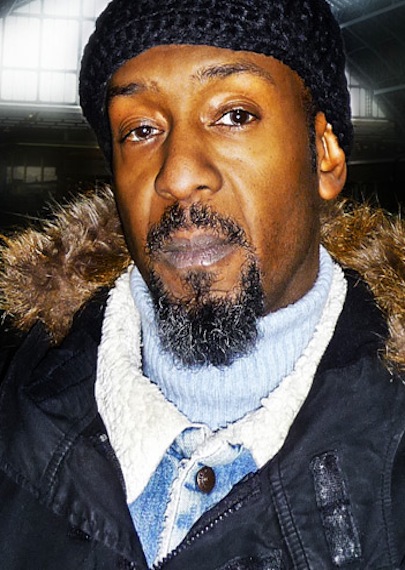
Longevity, consistency, and quality don’t always go hand-in-hand—but for the U.K.’s Colin McBean, that seemingly comes effortlessly. His career dates back to the early ’90s; among other claims to fame, he was the partner of Cisco Ferreira in the British techno outfit the Advent. Working solo for the past decade and a half, mostly under the Mr. G moniker, his signature style—cultivated over 60 releases—has generally been categorized as tech-house. But his new album, Night on the Town? (just released on his own Phoenix G label, also available on DVD with an accompanying video), has a much deeper, left-of center sound. His extensive knowledge of American, British, and Jamaican music is combined with a quick-talking and tangential personality, one that’s wholly apparent on his new record.
The city of London is one of the central themes on the album. Can you talk about your relationship to the city? The album the sound of my perfect night out, that grainy mechanicalness of London. Some of the tracks are hypnotic, some passive, some active, some deep and twisted. It’s all those things happen in nightclubs in and around London. And it’s also an amalgamation of all my influences, whether it’s house, or soul, or techno, or whatever I’m listening to. It’s that musical backbone combined with my love of the city.
Growing up as a small-town Derby boy, I could come down to London for the art, the clothes, sneakers, records…you name it. I’ve seen it all. I walk the same route as I did when I was a kid, I look at the same things. I see buildings and popular art places come and go, new art and new photography spring up. By now I know most of the people in Soho in someway or another, and I love all that. But as I was getting older, I wanted some calm. The madness of the ambulance going by at three in the morning—I don’t want that anymore. I don’t want to hear people coming in from the pub making noise. And that’s a choice a choice you have to make, and I think that’s a choice you make when you get older. I love music, I love sound, I love people, but I also love quiet. Hence my decision to move to the country.
But I still have the ability to get on the train, get off and switch into London mode, running around, talking. And then you get back on your train, and you get your quiet.
Can you talk about Derby, the town where you grew up? What were your musical influences in those early years? I grew up in a really old-fashioned Midlands town, but it had a strong cultural background—a really robust Jamaican community. So you had parties in church halls, or you’d have the local DJ playing in the community center, so there were always great DJs long before me. We had knowledge of the music, because we were given that knowledge as kids from the elders. So what we used to do is save our money for a month, get on the train and head to London to buy records.
But then you come back to Derby, and you’re DJing in the clubs, and at some point you’re like, this isn’t enough for me. Because you can’t play your amazing rare disco gem to your local people. They’re not ready for that. So when you come through, or chose to come through, you’ve got all the knowledge you’ve been given—but then you realize, oh shit, I’m in Derby. How am I gonna get access to the great music, the great second-hand shops and great charity shops that have all these rare records waiting for me? So eventually I decided to leave, got a job in London, and I spent my days scouring every second-hand record shop.
Can you talk about that Jamaican cultural influence you got from Derby? My mom and dad are from Jamaica, and I speak patois. I’ve been going to the island since I was about eight. When I go to where my parents are from, every Thursday, Friday, Saturday, Sunday there’s a sound system. So it’s a trip filled with sound. The cars have sound systems, and you can hear them coming from seven of eight miles away. And you can hear that bass rolling, and then rattling the house. So that’s me stocking up on basslines and juice and energy for my next music.
“What I’ve come out of is that U.K. reggae bass that’s always been distinct to the U.K. That bad-boy bassline, I’m in all day.”
Whether it’s Burning Spear, Bob Marley, Studio One, or King Tubby, that bass and analog is in our heritage, and that’s what Jamaica is so important for. What I’ve come out of is that U.K. reggae base that’s always been distinct to the U.K. That bad-boy bassline, I’m in all day. Whether it’s drum & bass, dubstep, garage, that dub is a part of our heritage. And Americans can’t do that bass the way we can. It’s not a part of their heritage. And in the same way, we in the U.K. and Europe don’t have the ability to have that level of emotion—that deep, black emotion that is special to America. Guys like Fred P, Theo Parrish, Moodymann, Masters at Work, Frankie Feliciano, Lil Louis, Joey Anderson…we can’t get that level of emotion on our side. Because our forefathers and backgrounds are different.
So there’s always something to be gleamed in Jamaica, whether you find a new album, a rare record you never heard, or you hear something on the TV, or a car goes passing with the radio. But it really is a tough trip—it’s not a trip for the faint of heart. Jamaica is a tough tonic. So as much as I love going, I’m always slightly nervous. You have to respect what you are, and who you are.
Those Americans that you mentioned, their styles were influenced in some degree by new wave, which was emerging around Derby and the Midlands when you were growing up there. What was your encounterwith those sounds like? To be fair, I only picked up on that later on in life. Because at the time that all came out, I was a box boy for a sound system, so my life became speaker boxes and late night parties, packing it away and hopefully getting some rum and hearing some great music. There are parts of life that I completely missed because I was wrapped up in the world I was in. But I do remember a club in Derby we used to play called the Blue Note, and we had all of those weird and wonderful groups on Tuesday or Wednesday nights playing, and I would hear them. There are lots of crazy names I remember, but I never thought of it as a specific movement, because the clubs I DJed at played really eclectic mixes of music. That went from left to right without stopping in the middle. So when you talk about new wave, or you talk about punk, or you talk about indie…for me it was also a part of where I was working, where I was DJing, the clubs I played at. Certainly the Blue Note was one of the landmarks in the Midlands for bringing out the unknown left-of-center talent. But it was never about a certain style. It never has been.
Over the course of your career, you’ve released over 60 EPs and singles, but not too many full length LPs. Can you talk about that consistent output, and why you decided this should be a full length album? I’m a ’70s child all day long. When you do an album project, it should be something that you made pretty much around the same time; you only work on that project for a long time. So normally the 12s and the EPs are tracks that might be from last year, the year before, this year, yesterday. But when something is done over a limited period of time, I think, well that’s an album—because that’s a picture, a snapshot of where you were just then. Some kids are like, man, how do you put out so many records? I don’t see it like that. I say, I’m a music guy, I live to make music, and hear music. If I make it in five hours or I make it in five weeks, I just keep making music. I might write ten or so tracks over a period of time, but then I have to sit down, and sit with my system and listen back to them and pick out which ones I like. So you end up with this bank of music, and you think, well, it’s no good sitting around waiting. Someone might like that, someone might not like that, so just put it out. What sticks, sticks.
So if you’re an artist, and it’s in you, you don’t just release one here, and release one there. You don’t go like that. I might not have anything to say next year. So I get them out. Let people hear where you’re at. If people like it, if they dislike it—get it out there. I’m a firm believer in that. it’s not a competition thing—it’s just, for me, a way of life.
There’s an introspective quality to the new record. Is that something you intended, or is it something that comes with getting older? I think that’s the environment. Living out in the country, near water, in a quieter old house. Your vibe becomes introspective. I’ll think about the room where I have my studio, and wonder what happened in that room as years went by. You wonder what goes on. All those thoughts, the greenery around you, walking the dog every day…I didn’t have that in London. It feels slightly freer, you just have the room to stop, go outside, get some fresh air, walk the dog, get some nature, talk to someone, say good morning, good afternoon, good-day. It brings out something different in you.
Your last full-length album came as a result of your father passing. Was there a similar catalyst or this record? With my father’s album, Personal Momentz, I didn’t know what was in me. And then to hear what comes out, and the message you’ve got inside you, is sometimes surprising. All the experience, all the pain, all the newness went into that album. It felt fitting that the experiences of death, and all the pain, and moving outside of London for a change, culminated in something so positive. It means you’ve made the right choice.
And it’s the same thing with the new one—it’s like wow, that’s what’s in there? Shit. This record is a very different side of me, and I’m quite shocked to see that myself. Obviously you know your work, you do what you do, you know your trademarks, and you know the sound of yourself. Sometimes you have to surprise.
“All those years of working for labels and doing remixes for people you didn’t want to do, or maybe shouldn’t have done—all that makes you very clear at one point when you get older. You’re like, right—this is who I am. This is what I want to be. This is how I want to do it”
Was it therapeutic to come out with a record that didn’t have that weight to it? Yeah, of course—it was therapeutic, because it’s the knowledge that you’re free. This album was just me trying to do something different. And that’s always been my ethos: I’ve tried to do the best I can with the palette that I’ve got. But there’s a massive freedom, because I feel relaxed and I feel confident about what I’ve done—learning more about my art, I understand now there’s something different going on. And this album…I showed it to a few nearest and dearest, and they were like, “Damn, this is left-of-center, Colin, but I loved it. I could hear you in there, but it’s a different you.” So that makes me feel great. It’s all those years of working for labels and doing remixes for people you didn’t want to do, or maybe shouldn’t have done—all that makes you very clear at one point when you get older. You’re like, right—this is who I am. This is what I want to be. This is how I want to do it.” And also, once you see the video aspect, you’ll understand the extra dimension to it.
Can you talk about the video aspect to it? There was a real visual component to all the tracks, and so it felt fitting to do some sort of visual accompaniment. I started reaching out to friends, and found out that one of my friends has a sister who is a filmmaker. And we went back and forth on it and I sweet-talked her into it, but it turned out fantastic.
For me to do the video aspect, it’s a massive step. I like to be the guy who goes to the club and does what he does. I want to be there listening to a DJ, or be at home making music. That’s it. I don’t really do the interactive side. It’s stressful for me because it’s not music—it’s not what I’ve been doing all this time. If it were about me performing or me DJing, I’d be like yeah, whatever, I’m good with that. With this whole visual thing, it’s out of my control. So it’ll be fascinating for me to release it, let people see it, and find out what others think. It takes it to a level I’ve never been to before, and that means I’m moving forward. It means I am building, I am trying. It’s so easy in this world to say, “Yeah, I’m doing okay” and be fine with where you’ve been. It’s not about that. For me, it’s about always trying to be a leader, rather than a follower. Give the kids something to look to.
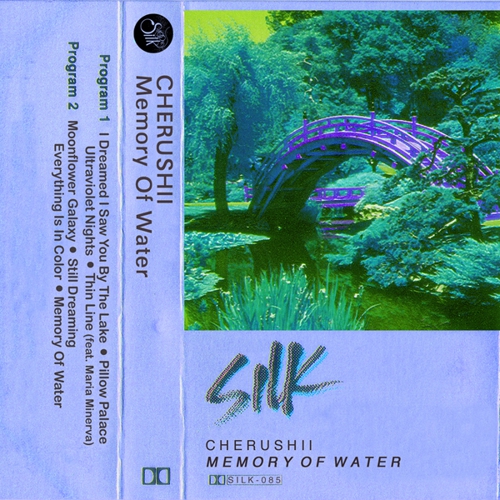
Cherushii (a.k.a. Chelsea Faith) is an musician, producer, and live performer based out of San Francisco. Cherushii has been working as a live PA and producer for 10 years, using her gear savvy and innate musicianship to create lush, retro-futurist productions. Her passion for music is evident in her music, which take cues from Detroit techno, Chicago house, and classic rave sounds. Just this past August, Cherushii released her album Memory Of Water on Los Angeles label, 100% Silk. The album was originally released on cassette format, and limited to only 100 physical copies that didn’t last very long. The album is now available digitally, and Cherushii has offered up a download of the ambient house track, “Everything Is In Color.” The arrangement begins with quick-moving chords that are splattered upon a milky-way foundation. The rhythm keeps you hypnotized for almost two and a half minutes before the deep tempo of the bassline rides a space comet into a muffled snare, before completing its transformation into a deep house chugger that feels complete and satisfying on the dancefloor, as well as the headphones.
For over a decade now, Decibel Festival has turned Seattle into an electronic music hotspot for one-week out of the year, showcasing some of the most reputable names in the scene at various locations around the city. Acts being featured this year include Marcel Dettmann, Bonobo, Daniel Avery, Dauwd, Nicolas Jaar, John Tejada, DJ Tennis, Lusine, and The Black Madonna, just to name a few.
This year XLR8R will host a panel on Friday, September 25 at 5:30pm in association with dB Conference and CreativeLive, with a secret performance by a Decibel 2015 artist directly afterwards. XLR8R will also be hosting an Official dB after-hours party in association with Decibel Festival at Q Nightclub, featuring performances by Marcel Dettmann, Function (live), and VRIL (live). To celebrate this fact, we are giving away two full event passes to this years Decibel Festival! For your chance to win one full event pass, give us a follow on Instagram and then enter your email below. XLR8R will choose two winners that will be contacted this weekend via the email provided. Terms and Conditions apply.
The festival takes place in Seattle between September 23 – 27, with pre-sale tickets and more information available here.
Click on our badge to follow XLR8R_Official on Instagram.
[mc4wp_form id=”95759″]
[infobox]
Terms and Conditions:
The promoter is, Decibel and agent, XLR8R.com whose registered office is at 837 Traction Ave #304, Los Angeles, CA 90013, USA.2. Employees of Decibel / XLR8R.com or their family members or anyone helping to set up the competition shall not be permitted to enter the competition.
There is no entry fee and no purchase necessary to enter this competition.
Closing date for entry will be Sunday September 20, 2015 at 11:59PM (PST). After this date the no further entries to the competition will be permitted.
No responsibility can be accepted for entries not received for whatever reason.
The rules of the competition and the prize for each winner are as follows: Only 1 entry per email address accepted Must be 21 years of age or older to enter Prize is for 1 wristband to Decibel 2015 event taking place in Seattle, WA.
The promoter reserves the right to cancel or amend the competition and these terms and conditions without notice in the event of a catastrophe, war, civil or military disturbance, act of God or any actual or anticipated breach of any applicable law or regulation or any other event outside of the promoter’s control. Any changes to the competition will be notified to entrants as soon as possible by the promoter.
The promoter is not responsible for inaccurate prize details supplied to any entrant by any third party connected with this competition.
No cash alternative to the prizes will be offered. The prizes are not transferable. Prizes are subject to availability and we reserve the right to substitute any prize with another of equivalent value without giving notice.
Winners will be chosen at random from all valid entries received and verified by Promoter and or its agents.
The winner will be notified by email within 1 day of the closing date. If the winner cannot be contacted or do not claim the prize within 1 day of notification, we reserve the right to withdraw the prize from the winner and pick a replacement winner.
The promoter will notify the winner when and where the prize can be collected.
The promoter’s decision in respect of all matters to do with the competition will be final and no correspondence will be entered into.
By entering this competition, an entrant is indicating his/her agreement to be bound by these terms and conditions.
The competition and these terms and conditions will be governed by English law and any disputes will be subject to the exclusive jurisdiction of the courts of US.
The winner agrees to the use of his/her name in any publicity material. Any personal data relating to the winner or any other entrants will be used solely in accordance with current US data protection legislation and will not be disclosed to a third party without the entrant’s prior consent.
Entries into the competition will automatically opt-in email for XLR8R.com weekly email newsletter, The Lowdown. User may unsubscribe at anytime.
Entry into the competition will be deemed as acceptance of these terms and conditions.
This promotion is in no way sponsored, endorsed or administered by, or associated with, Facebook, Twitter or any other Social Network. You are providing your information to XLR8R.com and not to any other party. The information provided will be used in conjunction with the following Privacy Policy found at https://xlr8r.com/legal.
With over twenty years of experience under his belt, Trevor Jackson is revered as one of electronic music’s most accomplished and well rounded audio/visuals artists. Some of these accomplishments include the forming of Output Recordings in 1996—which released music from the likes of Four Tet and LCD Soundsystem—as well as receiving numerous awards for his visual campaigns and having his work premiered in museums such as the Guggenheim and the ICA.
Teaming up with Adrian Sheerwood’s label On-U Sound, Trevor Jackson is now set to release the compilation album Science Fiction Dancehall Classics, a 3 x vinyl and 2 x CD release that charts an “alternate history of the label.” The mix features a plethora of B-sides and unreleased tracks, with a heavy post-punk, reggae and dub influences. This bizarre and alluring mix is further complimented by the visual aesthetic that accompanies it. The 14-minute black-and-white video mix, produced by Trevor Jackson, uses found footage that has been animated and warped to fit the rare and extraordinary sound of the compilation.
Be sure to check out the video mix of Science Fiction Dancehall Classics below and order your copy of the compilation by going here.
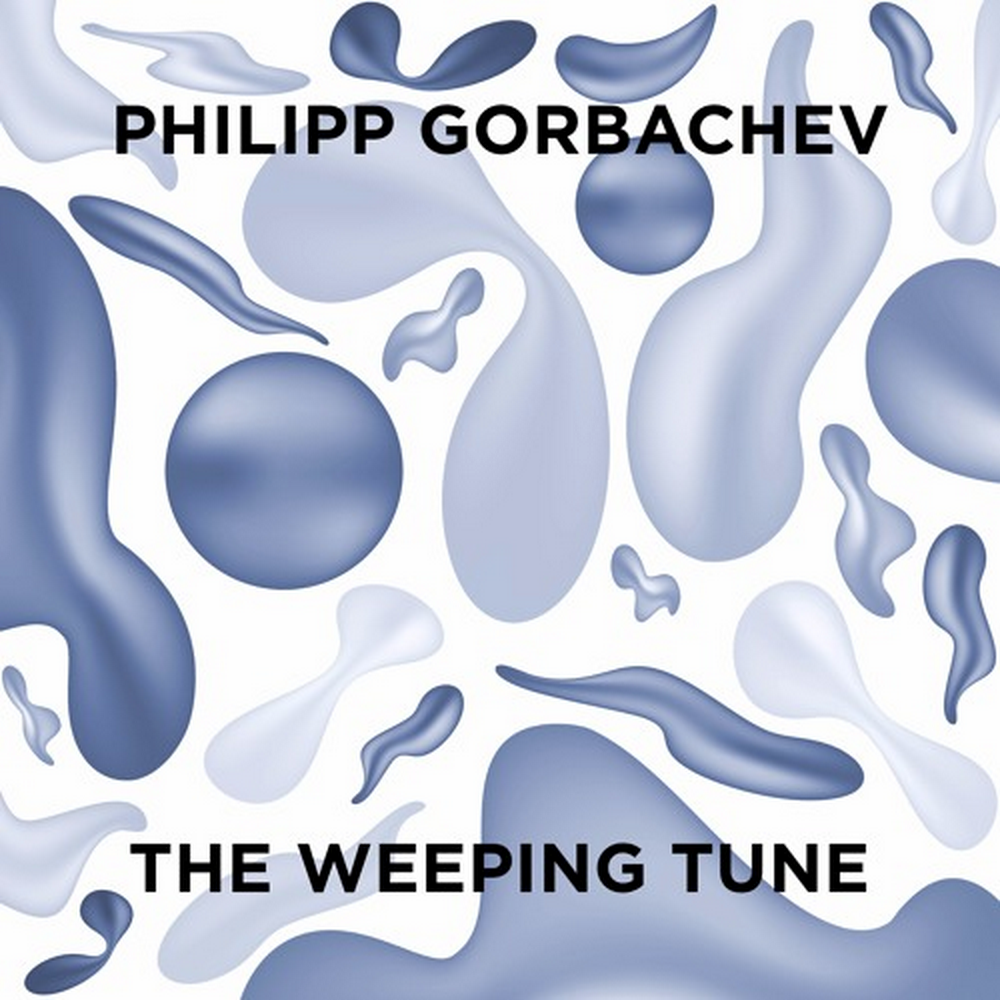
An aspiring diplomat and the son of a Soviet-era Racing Car champion, Philipp Gorbachev is not your average techno producer. Hailing from Russia, Gorbachev splits his time between being a key figure in Moscow’s blossoming club culture and drumming in the studio of the cult avant-garde group Zvuki Mu. Most recently, Gorbachev his single “The Weeping Tune” via his imprint, PG Tune. In a video interview, he explains his reasoning behind the name of the track:
“Before being able to play shows, I was weeping a lot. That’s how I know… that nothing works without love. Weeping is not a dark and tragic state, it’s a revelation and sign of upcoming joy. That’s what “The Weeping Tune” is all about.”
You can stream the track below and be sure to check out more from Philipp Gorbachev by going here.