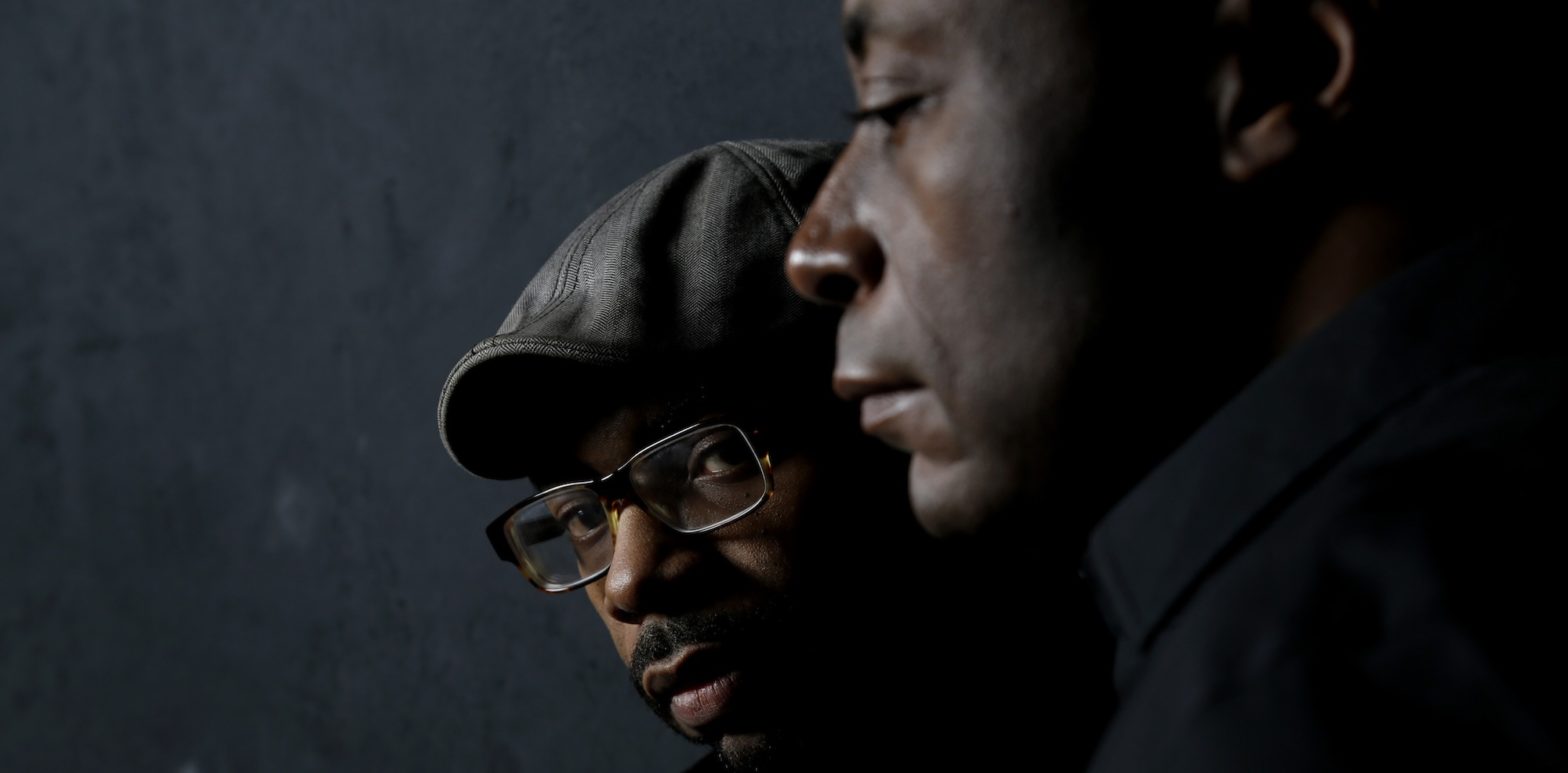
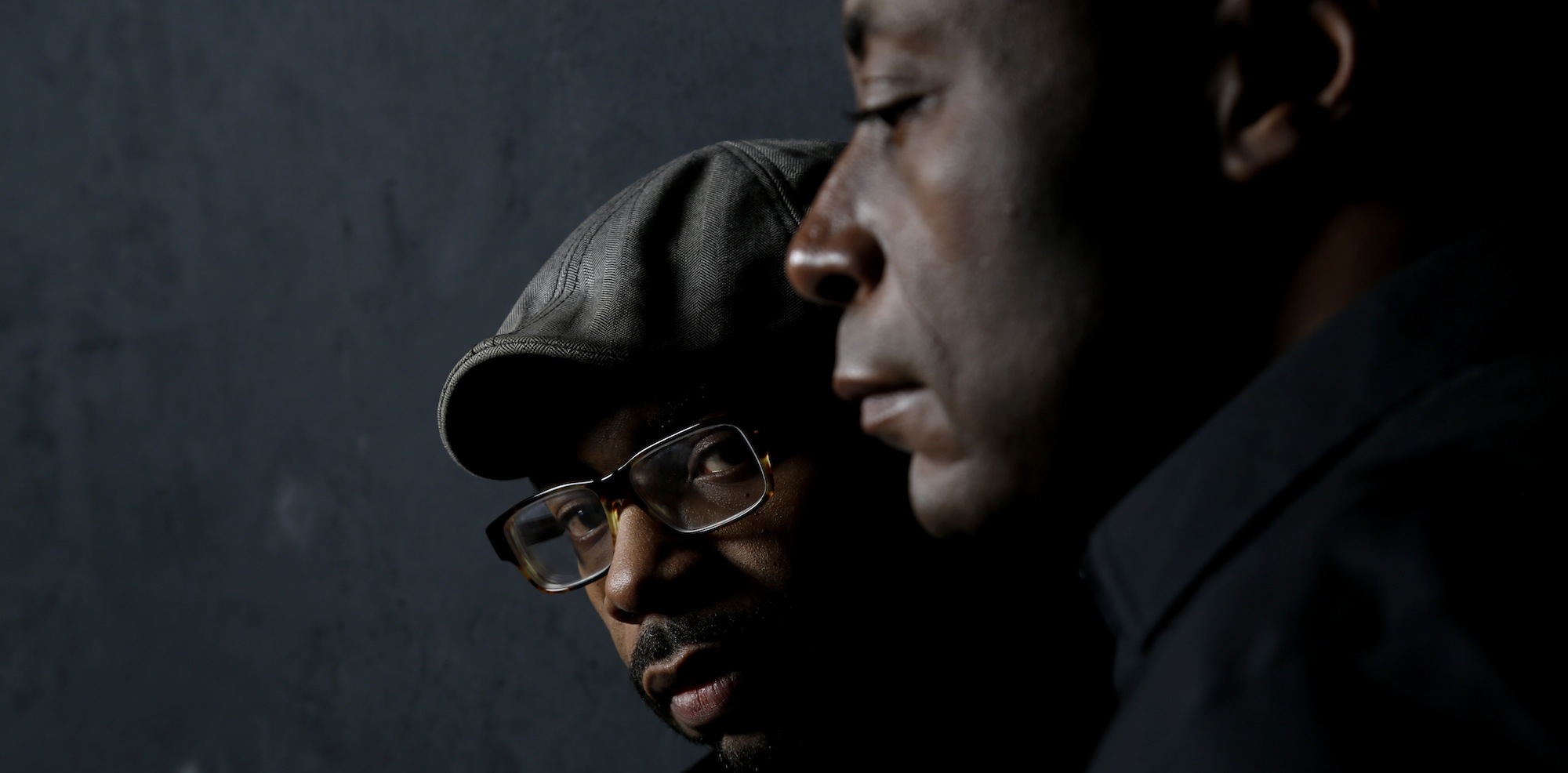
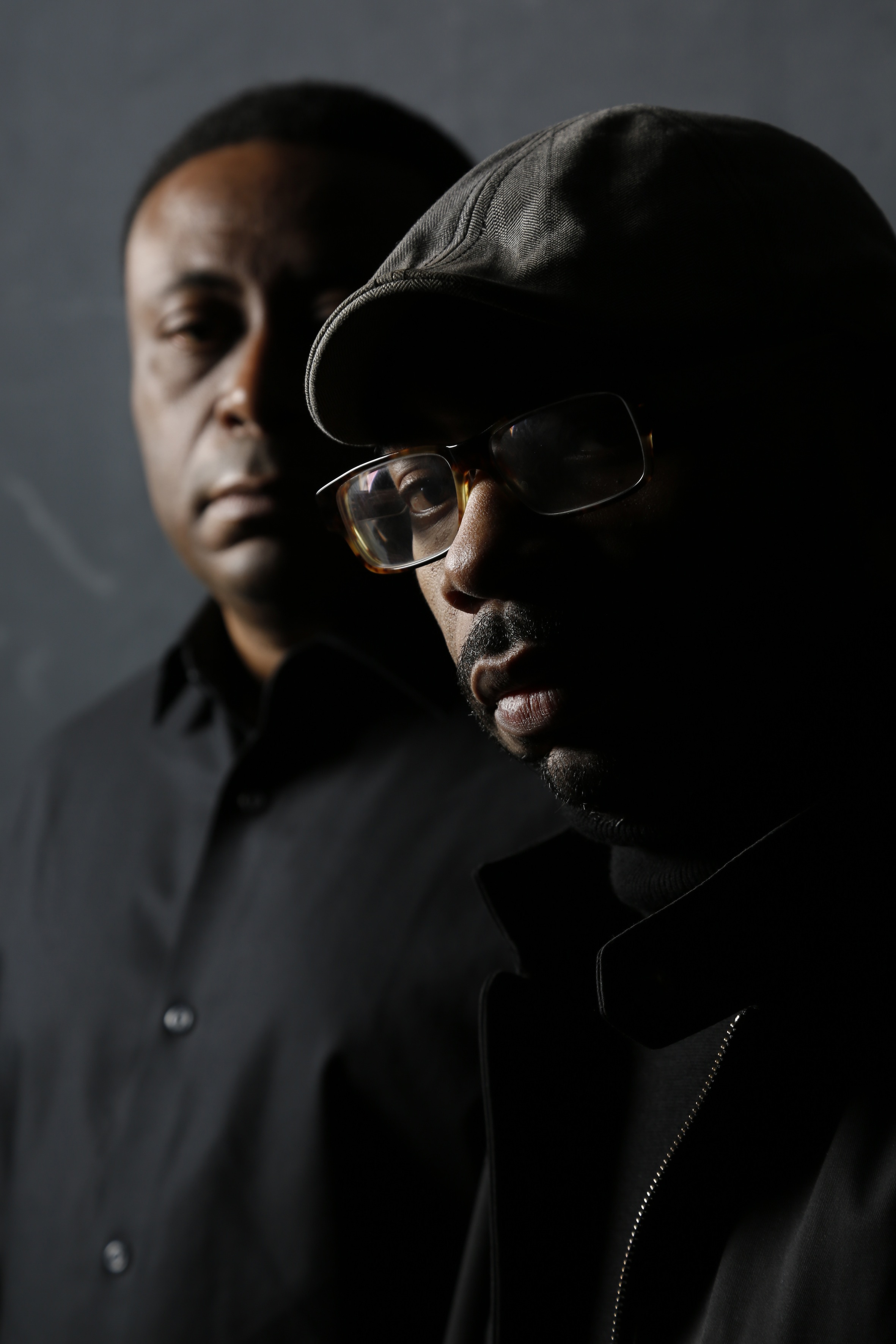
Polish-born Brooklyn-based artist Jakub Alexander (a.k.a. Heathered Pearls) will release his latest LP, Body Complex, in August via Ghostly International. The LP will follow on from Alexander’s beatless debut album, Loyal, with 10 tracks that lean towards the dancefloor.
Body Complex is said to be inspired by Alexander’s youth spent travelling home from Detroit afterhours with artists Terrence Dixon and Lawrence soundtracking the ride. “I respect [Terrence Dixon and Lawrence] because they can ride the same thin lines of what I love: electronic music that is heavily repetitive, melodic, and deep,” the artist says. “They both can find this elegance in techno beyond the dark warehouse.” The album will also feature fellow Ghostly artist Shigeto, Outerbridge, and The Sight Below—who also mixed and mastered the album.
Ghostly will release Body Complex on August 7, with the full tracklisting below; along with a stream of lead track “Interior Architecture Software.”
“We’re slow burners,” says Anthony Middleton, the British half of musical duo, Audiofly. Together with Luca Saporito, the Italian member of the pair, Middleton has been DJing and producing a exquisite style of deeply melodic techno for well over a decade. But while many of their modern-day contemporaries have found immediate acclaim with just a small number of releases, Audiofly’s progress has been far more gradual, founded upon a deep-rooted common wish to carve out their own unique identity in an already saturated market, by remaining true their sound and retaining their creative integrity as artists. Through a continual process of fine-tuning their individual skills, carefully calibrating their objectives, and searching far and wide for inspirations and ideas to incorporate into their growing catalog of beautiful musical works, Audiofly have steadily risen to become both a highly-demanded and wonderfully unique unit.
Outside of their DJ and production work, Middleton and Saporito also head up Supernature, the respected musical imprint they founded in 2007 that’s served as a launch pad for artists such as Ali Nasser, Alex Niggeman, Bearweasel, Amelie and Boris Horel. Their work with Supernature meshes with that of their other label, Maison DEtre, an imprint which satisfies the pair’s diverse creative cravings and exists as a vehicle for releasing the undiscovered music for which the pair share a common love. The final piece of the Audiofly jigsaw is Flying Circus, the global party-brand that’s established in more than 30 different countries. It’s fair to say the boys have got their hands full. In the anticipation of their almost-here date at Detroit’s Movement, XLR8R caught up with Middleton and Saporito to discuss their everlasting motivations to continually create, the key factors behind their success and their plans to follow up their wonderful debut album from 2011, Follow My Liebe.
It’s fair to say that Audiofly has been a big success since its inception in 2002. Did you ever ensvision this? Middleton: We’ve always been very focused on the musical aspect of what we do, but we have never really envisaged where we were going to be. However, as your career goes on, I think it becomes more important to be grounded and aware of what you’re trying to achieve—you can’t just keep on floating along in this game anymore, and you definitely do have to play the system a little bit, otherwise you will disappear into this mass of people trying to come through. In essence, though, we have always been doing it for the journey. Saporito: When we actually started, we certainly didn’t have a long term plan. Anthony was coming from Spain and we happened to meet out of chance. I was just a kid at the time and I was lucky enough to meet Anthony who was already producing and working with other musicians. I was very excitable at the time, and for the first year or so there were absolutely no expectations; we just decided to get together in the studio and have fun. I still had a day job and used all my free time to work with Anthony. But slowly it just started to work. Middleton: There was certainly a point where we sat down together and asked ourselves whether we were going to take this seriously. Was it a career? In order to make it into a career, Luca has to stop his day job and I had to dedicate all of my energy to Luca and the Audiofly project.
“Almost like magnets, we’ve subconsciously tried to repel from whatever music is current at the time.”
Looking back now, besides the obvious hard work and dedication, what do you put your success down to? Middleton: I definitely think we came through at a time when it was easier to be noticed because, although there were a lot of DJs, there weren’t too many producers—and there certainly weren’t many duos. I think that people today go into the game with a lot more planning and strategy. Saporito: Ever since the very beginning, we’ve had a very signature sound. Even though people perhaps didn’t know who Audiofly were, our sound was always very different to what was being produced at the time. We started at a time of West Coast house and super-underground techno, so we already had a niche for ourselves without even being aware of it. And we certainly didn’t intend for that; we just went in the studio and that’s the sound we made. Middleton: The only strategy we ever had was that, musically, we didn’t want to feel that we were either copying other artists or being copied. It’s very important we have integrity in our sound and, almost like magnets, we’ve subconsciously tried to repel from whatever music is current at the time.
Do you ever feel that this niche sound held you back because people perhaps couldn’t identify with Audiofly? Saporito: Certainly. Although the niche worked in our favor, it is a double-edged sword. It gives you an identity but it can hinder your growth because people can’t put a finger on your sound. People were always wondering what Audiofly was, and what kind of music we wrote because we were difficult to place as DJs and producers. Middleton: We definitely chose the long road, but it fortunately worked. I feel that people are really starting to get it and we are being recognized for what it is.
Where was it that you guys met, and how did Audiofly come about? Saporito: We met in a bar in East London through a common Italian friend of ours. I was 22-years-old and excitable, wearing silly clothes and red glasses, while Anthony was a super quiet studio boy. It was very ying and yang. I do think this diversity has had an influence in our success by helping us to create something unique
And where did the name originate from? Middleton: It’s just one of those classic things where we had written a track and there was suddenly a pressure for us to have a name for the first release. We spent weeks thinking about it and then I said I liked the catchiness of the word “Superfly.” We spent five minutes sitting there staring into space and then both thought of Audiofly. It sounds like you know it, even though you haven’t heard of it, and it just rang all the right bells.
Luca, tell me about your background before Audiofly. Saporito: I was working as a sale assistant at Selfridges and then the manager asked me if I wanted to play some music for the store. At the time, I wasn’t a DJ so I absolutely blagged it! I remember that night I went to a friend’s house to start mixing music on his decks, and the day after I had to perform in the Selfridges store. I didn’t have a fucking idea what I was doing. The only time when two tracks mixed in well together was when the manager walked by and he gave me the job. Although that seems like a long time ago, these experiences were very important in my formative years, because I had to play eight hours in the store and had to go through so many different styles of music. It gave me a great musical education, more so than just playing in clubs, because I had to start off really chilled and then move to more jazzy and funky stuff. Finally I could play some dance music in the afternoon, which gave me a very wide musical education that I wouldn’t have had if I had learned playing only in clubs.
And Anthony, what’s your story? Middleton: I’ve been a DJ since 1992, but I went off to Marbella most summers. At some point my Dad told me that I should begin studyngi, and they had just opened a new higher-education system in Manchester that didn’t require applicants to have physics or mathematics to get into the Music Technology course. I enrolled but went away to Spain in the summers before coming back to the UK to take music seriously. I was fortunate enough to be mentored along the way by a producer/engineer called Merv De Peyer. He was an excellent producer, one of the best, although never one of those star producers of the old-school. I spent a good couple of years learning from him. Funnily enough, at some point we wanted to showcase an experimental live meets surround sound system project and visuals that Merv had invented, and I had been lucky enough to be working with him on, and though the nuts and bolts of the show were covered, there was no budget left for interim music and entertainment. That’s actually part of how Luca and I met; he popped up and offered to DJ for us for free between the acts.
At what point did you both begin working full-time on the Audiofly project? Middleton: I wasn’t working because I had been put out with a genetic back disorder about two years before meeting Luca. I was almost unable to move, I was on the dole and was completely unsure of where I was going to go. Luca was working extremely hard in his job and that’s why the output was so low at the beginning. Saporito: Due to budget cuts at Selfridges, they didn’t want to pay me the salary that I thought i deserved, so I decided to quit it and just take Audiofly seriously. It was around the time of “Release Yourself” [2005] when we started working Shaun Parkes. That record was being produced at the time a left my job and I think you can hear the difference. Before this time, we would start a track together but Anthony would finish it because I didn’t have the time to spend in the studio. “Release Yourself” was the first track we actually produced together in its entirety.
And you feel this really helped with the growth of the project? Saporito: Yes. Within six months we saw the benefits because we were in the studio every day putting our stamp on the scene. Although there very long periods where we ate a lot of the same food -mostly pasta and tomato sauce, the cheap kind as it’s all we could afford then. The past experiences that Anthony had prior to meeting me have certainly been pivotal in our success. His experiences in the studio gave him an understanding of how to work not just with dance music but also with numerous different styles. That was something that gave us a different kind of edge – something that makes us a little bit unique. Middleton: Before the point when Luca quit his work, Audiofly just didn’t feel concrete. It was like when you start collaborating with people: we had the Audiofly name,but until you start spending serious time in the studio together it doesn’t become coherent.
Going back to “Release Yourself,” do you identify that as a key turning point in your careery? Middleton: As Luca mentioned, it was the first moment we really started working closely together, but working with Shaun [Parkes] was also amazing because he such an good lyricist. We got a lot of kudos from the release because it was the one that popped for us. Saporito: It was certainly the track that was being played out the most, but if I had to pinpoint a turning point in our careers, it was “1999.” That was the track that really put us on the map, I feel. Middleton: We don’t really feel attached obsessively to our musical output because it’s just a continual process of putting out music that feels right.
Do you feel that your varying backgrounds in music have influenced Audiofly’s success today? Saporito: Without doubt. The past experiences that Anthony had have been pivotal in our success. His experiences in the studio gave him an understanding of how to work not just with dance music but also with numerous different styles. That was something that gave us a different kind of edge – something that makes us a little bit unique. Middleton: Absolutely. Merv [De Peyer] was very jazz-orientated, and had lots of knowledge of rock too, which influenced me. Also, when I first came back to the U.K .from Spain, I had a good friend who was studying up in Manchester. We did some cool ambient drum & bass projects together, and although we never released anything, I learned so many important production values from the experience.
Was there a specific point that you can recall where you realised that the Audiofly project was going to be a success? Middleton: Due to his work commitments, there were times when Luca wasn’t turning up at the studio and, at one point, I just pulled him aside and asked him what he wanted to do with his life—and how far he wanted the Audiofly project to go. That was the first time we started to take it seriously, but we probably didn’t realize it was going to be a success until far later. Saporito: When I quit my job, I remember we started playing loads of gigs around London. Even though the music was being spread internationally, we were still only local DJs. At the time it was a nightmare to get paid for a job and, at some point, we knew we had to decide whether we were content with being an undervalued local DJ or whether we should stop the local gigs and try to create a different perception of ourselves. So that’s what we did: We tightened the belt and went back to the tomato and pasta sauce. The first point we felt like our careers were going somewhere was when Sasha approached us. For the first time we were traveling around outside of England, being able to support ourselves inside the studio while playing gigs all over the place. We were not even marketing ourselves; our reputation was growing from only the music we were playing and the music we produced. We quickly began to take the project a lot more seriously and realized we needed a plan. Middleton: I feel like we played for other people for a while, and these were important times for us because we saw bigger artists than us doing it properly. We had come from doing after-parties, but then when Flying Circus began to take off and we had our own successful event, we realized that we had to take another step up and be as good as the artists we wanted to play with, who were our friends but were bigger than us. This was a big period of growth for Audiofly. Musically speaking, however, I think we have come into our own ever since the first album. Before that, we had written a lot of stuff.
You must feel extremely proud of what you’ve achieved, more so because it’s taken you so long to get the acclaim you have today. Do you feel the struggles you’ve been through make the experience now more rewarding? Middleton: Very much so. We have a resistance to following trends so we would never have risen to the top of the game with just one massive release. Our desire to be unique and craft our own niche has held us back and slowed our progress down, but I feel it is worth it now. Saporito: Also, we’ve never been attached to a crew. Lots of new artists come up because they play with Cocoon or Hot Natured, for example, but we never had the desire to be attached to a crew that we didn’t make ourselves. Because of this, and because we have never been touring with an already established brand, it has certainly taken more time for us.
Do you envisage yourselves primarily as producers or DJs? Middleton: It’s both, to be honest. At some point along the way when we began touring, we realized we weren’t spending enough time in the studio, and there were times when we have spent too much time in the studio that we have lost a valuable connection with the DJ side of our work. Today, we know that’s it’s just about trying to fit all that we can into the schedule. I think that I will always be a studio boy and that Luca will always be a DJ—but they’re both equally important to us and we cannot actually function without producing music that makes us happy in our souls, and then making these sounds fit into the DJ sets that we’re playing. Saporito: One feeds off the other. We wouldn’t be the producers we are today without our experiences of DJing around the world. There has been a few gigs in our career which have influenced us in various ways, and we bring back these influences to the studio, which changes our sound slightly.
There has been a feeling of late than your sound has mutated a little bit as a result of playing in Romania. It’s a bit more more techy and minimal, yet still deep and lush. Is this something you’d agree with and are aware of? Middleton: The Romanians give you the opportunity to play for a long time. They pay attention to you; they are not expecting you to deliver to them an enormous track immediately, and they will sit with you for hours, patiently waiting for you to reveal the picture you are trying to paint. We became very attached to that, and obviously the Romanian sound is very loopy and organic. It’s very percussive and allows you to mix very deeply, allowing you to go places with mixing. It’s the perfect place for us to be as a starting point for our DJing. We are constantly trying to reinsert the Audiofly essence into the sets without having to drop the big tracks straight away, and that’s had a big influence on us. Saporito: Playing in Romania has certainly taught us patience. We have learned to build the story as opposed to laying it all out in just a few hours. Middleton: It was very much a natural evolution, based only on those guys in Romania giving us the space to create for the first time.
And does this evolution feed very naturally into your production too? Middleton: We’ve always being very journey-esque in our sound; we have always been trying to tell a story from one side of the track to the other, and we found it difficult to reinterpret that into our DJ sets until rather recently. Saporito: Playing places where you are allowed more time to tell your story as a DJ has definitely influenced our studio work. That’s why our tracks have gradually become longer and longer in recent times. We are influenced by the longer DJ sets.
Traveling as much as you guys do now, can it become frustrating when you can’t produce when you have these inspirations you find on the road? Middleton: We only stumbled across the formula rather recently, actually. We’ve never been good at working with something like Ableton. Instead, we have always worked with Logic which is a very studio-based way of working because it requires patience and complete isolation. Ableton is a lot faster and, although we were against it when it first came about, we have started working with it when we are on the road. It allows us to have fun with music away from the studio, knocking out basic sketches for our tracks. Just recently, we have also started to schedule production blocks, during which we will take time away from DJing to focus solely on production. We can work on the sketches we have made on the road, plugging them into Logic to develop them further. Saporito: Before, we were always constrained to our studio, and our productions suffered because it took us some time to find our groove when we returned. It’s different now because we are constantly doing loops when we are on the road, and we can either complete this back home in the studio or in a studio on the road. This way, we don’t lose have to start from zero every time we head back into the studio.
After 10 years in the game, producing and DJing together, is it ever hard to find the motivation and inspiration? Saporito: You live and learn all the time. It’s a continuous learning curve and I think this makes exciting. We’re continually motivated because we’re always searching for something, or trying to find a way to improve our work. We’re always learning from each other and this drives us to carry on. Middleton: None of us are getting any younger and it’s extremely hard work that takes a lot out of us as people, but the music around us is so good that we absolutely thrive. As long the music remains inspiring, and our collaborative relationship remains strong, then we’ll keep on going—although I want to have a desert island by the time I am 50!
“The main thing in a duo is to put your ego away. It’s always important that we have consideration for the other person’s thoughts and beliefs, and that’s what has kept us together for this long.”
You say as long as the relationship remains strong. How do you ensure that it does, after so many years working and traveling together? Saporito: The main thing in a duo is to put your ego away. It’s always important that we have consideration for the other person’s thoughts and beliefs, and that’s what has kept us together for this long, and what will keep us together for as long as we have the ego under control. Middleton: It is a constant process. In this job, it’s very easy to get lost in yourself and there are obviously times where we don’t agree and have had some healthy fights, but we are both work hard to maintain it. It’s totally the same as having any relationship with a girlfriend. Saporito: I also think that we never got too big too quickly. If you look at other duos, the ones that got too big broke up at the some point. Perhaps there are too many people throwing things are your ego, and maybe we have been blessed that we haven’t been subjected to that kind of intense pressure.
Returning to Follow My Leibe, what were the motivations behind it, and why did it come about nine years after the inception of Audiofly? Middleton: We just didn’t feel the need to produce an album before that. We both think that an album is only for when you have something to say, and when you really feel it is the time. I always worry about artists who release an album early in their careers, because it takes a lot of experience to complete one. I don’t know about how it sounded to the outside world, but a lot of our experiences are subtly expressed throughout the album. Saporito: We didn’t want to release an album that was only dance music, so we had to have a lot of moments in there that could only be achieved after having had many years together in the studio. We couldn’t have done that before. Middleton: We both feel that there are two kinds of albums: greatest-hits albums and conceptual ones. We only wanted to write a conceptual piece that documents emotions and a journey, and we didn’t feel ready before that point in our career. Now that we have done the one, and we understand how to conceptually write an album, we are very much looking forward to writing another one.
Now that you have achieved the acclaim you deserve, do you feel any more pressure in your work? Saporito: I wouldn’t really call it pressure. If anything, it has given us a greater desire to innovate. When we get to the studio, we forget about any outside pressure and expectation, and go back to doing what we know best. The best way to perform, in anything, is to base yourself on what you know best and that is exactly what we do. We will start a track or DJ set in the same way and tweak it a little each time, searching for new techniques and methods to find inspirations. strong>Middleton: The pressure to innovate is an internal thing. It’s a personal need to innovate, and the pressure from the outside is something we have always fought against. We have always been trying to ignore this outside pressure, and it may have slowed down our long-term development, but it is something that gives us a unique identity. We pay attention to what’s going on but always do our own thing, staying true to our sound.
Tell us about the inspirations for Supernature. What was the idea behind the label? Saporito: The initial thought was to release the music artists we like. It was quite simple, and we wanted to have a very strong visual aspect too. And then it grew into a platform for undiscovered artists to express themselves before going on to be their own artists in their own right. We are doing the same thing with Maison D’Etre, our other label, which is ultra-chilled and takes care of more artistic stuff. It does music for music’s sake, not because it’s going to sell lots of units. We do music that we like and not because it’s going to pay the bills. It’s been extremely fulfilling.
So, looking forward, what has 2015 got in store for you guys? Saporito: We have a release through Supernature in just over a month. We have a two-tracker out. While remaining true to the Audiofly sound, one is certainly more heads-down techno-based and incorporates a wider ranger of influences. The other is a collaboration with Big Bully. After this, which have a mix we just finished for Rebellion, which is another step towards the sound we are playing out these days. It’s definitely something for bigger rooms and dance floors. We tested it out last week and it got a great reaction. On the deeper side, we also have a remix scheduled for August which is less intense and more melodic. It sounds more like the old Audiofly. Middleton: We’ve also got some great ideas for the second album. There are two or three musicians we’d like to work with and are currently in talks with. We’d like to make the second album a bit more cinematic, not so much in the tracks themselves but in the whole approach to it. Out of that, we’re going to develop the live act because we feel this will complement the style of the album nicely. We’re also doing a number of exciting Flying Circus projects, including a cool collaboration with Heart Ibiza.
You talk about testing a track out on the dancefloor. Is this something you do with all your productions before you release them? Saporito: This is a more of a recent thing. I feel there is always a reluctance to play your own music sometimes, because we spend so much time making it. But now, we feel that the music we are producing is perfectly in sync with the music that we are playing out so it only feels right to test it. We’ve always played our own music but now it is a more conscious decision to do it more often. Middleton: I think recently there was little gap where we weren’t playing as much of our own stuff, because of this new style we seem to be associated with would work in podcasts but not so much on the dance floor—and our old sound definitively didn’t fit into our DJ sets.
How do you switch off from it all? Or do you? Middleton: For myself, I try to meditate about four days of the week. I also do yoga because this helps my head. A bunch of us all try and go away at the end of the year to get away from the music completely. Saporito: I really find cooking helps me to relax because it has this off-zone where I am completely in the moment. Middleton: Cooking and music are almost exactly the same thing—so perhaps we are not switching off at all.
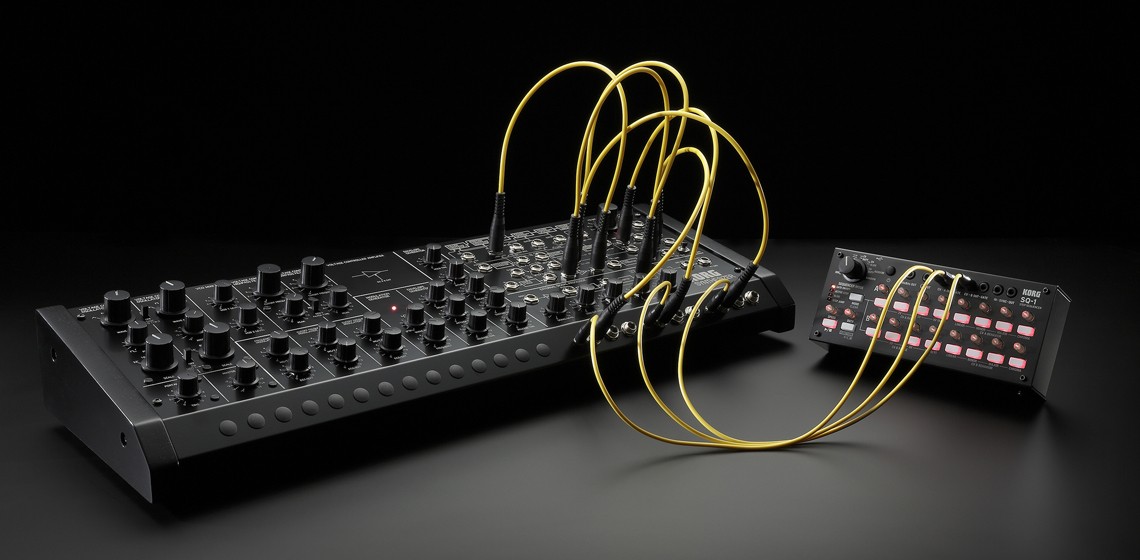
The most recent in an increasingly long line of resurrections, Korg’s MS-20M brings the legendary MS-20 synth to your desktop in all its glory—minus the keyboard. It’s nearly identical to the original, with the same analog oscillators, first-generation filters, and a VCA that’s been tweaked to reduce noise. There are handy new additions to integrate it into more modern workflows as well, including MIDI In and USB connectivity, as well VCO sync for added harmonic content, patchable PWM, and FM. It comes bundled with Korg’s own SQ-1 sequencer for Volca-style pattern generation, and all in all is the beefiest, most versatile version of the MS-20 ever created.
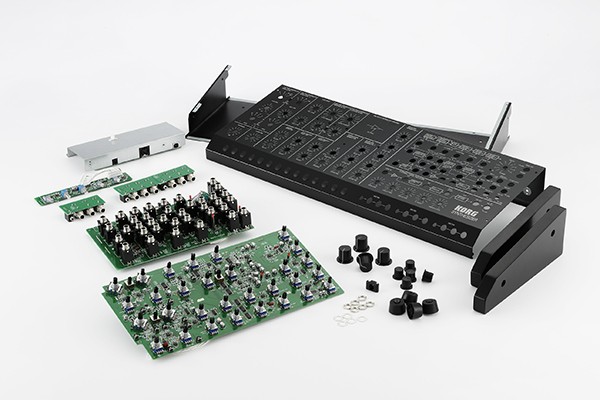
How It Looks With solid metal construction and stained black wood ends, the MS-20M is a beautiful instrument. It’s also a kit, meaning you’ll have to put the thing together yourself: open the box and you’re greeted with bubble-wrapped circuit boards, a chassis, and a motherload of screws, nuts and washers. Assembling the MS-20M is a bit fussy, and will take you a few hours; though there’s no soldering, it can be frustrating—sort of like assembling a piece of Ikea furniture, with a somewhat abstract manual to match. Fortunately, once it’s finished, the results are anything but Ikea: build quality and finish are great, and the machine certainly feels sturdy enough for the long haul (you’ll also feel weirdly bonded with the hardware after putting it together yourself). It’s worth noting that the module is heavy, flat and long—nearly 9 pounds and two feet in length—so you’ll either want to make sure you’ve got the desk space for it.
How It Sounds Fortunately, this relatively large footprint pays off: Unlike the MS-20 mini, the MS-20M’s patch bay uses full 1/4” jacks, and they’ve all got plenty of space to breathe. This makes the user experience an amazingly comfortable, almost luxurious one, and makes the knob-twiddling workflow fast and fun. Like its ancestors, the MS-20M excels at producing dirty, thwonking bass, but it’s also great for making drum sounds, leads, and plenty more. The frequency range of the LP and HP filters is vast, and you can go from skittering, screaming highs to dubby lows in a heartbeat. In general, the synth has fantastic sonic character; the fact that it sounds simultaneously modern and authentic to the original speaks volumes about the staying power of the MS-20 design.
Korg has added oscillator sync, which sounds great, and FM adds yet another level of sonic drama to the proceedings. For the first time, you can now flick between the dirtier, noisier 35 filter and the more hi-fi sound of the LM13600 filter with the flick of a switch.
The Bottom Line As mentioned, the MS-20M comes with Korg’s SQ-1 sequencer, which, among other things, works great as an LFO. It’s tiny, battery-powered, and works with all sorts of analog setups as an intermediary; while it would be nice to have the option to buy the MS-20M on its own (especially if you’ve got other sequencers in mind), it makes a nice compliment to the synth itself. The package isn’t particularly cheap, but you’re looking for that MS-20 sound—and can handle a few hours of build time after your ceremonial unboxing, perhaps while foaming at the mouth—you really can’t do better than this.
Radioactive Man released his White Light Monochrome EP in January this year on the LA based music and art imprint Reinhardt. At the end of this month, the EP will return in the form of the White Light Monochrome Remixes EP, which will also be released on Reinhardt.
First up, Radioactive Man collaborator and drum & bass legend dBridge takes on the title track, twisting the electro-tinged original into more club-focused territory; with skittering synths, sci-fi pads, and a body-moving low-end groove. The EP also features Jerome Hill and Shengi, who turn in reworks of “Space Ranger” and “Mechanical Music Menace,” respectively.
White Light Monochrome Remixes will be released on May 25 and can be pre-ordered here, with dBridge’s remix of “White Light Monochrome” streaming in full below.
In June, UK techno and electro pioneer Cylob will release a seven-track EP on Berlin’s Power Vacuum, titled Inflatable Hope. The EP will follow on from Vectors 2, the label compilation released in March, which also featured Cylob’s track “Spyworld.” Inflatable Hope will be the first Cylob release to come out on vinyl since 2004, with the seven tracks “selected from over 100 ideas, sketches and demos” that were sent to Power Vacuum label head, Bintus. You can check out the full tracklisting and artwork below, ahead of the EP release on June 23.
Yesterday, techno artist Florian Meindl returned to his FLASH Recordings imprint for his latest LP, Collide. The album is heavily influenced by Meindl’s recent transition from a digital based production set up to recording mainly analog jamming sessions on his hardware set up including modular systems, an analog mixing desk, and classic machines like the Roland 909. Although not on the album, the aptly titled “XLR8” still bears the hall marks of this new set up with booming drum-machine rhythms and modular synth phrases rattling around on top of thick, buried textures. The nine-track LP was released in all digital stores on May 18—as well as Meindl’s Facebook shop in a limited run 8GB USB Card—with “XLR8” available as a free download below.
Back in February, we reported that London’s Altered Natives (a.k.a. Danny Yorke) was about to release his seventh LP, In the Place Where Love Once Lived. With the album having come out in late March via his own Eye4Eye imprint, Yorke has now made the whole record available to stream in full via his Soundcloud page. The album’s 13 tracks of dark, grainy house can be heard on the player below, while his 2011 contribution to XLR8R‘s podcast series can still be streamed and downloaded here.
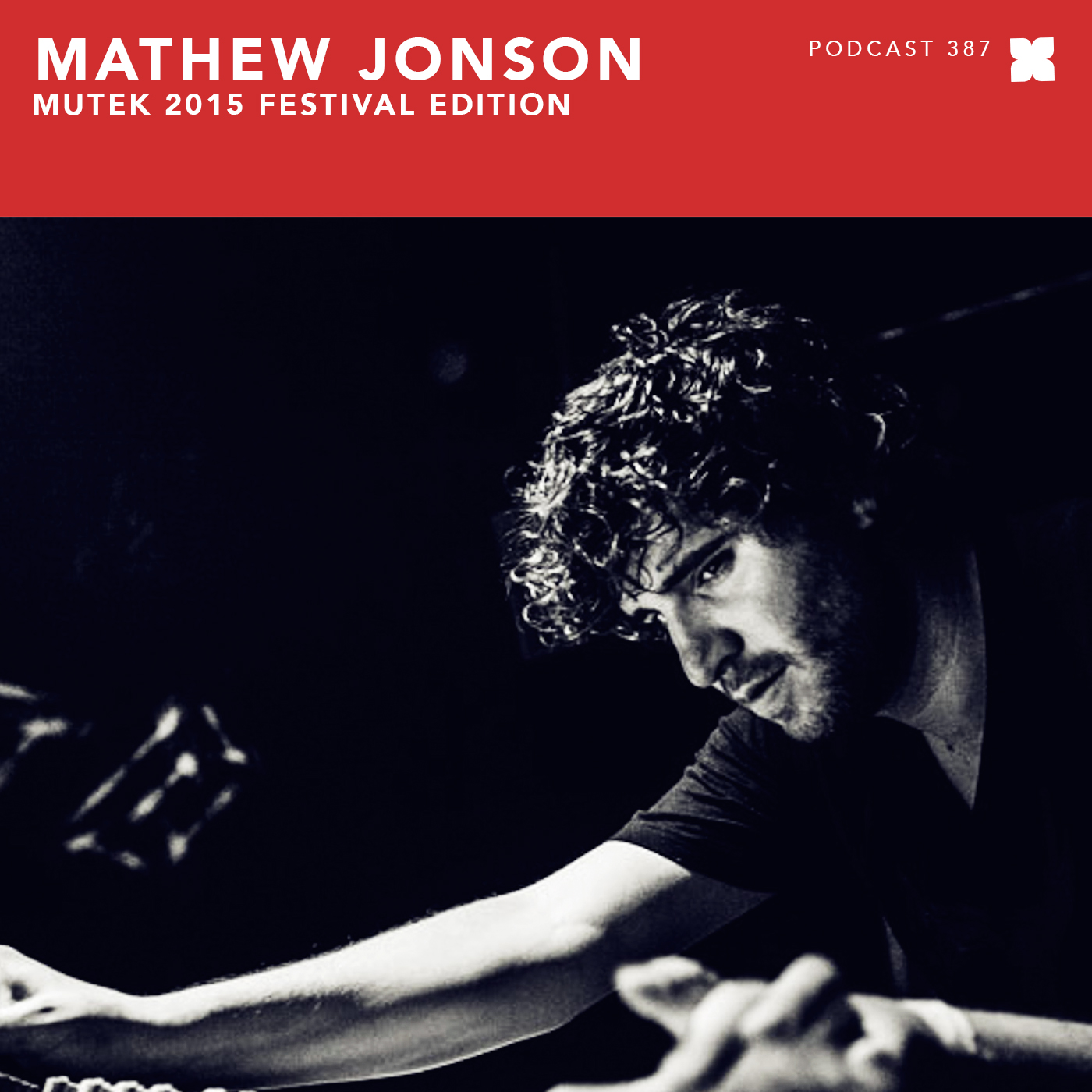
We here at XLR8R have a longstanding love affair with anything that Mathew Jonson touches, and here’s why: Whether working as a solo artist or in one of his collaborative projects—the most known being Cobblestone Jazz, his partnership with Tyger Dhula and Daniel Tate—Jonson, who heads up the Wagon Repair label, has always walked a musical tightrope that’s few others can match with his grace and style. The Canadian-born, Berlin-dwelling artist, who also works with his Cobblestone Jazz cohorts and the Mole under the Modern Deep Left Quartet moniker, makes and plays music that’s exquisitely emotive, rhythmically ambitious and melodically complex, with threads of jazz, classical and the indescribable weaving their way through the mix—but he’s still able to pack a dance floor with the best of ’em. If you need convincing, check out Cobblestone Jazz’s excellent new EP on Itiswhatitis Recordings—and if you need more proof, you can hear Jonson when he does double duty at Montreal’s upcoming MUTEK fest, where he’ll play in solo mode May 28, and with Cobbblestone Jazz on Sunday 31. And you’ll be convinced yet further through this stunner of a set, put together by Jonson via the magic of Ableton. It’s a great listen, and we think—make that we know—that you’ll enjoy it as much as we do.
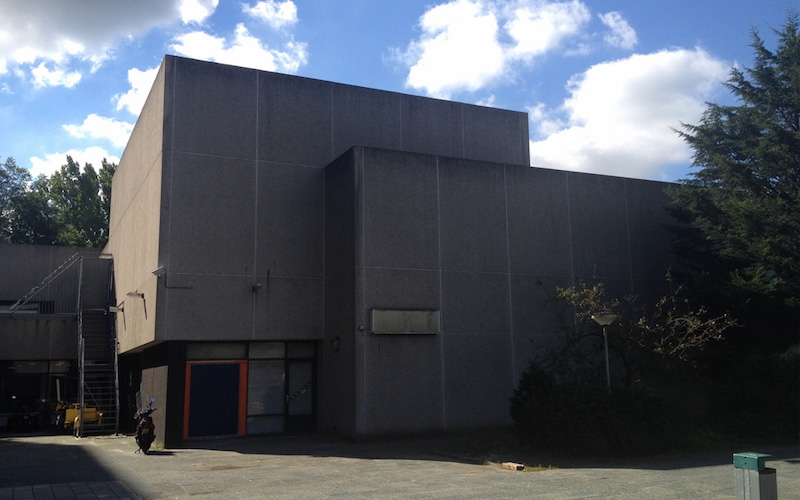
As Resident Advisor reports, Amsterdam’s mayor Eberhard van der Laan has approved 24-hour licenses for three clubs in the city. Radion (pictured above), Cruquiusgilde, and a new, as-yet-unopened venue from the people behind the recently closed Trouw will join the already-24-hour-licensed Tolhuistuin and Tower Overhoeks North if—as is expected—the city’s council rubber-stamps the permits.
The move comes in the wake of widespread shock in the UK at a move in the opposite direction from Glasgow City Council, whose revoking of The Arches‘ clubbing license has been widely condemned as an attack on both the city’s clubbing scene and the country’s wider arts scene.
It’s been two and a half decades since Octave One‘s “I Believe” came out as part on the seminal Techno 2: The Next Generation, and even in those early days, the production unit had already nailed down its sound: deep and driving melodic techno that’s brimming with feeling, blending starkness and sublimity like few others. Its a sonic template that has served Octave One—Lenny and Lawrence Burden, with contributions over the years from siblings Lynell, Lorne, and Lance—well over the years, and, with only a few tweaks here and there, it’s the template (with only a few tweaks in service of modernity) that you’ll find on Burn It Down, the Motor City–born brothers’ first album since 2008’s Summers on Jupiter. Featuring vocal contributions from Afrika Pratt-Ansa and longtime collaborator Ann Saunderson (who also sang on 2000’s “Black Water,” among many other claims to fame), its packed with hard-charging yet emotive cuts that are pure Octave One. Burn It Down is released on the Burden’s longtime label, 430 West, on May 26th—but you’ll be able to get a sneak preview when Lenny and Lawrence Burden perform live at the Movement festival on May 23, and when they play an intimate in-store set in Detroit shop Spectacles on May 24.
I’d bet that when you guys first started you didn’t have a clue that, a quarter of a century on, Octave One would still be going strong. Lenny: You don’t know what’s going to happen when you start making records. We didn’t know we were going to have a career at all; it was kind of just like recreation that turned into something more. We would just head into the studio because we loved it. You have to get something out of your system? Head to the studio! It was kind of like driving a fast car. But we’re certainly glad it did turn into something. Lawrence: Of course, we didn’t know it would last this long.
The studio, along with playing live, is what you do this for, right? You’ve been quoted in the past that you’re not really into the record-business end of the whole endeavor. Lenny: Early on, it was actually kind of fun—but it wasn’t close to the kind of enjoyment we got from making records. We’ve only been playing live for about 15 years—though Lawrence was deejaying way before that—but once we got into that, we thought that was the best part. If someone told me we had to give up the running-a-record-label part, we wouldn’t miss that at all.
Having said that, though, your label 430 West is still going strong, right? Lenny: Absolutely, and the new album is coming out on it. But it’s not how it was before. In one point in time, when we had 430 West and Direct Beat, we were dealing with 18 artists. Now, we’re primarily dealing with ourselves—which is a drastic difference from dealing with all these people on a daily basis. Lawrence: Oh, yeah. [laughs]
We weren’t part of the Detroit inner circle. We never were actually nurtured by what you might call the Big Three.
One thing I’ve always found interesting about you guys is that even though you’re longtime figures on the Detroit scene, it always seemed like you stood apart from that universe a bit. Lenny: I would say that’s a true assessment. We weren’t part of the Detroit inner circle. We never were actually nurtured by what you might call the Big Three. We were never apprentices to anyone, like some of the other Detroit producers. We developed our sound on our own, just three guys working together. And when we initially were working on our first record, “I Believe,” it was only through a friend of a friend that ended up at the Metroplex studio to record it. Lawrence: And that friend introduced us to Anthony “Shake” Shakir—and he’s the one who finally did bring us into the inner circle, or at least as close as we ever were. He was connected with everybody, but definitely with Transmat and Metroplex. That’s how we got in. I mean, we knew everybody from the Music Institute and everything, but we just weren’t in that core group.
Your music was also a little different from what the others were making at that point, perhaps. Lenny: It was probably a lot different. Shake always used to tell us, “It’s techno, but it’s different. You can dance to it—or you can make love to it!” And he was right, because we always did like a deep and melodic kind of sound. Lawrence: We never really felt like we were competing with the other guys. But we appreciated everybody’s style; we really loved everything that everybody was doing back then. Lenny: It was weird how everything came together for us. I lived in an apartment building, and we had our first little studio in my apartment. Our next-door neighbor was Marty Bonds, who was working with Juan Atkins. Jay Denham lived there, too. Lawrence:Carl Craig’s sister lived upstairs. Lenny: It was like this weird little collective, and there never was any competition. We shared equipment all the time. But still, we were always sort of on the outskirts, which let us develop on our own.
“Having a record was huge, man. When you get to touch that vinyl, and put it on a turntable, and actually hear something that you did…that was the ultimate goal.”
You were probably happy just to be getting records out and having those records get some recognition, whether you were part of the core group or not. Lenny: To be honest, that was really the only thing we were thinking about. And having a record was huge, man. When you get to touch that vinyl, and put it on a turntable, and actually hear something that you did…that was the ultimate goal. You didn’t care about the financial rewards—you just wanted to make a record. And once you did that, you wanted to make another one. Lawrence: It was addicting. It was a drug, seriously.
Lawrence, were you playing Octave One’s early material in your DJ sets at the time? Lawrence: I didn’t really get a chance to that far back, because I didn’t start DJing until early ’93. I do remember playing “I Believe” and some others at that point, though, after the heat of the moment had already expired on them. [laughs] Lenny: I remember hearing “I Believe” at the Music Institute very early on, though. I can’t remember who played it…it might have been Derrick. Lawrence: That was amazing for us. Lenny: We were actually working there at the time, doing lighting and effects. I also remember hearing “I Believe” on local radio. Lawrence: We were driving in the car, and it just hit us—“Oh, man, is that our song coming on?!?” That was amazing. We thought we had hit the big time…the local big time. Lenny: And then we could retire. [laughs]
Let’s flash-forward quite a few years and talk about your new album. This is your first LP of all-new music since 2008’s Summers on Jupiter—why the long break? Lenny: To be honest, we’ve been on a kind of journey for the last few years. In 2007, we actually moved from Detroit to Atlanta; we had kind of needed to shake some things up. And then between the move and now, we’ve been doing tons of touring, and working more as a band as a production unit, which is a different concept.
Do you think that this switch has effected your productions at all? Lenny: Before, I think we were primarily making music for DJs, and now we’re really making music for our live set. They’re largely tracks that we’ve developed by playing live, and that’s required almost relearning out we make music. We have known over these past seven or eight years what we want to achieve musically, but it’s been hard to get there. And we feel that it’s not good to put records out just to put records out. Lawrence: At least, it’s not good for us. We’ve always just put things out when we feel we have something to say. We have had our growth spurts where we’d put three or four months worth of records back to back, but that only was when we felt that we had a real reason to, because the material needed to be out.
You just mentioned that the songs were developed by playing live. How does that process work? Lenny: The live stage is our new studio. That’s how all of these songs came about. A couple of songs are even reworks, like “A Better Tomorrow”—that was initially released as a Random Noise Generation track. We had been constantly playing that song, and it had matured to a certain level where we realized that most people hadn’t heard it in its new form. But in general, when we’re playing, we’ll start with the shell of a track, add another piece, then do something different with the arrangement, then add another piece or whatever. We feel like this all came together when we did a Boiler Room set in Moscow last year. It was made up of tracks that we had developed live, and people were asking forthese records. Lawrence: And so we had no choice but to release them. [laughs] We had so many requests on Facebook, like “What was that track at 20:16? I need it!” We just had to go into the studio and record them. I mean, DJs were playing the tracks off of YouTube or whatever. Lenny: It really came to the point where we already had an album ready to go. It was already a full story.
What does the name of the album, Burn It Down, signify? Lenny: It has quite a few meanings, but it’s really like a rebirth. We find that in both our careers and our lives, we have to break everything down to the basic minimum, so that we can then build it back up. Lawrence: And when you burn something, it consumes everything—and when that happens, you have no choice to start from the ground up. There was just so much going on with our personal lives and our careers that we felt like it was time to press the reset button and see what it felt like.
And how is it feeling? Lawrence: Oh, man, it’s exhilarating. Lenny: You know, because we’re brothers and have been working together for so long, our lives and careers have kind of been in parallel. And it really helped to shake things up a little.
Do you guys ever get sick of working together? Lawrence: I’m sick of him right now! But really, we have our moments. But the thing about being family is that you always come back together. You do have to get certain things out of your system sometimes, but it’s all cool.
There are a number of vocal tracks on your album, and you’ve always embraced singing a bit more than some of your Detroit contemporaries. What is the appeal of vocals for you? Lenny: I think we’ve just both always really liked vocals. Lawrence: For us, vocals are another instrument. A lot of times, we’ll have some melodies in a track, but we’ll hear another instrument that needs to be there. And that’s often a vocalist. We like to bring them in and add their accents to what we’ve already developed. Lenny: Sometimes it will even happen after we put a record out. That’s what happened with “Black Water,”for instance, and more recently with [the new album’s] “Jazzo/Lose Myself.” We actually released “Jazzo” on very limited vinyl, like 500 copies, a year or so ago. When we got the vinyl and played it, we said to each other “You know, this record isn’t finished.” We knew the record could be more. It was the same with “Black Water,” too. We always thought it should have some vocals, but at the time our resources were very limited, so we just couldn’t do it. Lawrence: But after it started selling, we had the money to reinvest in the record, so we had the opportunity to go into the studio and add vocals and an orchestra.
With or without vocals, Octave One tracks usually have a lot of emotion in them. Lawrence: We always like to feel something. Whether it’s happy or sad, we always want the music to evoke some kind of emotion. That’s always been true: Even back at the Music Institute, if someone was playing even a jack track or something, the music’s got to make me feel joyous, so I can close my eyes and dance around the club from one end to the other.
You guys are playing in your hometown on May 23 at the Movement festival. Do you feel any extra pressure when you play in your hometown? Lenny: It’s not really pressure: it’s actually just a lot of fun! We get to see all of our peers and hang out. Lawrence: It’s like, alright—we’re home!