Hear Two New Tracks from The Bug’s Upcoming ‘Angels & Demons’ LP

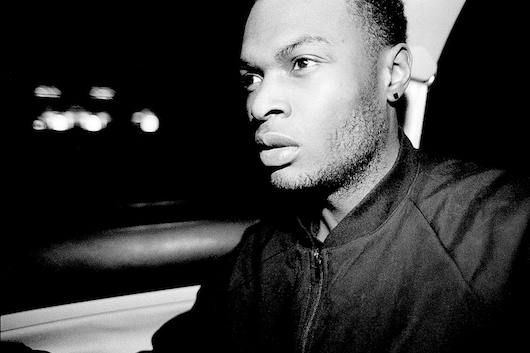
Next month, UK producer Kevin Martin will return to the Ninja Tune label with Angles & Demons, his first full-length record as The Bug since London Zoo dropped in 2008. Having already shared a pair of productions from the forthcoming effort, Martin has now let loose two new LP cuts featuring vocalist Liz Harris (of Grouper) and London MC Manga, respectively.

The first of the two, “Void,” will serve as Angles & Demons‘ opening effort, taking shape as a blissful, static-lined beat with innumerable layers of Harris’ vocals floating atop. The second, “Function,” is a more boisterous affair, one whose sampled horns and heavy percussion serve as a powerful base for Manga’s animated verses. Before The Bug’s next album lands on August 25, both “Void” and “Function” can be streamed in full below.

Actress Shares Details of Surprise New EP

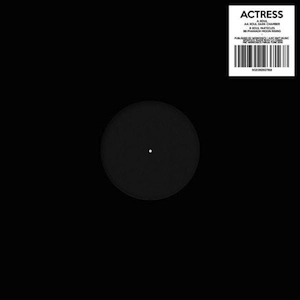
London-based techno abstractionist Actress (a.k.a. Darren Cunningham) has revealed details for a surprise 12″, which will reportedly see a release via his own Werkdiscs label within the next week. According to Juno Plus, the four-track Xoul EP will be issued as a limited, 500-edition vinyl run, and follows Cunningham’s Ghettoville album from this past January. While little additional information has yet to surface regarding the forthcoming record, its artwork and tracklist have been posted below.

A1. Xoul
A2. Xoul Dark Chamber
B1. Xoul Particles
B2. Pharoah Moon Rising

Artist Tips: Dusky Details Five Techniques for Producing Precise, Club-Ready Tracks

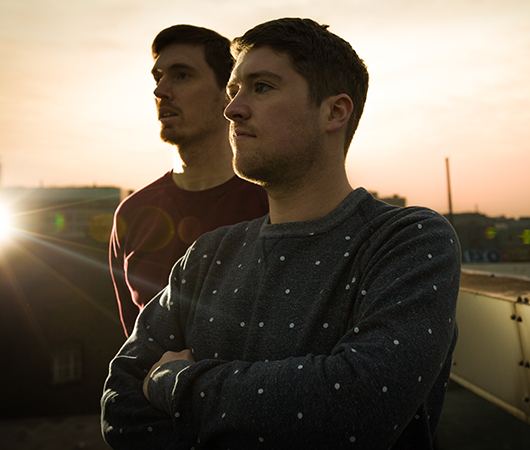
When introducing Dusky‘s XLR8R podcast last year, we commented on how it, along with the pair’s own music, is “clean, well mannered, and, most importantly, effective.” Being effective is what the UK duo of Alfie Granger-Howell and Nick Harriman does so well, which helps explain how the pair has become one of the most in-demand electronic acts around. Releases for Aus, Anjunadeep, and Dogmatik, not to mention the just released ‘Love Taking Over’ EP on the duo’s own 17 Steps imprint, have seen Dusky striking a key balance between club functionality and hooky pop inclinations. In hopes of learning a few of the pair’s production secrets, we invited Dusky to put together the latest edition of our ‘Artist Tips’ series, and the duo complied by breaking down the process of building punchy tools that leave space for character.

Pay attention to the construction of melodic and rhythmic patterns and contours.

The vast majority of dance music contains at least some melodic movement, be it in a bassline, synth line, within chordal movements—the list goes on. And by definition, all dance music bar none includes rhythmic patterns in various different forms. While we don’t tend to stop to consciously analyze these patterns (we tend to “feel” it instead), it can be useful to take a moment to think about their construction and how they might be improved. A successful and interesting rhythmic pattern has a combination of symmetry and asymmetry, or predictability and unpredictability. On top of that, swing and pushing and pulling of timing can be used to loosen or tighten a groove. All melodic contours contain rhythmic patterns too, but additional considerations to the rhythmic elements can also be made when approaching the melodic shape. Like a good photograph, a similar balance of symmetry and asymmetry applies here through contrasting elements like ascending and descending movement, or stepwise and skipwise motion.

Focus on the kick and bass relationship.

The interplay between the bass and kick is particularly important in dance music, especially “four to the floor” genres like house and techno. As such, it’s worth spending a lot of time and experimentation on the bottom end to get it sounding right. The kick and bass are crucial to the underpinning of a track’s groove, and if they don’t punch through properly when listening in a studio, they’re certain to sound weak and flabby on a club soundsystem. We tend to hold back from EQing the bottom end of a kick. Instead, finding the correct frequency kick sound or sample to complement your bass will save hours of messing about with EQ. The aim is to have everything sounding solid and smooth, with the transients coming though and without an unpleasant clashing of lower frequencies. Side-chain compression of the bass relative to the kick can work wonders in helping the kick and bass to gel together. Another trick is to use the bass ports on your speakers to feel if the kick is punching through the bass. The kick should feel like a quick punch of air, not a massive gust of wind that obliterates the bass tones. As a rule of thumb, anything below around 250 Hz should be in mono.

Give your ears a break.

When you’re first starting to produce, it can be amazing how different something sounds upon listening after a break, be it a coffee break or when opening a project after a month away from it. Time gives you plenty of perspective on all elements of a track, from its technical elements to the overall aesthetic. Given time, your subconscious sometimes processes decisions without your awareness, so solutions to tricky corners within a piece may offer themselves up without effort once your mind has had some time to consider the problem. Hearing fatigue is a huge consideration, too—our ears start to hear details with less accuracy after time spent constantly working on something, so it’s important to take a break. Listening to unrelated music briefly within a studio session can be a useful tool to reset your ears a little, or a quick ‘A/B’ with a similar sounding, well-produced track can be useful to identify mix or balance issues.

Dynamic processing: sound sculpting vs. mixing

It’s important to acknowledge the difference between these two approaches when you are processing sounds. Are you sculpting the sound? In other words, are you using effects to distort the sound or alter it in an extreme way so as to transform it from what it once was? If so, we see that as sculpting. In this case, we throw caution to the wind and completely disregard how the sound will work in a mix. This helps to avoid stifling your creativity. If you want to put 10 phasers and five delays on one track, just do it and see what happens. Don’t be worried about how it might work later in the mix. This is how some really interesting and unique sounds can occur. On the other hand, if you are using processing in a mixing sense, to try to get your sound to sit correctly with the other elements of your track, your approach should be much more exacting and precise. Be conscious of what other frequencies are already occupied, and use the tools at your disposal to fill the gaps as well as clearing out the middle of the mix for your bass and kick (and vocal, if it’s a vocal track). A word of warning—use meters and visualizers to help you, but don’t rely on them; they can become a distraction. It’s more important to trust your ears.

Parallel processing

Utilizing effects and dynamic processing by way of sends to bus channels is the way forward. Once you understand the concept and learn to balance the levels appropriately, it will add depth and subtlety to your mixes that can’t be achieved with a channel insert. The only way to get good at this is to practice, but here are a couple of key parallel processing techniques we use to get you started.

Reverbs: This works for any instrument, including bass (not putting reverb on bass is a myth). Send the signal to a bus with a reverb insert set fully wet, match the pre-delay time to your tempo, use parametric EQ on the reverb to get rid of any unnecessary frequencies (normally 1000 Hz – 4000 Hz and a low cut), side-chain it with compression if you want it to “pump,” then set the level.

Compression: Works especially well on drums if you want to add subtle “punch.” As before, send your drum signals to a bus, add compression with a high ratio, fast knee, very slow attack, and very short release. Then bring down the threshold until you start lose a bit of volume. Add an EQ with a bit of low cut, boost around 100 Hz, and a high frequency shelf with a low Q setting around 12000 Hz. Set the level to add the necessary required punch.


Stream Juan Atkins’ New Remix of Wild Beasts

Released via Domino earlier this year, tracks from Wild BeastsPresent Tense LP have already received remix treatments from Lone, Factory Floor, and The Field. Now, veteran Detroit innovator Juan Atkins can be added to the list.

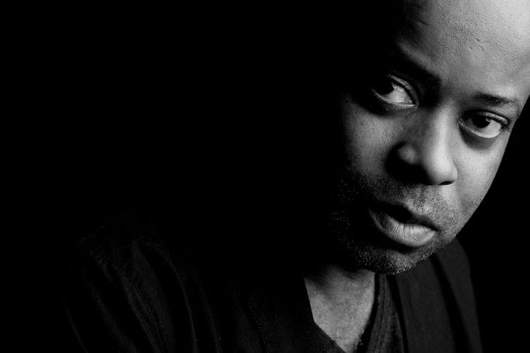
Set to appear on an upcoming remix package alongside a rework from Sohn, Atkins’ take on “Mecca” reshapes the dramatic song into a space-age electro track, one led by a stiff beat and a resonant lead synth. From there, Atkins weaves in the original’s warm pads and watery vocals, which help the jittery production grow and evolve across its six-minute run. Juan Atkins’ full remix of Wild Beasts’ “Mecca” single is streaming below.

Clara Moto “In My Dream (Ferdinand Remix)”

Budding producer Ferdinand takes a clean and simple route to remixing “In My Dream,” a track pulled from Clara Moto‘s Blue Distance LP, which landed last year via Infiné. This week, Moto’s robot-pop tune has been revived for a new remix EP, which includes a “Violin Version” of the track, along with remixes by Thomas Müller, Vendredi, and this elongated rework from Ferdinand. Spanning just over eight minutes, Ferdinand’s contribution is simple but effective, lacing a miniature house beat with percussive rhodes chords, swelling organ ambience, and soft touches of the original’s dreamy vocals.

In My Dream (Ferdinand Remix)

Watch Mathew Jonson Talk Synths, Drum Machines, and Production in New Video

A veteran producer and the driving force behind the Wagon Repair imprint, Mathew Jonson has opened up the doors to his enviable studio space in a new video. Appearing as part of Electronic Beats‘ ongoing Slices series, the 10-minute clip finds the Canadian-born, Berlin-based artist giving a tour of his compact production space, which appears to be filled to the brim with a number of high-quality drum machines, hardware synths, FX units, modular racks, and an analog mixing desk. Throughout the course of the video, Jonson discusses how he is able to make sense of, and together use, the array of pieces in his arsenal, while also emphasizing that he aims to strike a balance between both the analog and digital sound worlds in his productions. Jonson’s full Slices video can be watched via the player below.

Donky Pitch Readies Debut LP from Starfoxxx

Following recent LPs from The Range and Lockah, the Donky Pitch label will release the debut full-length from Chicago producer Starfoxxx in August. Entitled Baby I’m Off Drugs and I’m Ready to Marry You, the 12-track album is said to take the listener “in a multitude of musical and rhythmical directions” while covering a variety of electronic forms, “from smudged 4×4 to hazy psychedelia, widescreen synth-pop and saturated ambient.” The solo project of one David Beltran, Starfoxxx has issued releases via Chicago’s Ghettophiles label in the past, as well as the city’s Feeltrip/Boy House imprint.

Starfoxxx’s proper debut LP will see its official release on August 18. In the meantime, a radio rip of opening cut “Club Entrance” can be heard below, where the record’s full tracklist can also be found (the LP’s artwork can be seen above).

01 Club Entrance (Intro)
02 Bad Reception
03 Bae HD
04 My Cats Will Die B4 Me
05 Our Bodies
06 XTC Makeouts
07 Vacation on Tape
08 No Text No Call
09 You Are My High
10 Feels Good
11 Slow Jams
12 Outro

bRUNA “Closer (Lost Twin Remix)”

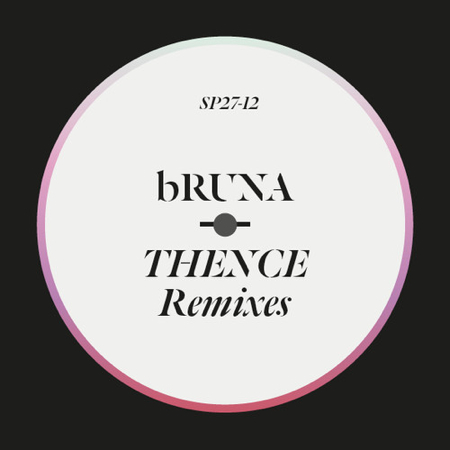
On his remix of bRUNA‘s “Closer,” Brighton-based producer Lost Twin tones down the summer-soaked vibes of the Barcelona resident’s original. In its new form, “Closer”—a cut pulled from bRUNA’s 2013 Thence album for hometown label spa.RK—the track is reimagined as a stoney piece of understated boom-bap, its radiant synth lines subdued by hazy textures and lo-fi filtering. Lost Twin’s purple-streaked remix of bRUNA is set to appear alongside additional remixes from Henry Saiz, Alizzz, and more on the Thence Remixes 12″, out this month via spa.RK.

Closer (Lost Twin Remix)

Anenon Announces Upcoming Sophomore LP for Non Projects

Los Angeles producer and saxophonist Brian Allen Simon (a.k.a. Anenon) has revealed the details of Sagrada, his forthcoming sophomore LP for his own Non Projects label. A former XLR8Rpodcast contributor, Simon’s debut full-length, the Rhodes-soaked Inner Hue, arrived in the Spring of 2012, preceded by the artist’s excellent Acquiescence EP, which we included as one of our favorite releases of 2012.

Now, the forthcoming Sagrada LP is described as “the work of an artist who has spent time traveling the world and playing music alongside many of today’s sonic luminaries,” resulting in an album that “bears a clearer voice.” Furthermore, the record aims to display Simon’s saxophone skills in a more prominent light, as the breathy instrument is said to “lead songs with a strong free jazz-inflected vocabulary… [showing up] in processed forms as both texture and rhythm.” Set to arrive on September 23 via Non Projects, the artwork and full tracklist for Anenon’s upcoming sophomore LP have been included below.

01 Voice One
02 Lights and Rocks
03 Shibaura
04 Aurora
05 Lithograph
06 Karma
07 Surface Points
08 Sagrada
09 Emblem
10 The Color White
11 End

Matrixxman Returns to Delft on Split 12″

The exploits of prolific San Francisco producer—and recent XLR8Rpodcast contributor—Matrixxman are set to continue next month, as the Stateside artist has announced plans to return to the Delft imprint with a split 12″ alongside Delft label head LA-4A. The upcoming four-track effort will find each artist contributing a pair of acid-fueled tunes, with Matrixxman (whose 808 State of Mind EP served as the fledgling label’s second outing last year) being joined by frequent collaborator and Soo Wavey co-head Vin Sol on the record’s closing cut, “Acid City.”

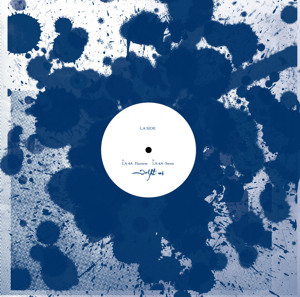
The simply titled Split EP is slated to drop next month. In the meantime, the forthcoming effort’s artwork and tracklist can be found below while preview clips of its four tracks can be heard here.

A1 LA-4A – Sweat
A2 LA-4A – Harness
B1 Matrixxman – Escort Service
B2 Matrixxman ft. Vin Sol – Acid City

Page 1291 of 3781
1 1,289 1,290 1,291 1,292 1,293 3,781