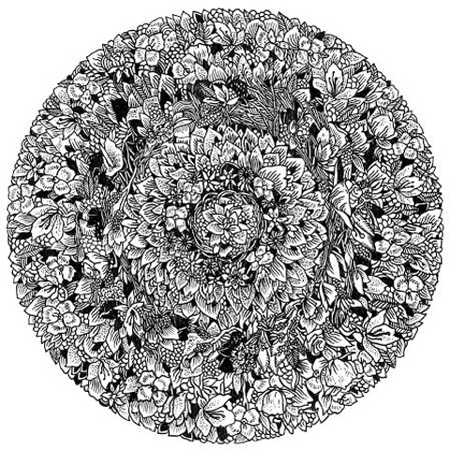
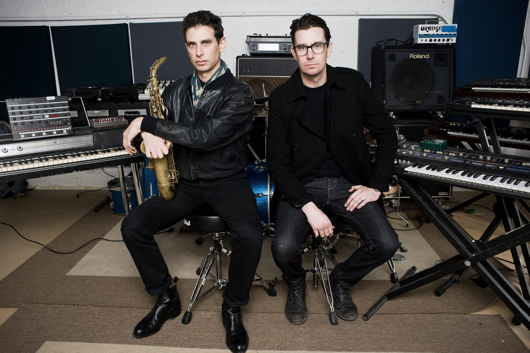
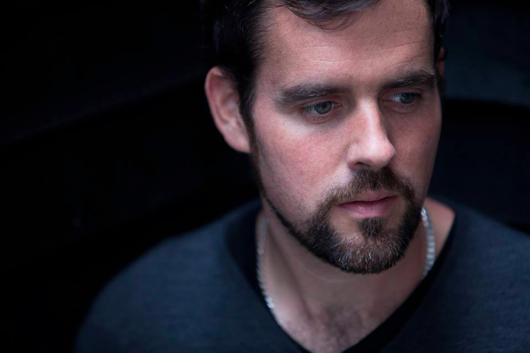
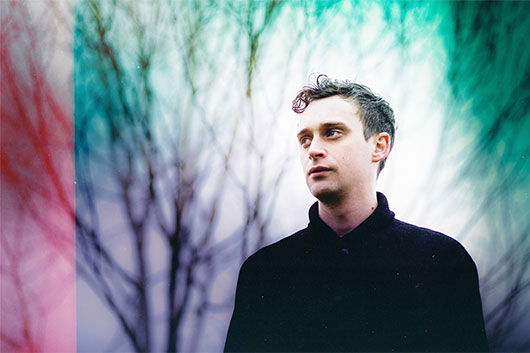
Last month California duo Some Ember released a self-titled LP (artwork above) of expansive, synth-laced dark wave productions via the fledgling Dream label. Accompanying the release now is this remix from recent Berlin transplant (by way of San Francisco) Avalon Emerson, who reshapes the dark pop of “The Thrashing Whip” into a propulsive excursion through machine-minded techno. Atop its rumbling core, Emerson repurposes the original tracks dreamy synth work, dubbing out lush chords and light vocal murmurs to result in a remix that is as inviting as it is broodingly dense. For its part, the Some Ember duo will be embarking on a comprehensive West Coast tour next month, the full dates of which have been included after the jump.
July 16 The Parliament – Tempe, AZ * July 17 Whistle Stop, San Diego * July 18 Complex (Maldoror), Los Angeles * July 19 The Compound, SLO * July 20 The Night Light – Oakland * July 21 Arcata TBA * July 23 Portland, OR – East End * July 24 Olympia TBA * July 25 Seattle – Black Lodge * July Vancouver – Electric Owl
Former members of The Rapture have come together to form Vito & Druzzi, a project which will release its debut EP later this month via Throne of Blood. The four-track Moon Temple EP will offer two original cuts from the Vito & Druzzi production duo, with each said to have a “a classic (but not retro) feel to them.” Joining the two productions will be a pair of remixes from Curses (a.k.a. Drop the Lime’s new alias, which released its debut record via Throne of Blood last month) and Leeds duo PBR Streetgang.
Vito & Druzzi’s upcoming EP for the label (of which they are co-founders) will see an official release on June 30, with a digital version of the EP to follow in early June. In the meantime, each cut from the upcoming four-track effort can be previewed below.
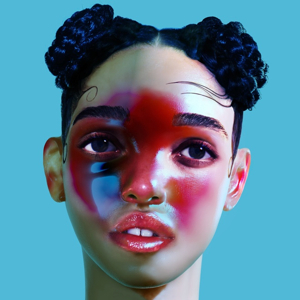
After releasing two EPs and a string of intriguing videos in 2013, London artist FKA Twigs has revealed the details of her forthcoming debut LP, which will drop this summer via the Young Turks label. FKA Twigs’ brand of slow, jagged alt-R&B proved particularly rewarding at the recent Primavera Sound festival in Barcelona (our full review of which, including FKA Twigs’ performance, can be read here), with her set including a number of new tracks set to appear on the artists upcoming debut long-player, simply titled LP1.
The forthcoming 10-track endeavor (which will include no previously released songs) is set to see a full release on August 12. In the meantime, the artwork and complete tracklst for FKA Twigs’ LP1 have been included below, where a list of her upcoming North American summer tour dates can also be found.
01 Preface 02 Lights On 03 Two Weeks 04 Hours 05 Pendulum 06 Video Girl 07 Numbers 08 Closer 09 Give Up 10 Kicks
July 19 Chicago, IL – Pitchfork Music Festival August 06 New York, NY – Webster Hall August 08 Toronto, Ontario – Danforth August 09 Montreal, Quebec – Cabaret Du Mile End August 12 Los Angeles, CA – El Rey August 13 San Francisco, CA – Great American Music Hall
“When the City Was Bare” is one of 10 immersive productions set to appear on Dust, the new full-length effort from Berlin artist Glitterbug which sees a release today via Gold Panda’s growing Notown label. Lined with sparse rhythms, “When the City Was Bare” focuses on a gorgeous procession of sequenced bell sounds, behind which lush atmospheres subtlety bend and swirl. Electing not to build into a far grander affair as it progresses, the production is less an outright song and more a trip into an inviting aural world—one whose rich textures and fine craftsmanship bodes well for Glitterbug’s new LP.
The Warehouse Project has announced that starting this fall, it will make a seasonal return to its “spiritual home” in Manchester ahead of its 10-year anniversary in 2015. The Store Street venue beneath the city’s Piccadilly rail station, once serving as an air raid shelter, played host to the infamous party for five years before relocating. The opener on September 27 lists a formidable lineup from The Warehouse Project’s extended family, leading with Seth Troxler and also showcasing Detroit veteran Carl Craig, Numbers’ Jackmaster, and Berlin cult commander Mr. Ties. Tickets for this first event go up on Thursday, and additional dates will be revealed in mid-July.
For the outfit’s new Reach for Me single—its debut on the PMR label—London pair No Artificial Colours has enlisted the talents of former XLR8Rpodcast contributor Deetron to remix the effort’s title track. Drenched in soul and finished off with seemingly boundless synth work, the new rework from the Swiss techno veteran is now streaming in full.
In its original form, No Artificial Colours’ “Reach for Me” is a pop-infused club track, one which is led by the soaring vocals of Alex Mills. In Deetron’s hands though, the tune is rearranged into a more analog-minded affair, its thick chords tucked underneath clap-heavy drum-machine patterns which, along with a good deal of restlessly tweaked synth lines, take the focus off the song’s vocal contributions. The latest remix from Deetron—whose own installment in the highly regarded Fabric mix series drops next week—can be heard in full below; No Artificial Colours’ Reach for Me single is out now via PMR, with its accompanying remixes set to drop next week.
Manchester-based DJ/producer Lone (a.k.a. Matt Cutler) has shared a full stream of his forthcoming LP for R&S, Reality Testing. While his 2012 debut album for the label, Galaxy Garden, was spectral, ravey, and clean to the point of glossy, this new issue is–according to the accompanying interview–a “total reaction against that cleanliness,” saturated and more dense, eschewing rave hardcore stabs and big, shiny chords in favor of the grit and machines-at-work undercurrent that characterizes L.I.E.S. or the new Detroit trinity of Kyle Hall, MGUN, and Jay Daniel. The XLR8Rpodcast alum also notes that his original intent was to do a hip-hop record, and although that doesn’t entirely pan out, the influence is clear. In putting together the album, he revisited an affinity for old skateboarding videos–often soundtracked by iconic ’90s outfits like Wu-Tang or Gang Starr–for inspiration, as well as the dancefloor-ready playgrounds of house and techno.
To accompany the release, due out on June 16, Lone will also premiere a new live show with frequent collaborator Konx-om-Pax in London two days later, which couples the visual artist’s signature animation with raw, real-life footage. All 11 tracks on Reality Testing can be heard below, and the accompanying interview can be found over at Thump.
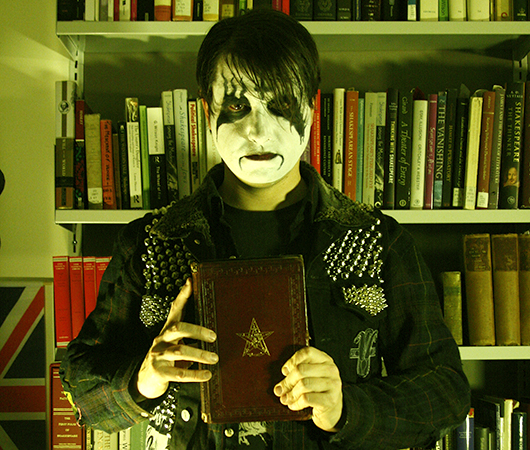
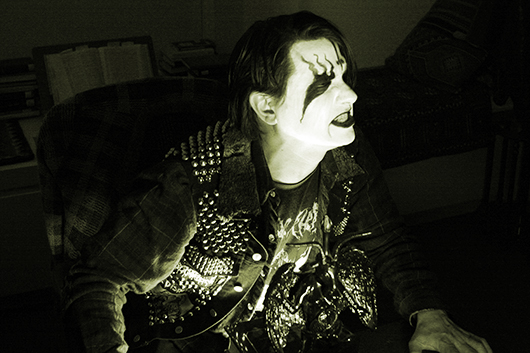
Drew Daniel is halfway through swallowing a pill when he answers our Skype call in his Baltimore, Maryland home. He wonders aloud if the effects will become noticeable during our conversation about his latest solo album produced as The Soft Pink Truth. (A record comprising weird electronic covers of classic black metal songs, the LP is called Why Do the Heathen Rage? and is being presented with the subtitle Electronic Profanations of Black Metal Classics.) Just the idea of chatting about black metal, queer theory, authenticity, and leftfield dance music with one of contemporary electronic music’s sharpest minds is enticing enough, but doing so while he’s on something feels like striking gold. He announces his excitement to be going on tour with his long-standing experimental duo Matmos, playing a show in Brooklyn with Oneohtrix Point Never (then DJing its afterparty with his good friend Bjork), and attending his adopted hometown’s Deathfest, billed as “America’s biggest annual metal party,” all of which are scheduled in the weeks following our interview. Having taken the pill though, it would seem that maybe Daniel has decided to start the party a little early.
After asking him if The Soft Pink Truth will be performing with his new material at Deathfest, the producer exclaims, “God, no! They have to protect the intensity and extremity of what the festival is about, and so they’re pretty snobby about not having metal bands that even dip their toe into weird genres.” His response is eloquent and on point, perhaps more so than a recent doser’s should be, even when one factors in his borderline intimidating academic resume (awarded his PhD in 2007, he now teaches literature at Johns Hopkins University). So what exactly did Drew just take, anyway? From behind him, his boyfriend and Matmos co-creator Martin Schmidt chimes in, “I’m sorry to report that it was just a generic multivitamin.” Oh. Well, that kind of playful bait and switch should probably be expected from a dance music prankster like Daniel, especially one as willing and able to take on the sacrosanct “kvlt” of black metal and turn that grim, insular world completely upside down.
“Black Metal”
XLR8R Couldn't find the embed function for type: "vimeo" and source: "<iframe src="//player.vimeo.com/video/95419613?title=0&byline=0&portrait=0" width="530" height="298" frameborder="0" webkitallowfullscreen="" mozallowfullscreen="" allowfullscreen=""></iframe>".
As we learned back in 2004, when The Soft Pink Truth released its second album, the sinewy electro-punk mutations of Do You Want New Wave or Do You Want the Soft Pink Truth?, Drew Daniel came up in the scenes of punk and hardcore, but his interests in underground rock subcultures didn’t stop there. “Like anyone curious what the edges of a genre are,” he explains, “I was seduced by black metal early on, just by the aggressive rawness and monotony of the sounds.” The music would come to him while living in San Francisco in the ’90s, when his friend Kris Force, a staple of the Bay Area metal scene, showed him records written by the man who owned the Misanthropy label she was signed to, a notorious Norwegian musician named Varg Vikernes (a.k.a. Burzum). Daniel heard similarities between black metal’s “monochromatic” chords and the tonal qualities of Éliane Radigue’s longform drones he’d been listening to—citing how it was able to “induce the same kind of psychological states that you get with minimal drone music”—and was enamored with its relentless blast beats and thrumming, fast-picked guitars. But the music itself is unfortunately only a fraction of what black metal is all about.
“At the time, [Kris] was like, ‘Wow, this music is amazing, but this dude sounds really fucked up,'” Daniel tells us, referring to Vikernes’ 1994 conviction for murdering guitarist Øystein Aarseth, as well as other assorted criminal activities and general bigotry. He continues, “She wasn’t by any means embracing the ideology of [black metal], but there were other people around us who did. So there was this weird crossfade of watching industrial scene people react to the shitty politics of black metal. Some of them chose to draw a distinction between liking the music and embracing the ideas, while others got sucked into the dark, pagan romanticism of it, and kind of wound up being apologists for shitty politics.” To reiterate: traditional Norwegian black metal has a storied history of violence, racism, anti-Semitism, homophobia, and Satanism perpetrated by the bands and their kvlt of fans alike. All of this is at the forefront of what Why Do the Heathen Rage? confronts and perverts, which is done so with crystal-clear intentions thanks to a disclaimer written in the album’s liner notes by Daniel himself. “I don’t think I’m twisting somebody’s arm and telling them what the art means, but I am deliberately not being vague about my relation to these politics, because I’m not interested in being misunderstood,” the producer illuminates. “There’s a point when you’re an artist that you can’t really control the way things are received. There’s always going to be a difference between your intentions and the effects of what you do out in the world. You can’t really run that show past a certain point, but I didn’t want to be mysterious about it. That would seem kind of cowardly, frankly.”
The songs selected to appear on Heathen were chosen with a similar clear-headed decisiveness, though perhaps not for the reasons some might assume. “Honestly, the covers aren’t necessarily my favorite black metal songs ever,” elaborates Daniel. “Some of the bands I really love, like Striborg or Xasthur, I don’t think a cover of them would be very compelling, because what makes those bands exciting is the texture and the performance, not the notes. When I made this record, it sorta had to be about riffs, insanely catchy riffs, but it also had to be about lyrics that I thought would speak well to other lyrics in a collection. I wanted to hit certain dimensions or facets of black metal aesthetics.” And he does. Dark sexuality is addressed with a searing, bass-loaded version of Beherit’s “Sadomatic Rites” and Sarcófago’s “Ready to Fuck”; “Let There Be Ebola Frost” almost makes the annihilation of mankind by environmental and/or supernatural powers sound soulful and titillating, thanks to Jenn Wasner’s silken voice and some shadowy club rhythms; The Soft Pink Truth’s chaotic take on “Satanic Black Devotion” by Finnish band Sargeist offers a lyric that epitomizes the core element of both black metal and Heathen, “I am the sick and devoted fanatic.” Because even if Daniel means to blaspheme the “bullshit politics” of black metal to no end, he’s doing so out of a near-obsessive devotion to its music. He articulates the point further, saying, “I wanted to be a kind of Satanic serpent that sneaks in the Garden of Eden of black metal and fucks with it, takes the sacred bands, like Mayhem and Darkthrone, and trashes them. I mean, it’s a trashing that’s born out of love, but it’s also born out of a desire to provoke and piss off.” As such, Drew has chosen the right genre to pick on: there are few other fanbases—aside from, maybe, techno’s—easier to rile up and offend than black metal’s.
We start talking about potential backlash from the black metal community once it catches wind of the mockery The Soft Pink Truth has made of its beloved kvlt, but Drew seems unfazed by the possibility—perhaps he even looks forward to it. “I would be flattered, in a way, because it would mean that people are taking it seriously,” he says with humility, even if he doesn’t actually aim to be accepted by the group. Still, the topic does hit a nerve with Daniel when we broach the subject of authenticity, a sacred cow in the religion of black metal. “The whole kvlt of authenticity, despising posers… That rhetoric of the hatred of posers, I was very familiar with that coming up in punk and hardcore,” he begins. “And very often, someone who’s a poser is just shorthand for something ‘faggy,’ something queer. Macho masculinity is tied to a certain version of authentic realness, and to be an art-fag was anathema in my punk and hardcore scene, because those people were ‘fake.’ But their ‘fakeness,’ if you think about all of these associations of theatricality and artificiality, is very standard homophobic discourse. That’s how ‘real’ performers with ‘real’ chops get distinguished from people just ‘fucking around’ and ‘flouncing around’ with synthesizers. So I wanted to tackle head on these heavily gendered attitudes about what makes a scene real or fake. I wanted to make a record that was as deliberately fake and faggoty and false as possible. Like, this is false metal.” Even a cursory listen of the ravey and industrial-inspired leftfield dance tracks on Why Do the Heathen Rage? will confirm Daniel’s success. The man has subverted revered black metal songs, rewriting them as if the genre owed more to ’90s gay club culture and experimental noise music than nihilistic misanthropes and ’80s UK heavy metal, and that is truly no easy feat.
But for all of the serious issues it tackles with tenacity and style, Heathen is also a whole lot of fun, which is partially because Drew had a blast making the record. “It was so much fun doing that first track (Beherit’s ‘Sadomatic Rites’). Like, when I played it back the first time after doing the vocals and everything, I just couldn’t stop laughing. It was the most ridiculous music ever.” He kept working on it, though, and despite having not released a solo album in about eight years, decided that the songs would become the next Soft Pink Truth LP. “When I’m being thoughtful about musical work, then it’s for Matmos,” he explains. “There’s humor in Matmos, but there are also a lot of other dimensions. With The Soft Pink Truth, it’s kind of high-contrast—you lose all the shades of gray and just go for the neon sign. It’s not always a joke, but it’s always meant to be kind of obnoxious.” Perhaps the biggest question left is whether or not there’s a market for tongue-in-cheek, leftfield electronic covers of black metal songs, but thankfully, Daniel has the support of Bettina Richards’ always adventurous Thrill Jockey label, where his Matmos project is also currently signed. Yet it would still be safe to say that Thrill Jockey took a risk on releasing Why Do the Heathen Rage?, and its producer will probably be the first to agree. “This is really a strange record,” he says without hesitation. “It’s not necessarily what metal heads want to hear and it’s not necessarily what house music people want to hear either, so there’s this weird question of ‘Who the fuck is this for?'” Daniel takes a moment while he considers his fans, many of who have already followed him through impressively strange concept albums based on surgery and medical procedures, telepathy, 19th-century Americana, ’80s punk rock, “sonic portraits,” and beyond. “On the other hand,” he continues, “I don’t want to be condescending or think that no one is going to get it. I feel like, potentially, lots of people could get it.”
As we’re wrapping up our interview, Daniel clears up one last mystery: Why are all Soft Pink Truth album titles phrased as questions? He laughs and responds, “It sounds really corny, but, in a way, the title is a neon sign that lights up and says, ‘Here is what this record is about.’ But to me, a question is also a way of directly involving the viewer, the listener. It’s like throwing a grappling hook at them to pull them in. And so those questions are questions for the listener, but they’re also kind of a question for me. Like, ‘What’s my relationship to this stuff?’ The point is that the album is supposed to be the answer, the album is supposed to function as the response to the question in the title.”
Once again, he makes perfect sense, and even gives an added sense of depth in his solo work right off the bat. But how does that apply to Why Do the Heathen Rage? Eloquent as ever, he explains in detail: “[The album title] is from the Psalms of King David in the Jewish Torah. It’s a question that, I think, if you transpose it to black metal, is, ‘What’re all these kids so pissed off about? What’re these kids in black, wearing corpse paint, and listening to black metal so angry at?’ Are they angry at Christianity? Are they angry at multicultural liberalism? Are they angry at an economic situation that is fucked, of mass unemployment and jobless recovery? Are they mad at the fact that, because of our fossil fuel system, our whole fucking planet is going to drown and everyone is going to die? I think there are very good reasons to be angry, and I think there are really shitty reasons to be angry. Black metal is fascinating because it swirls together what I would regard as valid and invalid targets. It’s an ideological morass, it’s a mess.” He’s not wrong at all, but such a loaded and personal question doesn’t seem to be what Heathen is addressing with its black metal bastardizations and sacrilegious tone. The record plays more like a calculated affront to those who stand by the kvlt’s acceptance of hateful behavior and disrespect for fellow human beings, kind of like a middle finger with a PhD. Then Drew boils it all down with a much simpler explanation, “Why Do the Heathen Rage? is basically saying, ‘What’s your problem?'” If the black metal diehards don’t know their answer already, The Soft Pink Truth will happily give them one.
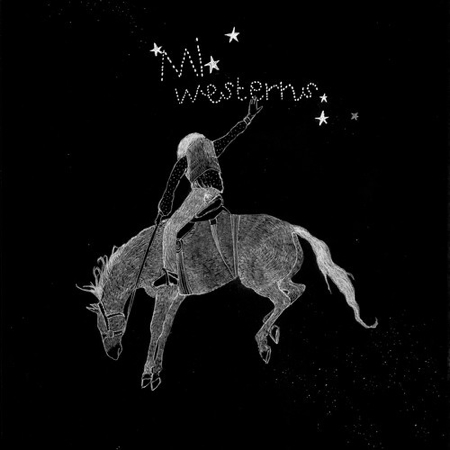
On his remix of “For Givers,” Berlin producer DoubtingThomas begins with an intimate procession of detailed percussion. From there, the rework effortlessly gains steam, with light plucks of electronic harps rising from the background, eventually joined by crystalline textures and elongated, pristine bass notes. DoubtingThomas’ seductively patient, seven-plus-minute remix comes as the closing cut to Mi‘s (a.k.a. New Mexico-based producer/multi-instrumentalist Ben Wright) Westerns EP, which saw a release last week via Wright’s own Mesa label.
Chicago juke/footwork innovator Traxman (a.k.a. Cornelius Ferguson) has delivered a mix for the latest installment of Resident Advisor’s podcast series. Singled out in the accompanying write-up as a godfather to the modern footwork scene, Traxman has been active since “the glory days of ghetto house” in the mid-’90s, but came to wider attention two years ago with his debut for Planet Mu, Da Mind Of Traxman. His 2013 outing on Lit City Trax landed among issues from the likes of Visionist, DJ Spinn, and the late DJ Rashad, and this year saw the producer submit a follow-up to his debut, Da Mind Of Traxman Vol.2.
For RA.419 Traxman, no tracklist is provided, but the mix leans heavily on his own productions (including a distinctive edit of Kraftwerk’s “Computer Love”) and can be downloaded here.