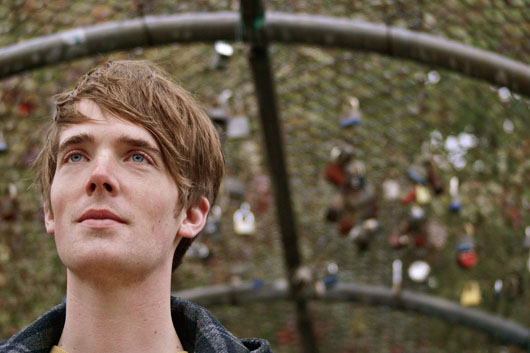
Burgeoning Night Slugs affiliate Helix will assume a new handle, DJ Vague, on an upcoming three-track record for Australia’s Templar Sound label. The forthcoming Porsche Trax EP will include DJ Vague’s “Porsche Trax 1” and “Porsche Trax 2,” two cuts that have floated around the internet in various forms for some time, and will also include the previously unheard “Porsche Trax 3.” Before the official debut of Helix’s DJ Vague alias drops later this month, its closing cut can be heard in full below, underneath which clips of Porsche Trax‘s other cuts are also available to stream. (via Juno Plus)
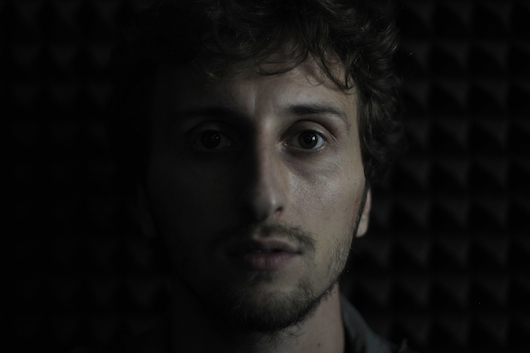
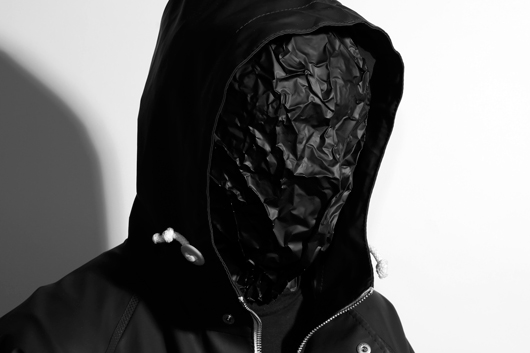
In preparation for the forthcoming Churches Schools and Guns LP by Italian techno producer Luca Mortellaro (a.k.a. Lucy, pictured above)—out on February 17 via his own Stroboscopic Artefacts label—the artist has commissioned four eclectic producers to remix album selections for an EP prelude. Simply titled Churches Schools and Guns Remixed, the record will feature experimental and chilly, minimal reworks of new Lucy cuts from fellow Italians Shapednoise and Donato Dozzy, Berlin techno producer Milton Bradley, and Irish tunesmith Eomac. Officially out on January 27, Lucy’s remix 12″ can be previewed below, where its tracklist can also be found.
1. Catch Twenty Two (Shapednoise Remix) 2. The Illusion of Choice (Donato Dozzy Remix) 3. Laws and Habits (Milton Bradley Remix) 4. The Self As Another (Eomac Remix)
In addition to running his own Tuff Wax label, Scottish producer Tom Banks (a.k.a. Lockah) released his Only Built 4 Neon Nites EP via Brighton’s Donky Pitch last year. Today, the rising label has announced that its first release of 2014 will come from Lockah in the form of his If Loving U is Wrong, I Don’t Want to Be Wrong EP (artwork above), which is a prologue to the artist’s debut full-length. Dropping on February 17, the record’s title track is a glassy slab of hyperactive electro, harnessing throwback tones like digital piano stabs and celestial chimes for a more futuristic bent. The single will also feature rigid synth workout “Ayyo Tricknology,” as well as stripped-down reworks of both cuts.
The details of Lockah’s debut LP, Yahoo or the Highway, are currently scarce, but we do know it will see an official release via Donky Pitch on April 14. Before then, the 12″ edit of “If Loving U is Wrong, I Don’t Want to Be Wrong,” as well as the upcoming EP’s tracklist, can be found below.
1. If Loving U is Wrong, I Don’t Want to be Wrong 2. If Dubbing U is Wrong, I Don’t Want to be Wrong 3. Ayyo Tricknology 4. Ayyo Bonus Beats
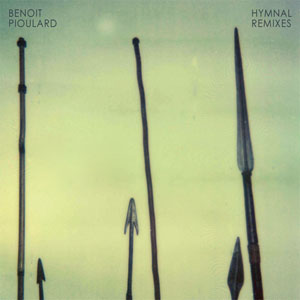
Later this month, Seattle producer Benoi?t Pioulard (pictured above) will release a double-disc collection of remixes for his Hymnal LP, which was issued last year by Kranky. The forthcoming 19-track compilation features a wide range of artists taking on the album’s tracks, including Berlin composer/sound artist Field Rotation. Spanning over seven airy, sweeping minutes, “Censer (Field Rotation Remix)” spreads the original track out wide. Long-winded strings fade into the song’s dense and misty background soundscapes, which are upheld by the steady pulse of some light drum programming. Before Benoi?t Pioulard’s Hymnal Remixes collection sees an offical release via the Lost Tribe Sound label, its tracklist and artwork can be viewed after the jump.
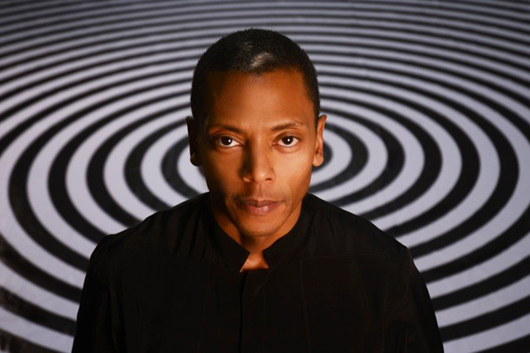
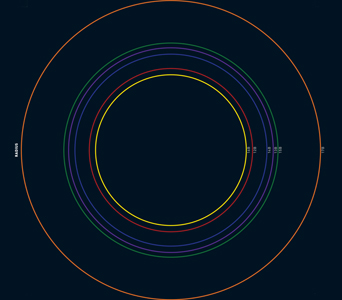
Kicking off 2014 in high gear, Detroit techno legend Jeff Mills has released his latest full-length, Chronicles of Possible Worlds, via his own Axis label. The 11-track album compiles music from a recent performance (also called Chronicles of Possible Worlds) in Aix-en-Provence, France, which, according to Resident Advisor, found Mills “[translating] scientific data of newly discovered Extra Solar Planets using dance, art, and techno music.” Presented as a multimedia experience spread across a CD, DVD, and 22-page booklet (the latter two offering a look at the making of Mills’ project), Chronicles of Possible Worlds is currently available on the Axis website, here; its tracklist and artwork can be found below.
01. Starlight Transmission 02. An Alternative To Earth 03. Solar System Context 04. The Gemini Pulsar 05. Searching The Stars 06. The Possibility Of Other Earths 07. Tales From Extra Solar Wasp 17B 08. Transit Detections 09. Lyra Constellations 10. Planetary Habitual Zones 11. Dreams Beyond Our Horizon
Busy Barcelona producer John Talabot (who recently provided XLR8R with an informative introduction to the Barcelona electronic-music scene in this week’s profile of his hometown) is celebrating his birthday today, and has elected to mark the occasion by offering fans a free download of a never-before-heard demo track. Appropriately called “08-01,” the drum-heavy production appeared on the artist born Oriol Riverola’s SoundCloud account earlier today with this message: “It’s my B-day today. Here’s a demo I’ll never be able to finish or properly release because I lost the files. Free download. Thanks.” John Talabot’s “unfinished” production sounds anything but, with a set of typically balmy synth tones dancing around his ’80s-inflected bassline and punchy drum-machine patterns—all of which can be streamed and downloaded for free via the player below.
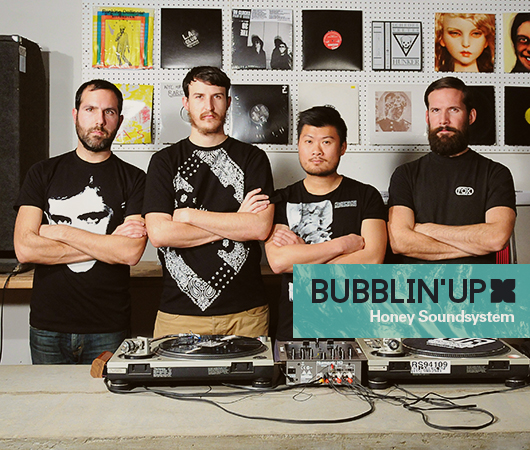
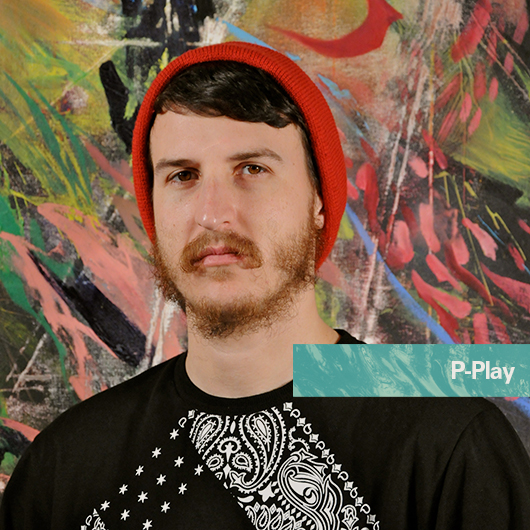
“People throw around the term ‘collective’ like its a fucking 99-cent fan at a vogue ball. But those that truly stick to the principles of making something successful together know you can’t crap out after the first group meeting goes sour,” says Jacob Sperber (a.k.a. P-Play) of Honey Soundsystem, calling from the San Francisco airport. “There is a tireless amount of energy we all put into making sure everyone is comfortable with where this rather insane project is going. But most of all, we put a lot of work into calming our individual styles and needs to make sure that Honey stays Honey.”
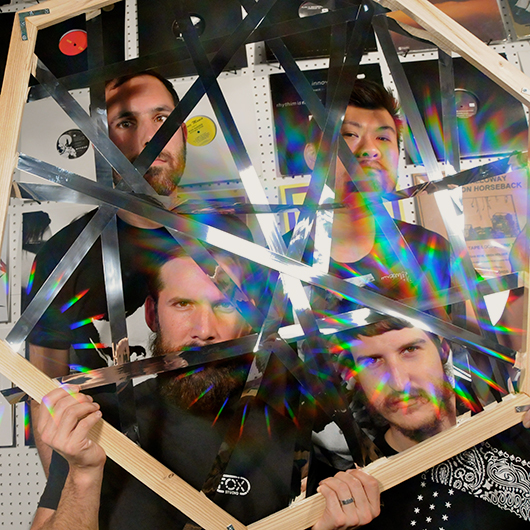
A little calming may have been needed around the time of his late-night call. The four Honey members were just then in the process of returning to their San Francisco home base from various corners of the earth—P-Play from Chicago; Robert Yang (a.k.a. Robot Hustle) from Singapore; Josh Cheon from Barcelona and New York; Jason Kendig from Detroit. They were arriving just in time to throw three overlapping New Year’s parties totaling 22 hours of non-stop dancing, with guests including Matthew Dear and Hunee, plus a semi-secret sunrise gig for locals only.
This flurry of activity has become standard operating procedure for the slyly eclectic, unabashedly queer six-year-old DJ collective, which is currently riding high following the breakout release of School Daze, a curated collection of 1970s electronic music pioneer Patrick Cowley’s eerie, groovy music for gay porn flicks. (The record was a joint release between Honey Soundsystem’s HNYTRX imprint and Cheon’s own Dark Entries label.) Although Honey recently ended its acclaimed Sunday-night weekly after five years, it hasn’t stopped to take a breath. That party, Honey Sundays, introduced San Francisco to a host of diverse underground styles and international guests—Todd Terje, DJ Sprinkles, Silent Servant, Bicep, Prosumer, Optimo, Kink, Lady Blacktronica, and Kim Ann Foxman are just a few of the artists that came through—and hilariously tweaked up-to-the-minute issues with satirical themes taking on skyrocketing real estate prices, the increasing income gap, troll culture, and internet homophobia.
Honey Sundays played a major role in defining San Francisco’s nightlife scene, anchoring the foursome and providing a local canvas to test out aesthetic ideas. But Honey Soundsystem has always been on a global mission: “The project is really about re-legitimizing and empowering the queer role in underground clubbing and dance music,” says Sperber. Honey is hardly alone in this undertaking, but it has managed to create a muscular, multi-faceted style powerful enough to take over any dancefloor, explicitly queer or no.
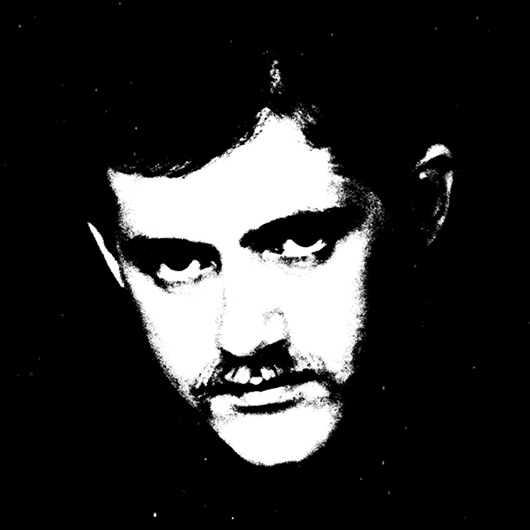
Patrick Cowley School Daze
The collective arose out of the disco revival of the mid-2000s. That movement, with its internet hoard of unheard gems and edit-ready technology, was also a cultural one; the scars of AIDS ran so deep in the previous gay generation that disco, and hyper disco descendant Hi-NRG, were taboo at gay clubs, almost too full of memories to bear. But the first generation to come of age after the AIDS devastation became captivated by the sound, whose complex production, brassy attitudes about sex, occasional darkness and melancholy, and just plain rarity was a perfect antidote to the screechy circuit music and bland pop that had become emblematic of gay dancefloors.
Honey’s first parties, influenced by seminal disco revivalist DJ Bus Station John and driven by the discovery of a huge stash of original disco and Hi-NRG vinyl in the vaults of one of the older mentors they call their “gayngels,” celebrated SF disco labels like Fantasy and Megatone, along with important figures like Cowley and post-Stonewall writer Andrew Holleran’s classic novel Dancer from the Dance.
Soon, however, Honey began to transcend the disco-only category and morph into something quite different, incorporating intelligent techno, EBM, experimental electronics, ’80s rarities, acid house, darkwave, and psychedelic rock re-edits, all with a wink at the queer or sexual subtext of these records. One could hear Chris Burns’ “I.Y.E.,” the Rrose remix of Minilogue’s “Clouds and Water,” and DJs Pareja’s “Saxo Tremor,” next to Julian Jabre’s “Swimming Places,” “Paradise” by Wild Nothing, and Armand Van Helden’s mix of “Sugar Is Sweeter” by CJ Bolland. In an often bewildering era of dance music releases, re-releases, rediscoveries, and micro-movements, Honey’s curatorial prowess provides a kind of bespoke techno for discerning dancers. (Another of Honey’s early influences was sharp underground San Francisco collective Gentlemen’s Techno.)
“Honey really began as a way to present music and contexts that weren’t being presented in gay clubs,” says Sperber. “Part of that was not to engage with gay clubs at all, but to have our parties in straight venues with weird connections to the San Francisco gay past, like lounges that had once been leather bars or sex clubs, or the original site of the legendary Stud bar, now a bachelorette hangout.”
“But because we wanted to help draw a slice of the queer club scene away from top 40, circuit music, and pop hip-hop into more adventurous territory, we’ve always had to compete,” Sperber explains. “That competitive drive helps shape our sound. Even the moody or dark moments of Honey sets have just enough camp or bang to keep everyone moving. The Honey sound is sexual, vocals are melancholic, lyrics are leftfield and tongue-in-cheek, and everything has a thick and commanding kick drum.” He adds, “Dancers can focus on footwork and sluts can focus on eye contact and calculating rhythms. I think the best way to describe Honey’s sound is our cliché term for it, Hard-NRG.”
“From the beginning, too, we wanted to draw on this emerging global network of gay DJs and musicians, people who had been energized by Butt Magazine out of Amsterdam, LA’s A Club Called Rhonda and New York’s Mr. Black club, Horse Meat Disco in London, and the Italo disco revival happening in Italy,” Sperber continues. “We wanted to play the music our friends were putting out, which meant our sound was constantly transforming. After six years, we’ve seen a lot of transformations. But we each come at everything from a different musical perspective, so that helps us absorb new styles into our own.”
Honey started when Ken Woodard (a.k.a. Ken Vulsion), a veteran DJ of ’90s San Francisco, walked into Cafe Flore in the city’s Castro district one afternoon and was tickled to hear a young P-Play drop an Adam and the Ants tune. It was P-Play’s very first gig. An art student raised in Hollywood by a ballet dancer father and a mother who starred as a nurse on M*A*S*H, he’d recently decided he was “too charismatic to be a conceptual artist” and was trying out DJing in partial homage to his first dance music “bitch slaps”: DJ Harvey’s Sarcastic Disco and digger duo Rub N Tug.
Eventually, Ken Vulsion and P-Play formulated a plan to revitalize the gay dance scene. Professional designer Woodard’s deep knowledge of early techno and psychedelic rave sounds, combined with P-Play’s contemporary art knowledge and encounters with local “outsider queer” musicians ranging from Matmos to Gravy Train!!! birthed the Honey aesthetic. They then set out to find others of like mind; searching for queer DJs isolated by their tastes in mostly straight scenes, the pair began to build their own strobe-lit island of misfit toys.
Jason Kendig is the techno roots intellectual, a soft-spoken guy with a bushy beard whose native knowledge of Motor City sounds is dizzying. “I grew up in a suburb of Detroit, and learned about the underground party scene happening downtown from kids in my high school. It was in 1994 that I went to my first warehouse party,” he says. “I used to listen to dance music on the radio. Claude Young on 96.3 FM. Juan Atkins, Kevin Saunderson, and Minx on Deep Space Radio, late nights on WGPR. I always thought there was an eclecticism to the Detroit sound. You would hear DJs jump between house and techno cuts as well as Italo disco or electro, always maintaining that groove.” Kendig’s own mixes have a deep, wintry atmosphere, sparkling with subtle details, ambient risks, and the refinement that comes from years of just listening to techno. He also has the ability to reinvest campy disco or house classics with the fervent emotions that informed them in the first place, bringing on the shivers with, say, a familiar acid-derived cymbal hit.
Kendig’s first residency was at promoter Adriel Thornton’s Family party at Motor Lounge in Detroit enclave Hamtramck. Family, a gay-straight mixed party (rare at the time), was voted “Best Party of 2001” in Urb magazine, but Kendig was ready to “explore new things.” He moved to San Francisco in ’02, eventually teamed up with Hercules and Love Affair’s Andrew Butler for the Mr. INTL project, remixed for fellow queer outfits Discodromo, Stereogamous, House of Stank, and Sleazy McQueen (as Space Coast), and began developing his own tracks. “I’m often wrestling with the idea of ‘What am I contributing to this musical scene?’ Should it matter that I’m following in so many different footsteps? At the end of the day, it’s still fun, which is why I continue,” he says.
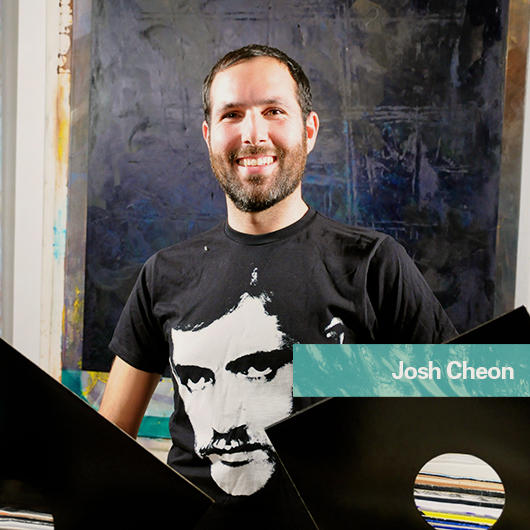
Josh Cheon is the Electronic Body Music and darkwave synth-pop fanatic, someone who’s not averse to dropping Front 242, driving hip-house, or rare Mexican, Romanian, Turkish, or Finnish post-punk into the mix. He’s equally well-known as the head of the Dark Entries label, which has issued a steady stream of relatively undiscovered, out-of-print underground music from the ’70s, ’80s, and ’90s, as well the occasional contemporary band. (The label just launched a special dance-oriented 12″ arm, Dark Entries Editions, with releases from Victrola and Big Ben Tribe.)
“I grew up 15 minutes outside of New York City, and more specifically [was influenced by] The Bank, a goth club that laid the foundations for my obsession with dark, synthesizer-driven music,” Cheon says. “I got a summer job with Metropolis Records in Philadelphia, which released modern EBM and synth-pop bands as well as classic darkwave. At Rutgers University, I was the music director for 90.3 FM The Core for two years and held internships at Beggars Banquet, 4AD, Matador, and DFA Records. I moved to San Francisco in 2006, secured a weekly show on West Add Radio, and fell into Honey’s disco sound—but of course, I couldn’t keep the darker ’80s part of me down.” He continues, “For me, the best way to describe Honey’s sound is ‘Divas to the dancefloor, please.’ I can’t resist a good club vocal, and I think we provide a soulful haven for our dancers.”
Robert Yang, a quiet type with a sudden grin who’s most comfortable when sitting behind a massive bank of equipment, comes at things from an abstract, analog-obsessive angle. “The bleep-bloop melodies of the early Warp sounds from the ’90s enchant me,” he says, “and the Italo disco and proto-house sounds I discovered while listening to the Cybernetic Broadcasting System (CBS) online embedded me in the sounds of the early ’80s.” Yang is the one to drop in obscure ambient soundscapes and abrasive DIY tracks, although his singular taste also extends to goofy lost East European and Asian disco records and motorik classics. His musical side project, Bezier, reflects all this.
“I’d say I bring continuity to Honey,” he says. “I have a pretty good memory and can remember the hour, day, and location of events on our timeline. For a group that is obsessed with history, I think this is important. Even though each of us has something different to bring to the table, all of our sounds are rooted in classic feelings and sensations. Honey is like a body memory.”
Since its inception, Honey has been joined on its queer-the-underground quest by outfits like NYC’s Wrecked, Berlin’s Homopatik, Chicago’s Men’s Room, Pittsburgh’s Honcho, mysterious masked entity Luther, and many others. Founder Woodard has left the group to start his own Black Sheep Music project, but the Honey machine rolls on, with one-off parties whose flyers take inspiration from classic Situationist and gallery-fresh contemporary art and décor best described as “Dash Snow’s disco Bar Mitzvah, discount party store edition.” (It’s no surprise that the collective recently appeared at LA’s Museum of Contemporary Art.)
Sperber, whose own DJ style is hard-driving yet kicky and in-your-face, like an army of ghost voguers invading a warehouse rave, and whose alter ego Jackie House can often be spotted behind the decks in a giant blonde wig, lists upcoming Honey highlights: “We are doing an East Coast tour in February hitting Philly, New York, DC, Chicago, and Detroit. In Chicago, we’ll throw a School Daze event on Valentine’s Day which celebrates the life of Patrick Cowley and the vintage adult films of Fox Studio in what is said to be the oldest gay sex club in America, the Bijou Theater.”
He continues, “But mostly right now we’re enjoying some of the fruits of our labor, having created such great relationships with promoters, dancers, and musicians around the world, and are getting to travel and play other cities. We’re putting a lot of work into transitioning the way our fans interact with our events, confusing the aesthetic, throwing some wrenches in the mix to make people have to think a little and redefine what we are about. You gotta work for it, gurl.”
Swedish-born, New York-based DJ/producer and Cumba Mela co-founder Thornato (pictured above) uses his music and label as a reflection of his varied background, asserting a global and diverse palette which ranges all the way from classical piano to dubwise club music. Ahead of his “Ka Kong” single on January 14, Thornato has shared one of his upcoming record’s remixes, a heavy production by label mate Atropolis. Sledgehammer kicks and childlike chanting introduces the bass-addled remix ahead of Jahdan Blakkamoore‘s gruff dancehall vocals which ride over oscillating pads and spacious tuned percussion. Atropolis’ uptempo tune stretches “Ka Kong” into a satisfyingly multicultural tune, dicing up African-inflected percussion with tropical vibes and a dose of grimy UK sounds.
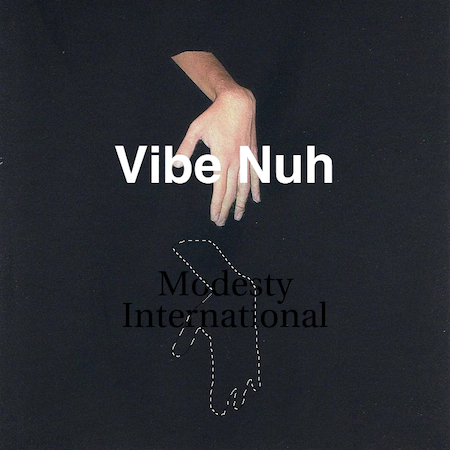
New York City imprint Ounce. celebrates its 20th release on January 15 with a full-length from anonymous producer Vibe Nuh, titled Modesty International. Lifted from that record, “Calimocho” fuses Middle Eastern percussion to a cruising jazz-fusion groove, with a mangled, bubbly lead melody and some odd production tics that place the globally aware material in a slightly more futuristic context. The effervescent cut pulls from a host of countries and styles, but its eccentric use of production techniques shows that the new artist’s craft isn’t only in stitching vintage samples.
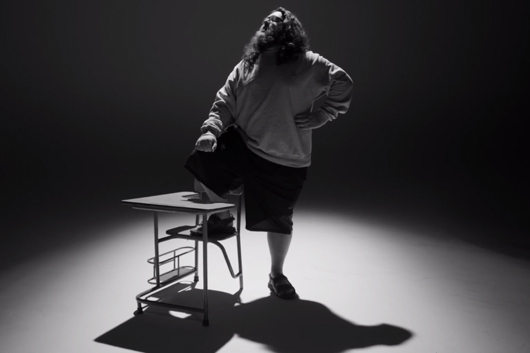
Last November, LA MC/beatsmith Jonwayne issued his debut rap album, the appropriately titled Rap Album One (the making of which we talked about at length with the producer in a recent In the Studio feature). With his record for Stones Throw only two short months behind him, Jonwayne has shared a new video for album cut “The Come Up.” Split into two separate songs on his album, Part 1 and Part 2 of the track are combined here into one black-and-white clip by director Henry DeMaio. The four-plus-minute video features Jonwayne sitting on top of bikes, standing next to school desks, and rapping while surrounded by tinfoil—all while rocking Birkenstocks, it should be noted. Scoop Deville, who features on “The Come Up Pt. 1” and produced “Pt. 2,” also makes a brief appearance.