An extended rework of L.I.E.S. label boss Ron Morelli’s track “Director of…”—lifted from his recently released, industrial-tinged Spit LP—by PAN experimentalist Lee Gamble (pictured above) has landed online as a full stream. Last month, Ron Morelli released his raw and knackered debut album via Dominic Fenrow’s Hospital label, and quickly followed it up with an EP of outtakes called Backpages. Streaming below, Lee Gamble’s generous expansion of “Director of…” takes the barbed electronics of Morelli’s original production and adds staunch kicks and punchy percussion to forge a surprisingly danceable tune out of a rather strange piece of music. (via Juno Plus)
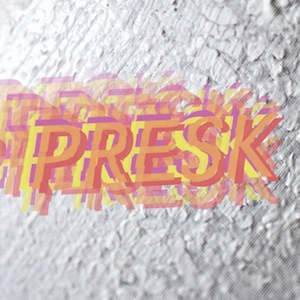
Following up the September release of his Love Again EP, Dutch DJ/producer Presk is set to return with another EP next year. The artist’s palette of bass-heavy techno is said to be expanded into more warped and broken territory on Saluki, a four-track release which is set to drop on January 27 via Doc Daneeka’s Ten Thousand Yen imprint. Before then, the tracklist and artwork for Presk’s forthcoming record can be found below.
At this point, it’s safe to assume that the majority of XLR8R readers know the drill. For the past three weeks, we’ve been cobbling together lists of what we consider to be the Best of 2013, and though our audience will finally get to have its say on Monday when we unveil the results of our annual Readers Poll, the editorial staff does have one last piece of business to take care of first—our favorite releases of the year. The first half of this list was published yesterday, but today’s entry details the absolute best of the best, namely, the 15 releases we enjoyed the most in 2013.
15. Laurel Halo “Behind the Green Door” (Hyperdub) Coming off the claustrophobic, cryptic poetry of last year’s divisive Quarantine album (we liked it, for the record), Laurel Halo‘s first release of 2013 felt unnerving in a different way. In our review of Behind the Green Door, we described it as “mimicking a machine’s automated blinking underneath [her prior work’s] telecom psychedelia.” The EP’s four tracks offer rigid, stripped-down takes on her signature sound, eschewing vocals, moving with a cold pulse, and only scarcely letting light in. Like the best minimal music, it’s readily powered by a scant few elements that have been expertly dialed in, such as the blanket-like pads on “UHFFO,” the huge, throbbing kicks on “Sex Mission,” and the eerie, out-of-tune piano on “Throw.” Steve Kerr
14. John Roberts Fences (Dial) Upon its release, we called John Roberts‘ Fences “a kind of holistic listening experience; like an initially painful deep tissue massage, it is quite difficult to enjoy superficially.” This judgment holds up some six months later. Roberts’ effort is uncommonly austere for its era, offering a progression of arrangements that’s far more about sensuality and texture than hooks. Fences is as far from the producer’s house roots as he has ventured; the drums come in bursts, the intricate melodies tangle synthetic and organic instruments, and there are few, if any, vocal samples. Its abstraction begs for full immersion, and we’re betting the album will sound just as beguiling years down the line. Steve Kerr
13. Livity Sound Livity Sound (Livity Sound) Livity Sound’s two-disc compilation comes across less like an album, and more like a manifesto from the Bristol collective’s three members (Peverelist, Kowton, and Asusu.) It’s a showcase of the producers’ solo and collaborative works, but every track is drawn together by a shared aesthetic. Theirs is a vision of club music reduced to its most potent elements, where raw energy and rhythmic tension take pride of place over production sheen or obvious hooks. The result is two hours of the most vital and deeply satisfying dance music that’s been released in recent years. Si Truss
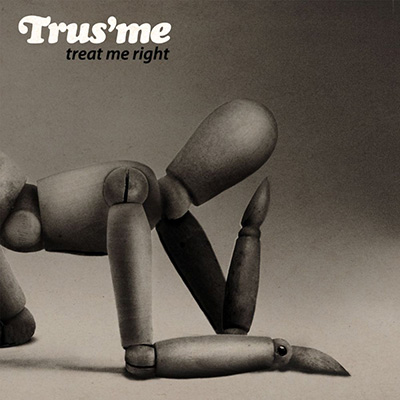
12. Trus’me Treat Me Right (Prime Numbers) Following a relatively long period of quiet (apart from an admittedly excellent trio of remix EPs that popped up last year), Manchester house producer Trus’me re-emerged in a major way in 2013, dropping Treat Me Right, his third full-length and first album since 2009. Though his work has always been notable for its lush construction and soulful Detroit-isms, this new LP found Trus’me forging a deeper, darker path onto the dancefloor. The music is sultry, hypnotic, and occasionally even a little scary, as Trus’me often foregoes melody while laying down thick rhythms, heavy drums, and ominous vocal bits, all while turning up the tempo and flirting with techno in a more overt fashion than ever before. Shawn Reynaldo
11. Gold Panda Half of Where You Live (Ghostly) Leading up to its release, it was said that Gold Panda had wished to use Half of Where You Live as a way to reflect upon the impressions left by the various cities and cultures he had experienced during the travels that followed the release of his 2010 debut LP, Lucky Shiner. In that regard, Half of Where You Live surely accomplished its goal. Each track on the UK producer’s sophomore full-length seems to embody a specific locale, more obviously on efforts like the percolating “Brazil” and ambient collage “My Father In Hong Kong 1961.” In a less overt manner though, each production appears to be stamped with a distinct time and place, as the synced layers of dusty samples and tasteful melodies help to build warmly inviting aural worlds on top of Gold Panda’s efficient rhythmic frameworks. From the dreamy skip of “An English House” to the murky jazz of “Flinton” and the burnt R&B of “Reprise,” Gold Panda lets his gracefully chopped and manipulated samples do most of the talking, and the results are charming, making Half or Where You Live just as suitable for friendly dancefloors as it is for sunlit joyrides and immersive headphone listens. Glenn Jackson
10. Graze Graze EP (New Kanada) With their debut release together as Graze, Adam Marshall and Christian Andersen (a.k.a. XI) made one of the year’s strongest first impressions. The pair’s self-titled EP offered six pieces of machinist dance music, each realized somewhere between rhythmically rooted house and precise techno, with an emphasis placed on robust sonic structures. Heavy-handed as it is, Graze also succeeds because of its human touch, as tracks like the opening “The Sust” and the shuffling “No Save” impress a sense of refracted mood upon Graze’s deep dancefloor workouts. Appearing halfway through the elongated EP (which clocks in just below 40 minutes, making it an album-sized effort by most standards), the swinging “Ques” proves to be the record’s standout cut, as its icy chords and enveloping bassline play a large role in Graze‘s turn as one of the most memorable debuts of 2013. Glenn Jackson
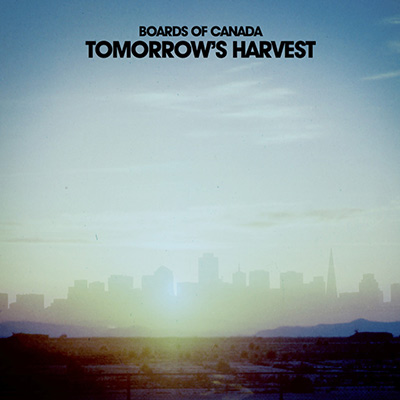
9. Boards of Canada Tomorrow’s Harvest (Warp) The music of legendary Scottish duo Boards of Canada has undoubtedly been described as “cinematic” before, but this year’s intensely conceputal Tomorrow’s Harvest LP saw producers Michael and Marcus Sandison elevate the idea to a whole new level of importance. Their long-awaited fifth album was explicitly influenced by “grim ’70s and ’80s movie soundtracks” from the likes of John Carpenter and Italian composer Fabio Frizzi, with the brothers going so far as to make specifically timed changes in the music to “give an impression of something familiar from soundtrack work that was around 30 years ago.” These kinds of detailed nuances are the stuff that diehard Boards of Canada fans have thrived on since Music Has the Right to Children canonized the group’s technicolor beat music in 1998, but even if the subtleties weren’t apparent to every listener, Tomorrow’s Harvest was by all accounts a lovingly crafted album rich with desolate imagery and a dynamic narrative evoking the aftermath of contemporary civilization’s collapse. Patric Fallon
8. Factory Floor Factory Floor (DFA) Factory Floor‘s self-titled debut isn’t just minimal, it’s surgical. Every synthesizer and drum beat on the LP sounds like it was shaped by a scalpel. Rhythms pummel, keyboards slice, and Nik Colk Void’s voice is sucked through space like an astronaut out of an open airlock. During the album’s recording process, the band worked with various ’80s luminaries, including members of Throbbing Gristle, Mark Stewart of The Pop Group, and Stephen Morris of Joy Division/New Order, and their influences seem to have helped weaponize the trio’s sound. Yet amidst the album’s doomy industrial and chilly techno tracks, danceable hooks abound. Factory Floor may have waited several years before it released a proper full-length, but the UK outfit has clearly used that time wisely, developing an uncompromising vision that combines post-punk urgency and dystopian Detroit grooves. Nathan Reese
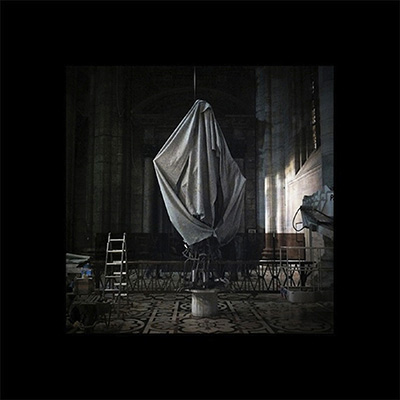
7. Tim Hecker Virgins (Kranky) Virgins, Tim Hecker‘s latest, continues to expand his palette and secure his place as one of the top—if not the absolute best—ambient composers working today. While 2011’s Ravedeath, 1972 was built from processed guitar and organ, Virgins includes more varied instrumentation woven into Hecker’s tapestry of electronically sculpted ambient abysses. Collaborating with the Reykjavik-based Bedroom Community collective, including Paul Corley and Ben Frost, Hecker recorded many of the instruments in a live setting. As always, nothing about Hecker is easy to digest (his compositions demand at least a modicum of patience), but all things considered, Virgins is one of Hecker’s most immediate and fluid efforts; blooms of light appear amidst claustrophobic drones and the guest players imbue analog warmth to the album’s bleaker moments. Even casual fans of drone and ambient should be able to appreciate Hecker’s masterfully realized vision. Nathan Reese
6. FaltyDL Hardcourage (Ninja Tune) There’s something decidedly understated about Drew Lustman’s third album as FaltyDL. On a superficial level, it’s a record that doesn’t set out to do anything remarkable; basically, it’s an album which blends sounds taken from house and garage into melodic and subtly accessible works of electronic music. Yet beneath the surface, Hardcourage is meticulously detailed, richly textured, and exquisitely produced. It does away with much of the rough-edged aesthetic of Lustman’s previous works, but in its place is a clean and streamlined version of his vision—music that is direct enough to suit the dancefloor while still being utterly cerebral. Si Truss
5. DJ Koze Amygdala (Pampa) There really is no one that makes music quite like DJ Koze, a fact Amygdala—the Hamburg producer’s first solo LP in seven years—graciously reminds us of across its 13 strangely sweet tracks. On it, Koze makes sense of things most producers could never get away with, whether he’s working toy instruments and detuned horns into the foreground, chopping up Marvin Gaye samples, or repositioning the loungey vocals of deceased German vocalist Hildegard Knef into one of the record’s most spellbinding efforts. But even when one sets aside his production gymnastics, Amygdala still stands as one of the year’s most distinctive listens, as Koze is a master craftsman when it comes to this kind of playfully eccentric, soul-dripping dance music. Incorporating an impressive list of collaborators—Caribou, Matthew Dear, and Apparat among them—Koze’s vision comes across expertly balanced, taking equal time to explore obtuse hybrids on songs like “Magical Boy” and “Don’t Lost My Mind,” while also landing on a number of truly beautiful musical moments with pieces like “Nices Wölkchen” and the tenderly wistful “Homesick.” In terms of electronic music, not much is worth waiting seven years for; Amygdala was. Glenn Jackson
4. Floorplan Paradise (M-Plant) While putting together the debut full-length of his long-running Floorplan moniker, techno stalwart Robert Hood opted for a sound that was both fidgety and pared back, but also made sure to retain the disco, house, and gospel inclinations that separate the project from his larger body of work. From the soulful vocal and piano samples of “Never Grow Old” to the flatteningly severe “Baby Baby,” Paradise exhibits a welcome diversity that enlivens the proceedings; in lesser hands, the LP could have become mired in overly rigid, loop-based production. As always with Hood, the highlights are in the details—rhythmic elements penetrate and circle around one another in a dizzying, intricate fashion, and the melodic core of many of the record’s tracks is often a composite of infinitesimally small micro-loops—but the inclusion of vocals on a number of Paradise‘s tracks does a lot to free up the producer’s style, giving it an unexpected warmth while keeping his rigorous, technical prowess intact. It’s this balance that makes the LP so refreshing and so damn good—its grooves are just as fast and just as itchy as any other Robert Hood record, but there’s a surfeit of ecstatic energy that pushes things over the edge, and ultimately makes Paradise one of the most humanizing, unclassifiable, and best dance-music records of the year. Tim Gentles
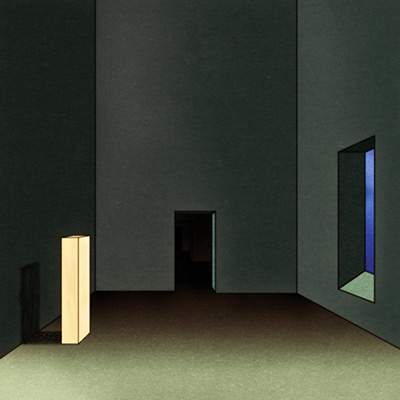
3. Oneohtrix Point Never R Plus Seven (Warp) It seems to be an established fact within electronic-music culture that ‘digital’ is the devil. Young producers chase analog gear as if it’s some kind of Holy Grail, its mythical warmth supposedly capable of turning their productions into instant masterworks. Yet with R Plus Seven, Daniel Lopatin (a.k.a. Oneohtrix Point Never) proves that there’s beauty to be found in the clinical iciness of early digital music. It’s an album that crafts the cold sounds of ’90s marketing themes and crude sound effects into something uniquely evocative. MIDI instruments pick out motifs that sound like they’ve been ripped straight from early CD-ROMs across a backdrop of clinical infomercial synths, with Lopatin rapidly shifting between different sounds and textures. He often alters the mood at the drop of a hat, as if he’s flipping through a series of obscure late-night TV channels. It all creates a sonic tapestry that feels like a decade’s worth of rudimentary digital sounds remixed into some half-forgotten nostalgic dream. The result is a work of experimental electronic music with an unparalleled level of emotional resonance; moreover, it’s a true masterwork of sound design. Si Truss
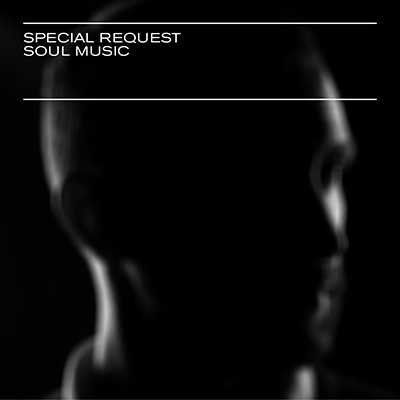
2. Special Request Soul Music (Houndstooth) A fair portion of 2013’s most interesting moments in dance music centered around the resurgence of jungle and drum & bass as a viable influence and sonic palette from which to borrow, but none of them had the sheer vitality of Soul Music. Veteran DJ/producer Paul Woolford‘s debut LP as Special Request is steeped in the memory of classic rave and pirate radio’s salad days, but never feels bogged down by nostalgic sentimentality or derivative retreads; as such, he’s able to cherry-pick some of that era’s best elements to make the updated dancefloor hybrids that comprise his album’s sizable tracklist. Cuts like “Soundboy Killer” and “Ride VIP” use fiery breaks and massive basslines in their untouched forms, as wailing synths, vintage FX, and radio-ripped vocal hooks color in the edges. The record’s stranger iterations of jungle (i.e. “Cold Blooded,” “Body Armour,” and “Broken Dreams”) contort the genre into something so contemporary it is almost unrecognizable, giving the likes of Zomby or even Hessle Audio a run for their money. And though the album’s second disc of remixes and bonus cuts may feel a little bloated to some, the quality of its contributions can’t be disputed. Woolford’s Special Request album offers a whole lot of challenging dancefloor tunes that largely ride one visceral note, but in a year that often felt lacking in classic, club-ready electronic sounds with an irrefutable edge, we needed as much Soul Music as we could get. Patric Fallon
1. Jon Hopkins Immunity (Domino) Immunity, the fourth studio album by virtuosic UK producer Jon Hopkins, has grown on us considerably. When we published our review of the eight-track LP in June, we found it to offer “precise sonic sculpting” and “graceful musicality” even then, but that appreciation for its impossibly detailed brand of techno- and ambient-informed electronic music only continued to deepen. Our In the Studio feature with the seasoned artist further enriched our understanding of the machines, places, processes, and ideas that brought about Immunity, helping to unravel the densely layered personality woven into each song. Experiencing the music live gave it a raw physicality that only the dancefloor can foster. And as the months wore on, a new dimension of the record revealed itself; the icy crunch of its opening half got into our bones like autumn’s chill, and the bottom section’s celestial majesty felt all too perfect for our daily listening as the holiday season approached. Hopkins seemed to have created something that increasingly made sense the more it was heard in different contexts.
The key to Immunity‘s enduring versatility can be boiled down to two main elements: purity and simplicity. It’s not an album beholden to musical trends or genre fads, nor does it blatantly gear itself towards any particular audience. In fact, of all the major electronic records to cross over in 2013, Hopkins’ is the only one practically devoid of blatant hooks and catchy vocals (there are certainly no discernable lyrics), which is no easy feat considering the majority of artists who ruled the dance charts this year. Songs like the commanding “Open Eye Signal” and the transcendent “Abandon Window” all subsist on musicianship and production skill, speaking to the listener purely in the tone, melody, rhythm, and dynamics of their instruments and soundscapes. And unlike many of Hopkins’ peers in the more experimental sectors of electronic music, he never seeks to complicate his tunes. Each production thrives on, say, a single bassline that swells and contorts through its runtime, or maybe a five-chord piano piece, around which mangled beats and gauzy atmospheres stomp and sway. The clarity of vision that Hopkins crafted Immunity with made it pure enough to exist outside of contemporary expectations and simple enough to find its place in any record collection built on powerfully confident, jaw-droppingly beautiful music of any kind. Patric Fallon
XLR8R’s Best of 2013 coverage will conclude on Monday with the results of our Readers Poll. In the meantime, don’t forget to take a look at the other Best of 2013 pieces we’ve posted already:
UK producer Jabru has put his talents to a variety of projects this year, delivering an early collaborative EP alongside Hackman as Bruh Jackman, and appearing just last month on the inaguaral comp for the new Sounds of the Cosmos label. Looking to squeeze one last effort in before the year comes to a close, Jabru has dropped the Calling Card Vol. 1 EP, a diverse, five-track effort that shows some new depths to the budding producer’s range. “Like You Care” serves as the digi-record’s most straight-forward cut. Its thinly sliced chords and bulbous bassline lead the rolling house number’s opening push before a restlessly tweaked synth sequence takes over the latter half. After giving “Like You Care” a spin, Jabru’s full Calling Card Vol. 1 EP can be streamed and downloaded for free after the jump.
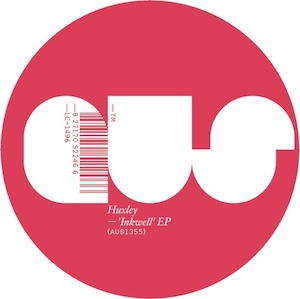
Following several high-profile releases on Rinse and Hypercolour over the past couple of years, UK producer Huxley (a.k.a. Michael Dodman) has now issued his debut for Will Saul’s Aus label. The three tracks—along with a digital bonus track—that make up the Inkwell EP continue in the vein of bass-heavy, big-room garage-house that Dodman has mined with considerable success in his releases to date. Like those previous releases, Inkwell provides a nice balance between melodic hooks and easy accessibility, and includes some deeper, darker strains that are carried forth by Dodman’s penchant for seriously formidable basslines.
“Inkwell” opens the proceedings with a slow-burning intro that introduces a vocal sample that provides the tune’s main hook, which is draped in oscillations of filtered sound and slowly builds up to the introduction of a massive bassline. The rest of a track feels customized for a peak-time dancefloor, and while big, garage-influenced house tracks from the UK are hardly groundbreaking at this point in time, its bright organ stabs and shuffling, slightly swung beat can’t help but satisfy. The remaining two tracks from the physical release break from this formula slightly, but in many ways are no more original. “Creeper (Club)” tones down the first track’s melodic sensibility, offering up a lopsided beat, sprinkled piano ambiance, and a rapped vocal sample, while “Long Summer Night” takes things in the direction of sensual deep house that’s heavy on reverb and muted, underwater pads, with a vocalist repeating both the titular phrase and “all night long.” The digital-only bonus track “Creeper” feels aimless, with none of the stripped-back appeal of the “Club” version, and like much of Dodman’s material, it relies perhaps a little too heavily on a good bassline to carry the tune. While Huxley surely knows how to craft a decent tune, there’s a distinct lack of subtlety to the Inkwell EP that doesn’t always work in the record’s favor.
The marketplace for DJ headphones has been growing increasingly crowded, with many companies scrambling to manufacture a pair of cans that can provide appropriate levels of bass and clarity while maintaining the comfort necessary for daily use. Danish audio brand AIAIAI is the latest contender to occupy that niche with its new TMA-1 X, an extremely lightweight, dynamic set of closed headphones described as being suitable for “DJing, monitoring, and [using with] mobile devices.”
How They Look
The TMA-1 X headphones follow the same sleek visual aesthetic that AIAIAI has established with their popular TMA-1 style—black matte coloring and minimal lines, with a focus on function. The earcups are on the smaller side, with less cushion than the TMA-1, though the light padding ensured they still were comfortable enough for multi-hour use. The TMA-1 X’s headband is covered with a soft-yet-firm foam that kept the phones rightfully situated. Sticking to previous design decisions, AIAIAI opted to leave the headphones devoid of any branding, save for a small, indented logo on the inside of the headband.
Fitting with their multi-purpose strategy, the TMA-1 X employs an in-line microphone and one-button remote for answering calls when used in conjunction with a phone, though it would have been nice if it also carried over the volume controls from the TMA-1. Users with smaller heads might want to take note of a minor quibble we had with the TMA-1 X: we found that the cable connecting each earcup bunched up uncomfortably when the phones were fitted tightly. Ultimately, this didn’t get in the way of usability, but it did require tucking the cord snugly under the ridge of each earcup.
How They Sound
The most important factor in the success of any pair of headphones is, of course, how they sound, and thankfully, the TMA-1 X didn’t disappoint. As promised, they easily handled a wide range of music with aplomb, accurately delivering crisp highs and deep lows. The TMA-1 X shares the 40mm driver unit size with its big brother, and certainly felt capable of delivering enough volume in any situation while maintaining accurate sound reproduction across the frequency spectrum. Thankfully, the TMA-1 X lacked the exaggerated bass of other headphones aimed at DJs, making them a suitable substitute for monitoring quick mixes and production tasks. However, the lightweight design of the TMA-1 X did mean that the smaller earcups provided less sound isolation than larger headphones typically offer, but such a trade-off seems necessary given the design imperatives.
The Bottom Line
Apart from the small comfort issue with the cable, it’s hard to find much at fault with AIAIAI’s new TMA-1 X line. The Danish brand has managed to craft another sleek, versatile pair of headphones that sound impeccable and are comfortable enough for daily use. Their lightweight and clean design will give anyone looking for a stylishly practical pair of headphones an easy choice.
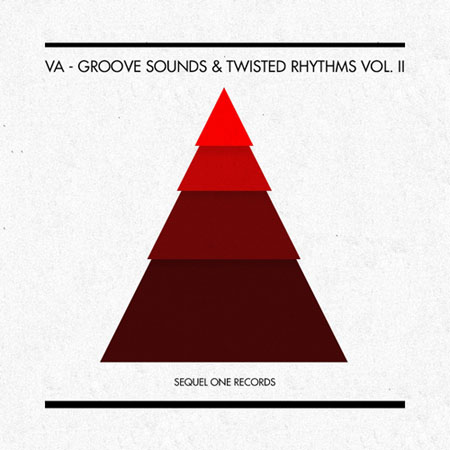
After first introducing itself to the XLR8R faithful earlier this year with Keepsakes’ “Kontaina” (a cut that ranked pretty high as one of the Top Downloads on our site this year), Poland’s Sequel One imprint is wrapping up 2013 with a new compilation, Groove Sounds & Twisted Rhythms Vol. II. Included in the forthcoming seven-track collection is Chilllito‘s “Lucidity,” an industrial-streaked slice of moody garage which comes laced with the kind of icy pads and sun-starved melodies that fit the winter season perfectly. On December 21, the entirety of Groove Sounds & Twisted Rhythms Vol. II will be available as a free download via Sequel One’s Bandcamp and can be previewed after the jump.
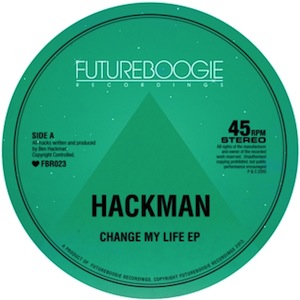
Over the past few years, with releases on RAMP, PTN, Greco-Roman, Well Rounded, and a smattering of other labels, Hackman has steadily honed a sound that draws from R&B, house, UK funky, and garage. His latest release is his first via formidable Bristol imprint Futureboogie, and it sees the producer leaning further than ever before towards vocal-based, R&B-influenced house of a decidedly commercial (at least in the UK) bent. The resulting Change My Life EP is a distinctly soul-tinged affair, one full of well-rounded bass notes and sweeping synths, but the record ultimately presents a sound that is arguably well past its saturation point.
The EP’s title track pairs a steady 4/4 kick and clap pattern with some nice, full-sounding Rhodes chords, while a fairly saccharine R&B vocal line is placed over the top. It’s the kind of tune that’s clearly meant to seduce, but the result is, if not outright grating, completely innocuous. Much better are the EP’s other two tracks; “Lost From Me” features breathy, chopped-up vocals and squelchy bass notes, and the chorus manages to achieve an appropriately decadent vibe, but it’s “We Make Delicious” that most clearly breaks from Change My Life‘s conventionality. Based around a raw, tense bassline, the track opts for a moody, downtempo sound, and features lilting, minor-key synths and barely there vocals; still, aside from an appealingly complex rhythm section, the song fails to congeal into anything especially memorable.
If anything, this latest release from Hackman is characteristic of an increasing—and dispiriting—homogenization of underground house music from the UK. Shorn of any of the mongrel, funky-meets-garage-meets-R&B character of his previous releases—such as 2011’s excellent, steel-drum-featuring single “Agree to Disagree”—the three tracks on Change My Life instead have a sheen of upwardly mobile blandness, and seem unsure of who they’re meant to appeal to.
Most of the XLR8R audience has likely noticed all of the Best of 2013 articles over the past two weeks, and while we’d like to think that everyone is happily devouring what we have to say about this year’s crop of music, we’re also fairly certain that our readers have plenty of opinions of their own. Given that, we’ve once again decided to roll out an official year-end readers poll and find out what everyone has to say.
Below are the five categories in which we’d like people to weigh in. Voting is open now through Friday, December 20. The results will be published at the conclusion of our Best of 2013 series, so don’t miss your chance to make your voice heard.
XLR8R Couldn't find the embed function for type: "embedcode" and source: "".
London bass specialists Boddika and Joy Orbison have kept a bit of a low profile on the release front in 2013, though the VIP version of their “Mercy” tune from 2012 did nab a high-ranking spot on our list of the Top Tracks of 2013. 2014 looks like it’ll kickstart the pair’s collaborative output early on, as a two-track 12″ has been announced for January with a preview of both sides. “More Maim” b/w “In Here” offers more than its weight in throbbing, ominous techno, with each side pushing oil-slick and mechanical grooves. Both tracks from Boddika & Joy Orbison’s record can be preview below. (via Juno Plus)