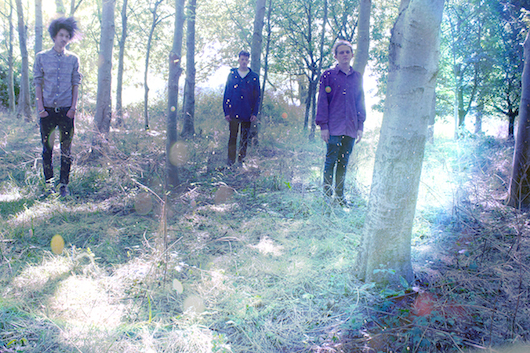
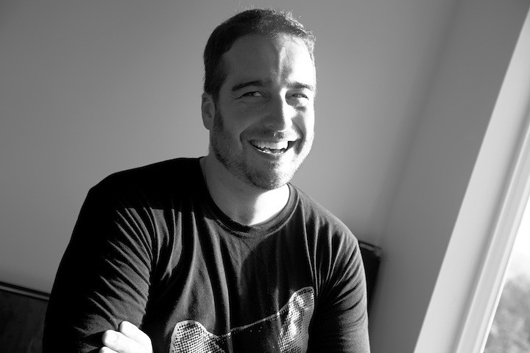
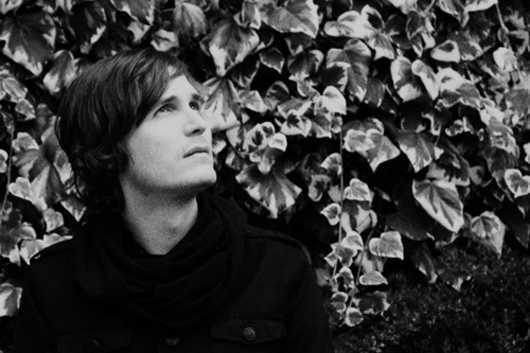
Dreamy Suffolk trio The Soft (pictured above) dropped its Uncanny Valley EP back in September via Brooklyn label Ceremony, and the group returns today with Melbourne producer Jahnne‘s gauzy remix of one of the record’s cuts. Originally an ethereal and texture-heavy production, “Bewilder” is shaped by Jahnne into a simultaneously spirited and meditative piece, with cracking percussion and reverb-soaked vocal snippets swelling into an elegant, house-inspired refrain.
Apparently, yesterday was the birthday of LA-based house/garage veteran Todd Edwards, and the artist used the occasion to hop on his Twitter account to make a few announcements and share a link to download a handful of edits used in his Essential Mix from earlier this year. In his Twitter feed, Edwards explained, “When I was young, I trusted someone to manage my career and it was a mistake,” after which he continued, “Since I started making music, my music—in music industry language, the masters and publishing—were owned and controlled by someone else. For the last four years, I’ve been fighting to get the songs I created back into my hands, and I’m very happy to say that I finally own my music.” The DJ/producer caps off his celebratory announcement with more news and a gift, saying, “My new album will be out in 2014; I can’t wait until you get to hear it. Until then, here are my Essential edits.” That bunch of tunes can be nabbed for free here.
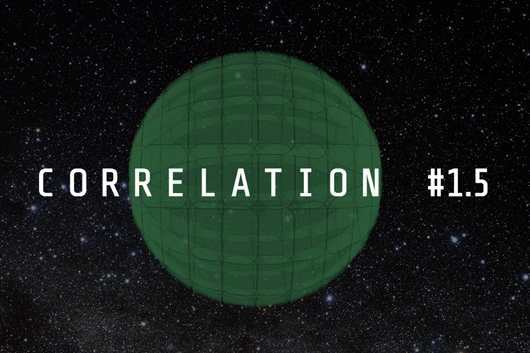
Belfast’s sci-fi-obsessed funk and techno maestro, Space Dimension Controller is keeping up with his prolificstreak in 2013, as he’s just released a new EP as a free download. Correlation #1.5 is two tracks of the DJ producer’s special brand of intergalactic dancefloor music, albeit with a more hard-edged and stripped-down vibe than usual. The offering follows soon after the release of Space Dimension Controller’s Correlation #1 EP for Clone’s Royal Oak imprint, and according to Dummy, is part of an ongoing free download series. All of Correlation #1.5 can be streamed and downloaded for absolutely free here.
Of all the content that gets posted on XLR8R each week, there’s little question that our podcast series is the thing that usually gets people the most excited. Even as a litany of mix series have sprung up around the web in recent years, readers continue to flock to XLR8R on Tuesday mornings to gobble up the latest mix on offer. In 2013, we published nearly 50 podcasts, all of which were exclusive DJ mixes crafted specifically for the series. The styles explored and the artists highlighted may have varied wildly from week to week, but we’d like to think that each podcast showcased an artist putting their absolute best foot forward. (After all, we only allow people to do one XLR8R podcast; there are no repeat appearances.) Given that, it was difficult to select our favorite mixes from the past year, but our Best of 2013 series wouldn’t have been complete without taking a look at the XLR8R podcast series. Our editors’ top picks are below, but in the interest of providing a more thorough picture, we’ve also taken a look at our web traffic and assembled a list of the year’s 10 most popular podcasts.
Top 10 XLR8R Podcasts: Editors’ Picks
10. Nautiluss 2013 was a relatively quiet year for Nautiluss, but this compelling mix nonetheless found the Toronto-based producer skillfully bringing together bits of playful house, chunky techno, and speaker-flexing bass.
9. Ulrich Schnauss Entitled Drift to the Centre: Deep Atmospheric DnB from the Golden Age, this 78-minute saga offered the German veteran a chance to dive into his archives and put together a lush session of vintage drum & bass.
8. Marcel Dettmann Highly functional and starkly intoxicating, this mix captured the Berghain resident and Berlin stalwart doing what he does best: weaving together a driving, no-frills session of top-flight house and techno.
7. Trus’me Surfacing ahead of his much-anticipated and long-awaited Treat Me Right LP, this podcast served as a something of a reintroduction to the UK producer, who strung together propulsive bits of house while showcasing both his own work and a sampling of quality offerings from his Prime Numbers imprint.
6. Special Request The Special Request project is largely defined by its longing for the pirate-radio era and its love for vintage jungle and hardcore, but this breakneck mix found Paul Woolford fully indulging those passions as he combined vintage cuts and new tunes into a totally thrilling DJ session.
5. Omar-S It’s not often that Omar-S puts together a podcast for anyone, but we somehow convinced the Motor City original—who elected to take things in a decidedly funky and unapologetically old-school direction on this DJ mix—to kick off a special series of podcasts celebrating XLR8R‘s 20th Anniversary.
4. Peverelist Bristol has long been a key outpost in the UK’s electronic landscape, and 2013 saw the city coming alive with a new breed of bass-driven experimentation. Peverelist was in the midst of that resurgence, and this mix allowed him to share many of the latest groundbreaking sounds that his hometown had to offer.
3. Delroy Edwards’ New Forms Mix Of all the artists in the L.I.E.S. universe, LA producer Delroy Edwards has arguably generated the most excitement, thanks in part to his decidedly unpolished aesthetic and flirtations with classic ghetto house. This podcast—which dropped just days before he officially launched his own L.A. Club Resource imprint—found him expanding his vision, as he combined those sounds with bits of noisy weirdness and raw hip-hop.
2. dBridge Though the genre never went away completely, there’s little question that drum & bass enjoyed a heightened level of attention in 2013, which resulted in storied old-school producers like dBridge once again being celebrated as heroes. On this mix, he offered up a number of selections from his own Exit label and also highlighted the dancefloor potential of combining jungle with juke and footwork rhythms.
1. Oneohtrix Point Never Referring to this mix from Oneohtrix Point Never as merely a podcast almost does it a disservice. Simply put, the Brooklyn experimentalist put together a complex listening experience, one that ran nearly two hours and somehow connected the dots between disparate sounds that most rational people would have assumed had nothing to do with one another. Debuting on the same day as his stellar R Plus Seven LP, the podcast further solidified his status as one of the most innovative—and interesting—artists of our time.
XLR8R’s Best of 2013 coverage will continue throughout the next few weeks, so check back each day for additional year-end round-ups. In the meantime, don’t forget to take a look at the other Best of 2013 pieces we’ve posted already:
Inspired by filmmaker Stanley Kubrick and writer H.P. Lovecraft, electronic outfit Saroos explores a sound that is steeped in ambiguous sci-fi references. The group’s sound is positioned at a crossroads between the physicality of post-rock and the abstractions of electronic music, but experienced ambient artist The Sight Below (pictured above) remixes “Seadance”—a track which comes from Saroos’ sophomore effort for Alien Transistor, Return—by submerging that sound into a more cavernous place. Wavering tones reminiscent of old film sound effects and Drexciyan synth percolations bookend this new version of the song, allowing The Sight Below to focus on the guttural textures and druggy beats which meander through its core.
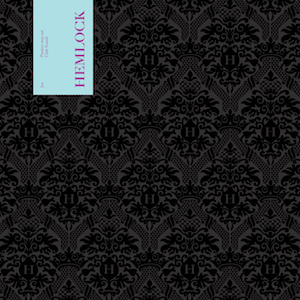
Following the accolades that accompanied the release of his “Slope” b/w “Maximum Busy Muscle” 12″ in October, UK tunesmith Joe has returned at an atypically brisk pace, this time with a single for Untold’s Hemlock label.
“Punters Step Out” is a tightly wound, minimal bass cut with a circus-like synth refrain that leads its percussion into a choppier, dancehall-leaning build-up. Joe’s expertly honed mix allows for plenty of space and sonic contrast, and even though the composition solely relies upon a keyboard, bass, and a skittish drum progression, it still sounds full. The cut’s wonky rhythm isn’t heavily detailed, but it is rich in both personality and DJ functionality, evidence that Joe designs tracks with more than just the club in mind. Mildly experimental with an accessible core, “Punters Step Out” offers a genuinely enjoyable five minutes, much like the ambling carnival rides it seems to evoke.
On the flip, Joe imbues “Club Scared” with a similarly hyperactive, joyous bounce and another finely crafted mixdown, but the cut relies on a gimmick—basically, an Englishwoman announces the song’s “hook” as it happens and continues to chime in throughout the track. The set-up doesn’t come across as particularly humorous or clever, but the joke carries on nonetheless, with Joe raising his interweaving synth stabs until they eventually overtake the woman’s cheeky deprecation that “you have heard this before.” It seems that Joe has used his b-side to poke fun at himself and dance music in general, but when the female narrator orders the listener to “stop listening,” it’s hard not to do what she says, and maybe that is Joe’s point. Breaking the fourth wall in any artform is always a gamble, but the song’s jokey demeanor undermines what is actually some impressively driving, carefully sculpted, and rather inventive drumwork.
Now based in New York, London-bred producer Jack Dixon lends a more reflective, low-key take on techno and UK bass sounds. In advance of his forthcoming Those Questions EP—out next week via Dixon’s own label, White Asega—the artist has shared “See Me,” a one-off cut made with occasional studio partner Yusuf Sebaiti. Glitchy synth bits amass into a solid two-step rhythm on “See Me,” as an eerily harmonized vocal line leads the track into a grimy, dejected breakdown. But the energy picks up in the song’s final minutes, channeling a maximalist bass rhythm that can’t help but crash into a bittersweet coda.
DJ Koze‘s Amygdala is one of the most strangely comforting records of the year. Across its 13 tracks, Stefan Kozalla deals in a beautiful, fuzzy melancholia that seems to be made neither for the club nor headphones, but rather for soundtracking a session of collective weeping with friends at the occasional beauty of the world. Now, the album has been augmented with a new set of remixes from Matthew Herbert and Efdemin.
Back at the end of 2012, Kozalla turned in a well-received remix of Herbert’s “It’s Only,” a version that has almost entirely eclipsed the original. Now, Herbert has reciprocated. His extended version of Amygdala highlight “Magical Boy” takes Koze’s beautiful luxuriance and wrenches it into a 10-minute wander. In Herbert’s hands, the track becomes much more narrative, inserting an entirely new vocal courtesy of Londoner Rahel. Her performance bears comparison with much of the cozy vocal neo-R&B that is so in vogue these days, with a gentle vibrato and a broad range. Song collaborator Matthew Dear and his subaquatic wobble carry over from the original as, in fact, does much of the remaining source material. Herbert’s primary contribution here is one of extension, drawing out the twinkling lead samples on which the original is based, and yet his version lacks the focus that Koze managed to maintain over his seven-minute composition. Kozalla’s track is louche, certainly, but it never meanders, winding itself tightly around its strung-out elements. Herbert’s version, though, feels somewhat aimless, particularly in a final section that repeats the vocal hooks over an approximation of the original’s wood-and-reverb percussion.
On the flip, deep-house stalwart Efdemin turns in a much more convincing take on “La Duquesa.” His remix inverts Koze’s pads, using them as a rough foundation to which he affixes pinging digital ornamentation. Where Herbert’s effort attempts to add bombast, Efdemin is instead content to rely on the downbeat haze of Koze’s original, adding the binary where so much of Amygdala felt proudly and roughly analog.
In truth, Amygdala doesn’t really need remixing. It is such a singular record, one on which Kozalla’s unique mark weighs so heavily, that new versions of the tracks seem superfluous. Efdemin’s rework, though, succeeds because it doesn’t stray that far from the delightful little aesthetic path that DJ Koze has already trodden.
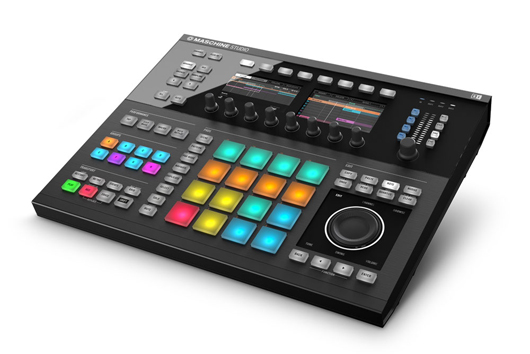
Maschine Studio is the new, flagship product in Native Instruments‘ popular MPC-style “groove production studio” line, outfitted with onboard screens and a host of new controls. Included in the box is the brand-new Maschine 2.0 software, which is a big leap forward, full of features and tweaks large and small. Whether you invest in the Studio hardware or not, the 2.0 software is an essential upgrade, and works across the entire range of existing controllers: the original Maschine and Maschine Mikro, as well as their Mk II equivalents.
How It Looks
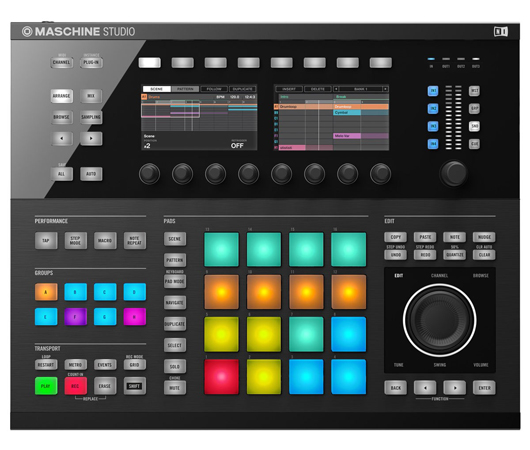
In many ways, Maschine Studio feels like using a classic drum machine workstation (read: ASR, MPC, EPS, etc). The larger size now accommodates two OLED displays, marking a big step beyond NI’s previous controller screens. Browsing through your library of Native Instruments sounds is much improved, with the various knobs and screens used to dial in on the style of sound you want by filtering through tags. Arranging and sequencing patterns can now be done without looking at your computer screen at all; the left display provides an overview of the scenes and patterns in the timeline, while a closer, more detailed view populates the right display, ordered by name and color.
Maschine Studio makes use of NI’s new Maschine 2.0 software, and the GUI switches between what’s now known as the “Arrange” and “Mix” views. Though there’s no built-in audio interface, mixing is improved by the Studio hardware as well. In addition to the virtual mixer viewable on the Studio’s displays, a Master section on the upper right portion of the unit is outfitted with an LED level meter that can be switched to show the volume at the master, or of individual groups or sounds. This is also where the incoming sound from Maschine’s four stereo inputs can be monitored, which serves as a boon to the software’s prodigious sampling capabilities. Finally, an Edit section incorporates a large, clickable jog wheel that will become the primary means of scrolling and selecting. This section will be used to transpose/nudge notes, as well as to adjust volume, swing and tempo.
How It Sounds
One of Maschine 2.0’s finest new features—and one that itself entirely justifies the $99 upgrade fee without buying the Studio hardware—is the set of new drum synthesizers. Essentially, these are five dedicated drum and percussion synth plugins (Kick, Snare, Hi-Hat, Tom, and Percussion), each of which offers a host of ‘engines’ and custom-tailored controls. They sound fantastic, ranging from purely digital to strikingly realistic, and are exceptionally easy to use. From room-filling 808 sub-harmonics to more tom variations than we could shake a shaker at, their frequency-shaping possibilities are endless.
Sidechaining is now fully supported in Maschine 2 for VST/AU plugins and its own Compressor, Limiter, Gate, Filter, and Maximizer effects. This makes it very easy to set up sidechain compression on the fly, without so much as having to look away from the controller. The Sample Editor can now produce slices that overlap and have gaps between them, and macros are now unlimited, and can now be assigned targets from the Master, Group, and Sound levels. Undo now comes in two forms: Step Undo (i.e. classic undo) and Take Undo—the former of which allows for undo-ing a note at a time, while the latter can undo the last set of actions as a group. There are now unlimited Groups, Scenes, and plugins available, and the Follow mode is greatly appreciated.
The Bottom Line
It’s clear that software integration with Maschine Studio will evolve over time. The screens, for instance, don’t yet feel like they’ve been fully taken advantage of; rather than merely providing numerical readouts of affected variables on a particular virtual device, for instance, we’d love to see fully visualized, animated representations thereof. The graphics (particularly those representing the NI sound packs) feel a bit dated, and certain commands aren’t as clear as they could be. Generally, the 2.0 software still lacks the ability to record and transmit MIDI CC to control external gear, as well as time-stretched audio.
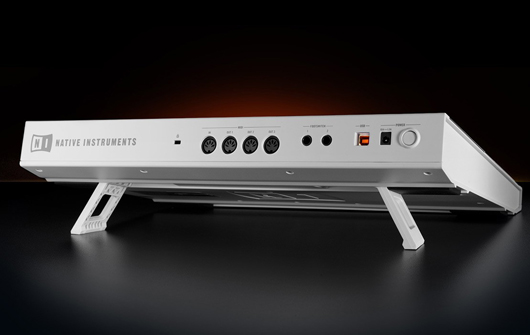
But these are small quibbles, and because they’re software-based, improvements stand a good chance of appearing in future updates. If the upgrade to Studio seems like a no-brainer, then it probably is. There are hundreds of minor workflow improvements that the expanded controller enables, and it’s possible to go for longer stretches of time than ever without even glancing at the computer screen—staying in the zone, so to speak. The pads are incredibly bouncy and sensitive, and smart inclusions like the kickstand-style feet built into the bottom of the unit make for superb ergonomics. As was perhaps evident upon first glances of the photos of the hardware online, Maschine Studio is some seriously luxurious beat-making kit.
Helsinki-based producer V.C. recently released his debut long-player, Invisibility, via his own Raha & Tunteet label. After first giving us a taste of the 12-track effort last month with a colorful video for LP cut “Roy M.,” V.C. returns to our pages to give away the slinking “Closing In.” Echoes of the producer’s time spent as an innovative figure within the skweee movement can be heard across the tune’s three-plus-minute run, which cobbles together a playful hybrid from glowing synths, loose basslines, and a bit of understated boom-bap. While still evolving, “Closing In” is a welcome reminder that the miniature tones and crisp beats of skweee are still alive and well.