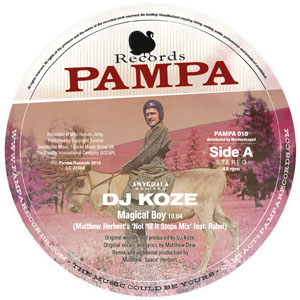
Renowned electronic experimenter Matthew Herbert and Berlin mainstay Efdemin have been enlisted to remix a pair of tunes from DJ Koze‘s XLR8R Pick’d Amygdala LP for an upcoming 12″, set to drop on Pampa next month. In some ways returning the favor of Koze’s well-received “It’s Only” remix from late last year, Herbert has turned in a 10-minute rework of the Matthew Dear-featuring “Magical Boy” to serve as the record’s a-side (even adding extra vocal touches from Rahel to the track), while Efdemin has taken on Koze’s airy “La Duquesa” for the flip. The remix 12″ will see an official release on December 2, but in the meantime its artwork and tracklist (complete with somewhat silly titles) are included below.
A. Magical Boy (Matthew Herbert’s ‘Not ’til It Stops Mix’ feat. Rahel) B. La Duquesa (Efdemin’s Cose Cosi Mix)
About a month before he releases it, UK bass maven Joker has posted a full stream of his forthcoming Head Top EP. The four-track record sees the DJ/producer born Liam McLean driving his signature “purple” dubstep sound into more elegant ranges, with tunes like “Deserted Island” showing off haunted organs, pitched vocal harmonies, and whiplash drums. Due for official release in December via his own Kapsize label, Joker’s Head Top EP can be heard in its entirety below.
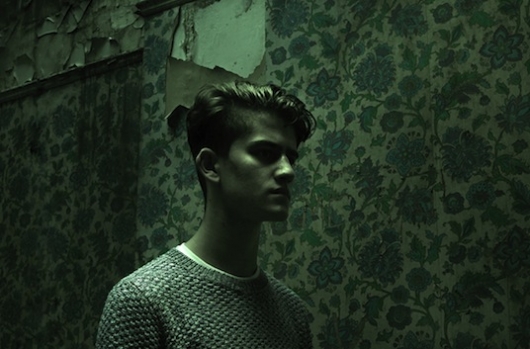
After 12 months, the collaboration between online music retailer Bleep, photographer Shaun Bloodworth, and design collective GiveUpArt, the Green Series, will come to an end with a release from veteran trio The Black Dog and young up-and-comer Happa (pictured above). Having been in production since fall of 2012, the series has previously featured the likes of Karenn (a.k.a. Blawan and Pariah), Objekt, Marcel Dettmann, and Redshape, among others. This final 12″ shifts away from the Berlin-oriented sound of its previous installments, and dives head first into gritty, bass-focused UK music. The Black Dog’s a-side cut, “Scan 9 From SoYo™,” is ominous techno unfolding over a muted drum pattern; on the flip, Happa’s “Red Place” operates in a slightly more disturbing fashion, with a thrashing bassline described as a “ferocious exercise in dark and tough techno.” The limited 12″ is set to drop on November 18, but until then, both tracks can be previewed via the player below.
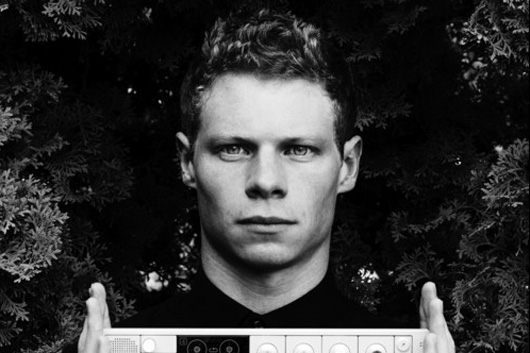
Victoria beatmaker okpk (a.k.a. Dan Godlovitch) describes his approach to making tracks as “using bass to warp the flow of time,” which certainly seems like an apt description for his new prismatic 2010 EP, recently released on fellow Canadian label Low Indigo. Opener “Blacklight” is a bath of slowly pulsing and evolving textures anchored by shuffling rhythms. Supposedly composed entirely on the famed Elektron Machinedrum and Monomachine units, the song is able to seamlessly flow between purely ambient transitions and more beat-focused workouts over its six-minute runtime—giving “Blacklight” both an earthbound and celestial vibe.
Last month, recent Brooklyn transplant Dubbel Dutch tipped us off to his next release with a new mix before sharing the full details of that five-track record. And now that it’s available to purchase from Dre Skull’s Mixpak label, the Cloud Club EP can be streamed in its entirety. The music on Dubbel Dutch’s new record is said to have been “created while simultaneously working on upcoming productions for dancehall star Popcaan” and is “inspired by both jubilant daytime pop sounds and the vibrant underground club culture of his new home.” Hear for yourself if that adds up via the SoundCloud player embedded below.
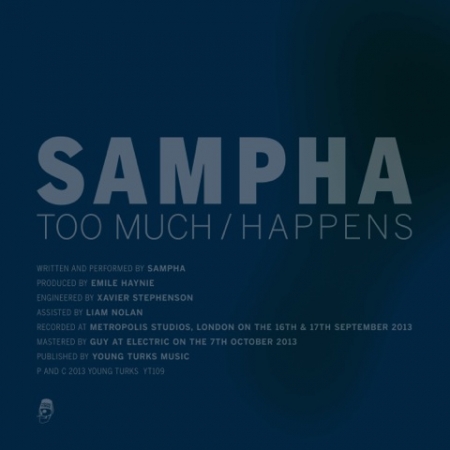
The two-track 7″ and digital single from London artist Sampha which was announced last week is out now via Young Turks, and to mark the occasion, its b-side cut, “Happens,” can now be streamed in full. Much like “Too Much,” the song is a piano-based number with the singer’s syrupy voice glazing over the top of its bubbly chords—albeit with a decidedly more upbeat and jazzy vibe. Sampha’s latest can be heard below.
About a year and a half since the release of her self-titled debut LP, Nina Kraviz has unveiled the details of her next offering of original material. Mr. Jones is a six-track, double-12″ package set to drop on November 25 via Radioslave’s Rekids label, and its music is described in a press release as being “hypnotically dissonant” and “melancholic yet danceable,” with the DJ/producer’s voice said to often take the spotlight. Detroit stalwart Luke Hess also shares production duties on a cut called “Remember.” Ahead of the release of Mr. Jones, snippets of Kraviz’s new tracks can be streamed below.
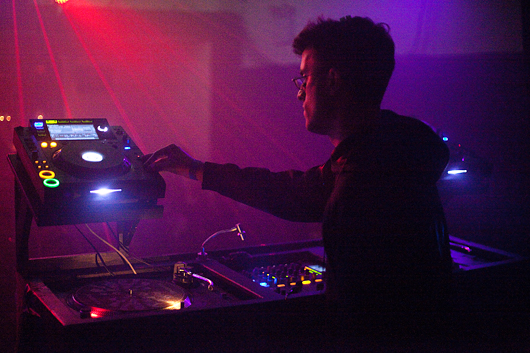
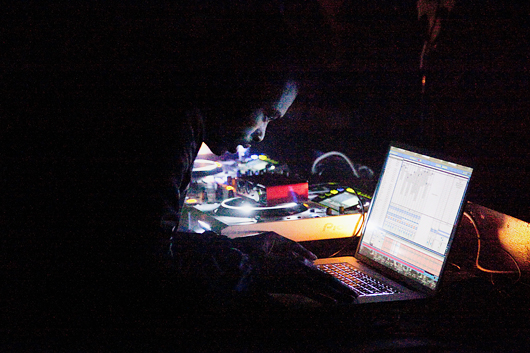
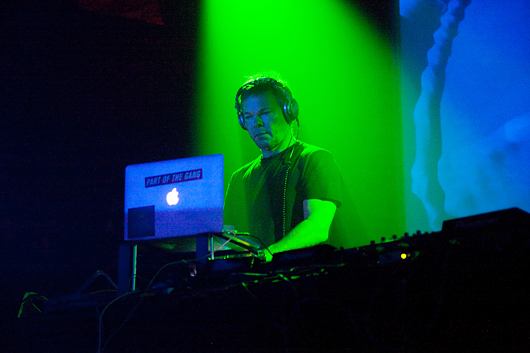
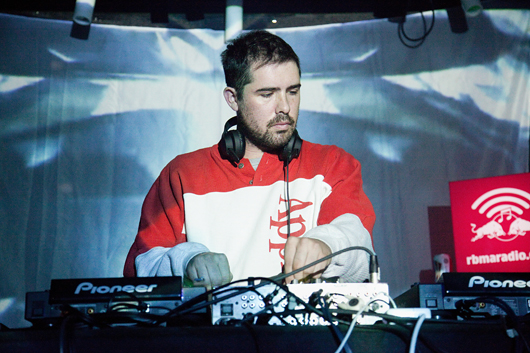
At this point, it’s hard to deny that Brooklyn has become a leading hotbed—if not the outright epicenter—of new and emerging electronic and dance music in North America. The borough boasts a stronger, more diverse scene than at any time in recent memory, and it often feels like every weekend in Brooklyn offers a plethora of parties and DJs to suit a variety of tastes. Oddly enough, this makes a local electronic-music festival something of a weird proposition. Especially after seeing the initial announcements for this year’s Brooklyn Electronic Music Festival (a.k.a. BEMF), we were skeptical—what was going to make the event any different from a regular weekend in Brooklyn? Given that BEMF was scheduled to take place at a number of venues in Williamsburg, including Output, Cameo Gallery, 285 Kent, and Glasslands—the very same locations we’d usually go to party—the festival really needed to deliver a stellar line-up, or at least provide a compelling point of differentiation, in order to stand out from the norm. Sadly, with a few notable exceptions, that didn’t really happen. On the whole, the line-up came across as not only average, but unfocused; furthermore, it seemed to bear little tangible relation to the festival’s supposed Brooklyn base. In the end, this year’s BEMF contained more mediocre moments than actual highs, although there were flashes of quality sprinkled throughout the weekend; here’s our rundown of what went down.
Oneohtrix Point Never
The line-up was a serious letdown.
While there were a few “big” names on the bill that would have been familiar to most XLR8R readers—including Oneohtrix Point Never, Actress, Tensnake, Skream, and, well, Pete Tong—the resounding feeling upon looking at the line-up was something along the lines of, “Wait… This is who they booked?” Not only was the BEMF roster short on headliner-caliber acts and heavy on middling talent, but the line-up was incoherent. Surely, a Brooklyn-based electronic-music festival should be expected to showcase the music that’s bubbling up in Brooklyn, and that effort should include a willingness to showcase at least a handful of more unknown names. However, with the exception of the stage dedicated to local imprint Sci-Fi & Fantasy—which is just one of the many exciting labels to emerge from Brooklyn recently—BMEF largely skipped over the local underground in favor of a motley, dated assemblage of uninspiring known quantities. Granted, Brooklyn’s current electronic-music scene is particularly diverse, and it’s quite easy to imagine the difficulties of curating a line-up that adequately reflects this, but this year’s BEMF fell well short of the mark, at least in terms of booking. Part of the problem stemmed from the fact that the festival didn’t seem to know who its audience was, as it pandered to a more mainstream crowd with the likes of Nadastrom and Star Slinger while simultaneously making nods to electronic music’s experimental fringes with the inclusion of Oneohtrix Point Never and the local crew from The Bunker. This attempt at diversity may have been admirable in theory, but given its poor execution overall, the BEMF line-up ultimately satisfied almost no one.
Even after seeing it live, we still didn’t know what to make of Skream’s new disco persona.
This year’s BEMF festivities were kicked off by ex-dubstep denizen Skream, who brought his infamous Skreamizm party to Output on Thursday night. Following his recent turn toward house and disco, the veteran producer has caught a bit of flack from his core dubstep fanbase. But while any sort of change—particularly one toward a less “serious” and more fashionable corner of the electronic spectrum—was always bound to alienate some, Skream’s DJ set at BEMF was actually pretty undeniable. Starting out with a selection of current UK house—which, perhaps a little too predictably, included Disclosure and Duke Dumont—before closing things out with a series of disco classics, the sense of fun was palpable, even if it seemed to be constantly walking the line between quality and pedestrian. Less satisfying was Output’s business-suits and high-heels vibe, which seemed even more conspicuous than usual. It didn’t help that the party’s other notable DJs, MK and Oneman, were both disappointing in comparison. MK seemed to be on autopilot, while Oneman played a mix of house, R&B, and trap that has rapidly become something of a cliche; moreover, in this context, it felt like an instance of pandering to an unadventurous crowd.
DJ Sliink and Nadus
Jersey club DJs need to play in NYC more often.
After its lackluster start, Friday night’s Thread showcase at Glasslands offered a shining example of what BEMF should have been doing more of, at least from a booking perspective. Although not from Brooklyn, the tightly knit Jersey club crew took over Glasslands for the night with its distinct, infectious sound. The highlight of the showcase was DJ Sliink going back-to-back with Nadus, as the Jersey jocks traded classic club tracks, their own material, and edits of R&B tunes. As they performed, there was a noticeable energy in the air, and that sensation was only amplified by the presence of an MC. Thankfully, these good vibes were sustained throughout the evening, and were a big reason why the showcase felt like an antidote to the anonymous, corporate-sponsored feel that defined many of the other BEMF parties. On a larger scale, particularly in light of recent online controversies surrounding the cultural appropriation of Jersey club music by non-Jersey DJs, DJ Sliink’s and Nadus’ set at BEMF underscored the talent of the genre’s originators. As we left Glasslands, we couldn’t help but think that it would be great to see them on the New York side of the Hudson River more often.
Lunice
Evian Christ
Trap is still huge, apparently.
One could be forgiven for thinking that trap—after effectively becoming the new ‘brostep’ in the US—had become a genre that was no longer taken seriously in the dance-music world. However, this year’s BEMF had a surprising amount of it, much of which was concentrated around Friday night’s LuckyMe stage at the Music Hall of Williamsburg, a show which included a high-profile headlining slot from Montreal DJ/producer Lunice. Preceded by a solid warm-up from UK-based Tri Angle affiliate Evian Christ—an artist whose chilly intensity as a live performer was once again impressive—and young Chicago rapper Rockie Fresh, Lunice delivered what can only be described as an extremely energetic DJ set. Jumping around the stage and at one point throwing himself into the audience, the spectacle of his performance was difficult to ignore. From a musical standpoint, however, though Lunice’s selections were impressively symphonic and absolutely unrelenting, it was difficult to shake the feeling that we’d heard this all before.
Lotic
Sci-Fi & Fantasy is unquestionably a label to watch.
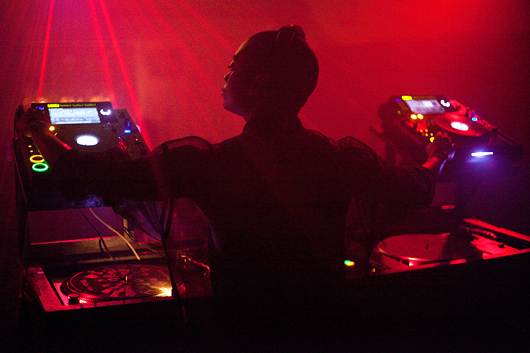
Putting aside any qualms about why Sci-Fi & Fantasy was given a BEMF label showcase when plenty of other deserving local labels were left out—L.I.E.S., Fifth Wall, and Mister Saturday Night all come to mind, amongst others—it was nonetheless reassuring to see the festival paying some attention to Brooklyn’s resurgent techno underground. That said, the young imprint’s showcase was scheduled for the very end of the festival, which led to sparse attendance, along with a feeling that the artists on hand weren’t quite getting the shine they deserved. Regardless, the Berlin-based Lotic and NYC’s own Max McFerren—who have both released outstanding singles on Sci-Fi & Fantasy in recent months—proved to be highlights. The Houston-raised Lotic was especially impressive, as his dark and heavy DJ set seamlessly moved between jacking techno, vogue house, and the Southern rap he grew up on. Max McFerren had also just returned from a short trip to Berlin, and his set of elastic, aerated techno made the case for him being one of New York’s best new DJs.
Max McFerren
In the end, the two acts we (along with a large swath of the BEMF crowd) were the most excited to see—Actress and Oneohtrix Point Never—lived up to our expectations.
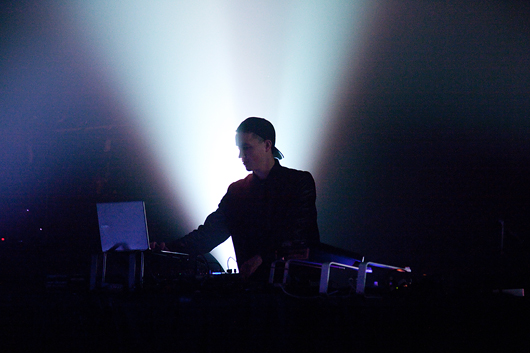
Without question, two of the most highly anticipated BEMF acts—at least by XLR8R standards—were Actress and Oneohtrix Point Never. Strangely enough, the two artists were slated to perform overlapping sets at separate venues, which was surely one of the most questionable organizational decisions of the weekend. Fresh off his groundbreaking, widely acclaimed new LP, R Plus Seven, Brooklyn resident Daniel Lopatin (a.k.a. Oneohtrix Point Never) delivered an austere set, one that largely consisted of material from the new album and wonderfully reflected the record’s deeply alien electronic surfaces. Watching Lopatin play, it was clear that he’s managed to hone his live set into an impeccably slick operation, and the intimate confines of Glasslands proved to be the perfect setting for his unsettling, yet restrained brand of electronic music.
Actress
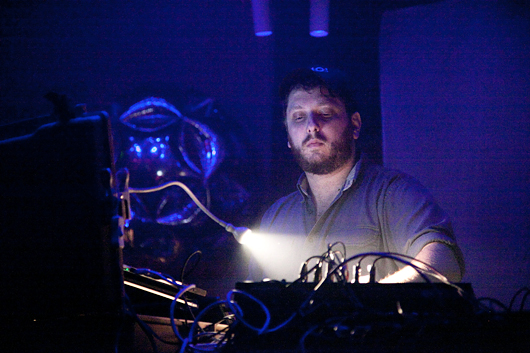
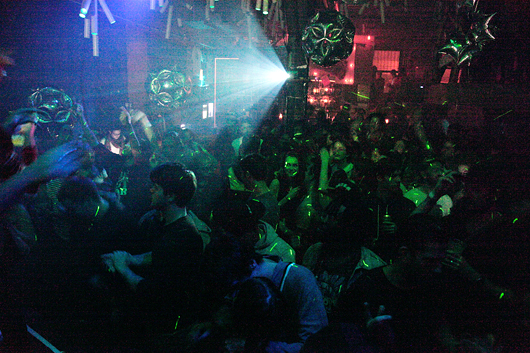
Actress’ set next door at 285 Kent was an entirely different entity, although it was ultimately no less satisfying. While the UK producer’s live shows can be a notoriously tricky proposition, his BEMF performance saw him operating in top form while offering a challenging but surprisingly hypnotic set that veered between sample-heavy house, more ambient sections, and moments that were close to harsh industrial techno. Though the music wasn’t exactly primed for the dancefloor, the producer’s crunchy, blown-out approximations of house music still managed to work the crowd, albeit in unconventional ways. Adding to the show’s success was its visual element; though Actress and his live set-up were hidden away almost completely out of sight, the stage was decorated with blow-up, metallic-colored baubles, which were themselves complemented by an excellent light show. Combined with the gritty techno sound that dominated Actress’ set, the atmosphere approximated a stark warehouse rave rather well.
BEMF’s organization was something of a mixed bag.
Simply put, this year’s BEMF seemed to suffer from its share of organizational problems. Last-minute cancellations, including that of Todd Terje—who would likely have been a huge festival highlight—and other 11th-hour venue changes didn’t inspire confidence, even before the festival had even officially begun. That being said, once BEMF was underway, the execution seemed to be fairly close to flawless. Sets ran on time, and even with all the venues at work, we had no trouble getting in anywhere in a timely manner. One thing we did take away, however, is that with a multi-venue festival such as BEMF, different venues can really color the experience of seeing someone; and while there was no obvious mismatch this past weekend, each venue seemed to have a very different crowd, which only added to the feeling of discontinuity between the festival’s showcases.
Pete Tong
Heritage dance music acts aren’t very satisfying.
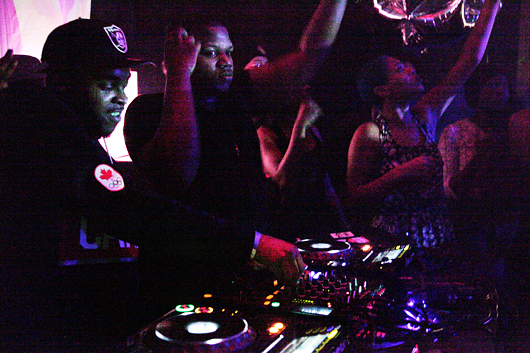
There’s no denying Pete Tong’s importance in the genesis of acid house and Balearic in UK, and he certainly carries some level of ongoing curatorial importance as the long-running host of BBC Radio 1’s Essential Mix. However, his appearance at BEMF made it clear that as a DJ in 2013, there is very little to recommend about him. Performing on Saturday night at the Music Hall of Williamsburg, the majority of his selections fell under the increasingly broad auspices of present-day UK house, which only reinforced that even Tong himself seems to have very little sense of his place in today’s dance-music landscape. In truth, his set felt pedestrian and Tong came across more like a relic from a different era than any kind of vital modern artist. (This fact was only underscored by the absurdly dated, cheesy visuals that accompanied his set.)
Sinden
Sinden is doing something pretty unique.
We weren’t sure what to expect from Sinden at BEMF, as the UK-bred, LA-based artist has charted an unusual path in recent years. Of course, he runs his own Grizzly label, but he’s also released tunes on imprints like Mad Decent, Fool’s Gold, and Unknown to the Unknown. He’s always been a diverse DJ who was unafraid to dip into different corners of the electronic sphere, but he seems to have settled into a specific niche that falls somewhere between techno, bassline, and grime. On Saturday at the Music Hall of Williamsburg, Sinden’s set was largely made up of bass-heavy techno, and he kept things at an unrelenting pace throughout—Floorplan’s blistering “Baby Baby” was a definite high point. Employing a healthy “anything goes” attitude, the music spanned serious-minded house and techno, and even dipped into some UK vocal-house fare. We didn’t necessarily expect to enjoy Sinden’s performance as much as we did, but he was absolutely one of BEMF’s surprise highlights.
Jerome LOL
Sunday night’s showcase at Glasslands wrapped up the weekend on a high note.
Though we spent a solid chunk of the festival’s final night at the Sci-Fi & Fantasy showcase, we also made sure to check out the THUMP-curated stage at Glasslands, which featured excellent DJ sets from Body High co-founder Jerome LOL and Mixpak affiliate Jubilee. “Crowd pleasing” is perhaps the best way to describe Jerome LOL’s performance, as he began with house selections that were just on the right side of cheesy, including Omar-S classic “Tonite” and some of his own increasingly excellent productions. As his set progressed, Jerome LOL took things into darker bass-music territory, playing tunes from the likes of Slackk, Sophie, and Joy Orbison. Adding to the playful spirit of it all was his typically irreverent fashion sense, as he took to the decks wearing a vintage Apple Computer jacket. Combined with his enticing selections, he set an atmosphere that was just about perfect on BEMF’s final night.
Jubilee
Jubilee was another bright spot at Glasslands that night, and as the evening drew to a close, she even brought in Night Slugs co-founder and recent Brooklyn transplant L-Vis 1990 in for a back-to-back session. Jubilee’s selections drew heavily from both the Mixpak catalog and the Fade to Mind and Night Slugs axis, but she also made sure to toss in plenty of the pop curveballs and deep American bass cuts that make her such a great DJ. She’s a formidable presence behind the decks, and seeing her going in with L-Vis 1990 late on a Sunday night was a great way to close out a festival that had been fairly lackluster overall.
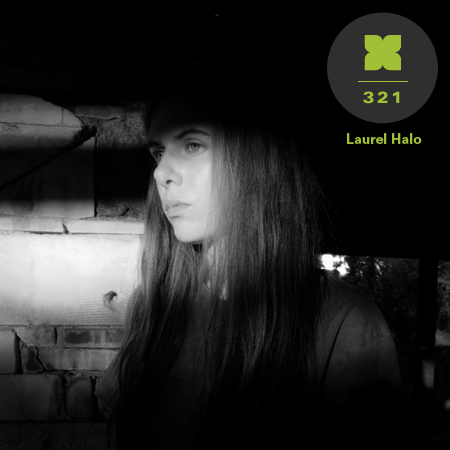
It wasn’t all that long ago that XLR8R first profiled Laurel Halo. After hearing her woozy, 4AD-esque King Felix EP, we did a small feature in January 2011 for a series that was then known as Bubblin’ (these days, we call it Bubblin’ Up), and we’ve been keeping a close eye on the Michigan-raised, Brooklyn-based producer ever since. In truth, her path hasn’t always been an easy one to chart, as Laurel Halo has never been an artist who lingers in one musical space for too long. 2011’s Hour Logic EP focused on drifting sonics, abstract beat structures, and manipulations of Halo’s voice, while last year’s Quarantine, her debut LP for Hyperdub, eschewed drum programming entirely while offering a series of leftfield, vocal-driven creations that were ostensibly pop, albeit in the most adventurous way possible. 2013 has seen another creative left turn, as the Behind the Green Door EP found Halo leaving the vocals behind and digging into techno, and that excavation has continued with Chance of Rain, her new full-length that dropped just a few weeks ago. Given that Laurel Halo has traversed so much musical territory with her own productions, we figured that her taste in other people’s music would be equally intriguing, and asked her to put together an exclusive mix for the XLR8R podcast series. Much like her new album, the mix is loosely rooted in techno, although there’s nothing particularly straightforward about the music on offer. With 24 tracks in a little more than 48 minutes, Halo isn’t shy about quick transitions or short asides, and the podcast certainly contains its fair share of twisted soundscapes, noisy interludes, and off-kilter beatwork. At the same time, the mix’s diverse sound palette and willingness to engage with the experimental are both key tenets of Halo’s own music, which quite possibly explains why it’s such an engaging listen.
01 Rahsaan Roland Kirk “Something for Trane That Trane Could Have Said (Edit)” (Atlantic) 02 Escola de Samba da Cicade “Improvisos na Batucada” (Philips) 03 Madteo “Pram Reset” (Morphine) 04 TCB “Unchained (KM/MM Mix)” (Die Orakel) 05 Subsaharan Spaceways “Shout (Two For Marion)” 06 Population One “B2 (from A Simpler Form)” (Reduction) 07 Matrix “Isthmus #Fast” (Chain Reaction) 08 Jam City “Water Edit” 09 Boo Williams “Mistical Journey” (Chiwax) 10 Ken Nordine “Flesh” (Philips) 11 Blk_out “Sergecutty” 12 Mass Prod & Herva “Mike vs Speak & Overdub As a Weapon Against Modern Laptop Wanking” (Kontra Musik) 13 Smith N Hack “No Gimmicks, No Flash” (Smith N Hack) 14 Sleeparchive “7” (Tresor) 15 Laurel Halo “NOYFB (Acapella)” (Hyperdub) 16 Charles Manier “Octopus” (Nation) 17 Vester Koza “Maslo 03B” (Maslo) 18 Dalglish “Donsfe” (PAN) 19 NSNT PRJCT “We Invented Dis” (Wild Oats) 20 Ken Ishii “Stretch (Regenerated)” (R&S) 21 Ter(r)a “Underwater Vessel (OH/FFU Edit)” 22 Dresvn “A2 (from Acido 014)” (Acido) 23 Claude Young presents Golem Craft “B2 (from the Of Ages EP)” (Fracture) 24 Factory Floor “Turn It Up (Laurel Halo Remix)” (DFA)
Sweden’s Axel Boman first gained serious attention with his 2010 track “Purple Drank,” which was released on DJ Koze’s Pampa label. He’s since gone on to establish himself as a consistent producer with his own set of idiosyncrasies, but Koze’s initial backing still feels like quite a heavy—perhaps the heaviest—influence on his sound. Like Koze, Boman trades in a type of house which expertly balances emotion and quirk; it’s as inviting as it is intricate, and is wont to switch directions. Family Vacation, his debut LP, is as fine an introduction as any to the producer’s approach.
Boman describes his process in composing the album thusly: “I decided to go through the vast collection of ideas and sketches I had on my computer, as a final project before I set that machine on fire and let it all go up in flames.” It’s a premise that doesn’t necessarily bode well—many dance producers are used to composing for EPs, and end up making full-lengths that are more like data dumps than actual albums. There is, in fact, a lot of variety on Family Vacation, certainly enough to dissuade Boman from attempting to insert a narrative flow. Ultimately what saves the record—not to mention makes it a quality effort—is that Boman’s pieces are often mini-narratives on their own, and do not need any outside context to succeed.
That said, Family Vacation is probably best enjoyed in pieces. Its runtime is a leisurely 60-something minutes, and the producer tends to reuse motifs, namely soul loops, woozy deep-house chords, and booming bass tones, which occasionally results in a soporific effect. Of course, this is just fine for a record that’s probably more meant for home use than a DJ set; it is made from scraps, after all. But listening to it in one sitting, without something to occupy one’s mind alongside it, can feel like a bit of a task. When one dives into the pieces on their own, though, there is a wealth of detail to enjoy. Opener “Can’t Find It” rises above its somewhat drowsy base thanks to its twitchy, flexible rhythm, while the romantic midpoint melody of “Animal Lovers” is arrestingly accomplished. Elsewhere, “Barcelona” recalls the dancefloor-tinged R&B production on Jessy Lanza’s recent Pull My Hair Back LP, with its soft melodies rubbing up against a bumpy, gravelly bassline and stuttering drums. “Bottoms Up” interpolates a steel band for a maniacal conga-line-meets-house workout, and “Fantastic Piano” lives up to its title, conjuring a kind of nostalgic The Wonder Years vibe from its sentimental lead instrument. Boman’s music comprises a sometimes bizarre blend of melancholy and ecstasy, and this is occasionally awkward. On paper, “New Krau Era” should be such an example, but it’s actually one of the most charming cuts on the album, balancing a moody, downcast framework with exuberant hip-house interjections. Overall, Family Vacation succeeds because of these types of juxtapositions. Moreover, its variety displays why Boman remains endearing to so many different audiences.