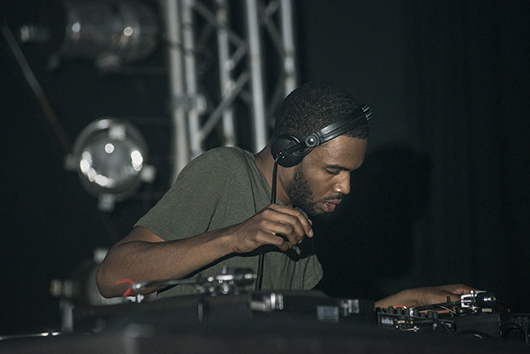
Multi-monikered UK artist Luke Slater has an album out today under his L.B. Dub Corp alias, and has marked the occasion with a new mix which finds him juggling that name with his Planetary Assault Systems project. Over on Resident Advisor, the DJ/producer described his hour-long set, saying, “It’s an L.B. Dub Corp to Planetary Assault Systems mix, and I guess it could have been much longer, as this condensed story is celebrating diversity, blend, and dynamics within that idea. Those were the inspirations to try and get a listener from L.B. Dub to P.A.S. in a cohesive and adhesive way.” No tracklist was included with Slater’s offering, but RA points out that the music “begins with gently bubbling house and ends with full-bodied techno, all shot through with Slater’s singular sense of sound design.” The whole thing can be streamed and downloaded here.
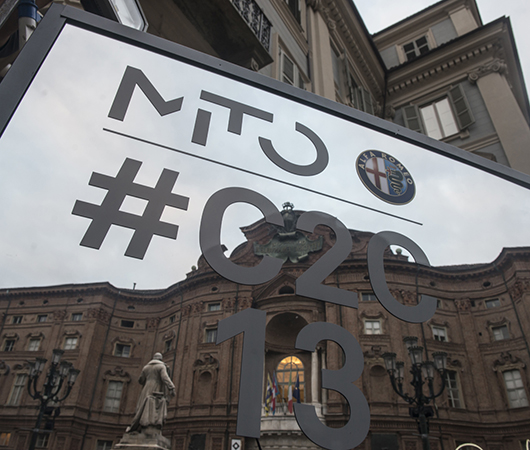
Last year, XLR8R made its first trip to Club to Club, a long-running festival in Turin, Italy that is officially known as Alfa MiTo Club to Club. As our review detailed, we thoroughly enjoyed the event, and were particularly struck by its ability to put together an intelligent, forward-thinking line-up while also creating a fun, dancefloor-friendly atmosphere. Few festivals can capably manage this sort of duality, but Club to Club’s split personality actually seems to be a point of pride for the festival’s organizers—in truth, this year’s official theme was “TWINS,” which described the four-night event as a celebration of the “avant garde and a pop vocation, music and art, innovation and tradition.” Curious to see the results, we returned to Northern Italy last week, and after attending various events and partaking in some serious clubbing, we can confidently report that despite a few small hiccups, Club to Club once again delivered on its promise. In an effort to share a bit of the experience, we’ve catalogued a few of the festival’s most memorable moments.
John Talabot
Surprise! John Talabot and Ben UFO were really good. Again.
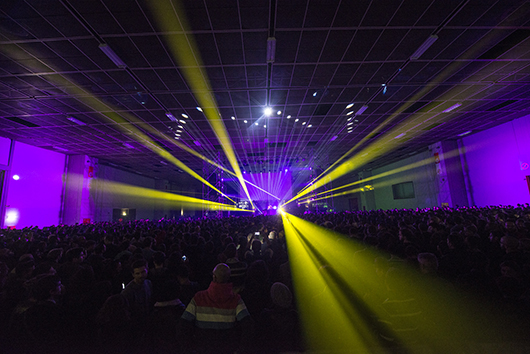
At this point, anyone who’s been following XLR8R‘s festival coverage this year has probably noticed our fondness for John Talabot and Ben UFO, and although we’re running a serious risk of beating a dead horse, both of them were excellent at Club to Club. As it turned out, the two DJs served as the bookends for the main room at Saturday night’s Gran Finale at the Lingotto Fierre, an enormous, hangar-like venue. (Oddly enough, the Gran Finale actually takes place on the peniultimate night of the festival each year; regardless, it’s undoubtedly the centerpiece event of Club to Club.) In truth, it felt like an odd choice to have Talabot open up the festivities—his set began at 9 p.m.—but the Barcelona DJ did a wonderful job warming up the floor. Clearly aware of the situation, he put together a set of fuzzy, melodic, and, most importantly, slow-moving house cuts that established a low-key vibe while remaining true to his musical bent.
More than five hours after Talabot wrapped up his set, Ben UFO took to the main stage. Charged with the task of closing out the main room, he nonetheless faced a dancefloor that was still stuffed with partying Italians, even as the clock approached 5 a.m. Perhaps he sensed that energy, because instead of winding down the evening with a series of late-night grooves, the London DJ and Hessle Audio co-founder elected to go in hard, and spent the majority of his 75-minute session dropping sharp, exacting techno cuts that honestly sounded phenomenal. Without question, heavy kicks and low-end thuds kept things moving, but the tunes were rhythmically inventive, which prevented the music from becoming monotonous. When the lights came on at 6 a.m., there were still a couple of thousand people on the dancefloor that would have been happy to hear more.
James Holden (live)
James Holden’s DJ set was a lot better than his live set.
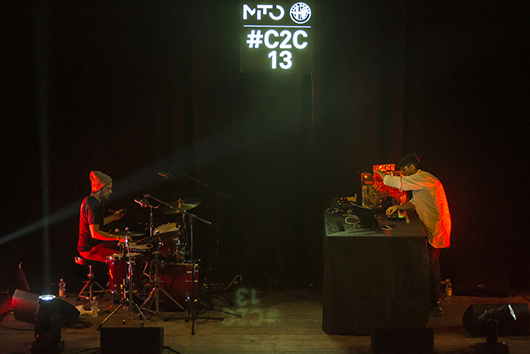
James Holden was given double duty at this year’s Club to Club; on Thursday, we was scheduled to deliver the the European debut of his new live set, while Friday had him slated for a DJ set. In the hours leading up to his live show, the collective anticipation for Holden’s live set was palatable, especially because he was scheduled to perform at the Teatro Carignano, a gorgeous, multi-level theater that dates back to the 18th century. The house was packed when Holden took the stage alongside a live drummer, but our enthusiasm quickly waned once the music began. When done well, a live drummer will boost the rhythms of an electronic performance, but the drums weirdly sounded limp. Holden has never been known as a low-end specialist to begin with, and here, the rhythms were effectively toothless, which made the music sound oddly one-dimensional. Unfortunately, the melodies—which are supposed to be Holden’s specialty—weren’t much better. Although he spent the bulk of the set piloting an impressive-looking modular synth, the melodies were oddly flat. Combined with the weak low end, it simply felt like most of the sonic spectrum was being left empty; in short, the performance lacked the detail, nuance, and intensity that defines Holden’s recorded output, and his decision to stop and reset after each song meant that the show also lacked the usual flow and arc of his DJ sets. In fairness, Holden only recently began performing live, and he does seem like exactly the sort of artist who would be capable of putting together a top-flight live show. But based on what we saw at Club to Club, he’s got some additional work to do.
James Holden (DJ set)
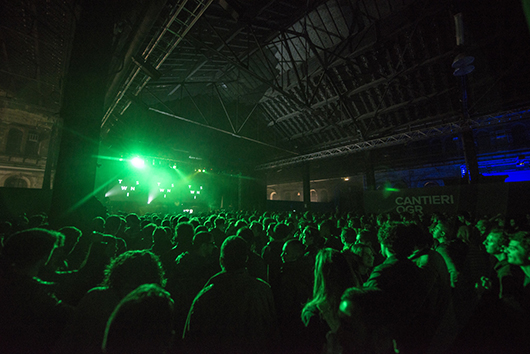
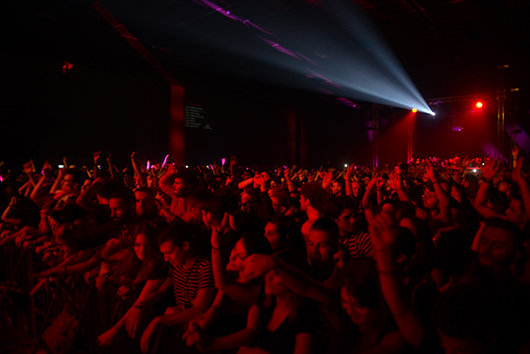
Despite the disappointment of Thursday night’s live show, we had no complaints about Holden’s DJ set on Friday at Cantieri OGR Torino, a converted factory that had been transformed into a raw, visually impressive performance space. The guy has been DJing for quite some time, and has carved out a unique musical niche that goes heavy on melody and even flirts with trance, but somehow never crosses the line into full-on cheese. Readers may recall that we recently saw Holden at this year’s MUTEK.MX (our review is here), and his set at Club to Club was similarly compelling, although he elected to dive right into heavy dancefloor groves rather than kicking things off with loose, jazzy rhythms. Cuts from Four Tet and Koreless elicited particularly enthusiastic responses, but it was clear from the get-go that Holden had the enthusiastic crowd in the palm of his hand, and he happily bopped right along with them in the DJ booth.
Factory Floor
Factory Floor’s live show was very solid.
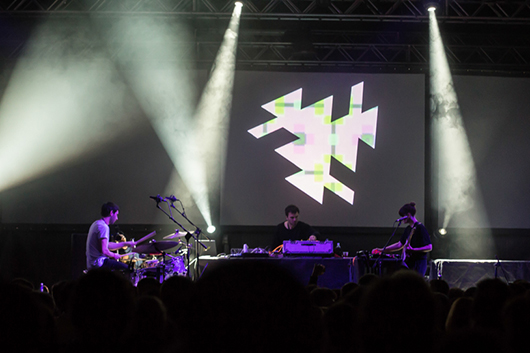
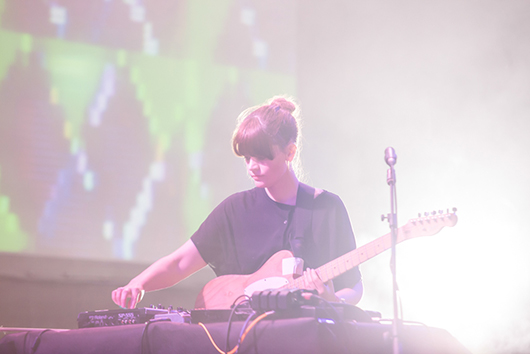
After James Holden’s live set on Thursday, it’s no stretch to say that we were feeling a tad disappointed, but those feelings quickly dissipated once Factory Floor took the stage for the closing set at OGR. The London trio has been riding high since the release of its much-lauded self-titled debut album, but we hadn’t previously had a chance to see how the group’s no-wave-influenced strain of dance music would translate in a live setting. As it turned out, the transition from the studio to the stage has been seamless, as the UK outfit nimbly combined organic and drum-machine rhythms and injected additional energy with its vocals (which were often either deadpan or yelpy) and assorted instrumentation (which included guitar, synths, and various pieces of gear). Furthermore, the performance definitely looked like the work of a proper band, but the music was also completely suitable for the dancefloor without pandering to tired tropes or being overtly “rock” or “indie” in orientation. In short, Factory Floor was as good—or perhaps even better—than we had hoped, which is why we ultimately went to bed happy on Thursday night.
Jon Hopkins
Jon Hopkins’ set showed that he’s got the whole “live show” thing down to a science.
Following the release of his stellar Immunity LP earlier this year, London producer Jon Hopkins has been a fixture on the festival circuit, and his appearance at Club to Club demonstrated just how well his months on the road have suited him. Pulling heavily from Immunity, Hopkins’ set was, in a word, precise. And though very little about his time on stage felt spontaneous, it was undoubtedly potent. The music on offer could ostensibly be described as techno, but there was nothing austere about what Hopkins served up. From start to finish, everything sounded big, as though he set out to fill every millimeter of the sonic spectrum with his richly detailed creations. The biggest cheers came for Immunity tracks like “We Disappear,” “Open Eye Signal,” “Breathe This Air,” and “Collider,” but Hopkins did veer away from those songs’ big-room pulse, occasionally stepping into spells of moody introspection (which we liked) and glitchy, dubstep-leaning halftime breakdowns (which we didn’t). Still, regardless of what genres Hopkins was experimenting with, it was impressive to simply watch him work. It’s not often that an artist accomplishes exactly what they set out to do with their music, particularly in a live setting, but Hopkins’ set at Club to Club seemed to indicate that he’s done exactly that.
Holly Herndon
There was a lot of “dark” music at Club to Club 2013, and Forest Swords provided the best of it.
The entire electronic spectrum has seen a resurgence of dark and gloomy sounds in recent years, particularly with the rise of labels like Tri Angle and PAN. And while the acts on these imprints (and other like-minded outposts) often sound quite different when compared side by side, there are numerous stylistic threads (occult imagery, references to goth.industrial music, etc.) that can tie them together. This “scene” (for lack of a better word) was well represented at this year’s Club to Club, and though some artists sounded better than others, most of them came off pretty well.
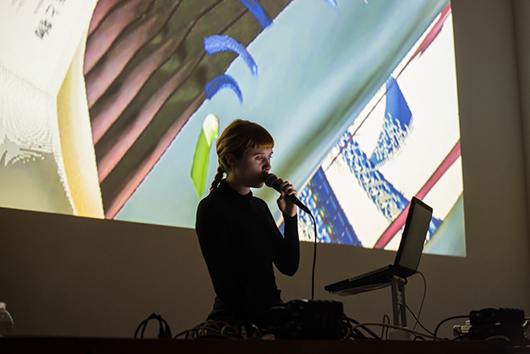
Holly Herndon was one of the first acts to perform at Club to Club 2013, and her live set was a bit hit and miss. Granted, the atmosphere didn’t help her, as she performed in the auditorium at the Fondazione Sandretto Re Rebaudengo. (The building basically served as the festival’s headquarters and kicked off each evening with a series of events, which included panel discussions, live performances, and DJ sets.) Unfortunately, with its tightly packed, stadium-style seating, the auditorium felt more like a university lecture hall than a concert venue. As such, some of the performances in there throughout the weekend were a little awkward, particularly as attendees drifted in and out of the room. Putting these issues aside, Herndon’s live show was undoubtedly interesting, at least from a technical standpoint. The performance was largely centered around Herndon’s manipulations of her own voice, and she also appeared to be using some kind of software interface that altered the music based upon how she moved some small sensors with her hands. In terms of music, while Herndon’s more ambient and experimental passages were engaging, the set’s brightest spots generally came when she veered toward more techno-oriented structures.
Lee Gamble
Still, despite her struggles, Herndon fared better than PAN standout Lee Gamble, who played in the same auditorium on Friday evening. Perched behind a laptop and frequently crouching down so that only a portion of his body was visible, Gamble decided to eschew a steady kick during the majority of his set; as the music drifted through the room, it quickly became obvious that his dark and spacey explorations were not a good match with the space, and the growing restlessness of the crowd made things a bit uncomfortable. After seeing Gamble, we were worried about the fate of Forest Swords, who was slated to play the auditorium on Saturday. However, our trepidations proved baseless, as the mysterious UK act’s set was unquestionably one of the highlights of the entire festival. Though Forest Swords himself operated a small set-up of gear (that appeared to all be linked to his laptop), he wisely chose to bring along a live bassist, who injected some much-needed dynamism into the proceedings. Forest Swords even picked up a guitar of his own for a couple of songs, adding some bluesy riffs to his brooding mix of dark soundscapes and broken R&B and hip-hop rhythms. Combined with his visuals—a black-and-white reel that largely focused on vintage footage of ballet and other classical dance—Forest Swords did a wonderful job creating an enticing atmosphere, and impressed just about everyone who was lucky enough to squeeze into the packed auditorium for his set.
Dinos Chapman
The Haxan Cloak
Thankfully, not all of the festival’s “dark” music was confined to the Fondazione auditorium. Thursday and Friday night also featured line-ups at the Cantieri OGR Torino, a converted factory that had been transformed into a raw, visually impressive performance space. UK producer Dinos Chapman took to the OGR stage on Thursday, and his abstract, Actress-indebted take on techno was competent, even it wasn’t hugely engaging. Much better was The Haxan Cloak, who opened up Friday night’s OGR show with a visually stark but sonically arresting performance. His recorded music is restrained to begin with, so we weren’t sure how it would translate in a festival setting, but with the volume cranked and the crowd at attention, every note resonated and every bit of percussion sounded like an ominous thunderclap. The set unfurled in movements rather than proper “songs,” but the Club to Club audience seemed more than willing to follow along on The Haxan Cloak’s journey.
Andy Stott
Andy Stott dabbled in some new musical territory.
With all this talk of “dark” music, keen-eyed readers may be curious why there has been no mention of Andy Stott, who can easily be lumped into the same camp with the artists mentioned above. Stott performed at Saturday night’s Gran Finale in the venue’s Sala Rossa, a bunker-like structure which served as the second stage and played host to many of the evening’s bass-oriented acts. Because Stott was given the closing slot, we actually missed the beginning of his set (we were having a hard time pulling ourselves away from Ben UFO, who was performing at the same time on the main stage); however, when we eventually walked into the Sala Rossa about halfway through his performance, we found that Stott was playing, well, music that we hadn’t heard from him before. Namely, the rhythms were a whole lot faster than what we expected. It wasn’t bad, it was just a departure from the slow, dubby beats we’ve heard from Stott in the past. (Later on, we were told that the first half of his set contained sounds that were more in line with his recorded output.) Granted, Stott’s work has frequently touched upon ideas lifted from classic jungle and hardcore, but at Club to Club, Stott was exploring those genres in an explicit fashion. Furthermore, the set included forays into footwork-esque beats and even hip-hop. Again, none of it sounded bad, but it was unquestionably different. Given that he was performing live, perhaps he was experimenting with some new material. Regardless, we definitely left the party intrigued and wondering exactly what Stott is going to do next.
Kyle Hall
Kyle Hall and Objekt stole the show on Friday night.
Following earlier shows at the Fondazione Sandretto Re Rebaudengo and Cantieri OGR Torino, Club to Club wrapped up its busy Friday schedule at Hiroshima Mon Amour, a place that, oddly enough, was one of the few actual clubs that hosted a festival event this year. The two-room venue was sold out, which wasn’t surprising given that the line-up included the likes of Nina Kraviz, Koreless, Kyle Hall, and Objekt. (Todd Terje was also scheduled to play, but unfortunately had to cancel at the last minute.) All in all, it was a very solid night of music, but Objekt and Kyle Hall were the clear standouts.
Koreless
Objekt was in the club’s smaller second room, and stepped up to the decks around 2 a.m. Following the comparatively mellow sounds of UK producer Koreless, the Berlin DJ’s taste for hard, thudding techno provided a real shot in the arm, and quickly got the dancefloor moving. As he continued, Objekt did switch things up a bit, occasionally slipping in an electro or ghetto-house cut, but techno was undeniably the main focus, and the tempo only increased as the set continued. In truth, this year’s Club to Club line-up didn’t feature many straight-up techno acts, but that ultimately only made us appreciate Objekt even more; his set wasn’t for the faint of heart (they never are), but it was precisely put together and invigorating to watch unfold.
Objekt
Back in the main room, Kyle Hall’s set began around 2:30 a.m., and it found him going deep and getting weird in a most pleasurable fashion. It wasn’t that long ago that we were raving about Hall’s appearance at the Decibel festival in Seattle (our review is here), and he was operating at a similar level of excellence in Turin. The Detroit DJ and producer is increasingly defining himself by his love of raw, soulful sounds, and he absolutely indulged that passion at Club to Club, combining dubby drum workouts with bizarre slices of acid house and warped disco cuts. It’s clear that the man has deep crates at his disposal, which means that no two Kyle Hall sets sound exactly alike, but he does make sure to cultivate a consistent vibe, one that’s enjoyably rough around the edges and fully capable of livening up just about any dancefloor.
Nina Kraviz
Someone was going overboard with the strobes.
Admittedly, this is a minor gripe, but on Friday and Saturday night at Club to Club, whoever was in charge of lighting—both at Cantieri OGR Torino and Hiroshima Mon Amour—was going way too heavy on the strobes. Granted, strobe lights are often annoying when they’re not being used in moderation, but this was an example of extreme overuse. During the sets from Factory Floor, James Holden, and Kyle Hall, it was literally difficult to keep one’s eyes fixed on the stage because the flashing lights were frequently on overdrive. Perhaps someone was trying to make up for these artists’ lack of visuals, but this was not the right way to go about it. Next year, those lighting techs’ strobe privileges need to be revoked.
Kode9
Kode9 put together a symphony. Really.
While it’s a safe bet that most people who saw Kode9 at Club to Club will remember his Saturday-night set in the Sala Rossa at the Gran Finale, the veteran UK artist actually played a much more substantial role in this year’s festivities. Part of the festival’s mission is to celebrate artists’ experimental impulses, particularly when those impulses have something to do with the city of Turin, which explains why Kode9 was enlisted to oversee a project that was dubbed A Great Symphony for Torino. Basically, five local artists were commissioned to put together a piece of music inspired by a particular locale in Turin. After their works were completed, Kode9 then utilized their compositions to create a piece of his own, which he actually debuted during a panel discussion on Saturday evening at the Fondazione Sandretto Re Rebaudengo. All of the pieces will eventually be released online, but for now, they’re only playable when a barcode is scanned at each of the designated locales around the city.
Even for those of us in attendance, the whole thing was admittedly a bit complicated, but there’s little question that the project was interesting, and the involvement of Kode9 only boosted the overall level of intrigue. It was also a great sign of Club to Club’s versatility that just a few hours after this panel discussion, Kode9 was behind the decks in the Sala Rossa, mashing up the floor with a bass-heavy mix of grime, bassline, hip-hop, footwork, and more. Somehow, both Kode9’s symphony and his DJ set made perfect sense within the context of Club to Club, and reminded us why we liked the festival so much in the first place.
Cantieri OGR Torino
It would have been nice to see some additional Italian acts.
Granted, this is a challenging issue for almost any festival that’s happening in a place where local talents rarely get noticed outside of their own country, but we would have appreciated the opportunity to see a few more Italian acts during our time at Club to Club. In fairness, the festival’s organizers did book several Italian DJs and producers through the weekend; almost every event included at least one or two Italian artists. However, many of these acts were given early opening slots or were placed in spots where few people were likely to pay attention. (For example, many Italian DJs were enlisted to soundtrack the bar area each evening at the Fondazione Sandretto Re Rebaudengo.) From a commercial perspective, there’s little question that festivals need to book artists who are going to draw a crowd, and even within Italy, it’s a safe bet that acts from the US, the UK, and Germany are more likely to draw a crowd, just because they’re more known on an international level. And to Club to Club’s credit, a large number of its foreign-talent bookings were exclusive Italian appearances or even Italian debuts, so a clear effort was made to ensure that this year’s line-up was something special and not merely a rehash of the usual DJs and artists who come through Turin. At the same time, part of the fun of attending a festival is discovering new artists, so it would have been great if just a few more of the prime slots (or even just the slots that didn’t open or close an event) had gone to Italian acts. Obviously, this is a tricky proposition and a difficult challenge, but given Club to Club’s success in just about every other area, we think that the festival’s organizers are up to it.
Gran Finale at Lingotto Fierre
It was hard to take issue with Saturday’s Gran Finale.
Simply put, the line-up for the Gran Finale was stacked. We’ve already mentioned John Talabot, Ben UFO, Andy Stott, and Kode9, but the two stages at the Lingotto Fiere featured a lot more in the way of quality acts. From when the doors opened at 9 p.m. to when the lights came on at 6 a.m., there was always some high-quality music to be heard, and the caliber of acts in both rooms often made choosing between stages a difficult task. For the noise lovers, Fuck Buttons assaulted everyone’s eardrums early on, while Diamond Version married glitchy interludes with hard-charging techno sounds. Four Tet‘s chiming tones and ramschackle rhythms provided an early highlight, Julio Bashmore had the crowd cheering for his big-room house creations, Rustie melted faces in the Sala Rossa with his futuristic trap flirtations, and Machinedrum offered up another addition of his compelling Vapor City audio-visual show (although the visuals did crap out halfway through his set). Throughout the evening, we found ourselves repeatedly drifting between performances, as it was simply too tempting to go and check out what was happening on the other stage. Of all the artists who played, only one act left us cold, and that was Berlin duo Modeselektor. The long-running pair is usually quite good, especially in a festival setting, but its DJ set at Club to Club largely consisted of tepid and overly linear techno cuts. As always, Sebastian Szary’s on-stage antics and exuberantly goofy mic work riled up up the crowd, but the actual music wasn’t on par with what was being presented by the rest of the line-up. That said, we easily took refuge in the sounds of Kode9 and Rustie, and found that perked up quickly. On a night that was basically overloaded with talented acts, it was easy to overlook a single performance that didn’t strike our fancy.
Gran Finale at Lingotto Fierre
Club to Club has become one of our favorite festivals.
Scheduled at the end of the year and situated in Turin (a city that isn’t widely regarded as a musical hotspot), Club to Club is an easy festival to overlook. By the time November rolls around, many music enthusiasts have already concluded their festival schedule for the year, which is perhaps Club to Club’s enthusiastic crowd continues to be so overtly Italian. That being said, if organizers continue to put together these kinds of line-ups, the festival isn’t likely to remain a local happening for much longer. It’s easy to say that Club to Club is the best festival in Italy, but it’s actually better than that; a case could be made that it’s already in the top tier of festivals in Europe. And what’s more impressive is that Club to Club’s appeal rests almost entirely on the caliber of its curation. Where other festivals can rely (at least in part) on their locales or even the summer heat to draw in music lovers from around the globe, Club to Club’s strength is drawn almost entirely from the quality of its artists and the passion that its organizers bring to the table. Presenting a large-scale, multi-night electronic event that touches upon the music’s bleeding edge without alienating the dancefloor is no easy task, yet it’s something that Club to Club does both naturally and successfully. That’s worth celebrating, and that’s why we’ll keep coming back.
From the opening moments of Kontext‘s “The Man Who Escaped,” it’s hard to tell exactly where the St. Petersburg-based producer plans on taking us. Initially, the tune sounds like an exercise in textural dub, but slowly, “The Man Who Escaped” begins to gather speed, even as it becomes consumed in every increasing layer of washed-out haze. Just before the three-minute mark, though, Kontext peels back the layers he’s amassed, letting the dark, tribal-like techno pulse that has been waiting to reveal itself from underneath finally run at full speed. This tune, and eight other experimentally rooted productions from Kontext, are included on the man’s Dysphoria album, which serves as the inaugural release of the Klammklang casette label, a new project helmed by tireless Russian outpost Fuselab. Kontext’s full effort for the label can be streamed on Klammklang’s Bandcamp.
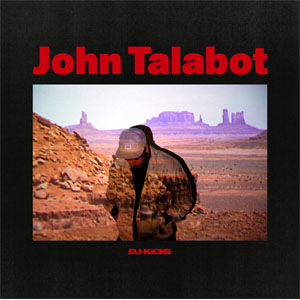
The appearance of a mix CD can sometimes feel like a victory lap; after all, they often happen once a particular artist has proven their worth to the current musical community and is therefore declared “deserving” of a chance to show off their sonic personality in the form of a 70-minute mix—sprinkled with some unreleased tunes, of course. Granted, this sort of generalization can make the appearance of a new mix CD seem like a cynical music-industry exercise, but regardless, it’s difficult to think of a man more deserving of a victory lap right now than John Talabot. Following the release of his triumphant debut LP, ƒIN, he’s continued to prove worthy of considerable praise as a live act (alongside Pional), DJ, and producer (mostly via a number of remixes). As his contribution to the longstanding DJ-Kicks series goes to show though, Talabot is well aware that victory laps do not make for the most engaging listens, which is likely why he’s instead taken the opportunity to put together a truly rewarding mix, one that reveals new facets of his musical DNA and further showcases the substantial depths of his own musical IQ.
After opening with the sprawling crawl of North Lake’s “Journey to the Center of the Sun,” Talabot’s DJ-Kicks explores the more lethargic ends of dance music early on. Beginning below 100 bpm, the mix sifts through noticeably dark, almost tribal efforts (including a particularly fitting remix of Maps’ “Heard Them Say” by Andy Stott) as it gradually increases the tempo with each new addition to the tracklist. In this early stage, Talabot’s selections ooze more than they flow, giving the beginning of the set a spooky vibe that proves unexpectedly alluring. Seven tracks in though, the man’s brighter side begins to peek through on Elmore Judd & Rowan Park’s remix of Harmonious Thelonious’ “The Grasshopper Was The Witness” and “Anagrama” by Tempel Rytmik—two cuts that continue to notch up the momentum of the mix while beginning to introduce some familiar pan-Latin elements in the breathy flutes, bell-made melodies, and stacks of hand percussion heard in each tune. Shortly thereafter, “Without You”—Talabot’s new solo production for the mix—appears, beginning to signal an eventual sea change in the proceedings and essentially serving as the link between the dusky atmosphere his DJ-Kicks has displayed so far and the more energetic selections that will come down the line. It’s also just a great tune; ghostly in its own way, “Without You” falls in place with much of ƒIN, balancing hazy synth atmospheres with just a shimmer of the man’s trademark pop flair. For those who have had an insatiable appetite for all things Talabot since his debut LP dropped last year, “Without You” will not disappoint.
Following his own contribution is a series of cuts which graciously begin to introduce more house-minded elements to the mix while still remaining calm and cool in their delivery. Axel Boman’s Boyz II Men-sampling “Klinsmann” sounds particularly enticing in this section, as does a rough-around-the-edges Moodyman remix of Mara TK’s “Run.” But it is with Unknown’s “#001” that Talabot’s DJ-Kicks appears to enter its final push, the shuffling tune signalling that after almost 40 minutes of tagging along with the selector’s cosmic, often dark, and—yes, every so often—Balearic-tinged voyage, he has now firmly landed on the dancefloor. Of course, this imaginary dancefloor is entirely Talabot’s own, as he manages to seamlessly fit the Eastern-indebted, almost goofy bounce of Samo DJ’s “Tai Po Kau” next to the underwater roll of Paradise’s Deep Groove’s early-’90s effort “Innermind” and Motor City Drum Ensemble’s synth-led “Escape To Nowhere” (one of the few cuts allowed to run for an extended length), among others. Talabot’s collaboration with Axel Boman as Talaboman and “Glass,” a gorgeously melodic cut from (what we can tell is) an anonymous producer operating by the name of Round, provide further highlights in the mix’s second half.
Taking a step back, it’s hard to see how the mix CD format is not at least in some danger of becoming a dying art in 2013. Between the proliferation of free podcasts and SoundCloud mixes, there is surely no shortage of sets to be heard from both complete professionals and amateurs alike. (Some might even say there are too many mixes out there.) Nonetheless, Talabot’s DJ-Kicks proves to be an essential listen, not only because it is an immaculate mix in its own right—one which moves swiftly through a graceful arc—but also because there is just so much vital music to take in over the course of its 70-plus minutes. If someone had given us the option between choosing a new John Talabot record or a new John Talabot mix, we probably would have chosen the record—however, as it turns out, the mix is just as satisfying.
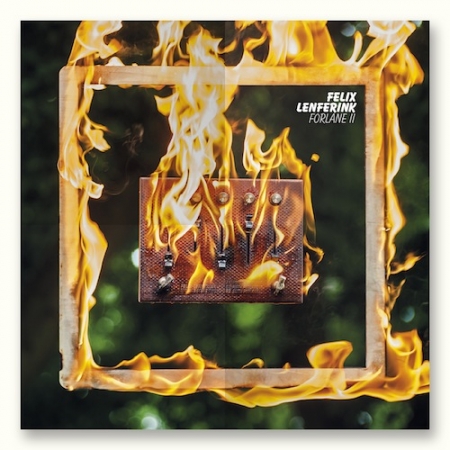
Operating under his Felix Lenferink moniker, Dutch house producer Steve Mensink has shared “Fourth Forlane” from his brand-new Forlane II EP. The producer’s usual style of plush melodic developments is explored further with this track, as he plays with textures throughout the constantly rotating and unraveling piece. Spongy, low-frequency pads bounce around a shuffling kick-and-bass motif, as glossy synth accents hover around vocal clips in the background. Mensink’s staunch production continues searching for its shape as shakers join the mix and tin-like percussion patterns skitter in and out of the firmly established groove.
In the grand scheme of collaborations, a meeting of the minds between Tom Demac and Will Samson ranks on the more unlikely end of things. The first is an old hand in the UK tech-house scene, known since the early ’00s as a producer of bassline-centric club cuts. The second is a folky singer-songwriter whose output has so far been characterized by cloudy atmospherics and delicate guitar work. Nevertheless, It Grows Again, the pair’s debut EP on Will Saul’s Aus imprint, finds a middle ground between the two artists’ differences that results in something relatively rare at the moment: clean, indie-shaded vocal dance music that actually works.
A large part of this is due to Demac’s considerable talents as a producer. His aesthetic is restrained; it’s clean in the mid-range, with emotive pads and well-tuned drums. However, his basslines, as usual, steal the show. “It Grows Again,” the a-side, uses a hollow acid bassline to tease the ears, but then rounds things out with a heavily distorted (but not abrasive) sub-bass rumble. In lesser hands, this much low end might be muddy, but the mixing is so precise here that each element stands on its own. As a result, there’s plenty of space for Samson’s voice to take the stage and lead the song through its peaks and valleys. This is, however, also what will make or break this song for a lot of listeners. Samson has a unique way of singing that’s atypical of dance music and more often found elsewhere in more acoustic genres. It works, but some might find his voice to be too twee for their tastes.
Much of the same can be said for the EP’s b-side, “Chasing Shadows,” which features Samson cooing again, although this time Demac pairs him with more loopy shuffling rhythms and a chunky, resonant bassline. It’s similarly laid back, but lacks the epic feeling that makes the a-side so compelling. It’s better in its second incarnation on the EP, the subtly different “Formula” mix, which punches up the swing on the drums and adds a layer of crackling dirt across the surface that completes the transformation into a late-night, red-lit basement banger.
Throughout the week, a whole lot of material gets posted here on XLR8R. And while we know—and love—that some hardcore readers will eagerly pour over every single news story, interview, podcast, video, and MP3 download that appears on the site, we also realize that for most people, it’s impossible to see everything, which means that some quality XLR8R content is likely to get missed in the hustle and bustle of everyone’s daily lives. In the interest of making it easier for everyone to catch up, every Friday we present The Lowdown, a weekly wrap-up of the top 10 tidbits from our site.
1. This week’s XLR8R podcast was assembled by Warp veteran Clark and offers plenty of his signature raw, hyperactive rhythms.
2. The latest installment of In the Studio found us visiting the Amsterdam lair of Rush Hour stalwart Tom Trago and peppering him with questions about his production methods.
3. Dubstep don Coki graced our Downloads section with “Chicken Bop.” Now available for free download, the bass-loaded cut was previously floating around the web and being openly pined for by the UK producer’s many devotees.
4. We kicked off this week with a new chapter of our B2B series, this one featuring a conversation between Chicago footwork heavyweight DJ Rashad and UK bass enthusiast Om Unit.
5. The latest XLR8Rcontest offered readers the chance to score a Novation Launch Control. We’re still accepting entries, so enter now before it’s too late.
6. UK producer Tessela took on the challenge of our Hi-Five series this week, selecting five of his favorite ’90s hardcore cuts and telling us why each one is important to him.
7. John Talabot’s highly anticipated DJ-Kicks mix is dropping next week, so it’s little surprise that our readers flocked to a stream of the album when it surfaced online a few days back.
8. Machinedrum is in the midst of a lengthy world tour promoting his new Vapor City LP, and a snazzy video appeared this week, offering a preview of what people in North America can expect when the tour comes back Stateside next week.
9. The calendar recently flipped to November, so XLR8R did its regular ritual of compiling the most popular tunes from our Downloads section during the previous month. The Top 20 Downloads of October can be viewed here.
10. It’s not often that Timo Maas appears on XLR8R, but when one of his tunes was remixed by UK producer Tom Demac, we were happy to make an exception. His rework of “Tantra” is available as a free download.
An expanded version of the The Lowdown is also available via a weekly email newsletter. Those interested in an even more in-depth round-up of XLR8R content, including a complete listing of all the free downloads we’ve offered in the past seven days, should sign up by entering their email address below.
Directed by Eric Epstein, the video for Barcelona synth-pop group Delorean‘s “Unhold” single was filmed throughout the Opus 40 sculpture park in Saugerties, New York. Lifted from the band’s brand-new Apar LP, “Unhold” features a vocal performance from Chairlift‘s Caroline Polachek, who provides soaring falsettos and half-spoken nuances to the shimmering track. The singer is also the focus of Delorean’s new clip, which premiered on Nowness, as it shows her navigate down winding paths and around towering figures. Basically, she runs rampant through the strangely beautiful park as it shapeshifts in dizzying ways.
XLR8R Couldn't find the embed function for type: "nowness" and source: "<iframe src="http://www.nowness.com/media/embedvideo?itemid=3456&issueid=2660" width="500px" height="315px" frameborder="0"></iframe>".
Skwee-obsessed Portland outpost Ausland has sent over this off-kilter cut as a preview to the label’s forthcoming Klärvoajans tape, a 20-track collection which compiles contributions from an international cast of beatmakers. “Dr. Ananas” serves as E?SY & C.O.U.‘s effort to the cassette, one which finds the Oslo-based pair crafting an almost-evil beat from bit-chopped drums and revolving electronic squelches, with the occasional bit of woodwind and steel drums thrown in for good measure. Complete with a kind of uneasy sway (a hallmark of the skwee genre) and a host of playful melodies, “Dr. Ananas” would make a fitting soundtrack for the operating room of some demented child doctor. Ausland’s Klärvoajans compilation is set to drop on November 20, but can be pre-ordered via the label’s Bandcamp, where more track previews can also be found.
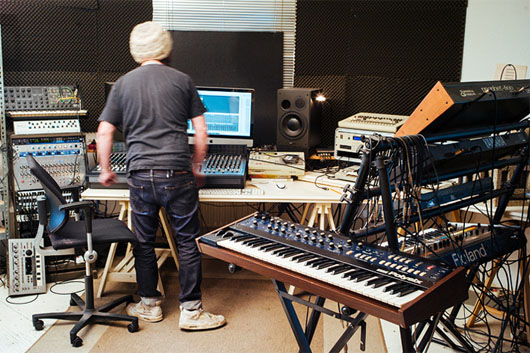
Dutch producer Martijn Hoggendijk is perhaps best known for his Alden Tyrell production handle, but the man is also a notable mastering engineer, one who has put the final audio touches on countless Clone releases (among others) over the years. Now, the doors to his beautifully gear-packed, synth-filled studio have been opened for all to see. Appearing as part of Resident Advisor’s ongoing Machine Love series, Hoggendijk gives a visual tour of his impressive home studio while chatting about his decades worth of experience using and collecting gear (recalling the story of buying his first synth in 1984), as well as discussing why he believes collaboration can be a useful tool and why he’s found himself using samples more and more recently. The full interview and picture set can be checked out over on Resident Advisor.