As far as genre is concerned, New Zealand producer Fis (a.k.a. Oliver Peryman) refreshingly doesn’t give listeners much to go on. His EPs have been loosely lumped in with drum & bass, if only because of tempo, but Peryman is about as close to that genre as Shackleton (a close reference point) is to dubstep. Like Shackleton, Peryman creates off-kilter, claustrophobic compositions, which are typically laced with some hints at occult ritual. The two tracks (and brief interlude) on Homologous, his latest 12″, do just this. Beyond that comparison, it’s safe to say there are not many artists who sound even remotely like him.
This uniqueness is certainly commendable, as it’s more important than ever for an artist to have his own signature. However, when it comes to the question of whether these tracks are more than just interesting experiments, it’s difficult to say. “1” cuts an unsettling figure, its undulating bass pressure specked with odd croaks and shuddering droplets of lasers. “2” feels even more malicious, and more synthetic as well, but it features a similarly disjointed rhythm of rustles and rattles, offbeat claps, and throbbing bass, with an eerie “wind” whistling around it. Both of these pieces (and the foggy but busy interlude) capture dense, teeming landscapes, somewhere between the forest and the factory, though as the sample on “1” attests, “you create your own environment.” Regardless of its implications, Homologous is largely noteworthy because its creator dares to move in such abstraction.
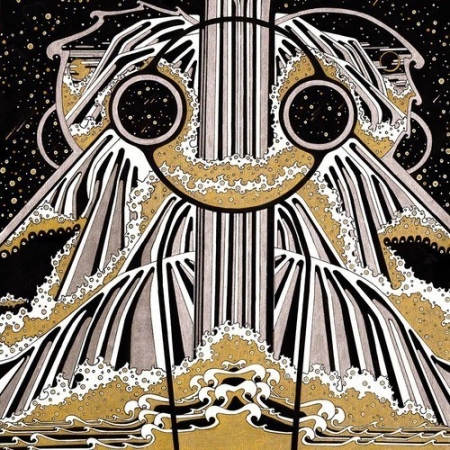
Manchester artist Synkro is about to finish up a busy 2013 with the impending release of both the debut LP from his Akkord project and a new solo EP for Apollo. But before Lost Here (artwork above) drops on December 3, the Mancunian producer born Joe McBride has shared one of its four lush and introspective cuts. “Fading Lights” is the closing tune from Synkro’s forthcoming EP, and finds him ending on a pensive note with quiet synth atmospheres, smeared vocal melodies, and fragments of drum breaks. The whole six-minute thing pushes a serene and weightless vibe, and can be streamed in full below.
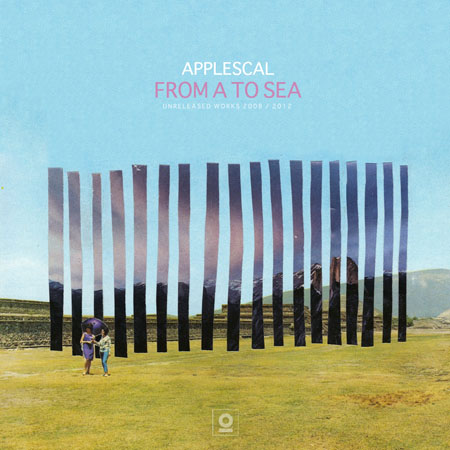
Dug out from the nearly lost files of an “old, forgotten computer” are the nine tracks which make up the forthcoming mini-album from Applescal, From A to Sea. One of the tunes crafted by the Dutch producer between 2008 and 2012, “Screams” is a particularly lush and sprawling cut which would have felt right at home on Dreaming in Key, Applescal’s most recent full-length effort released via his own Atomnation imprint earlier this year. The production presents its grainy textures, smoldering melodies, and other rich sonic layers atop an IDM-indebted shuffle, landing the track somewhere along the lines of a more stoney Clark or a subterranean M83 (during his instrumental days, of course). “Screams” and eight other recently recovered tracks from Applescal’s archives can be found on From A to Sea when it drops on December 9.
Helsinki-based producer V.C. (a.k.a. Jukka Santanen) had a hand in bringing Scandinavia’s exuberent, bass-driven skweee movement to life, and the artist’s new video for “Roy M.” demonstrates the genre’s hyperchromatic sound in visual form. Created by Antony Barkworth-Knight, the piece begins with arrows that jet across a bright, single-colored background, gradually adding different shapes to its arsenal, as a choppy dancehall rhythm chugs along and sidestepping analog synths cram the soundscape. The forthcoming LP from which this track is taken, Invisibility, is set to drop on December 6 via V.C.’s own Raha & Tunteet imprint.
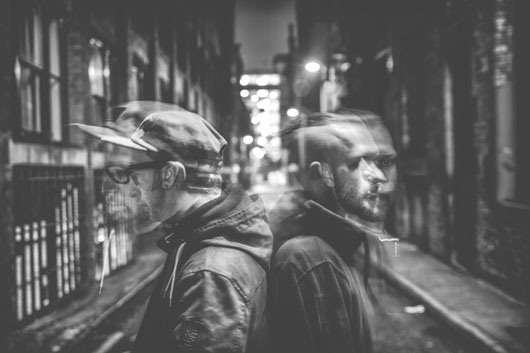
Announced last month, the debut full-length from Akkord (a.k.a. Synkro and Indigo) is set to drop via Houndstooth before November is through, capping off the Mancunian pair’s admirable 2013 run. But before the self-titled record sees a release, we have been treated to a stream of “Hex_AD,” a particularly machine-minded cut which lives up to the album’s attempt to “[blur] the lines between junglist revivalism, smoky ambience, and suctioned dub.” Clocking in just short of six minutes, “Hex_AD” is a patient but unrelenting voyage into dark electronics, one which relies on precise percussion and sturdy rhythms to push forward amongst the thick layers of foggy textures. Ahead of the 10-track Akkord LP’s official release on November 25, “Hex_AD” can be streamed in its entirety below.
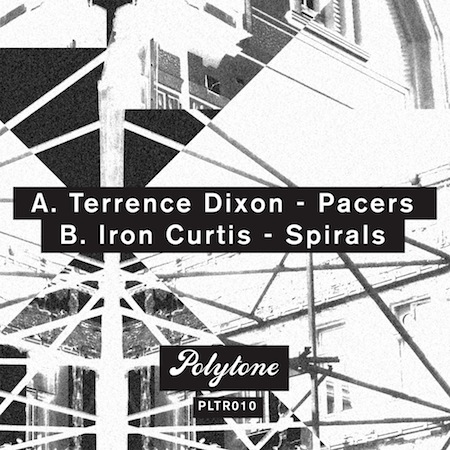
Detroit techno purveyor Terrence Dixon has paired up with Berlin producer Iron Curtis for a just-released split 12″ for German label Polytone, lengthy clips of which are now available to stream. Dixon’s offering, “Pacers,” is a minimal slab of low-res techno that firmly adheres to one groove, even when feedback gusts and delayed field recordings try to disrupt the rhythm. Iron Curtis contributes “Spirals,” a funkier, house-leaning selection that places the bass drum at the core of the mix, with an anthemic chord progression of warbling synths as its main refrain. A streaming preview of the new 12″ can be found below.
Hailing from London, the Lobster Theremin imprint launched back in October with its first release from rising Berlin talent Palms Trax. Now, before Lobster Theremin’s sophomore release drops later this month in the form of a four-track effort from Snow Bone, the London newcomer has turned in a remix of Palms Trax. Where the original “Equation” takes cues from producers such as Legowelt and others enamored with the spacier heritage of Detroit techno, Snow Bone’s version of the tune is decidedly more dark and brooding from the onset, carefully weaving cloudy textures and digitally singed percussion into an immersively sparse six-plus-minute rework. Those interested in hearing what Snow Bone’s original material sounds like can head to Lobster Theremin’s Bandcamp, where the Londoner’s forthcoming Remote Viewer EP can be heard in full before it drops on November 25.
After casually dropping its sophomore LP, Swisher, via RVNG this summer, Brooklyn house duo Blondes (a.k.a. Sam Haar and Zach Steinman) has shared a new, self-produced video for the album’s second single, “Andrew.” Shimmering and pulsing to the outfit’s brand of hypnotic, sleek dancefloor music, the visuals feature metallic 3D renderings that parallel the cut’s celestial synthlines and muffled, underwater percussion. Refractions of colored light create intricate patterns on what appears to be a face, which eludes definition by constantly shapeshifting and bending from various angles.
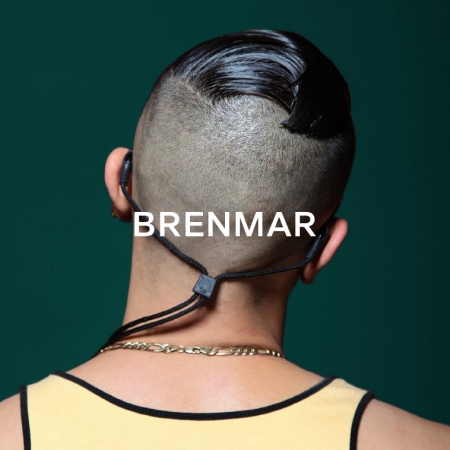
Though he may be currently based in New York, party-starting DJ/producer Brenmar hails form Chicago, so he presumably knows a thing or two about the Windy City’s long lineage of dance music. And he’s chosen to flex some of that knowledge on a brand-new mix which offers a sonic history of Chicago ghetto house, juke, and footwork. Called History of Chicago, Brenmar’s mix was commissioned by Montreal clothing brand SSENSE, and was delivered with a bit of information from the DJ. He explains, “[The mix] starts in the mid-’80s and ends around the mid-2000s, just as footwork was becoming a new sound/thing… My personal era of Chicago ghetto house is late-’90s and early-2000s. Juke was basically the house party music of choice if you were a teen in Chicago around that time.” With a tracklist boasting cuts from the likes of Frankie Knuckles, Adonis, Paul Johnson, Gant-Man, Traxman, DJ Funk, and RP Boo, it would seem that Brenmar knew exactly what he was doing when he put together his History of Chicago mix, all of which can be streamed and downloaded for free below.
Jody “Fingers” Finch – Jack Your Big Booty (BHQ No Acid Vocal) Frankie Kuckles – Baby Wants To Ride Mark Imperial – Dissin All Hoes (46th Street Dub) MD III – The Pressure Cooker (M.D.’s Klub Mixx) Candy J – Why Are You Wasting My Time (Club Mix) Mark Imperial – J’adore Danser (Club Mix) Adonis – No Way Back Armando – Morse Code Gant-Man – Juke Dat Girl From Tha Back Paul Johnson – Construction Work Jammin Gerald – Pass It To The Homie Waxmaster – Footwerk 97 Houz Mon – Fear The Worlddd Eric Martin – If You Ride N My Truck (FTP Up 96 Mix) DJ Deeon – 3 Fine Hoez DJ D-Man & Billy Boy – Dooky Boody (D-Man Club Version) DJ Puff – Bang The Box Jammin Gerald – Hold Up Greedy J & Sleepy J – Nation Hoe DJ Milton – JR Funeral Dj Puncho – Let me C U Juke Parris Mitchell – Muthafuckin Dog Dj Clent – Back Seat Hoe Green Velvet – Shake & Pop (Gant-Man’s Juke Remix) Traxman – Get Down Lil Mama Dj Funk – Bounce Dat Ass RP Boo – Speakers R-4 (Sounds)
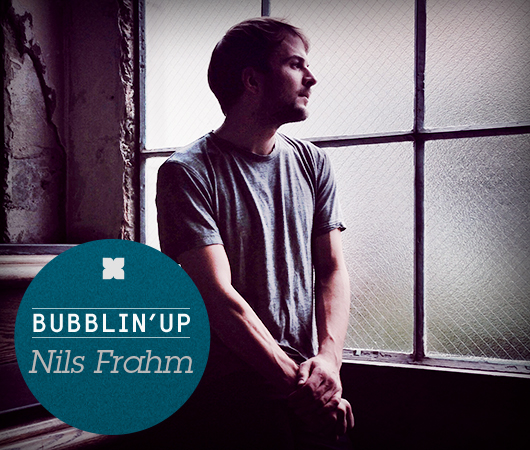
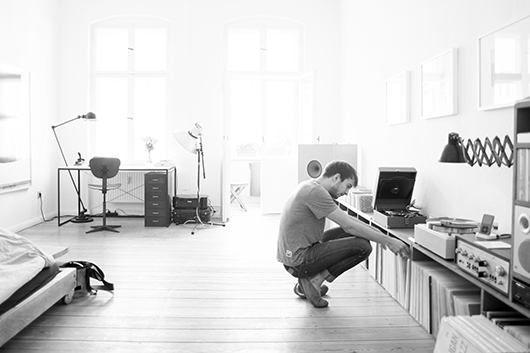
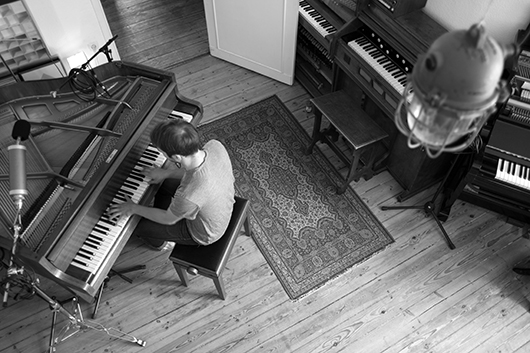
Nils Frahm was in the studio one day, recording a new track on the piano, when he was suddenly forced to take his hands off the keys. A cell phone started ringing and the 30-year-old German multi-instrumentalist was temporarily stunned. Most producers would erupt in anger at such an interruption; Frahm just laughed, before calmly moving onto the next note. Tape was rolling the entire time, and the whole episode—stray ringtone, laugher, and all—is now a permanent fixture of the piece. “I’m very grateful for that moment because it’s fun and it shaped my improvisation,” he says, fondly recalling the incident.
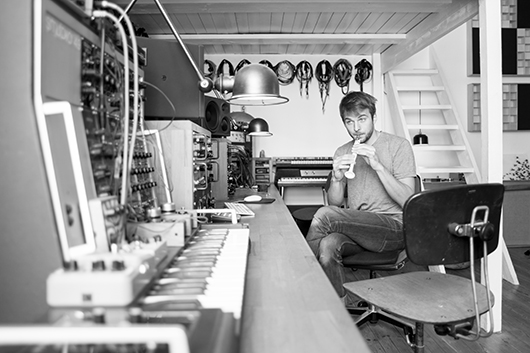
Frahm is an unusual breed of engineer—he takes pleasure in using the ‘wrong’ recording equipment and enjoys capturing the ambient sounds most would strive to eradicate. “I don’t really want to design something perfect, something artificial,” he explains. “I just want to catch a good moment. When they occur—when something’s wrong, something’s clicking or cracking—I always feel like it adds something special.”
His own breath lingers throughout 2011’s Felt, his delicate, critically acclaimed studio debut for innovative London imprint Erased Tapes. Recorded in the dead of night in his Berlin studio, Frahm was concerned about disturbing his neighbors with his playing. Ever polite and respectful, he dampened the sound of his piano by stuffing it with thick pieces of felt and placed microphones as close as possible to the strings. The resulting recording was incredibly intimate—one can hear every sigh, every creak in the floorboards. Listening is almost akin to sitting right there with him, sharing his piano bench and his quietest moments.
Of course, he says, not all accidental noises are worth retaining, “but it’s good to have open ears for what’s interesting or compelling. It’s about selecting the right accidents.” It’s this philosophy that allowed the classically trained impresario to seamlessly transition into the world of electronic music—in recent years, he’s made appearances at major festivals like MUTEK, Primavera Sound, and Decibel, all of which left audiences buzzing.
Though he is the only professional musician in his family, Frahm grew up in a musical household. His father, a photographer who worked with ECM in the ’70s, played a bit of piano and guitar, and kept classical and jazz records—including a treasure trove of promotional items from the label—around the house. “The music playing at home was extraordinary,” Frahm remembers. “He was really open-minded, musically,” and encouraged his young son to experiment with a range of instruments, from the harmonica to the drums.
Eventually, Frahm settled on the piano. It was largely out of convenience; his mother already owned one, though she didn’t play much herself. As soon as his fingers pressed down on the ivory keys, he felt a connection to the instrument. “The piano is easy to start with. It’s like learning English; you can learn how to say a few things very quickly, just by pressing some keys.”
As a child, Frahm studied under Nahum Brodski, who was himself a student of Tchaikovsky’s last protégé. Determined to mold the eight-year-old Frahm into a world-class classical pianist, Brodski worked him hard—almost too hard, sometimes. “I kind of loved and hated him,” Frahm says. “He smelled like garlic every time he came over. And sometimes he forgot his teeth. I was a little scared of him. But as crazy and eccentric as he was, he was also really wonderful and had a big heart.” Brodski often gave Frahm extra lessons without charge, at one point working with him on a near-daily basis—that’s how much he believed in Frahm’s potential as a classical concert pianist.
But after six or seven years hacking away at Chopin, he’d had enough. “I went through some hardship in that time,” Frahm remembers. “Instead of playing football outside with my friends, I was inside practicing two bars of a complicated piece 400 times. I kind of hated it, but in the end, it made me tougher, and it made me realize that nothing comes from nothing. You have to suffer a little bit to achieve something, and you have to stick with something to be good at it.”
Frahm continued on with the piano—but started to move beyond his classical-only repertoire. He joined bands, but that didn’t last long; he loathed coordinating gigs and recording sessions with a group of people who didn’t share his work ethic, and at 16, he decided that it just wasn’t worth the effort. It was around that time that he was introduced to the computer, and learned how to record on his own. All the while, his appreciation for legends like Steve Reich and Philip Glass continued to grow and inform his technique. “It was really fashionable at that time to make interesting click-and-clap beats out of field recordings,” he says. “For most people, it seems odd, because they put me on the classical shelf, but I played in rock bands and all kinds of noisy, experimental groups. A lot of that music wasn’t released, but I spent all this time developing these skills as an electronic-music producer that never really went away.”
Eventually, he circled back to the piano, recording his first solo effort in 2007. The 30-minute improvisational piece was recorded as a Christmas present to his friends and family, but the album soon found its way to the Sonic Pieces label. Recognizing Frahm’s substantial talent and the album’s beauty, the imprint released an edition of 333 copies in 2009, which promptly sold out. “I kind of wanted to stop them from doing that, but they talked me into it,” he says. “It was a surprising experience. Way better than my expectations—it was a tremendous success.” A second edition of 500 copies was pressed to meet demand.
He soon followed with The Bells, collaboration with close friend and future labelmate Peter Broderick, for Swedish label Kning Disk. The album was recorded in a two-day session inside of a massive, reverberant church, which was chosen for its treatment of a string-quartet performance he’d witnessed . “[Peter] is really in the same kind of spirit as I am. He likes unusual ideas. He told me, ‘Play a song you can imagine me rapping over.’ ‘Play me song with only three notes.’ ‘Play something with me laying on top of the piano—a song called “Peter’s Lying Dead in the Piano.”‘ So I improvised and then I edited the best pieces together.”
Because of his connection to Broderick, Frahm’s first two albums were picked up by Erased Tapes; the label re-released them and signed Frahm for three more records. Aside from 2011’s Felt, he’s released Juno, a two-track solo synthesizer EP, Screws, a nine-track collection of songs recorded with nine fingers that was named for the tiny metal objects implanted in his hand after a traumatic thumb injury, and Juno Reworked, a re-release of the long-sold out Juno with remixes from Border Community’s Luke Abbott and Warp’s Clark. Anne Müller, Ólafur Arnalds, and F.S. Blumm have become collaborators, and his Juno pieces have surfaced in Four Tet’s DJ mixes.
Frahm is now about to release Spaces, an album that aims to capture his unique live show, which blends piano improvisations with synth experimentations. His unconventional approach to the piano—once the subject of much snark in online forums for his strange recording style—has shined a new light on the modern classical genre and earned Frahm accolades from around the world. “All these preconceptions about recording and making music, hearing music, and all these dogmas from people about how you have to do things this way or that way—I always thought that was wrong,” he says. “I hate dogmas. I hate principles. When people have the answer before the question, it’s always sketchy.”
“I just try to explore wrong ways of making music in order to create something interesting.”