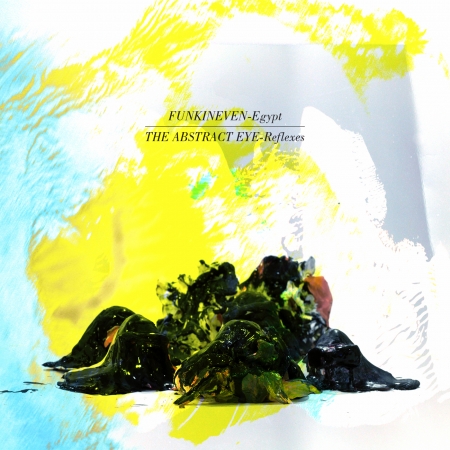
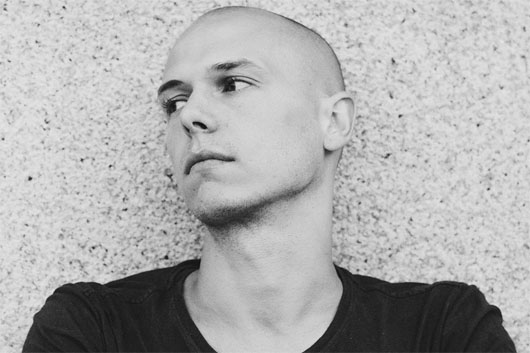
Hardware-funk specialist FunkinEven has announced his return to the Eglo label with a brand-new track which will feature on a split-12″ alongside a tune from shapeshifting producer Gabriel Reyes-Whittaker‘s GB: The Abstract Eye moniker. The two-track record is set to drop on November 15, with the digital package arriving sometime afterwards, and though Reyes-Whittaker’s “Reflexes” tune already appeared on the Eglo Records Vol. 1 compilation, this will be the first time FunkinEven’s “Egypt”—described by the label as a “Sakamoto-esque journey over the pyramids”—sees a release. Both tracks can be streamed below
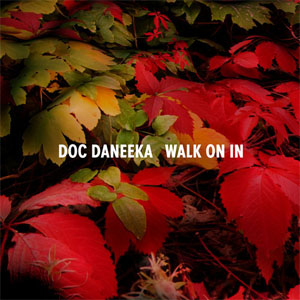
With efforts for Ramp/PTN, Roska Kicks and Snares, 50Weapons (usually alongside Benjamin Damage), and his own Ten Thousand Yen label, Doc Daneeka has certainly built a solid reputation as a producer, but—with the exception of his and Damage’s “Creeper,” perhaps—has not exactly delivered a trademark “tune” since appearing on the scene a few years back. However, Daneeka’s first turn for Glasgow’s reputable Numbers imprint may remedy that predicament, as its a-side cut, “Walk On In,” is a certified monster.
“Walk On In” does not really attempt to push the boundaries of underground dance music, and in this case, that is just fine. In the simplest terms, “Walk On In” is a solid, bass-fueled house tune—one drenched in filtered soul and topped off by a smoky vocal sample which is chopped into quick syllables and the looping phrase which provides the song’s title. A collaboration with CRST affiliate Ratcatcher, “Walk On In” is led by these rearranged vocal samples, but the meat of the track is in the beat—a low-swung house groove that operates in the deeper ends of the spectrum, but certainly is not “deep house” in the conventional sense. The musical sample which the beat revolves around is so buried in filtering that it is hard to tell what exactly is at play, but one can faintly pick up a few piano chords and some droning horns somewhere in there. The musical details are a bit irrelevant though, as it is really the resulting groove that makes “Walk On In” such a success, as its effortless, instantly inviting swing allows Daneeka and Ratcatcher to wait until well after the two-minute mark before introducing the song’s full bass weight. Moreover, it enables the two producers to do little more than filter elements in and out of the track for almost eight minutes without losing momentum.
On the flipside, “Trife Pt. II” comes in as an admirable effort, trading in the soul-drenched vibes of its a-side counterpart for more warehouse-minded chords and hardware-born rhythms, which come with some delicately implemented pads thrown on top. It’s certainly a solid cut, but considering what it’s up against, the track does little to distract from “Walk On In”—a song that ultimately shows it is possible to make fun and catchy dance music without dumbing down one’s delivery or watering down one’s craft. Daneeka (and Ratcatcher for that matter) surely deserves credit for hitting that hard-to-find balance right in the sweet spot.
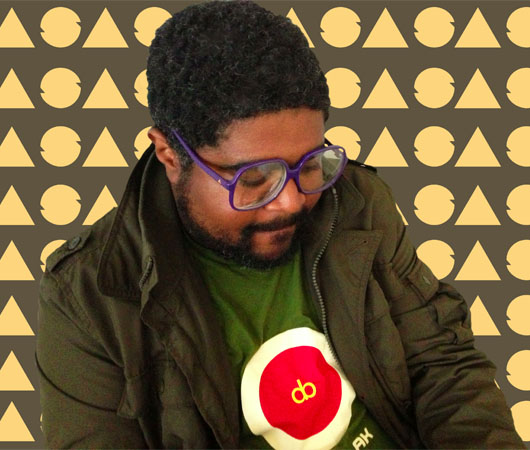
Below the basements and warehouses of the house-music underground lies a subterranean domain so deep that it’s almost completely off the map. These are the spaces and dimensions that Oakland’s Afrikan Sciences (a.k.a. Eric Porter Douglass) explores in his increasingly free-form music, which finds a unique place between the leftfield rhythms of Flying Lotus and the spaced-out, post-techno soul of Theo Parrish. His latest album, Theta Wave Brain Sync, was released late last month. Still, we felt like Afrikan Sciences was someone who merited closer inspection, so we’ve put together a list of 10 things everyone should know about this truly avant-garde Bay Area producer.
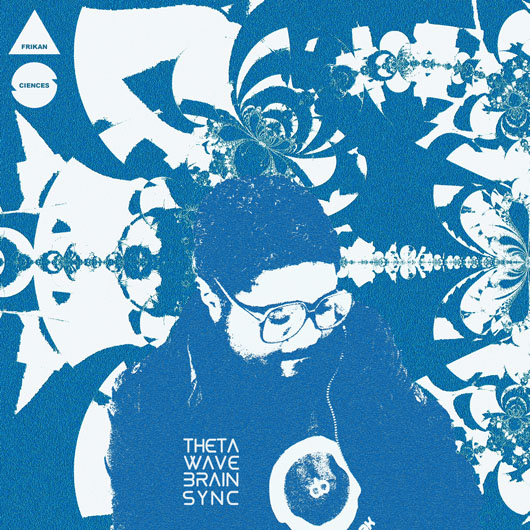
Afrikan Sciences ‘Theta Wave Brain Sync’
He started out as a hip-hop producer. Though Afrikan Sciences is the first project Douglass unveiled publicly, he has been experimenting along similar lines since he first discovered belt-drive turntables and the record button on his cassette deck in the ’80s. “I was the kid in the dorm room with the turntables and primitive recording equipment,” he says. “My collective of collaborators recorded volumes of tapes, mostly free-form improv interlaced with freestyled rhymes and experimental production techniques, like Frank Zappa meets Charles Mingus meets Marley Marl.”
He’s been into dance music for a long time. Always a DJ, Douglass is quick to point out that there has always been a connection between hip-hop and dance music. “Ever since the ‘Planet Rock’ era, there’s always been an intersection where you had uptempo hip-hop and mid-tempo club music,” he notes. Douglass also cites the influence of New York City radio stations like KISS FM in the ’90s, where he remembers, “you had guys like Bobby Konders rocking next to Kool DJ Red Alert or Frankie Knuckles.” However, he began producing electronic dance music in the late ’90s. “I grew out of love with the climate of hip-hop in that time period, plus I was taking inspiration from all these incredible movements going on in dance and electronic music.”
The majority of his material has been released on Aybee’s Oakland-centric Deepblak imprint. Started in Oakland by Aybee, Deepblak is one of the major progressive forces behind the city’s deep-house output. Throughout its decade-long run, the label has remained a fixture in the global underground, releasing increasingly experimental music that’s cosmically oriented in the way it challenges conventional melodic and rhythmic structures. Douglass’ music has been integral in the imprint’s development; he’s the “rhythm czar” and has been involved with the Deepblak camp since he met Aybee. Interestingly enough, the two first connected “through a forum of some sort, probably a 4hero message board.”
He’s a fan of science fiction. “All praises due to the writer Octavia Butler,” says Douglass. Much like the rest of the Deepblak crew, science fiction plays a role in the sonic fiction of Afrikan Sciences. Still, beyond the titles and the implied Afro-futurism of his alias, there’s a subtler influence in the music itself, though not necessarily in the way one might expect. “[I love] the mystery and tension found in the incidental music found in sci-fi: Star Trek, ’70s-era Tom Baker Dr. Who, Dune—that stuff factors big,” he explains. At the same time, Douglass is cautious about going overboard with the overt sci-fi references in his work. “I try not to be blatant about it, I find that can come off a bit cheesy.”
He collaborates with Aybee. Douglass doesn’t collaborate a lot outside of the Deepblak camp, but his work with Aybee has been particularly memorable. The Nibiru Projekt fused the two producer’s styles together, mixing Douglass’ advanced rhythms with Aybee’s more melodically ambient leanings. The first song on that record, “Ordinance,” directly references The Jungle Brothers’ classic hip-hop cut “Acknowledge Your Own History,” which injects the track with an Afro-centric dimension that seems vital at a time when dance music has largely been stripped of its political potency.
It’s all about the polyrhythms. Since he first began recording as Afrikan Sciences, Douglass’ music has been characterized by rhythmic complexity. Across his discography, his tracks tend to drift away from conventional percussive arrangements. Douglass prefers hand-crafted grooves, with natural swing pushing his drums into uncharted territory. “Polyrhythms are where the magic is conjured. Odd versus even, dynamics and accents, it’s all language,” he says. On occasion, he even layers conflicting rhythms on top of one another to create more complicated patterns.
He’s not afraid to use three turntables. Though not a part of his live set-up, Douglass utilizes a three turntable set-up in his studio. “I suppose it directly connects to my love of sound collages,” he says, “and layering for the effect of creating a conversation between the music by introducing various elements together.”
He’s a talented jazz bassist. The sound of Douglass’ short-scale fretless bass figures highly in his music, with slippery jazz playing augmenting his use of avant-garde rhythms. “I am a self-taught bass player and have dabbled with the instrument, off and on, since the late ’90s,” he explains. But despite his jazz leanings, Douglass has never really played in combos. “I’ve kicked around in roots-reggae bands; my involvement in jazz combos has been more as a live dubologist, capturing sounds and atmosphere from other instruments to add another element to [the] music.”
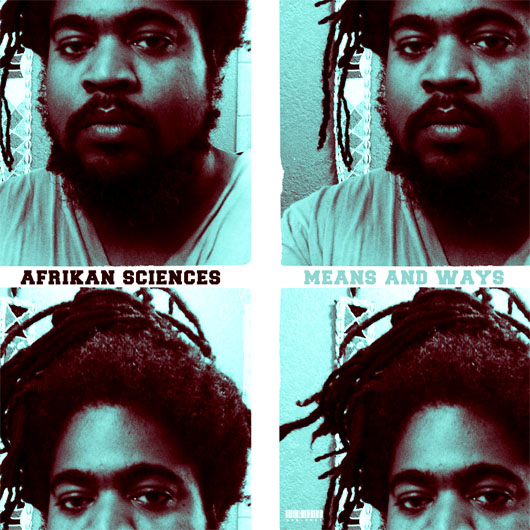
Afrikan Sciences ‘Means & Ways’
Means & Ways, his debut LP, was really good. On it, he tied together a number of loose ends, making something totally alien in the process. In practical terms, that saw Douglass going from the galactic excursions and twirling arpeggios of “Spirals” to the more Earth-bound, yet still mind-expanding, jazz-combo exercises of “A-Tonk.” Somewhere in between lies an aesthetic influenced by Afro-futurism that’s refreshing in its earnest devotion to breaking with the conventional sonic norms of dance music.
Theta Wave Brain Sync is a true sophomore release. Picking up where Means & Ways left off, the LP discards some of its predecessor’s more conventional jazz leanings in favor of an altogether more cosmic approach. For the new record, Douglass is drawing cues from the psychedelia of ’70s fusion, utilizing its ethos to explore, in the words of the album’s press release, an “expansive rhythmic dialect [that] points us inward to a sonic palette free of grids. That special place where numbers and counting are rendered meaningless, leaving nothing left for the listener but the groove.” The title refers to a way of sonically inducing altered states of consciousness that was developed in the 1960s. “I’ve researched it and find it fascinating,” Douglass says. “The relationship between specific frequencies, creativity, and the subconscious. The music on this new album I feel ties into that through the imagery it provokes through its layers and textures, kind of like a waking dream.”
Having relocated from LA to London, house DJ/producer and Amadeus label affiliate Steve Huerta seems to be in the midst of some changes, and it shows on this brand-new track he just sent over. Attempting to break away from a straightforward house palette, Huerta shifts towards a more moody UK sound on “Falling Up.” The tune is a pleasant experiment, too, with a disjointed core and throbbing pads which overshadow its off-kliter beat and swirling, reverb-drenched vocal samples.
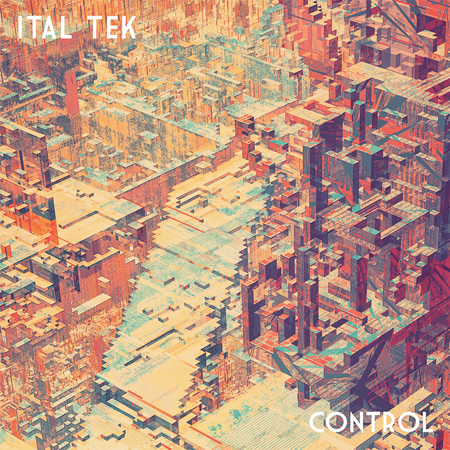
Ital Tek is set to return to Planet Mu next week with Control, the shapeshifting Brighton producer’s eight-track “mini-album” which can now be streamed in its entirety. Described as “sophisticated and dense sci-fi music that flexes your senses,” Ital Tek’s newest effort follows over a year after his Nebula Dance LP, and continues to find the established UK talent seeking out new hybrid forms of electronic productions, specifically looking towards the 160 bpm frameworks of footwork and drum & bass as the initial buidling blocks of his tracks. Set to drop on November 11, Control can be streamed exclusively on XLR8R using the player below.
Toronto producer Meesha released a debut EP back in 2010 via recent XLR8R podcast contributor Noah Pred‘s Thoughtless Music label, and has been slowly trickling out self-released music on Bandcamp and SoundCloud since then. “You Know”—taken from his latest EP, Movements—sticks to a relaxed R&B tempo, but the looming synths and uttered samples drip with moisture and a silken reverb that swells and recedes in intensity.
Following a handful of releases over the past couple of years, Japanese experimental musician/producer Sapphire Slows (a.k.a. Kinuko Hiramatsu) has finally issued her debut full-length via Not Not Fun. Following on from her last release—the housey “Just Wanna Feel” 12″ done in collaboration with 100% Silk affiliate Magic Touch—Allegoria is a textured, psychedelic, and meandering turn for the artist. Even compared to Sapphire Slows’ relatively introspective Not Not Fun debut, the True Breath EP, Allegoria is a drifting, murky album, albeit one that manages to strike a balance between an overt dance influence on the one hand and more hypnogogic tendencies on the other. The LP largely leaves Sapphire Slows’ sonic formula intact—slow house beats underpin Hiramatsu’s languid, narcotic haze—but there’s a restlessness to the record that can make it surprisingly difficult to pin down sonically. Alongside the plethora of other Not Not Fun and 100% Silk artists it’s possible to draw constellations between when listening to Allegoria, dream-pop and shoegaze influences are also readily apparent, as is the push of house and techno. What ties it all together are Hiramatsu’s reverb-laden vocals and her deft ear for rhythm.
The album’s opening track, “Dry Fruits,” smothers Hiramatsu’s vocals in atmosphere and utilizes a muted house beat that holds down a woozy, dub-inflected guitar part. “Third Party” takes things further into the realm of dub, particularly with its sparse, echoey production and slinky guitar lines. Both tracks recall vintage Not Not Fun artists such as Sun Araw and Pocahaunted, and if they perhaps mark the most derivative tunes on Allegoria, they’re also some of the most listenable. Still, the album’s most fully realized moments come when Hiramatsu embraces her house and disco influences. “Fade Out” encapsulates a blissed-out state of dancefloor rapture with its insistent rhythm, elegant arpeggios, and hints of a Cocteau Twins-esque fragility in her disembodied, manipulated vocals. Similarly, “Core Kill” adopts an almost techno framework with its low-key, itchy rhythms and tension-building bassline.
The record’s second half is notably less immediate than the first, allowing Hiramatsu’s more experimental side to come to the fore. “Break Control,” for example, is decidedly obscuritanist in its approach. The tune opens with drifting arpeggios before introducing Hiramatsu’s reverb-soaked vocals, while deconstructed claps and pitter-pattering bursts of bass keep things pleasantly lopsided. Many of the tracks on Allegoria‘s flipside also have a heavy shoegaze influence, such as on the melancholy “Can I Get Out,” whose clattering rhythm helps break through otherwise indistinct production, and the oblique grandeur of “Meteor.” Comparisons to Maria Minerva have always been inevitable with Sapphire Slows, given the similar influences and label share between the two, but the record’s final track, “Allegoria”—an album highlight—recalls another notable recent female producer, Laurel Halo. Built around a disjointed piano line, the six-minute track’s murky techno gradients suggest that Hiramatsu is at her best when at her most difficult. There’s no denying that Sapphire Slows has a sonic formula, but if Allegoria is anything to go by, it’s one with enough flexibility to make for compelling listening.
London singer/producer Sampha released his debut Dual EP back in July via Young Turks, and this month, the artist will return to the label with a two-track single. Recorded with producer Emile Haynie, the two vulnerable cuts lay Sampha’s considerable vocal talents over gorgeous piano chords. A demo version of “Too Much” was sampled by Canadian hip-hop artist Drake for a song of the same title on his Nothing Was the Same album, and b-side cut “Happens” is a similarly bare piano ballad. “Too Much” b/w “Happens” will see an official release on November 12 via Young Turks, and the new video for “Too Much” can be found below.
The ever-busy Ghostly label—an Ann Arbor instituion we profiled at-length during our recent Labels We Love week—has two full-length records set to drop next week, one from Berlin minimalist Recondite (pictured above) and one from glitchy experimental trio KILN. Now, both albums are available to stream in full before they see an official release. Hinterland marks Recondite debuting on the label with 11 tracks of icy techno, whereas the dubby and textural meadow:watt sees the adventurous KILN outfit returning to Ghostly for the first time since its Dusker LP appeared on the imprint in 2007. Both records will be made available on November 11, and can be heard in their entirety via the respective players below.
XLR8R Couldn't find the embed function for type: "vimeo" and source: "<iframe src="//player.vimeo.com/video/76596714?color=fc0824" width="530" height="298" frameborder="0" webkitallowfullscreen="" mozallowfullscreen="" allowfullscreen=""></iframe>".
Leading up to a full-length debut, international outfit Graze (a.k.a. Adam Marshall and XI) has had a fruitful 2013, with an XLR8R Pick’d self-titled EP, a Bubblin’ Up feature, and an exclusive live session demonstrating the duo’s club force. Now, ahead of the December 3 release of its Edges LP via New Kanada, the pair has shared an entrancing video for opening cut “Skip/Crush.” Created by DSMV, the piece features fabric-like sketches and architectural renderings that animate and flash by in epileptic fashion. The stark, black-and-white visuals perfectly mirror the movements of slippery bass and brawny percussion in Graze’s new track.