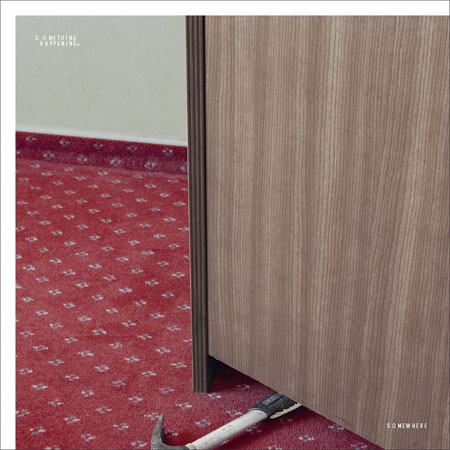
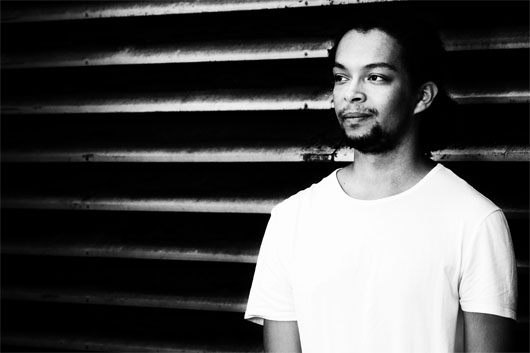
Producer, DJ, and resident of Amsterdam’s renowned Trouw club, Nuno Dos Santos will launch his new label, Something Happening Somewhere, in the coming weeks, with its inagural release coming from fellow Dutch talent Love Over Entropy. The forthcoming Off the Grid EP offers two originals from the budding producer, as well as remixes from Versalife and the rework offered here by Dutch producer Melon (also known to operate as Ratio). On his version of “Groundswell,” Melon infuses Love Over Entropy’s track with an extra dose of disco vibes, rendering the tune a lighthearted dancefloor exercise in which playful percussion and kitschy FX join sparse smatterings of galactic synthwork and a DFA-reminiscent bassline. It all makes for an effort that’s just downright fun.
It has been quite a busy year for the prolific DJ/producer known as Machinedrum, and that activity recently culminated in the release of his solid and expansive Vapor City LP for Ninja Tune. With the album under his belt, the artist born Travis Stewart announced that he would launch a brand-new live A/V performance and take it around the world throughout the remainder of 2013. The North American leg of that extensive tour is set to kick off just over a week from today, and so Machinedrum has decided to share a video to give all of his stateside fans a preview of what to expect. Appropriately called Vapor City Live, the performance features Stewart leading a live drummer through renditions of the lush and bass-heavy tracks from his new LP—complete with Weirdcore‘s bespoke visuals moving, morphing, and flashing over the players. The video below—filmed by Niall Webster at Sneaky Pete’s in Edinburgh—shows just as much while the lovely “Center Your Love” tune plays in the background; the list of Machinedrum’s remaining tour dates can be found here.
XLR8R Couldn't find the embed function for type: "vimeo" and source: "<iframe src="//player.vimeo.com/video/78675203" width="530" height="298" frameborder="0" webkitallowfullscreen="" mozallowfullscreen="" allowfullscreen=""></iframe>".
Parisian producer Bambounou (a.k.a. Je?remy Guindo-Zegiestowski) has dropped a few releases via Modeselektor’s 50Weapons imprint—among singles for ClekClekBoom and remixes for musicians like Count & Sinden and Strip Steve—and the rising young artist will soon return with a new 12″ for the German label. The “Ignition” b/w “Take It Out On Me” record continues Bambounou’s pursuit of fusing together classic, minimalist techno and bass-centric styles stripped of superfluous flair. These kinetic, primal cuts feature lavish, stammering synths and frank percussion, with a clever, nebulous approach to club dynamics. The official release date for Bambounou’s new 12″ is set for December 6.
Livity Sound—the label helmed by Peverelist, Kowton, and Asusu, and an imprint which easily made our recent Labels We Love list—has announced plans to squeeze in one final effort before the book is shut on 2013, with a two-track 12″ from Batu set to appear via sister label dnuoS ytiviL early next month. “Spooked” b/w “Clarity [Dismantled]” will serve as the young UK producer’s second vinyl release, following a 12″ earlier this year for Pinch’s Cold label. Described by dnuoS ytiviL as an effort which features Batu’s “signature alien dub-dance” sound along with its share of “snaking, hypnotic rhythmic styles,” the upcoming record will see an official release on December 2. Before then, though, preview streams of both “Spooked” and “Clarity [Dismantled]” can be heard below.
Following its “Sacrifice” collaboration with UK house outfit Bicep and last month’s Tong Zi Dan EP, London duo Simian Mobile Disco (pictured above) is back with the latest entry for its Delicacies label. This time, the producers have teamed up with Romanian tunesmith Cosmin TRG for a two-track record. Named after a fermented herring dish from Sweden, “Surströmming” is known to be the most rancid smelling food in the world, with the track’s buckling synthlines attempting to represent that foul odor. “Sannakji”—a Korean dish of recently severed, still-moving octopus tentacles, seasoned with sesame seeds and oil—presents a risky challenge for the connoisseur, as Cosmin TRG and Simian Mobile Disco aim to musically sensualize the experience of tentacles fighting to escape your mouth as you chew them. The next Delicacies 12” will see an official release on December 9.
Radio rips of Coki‘s “Chicken Bop” have bounced around internet forums for about a year now, but with the recent release of the DMZ co-owner’s latest EP, Coki has elected to finally give away the sought-after tune exclusively through XLR8R. “Chicken Bop” is about as slippery as Coki gets, with its bass-loaded rhythms moving with a heavy sway while a small army of gliding synth tones skate up and down the frequency spectrum in a perfectly menacing fashion. Along with this strong-armed freebie—which can also be nabbed as a WAV file, here—Coki has passed along a full stream of the just-released Voodoo Dolls EP for his own Don’t Get It Twisted label which can be heard after the jump.
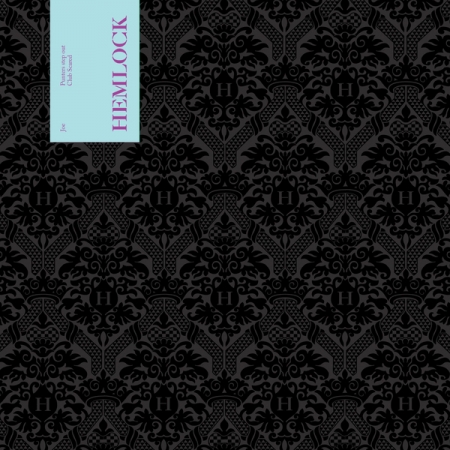
The simply monikered UK producer Joe is set to release his next 12″ soon after the solid “Slope” b/w “Maximum Busy Muscle” record for Hessle Audio, another two-tracker which will arrive next month via Untold’s Hemlock label. As Juno Plus reports, “Punters Step Out” b/w “Club Scared” is “pretty crazy sounding.” The record’s press release describes the formula for Joe’s latest a-side, saying, “Muddle 1 part dub-techno with 2 parts drunken hammond and shake hard with some driving dancehall,” before going on to call “Club Scared” a “high-proof riddim.” Before the 12″ drops on December 9, extensive previews for each side can be heard here.
Forward-thinking Night Slugs affiliate Jam City has been anything but dormant since the release of last year’s Classical Curves—having contributed a handful of productions to LA single Kelela’s mixtape for Fade to Mind, issued his own hard-edged installment of the Club Contstructions series, and given away a ton of random tunes for free. For his latest offering, the artist born Jack Latham is sharing a brand-new track for download. Appropriately called “Bells,” the freebie features many of those glittering and resonant sounds worked into swirling patterns around one of Jam City’s patently disjointed dancefloor beats. The track can be streamed in the player below, as well as downloaded for the price of an email.
Operating as Earth House Hold, time-tested producer Brock Van Wey (more commonly known as Bvdub) applies his affinity for hypnotic, ambient-leaning productions to two extremely elongated, blissfully lethargic house constructions on the See Through You EP. Clocking in at almost 24 minutes, the second effort from NY label Peach uniquely interprets “deep house” into a softly glowing brand of lush dance music, complete with hushed soul references and slow-motion rhythms.
With both tracks hovering between 100 and 110 bpm and each one falling just shy of a 12-minute runtime, See Through You was not designed with impatient listeners in mind. To his credit, Van Wey does not make it hard to become immersed within his slow-brewing tracks, as he sinks into rich textures and subtle, pop-flecked themes from the onset of each tune. The work of Earth House Hold is said to draw much of its inspiration from Van Wey’s days as a regular DJ within the San Francisco deep-house scene of the ’90s, and this influence is easy to pick up on, revealing itself in the breathy electric piano and celestial pads one imagines originated from digital keyboards of that era. In addition, a-side cut “Back Where I Belong” is particularly indebted to the work of Sade, not only because of the tune’s vocal performances—which in many ways reference the diva’s famously restrained timbre—but also due to the mixture of genres which lie at the base of the tune, landing it somewhere between slow-jam R&B, expansive new age, and (at least rhythmically) a bit of hip-house. On the flip, “Little Late For That Now” uses similar sonic components to strike a complementary genre balance of its own, but the track ultimately feels less nostalgic, even becoming somewhat reminiscent of Andy Stott’s sludgy offerings if they had been run through a bath of cold-filtered R&B.
At its core, See Through You is all about patterns. With both “Back Where I Belong” and “Little Late For That Now,” Van Wey spends minutes at a time building sonic lattices piece by piece and loop by loop. Rarely does an element appear only once, never to return; instead, interlocked patterns are left to run for long expanses, adding small touches as they pick up steam. Admittedly, this doesn’t make for the most exciting of tracks, but Earth House Hold makes up for that with the hypnotic power his patterns flex when in full form. Additionally, the strength of both cuts’ musical elements—the rich chords, muted basslines, and subtle melodies—prove strong enough to carry the 12-minute compositions, especially when combined with the heavily processed and richly nuanced vocal performances that sit atop each effort.
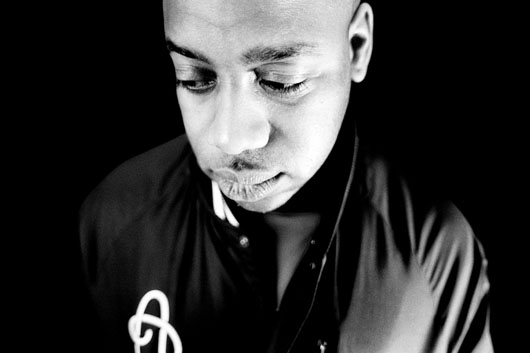
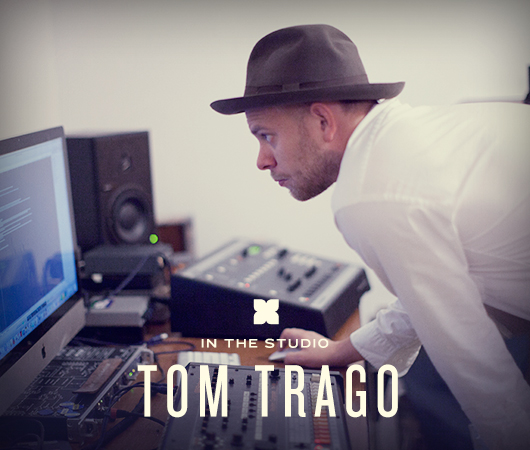
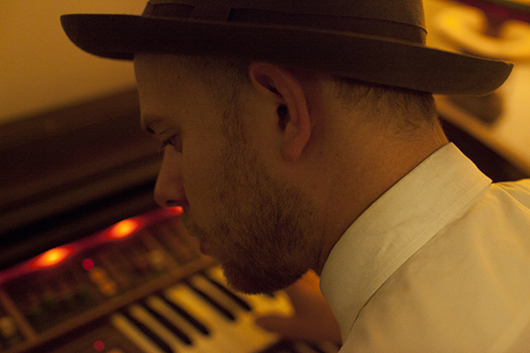
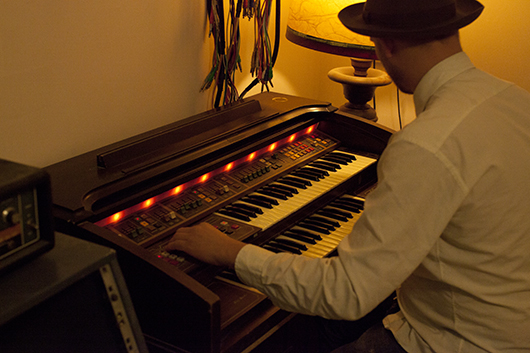
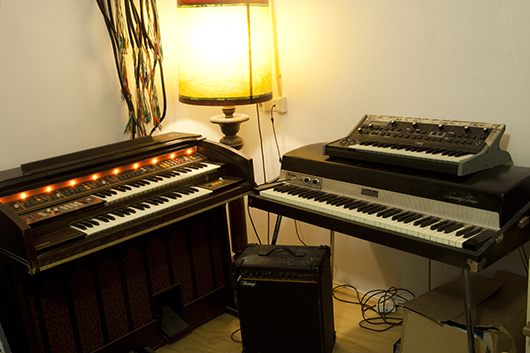
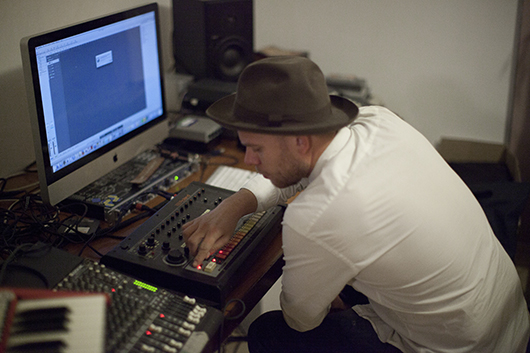
A few weeks ago, XLR8R headed across the Atlantic to the Netherlands for the annual Amsterdam Dance Event, which admittedly kept us rather busy. (For a full rundown, take a look at our review of the proceedings.) Still, even amidst all the activity and several very late nights, we managed to drag ourselves—and veteran Dutch producer Tom Trago—out of bed one morning so that we could get a look at his new studio and pepper him with questions about his music-making history and process. While the studio itself was still a work in progress (Trago had quite literally just moved in), he was more than happy to tell us about his long-running love affair with the MPC, the techniques behind his new album for Rush Hour, The Light Fantastic, his passion for collaboration, and why he thinks windows are important.
When did you first start producing music? I remember when I was like 17, I had a computer program [because] some guys in school were making music. I tried a few beats on it, but it didn’t really get my attention. I was more into DJing… when I moved to Amsterdam, I met the guys from Rednose Distrikt. That’s Aardvarck, Steven de Peven (a.k.a. Awanto 3), and Kid Sublime. And actually Kid Sublime, of those three, he took me to the studio and I was like, “Wow. This is what a studio looks like.” He was really fast on the MPC2000. I saw him, by sampling old records, making completely new tracks and soundscapes. When I saw this machine, I thought, “If I have this, I can make what I want to make.” I actually bought one quite soon afterwards and just started making beats every day.
Was the MPC2000 the first piece of gear you bought? Yeah, [that was the first piece of] dedicated hardware to make music. (My turntables and my mixer were the first equipment [I got] when I was 15, 16.) Now [the MPC] is broken, but it’s still the center of what I do. I run Logic next to it, but most of the work of the new album has been done on MPC.
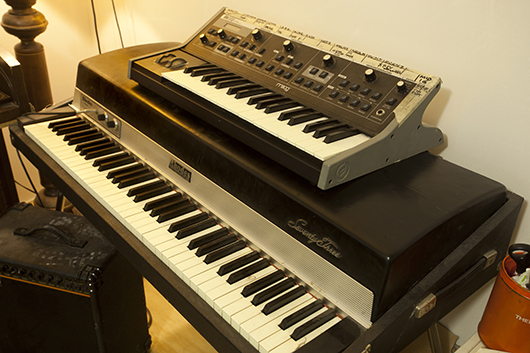
When did you start adding synths and other pieces of gear? I moved in with another guy. He was an old-school drum & bass DJ, DJ Chaos, and he bought a lot of equipment, because he wanted to produce. But he never did it. He had this studio, but he never really got into it. So he just let me use the equipment. I learned from him what a compressor does to a track, what mixing is. When I moved out, I remember I just had the MPC again. I had a certain track and I woke up and was working on this track and I couldn’t play the bassline I wanted. I was so irritated by that fact, so I actually ran to the shop and bought the Nord Lead. I bought it on credit, so I had to pay 250 a month, but I could take it right away. That was actually the first synthesizer next to the MPC. For quite a while, I just worked on those two. My first record actually was made on the SP-1200, but I already had the Nord Lead, and then I bought the Fender Rhodes from an old lady somewhere. That’s when it slowly started.
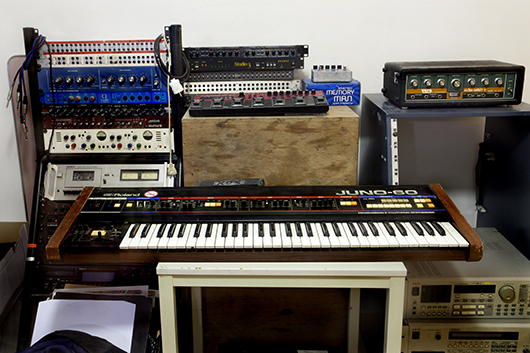
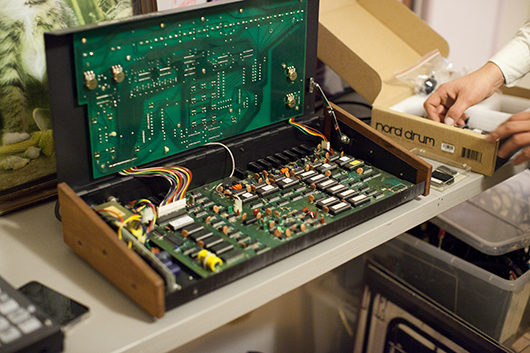
Later on, every time I had a little money or someone needed money—like friends—I would buy their equipment. Lots of equipment in the studio is from other producers who were [having] money problems. I was like, “I’ll help you out. I’ll take the machine, you can [buy] it back whenever you want.” I have machines from Dexter. I have Linkwood‘s 808. I kind of scrapped everything together.
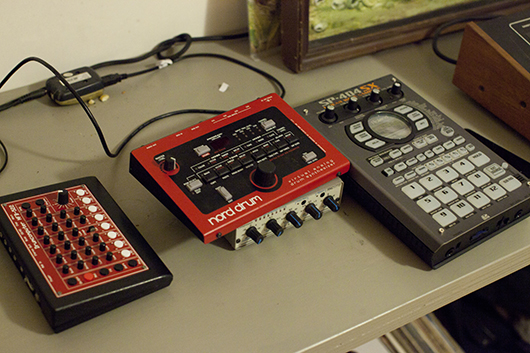
This is actually the first time in the studio I’m going to try and build a super robot out of all the machines, with them all running MIDI. I used to work really basic and then layer [everything] in Logic, but now I have enough machines to make a whole Optimus Prime of equipment—some compressors, some reverbs. I really want this studio to have a certain sound so that whatever you run, it will sound like this studio.
You just moved into this studio recently. Yeah, like two weeks ago.
Even though you’re still putting this place together, what makes a comfortable working space for you? Well, I used to have a studio on the fifth floor of this building. It was really nice. I had a really good view of the city, looking over Trouw. I know it’s not good for sound, but I do need daylight… I’ve been in really good studios that are completely [in a] basement and you can do amazing tracks, but if you’re like me, working every day, sometimes it’s kind of nice to have certain lights. So with this studio, it’s already a bit too dark for me, but we’re going to work on it with some light and try to get it [feeling] a bit more natural.
How does your songwriting process usually work? It varies every time I work on a track. Most of the time, I work on the MPC. I usually start listening to records, just getting into a certain vibe… It’s kind of a whole thing—you have to do nothing else with the day if you want to do a good track. So I go to the record store and buy some records and get a bit inspired by some stuff I hear. I listen to a few new records that just came out, mostly like synthwave stuff or Tomita stuff or Japanese electronic stuff, stuff that inspires me. From there, I just take a snare or a little key and the MPC just takes me in a certain direction. From [that point] on, there’s a certain blueprint. Most of the time, the bassline comes later. Rhythm is [usually] one of the first things, but sometimes, if you find a loop or a certain synth chord that’s so strong, you can add drums later.
It seems like samples are still a big part of your music-making process. Are you actually sampling records or are you just recording your own instruments and playing them back on the MPC? Actually, both. In the beginning, when I made hip-hop beats, I would take real obvious samples. But now, I really want to… take a little part that’s not really recognizable and just use it as an instrument. The longer I make music, the more I want to make my own stuff instead of just looping or sampling things. Although I do love good loops and samples—sample-based tracks, they can be amazing.
Over the course of your career, you’ve done a lot of collaborative work. There was the Night Voyage Tool Kit EP with Bok Bok, and the new album has collaborations with Steffi, Ben Westbeech, San Proper, and some other people. Is that something you’ve always enjoyed doing? Yeah. I feel kind of lonely sometimes being alone in the studio all day. I also find that it sometimes goes faster working together, because you have to make so many decisions all the time. “Should we add reverb? Should we take reverb off? Is the kick low enough? Should we add more low end?” It’s really nice if you have someone that you trust, taste-wise and music-wise, to talk about these things and reflect. It’s also really nice if you work with somebody else that has a different work ethic and work method—you always learn something. Some people start with harmony instead of drums. Or they work in Ableton, and I work in Logic. So I see them do things in Ableton and I’m like, “Wow. Shit. Tell me how it works.” I think it’s taught me a lot of lessons, working with other people.
The collaboration with Bok Bok was one that surprised a lot of people, just because you guys work in different scenes. How did that come about and how did you feel about the results? I feel super good about the results and he really became a friend. But let me start at the beginning. When I released my second album, Iris, there was a track on there with Tyree Cooper called “What You Do.” I think I read on Twitter that he liked that track. I did an album release party in London at the Dalston Superstore and he actually came down to the album presentation. It was a real small club and it wasn’t that good of a show, but he came up to me and said, “I love your music.” I got to know him and Girl Unit at a really early stage—they were just setting up Night Slugs. We actually stayed in contact through Twitter and the guy from Sound Pellegrino, Texi Latex, he was following both of us. I think he was playing with the idea of two producers who come from different worlds getting together. So he got in touch with us for this project. Actually, I was playing London three weeks later, so he was like, “What if we just pay [Bok Bok’s] ticket to Amsterdam? He stays with you a week in the studio and whatever results come out, we’ll release it.”
So we actually didn’t know if we’d like each other or how it work out, but… we knew we were both big fans of Dance Mania records. I already loved Night Slugs a lot and he loved Voyage Direct, the label that I run. So before we landed, the name Night Voyage was already born. We [went in the studio and] started just hooking up machines and making a sort of Optimus Prime like I was talking about, with all the machines running MIDI. He had his laptop running and brought a few little machines, and we just hit it off. For four days, we almost didn’t sleep. We just banged out tracks. People were really enthusiastic about the results. It was played quite a lot… the feedback came from all kinds of different genres. Like, Tiga loved it, but at the same time, all the more dubstep UK guys would play it, Joy Orbison or whoever.
After that, we stayed in contact. Since then, we’ve [gotten together] every year and we just finished off six new tracks that we’re going to release in the next six months, drop a few 12″s. We actually did those here [in Amsterdam] again, but I just recently went to London to visit him and wrap it up in his new studio. He has a real nice studio—a studio with windows! He has a studio with windows that open, which is really amazing to me, because normally you can’t really find places with fresh air and open windows and you can make music. It’s a hard-to-find combination.
While you were making the new album, did you feel like your production changed in any particular way? [The changes were] more in my mind. I had a certain idea of where I wanted to take it [as opposed to a specific] studio hardware set-up that I changed for the album. But I did leave my studio. I went a house in the forest and set everything up in a real simple set-up. I didn’t bring any effects modules. I was afraid of adding effects too early. I really wanted to work on real basic blueprints and layer them out in Logic. Later on, when I came back here, I had these skeletons of tracks and I tried some effects and stuff when they needed it.
Do you usually work on one track at a time? It differs. I’m not always working on one track. Especially when you do an album, you think a track is finished, but then you realize it’s not finished, and you’re already working on another. But I think that’s also a good thing because sometimes; if you listen to one track for too long, you can’t really judge anymore. It’s also good to switch between tracks if you want to [maintain] a certain sound. If you switch between one and the other, it’s like, “Shit. This is way too sharp compared to the other track.” It’s good to compare.
Do you do your own mixdowns? Yeah. Of all the tracks I’ve ever released, I’ve mixed them myself. Only “Time,” the track I did with Subb-an and Seth Troxler, that was the first time I let somebody else mix it. I was trying to mix it and I couldn’t grasp it myself. I couldn’t get it to the point where I wanted to take it, so I asked somebody else.
I do always have a friend of mine, Maxi Mill, who’s also a producer, next to me in the studio as a second pair of ears. He’s helping a lot on the mixdowns. He’s not even a professional mixer or someone with a lot of experience, but he has real good ears. I do a track, I play it for him, and he’s like, “Take some low end out.” I think feedback is really important when you do mixing. It’s pretty hard to completely do it yourself.
Do you have someone else do the mastering? Yeah. I’ve tried a million different guys, but now I use Precise Mastering in the UK, which is really nice. They’re really fast and really good, [and they] have a good combination between analog and digital. I’m happy because I’ve been through so many mastering people. Some people pushed it too much and other people didn’t push it enough, so you have to find a guy that fits your taste.
Do you have a favorite piece of gear? Definitely the MPC. I learned everything on this machine. It was my first machine, but I still work on it at home. The screen doesn’t even work, so I can’t see what I’m actually doing. I just know that I can really work on it blind. That’s my favorite piece, because you can really do anything… If you know how to work it, it’s a beautiful thing.
MPCs are often thought of as more of a hip-hop music-making tool, and you obviously have a background in that. Do you think that using an MPC to make house changes the end result? Definitely. Sound wise, but also in the way you produce. It’s way harder to arrange with an MPC. You work way more in loops. It comes out more, for me at least, as a jam, because I record all the sequences. I just flip them and some crazy stuff happens. More accidents happen with the MPC.
Also, you can really hear it. If you listen to Moodymann productions, for instance, he’s definitely using an MPC. It’s really obvious. If you listen to Robert Hood or Jeff Mills, they don’t use MPC. I can tell… It definitely changes the outcome.
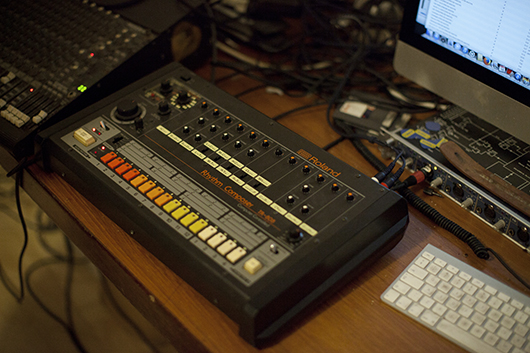
Are there any pieces of gear that you really want to buy? I always wanted to buy an 808. [Like I mentioned earlier], I actually bought one really recently from a producer named Linkwood… It’s the godfather or the mother of so many things. So much music I love involves this machine. I always wanted to have it, and I actually have it now, but I still have to make it MIDI, because it’s not MIDI.
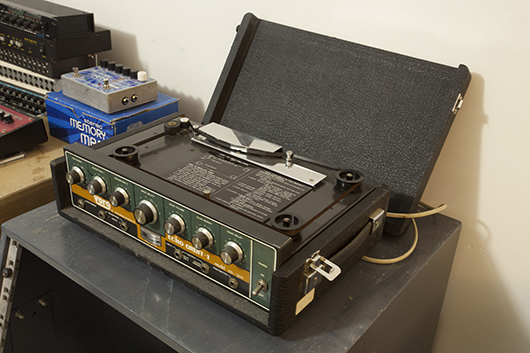
I’m definitely looking forward to buying a Korg PolySix keyboard. A Yamaha DX7. I had one and it’s broken, so I have to buy a new one. On the synth level, there’s still a lot of stuff. The Korg Mono/Poly synth is really something I would love to have. On a compressor level, I think I have enough now. I really like the Orban reverb stuff, I have one. But I saw that this brand Orban made other stuff, like parallel EQs, stuff like that. I really like this brand for some reason for sound texture. It really makes stuff live—it’s weird how they do that. On an effects-module level, I could really use a few cool things. Nowadays, if you add effects with Waves plug-ins in Logic, you can really achieve a level of quality I’m okay with, but it’s still more fun to work with machines.
[I’d also like] a new MPC. That’s something I would love to have.