Stream Noah Pred’s New Album Now

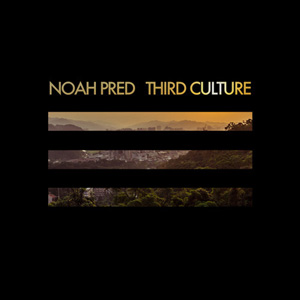
Veteran tech-house producer and this week’s XLR8Rpodcast contributor Noah Pred is set to drop his third full-length record Third Culture next week, and is preempting its release with a full stream of the album today. The 13-track record is Pred’s first full-length in four years, and finds the Berlin-based producer digging further into his precise, deep, and techy sound. Third Culture features guest spots from from Deepchild, Marc Deon, and Rosina, and is set for release on Pred’s own Thoughtless Music imprint on November 4; it can be heard in its entirety below, courtesy of PulseRadio.

Cock & Swan “Inner Portal (Braxton/Palmer Remix)”

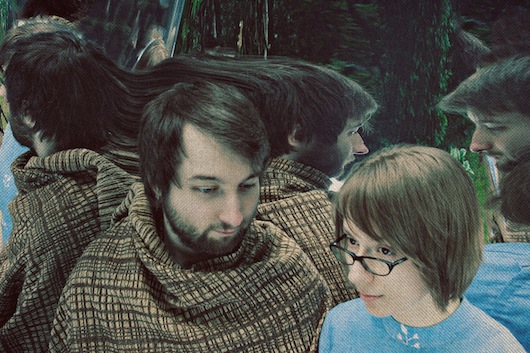
Seattle dream-pop outfit Cock & Swan (pictured above) dropped its third LP, Secret Angles, last month via Hush Hush, and the group has since enlisted a host of producers to contribute remixes of the record for a forthcoming, two-volume compilation titled Recess Tangle. Vol. 1 will be available as a free download via Bandcamp on November 5, and features—among productions by Kid Smpl, Cex, DJAO, and others—Olympia-based artist Braxton/Palmer‘s take on the transcendent “Inner Portal.” The Washington producer’s foggy rework dives into darker textures than the original tune did, propelled by a brooding, anxious house rhythm that whirrs in tandem with Ola Hungerford’s submerged vocal coos.

Inner Portal (Braxton_Palmer Remix)

John Talabot’s Hivern Discs to Release Remix EP for The xx

Late last year, John Talabot paired up with fellow Spaniard Pional to remix “Chained” by The xx, and has now announced that four artists from his Hivern Discs label are set to follow in his footsteps. Marc Piñol, New Jackson, Mistakes Are Ok, and recent addition Round have each been tapped to rework different tracks from The xx’s 2012 Coexist LP to comprise the HVNXX EP, which is set for release November 11. Before then, both Piñol’s house-infused take on “Fiction” and Mistakes Are Ok’s reworking of “Reunion” can be heard below, where the full tracklist for HVNXX can also be found.

01. Fiction (Marc Piñol Remix)
02. Reunion (Mistakes Are Ok Remix)
03. Missing (Round Remix)
04. Swept Away (New Jackson Remix)

Check Out Deadboy’s Fourth Annual Halloween Mix

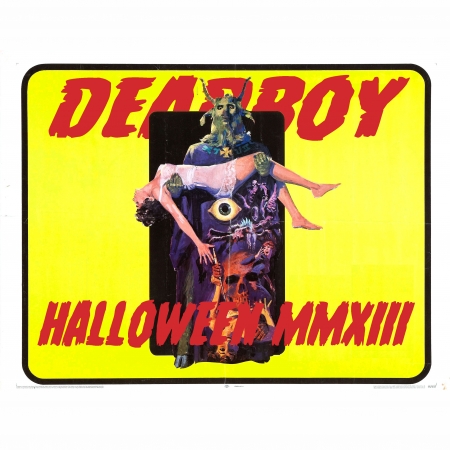
Halloween is arguably one of the most fun holidays to come each year, so much so that even DJs and producers from around the globe take a moment to do something special. Just yesterday, Berlin technoist Redshape gave away a spooky track for the occasion, and today, secretive Londoner Deadboy has gone ahead and posted his fourth annual Halloween mix online. Rife with all of the haunted sonics, rubbery basslines, skittering beats, and classic jams that we’ve come to expect from the artist’s yearly series, the 45-minute Halloween Mix 2013—for which there is no tracklist—is available to stream in its entirety below. And hopefully, Deadboy will re-up the downloads sooner than later.

Download a Live Session from Graze

Earlier this year, XLR8R admittedly went a little crazy for Graze, a collaborative undertaking from Canadian producers Christian Andersen (a.k.a. XI) and Adam Marshall (who’s currently based in Berlin). Following the appearance of the duo’s strong self-titled debut EP, we profiled the pair in our Bubblin’ Up series, in which Andersen and Marshall mentioned that more music was on the way. Just two weeks ago, the duo followed through on that claim with an announcement that Edges, its first full-length, would be released via Marshall’s New Kanada label on December 3. While more than a month remains before the LP officially sees the light of day, Graze has elected to share a little something to help whet our collective appetites: a 43-minute recording of the duo’s live set, which is exclusively available to stream and download here on XLR8R.

The live session was actually recorded several months back, when Marshall was in Canada and Graze was slated to perform a handful of shows. (Side note: the duo’s debut live show at MUTEK 2013 in Montreal was undoubtedly one of the festival’s highlights.) Consisting of 100% Graze material, the recording includes material from both the self-titled EP and the forthcoming album, along with a few other unreleased bits. Powered by rolling, snapping percussion and colored by gloomy melodies and thick basslines, the live session provides an excellent snapshot of what the Graze project is all about.

Autechre L-event EP

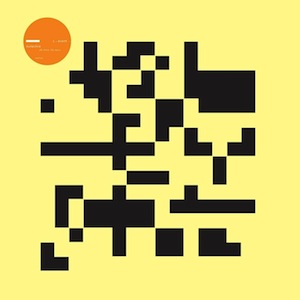
Autechre has a rare standing among the canonical acts on Warp, as the group continues to confound fans and impress newcomers, even after its stylistic preferences have fallen out of fashion. Inextricably linked with Warp’s foundational experimentalism, the duo of Sean Booth and Rob Brown didn’t stagnate after the early success of twitchy classics like Incunabula and Tri Repetae; instead, the outfit has put forth a new Autechre LP practically every two years since 1993. L-event is the follow-up to Exai, the pair’s mammoth double album from earlier this year, and it’s akin to a tank of freezing water to the face in subzero weather. Even in a community currently saturated with purposefully raw and ragged productions, the artillery on L-event is an affirmation of Autechre’s continuing caustic individuality.

A few weeks ago, Autechre staged an innovative streaming of L-event, which accurately translated the EP’s energy by transforming internet browsers and web pages into geometric gobbledigook before eventually morphing into the cover art. Even without these visual pyrotechnics, listening to L-event offers a similarly confrontational experience, a puzzle that nastily reshuffles whenever it nears completion. “Tac lacora” disintegrates into a flurry of broken beats after each moment of relative calm, with intimations of a sloping groove interrupted by a tinnitus-inducing piano segue into “M39 Diffain.” Given the overwhelming belligerence and abrasion of L-event, it’s tempting to write it off as a introverted exercise in algorithmic composition and digital alienation, but Autechre’s music accurately reflects the modern tumult and information overload of a caffeinated, motorized humanity.

“Osla for n” skitters into arrhythmia after an initial talkative funkiness that suggests two men with crushed larynxes communicating over a staticky radio. What sounds like a bowed cello elongates alongside church bells, with cauterized drones shapeshifting underneath. “Newbound” has a surprising tenderness beneath the requisite squawks and feints, with a descending three-note squeal that recalls Boards of Canada, even with the song’s chaotic intrusions. Still, L-event can’t really be defined by individual bits of noise, however exhilarating they might be. The EP is an exhausting listen, one that offers an experience of immersion, not itemization. Autechre hasn’t lost a step, and this EP is certainly memorable. Actually enjoying the bombardment, however, is another question altogether.

Singled Out – Benjamin Damage Uncovers the Layers of Juno Synths Hidden in His New EP

Singled Out is a new feature for XLR8R’s Gear section in which we ask artists to pull back the curtain of their work and highlight a specific element of a recent production, discussing what equipment and processes yielded the sonic component and offering readers a chance to hear and download the sound separate from the rest of the track.

Berlin transplant Benjamin Damage has not shown any signs of slowing down in 2013. Beginning the year with the XLR8R Pick’d Heliosphere LP, the 50Weapons regular has kept himself busy, capping his impressive run this week with 4600, an EP fashioned as a homage to the rare ETI 4600 synthesizer that recently rejoined Damage’s arsenal after 18 months of repairs. Interestingly enough, for the first edition of Singled Out, the producer has chosen to highlight a different synthesizer, the Roland Juno 60, which he used to record the bed of lush chords that would eventually serve as the base of the new EP’s most hypnotic effort, “Nebula.”

Benjamin Damage: These synth lines for “Nebula” were recorded quite a few years ago when I was in London. I had a bedroom studio in 50 Beck Road, East London, where Genesis P-Orridge of Throbbing Gristle and Psychic TV used to live. (We used to get mail for the Temple ov Psychick Youth, but no one ever came back to collect it.) While there, I’d borrowed a Juno 60 from a friend, but I didn’t warm to it at first—it had harsh, noisy digital oscillators and the presets were generally awful, though it did have nice envelopes, a great filter, and the noisy chorus section added a lot.

After a while, I found that there really is something magical about the Juno, even though its just this crappy, old cheap synth. The layout is perfect and the warm filter and cold digital oscillators actually work together really well and sound unique with the chorus on top. I eventually made a patch I liked a lot and came up with a synth line. The Juno was retrofitted with a Kenton MIDI kit, so I could record the pitch bend and octave changes live while the notes were playing through MIDI. I really liked what I recorded, but at the time, it didn’t come together into a coherent bit of music and so it was just left unfinished.

While working on the EP, I stumbled upon those recordings on an old hard drive and felt a bit nostalgic about my time in London, so I ran that audio and started up my ETI 4600 synth, which was just back from a two-year repair job. Using that, I recorded some noise loops over the original Juno sounds. There was a lot of depth to the original recordings, and it had a very different atmosphere when played at different speeds, which turned into two different tracks—one a lot darker and slower. I couldn’t let go of either, so I linked them together by slowing it down to half speed in the second half of “Nebula.”

The solo’d Juno 60 lines from Benjamin Damage’s “Nebula” can be streamed and downloaded below

Ukkonen “Kayamanu Divided”

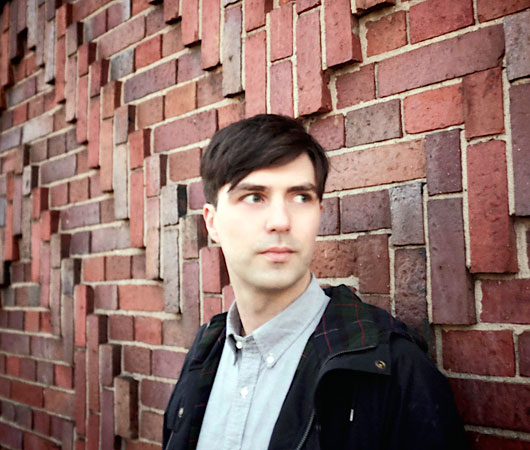
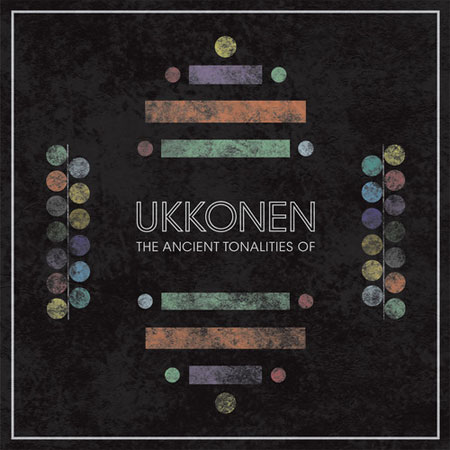
Ukkonen is a Finnish producer who has made himself somewhat scarce since bubbling into our peripheral with a handful of remixes and tracks for various compilations and esoteric labels. Next month, Ukkonen will deliver his sophomore LP The Ancient Tonalities of… via No Pain in Pop, a 10-track affair that is said to be “built on two central themes: adulation and respect for influence and tradition, and a pressing desire to contribute something ‘new’ to music.” Appearing towards the end of Ukkonen’s forthcoming album, “Kayamanu Divided” is an intriguing preview of what the producer has in store, landing somewhere in between the tender ends of house and techno with its interlocked layers, bubbling synths, sparse bells, and skipping-but-understated rhythms. The eight-minute track is both patient and majestic, and is certainly interesting enough to leave us anticipating the man’s forthcoming The Ancient Tonalities of… album, set to drop on December 2.

Kayamanu Divided

Tom Trago The Light Fantastic

Tom Trago is the kind of producer who’s unafraid to mix things up stylistically. Over the past few years, his discography has included a surprising degree of variation, especially considering he’s most known for his explosive, sample-based disco-house material. Nowhere has this diversity been more apparent than on his albums, which, though cohesive as works on their own, have served as a way for him to stretch out and show off the extent of his interests. His latest LP, The Light Fantastic, is his third so far, and while it’s billed as a return to the more focused rootsy dancefloor divaism of his 2009 debut, Voyage Direct, in actuality, it might be his most eclectic effort yet.

With that said, it’s also obviously a record made with the concerns of a dancefloor in mind. Across its 10-track, hour-long expanse, Trago tries his hand at a number of variations on the basic theme of house, rarely dipping below its requisite 120 bpm. As the record progresses, he moves from the sheen of modern, club-oriented deep house, through ’80s Chicago jack tracks, and then heads straight back into his signature bombastic disco samples.

The album takes a while to get going, as it frustratingly leads with some of its weakest material. Things start promisingly enough with the short, two-minute dancefloor invocation of “The Light Fantastic,” a mostly kick-less track that entices the listener into the LP with warm organ stabs and bits of chopped-up vocals. Then comes “True Friends” and “For the Children,” which are similar in the way they pair meaningless vocal chanting with repetitive instrumentation—in both cases, one gets the sensation that the vocals were added last minute, as a finishing touch in lieu of some other, more considered approach. This recurs across the album, in some cases taking a turn towards the cringe-worthy. For example, on “Jack Me,” Trago’s porny ode to (and simulacrum of) ’80s-era Trax Records, he has an unnamed female vocalist coo, “Do you remember Jamie?/What he used to say?/Baby wants to ride.” This might work for a certain kind of boozy dancefloor, but it just comes off as lazy in most other contexts.

Thankfully, after its up-and-down beginning, the record gets a lot better. “Cosmic Blacksmith” picks up the slack, with a deadstock take on acid house that revolves around an almost 8-bit 303 bassline that arpeggiates and repeats, propelling the track through a linear arrangement with sections of clanging cowbell, heavy digital processing, and lush, tension-inducing pads. It’s simple but effective, and acts as a bridge between the vocal material and the more interesting instrumental constructions of the LP’s second half. Next up is “The Elite,” a tracky DJ tool that sees Trago distill a jazzy orchestral tune into a stab-a-thon, complete with jit-worthy monotone hits that slap against a stripped-down four-to-the-floor, occasionally resetting with a full play of the organic sample itself.

Unsurprisingly, the LP’s best moment comes via “Two Together,” a collaboration with Steffi and its one real attempt at disco house. The hook is built around a creative re-interpretation of Goody Goody’s “It Looks Like Love,” an underground classic from 1978. Trago takes the bassline and guitar, adds some Rhodes, and loops it mercilessly, changing it on the fly, while adding simple bits of synthesizer that weren’t in the original song. The result is reminiscent of the madcap approach of old-school, mid-’90s Roulé—it’s lighthearted, but while it doesn’t take itself too seriously, it also doesn’t sacrifice anything in its appeal to the dancefloor, either.

Trago keeps the disco vibe going with “The Wrong Right,” a shuffling Latin drum track that breaks halfway through to make space for overjoyed piano vamping. He then finishes with “I Still Desire,” the lone vocal track on the LP that truly works, combining vocoder musings with a Dutch-electro ambiance that sounds totally out of leftfield next to the more standard four-to-the-floor house that populates the rest of the LP. It’s an incongruous end, but one that seems oddly fitting for a record as scattershot as this.

Wolfey “Sams?ra (This World of Death and Radiant Beings)”

Vancouver’s Hybridity imprint is set to slip one last release in before 2013 comes to an end, with a forthcoming two-track eponymous EP from hometown DJ/producer Wolfey dropping on November 26. Here, we have the record’s b-side cut, “Sams?ra (This World of Death and Radiant Beings),” a meditative exercise in lush and patient electronics. Wolfey’s elongated tune simmers just above 120 bpm, with waves of string-like chords ducking beneath rounded kick drums—leaving plenty of space for the delicate melodies and precise rhythms the Vancouver producer rotates in and out of focus, and the symbolic, spoken-word samples Wolfey peppers throughout.

Sa?s?ra (This World of Death and Radiant Beings)

Page 1521 of 3781
1 1,519 1,520 1,521 1,522 1,523 3,781