Over the past few months, XLR8R has been to a lot of festivals, most of which were pretty good, or at least had enough highlights to keep us relatively entertained over the course of a few days. At the same time, very few of these events have been truly exceptional. With so many festivals clogging the summer musical landscape, standing out is no easy task, but Amsterdam’s Dekmantel crew didn’t shy away from the task. After years of throwing quality parties and running a respected label, the outfit elected to expand its operations into the festival arena this year, and it’s no exaggeration to say that the inaugural edition of the Dekmantel Festival was a resounding success.
Truth be told, we’ve been excited about the Dekmantel Festival ever since the line-up was first announced back in March. Even casual XLR8R readers could likely see that the bill was stacked with many of our favorite artists, and at first glance, Dekmantel seemed like an “all killer, no filler” sort of affair. Granted, we kept it in mind that throwing a festival is no easy undertaking, and first go-rounds can be especially tough, but we still arrived in Amsterdam last Friday with some rather lofty expectations. And to the organizers’ credit, after spending three long days on the festival grounds, we can report that Dekmantel lived up to just about all of them. Though the festivities weren’t without a few minor rough patches, the positives far outweighed the negatives, and we can safely say that Dekmantel was one of the best festivals we’ve attended in 2013. That said, we don’t want to simply sit here and gush about how the past few days were so damn enjoyable, so we’ve put our thoughts together and compiled a list of reasons we loved the festivities.
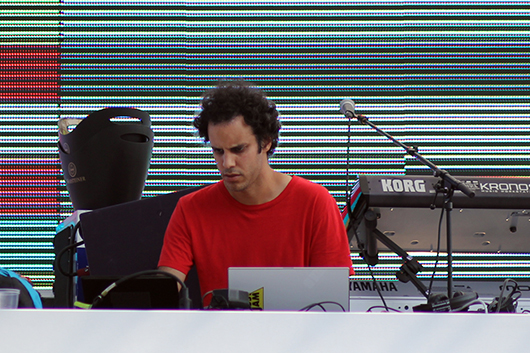
Four Tet
John Talabot
The Dekmantel line-up was almost unreal.
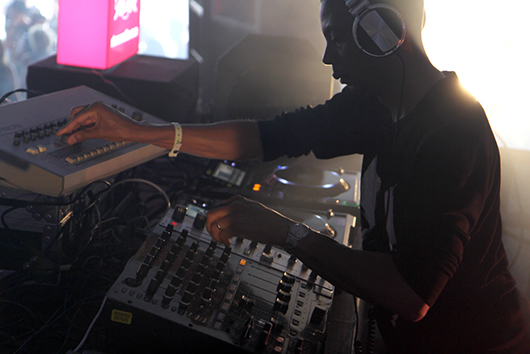
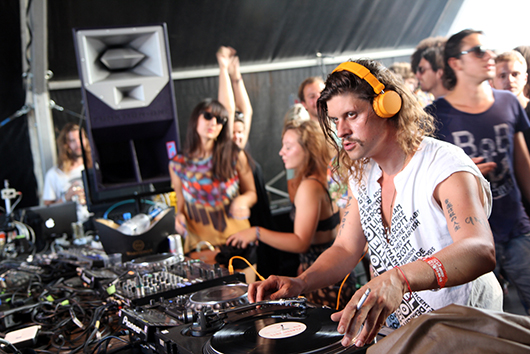
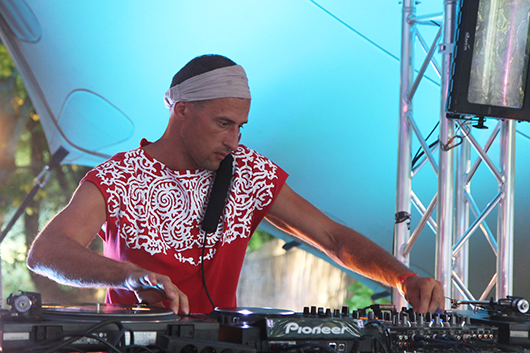
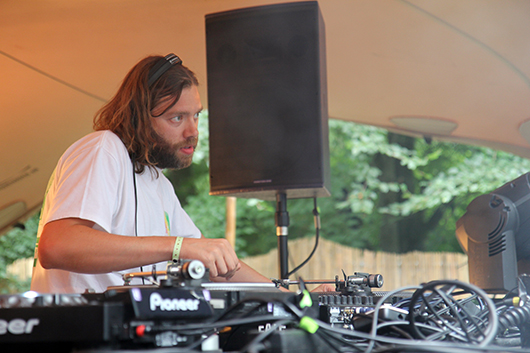
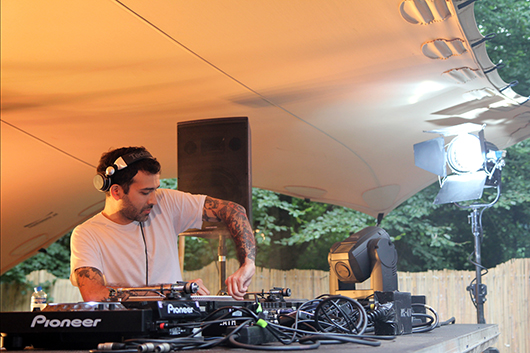
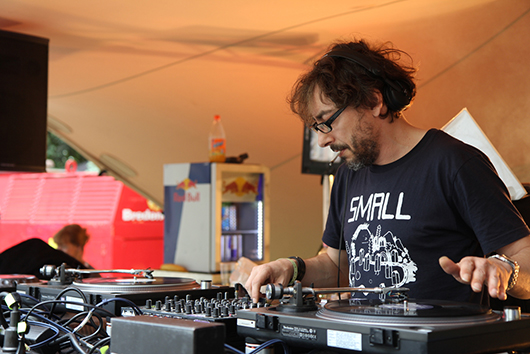
From a booking standpoint, it’s hard to imagine that Dekmantel could have been much better. Where many electronic festivals often bring in at least a few more “commercial” artists to sell tickets, Dekmantel went the opposite route. Although the inclusion of acts like Four Tet, John Talabot, and Jamie xx may have lent the proceedings a small bit of “indie” crossover appeal, the festival catered specifically to hardcore electronic-music fans, specifically those with what might be described as more “refined” or “informed” tastes who also crave tunes suitable for the dancefloor. (Critics might say that it simply catered to nerds who religiously read sites like XLR8R, Resident Advisor, and FACT, but we’d be hard pressed to complain too vehemently about that.) We’ll get into some of our favorite acts from the weekend later in this review, but it’s worth noting the depth, breadth, and quality of talent that Dekmantel brought to Amsterdam. Looking back at the weekend, one of the festival’s only downsides was having to make hard choices between who to see at any given time. Saturday was particularly difficult; at one point, festivalgoers were forced to choose between Joy Orbison (pictured at top) on the main stage, Hessle Audio‘s Ben UFO, Pearson Sound, and Pangaea on the RBMA stage, and Ron Morelli from L.I.E.S. on the FACT stage. Earlier in the day, techno legend Jeff Mills was playing at the same time as James Holden and Move D. Without question, techno was heavily represented throughout the weekend—artists like Marcel Dettmann, Ben Klock, and Carl Craig were just a few of the heavyweights at Dekmantel—but the festival also dipped into various strains of house (Ame & Dixon, Midland, Traxx, Vakula), bass music (Scuba, Martyn), and harder-to-classify digger DJing (Optimo, Beautiful Swimmers). Dekmantel also made sure that the Netherlands’ own talent received plenty of shine, as artists like Legowelt (who performed with Xosar), Tom Trago, Cinnaman, and Conforce were just a few of the Dutch acts on the bill.
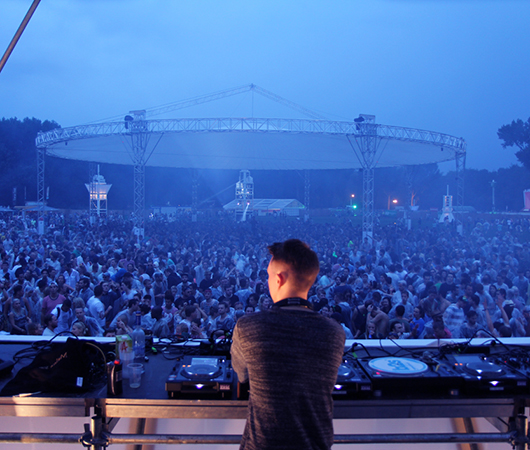
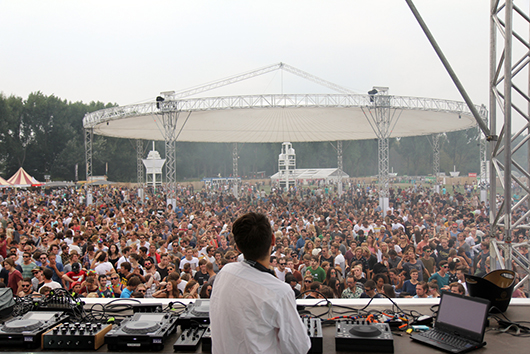
Dekmantel crowd at the Resident Advisor main stage
James Holden
Stacked line-up aside, Dekmantel’s organizers set the stage just about perfectly.
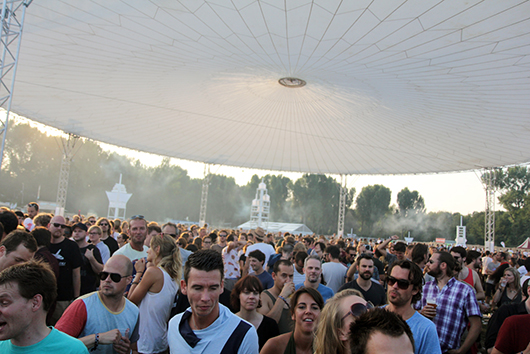
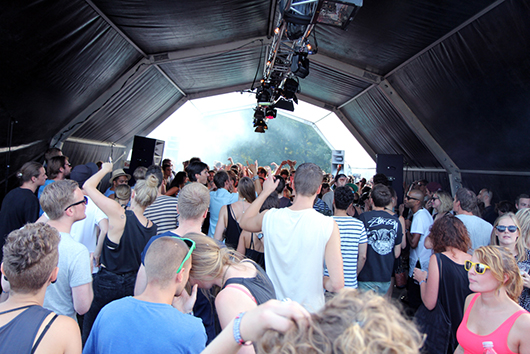
Dekmantel actually took place just outside of Amsterdam, in a wooded park known as Amsterdam Bos. Green grass was in abundance and numerous trees dotted the landscape. The FACT stage—which somewhat confusingly became the Red Bull Music Academy stage on Dekmantel’s final day—was particularly pleasant, as it was situated in a small, tree-lined grove. Overall, the festival layout was actually rather simple; each day featured four different stages, all of which were no more than a two- or three-minute walk away from one another. From the beginning, Dekmantel’s organizers elected to only sell 5000 tickets for each day, and limiting the capacity in this way proved to be a brilliant decision. Although the festival always felt busy—apart from the opening few hours, all four stages almost always had a solid crowd—the grounds never felt overstuffed or claustrophobic. (The festival’s third day, which was added relatively late in the process, didn’t sell out; this made for an especially chill Sunday.) Moving between stages was never a problem, and finding a choice spot to watch a performance or let loose and dance was similarly easy. Even when the party was at its height, the general vibe was relaxed, and that made all the difference. There’s a real value to limiting the size and scope of an event, and the fact that Dekmantel’s braintrust recognized this on its first go-round goes a long way toward explaining why the festival was such a success.
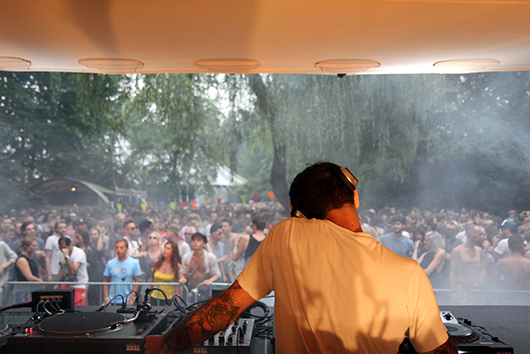
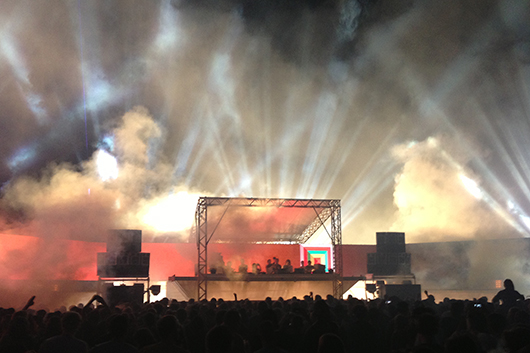
At the same time, Dekmantel’s organizers did a lot more than pick a laid-back spot and book an amazing line-up. They also made sure that the sound was on point. Sound quality is often an issue at festivals—especially new ones—but all four stages at Dekmantel were equipped with booming Funktion-One rigs. All weekend long, the music came through loud and clear, irrespective of who was behind the decks or on stage. On the visual front, the main stage—which was presented by Resident Advisor—was also boosted by the presence of wrap-around video screens. Though organizers generally took a tasteful, less-is-more approach to the visuals, hanging at the main stage certainly felt like more of an “event,” and once night fell, the combination of the screens with a number of smoke machines and spotlights made the show feel appropriately grand.
Joy Orbison
Pearson Sound
The Dekmantel crowd was incredibly unobjectionable.
Most of the time, attending a festival winds up being an exercise in putting up with the crowd, as large-scale music events tend to invite a general air of goonery. Dekmantel was not like that. Throughout the weekend, the audience was remarkably well behaved. This is not to say that people weren’t having fun; on the contrary, the festival’s multiple dancefloors were popping, especially once night fell. At the same time, the percentage of folks who were obnoxiously wasted was all but negligible. The crowd wasn’t overly old, but it wasn’t overly young, either. (Most people were in their twenties.) A lot of this could likely be traced back to the relatively heady line-up and the fact that the festival wrapped at 11 p.m. each night—before most attendees could get too sloppy—but it also felt like the bulk of the people at Dekmantel had been to festivals and parties before, and knew how to do it properly. It also helped that the festival attracted an overwhelmingly local crowd. Judging by the overstuffed bike rakes outside the entrance, it felt like half of the people in attendance biked to the festival from their homes in Amsterdam, and this too helped keep the partying under control. Where many festivals in Europe are plagued by people on vacation who feel compelled to really “go for it” and get as obliterated as possible, Dekmantel was more like hanging out with a few thousand Dutch music fans who simply wanted a few days of high-quality electronic music.
Jeff Mills
Magic Mountain High
Magic Mountain High was too good.
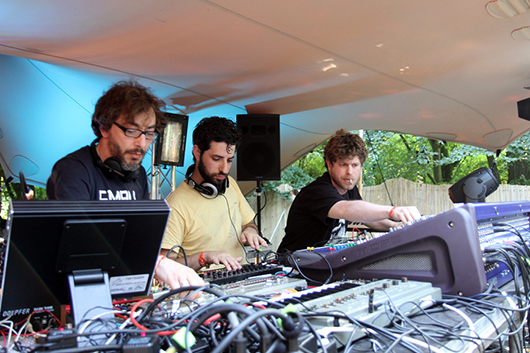
The festival’s first day—which also featured the weekend’s best weather—was filled with a lot of highlights, one of which was Magic Mountain High. The collaborative project of Juju & Jordash and Move D is largely based upon live, improvisational performances from the trio, and the outfit did not disappoint during its hour-long set on Friday afternoon at the FACT stage. Just watching the trio diligently assemble propulsive bits of house and techno was entertaining, not to mention impressive, as the three producers worked in unison to construct nuanced, multi-layered compositions completely on the fly. It could be said that the music was “deep”—and there was certainly a stoney, vaguely psychedelic tinge to the proceedings—but Magic Mountain High also built a solid groove, intermittently weaving in elements of acid and techno to boost everyone’s energy level. Despite all the technical nerdery happening on stage, the set was undeniably musical, and the dancefloor responded enthusiastically.
Legowelt
Robert Hood
Robert Hood has changed it up—and found his stride.
Friday night also featured a performance from techno stalwart Robert Hood, who delivered as live set as Floorplan on the RBMA stage. Floorplan is Hood’s more house-oriented alter ego (and the project responsible for his excellent Paradise album from earlier this year), and though the set certainly featured several choice Floorplan selections, it was mostly Hood doing what he does best: hard, rich, and subtly soulful techno. In truth, it wasn’t all that different from recent live sets we’ve seen where Hood was simply billed as himself, but as he banged it out for nearly an hour, it quickly became clear that how the set was labeled didn’t really matter. Hood has long been hailed as a certifiable Detroit legend and a progenitor of minimal techno, and there’s little question that his influence colors the entire genre, but the man appears to have found another gear in the past year or two. He’s still turning out tunes that are hard and fast, but he’s scaled back his raw, punishing edge just a touch; his tracks are still deadly, but it’s often the melodic bits that are hooking listeners before they’re pummeled into dancefloor submission by a pounding kick or a pulsing techno rhythm. At Dekmantel, the crowd happily absorbed every thud that Hood sent their way.
San Proper
Boiler Room stage
San Proper is an absolute character—and his Boiler Room set was absurdly fun.
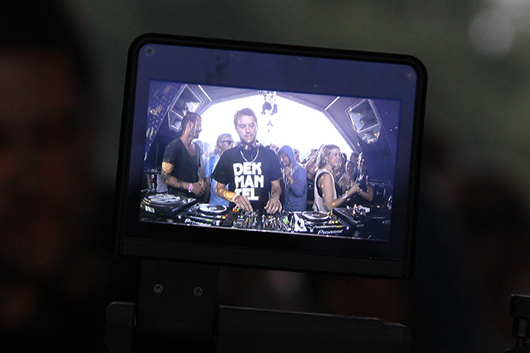
On Friday and Saturday, the Boiler Room hosted its own Dekmantel stage, and it consistently proved to be the place where the “party” vibe was strongest. A number of quality artists stepped in front of the Boiler Room cameras over the course of those two days, yet it’s unlikely than any of them made as strong of an impression as San Proper. The Amsterdam DJ/producer has a reputation as a bit of an eccentric, and that certainly shined through on Friday afternoon, most notably when he playfully bit (yes, bit) one of the Boiler Room hosts on the neck during the middle of his set. It was pretty obvious that San Proper was fairly wasted, but that didn’t stop him from whipping the dancefloor into a frenzy with his riotous mix of old-school house, techno, and electro. Mugging for the crowd while busting out a variety of entertaining hand motions and dance moves, San Proper’s energy was infectious, and the audience loved every minute of it. Without question, his hour behind the Boiler Room decks was responsible for some of the most fun we had all weekend.
Makam on the Boiler Room stage
Underground Resistance presents Timeline
Underground Resistance has still got it.
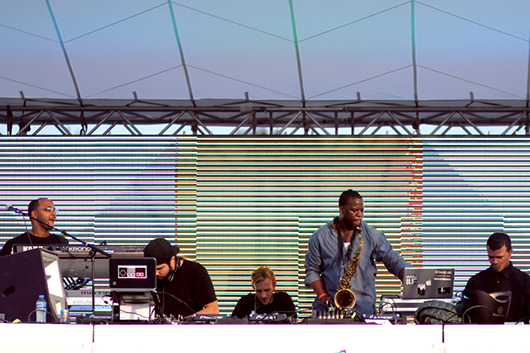
Friday afternoon at Dekmantel featured a live performance by Underground Resistance. More specifically, it was Timeline that took the stage, a quartet featuring UR founder Mike Banks, up-and-coming Detroit producer MGUN, and two other fellows. One of those guys was tasked with playing live saxophone, and it made all the difference, as the group’s compelling show married Detroit techno with live musicianship and jazz-inspired improvisation. As always, UR was uncompromising in its vision, and while the show’s jazzy leanings weren’t nearly as banging as the techno fare being offered elsewhere, the music was undeniably compelling, and provided a quality soundtrack as the sun slowly crept downward.
Vakula
Gerd Janson
Gerd Janson can DJ circles around most people.
Gerd Janson is perhaps best known as the man behind the impeccably curated Running Back label, but recent years have seen him increasingly celebrated for his prowess behind the decks. Simply put, the guy is a veritable electronic-music encyclopedia, and he puts that knowledge to use whenever he steps up to DJ. Dekmantel’s organizers were smart enough to have Janson perform twice at the festival; Saturday afternoon saw him spinning solo at the FACT stage, while Sunday placed him on the main stage to play in tandem with Berlin techno mainstay Marcel Dettmann. The latter set may seem like an unusual pairing, as Janson is generally known for his love of upbeat house and disco, but the set with Dettmann actually went rather well. Though the session started a tad slowly—the two veterans initially struggled to find a sort of middle ground between their style—about 30 minutes into their two-hour set, Janson steered things toward house. Dettmann seemed happy to go along with that, and the two spent the next 90 minutes trading off slices of propulsive, fun-filled sounds that still packed enough low-end heft to satisfy a festival crowd.
Still, as entertaining as that collaborative session was, Janson’s solo set the day before was even better. Whether he was playing a hands-in-the-air piano-house cut or a melodic techno groover, we often got the sensation that we were hearing some well-worn anthem, only to realize within a minute or two that we actually had no idea what the track was. It’s a unique talent, and one that helps explain why Janson does so well with both trainspotting record geeks and people who have never heard of him before. There aren’t many DJs who manage to be fun without also being obvious, but Janson does it with ease, and his work at Dekmantel only reaffirmed our love for his DJ skills.
Ron Morelli
Karizma, Levon Vincent, and Joe Clausell made for a potent Sunday afternoon.
Late on Saturday afternoon, the weather at Dekmantel took a turn for the worse, and though the crowds kept on dancing, the steadily drizzle definitely dampened the overall vibe. It didn’t help matters that Saturday night’s line-up was heavy on dark and driving sounds, from Joy Orbison and Ben Klock on the main stage to Karenn and Surgeon in the RBMA tent to Ron Morelli and Traxx over at the FACT stage. Although the music was unquestionably good, the sunny vibes all but disappeared, which meant that many festivalgoers arrived on Sunday in need of a major pick-me-up. Thankfully, the FACT stage—which was moved on the final day to the cozy tent previously occupied by the Boiler Room—obliged in a major way. Following a last-minute cancellation by Ron Trent, organizers were forced to shuffle the bill, and their decision to bring in Karizma at the 11th hour was a stroke of genius. The guy is a wizard with CDJs—albeit not in an overly showy, turntablism way—and he came armed with his usual repertoire of heavily vocal, soul-drenched house tunes, many of which are his own edits. The Baltimore DJ/producer offered a real change of pace from the more intellectual house and techno that dominated much of Dekmantel, and the crowd relished in the opportunity to let loose, sing along, and slip into a full-fledged party atmosphere. The room was absolutely bursting as his set came to a close, and the crowd enthusiastically showered Karizma with affection as he gave way to the afternoon’s next DJ, Levon Vincent.
Vincent ran into a little technical trouble at the start of his set, as the Dekmantel organizers—in one of the weekend’s few gaffes—failed to properly anchor the turntables. With the stuffed room and a very bouncy floor, several of Vincent’s records skipped, forcing him to switch over to CDJs. Once that transition took place, he settled into a rhythm and quickly restored the vibe with a set of drum-heavy house music. Though he often delves into old-school tunes, Vincent has carved a real niche for himself, one that combines a stripped-down production aesthetic with housey grooves and banging percussion. He also knows the power of using restraint, which is why he wasn’t afraid to bust out a lengthy bongo track before re-energizing the dancefloor with a banging kick pattern. By the end of his set, people were cheering, and that continued once Joe Clausell stepped in to close out the stage.
Clausell has a unique mixing style, one that relies heavily on a rotary E & S mixer and allows him to radically transform each track that he’s playing. As soon as he began, Clausell hit the mixer hard; employing one lengthy track after another, he didn’t actually do much in the way of mixing, but by constantly fluctuating the EQs, he created a sense of constant motion and change that allowed him to bring the crowd up (or take it back down) at will. It was impressive to watch, as Clausell brought the crowd to a boil again and again; in the process, he probably elicited more yelps of elation than other other artist on the Dekmantel bill.
Move D
Trade (photo by Shawn Reynaldo)
Karenn was great. Trade was great. Blawan is clearly doing something right.
UK producer Blawan performed twice at Dekmantel, both times in tandem with another artist. On Saturday he teamed up with Pariah for a live set from the duo’s Karenn project, while Sunday night saw him headlining the main stage as one half of Trade, his collaboration with Surgeon. In short, both sets were excellent. Though Blawan has become associated with an dark brand of raw, industrial-infused techno, his performances—particularly the latter one with Trade—demonstrated that he’s not only capable of doing more, but can also create some truly transcendent music. Granted, Karenn stuck close to the script, as Blawan and Pariah served up a live set of merciless machine techno, an hour-long session full of jackhammering kick drums and winding hi-hat patterns. There wasn’t a whole lot to Karenn’s music, and it certainly wasn’t “fun,” but there was something hypnotic in the pair’s relentless rhythms; as we stood on the dancefloor, we found ourselves voluntarily getting lost in the machine, and when it all came to an end, it wasn’t relief we felt, but remorse that the journey had come to an end so quickly.
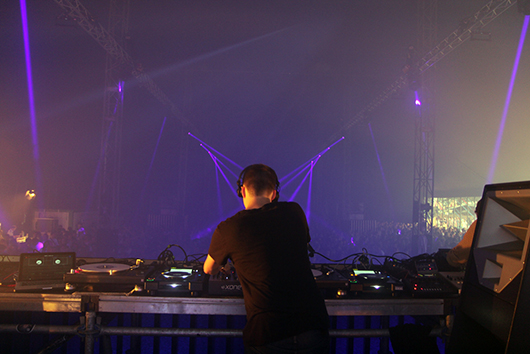
When Sunday night rolled around, we headed to the main stage, largely expecting more of the same. After all, UK veteran Surgeon is also known for his harsh, hard-charging sounds, so his collaboration with Blawan seemingly promised something along those lines. However, Trade was actually much lighter than we anticipated. Make no mistake, Blawan and Surgeon didn’t completely divorce themselves from their pasts; the music wasn’t light, airy, or heavily melodic, but there were actual melodies at play. If anything, the duo’s live set harkened back ’90s UK rave. The sound palette was still raw and aggressive, but its low-end boom wasn’t designed to beat the audience into submission; rather, it lifted their spirits and brought about a sense of elation. Moreover, when combined with the main stage’s array of strobing lights and smoke machines that had seemingly been set into overdrive, the whole show felt effectively “big,” and closed out Dekmantel on a very high note.