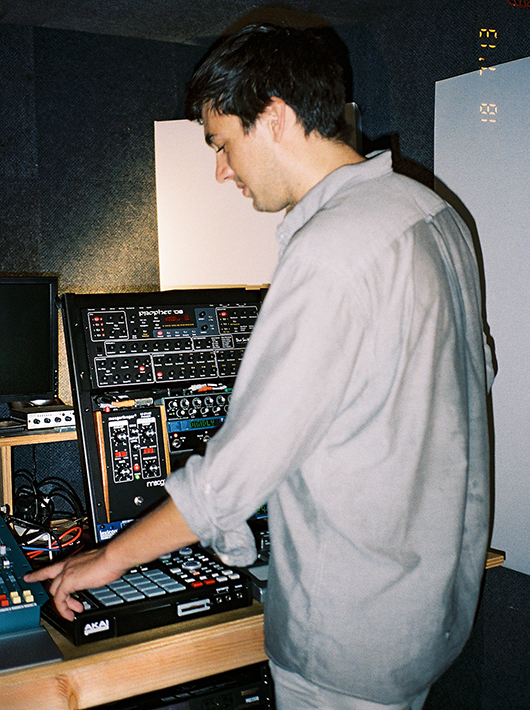
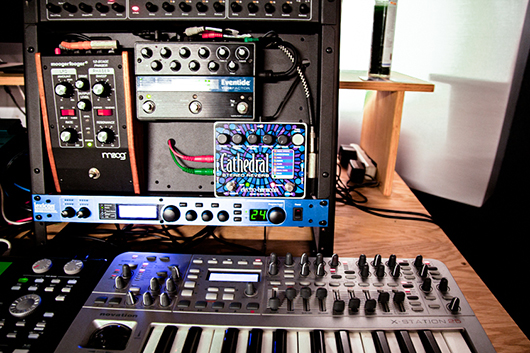
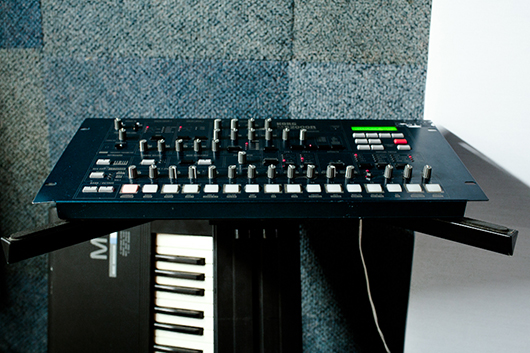
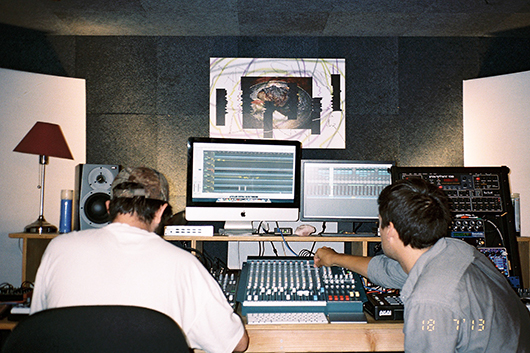
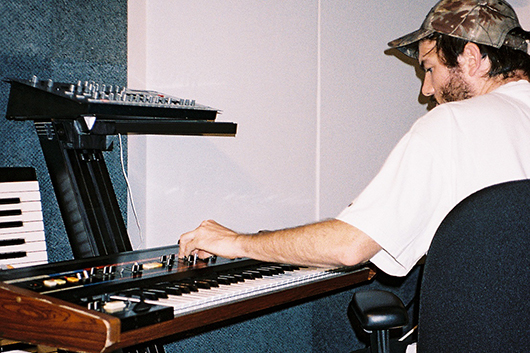
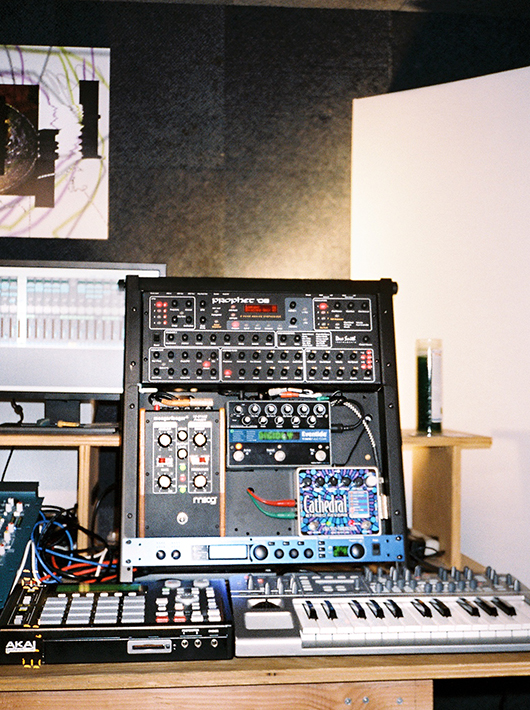
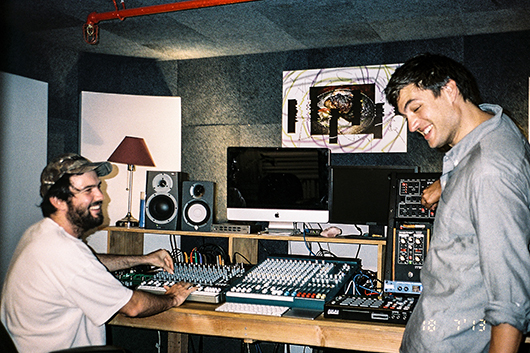
With the release of its second full-length album, Swisher, earlier this month via RVNG, New York duo Blondes (a.k.a. Sam Haar and Zach Steinman) has further boosted its reputation as an outfit capable of crafting uniquely dense and enveloping house tracks. With an army of hardware at its disposal, the pair has built up a signature sound that pulls together an almost incalculable number of wandering synth tones alongside lush layers of FX processing, resulting in productions that are engrossingly vast and almost limitless in their sonic width. Given that, XLR8R was curious to see how exactly Blondes puts its tunes together, so we visited the duo’s modest Williamsburg studio to chat about turning knobs, signal flow, and recording live jams: of course, we also took a peek at the pair’s keenly picked synth collection.
XLR8R: How long have you guys had your studio in this space?
Zach Steinman: About a year and a half.
Sam Haar: We used to have a spot in what was basically an art studio, which didn’t sound as good, but was nicer in a way—there was a window. But then other artists would also be in the studio, and there was no sound separation.
ZS: We’d get a little self-conscious, and we weren’t allowed to make as much sound as we wanted. You could hear someone in the other room painting or coughing, while we’d just be listening to a loop forever. [Laughs]
SH: It’s so hard to find a place to in New York where you can play loud at any time of day, so we moved to one of these little shitty cave rooms in this complex now, but we have 24-hour access and license to make noise.
A lot of your studio is built around hardware. Did you guys start producing on hardware, or did you move in that direction after having produced for a while?
SH: I started making electronic music on hardware a long time ago, probably around 1998. So, some of the pieces of hardware I have are actually leftover from collecting over the years, and then some were bought at moments where I had some money and just felt I needed some more gear. But I was also a laptop musician for a little while, so I’ve gone back and forth.
ZS: I came to hardware after playing instruments for a while. I had steadily gotten more into electronic music, and after college I started slowly building my collection of hardware pieces.
And how do you guys usually end up acquiring those pieces? Do you have any shops you go to, or are you more eBay/Craigslist people?
SH: Some of it is from eBay, some of it is from Sweetwater—we do buy stuff new. Getting nice vintage stuff is great too, but there’s a really nice assurance in having new gear. And a lot of our stuff is MIDI’d up too, so that’s usually easier with newer gear.
Is most of your gear MIDI-synced together, or are there pieces like, say, the Juno-6 that you don’t use MIDI with?
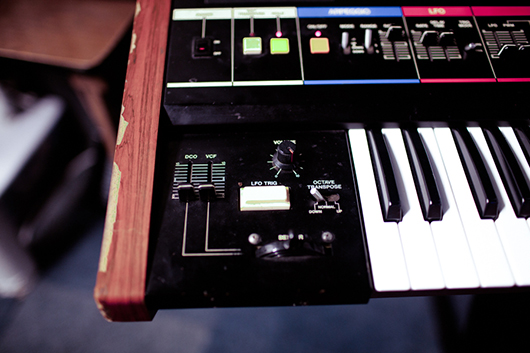
SH: Yeah, you actually have to use a CV converter with that.
ZS: But we really don’t sync the Juno. It’s definitely more fun to let [that keyboard] run free. [Laughs]
But for the most part, all of the pieces that can be MIDI synced together are?
SH: Yeah, definitely. And it’s the same when we play live. There isn’t that much of a difference between our studio set-up and our live set-up actually.
Are you ever worried that you’re going to damage some of your studio pieces by touring with it?
SH: All the time. [Laughs]
ZS: Luckily we don’t bring our mixers with us on tour, because aside from being really hard to lug around, they are also really easy to break.
Are there any particular pieces of hardware that are the staples of the sound on your new record, or did you find yourselves jumping around a lot?
SH: We pretty much used all the synths all the time.
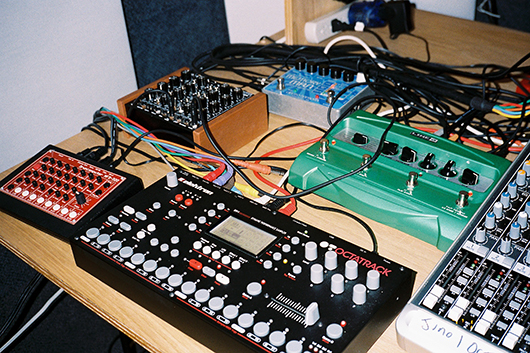
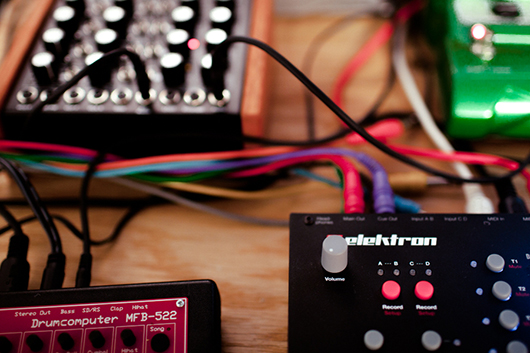
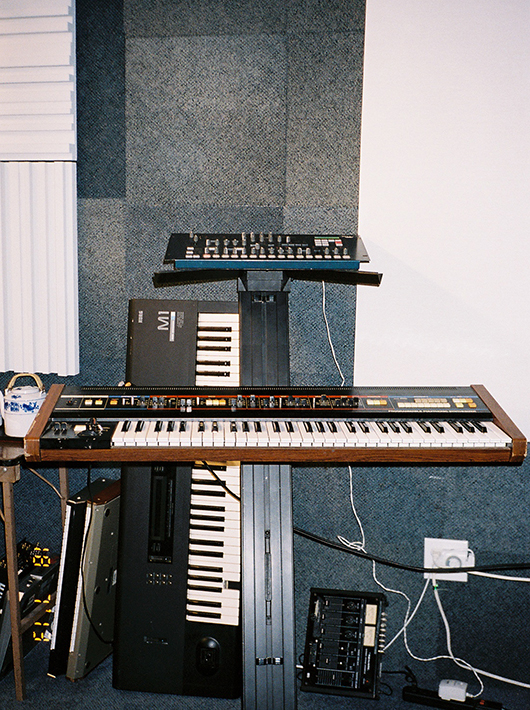
ZS: Yeah, the Juno was used for a lot of the arpeggiations, and just to generate noise. I’d run the Juno into the Doepfer Dark Energy [synthesizer] a lot, and use that as a filter. I’d usually run the MFB Drum Computer through the Doepfer as well, so there’s a lot of that on the record. The MFB bass drum is all over the album; it has a nice 808-style bass drum.
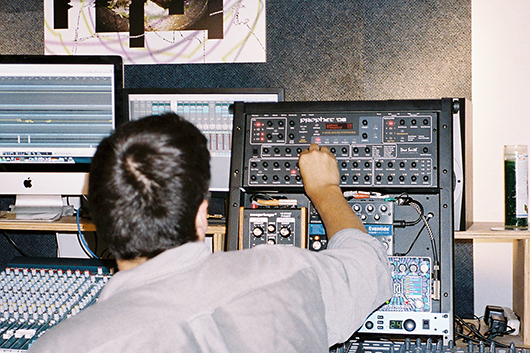
SH: I used the Prophet-8 and this old digital Novation synth a lot on the album, usually synced up together for arpeggiators, chords, and stuff. When they are synced up, you can get three different layers playing the same line at once.
ZS: We ended up sampling the [Korg] M1 a lot on the record. We’d sample into the [Elektron] Octarack and the MPC even. On [the album track] “Elise,” the sitar sound is the M1, and the organ bassline sound.
SH: The M1 has those classic, early-’90s sounds on it.
And is that a synth leftover from your early days of producing?
SH: Randomly, my dad’s friend had it and said, “Hey, I’d think you’d like this.” Of course, I was like, “Yeah, totally!” I’ve heard some of those classic Depeche Mode choir sounds came from the M1, but—honestly—when I play around on it, all I can think of is the X-Files soundtrack—it all sounds like it was made on the M1. [Laughs]
How does your signal flow work then? Do all the synths hit the mixer and then the mixer feeds the audio into the computer to get recorded?
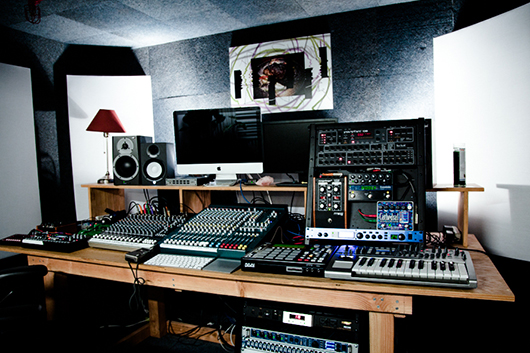
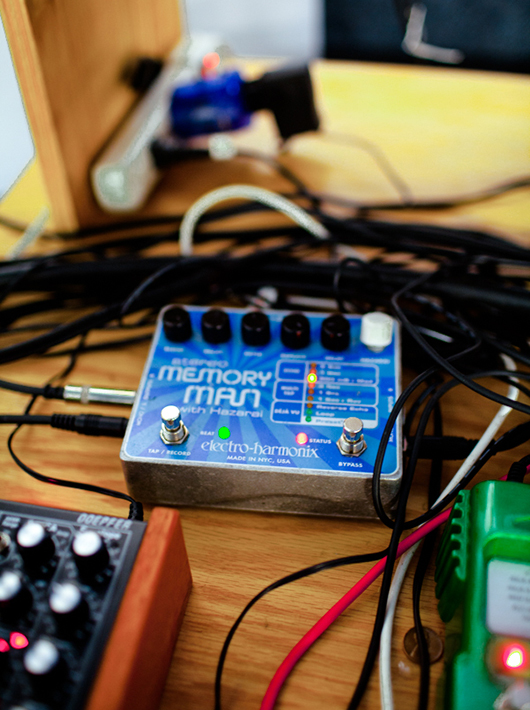
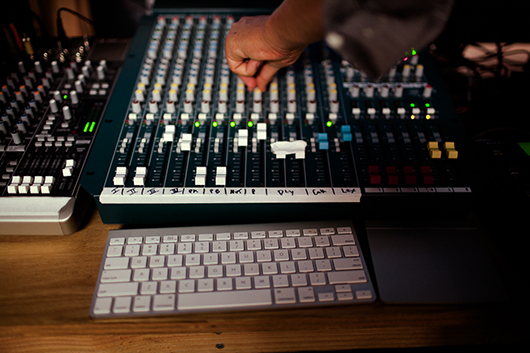
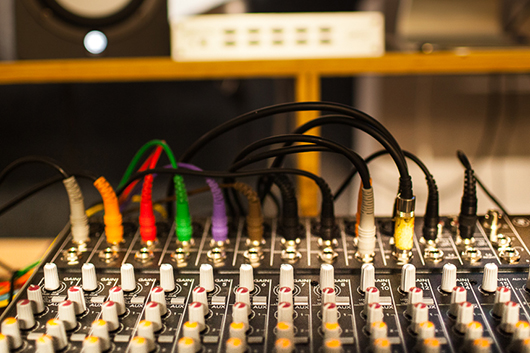
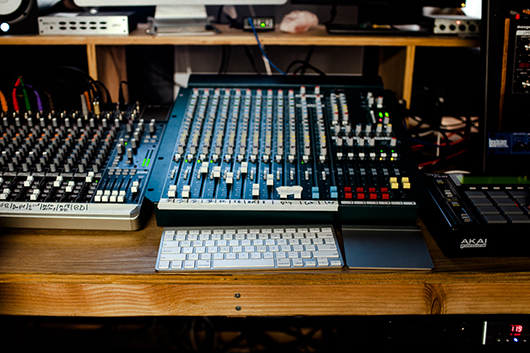
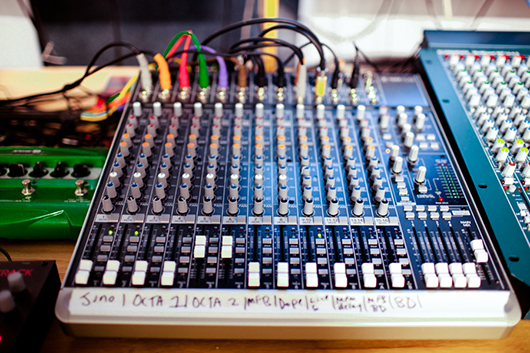
SH: When we record, we play [the songs] live, and everything goes through the mixers—we each have our own mixer that we use. The mixers are kind of the centerpoint of our set-up. Both of us have all the synths coming into the mixer, and the FXs and pedals on FX sends, and I’ll also have the MPC broken out into lots of different channels and going directly to the mixer. It’s kind of the same way that dub producers used to do it in a way, using the mixer to route the signals live and really doing a lot of the performance on the mixer. So when we track, we just take direct out from channel and just multitrack [record] that way.
And all of the songs on Swisher are live performances that were then recorded?
SH: Yeah, all of them are. We’d track live takes—something like 20 channels at a time. On this record, we definitely went back and mixed and edited a lot too.
ZS: We also took some live takes and then chopped those back up and put them into our samplers to then make something new out of that; kind of different iterations of those jams.
SH: Yeah, exactly. That’s how we usually work—we play with all our channels running, multitrack that, and then work from there.
It sounds like you each have your own stations and instruments that you control in the songs?
SH: Definitely, we each have our side of the table. Mine is on the right, mainly the MPC and the Prophet-8, and Zach is the left, with the Juno and the Octatrack.
Where do most of your drum sounds come from? You had mentioned the MFB Drum Computer earlier, but are the MPC and the Octatrack also contributing drum sounds as well?
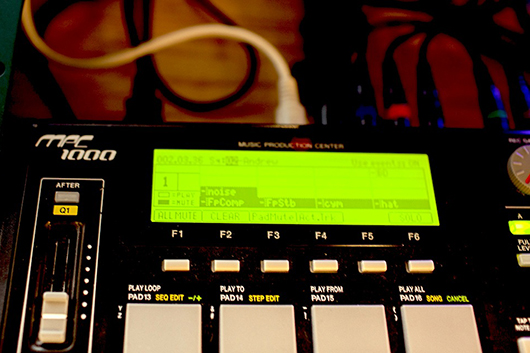
ZS: It’s all three really. There are a lot of samples in the Octatrack and MPC, and then the MFB is used with those as well.
So are you guys just always recording your jams and filling up hard drives until you get something you like?
ZS: Not as much as we should probably. We should be tracking more, but we kind of have to get into the mindset of doing that sometimes.
SH: Usually, we’ll start out just generating loops that we like and layers that we can use, and then we start jamming with those. First, you have to get together the building blocks and the seed of the idea, and then you can start jamming off of that.
ZS: A lot of times, each of us will work on our own to start the ideas, and then we’ll bring them together and build them together.
During these jams, how much of what you’re doing is triggering samples and such as opposed to you actually playing a keyboard line or tapping out a drum part on the fly?
SH: There are samples, but there are actually more sequences that we bring in and out as well as keyboard playing and a lot of knob turning, filtering, and manipulating the FX sends.
And where do the return of the FXs go? Back into the board on a return channel?
SH: They usually come back on a normal channel on the mixer. That’s part of the fun of it—you can create more complex FX routing depending on what you want to do.
ZS: Yeah, you can send something to the delay, and then from the mixer put that delay back through something else—it makes it really easy to make a chain.
How long did it take you two to become comfortable with a set-up like that? Had you used professional recording equipment before or had any training?
ZS: It’s definitely taken a while.
SH: Yeah, when we first started playing, it was much more simple. Then we slowly started adding more gear, and as we got more comfortable, we continued expanding. There was a learning curve, but it’s something we’ve gotten better at by playing over the past five years.
ZS: One of the harder parts of playing that way is getting a good mix and not letting levels rise too high, just because there are so many things to think about.
SH: It can definitely be a sort of acrobatic balancing act at times. [Laughs]
But that’s part of the fun too, right?
SH: Absolutely. And the sort of flexibility it allows for is really part of the fun because when you are playing live, you’ll often come up with an entirely new thing that you’ve never done before. Even a whole new network of routing, like, “Oh, I never ran that thing through that pedal.” It can be really dynamic and open to improvisation.
Are those tricks things you remember just from doing it so often, or do you guys ever write down notes or anything like that?
SH: Definitely the latter. When you do it enough, you sort of build up a repertoire of tricks in your bag.
ZS: Usually, you remember what worked. If you’re playing live, you especially need to remember.
How many of these jams would you say get recorded but then don’t end up on a record?
ZS: Making this LP, we had a few. But that kind of playing is really generative in a different way than usual. So when you’re tracking, it’s because you realize you’ve got something.
SH: And you have more predetermined sequences that you’re working with as well.
So you kind of have a sketch in your head before you start recording?
SH: Not exactly. We’ll maybe have a sketch of what we’re using, but not where we will end up going with it.
Is there ever a discussion before you start recording where you lay out guidelines, or is it more just left to improvisation?
SH: Sometimes we do, but mostly it comes from working on the track before recording it.
ZS: But tracks like “Eon” were totally improvised, totally in the moment. It definitely varies. There are times when we’ll have ran something and one of us will say, “Oh, I liked when you did that after I did this,” and then we’ll try to do that again.
In the interview that accompanied your recent Resident Advisor mix, you said, “We worked on all tracks simultaneously and then the album slowly revealed itself.”
SH: Well, we had ideas for a bunch of different tracks, and we were working on them all at the same time.
ZS: Yeah, we finished them all on the same day, actually. But we’d come to a new place with a certain track, and then move on to a different track until we got that to a new place, and that’s how the album slowly revealed itself.
SH: We worked on all the sequences, loops, and content for all of the tracks first, then we tracked everything, and then we started editing everything. We’d sort of be bouncing back and forth between every track, but they’d all be in the same part of the process.
ZS: We even had a color-coding system for the tracks as we were working—red status was “not very far along,” blue status was “getting there and ready to be mixed” and then green status was “good to go.” [Laughs]
And when you say you “finished” all the songs in the same day, do you mean that each track came to a conclusion on the same day, not that you recorded, edited, and mixed the album all in one day?
SH: No, no. We were editing and mixing them all at the same time, so the day we started saying, “Oh this track was done,” we were able to do that with all of the album. We were actually working on deadline, so it kind of had to be that way.
How does your mixdown process work? Is there a lot of EQing and compression that you are doing in the computer?
SH: Well, we track into Logic, and then we did a combination of mixing in the box and then sending stuff to outboard gear. It was fun to do that, summing some tracks using outboard gear, and then deciding to sum the other elements in the computer. I think summing tracks in the box or in outboard gear sounds really different, so we could play with that. You can level things out really well in the gear, but keep it more three-dimensional in Logic. The EQs and compression we did on the computer is pretty transparent; definitely more scientific, getting rid of specific frequencies and such. When we use the EQs on the mixers, it’s much more for general shaping, like we want the highs to come out a bit to add a little bit more mid-range. On tracks like “Andrew,” which got pretty dense, there was a lot more scientific, in-the-box EQ going on.
And when you say you were summing stuff to outboard gear, you mean that you were sending stems out to hardware compressors and such?
SH: Yeah, we’d maybe make a group of synths, like eight channels or something, and sum it down to two tracks and have fun with it, like run it through this crappy little mixer box we had and some parallel compression and then bring it all back in.
ZS: Just grouping sounds and running them through the same FX channel or process really colors the sound in a new way.
SH: It sort of solidifies them into a new texture.
And were you guys tweaking knobs and stuff on these FXs while you were recording them back in, similarly to when you were playing the tracks live?
ZS: Yeah, we sometimes would get really performative with that sort of stuff, almost like it was an overdub.
SH: We might think a clap was a little static or something and decide to play with a flanger effect or something while we were mixing it.
But you don’t do a lot of automation within Logic?
SH: Not really. Sometimes we’ll automate levels, but for the most part, if it’s not part of the scientific or transparent stuff that we want, we usually won’t automate on the computer.
And how long does it usually take you to mix a song?
SH: A few days, but we’d sort of go back and forth between editing and mixing as we were going. Those processes kind of inform each other. But once we’re in the computer, we really only try to use content that we tracked in, because once you’re in there, you can work on it forever. It’s nice to give yourself limitations like that, it helps just get the job done.
Do you guys make any attempt to build an atmosphere in your studio? You have some plants and pictures and such, but is having the room “right” something that affects how you work?
ZS: Well, I think we could make most anyplace work, but it is just nice to have plants around, to feel comfortable.
SH: There aren’t any windows in here, so the plants are just there to help make it not feel like you are in a box or a cave, and they improve the air quality a lot too.
ZS: Also, we have a grow light that is set to a timer, so you know whether it’s nighttime or daytime.
SH: It just helps us not feel crazy. [Laughs]