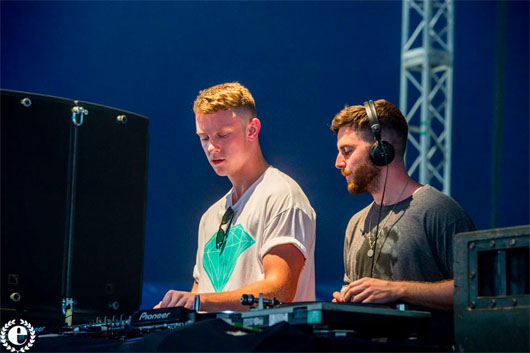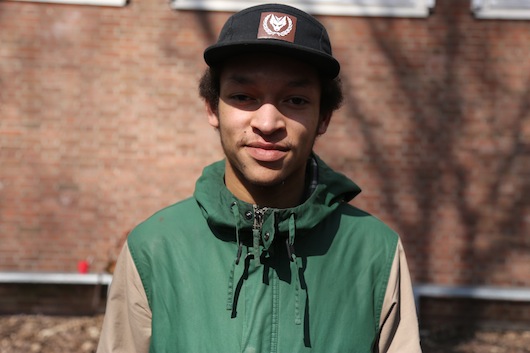
Six Surprises from MEG Montreal 2013

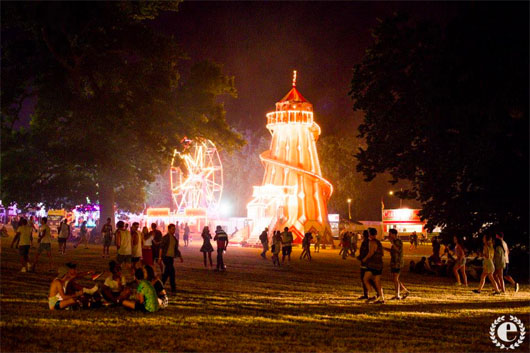
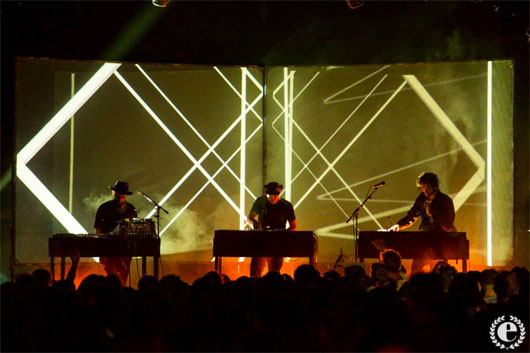
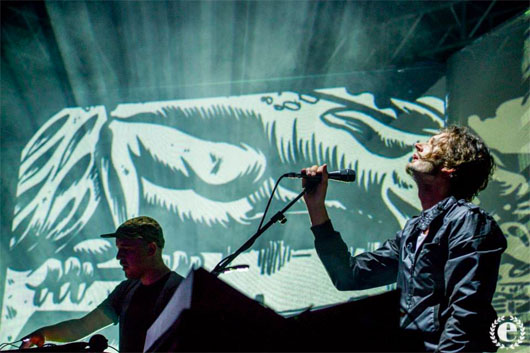
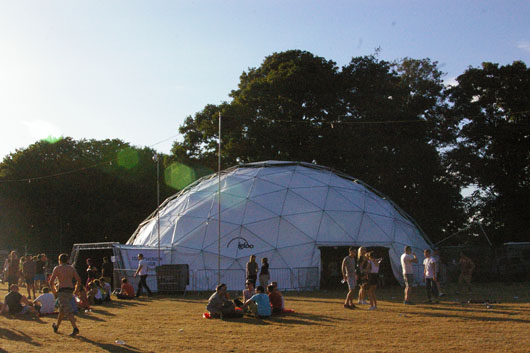
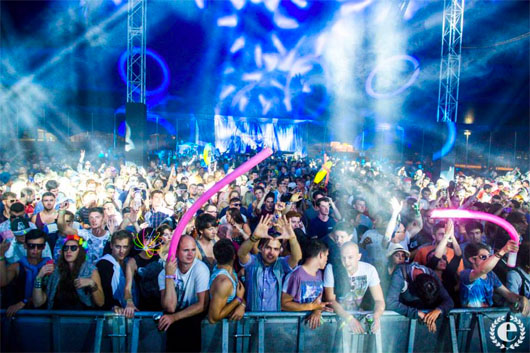
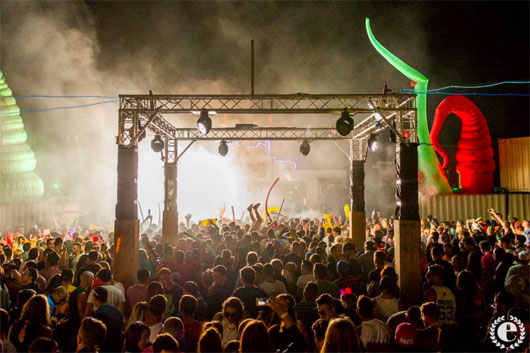
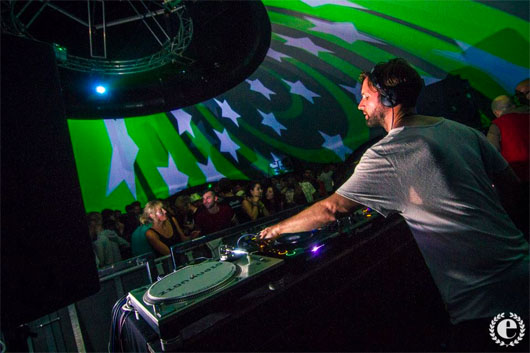
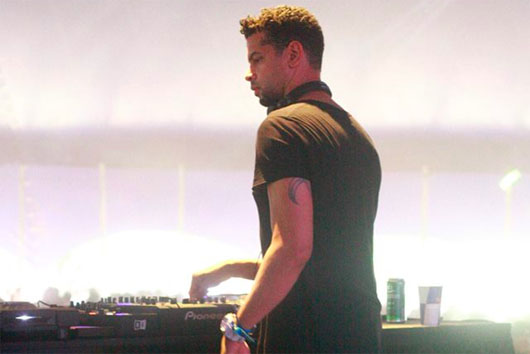
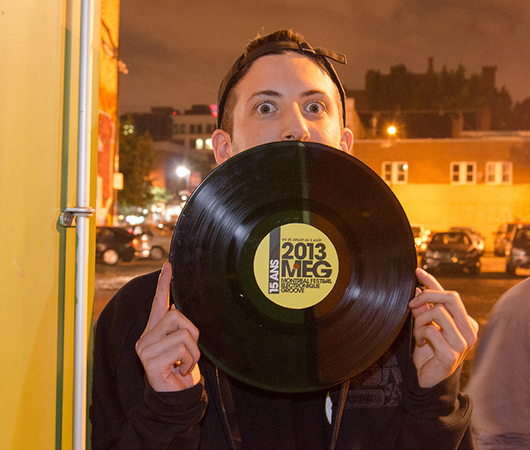
Now that the calendar has flipped to August, the end of summer is officially in view, but that hasn’t slowed the festival season one bit. Last weekend, XLR8R was invited to check out the final few days of MEG Montreal, an eclectic happening that had somehow previously eluded our radar, despite the fact that 2013 marked the 15th year of the festival’s existence. We weren’t sure exactly what we’d find when we crossed the Canadian border and dove into the MEG festivities, but after three nights of partying in Montreal, we can now say that the festival offered up a number of surprises, six of which we’ve cataloged below.
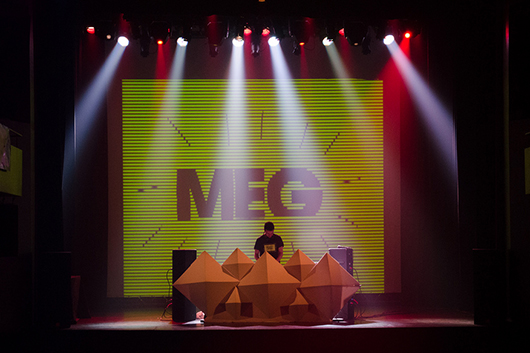
MEG Montreal is, like, a thing.

It sounds a bit silly, but before we received an invite to attend this year’s MEG Montreal, we hadn’t really heard of the festival. Granted, the globe is littered with festivals these days, many of which don’t necessarily make it onto XLR8R‘s radar, but it still seemed odd that a festival—particularly one that’s primarily focused on electronic music—could exist for 15 years without garnering more attention.

Granted, any electronic-music festival in Montreal has to compete with the spectre of MUTEK, which unquestionably casts a long—and internationally recognized—shadow. (Amazingly, MEG has actually been active for one year longer than MUTEK.) And though both MUTEK and MEG happen primarily in smaller venues around Montreal over the course of several days, that’s generally where the comparisons end. Where MUTEK presents an intellectual, highly focused vision that centers around the convergence of electronic music, art, and technology, MEG takes a far more laid-back approach. Its line-up this year was incredibly varied—some might even say scattershot—and the only real emphasis seemed to be on highlighting the “party” portion of the electronic spectrum.

MEG also seems to engage in a lot of partnerships, most notably with the French music scene. It’s likely that grants and funding issues come into play here—as does the obvious cultural connection between France and Quebec—but the 2013 MEG line-up did feature a notably large contingent of French artists. Beyond that, MEG also partnered with Osheaga, one of Canada’s biggest festivals. As it happens, Osheaga—which has a very high profile and was undoubtedly holding center court with the city’s music fans throughout the weekend—was happening concurrently with MEG, and the two events joined forces for Osheaga MEG Pro, a self-described “international music industry gathering.” (In truth, Osheaga MEG Pro ultimately seemed a bit murky to us, as it consisted of very few “industry” events and largely just seemed like a mechanism for people to get a laminated credential and attend a slate of afterparties.) One might think the partnerships would end there, but MEG also teamed up with Préscence Autochone, an event series billed as “Montreal’s First Peoples’ Festival” that celebrates indigenous cultures each year with a film festival, a myriad of family-friendly activities, and, yes, music.

After seeing all of these festival brands operating at the same time, we began to understand how MEG could be lost in the shuffle, even for those residing in Montreal. The fact that MEG didn’t present a concrete concept or offer a narrative through-line also didn’t help matters. That being said, the festival has been going for 15 years, so clearly something is working. MEG is not a small undertaking—this year’s festival ran for an incredible 10 days—and though we were only around for the final weekend, all of the events we saw had solid crowds. Furthermore, those in attendance didn’t seem concerned about the big-picture issues we noticed; they were too busy having fun.

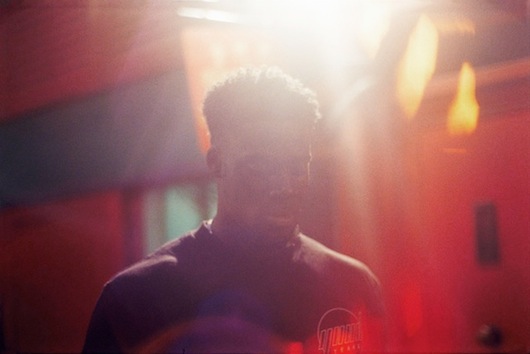
Tommy Kruise
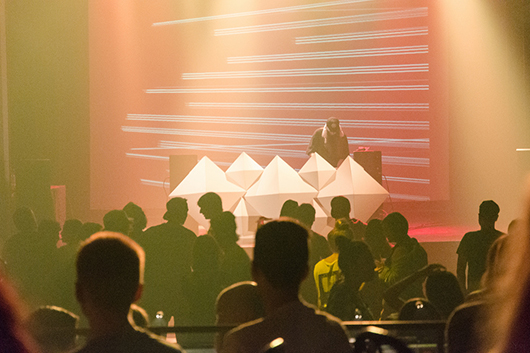
Para One is a slept-on DJ.

In truth, this wasn’t a total surprise; heading into the festival, we certainly didn’t expect a veteran like Para One to be bad. At the same time, we definitely weren’t ready for just how good his set was going to be. The French producer performed on Thursday night at Club Soda on a bill dubbed “Électromania,” which also included sets from local Montreal hero Tommy Kruise (who was weird and funny in the most charming of ways), Sound Pellegrino Thermal Team, and Shlohmo.

Obviously, Para One has an impressive resume. After getting his start as a producer for seminal French hip-hop outfit TTC in the ’90s, he eventually moved on to dance music and became a core member of the Institubes roster. Once that label closed, he founded the Marble imprint with Surkin and Bobmo, and just last year, he issued the excellent Passion LP. Clearly, the man is still operating at a high level and has seemingly shown no signs of slowing down, but despite all of his accomplishments, it often feels like Para One doesn’t quite get his due, or at least isn’t an artist whose every move is tracked with widespread anticipation and excitement. Admittedly, we were guilty of a certain malaise ourselves, as we entered Club Soda expecting a serviceable mix of bright, bouncy, party-starting house—sounds that would be vaguely retro, only delivered with a modern polish.

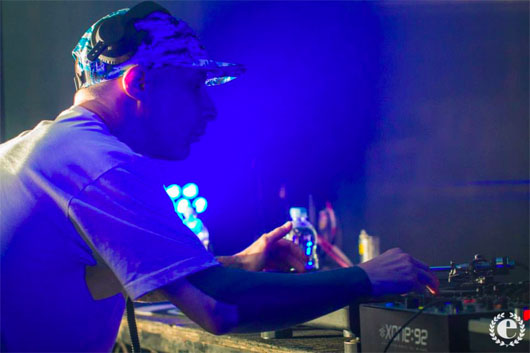
Para One
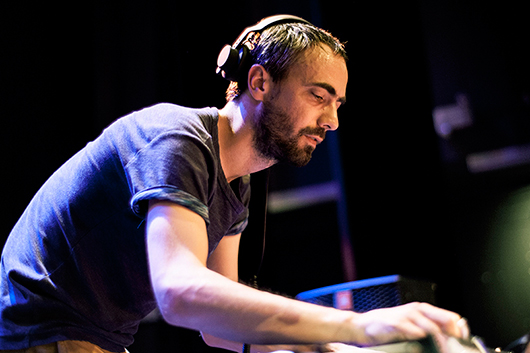
Within the first few songs of his set, it was clear that “serviceable” would be an inadequate way to describe what Para One was doing. Simply put, the guy was a force behind the decks, as he offered up a quick-mixed flurry of tunes that quickly elevated an already-popping dancefloor to an even higher energy level. The set was heavy on the neon-streaked house that often colors the French scene, but it didn’t feel heavy handed and never descended into full-blown electro-house. He also peppered his selections with a handful of hip-hop and R&B hits, and although this technique ran the risk of looking cheap, Para One struck the perfect balance, dropping in only a minute or two of each sing-along anthem before deftly sliding back into house and techno fare. It’s often difficult to be a “fun” DJ without coming across as a hack, but Para One had no trouble with the task.

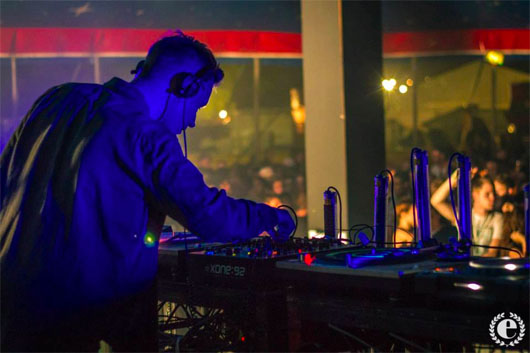
Shlohmo
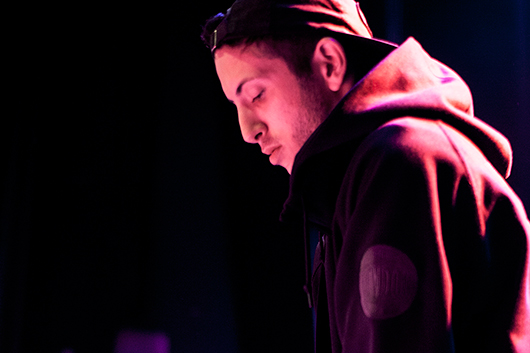
Shlohmo’s set was good. Really good.

This may not seem like a surprise, as XLR8R has been championing the efforts of Shlohmo for several years now. However, there has always been a sort of divergence in his artistic vision, one that clearly separated his thoughtful, introspective original productions from the bombastic, bass-heavy sounds he tended to explore in a club setting. On the one hand, the need for this split has always been obvious—the majority of people aren’t necessarily looking to hear melancholy headphone jams at the club. On the other hand, Shlohmo’s live/DJ sets over the years have occasionally left fans of his production work confused, disappointed, or simply wishing that he’d gone in a different direction. This is something that Shlohmo has certainly been aware of—we actually discussed the matter with him last year at MUTEK and again earlier this year—but if his performance at MEG Montreal is any indication, it appears that he may have resolved the issue.

Shlohmo headlined the Thursday-night show at Club Soda, and though he faced a packed floor, his set wasn’t particularly clubby. At the same time, it wasn’t overly abstract, either. The rhythms were slow, but they didn’t sound sparse. There were elements of hip-hop and R&B—including remixes of a few well-known radio hits—but the music didn’t sound especially “pop.” The songs were largely instrumental, the beats pilfered heavily from modern hip-hop and R&B, and the productions were bathed in a thick syrup of soaring synths and digital haze. It’s difficult to describe exactly what Shlohmo presented, but something along the lines of “epic R&B” seems accurate, as the music—which appeared to consist entirely of his own productions—sounded big, but never seemed trite. Maybe it’s merely a function of the fact that Shlohmo has been performing regularly for a few years now, and has become rather popular in the process; where he once faced pressure to “rock the party,” he now has a solid legion of fans, and they’re ready to go along on whatever journey he wants to lead. Shlohmo’s set was patient, even contemplative at times, but the crowd never grew restless; on the contrary, everyone seemed enthralled with just about everything Shlohmo was doing. It did help that the LA producer has developed a demonstrative on-stage persona—though he wasn’t exactly dancing, Shlohmo did spend a good portion of the set semi-staggering around his rig, throwing his hands in the air, and making intense faces while rolling his eyes into the back of his head. It all sounds a bit goofy now, but in the moment, it simply came across like Shlohmo was getting lost in the music. As it turns out, the audience was willing to do the same.

Poirier

Apparently, normals like dancehall.

On Friday evening, we headed to Montreal’s Place des Festivals for “Electro-Choc,” a free, open-air show that MEG put on in collaboration with Préscence Autochone. Though much of the night featured some fairly mediocre world music, we were excited to see what showcase headliner Poirier would do behind the decks. Much of his 2013 has been focused on his difficult-to-categorize Boundary project, but Friday’s show was a chance to see Poirier serving up dancehall and other kinds of global riddims.

Still, as his set began, we were… concerned, to say the least. Given that the show was free and situated next to one of Montreal’s biggest shopping districts, the audience wasn’t exactly thick with hardcore music fans. There were tourists, families with young children, elderly couples, and lots of random passerby. In short, it was the sort of crowd one might see at the mall, not at a music festival. Beyond that, the soundsystem for the stage wasn’t exactly booming, which is usually a recipe for disaster when it comes to dancehall.

Electro-Choc audience
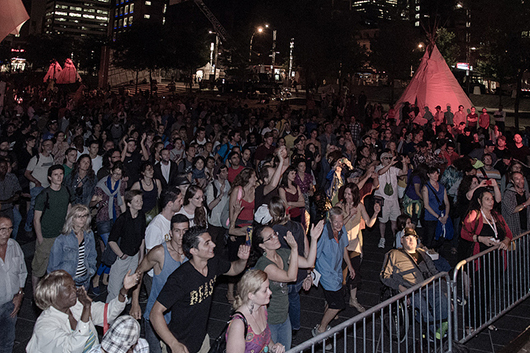
Amazingly though, Poirier started spinning around 10 p.m. and the crowd actually responded. Granted, Poirier was smart enough to keep things upbeat and bouncy, and he did have some help from MC and frequent collaborator Face-T, but we didn’t expect to see moms and people who looked like GAP shoppers getting their groove on to dancehall. Maybe things are different in Montreal. Maybe we were greatly underestimating the appeal of dancehall. Maybe Poirier was just that good. Whatever the explanation, we left the show both confused and impressed.

Machinedrum and Jimmy Edgar played a lot of rap—a lot.

In fairness, it’s always hard to predict what Machinedrum and Jimmy Edgar are going to do, but the two producers—who had performed together as Jets earlier in the day at Osheaga—threw us for a loop on Friday night at MEG. DJing separately at the Sociéte des Arts Technologiques (a.k.a. SAT) as part of a line-up that also included Montreal’s own Seb Diamond and French producer Rone, both Machinedrum and Jimmy Edgar went heavy on the hip-hop, not that the young crowd minded.

Edgar actually began his set with sounds that more closely paralleled his recent production, combining bits of ghetto house and drum-machine-driven techno with upbeat slices of ’80s electro and funk. Following a sluggish start to the evening, Edgar’s dancefloor was quickly swelling, but then he made a drastic left turn and dropped a growling, bass-heavy cut that existed somewhere in the dubstep-trap divide. It wasn’t bad per se, but it was definitely a surprise, and marked the beginning of a sharp change in direction—for the next 20 to 30 minutes, Edgar dove headlong into hip-hop, particularly Southern-style rap. Eventually, Machinedrum took over, and elected to continue in the same direction. His opening salvos were dominated by booming bass notes, rolling hi-hats, and the occasional rap sing-along. The kids in the audience ate it up, and kept partying, even as Machinedrum continued amping the energy level—and the tempo. As the set continued, he gradually segued into juke, footwork, and a lot of jungle, meaning that the SAT was both very loud and intense hyperactive for the duration of his set. Without question, the set was heavy, but the repeated cheers from the crowd demonstrated that Machinedrum had tapped into something potent.

The Hacker
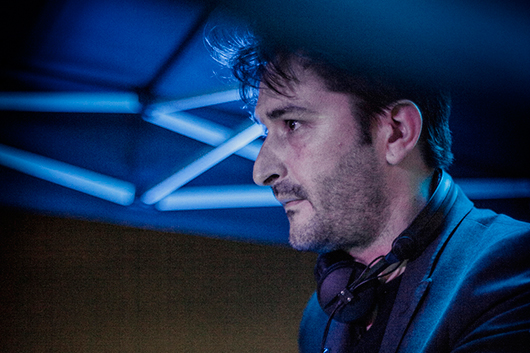
The Hacker and Zombie Nation are not only still alive, they’re also capable of soundtracking a boat party.

MEG Montreal came to a close on Saturday night with a massive boat party, an event which has concluded the festival for the past five years and was touted throughout the weekend as the potential highlight of the festivities. Unlike many boat parties, which often take place in the afternoon or the early evening, the MEG boat powered into the St. Lawrence river after midnight on Saturday, not returning until 3:30 a.m. Thought it was a cold and windy night on the water, nothing could could dissuade partygoers from filling the dancefloor and letting loose.

The MEG boat actually featured two dancefloors, although the one on the lowest deck—with music provided by Turbo RecordingsBordello and Thomas Von Party—ebbed and flowed dramatically throughout the night. Most of the action was happening on the main deck, where a couple of blasts from the past piloted the proceedings. First up was German producer Zombie Nation, who has likely spent the past decade trying to live down his 1999 mega-smash “Kernkraft 400.” Also on the bill was French producer The Hacker; despite his extensive catalog, he remains best known for his collaborations with Miss Kittin, which propelled both of the duo to temporary electroclash stardom in the early ’00s. Without question, both Zombie Nation and The Hacker seemed like unusual choices to headline the closing party of an electronic-music festival in 2013, but no one bothered to tell the crowd—the party was absolutely rammed, with something like 700-800 people in attendance.

MEG Boat

In terms of music, both Zombie Nation or The Hacker stuck to their stylistic guns. The former played a lot of thick and chunky electro-techno hybrids, while the latter went darker and provided a healthy dose of industrial-infused electro sleaze. Neither set was particularly cutting edge, but hearing these guys simply do what they’re known for doing was undoubtedly better than hearing them muddle through new material or experiment with more innovative fare. No one was surprised when Zombie Nation dropped a reworked version of “Kernkraft 400,” just like nobody was shocked when The Hacker closed his set with New Order’s “Blue Monday.” As the boat glided into the dock in the wee hours of Sunday morning, it was clear that people hadn’t come to the party to have their minds blown or experience the bleeding edge of dance music; just as they had been doing throughout the weekend, they came to party, and MEG gave them that chance.
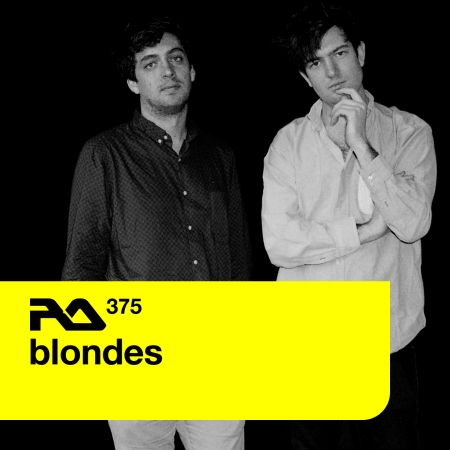
Download a New Mix from Blondes

With this week’s physical release of its Swisher LP for RVNG, Brooklyn duo Blondes has been tapped to provide the most recent installment of Resident Advisor‘s podcast series. According to producers Sam Haar and Zach Steinman, they crafted their mix out of “tracks from friends of ours here in New York,” “tracks we have just been into recently,” and a couple of picks from the pair’s brand-new album—resulting in an hour-long set comprising music from the likes of Laurel Halo, Efdemin, Stellar Om Source, Terrence Dixon, Max McFerren, and Lucy. Blondes’ podcast for Resident Advisor can be streamed and downloaded here, where a quick Q&A with the duo can also be found.

Devonwho feat. Teeko “Shine (Citymouth Remix)”*Dropping Gems*

As previously announced, Bay Area beatmaker Devonwho‘s self-released Perfect Strangers collection is set to be repackaged and given a proper release via Portland label Dropping Gems, an offering which will include new remixes from producers such as Benito, M. Constant, and Citymouth. Here, we have the latter’s remix of “Shine (feat. Teeko)”—clocking in at a breezy two minutes, the track combines ultra-hazy loops with liquid bass and bits of slow, glimmering percussion. The rest of Devonwho’s Perfect Strangers will be made available digitally and as a cassette on August 13.

Shine Citymouth (Remix)

Stream Lil Silva’s ‘The Distance’ EP

Last week, we featured the new video from Bedford-based producer Lil Silva‘s new EP, The Distance, and today, we’ve been treated to a full stream of his new record for the Good Years label. The Distance marks a giant leap forward from the UK funky and grime-indebted producer, seeing Lil Silva tackling more song-based tunes, as he’s collaborated with vocalists such as Sampha and Rosie Lowe. While the EP’s two vocal tracks are suggestive of a more pop-oriented direction for the talented producer, tracks like “One Twenty” and “Mask” showcase a hybrid bass music blend that recalls his earlier releases for labels such as Night Slugs. Lil Silva will be playing a few select US shows in late-August/early-September, the dates of which can be found below, along with a full stream of The Distance.

8/29 – Boston, MA @ Middlesex Lounge
8/31 – New York, NY @ MoMA PS1 [Warm Up]
8/31 – New York, NY @ Glasslands
9/4 – Los Angeles, CA – Los Globos
9/6 – San Francisco, CA – 1015

The Highs, Lows, and So-Sos of Eastern Electrics

In its first year as a large-scale festival, the 2013 edition of Eastern Electrics was certainly an ambitious undertaking, one which presented three days of music across six stages and championed a line-up that combined some of the most worthwhile names in both European and Stateside dance music (such as Masters at Work, pictured above). Over the past weekend, XLR8R did its best to catch everything that was happening in the UK’s Knebworth Park—located just outside of London in Hertfordshire County—and now that the dust has settled, we’ve compiled the festival’s many highs, along with a handful of lows and so-so performances from the three-day event.

High: The Opening Day
Friday, the opening day of Eastern Electrics, by far boasted the strongest line-up of the three-day festival. Scheduled from 2 p.m. to 6 a.m. the following morning, the festival organizers did a nice job spreading the talent throughout the entire day and night. After Huxley, Bicep, and Deetron started things off right on the festival’s main stage—it was hard to argue with that opening trio—Theo Parrish, Ben UFO, Levon Vincent, and DJ Koze also turned in excellent sets, making it a busy day for those who wanted to see as much as they could.

While much of Friday’s success was surely the result of good booking, there also seemed to be a palpable energy and excitement amongst the crowd on Eastern Electrics’ first day. After a bit of a slow turnout in the afternoon, in the evening the after-work crowd came out strong and was clearly ready to let the week’s frustrations go. Every dancefloor seemed not only absolutely ready to get down, but also attentive and willing to follow each DJ along unexpected paths. Friday’s selectors certainly rose to the occasion.

Levon Vincent

High: Maya Jane Coles
Along with the list of talents mentioned above, Friday also delivered some truly outstanding performances from a few DJs, Maya Jane Coles being one of them. Coles landed the festival’s first major dancefloor victory when she took to the main stage—admittedly quite early—around 7 p.m. Her 90-minute set was everything one would expect from the London DJ, as she strung together dense, billowing house tracks while mixing in flecks of machine-made techno and a number of vocal-led bits. In her hands, this made for a particularly entrancing combination, as Coles drew in listeners with subtle waves of buildup and breakdown, mostly moved the energy of her mix in gradual, understated steps, and reserved her grand mixmaster gestures for only those key moments when the dancefloor was about ready to burst from all the carefully built tension. When her 90 minutes were up, it was clear that the British DJ had plenty of legs to keep on going, and that the crowd would have stayed with her for much longer, but unfortunately, the festival had a schedule to keep.

High: Dixon
We should probably preempt this statement by acknowledging that we have no idea what Dixon‘s particular stance on drug use is, but—with that said—judging from his set on the festival’s opening night, there are few DJs who could better accompany a (happily) drug-induced dancefloor. On Friday, the German DJ led the party down an evolving path of tech-minded house tracks, usually bolstered by alluring percussion loops and slow musical movements. Occasionally, stranger elements would find their way into the set—songs featuring extremely dry synth runs or neverending organ drones would sneak in but never feel out of place. This may have been why Dixon was so perfect for Friday’s night druggy atmosphere; he was intent on taking the crowd to the outer regions of meditative dance music, but he was also certain to get them there safely, remaining calm and in control the whole time. Basically, the audience had an open invitation to continue burrowing into their own heads, and Dixon took care of the rest.

Top: Joy Orbison; Bottom: The festival grounds

High: Joy Orbison
Joy Orbison deserves the reputation he has. The man is just an excellent DJ, and he had no problem proving it late Friday night (or, rather, early Saturday morning). Joy O has a way of playing to both sides of the DJ coin—first, he is a technically sound jock, one who is able to make sharp twists and turns work just as well as methodical blending; and secondly, he knows what the crowd wants to hear, and he doesn’t shy away from giving it to them. During his 90 minutes at Eastern Electrics, he showed off his prowess in both fields, playing a number of recognizable tracks—his collaboration with Boddika, “Swims,” for example—for brief moments as he pummeled through a bass-loaded set that found the Londoner moving at a brisk, but never jarring, pace from track to track.

So-So: Moderat
Gernot Bronsert and Sebastian “Charlie” Szary (a.k.a. Modeselektor) and Sascha Ring (a.k.a. Apparat) debuted their new live show together as Moderat on the first night of the festival, taking to the main stage as the grounds had officially transitioned into night. With each member behind his own tabletop of equipment, the trio delivered a set which sounded mostly composed of material from the outfit’s new II LP, and so waded through a wide range of pop-flecked bass music with rich chords and, when called for, Ring’s lush vocals. As part of Eastern Electrics, Moderat’s live performance provided a refreshing breather from the slew of DJ sets which had already taken up the day. The group’s songs were just that—songs—complete with elongated arrangements and often straying from straight-up dance music, which may have seemed like a drop in energy to some, but for most provided a nice palate cleanser from the rest of the festival.

When the group hit its stride, the results were beautifully immersive. Moderat was able to conjure a larger-than-life sound from the interlocked layers the group manipulated on stage. Still, there were a few bumps along the way; the first time Ring attempted to sing into the microphone, his vocals were inaudible throughout the entire song. (The problem was fixed by the next time Ring stepped to the mic.) In the end though, it was sometimes hard to comprehend exactly what the three members of Moderat were doing on stage, and despite the show’s exquisite visual accompaniment—a multi-projector setup in an “X” pattern that allowed for an incredible depth of presentation—it was difficult for the large audience to feel a concrete connection with the performers.

Moderat

Low: Cigarette Smoke
XLR8R is going to put on its old-man hat for a moment and complain about people smoking cigarettes at festivals. In 2013, it seems that the debate about whether or not cigarettes are good or bad for one’s health has surely been settled. Of course, everyone is allowed to smoke if they please, but the simple courtesy of not doing so in the middle of a crowded dancefloor goes a long way toward helping others enjoy the experience. Granted, this is not a problem specifically with Eastern Electrics, as ostensibly every large outdoor festival around seems to suffer from this same carcinogenic omnipresence—and is rather powerless to stop it—but it’s hard to argue that unless you’re the one smoking, the constant presence of second-hand smoke in the middle of a dancefloor is just plain shitty. Perhaps non-smokers need to walk around festival dancefloors spraying Febreze in everyone’s face; maybe then we could get our point across.

High: Roman Flügel
Taking over the early-evening reigns on what ended up being a muddy Saturday—due to some light rain here and there—in the dependable Igloo tent was German DJ/producer Roman Flügel. The veteran selector did not take his task lightly, beginning with about 45 minutes’ worth of acid-tweaked tracks, 909 beats, and assorted DJ tools; the results were hypnotic. Grabbing mostly from his vinyl bag, Flügel favored tracks with upfront percussion and extended periods of repetition, allowing his transitions to run long as a new bassline or percussive loop would slowly bubble up beneath the previous cut’s snare or clap pattern. Eventually, Flügel moved towards slightly more soulful territory, but still kept his set adventurous with loads of quirky synth lines and space-age FX. After 90 minutes in the Igloovision tent, the man went and did it all again as a special guest on the Boiler Room stage just an hour or so later, and although those who caught both sets may have heard a few repeats, these songs somehow felt new in this fresh environment.

Top: The Igloovision tent; Bottom: The main stage crowd

Low: Maceo Plex
Appearing on the main stage for the festival’s second day was Dallas native and Crosstown Rebels affiliate Maceo Plex, who delivered one of Eastern Electrics’ more predictable sets to a very large, but somewhat ambivalent audience. Choosing to mostly focus on the deeper and more sun-glistened side of house, Plex’s constant back and forth between build-up and drop worked to get those in the back of the crowd to say “Ohhhh!” over and over again, but offered little in the way of momentum for those interested in more than just hearing a kick drum go away and come back in regular intervals. The result was an uncharacteristically lifeless and indistinct set from Maceo Plex, whose taste as a selector just may not be right for a “big room” crowd at 7 p.m.

High: Planetary Assault System and Surgeon
The last three hours of the Igloovision tent’s Saturday run proved to be the standout of the festival’s second day. Starting around 3 a.m., Luke Slater’s Planetary Assault System project jumped into a live set that was immediately fixed on pummeling, machine-made techno. Not appearing alone on stage (it looked like Slater was joined by another knob twiddler, with both of them using laptops and a bevy of controllers to perform, though the room was too packed to tell exactly what they were using), Slater rarely picked out a chord, melody, or even a proper bassline, instead focusing on dense rhythmic structures, unruly FX, and screeching drones to keep the crowd intensely involved.

Surgeon followed and closed the night out with just as much energy. Though not billed as a live set, a laptop running Ableton Live appeared in the booth with the veteran UK talent—perhaps it was a hybrid DJ/live set—but, regardless, Surgeon had no trouble using the tools at hand to flex his sonic muscle. While his sound was equally as mighty as Planetary Assault System’s, Surgeon did offer a few more musical twists, incorporating runs of tuned percussion and sheets of noisy chords to the robust kicks and unruly snares and claps which rendered his set utterly absorbing. The two acts together took the festival into its darkest regions, which only made it more jarring when we exited the Igloo tent and realized that the sun was in the midst of rising.

Top: The Switchyard Stage crowd; Bottom: Inside the Igloovision tent

So-So: MK
Marc Kinchen (a.k.a. MK) seemed to take his reputation as the man behind the “MK Dub” to heart on Eastern Electrics’ closing day, as he spent most of his two-hour set offering up garage-infused remixes of everything from The xx and Blondie to Chris Malinchak’s “So Good to Me” and Waknelmut and Emma Louise’s “My Heart Is a Jungle.” While his selections were certainly catchy—MK’s basslines and swung drums went over well with the sizable crowd—his set as a whole played it a little too safe for someone of MK’s stature. Performing on the main stage, perhaps he felt the need to go for a larger appeal, but in doing so, he took away some of the excitement from those who sought out MK based on his history as a genuine house pioneer. In the end, his set was pleasant enough but still surprisingly pedestrian.

So-So: Skream’s Disco Mix
Once one became comfortable with the fact that he or she was watching longtime dubstep kingpin Skream play a disco set, it became clear that the man was not some fly-by-night disco fan—he definitely knows his stuff. Utilizing the mixing talents he’s honed over the years, Skream put together a set that was fun yet smartly arranged, dropping a number of more familiar tunes—Duke Dumont’s “100%,” Krystal Klear’s “Addiction,” Daft Punk’s “Harder Better Faster Stronger,” and some Prince among them—but only in short glimpses before moving on to deeper disco cuts. Still, technical ability aside, the question is, do we really need Skream—or anyone for that matter—still putting these types of sets together for us? The dancefloor at the festival’s Star of EE Pub tent seemed to think so.

MK

High: Prosumer and Gerd
While it was hard to choose where to spend the closing hours of the festival’s final day—which boasted such talents as Kyle Hall, Kerri Chandler, Masters at Work, and more spread around the grounds—the Igloovision tent again proved to be the best place to end the night (which wrapped up around 10 p.m. in anticipation of most attendees having work the next day). Taking to the decks inside the Igloo before the sun had set was former Berghain resident Prosumer, who began with 45 minutes’ worth of mangled house anthems, all of them ripe with tweaked melody lines and enticing patterns. As his set progressed, Prosumer even managed to splice in Rick James’ “Give It to Me Baby” before moving on to jazzier territory, and the dancefloor happily followed him the whole way.

When it came time for Gerd to step up, the Dutch DJ moved the party into beefier house territory, throwing in a number of cuts that laid into garage-indebted swings and muscular basslines. Even so, Gerd’s selections were not so serious, as he smartly combined a fun and inviting vibe with a solid sonic framework. The crowd knew the last hours were approaching, and Gerd used this energy to great effect, breathlessly piecing together irresistible tunes before at last resting with his kickless edit of NY’s Finest’s “Do You Feel Me,” a song that despite its lack of kick-drum punch still had the floor moving as if Gerd was operating at full speed.

Top: Bicep; Bottom: Maya Jane Coles

Some Final Thoughts
After operating as a warehouse party and throwing a much smaller festival last year, this was Eastern Electrics’ first year operating on a very large scale, one that, according to its Facebook page, included “tens-of-thousands of music fans, hundreds of staff, and 140-plus [acts].” Considering this, there were hardly any bumps in the road or real issues that arose. Each stage’s sound was adequate (though the Igloovision tent may have taken the crown for “Best Sound”), and the different locales all presented a unique atmosphere for festivalgoers to take in the various performances. Furthermore, the festival’s curation did a smart job of not trying to reach into every pocket of electronic music, but rather focused on a few that were both appealing to partygoers and of a certain artistic value. With the exception of the live sets from Moderat and Hot Natured, the entirely DJ-driven festival did lack a bit of musical diversity, but the line-up nonetheless insured that those who came to festival were indeed fans of the brand of electronic music being presented, and—perhaps in part because of this—the audiences were attentive and a good time was easy to find. In short, America would be lucky to have a dance music festival of this size and musical quality; the UK is lucky to have another.

FilosofischeStilte “Memoirs”*Saturate*

After flying onto our radar with the “Light Years Away” tune we shared earlier this year, Dutch up-and-comer FilosofischeStilte (born Luuk Graham) has handed over a cut from his forthcoming digital EP for Saturate. “Memoirs” is a playful track with an undoubtedly unique sound palette: Squeaky synths, manipulated choir samples, and hip-hop-tinged drumwork each take their time to shine the spotlight. And despite the fact that the melodic elements of Graham’s track generally move in a somewhat repetitious pattern, it’s nonetheless compelling to hear these bold sounds bounce off each other as the production unfolds. “Memoirs” will appear on FilosofischeStilte’s Home Grown EP when it’s released on August 16.

Memoirs

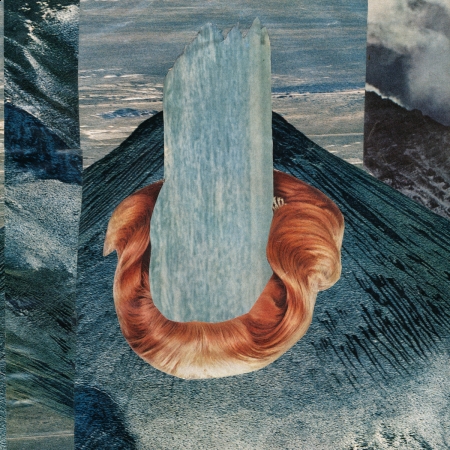
Blondes Swisher

Swisher, the second full-length from Brooklyn duo Blondes (a.k.a. Sam Haar and Zach Steinman), isn’t very different from the group’s first album—and that’s a good thing. Much like on Blondes, the tracks on the new LP unfurl slowly, allowing warm bass tones and glimmering synth melodies to rise spontaneously. “Andrew” would be at home on the pair’s debut effort, not only because the producers seem to have used similar sounds to craft it, but because the sky-high melodies and deep beats stir up a familiar sense of psychedelic wonder. While neither album spans multiple genres, Blondes’ focused vision doesn’t make the duo boring or derivative. Rather, Swisher finds Haar and Steinman honing their specific voice, which draws sprawling, smooth house grooves out of wandering hardware jam sessions.

Some may complain that Blondes hasn’t radically expanded its horizons on Swisher, but frankly, such an effort isn’t even necessary, as there’s still fresh ground to cover within the confines of the duo’s engrossing signature style. This time around, Blondes’ long, winding, and pristine tracks have been imbued with a melancholy energy. While the last LP balanced dark moods by pairing each single with a lighter counterpart, this one skews toward rumbling bass tones and noisy, buzzing instrumental bursts. “Bora Bora” is probably Blondes’ heaviest production to date; it opens with an unsettling swamp of sounds and eventually coalesces around a dense kick drum that drives the track into waves of grating feedback. Likewise, metallic drum hits and surges of buzzing noise on “Wire” add a slightly industrial edge to the track’s dramatic atmosphere. Even the beatless album opener, “Aeon,” feels more theatrical and foreboding than Blondes’ shinier previous efforts, like “Lover.”

Swisher has blissful moments as well. The last track, “Elise,” starts small, with a few miniscule rattling sounds and a stomping kick, but warm chords slowly rise into the mix. Eventually, rounded bass tones mingle with a twanging, light-hearted melody. Most of the other tracks rely on flickering percussion and booming kick drums, but the crisp claps on “Elise” make for the snappiest rhythm on the album. It’s a cleansing follow-up to the menacing and tightly wound melodies that populate tracks like “Swisher” and “Poland.” It’s a prime example of how Blondes doesn’t need to revolutionize its sound in order to make a highly engaging album—simply pushing its style deeper into new directions works wonders.

Phaeleh “Storm (Applebottom Remix)”*Afterglo*

British producer Applebottom has given us his remix of Bristolian artist Phaeleh‘s “Storm (feat. Jess Mills)” tune, the new single lifted off the just-released Tides LP for Afterglo. The lush, low-key original track left Applebottom with a lot of room to operate, and he certainly takes advantage of the space, persuading the mellow tune onto the dancefloor with an array of playful synths, chopped vocal samples, and heavy basslines. And maybe the most impressive aspect of Applebottom’s lively remix is the way it teases the listener with waves of tension before finally giving in to its solid grooves. On a related note, Phaeleh is about to embark on a tour of Europe and North America, the dates of which can be found after the jump.

08.09.13 – Satta Festival – Šventoji, LT
08.25.13 – Shambala Festival- Cottesbrooke, UK
08.29.13 – Outlook Festival – Pula, HR
09.12.13 – Bardot – Miami, FL
09.13.13 – Drake Hotel – Toronto, ON
09.14.13 – Le Belmont – Montreal, QC
09.18.13 – U Street Music Hall – Washington, D.C.
09.19.13 – Johnny Brenda’s – Philadelphia, PA
09.20.13 – Glasslands – Brooklyn, NY
09.21.13 – Great Scott – Boston, MA
09.22.13 – Symbiosis Festival – Oakdale, CA
09.25.13 – The Loving Touch – Ferndale, MI
09.26.13 – Schubas Tavern – Chicago, IL
09.27.13 – Decibel Festival – Seattle, WA
09.28.13 – Electric Owl – Vancouver, BC
09.29.13 – Holocene – Portland, OR
10.02.13 – Casselman’s – Denver, CO
10.03.13 – King King – Los Angeles, CA
10.04.13 – 1015 Folsom – San Francisco, CA
10.05.13 – Casbah – San Diego, CA

Storm (Applebottom Remix)

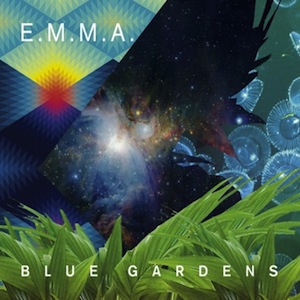
E.m.m.a. Blue Gardens

The world of grime production has a long tradition of reinterpreting classical-music tropes via the alien sounds of software synths and rudimentary garage beats. It’s a tendency that, to some extent at least, can probably be traced back to the videogame soundtracks that a generation of grime producers grew up with in the early ’90s—games that pillaged motifs from traditional folk songs or works by the likes of Bach and Tchaikovsky, stripping them down and refashioning them into 8-bit micro-dramas. Still, for all of grime’s emphasis on bass, beats, and MCs, at the heart of the production styles of scene stalwarts like Ruff Sqwad or Terror Danjah lies this same juxtaposition between classic melodic progressions and harsh electronic timbres. It’s this side of the genre that London-based producer E.m.m.a. plays with extensively on Blue Gardens, her gloriously colorful debut album. The LP is packed with creative chord progressions and timeless compositional flourishes, all of which are played out by an oddly alien-sounding orchestra of simplistic synth sounds. It sees E.m.m.a. pushing the naturally melodramatic tendencies of grime and garage to their extremes, and the result is certainly one of the more vivid and imaginative electronic full-lengths to be released so far this year.

A slightly streamlined VIP of E.m.m.a.’s 2012 debut single “Dream Phone” provides a fitting introduction to her vibrant sonic vision. Superficially, its composition of bubbling synth arpeggios, whip-like UK funky snares, and squelching, square-wave bass hits is the stuff of countless classic grime bangers. Yet structurally, with its rigid 3/4 rhythm and dense, almost regal-sounding minor-key melodies, the track feels rooted in the pixelated fantasy worlds of old-school RPGs just as much as it does East London pirate radio. This blending of naturally mismatched tonalities characterizes most of Blue Gardens‘ best moments. On “Marina,” for example, E.m.m.a. weaves layers of mournful, almost baroque melody over a delicately skipping garage beat to form one of the LP’s most engaging tracks. It’s a production that clearly shares its lineage with the dark releases of E.m.m.a.’s Keysound labelmates, but where her peers tend to leave space to build iciness and tension, E.m.m.a. packs the frequency spectrum with washed-out, fuzzy melodies, creating a tone that is far more placid and emotive. Similarly, on “Nostrum”—a joint venture with her production mentor Sully—E.m.m.a.’s measured and cinematic viewpoint has the noticeable effect of counteracting the more energetic and hard-hitting style of her collaborator. The result is a tune that reimagines the dramatic tension of grime as a brilliantly detached sort of slow-burning lament.

Amidst this backdrop of colorful digital soundscapes, the album’s only vocal cut, “Jahovia,” which features Michael West under his Rebel MC guise, becomes a fascinating centerpiece of the LP. While West’s toasting is relatively standard dub fare, when set against the backdrop of E.m.m.a.’s rich synth tones, the whole thing becomes totally otherworldly. The fuzzy, deeply textural nature of the instrumental is so removed from the usual echo-laden space of dub that West’s Rastafari references take on a completely new, fantastical existence and morph into something utterly removed from the continuum of either British or Jamaican music.

On the whole, there’s a pleasant sense of playfulness to Blue Gardens. While there’s little doubt that E.m.m.a. knows her stuff when it comes to grime and garage, one gets the impression that she relishes playing up to the idea of approaching the sound as an outsider. As the LP draws to a close, she begins to let things get knowingly absurd, blending nautical motifs with Amen-break drum workouts on “At Sea,” which slides into an album outro of sea-shanty accordions and overblown sound effects. Despite this slightly ridiculous coda, however, her approach to the music certainly works. As a complete package, Blue Gardens comes across as impressively well thought-out and refreshingly imaginative—it’s a bright flash of creativity in an already eccentric genre.

The Lowdown – This Week’s XLR8R Top 10 with Todd Terje, Shigeto, Moderat, and More

Throughout the week, a whole lot of material gets posted here on XLR8R. And while we know—and love—that some hardcore readers will eagerly pour over every single news story, interview, podcast, video, and MP3 download that appears on the site, we also realize that for most people, it’s impossible to see everything, which means that some quality XLR8R content is likely to get missed in the hustle and bustle of everyone’s daily lives. In the interest of making it easier for everyone to catch up, every Friday we present The Lowdown, a weekly wrap-up of the top 10 tidbits from our site.

1. Our latest installment of From Studio to Stage found us visiting the Berlin studio of Moderat, who described the production methods behind the trio’s new LP, II, and detailed the process of translating the music to the live arena. As it happens, this week also saw the German outfit offering up a stream of the whole album online.

2. Four Tet has rather active as of late, and continued his busy streak by giving away another one of his remixes, this one for Canadian indie band Diana.

3. Norway’s Todd Terje was behind last week’s Essential Mix on BBC Radio 1, and the entire session has been made available to stream online.

4. This week’s XLR8R podcast featured an old-school house session put together by the Greco-Roman Soundsystem, the crew behind the Greco-Roman label.

5. Our readers were particularly excited about this week’s contest, which offered the chance to score a stylish pair of sunglasses from Shwood. Enter now before it’s too late.

6. The most popular tune from our Downloads section this week came courtesy of Druid Cloak, who passed along his own “Club Cosmos Bootleg” of Mount Kimbie’s “Slow.”

7. Ahead of his forthcoming new album, Detroit producer Shigeto took part in the latest chapter of the Carsick video series and performed “Detroit Part 1” while driving through the desert.

8. Hotflush boss Scuba posted the third installment of his After Hours mix series. The hour-long offering is available to stream and download.

9. UK producer Synkro is the subject of the newest episode of the Slices video series, during which he discusses the roots of his craft, details a bit of his creation process, and explains why walking his dog has helped his evolution as an artist.

10. British beatmaker Pedestrian elected to grace our Downloads section with an edit of “Kalakuta vs. Zombie,” an Afrobeat-flavored track he originally made in collaboration with Jasperdrum.

An expanded version of the The Lowdown is also available via a weekly email newsletter. Those interested in an even more in-depth round-up of XLR8R content, including a complete listing of all the free downloads we’ve offered in the past seven days, should sign up by entering their email address below.

Subscribe to the XLR8R Lowdown

Page 1618 of 3781
1 1,616 1,617 1,618 1,619 1,620 3,781