The wake following the release of Disclosure‘s ultra-hyped Settle LP shows no signs of dissipating any time soon, as we’re once again treated to a brand-new video for one of its radio-ready singles. The clip for “F for You” takes a new direction in comparison to previous videos issued by the brotherly UK duo, showing off the multi-media stage performance of Guy and Howard Lawrence instead of a loose narrative like, say, the piece for “You & Me” the Detroit-referencing visuals for “White Noise.” It’s a nice change of pace, and gives Disclosure’s fans a special glimpse at the duo’s new live show.
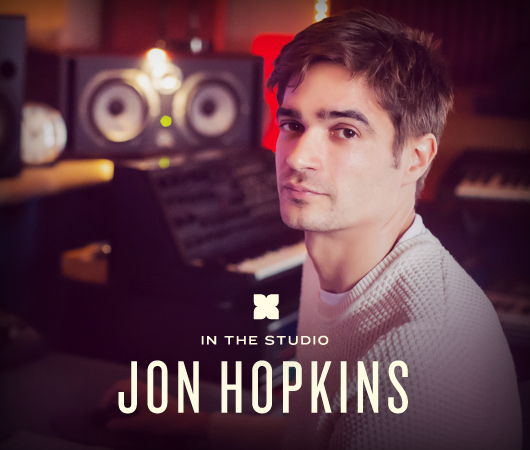
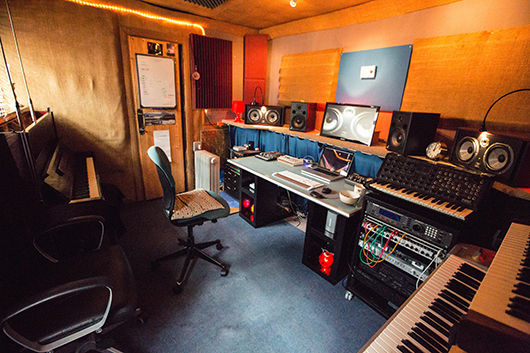
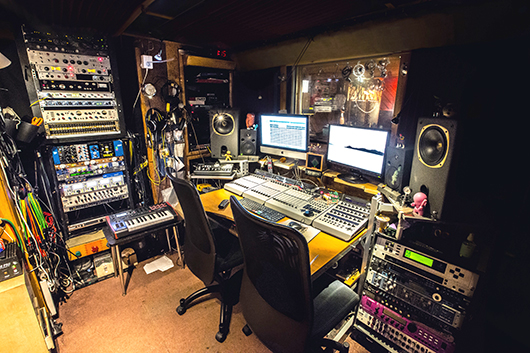
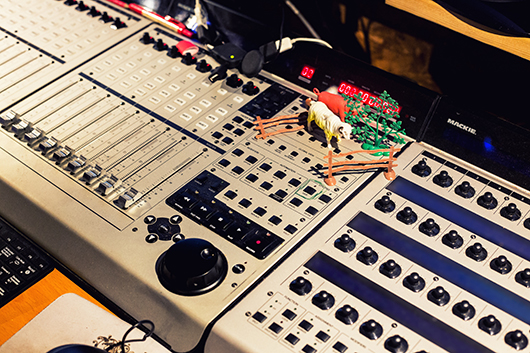
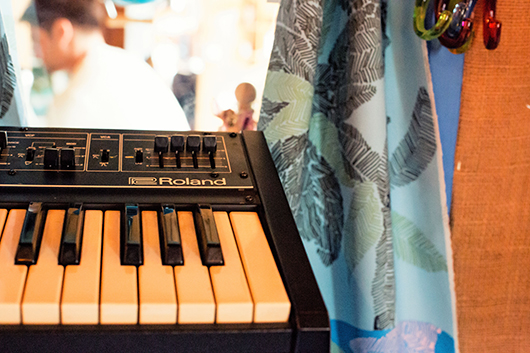
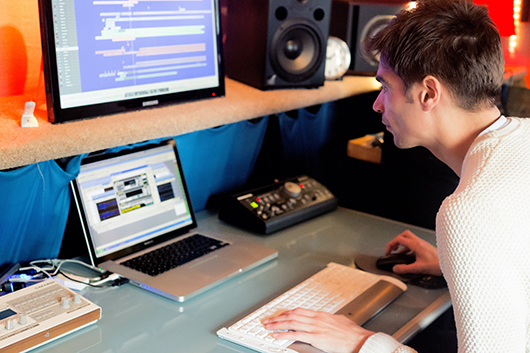
We weren’t exaggerating in the least bit when we reviewed Jon Hopkins‘ XLR8R Pick’d Immunity album and said that the UK artist is “from a school of production that values craftsmanship over most everything else.” The fact is emblazoned across Immunity‘s eight hyper-detailed tracks, as each handcrafted layer of sound design and momentary nuance is as important to the music’s staying power as its equally well-crafted beats and melodies. Ever since we heard the new LP, we’ve been absolutely curious to find out what kind of machines, software, and production work Hopkins put into his new album during the four years since he released the similarly excellent Insides, so we tracked him down at his studio in Hackney, East London to peek around a bit. We also talked with the talented producer about his love for vintage software, his favorite studio tricks, his connections with Brian Eno, his aversion to the more technical aspects of music production, and why he’ll never record over 16-bit, among other illuminating topics.
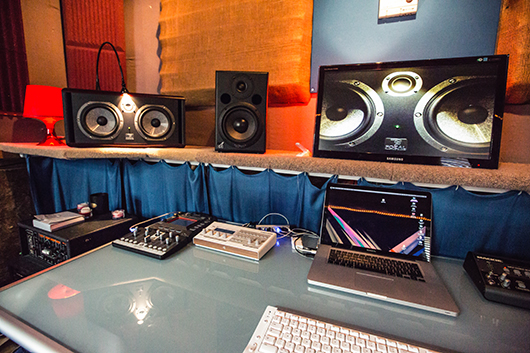
XLR8R: Just to start off, give us a basic rundown of the major units in your studio. Jon Hopkins: Yeah, so Logic is the main system that I use, but I also have Parallels on my Macbook Pro to run my old PC. I’d been running the same PC for like 10 years.
What version? Windows 98. [Parallels] is incredible because I can have the exact same PC that I’ve gotten so used to running in one window on my Mac. I wrote my last two records on the real thing, and now I’ve just compressed it into the Mac.
Which Windows programs are you using? It’s just SoundForge. Maybe I’m just stubborn about learning new things—I can’t stand learning new programs—but any sound I can imagine, I can make with SoundForge. And I’m using the old version, like 4.5 from 1999. I use it for every sound.
Every sound on the record? Pretty much. The live instruments get recorded into Logic, and then I open them simultaneously in SoundForge. I can make changes to them in [SoundForge], and those changes update immediately [in Logic] without having to save them. It’s kind of like a loophole. Logic doesn’t know that the sounds are being changed, so it just plays them directly off the drive. I’m just so used to it. I can have an infinite number of changes on a sound, with a whole Undo chain just for sound [in SoundForge] and a whole Undo chain just for arrangement changes [in Logic]. It keeps the sound and the arrangement completely separate, and I don’t understand why there aren’t programs that already do that. To me, the two things are different. They shouldn’t be part of the same chain.
How much live recording did you do for Immunity other than the piano? On this record, there are a little bit of vocals, but they’re heavily disguised. And then there are some violins, as well. Again, you wouldn’t know from the sound. At the end of the first track, “We Disappear,” there’s a kind of weird sound going up and down the harmonic scale, and that’s a violin bow going up and down a string.
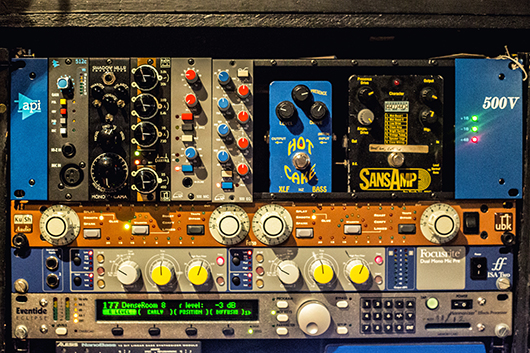
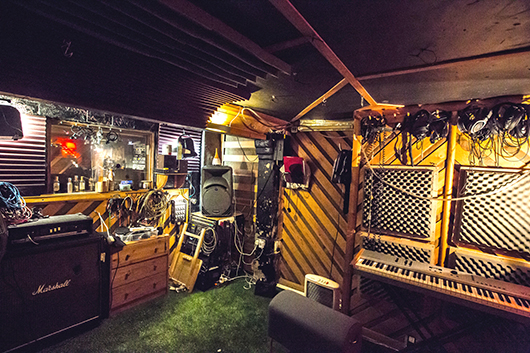
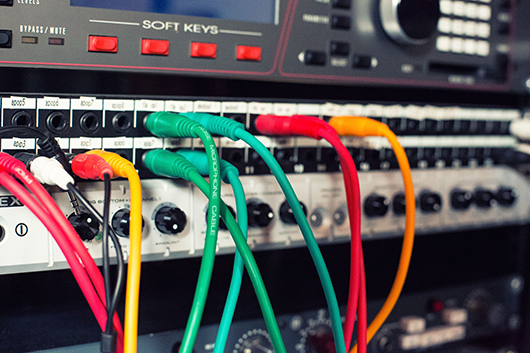
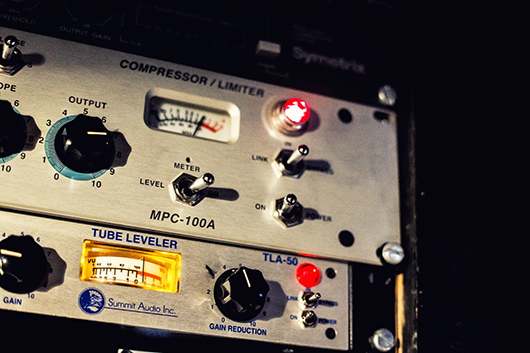
Do you do all of the live recording in your personal studio? That’s the great thing about my studio—there’s a commercial studio downstairs. So if I need to do serious live recording, like drums or anything (there are a tiny bit of drums on the album), then I go downstairs. That’s where the huge rack of pre-amps and compressors and stuff is, but part of the arrangement I have there is that I have access to all of that stuff. It’s all used on the record, but it’s not the feature.
The other great thing about being in that studio is that there are two engineers there who are kind of experts. I’m not an expert at capturing acoustic sound, so I had my mics set up on the piano by those guys. They kind of hung them from the ceiling, gave me advice on mic types and pre-amps. There’s a section in that song “We Disappear” that sounds like a choir in the background, and that’s my two string players and me all singing around one mic, which I then overlayed like 15 times. On the track “Collider,” the bass drum of the beat was made from a [recording of a] tuned tom drum that was slowed down quite a lot. That room has a really good sound, so I try to capture things in there. Sometimes we re-amp things, which is good for drums, and run things through a speaker to get a good crunch.
Who else uses that space? The downstairs room is just available for anyone to book, so there’s an endless stream of people. I mean, Brian Eno has been down there. The drums for the record he did with David Byrne were recorded down there. The band PVT comes in occasionally still. It’s been a studio for like 30 years now.
And how long have you been using it? For six years.
And it’s outside your house in East London? Yeah. For me, that’s absolutely crucial. Previously, I had [my studio] on the top floor of the house I was living in, and I just didn’t have that work/life separation. I’d get up in the morning and head upstairs to listen back to what I did [the day before], and before I knew it, it’s 4 p.m., I haven’t eaten, still in my dressing gown… Not behaving like a normal person who goes to work. [laughs] I have to get up in the morning, have breakfast, properly get dressed, and go into work. I prefer a long day of starting in the morning over working late into the night.
Do you put in like a sort of “9 to 5 shift” in the studio? At the first stages of recording, I do that. But when I get to the end and have got, like, mastering coming up, everything goes out the window. No friends, no food, nothing.
Do you dabble with mastering at all? No. I always go and I get stuck in, but I don’t really know anything about it. I know how it should sound. I always use the same guy, Guy Davie. He’s amazing. He’s done my last three or four records.
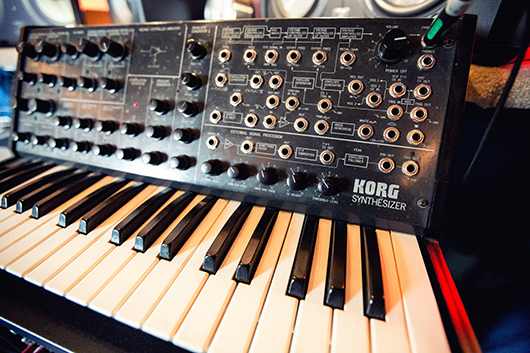
How much do you rely on your MS-20? The MS-20 is all over this album. The lead single, “Open Eye Signal,” is only that, basically. There’s a choir sound in the background, which is me singing with loads of weird processing, but it’s basically just made out of one sound. With a synth like that, the sound can evolve so smoothly and gradually. I did just loads and loads of live takes of me fiddling around with that synth, starting with one sound and never cutting to another sound. That’s what I wanted to do with that track, so it was a really singular, simple kind of thing. And that was the track that kicked off the writing of the album. It was the first one I wrote, properly, and made me realize the direction the album was going. The title track, “Immunity,” existed in an earlier form, but I kind of completely changed it.
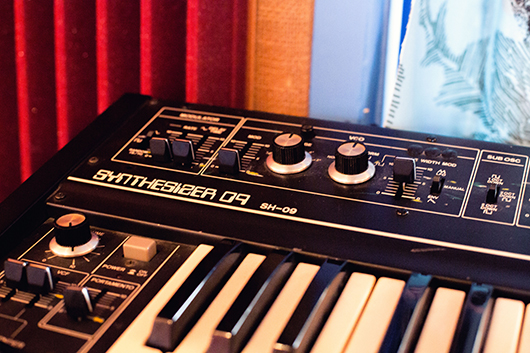
Where else did you use the MS-20? Almost all of the bass is from that, and any time you hear a techno-y riff of any sort, it’s that. I use a Korg Trinity—which was the only synth on Insides and my previous albums—a lot. I also had an SH-09 on loan. I used it a little bit for the bass, but the MS-20 is the lead synth.
Do you use the Eventide much at all? I used it so much on my previous record, and I did a little bit on this one. But I found that I could basically make plug-in chains in Logic that I prefer.
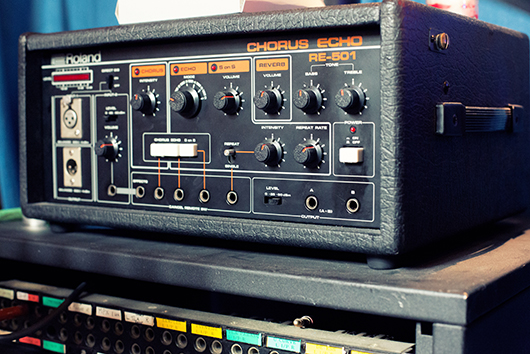
Which effects do you like better? There’s one on the track “Abandon Window” where you kind of hear the piano dissolve into the distance, and that’s basically this sort of pitch shifters into reverbs model. There’s a sound on the Eventide called Angel Echoes, and I had a tweaked version that I was using a lot. It pitch shifts an octave up with a little bit of feedback that’s another octave up, which goes into a chorus and a long reverb. It’s quite a recognizably Eno-type sound, and that was another reason why I wanted to move away from the Eventide. It was his instrument, like the DSP4000. It’s what all the amazing sounds on the early U2 records and the stranger sounds on the Apollo ambient album were made with. I was already using it on Insides a lot, and I just thought it was time to move on a bit. It’s not on this new record as much, but there are little bits. The chain I made in Logic sounds more modern to me, and that’s just using pitch shifters into Echoboy and then Altiverb with some other sidechains and weird things going on. It’s used a lot on the record.
“Modern” is definitely a word which comes to mind throughout Immunity, and there’s really not much else that sounds like the record. Was there a certain batch of plug-ins or specific processes you used to achieve that sound? It’s that combination of using SoundForge for the sheer detail of editing and rhythmic stuff you can get into there, coupled with the amazing plug-in quality you get in Logic. Some of my favorite plug-ins, like Altiverb, can be used for so many things because you’ve got all these models of spring reverbs and such in there. You put that on a sound, bounce it, slow it down, and you get these incredible harmonics. I’ve found a lot of weird sounds through processes like that. These really beautiful melodic accidents that I try to capture. The PuigTec EQs from one of the Waves bundles I’ve got bring this amazing richness to the music. SoundForge itself is very digital and very old, but if you use it to do the more obviously manipulated sounds and then put it through Logic plugins, you get this amazing combination of modernness and fuzzy warmth. There’s also the Decapitator, which is like a tape saturation. So you can have all sorts of crazy stuff playing in SoundForge, but the Decapitator makes it sound a little more physical. Another saturator I have is an old one from 1999 called Magneto. It just has this amazing effect on everything, it just takes the perfection and the shine off. It makes everything a little more dirty, a little more attractive to listen to, I think.
Are you still using this old software because you find there’s nothing new out there that compares? Yeah, for me. I’m sure people would argue with that, but I’m used to them and know how to use them better than something new. I guess I get addicted to a certain sound. When I know I want Magneto on something, I can fiddle around with any other modern plug-in, but it just won’t give me that sound. And if that’s the sound I want, there’s no point in wasting my time [on anything else]. And it’s all over the record, it’s part of its character. I’m pretty sure there aren’t going to be many other people who are bothering to use it. I mean, my PC died. The physical version of the PC that lives inside of my Mac died a long time ago.
What’s your mixdown process like? I’ve got this Aphex Aural Exciter and a Heritage audio pre-amp, but it’s basically all done in the box. I work really hard to make sure that [my mixdowns] don’t sound too much like [they ‘re done in the box], but I find that if you keep using real sources for everything—you use a real synth, a real piano, real strings, real percussion, and you’re making those noises yourself—then it still has that physical sound. The second you go into one of those virtual instruments, then it’ll sound “in the box.”
Another key thing for me, which is maybe a bit controversial, is that I never record above 16-bit. Everything I’ve ever done is 16-bit and 44.1 khz, I never go higher.
Really? Why is that? Firstly, I just don’t care. I don’t think [anything higher] makes it sound better. I think it makes it sound higher quality, shinier, and more accurate, but in my opinion, it sounds less emotional. Sometimes I hear records that are being recorded at the absolute highest quality, and I just don’t like the sound of it. I mean, for some things it’s right, but maybe one in a hundred thousand people will notice. I’m hoping to start dabbling with surround sound, so I’m up for that form of expansion, but with sample rate, I just don’t like the sound as much. Simple as that.
Would you say you’re a less technical producer than most? I go pretty deep into editing and programming within the system of SoundForge and Logic, but everything else around that doesn’t feel like music to me. Setting up a new Mac or setting up a virtual PC or choosing microphones doesn’t feel like music. My brain is incredibly focused and stubborn and ignorant, and likes to remain ignorant of those kinds of things. If I was just doing solo music and not film scores and stuff like that, I wouldn’t need an assistant who’s really on the ball with all the technical stuff.
What about working with synth patches and tweaking effects, does that feel like music to you? Oh, yeah, that is music for me. I have to be hearing something immediately to get excited enough to do it. All the musical processes I do myself, and the effects are my favorite, to be honest. I love to play a part, start manipulating it until it’s something else entirely, and then mix the original part back in. It makes this sound that has kind of a ghost of itself in the background somewhere. And I love to get really detailed with the beats, that’s my favorite. I’ve been recording stuff for 12 years now, and in that time, I’ve gotten used to what works for me. For me, the most important thing is to keep everything moving very fast, so when I have an idea, I can realize it and make it audible as soon as possible. If you have one of those amazing days where you hit a massive riff, it’s the best feeling in the world. Nothing can touch you when you’re in that mood, you’re just so ecstatic.
Brooklyn label Dutty Artz is putting the final touches on its latest project, a 12-track compilation called Geko Jones and Atropolis Present: Palenque Records Remixed which simultaneously celebrates the roots of Afro-Colombian music while giving those sounds new life on contemporary dancefloors. For their project, Geko Jones and Atropolis teamed up with artists on Colombian label Palenque to create and send recordings of Palenquero music—which has a rich, 400-year history—to be remixed by handpicked producers associated with Dutty Artz. Geko Jones’ remix of “Sambingo” sees the Brooklyn-based producer pairing traditional Palenquero call-and-response vocals and drumwork with booming kicks and an array of synths that gives a satisfyingly modern twist to the folksy music. Before Dutty Artz drops the compilation on June 25, a teaser video for the upcoming release can be found after the jump.
Even during the genre’s mid-’90s heyday, it was clear that Mike Paradinas‘ vision of IDM had as much interest in the D as the I. His music was frequently cutting edge while still being unabashedly melodic, groove driven, and occasionally tongue in cheek, offering a cheerful shrug and a hearty pat on the shoulder where others doled out a shove or a smack to the head. Albums like 1997’s revelatory Lunatic Harness and 1999’s underrated Royal Astronomy radiated the sense that the producer’s sounds were less built to shake foundations and more purposed to just sound fun. Of course, in Paradinas’ case, fun meant post-jungle rhythms that constantly threatened to break apart or bass hits that would have sounded janky coming from a Colecovision. Controlled chaos was Mu-Ziq’s specialty.
In the six years since Paradinas dropped Duntisbourne Abbots Soulmate Devastation Technique, a succession of newer names have picked up his mantle, filling in the void that his minor hiatus left and populating his Planet Mu label with their own wave of post-rave energy. Now that Paradinas is back to recording as Mu-Ziq, the possibility of an aging-innovator personality crisis has come into play. And where this spring’s XTEP EP was a mild, low-key paring-down of his old tics and tricks into something decidedly calmer, Chewed Corners aims to more ambitiously streamline Paradinas’ influences, peers and heirs alike.
What’s missing from that blend, however, seems to be Paradinas himself. Coming into Chewed Corners expecting runaway jackhammer snares, charismatically nauseous melodies, or anything more leftfield than the MOR-IDM precedent of XTEP will leave expectations dashed. On albums classic and otherwise, the one thing all Mu-Ziq efforts had in common was that they sounded like Mu-Ziq, no matter how frantic or measured (or, frequently, both) his musical direction was headed at that time. But so many things have been synthesized into Chewed Corners from so many sources and ideas that any sense of direction, reaction, or engagement with the cutting edge is markedly less adventurous than most releases on his own label.
It’s a worrying sign that things are off when a track like “Mountain Island Boner” (well, at least he still has a way with a song title) sounds like a direct homage to The Alan Parsons Project’s “Sirius.” Admittedly, it’s the most nakedly derivative moment on the record, but most other cuts still feel like they’re originating from somebody else’s portfolio. “Taikon” and “Gunnar” pull off some skillful juxtapositions between hovering, slow-moving ambient chords and backgrounded snare rolls, but the results are not much different from what any number of today’s bedroom-studio kids are doing more recklessly and iconoclastically with vaguely Memphis-rap-tinged bass music. A couple of throwback tracks—the Orbital-inflected “Houzz 10” and the euphoric tech-house anthem “Weakling Paradinas”—only add to the problem, as they reveal both a deep well of historical inspiration and an apparent lack of interest in transcending it past the point of loosely updated reverence.
That said, if Mu-Ziq isn’t completely himself on Chewed Corners, then whoever he is can at least be both crowd-pleasingly versatile and subtly direct at the same time. Those aforementioned throwbacks are straightforward, but they work on a level that reveals just how deeply Paradinas knows the ins and outs of what makes tracks like those so stimulating. And just because the more eccentric tendencies have been pared down, that doesn’t necessarily mean they’ve been eliminated. The seesaw grind of “Christ Dust” and space graveyard cruise “Feeble Minded” are welcome flashes of strangeness, and hearing Paradinas go in on some of bass music’s current tropes like the faux-Rustie electro-pop of “Wipe” or the sleek cloud grime of “Twangle Melkas” are uncharacteristic in ways that point towards a continued forward development in his sound. If Mu-Ziq’s shaken off what made him so distinct in previous decades, there’s still the intrigue of how he’s going to re-evolve without post-hiatus expectations looming over his head.
French trio Aufgang seems to have a knack for combining synthetic and classical sounds, as likely to use a grand piano on stage as an analog synthesizer. However, this remix of “Kyrie,” by fellow countryman Phonosheet, pushes Aufgang’s track off the cliff into acid territory. Synth arpeggios are filtered into squelches, and cascading, wordless vocal clips are fitted over a clean, hypnotic drum pattern recalling techno’s roots. The balance of energy and prowess offered here was enough to land Phonosheet’s production the winning slot of Aufgang’s recent remix contest, though maybe it would be best experienced as part of a proper DJ set rather than a standalone tune.
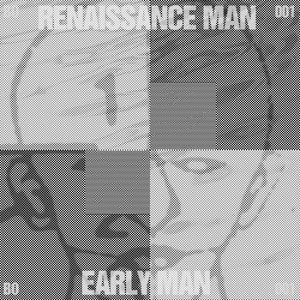
When we last checked in with Renaissance Man back in January, the Finnish duo had just released its Call2Call EP, a six-track offering of dark, inventive, percussive, and bass-heavy club music via Turbo. A lot has happened in the five months since then, however; the pair has been hard at work creating its very own label, Black Ocean, as well as that venture’s three-track inaugural offering: Early Man.
The record gets off to an exciting start with the first track, “UFO (Who R U),” which opens with loud, squealing samples that slowly coalesce with a dark and foreboding arpeggiated lead as bouncing drums and dark, swirling bass churn in the background. Suddenly, Renaissance Man ups the momentum, meticulously sprinkling in short fills and unexpected snare strikes. Of all the elements at work, the call-and-response samples (which are immediately recognizable as the same ones used in Rob Base’s 1988 rap hit “It Takes Two”) are just about the only things in the track that stay relatively constant. “UFO (Who R U)” is an off-kilter affair, but its chaotically organized atmosphere and interesting use of melody are very much in keeping with what made Call2Call such an interesting listen.
That said, the rest of the EP doesn’t quite take the same direction. “Early Man,” the record’s midpoint, is much more grounded than its predecessor, and slowly builds upon a pulse-like bass throb, maintaining a steady bounce as hi-hat rattles and an infectious whining synth melody are slowly piled on. The track doesn’t really go anywhere beyond that, though it is certainly an enjoyable listen, even if it’s a little stripped down and simplistic by Renaissance Man standards. “Hard Feeling” livens things up a bit—and perhaps steals the show—with its snappy backbeat, which comes replete with glitchy clicks, snips, and buzzes, all coupled with a distant lead forged from gliding synths.
If there’s one thing that is apparent about Early Man, it’s that Renaissance Man doesn’t underutilize its talent when it comes creating melodies; whereas the melodies on Call2Call were often subdued (and sometimes snuffed out before they could really develop), Early Man‘s three tracks give this aspect of the music breathing room, and occasionally even place them at the forefront of the productions. It’s a new—and more accessible—direction for Renaissance Man, and, if the duo chooses to continue pursuing it, tracks like “Hard Feeling” certainly make for a strong start.
Locked Groove‘s “Keep Thorough” served as a highlight on Turbo’s somewhat inexplicably Miami-themed compilation earlier this year. Now, placed under the microscope again on its very own 12″, the stripped-down house tune still proves to be a worthwhile effort, especially when joined by reworks from Dutch duo Juju & Jordash and budding Montreal resident Iron Galaxy.
If Locked Groove has demonstrated anything with the continuous stream of records he’s penned so far this year, it’s that he is certainly no one-trick pony. “Keep Thorough” continues to carry that torch, showing the Belgian producer’s ability to spin sunken house grooves and quasi-tropical percussion seamlessly into his production sphere. It’s not that the end result sounds completely unlike any other Locked Groove production, but “Keep Thorough” is certainly a bit of a sidetrack from the man’s more usual fare, albeit one that still fits the man’s reputation for delivering loaded dancefloor excursions.
While the original track finds Locked Groove letting a bit loose, the normally adventurous Juju & Jordash duo actually seems to tighten up on its remix contribution. The pair creates a sharp rhythmic grid that holds the track together tightly between a deeply stretched bassline on the bottom and gorgeous, organ-like synth pads on the top. Iron Galaxy takes a similarly direct path with his rework, dipping Locked Groove’s churning rhythms into a bath of hi-fi gloss, but still electing to hold the tune’s high-end elements up using a bevy of analog tones.
When all is said and done, it can be hard to choose a highlight from the three separate versions of “Keep Thorough” presented here—each strikes a similar vibe while taking enjoyably distinct paths to get there. Perhaps this is just one of those rare cases when a months-old track and its two accompanying remixes actually make for a rather essential 12″ record.
XLR8R Couldn't find the embed function for type: "vimeo" and source: "<iframe src="http://player.vimeo.com/video/67773794" width="530" height="298" frameborder="0" webkitallowfullscreen="" mozallowfullscreen="" allowfullscreen=""></iframe>".
After releasing his If I Tell U LP via Williams Street last month, Brooklyn-based producer Phaseone has just unveiled a new clip for album highlight “Hunter.” The five-minute video, directed by Daniel Garcia, follows a young woman’s getaway from her town, all the while blending bold realism with more fantastical elements.
With her new Dimension D LP—which landed as a full stream earlier this week—set to drop next Tuesday, Dinky is already revealing plans for a new single which will come with a pair of remixes from Norwegian space-disco mastermind Prins Thomas (pictured above). The “Blind” 12″ will include the stripped-down original version of Dinky’s album cut along with a “Diskomiks” and a “Dub” rework credited to Prins Thomas. Additional remixes by Hreno and The Mole will also be included on Dinky’s “Blind” single when it drops on July 29 via Visionquest. The forthcoming record’s artwork and tracklist can be found below.
01 Blind 02 Blind (Hreno and The Mole’s MHMD Remix) 03 Blind (Prins Thomas Diskomiks) 04 Blind (Prins Thomas Dub) 05 Blind (MHMD Ambient Yacht Mix)
“Real instruments and analogue sounds need to come back into dance music,” exclaims notoriously funky German producer Munk (a.k.a. Mathias Modica) in the press release for his upcoming EP. In preparation for Dirty Glam Jams‘ release via Gomma on July 5, Modica has shared the second track from his five-track effort; “Nigerian Jam” pays homage to its namesake, a groove built around sun-drenched, Afro-funk-inspired rhythms that rises from its humble opening after a tumultuous horn blast makes an unexpected appearance. Munk’s vintage sounds stay true to his aforementioned goal, as the producer blends a wide array of traditional funk instruments with a steady, unfolding house groove.