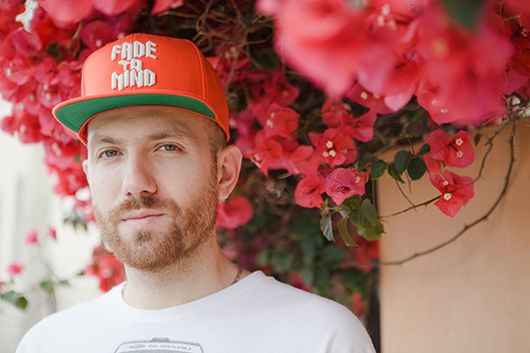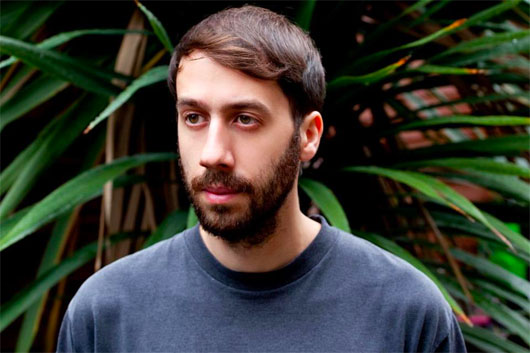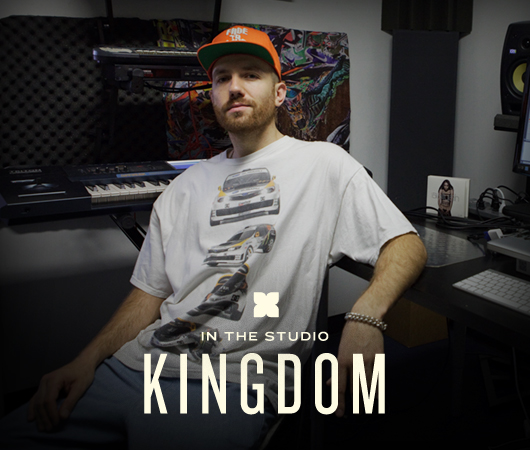
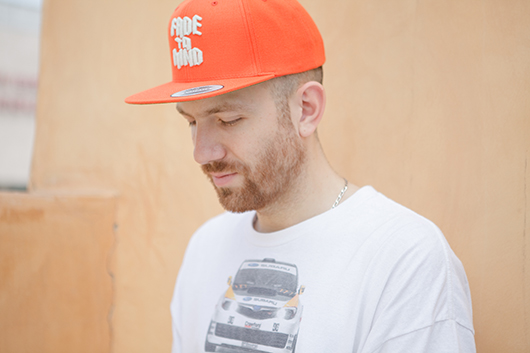
After building up his production career and becoming a flagship artist of the Night Slugs stable while residing in New York City, Ezra Rubin (a.k.a. Kingdom) relocated to the sunny city of Los Angeles, eventually landing in the Koreatown studio space he now shares with his Fade to Mind partners Nguzunguzu. After a somewhat quiet 2012, Kingdom’s Vertical XL EP saw the man return to form with seven forward-leaning tracks, led bythe particularly enrapturing lead single “Bank Head,” which features an appearance from rising vocalist Kelela. With that EP recently behind him and a volume for Night Slugs’ Club Constructions series on the way—not to mention a few productions for Kelela’s forthcoming mixtape—we paid Kingdom and his Los Angeles studio a visit, discussing how the producer developed his mixing chops and why he decided to evolve beyond being just a laptop producer.
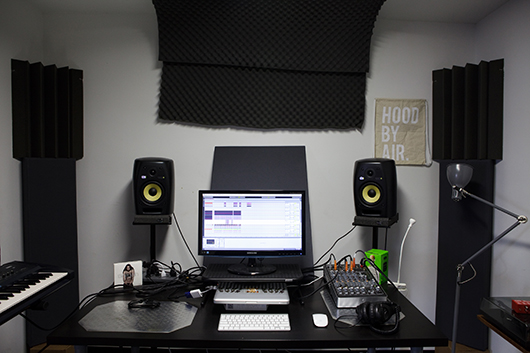
XLR8R: How long have been in this space?
Kingdom: I think about six months now.
Before then, did you have another studio or were you just making music in your apartment?
When I was in New York, I literally just had a laptop and a MIDI controller in my house and I was happy with that. I was just one of those people that was afraid to try new hardware or add anything else [to my set-up]. I had a couple of keyboards that I would work with sometimes, but really not that much. Then, a little over two years ago, I moved to LA and was set up pretty much the same in my new house, and I didn’t realize until a whole year had passed that in LA, that just wasn’t working for me—I wasn’t making any music. My little 12″ laptop was stifling me. That was part of the reason for the big delay between my EPs. Dreama came out in 2011, and then between doing a lot of work on the [Fade to Mind] label and the fact that I really didn’t have a good set-up, it just really set me back. Finally, when I realized that I had to put something out and I needed to find a proper space to create in, I rented a little studio in Glassell Park, in this kind of industrial area of LA, and that’s where I wrote most of the Vertical XL EP. Then, around the time I was finishing that up, I moved into this studio because it was just a better situation, especially being able to share the space with Nguzunguzu.
What do you think was the difference between New York and Los Angeles that made it so just using a laptop would not cut it any more?
I think I just grew up, and the limitations of working strictly on a 12″ laptop didn’t get to me before. But I was also experiencing creative block, and I needed a change, and I needed to have more space and more hardware so I could actually play music and jam with myself. It was never really like this before, but for whatever reason, here in LA, I’m much more likely to get distracted at home—which is pretty normal, I think.
Do you have a particular element or routine that starts the creative process for you?
Drums are always the beginning. I’m a drummer at the core, so I’m obsessed with different drum kits and drum samples, so that’s usually where I start—tapping out drums.
So you have a particular rhythm in your head before you start?
Sometimes I’ll hear some rap song on the radio and I’ll make a little note to try to make a Chicago house version of that new Lil’ Wayne song or something dumb like that—just an idea that fuses a few different things together. Then I probably won’t even bring that note up when I create, but those little concepts will still feed into the process. But there is a certain amount of imitation that I do too, where I’ll be listening to a record and it will make me want to start making a slow jam or a club track or whatever. A lot of my ideas come out of my listening experiences.
When you say you’re a drummer at the core, did you play drums growing up?
Yeah, I actually used to play drums. My dad got me a really shitty, weird old drum set when I was 12 or 13. I took lessons for a bit, but that didn’t really work out, so I kind of taught myself. I was also always really into keyboards, so I was experimenting with the drum sounds on my keyboards during my teenage years.
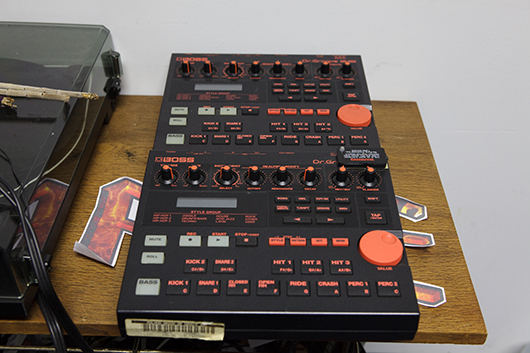
How have you acquired your library of drum sounds? Do you sample from records or trade samples with friends?
It’s been really random. I used to have Reason on an old computer of mine, so I have all the Reason drums from, like, 2007. That covers a lot of the basics. I’ve occasionally downloaded stuff or shared sounds with Nguzunguzu. Some of the sounds I’ve played directly from keyboards and then resampled them.
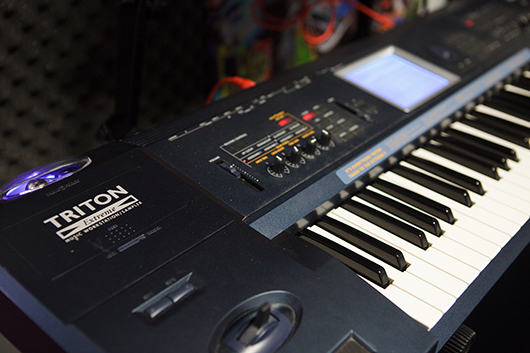
Like the sounds that come with your Korg Triton?
Yeah.
How long have you had the Triton?
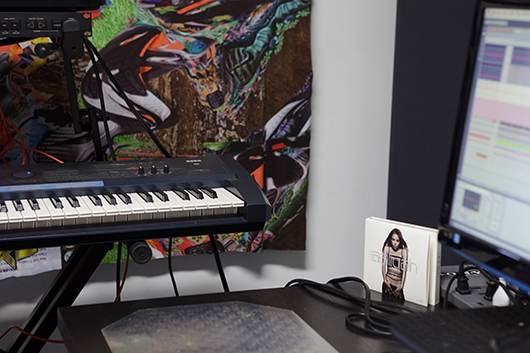
Basically, in the moment when I realized that I had to make an EP and I had to get a studio, my impulse was to buy a Korg Triton right then. I had grown up on the Korg M1, so the Triton made sense. But it was about a year ago when I got that keyboard and a studio, and started making the Vertical XL EP.
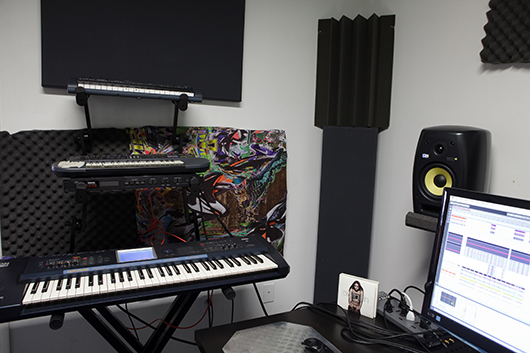
Now, it sounds like you’ve made it a point to incorporate more hardware elements into your productions. Where does that come into the process of making a track?
Like I said, I’ll sometimes jam some drums out on the keyboard and then mess with it after. But in terms of melodies and chords, just having a full keyboard allows me to play stuff live. A lot of the melodies on Vertical XL are live—I just did a bunch of takes and then picked the best ones and chopped them up.
And are most of those sounds on the EP then coming from the Triton?
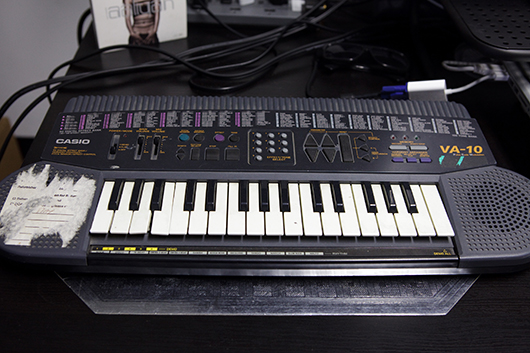
Yeah, a lot of that is from the Triton, and then I have this Casio that is used for just the occasional little detail. On Vertical XL, I didn’t use a lot of that, but I’ve used it for a bunch of other tracks and remixes though. It has a lot of sound FX and some weird, smaller sounds that I use a lot. I bought that keyboard for $5 on Canal Street [in New York] in 2003. It’s actually an amazing keyboard, it has all these FX that most little Casios don’t have—reverbs, choruses, flangers, stuff like that. Of course, they aren’t the best reverbs, choruses, and flangers, but it’s just junky enough to give it a really unique sound.
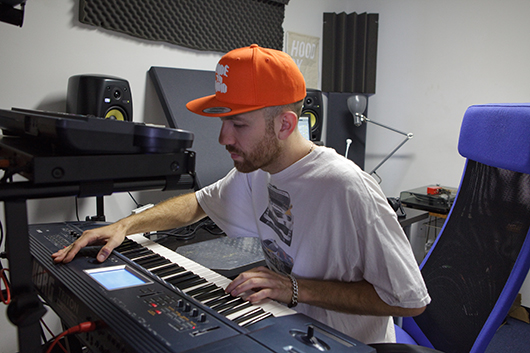
How long does it take you to complete a song? Are you the kind of person that gets flashes of inspiration, or is each production more of an ongoing process?
I’m definitely the slow type. It’s kind of like a leapfrog effect, where I make something and then I have to forget about it; I have to let it vintage itself somehow, that’s the only way I feel satisfied with it. If I’m drawn back to something I did three or six months ago enough to want to work on it, that’s my sign that it is something I should put effort into. I rarely can just move through and finish something. I like to let tracks simmer and think about them, listen to them on my headphones and make notes about them, and then go back to it. With a lot of my newer songs, I’ll go back into sessions from 2008 and grab a whole Ableton track that has the sounds and FX and then use them again. I like to leapfrog like that so that there are connections between my songs. Still, there’s always a lot of refinement. It takes a year for me to make an EP it seems like.
And you mix and do all those tweaks in the box yourself then?
Yeah, I do all my own mixing. Bok Bok really taught me how to do it, especially on my first two EPs. He helped me mix That Mystic and Dreama, and he’s the one who taught me about a lot of the mixing techniques I use now—even just the simple stuff like making sub-basses mono, creating stereo width, using EQ, and even how to make a proper pre-master where you don’t have the master channel limited or in the red if you’re going to send it off to mastering. With this new EP, I was pretty much on my own in the studio, just listening to it over and over again.
How much of your process do you think is the actual mixdown? Not composing, but going back and tweaking the audio and fitting everything together?
I wish it wasn’t, but I’d say it’s a good half of it. It really feels like the last six months of making Vertical XL involved very little composition, just mainly mixing. With the lead single—”Bank Head” featuring Kelela—I have no training in terms of vocal recording or engineering, so I really had to teach myself that. It was a really challenging process because I wanted the vocal to sound like it was from a major-label record, like a Brandy or a Mariah [Carey] vocal. I just learned by continuing to tweak and tweak until it sounded that way. That was the most time-consuming part; I had probably 50 different vocal tracks layered together. If you count from the time I made the instrumental until the time it was done, that took about two years [to complete].
And after all that, are you happy with how it came out?
I am! [laughs] But I’m really glad I made the last adjustment I did because there was something in the 2-kHz range that was really harsh, and just before I sent it into mastering I did one final tweak and then I was happy with it. It’s really hard to know how to balance the instrumental and vocal relationship—you want it to stand out, but you don’t want it to sound too on top. I spent what felt like an infinite amount of time slightly changing the level of the vocal versus the instrumental.
Mixing in this room, do you have a sub as well or do you just rely on your KRK monitors?
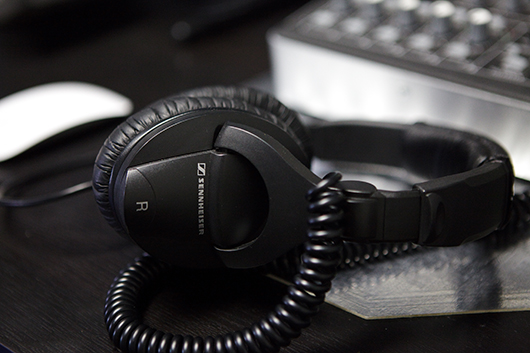
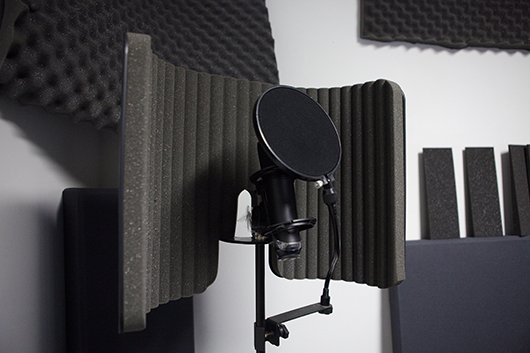
I don’t have a sub. I’m actually not that happy with the room I’m in as far as the sound is concerned. It’s square, which I’ve heard is pretty bad, and I find the acoustics really strange. I’ve tried to treat the room a little bit, but I really don’t know what I’m doing. But I do know that where I sit to work, there is no bass, then if I move back a foot, there is an insane amount of bass. So I always put on my Sennheiser headphones and bring what I’m working on into my car to hear what it really sounds like. I have a lot of friends that use a sub in a studio, but I feel like I want my music to sound really good on most people’s stereos, which usually doesn’t have a sub. I test the sub frequencies in the clubs, and these Sennheiser HD-280 headphones have a really good sub response, so I can do a lot of bass work with these on.
In the end, it sounds like the mixing process can be a little frustrating and time consuming for you, but is there something about it you really enjoy too?
I wouldn’t say I enjoy the time-consuming obsession that it takes, but I’m really happy with the results because I like what I do with it. I don’t know if I handed the stems over to someone whether I could really be satisfied with what they did with my songs. It’s also a process of learning, which is really exciting too. I do wish it just took less time, and I wish sometimes there was someone else there to be like, “Okay, Ezra, you need to stop going back and forth on this one EQ for an hour.”
Earlier you had mentioned using Reason on an old computer, but it looks like you are mostly an Ableton user now?
I actually started with Pro Tools a long time ago, and then I probably only made a few songs in Reason; it was more of a short phase where I was trying it out. Then around 2006 or 2007, I got an Ableton demo and—I’d been making music for a long time before then—but Kingdom kind of started with that moment and with Ableton Live because I made my first mixtape with it. I figured out how to warp vocals and combine things—like laying an R&B vocal over a UK garage track. Whatever kind of blends I was doing for my mixtapes, that was how I learned Ableton and that’s what really got me into the program. It all moved forward from there.
It sounds like you are still in the process of putting your studio together, is there any particular thing you’d like to change or are planning to upgrade in the near future?
Yeah, I actually do want to grab a bunch of hardware drum machines. I like the drum sounds that I have, but I’m ready for even more variety. I’ve felt a little anxious about where to start though because I feel like for the most part there are only three good sounds in each machine, which can make hardware not the best investment. I’d really like a rectangular room at some point too. Nguzunguzu’s room next door is a longer room, and the way the sound bounces around is much more pleasing to the ear. It’d be nice to have something with a more optimal shape at some point.