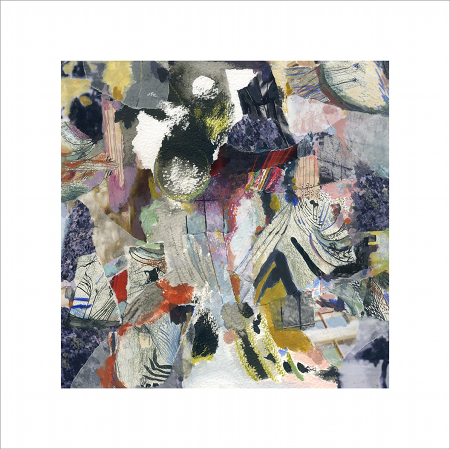
Just after longstanding technoist Anthony Child (a.k.a. Surgeon) announced his first collaborative release with Blawan as Trade, the DJ/producer shares more news of a solo full-length album crafted under his given name, called The Space Between People and Things. Comprised of music Child has been working on for the better part of the last two decades, The Space Between People and Things is said to highlight the negative space between the “molecules within the sonic textures and frequencies,” and consists of “location recordings, tonal experiments, and thought-forms from many different positions in space and time.” Quite literally, Child says of his new LP, “It is the sound of the space between people and things.” NNA Tapes will release Child’s record—which consists of two “side-long pieces” called “The Space Between People and Things”—on March 5.
Hans Joachim Roedelius, a founding member of pioneering experimental Krautrock group Cluster, has announced plans to compile an album’s worth of unreleased material spanning from 1990 to 2011. Set to see a release next month through Japanese label Mule Musiq, Selected Pieces 1990 to 2011 incorporates 11 songs hand-picked by label head Toshiya Kawasaki from the wealth of Roedelius’ unreleased material. Though we have yet to see the artwork for the veteran artist’s new record, you can check out the tracklist for the collection below before Selected Pieces 1990 to 2011 drops on February 18.
01 per se 02 out of the dark 03 vienna 2020 04 coulours 05 by the way 06 endless 07 once upon 08 quasi 09 frolic at six 10 ultimate feeling 11 as simple as
London-based DJ/producer/label head Joy Orbison is set to tour much of the East Coast, Canada, London, and Switzerland in the coming months, making up cancelled North American dates from last year’s tour with Ben UFO. In addition to the reconciled events, the artist will stop in Brooklyn to play back-to-back with current Nonplus label boss and frequent collaborator Boddika at an as-yet-unannounced location. The two producers most recently worked together on “&Fate” for the Think and Change compilation for Nonplus, though the duo have already released a considerable amount of material throughout last year (and subsequently nabbed a couple of spots on XLR8R‘s Best of 2012 lists). You can check out the dates, which begin on February 8 in Montreal, below. (via Resident Advisor)
February 8 – Igloofest, Montreal (Canada) February 9 – Wrongbar, Toronto (Canada) February 10 – U Street Music Hall, Washington DC (US) February 14 – Smart Bar, Chicago, IL (US) February 15 – TBA, Brooklyn, NY (US) February 16 – TBA, Miami, FL (US) February 22 – Liquid Room, Edinburgh (UK) February 23 – Oval Space, London (UK) March 23 – Hinterhof, Basel (Switzerland) March 31 – Canal Mills, Leeds (UK) May 4 – Oval Space, London (UK) May 25 – Damyns Hall Aerodrome, Upminster (UK)
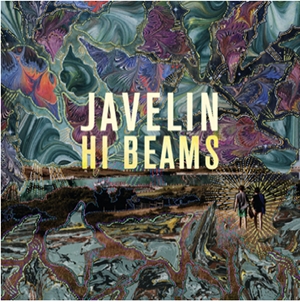
The bi-coastal sound scavengers of Javelin have announced they will drop Hi Beams, the duo’s sophomore LP, on March 5 via David Byrne’s Luaka Bop label. Ahead of the release, cousins George Langford and Tom Van Buskirk have shared a free download of their forthcoming record’s lead single, “Nnormal.” While Javelin’s previous music, like “Off My Mind” from 2010 LP No Más, was recorded at the artists’ homes, Hi Beams is said to be the pair’s first traditional studio album, taking the process a step up to include “proper microphones, a vintage mixing desk, an array of amplifiers, and real plate reverb.” You can check out the artwork and tracklist for Hi Beams, as well as download “Nnormal” for the price of an email, below, where you’ll also find a list of live shows the duo has planned for the coming months.
1. Light Out 2. Nnormal 3. Judgement Nite 4. Airfield 5. Friending 6. l’Ocean 7. Drummachines 8. City Pals 9. Garth Hudson 10. The Stars
1/31 – Baltimore MD – Floristree 2/1 – Brooklyn, NY – Shea Stadium 2/2 – Providence, RI – Machines With Magnets 3/19 – Allston, MA – Great Scott 3/20 – Montreal, QC – Drones Club 3/21 – Toronto, ON – Parts & Labour 3/22 – Cleveland, OH – Grog Shop 3/23 – Chicago, IL – Empty Bottle 3/24 – St. Louis, MO – Cherokee 3/25 – Louisville, KY – Zanzabar 3/26 – Atlanta, GA – 529 3/27- Raleigh, NC – Kings Barcade 3/28 – Washington, DC – Black Cat
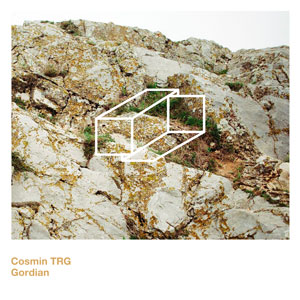
Following 2011’s notable—albeit frequently dissonant—Simulat LP, Cosmin TRG has anounced that he will soon release his second full-length album for Modeselektor’s 50Weapons label. Called Gordian (a reference to the fabled Gordian knot), the LP will find the Romanian producer exploring themes related to the age-old myth, such as “discerning between real and replicated, authentic and contrived… the necessity of ‘making it’, fear of failure, fear of ‘not being happy.'” Though Cosmin TRG’s album won’t see a release until late April, you can preview a clip of one of its tracks, as well as view the artwork and tracklist, below.
01. New Structures For Loving 02. Gordian 03. Desire Is Sovereign 04. To Touch Is To Divert 05. Defeated Hearts Club 06. Divided By Design 07. Semipresent 08. Epsilon, Epsilon 09. Noise Code
UK experimental-pop trio Darkstar is still a few weeks away from releasing its second LP, News from Nowhere, via Warp, but the band has nonetheless shared a full stream of that 10-track album today. In the player below, you can listen to Darkstar’s latest record, but there’s something of a catch. As Warp puts it, “Take your time, immerse yourself. For this reason, skipping tracks is disabled.” Look for the official release of News from Nowhere on February 5.
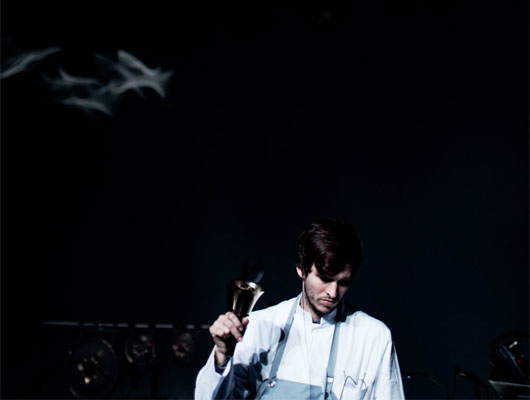
Today, London DJ Steve Bishop (pictured above) dropped a rare edit under his Oneman moniker, a catchy rework of The xx‘s “Chained.” Bishop throws an enticing 119 bpm house rhythm over The xx’s begging vocals, while a fastidious bassline quietly drives the tune forward. In other Oneman news, Bishop has announced his plan to self-release his next DJ mix, Solitaire Vol. 1, on January 28 through his website. “The tape was a gamble, really, mostly off-the-cuff mixes,” the artist said in a press release, adding that the mix represents “a game of subsonic solitaire where risks sometimes pay off.” And if that’s not enough, beginning on February 25, Oneman will hit the road on a 10-stop tour of the UK and Europe, with details of some US dates to be announced soon. You can check out the currently announced dates after the jump.
15th Feb Rainbow Warehouse, Birmingham, UK 16th Feb The Croft, Bristol, UK 19th Feb Rescue Rooms, Nottingham, UK 20th Feb Depot, Leuven, Belgium 22nd Feb La Machine, Paris, France 23rd Feb dollop x Standard Place, London 26th Feb Tuesday Club, Sheffield, UK 28th Feb Shipping Forecast, Liverpool, UK 1st Mar St. Judes, Glasgow, UK 2nd Mar Canal Mills, Leeds, UK
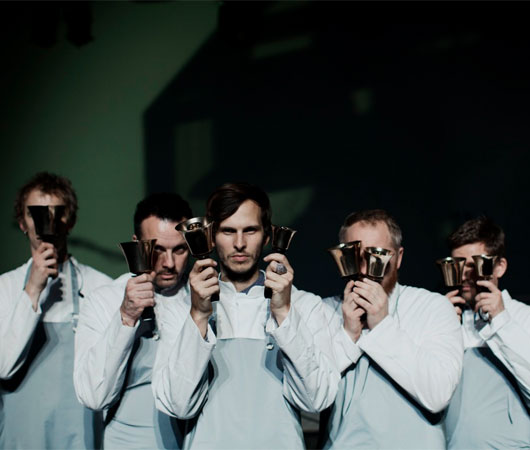
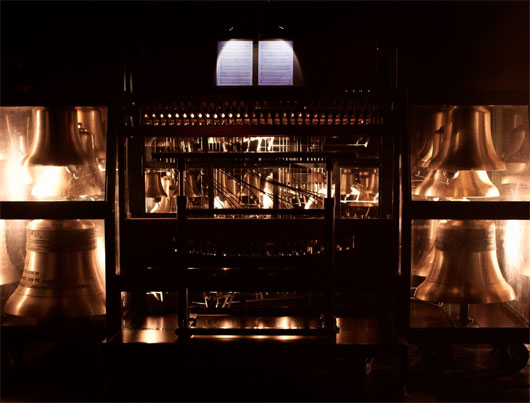
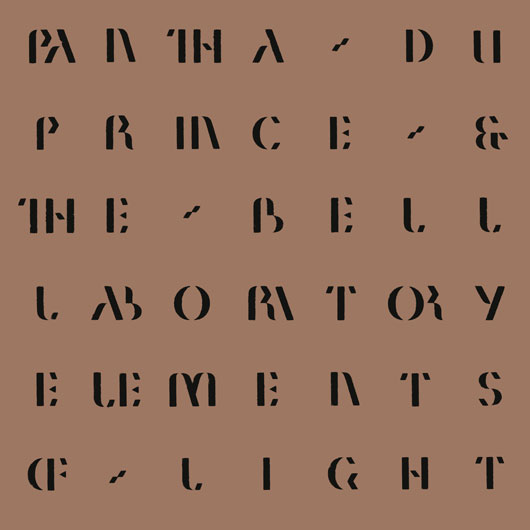
Sometime in the summer of 2010, Hendrick Weber (a.k.a. Pantha Du Prince) was eating lunch with some friends in Oslo when he first heard the cacophonous tones of the carillon. Originally of ancient Chinese descent and later adopted by Europeans in the Middle Ages, the carillon is a towering instrument which incorporates at least 23 (but often up to 50) bronzed bells. Shaped to various sizes, the bells are played with a series of keys and foot pedals, not unlike a traditional pipe organ. Hearing the carillon during one of its daily “concerts” from within the Norwegian capital’s city hall, Weber was struck by the rich interplay of resonances and unpredictable overlapping of frequencies, so much so that—with a little encouragement—he decided to build an ensemble and ultimately an album with the massive instrument as the centerpiece. The result is Elements of Light, a record that places Pantha Du Prince’s efficient electronic productions within a world of melodious clanks and highly orchestrated live percussion; it’s also the German artist’s most ambitious undertaking to date.
In truth, it seems safe to say that Weber has always displayed an affinity for bell-like tones in his music. For instance, his definitive Black Noise LP often placed vaguely melodic percussive sounds at the forefront of its tracks, along with memorable patterns of chimed notes and crystallized melodies. In that sense, incorporating the complex bell tones of the carillon was a logical progression, but not one that Weber initially knew exactly how to bring into his work. Eventually, he decided that it was not enough to merely record and sample someone playing a carilion, but he wanted himself—and an audience—to be able to interact with the enormous and antiquated instrument. More importantly, he wanted listeners to understand that these tones were not born of a piece of software, but an instrument weighing well over two tons. Somewhere, the concept became obvious to Weber, “I was suddenly like, ‘Okay, this is the idea: bring the fucking bells to the people on the floor and we’ll make them dance to the bells.'”
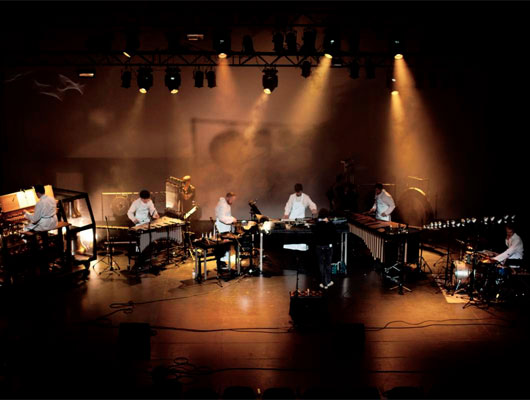
The compositions that led to the live ensemble performances and ultimate recording of Elements of Light began, as most of Weber’s productions do, in his computer. “I had the whole piece in my computer as a normal Pantha Du Prince track, 40 minutes long,” he explains. While the material was put together with the intention of being presented as one congruent piece, Weber is quick to point out that he did not write a 40-minute composition for the ensemble straight from beginning to end, but rather threaded together a number of smaller works to form what he refers to as a “patchwork” composition. To take the songs from his computer into the real world, Weber enlisted Norwegian composer Lars Petter Hagen, who translated the work into instrumental arrangements and helped form an ensemble of Oslo musicians who would perfrom the piece alongside Weber. “I found a composer and all these people that were really enthusiastic about working with bells,” says Weber, “and when we began to put together an ensemble, all these musicians popped up who had been collecting [bell-related] instruments.” As part of the process, the two discussed incorporating a slew of similarly melodic yet percussive pieces into the works, including xylophones, tubular bells, marimbas, chimes, an aluphone, and other bits that could be played live by the ensemble musicians.
The live touch within Elements of Light is apparent from its first moments. A slow pattern of bells is hand-played on top of itself to open the LP, the long decaying tones modulating each other into waves of ghostly metallic resonance. From there, opener “Wave” seamlessly morphs into “Particle,” the record’s first full production and a track which spends over 12 minutes introducing and bringing together—almost piece-by-piece—the entire spectrum of the ensemble. One pattern of struck melody is engulfed by another while the long, full tones of the carillon are given room to breathe underneath, their constant droning presence (possibly a result of Weber’s manipulation) ringing just beneath the surface. Almost four minutes in, a familiar sound interjects—dry, minimal drums. At first there’s just a kick, but eventually, a procession of miniature shakers and claps, as well as a rounded bassline precisely matched to the carillion pattern, push the track forward. The patterns continue to revolve and methodically build for a period before Weber suddenly allows the track to loosen, moving into an almost tribal array of free percussion while its more melodic elements start to peel away, anchored by the steady four-on-the-floor programming. “I wanted the musicians to have some freedom,” tells Weber. “I told them to do variations and play wrong; play wrong at the right time. Not make it too perfect, so it’s not strict like a minimalist composition.” This balance between control and freedom is what gives the record its natural movement, and the preciseness with which the different pieces of the composition are built, executed, and consequently unfurled are what allow for the extended track lengths of “Particle” and the 17-minute long “Spectral Split.”
Elements of Light is a record that values the detail and depths of its sounds as much—if not more so—than its musical content. The instruments lend themselves to an immense array of dynamics and constantly changing textures, and when weaved over each other, they make for a richly complex sonic landscape. “I’m interested in sounds that can tell a story more than any melody,” says Weber. “If you put a sound at the right place at the right time, it can tell so much.” The story the sounds tell here, according to Weber, is one of many layers. The history of the carillon and the omnipresence of bells in the Western power structure are certainly part of that narrative. “It was always a symbol for power,” says Weber of the bell, “and used as an instrument to put people in a specific mood and control them.” At a certain level, Weber admits he sees the record as a way to “bring a power instrument down and put it on a dancefloor.” Still, on a different level, Elements of Light was also a way for him to examine the city of Oslo—a place he has found himself captivated by over the years, although he has never lived there. Pulling not only his inspiration but also his ensemble from the fabric of the Norwegian capital—the carillon player he first heard in Oslo was recruited to record on the album—Weber wanted the music to in some way reflect his impressions of the European city. “I was thinking it would be nice to have this virtual map of the city where you have this one piece of music and every street almost has its own sound,” tells Weber. “It’s a very special situation [in Oslo] because the city is in a valley and a harbor, so [I wanted] the sound to have that same geographically specific resonance as the place [it represented].”
No cut on Elements of Light lends itself to this sort of auditory storytelling more than “Spectral Split”—the almost 18-minute piece which serves as the album’s climax. Again, the composition builds in patient steps; a cascading ring of bells and accompanying percussion coalesce into a joyous mess of melodic clatter and heavenly drones, held together by the steady thump of a breathy kick drum. Meanwhile, the textures on “Spectral Split” are increasingly vivid and warm. The nuances of the hand-played acoustic instruments give the song a palpable sense of urgency, while dusty electric piano and rounded bass rise in sync with a rich synth arpeggio. Though it may not have been Weber’s focus, the melodies which appear amidst this collection of organized noise are what make the story “Spectral Split” outlines so relatable, the simple notes surfacing on top of the mass of textures every so often to give the track just a touch of a hook. The listener is left to wait past the 13-minute mark for the song to reach its sonic peak, and the control with which the ensemble builds toward this ultimate reward—something it does well across the entire album—is what allows for the track to not feel tedious.
Like the opening effort “Wave,” “Quantum” closes the record with a drumless composition, effectively bookending Elements of Light whilst fully immersed in Weber’s bell fascination. Pantha Du Prince and the Bell Laboratory is by no means the first or only project to indulge so heavily in the ornamental pings of percussive bell melodies—Four Tet has surely made them a regular part of his repertoire, and the marimbas, xylophones, and glockenspiels often heard in Steve Reich’s work have an undeniable influence here—but it is hard not to admire the dedication with which Weber and his ensemble pursue this infatuation. The project certainly demonstrates a level of conceptual commitment that’s rare in much of modern dance music. According to Weber though, it isn’t the rich tonality or the familiar timbre in particular that drew him to the bells, but something simpler. “It’s an empty sound, so it is very free [of influence]” he says. “It’s not used in any certain style, it’s not connected to any fashion, it’s just an ancient sound that has always been there.”
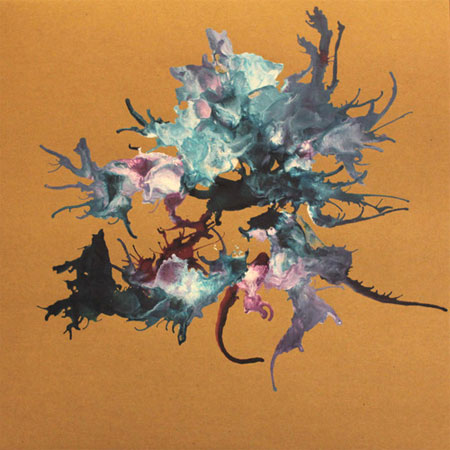
Brooklyn experimentalist Clay Wilson is set to offer six cuts of raw techno later this month when he debuts on the second volume in a fleding series of 12″s from NYC label Styles Upon Styles. The series—referred to as Bangers and Ash (or just BASH for short)—invites artists to create “heady experiments” on their record’s a-side and more “club-oriented tunes” on the flip, which is where Wilson’s “End Gap”—along with its dense groove and machine-made percussion—can be found. The BASH002 EP is set to drop on January 28, with each copy having its own unique, ink-jetted paper jacket—designed by Wilson himself—an example of which is shown above.
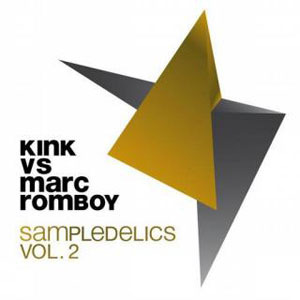
KiNK and Marc Romboy are well paired, and not just because both musicians seem to thrive on collaborations. A touch of European tech-house gloss flashes up at times from their tracks, even as they remain fixated on ’90s house for inspiration. As their extensive discographies make clear, neither artist has really articulated a signature sound, but it’s not as if that’s stopped them from putting out serious bangers and a slew of classy runners-up: KiNK’s “Hand Made” and Stephan Bodzin & Marc Romboy’s “Phobos” are evidence of consistent talent boiling over. To admit a certain correctness in their arrangements isn’t a knock on the quality of their tunes, as both appear to present themselves more as craftsmen; leaving few fingerprints on the tracks they put out, they nevertheless push every aspect toward established underground ideals. Sampledelics Vol. 2, a three-track EP on Romboy’s Systematic label, is every bit as well crafted and seemingly effortless as one would expect. There are no real surprises, just a few taut, structured house jams with a long shelf life.
Sure enough, “Over and Out” wastes no time in opening the EP. A slow filter sweep unveils a brigade of pumping piano chords, impatient for the flanger that soon screams across the sky, the claps that come in on the two and four, the open hi-hats strewn between, and finally, of course, the vocal that’s been taking shape all along and is eager to burst out. Having already built up a classic-sounding and deftly engineered track, the song’s second half allows itself to explore a divergent path: an interlude arrives with some lilac-colored pads before a break drops down in perfect slo-mo, translating ferocious house into a stargazing chillout tent for a brief moment. True to its name, “Pump It!” is in comparison a no-frills jack-a-thon featuring jaggedly syncopated snares and a charmingly naive-sounding hardcore riff. It’s a brash and assertive centerpiece, but the usual compositional elegance remains, even as KiNK and Romby push into the red. “Delusion of the Enemy” closes out the EP with a silky, chilled disco loop that relishes its own torpor but lacks the others’ hold on our attention: when it comes to this breed of producer, we like following every tasteful nudge.