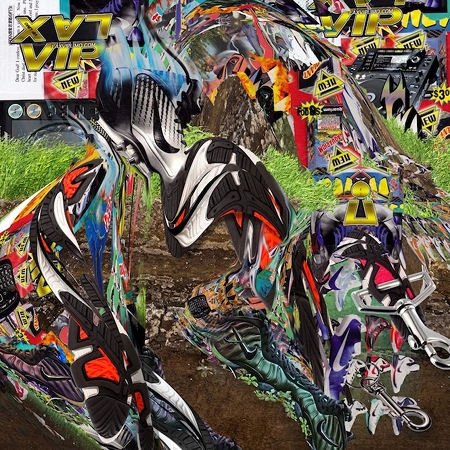
Fade to Mind label boss Kingdom has announced that he will soon drop a collection of “original productions, reconstructions, and previously unreleased dubs and remixes.” For his nine-track VIP EDITION, the Night Slugs mainstay has rounded up a new version of his “Stalker Ha” (from his XLR8R Pick’d Dreama EP), a “VIP Dub” remix of Nguzunguzu’s “Timesup,” and a charming remix of Ciara’s “Goodies,” among others. You can stream the latter of those tunes, as well as check out the full tracklist for Kingdom’s new offering, before VIP EDITION is released on limited-edition CD and 12″ on December 12, below. (via FACT)
01. FUKIN JAKER 02. GOODIES REMIX
03. OKAY TO DANCE VIP 04. STALKER HA (RAP MIX) 05. TIMESUP VIP DUB 06. APPETITE EDIT 07. SAY YES (REMASTERED) 08. SAY YES (INSTRUMENTAL – REMASTERED) 09. GOODIES REMIX (INSTRUMENTAL)
The UK producer/DJ/label head who has been at the center of house music’s exploding popularity—and, to some degree, its transition into mainstream culture—Jamie Jones has announced the launching of HOTTRAX, a new label that is said to be “dedicated to a more underground dancefloor-oriented aesthetic.” Operating as a subsidiary of Jones’ and Lee Foss‘ succesful Hot Creations imprint, the new venture is set to drop its first release later this month in the form of the three-track Change EP from Jones himself. Below, you can preview the record title track and check its full tracklist before the record drops in vinyl form on December 17, to be followed by a digital release January 7 of next year.
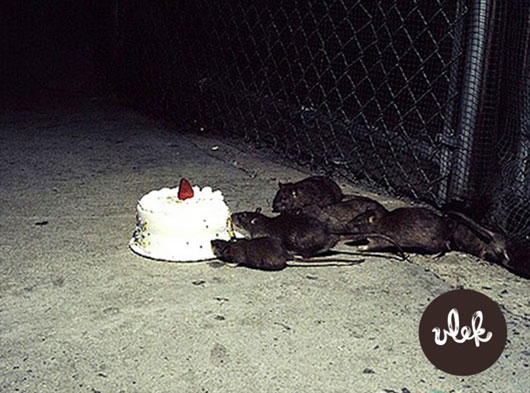
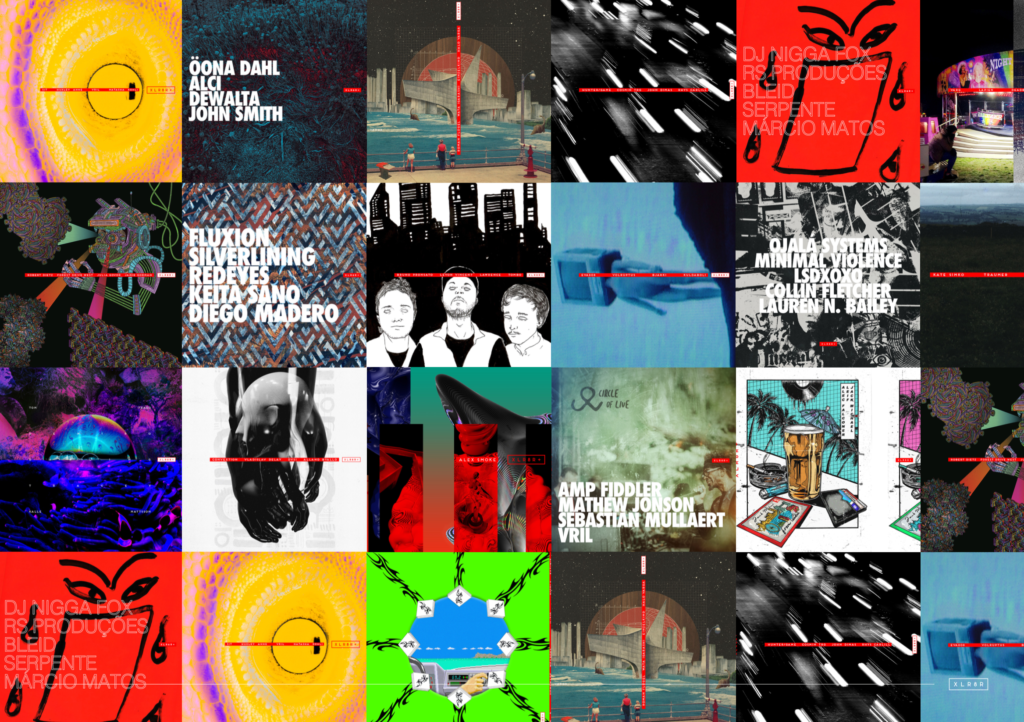
Brussels-based label Vlek is celebrating its second year running by offering up the entirety of its digital discography as a free download for a limited time. This means that the Belgian beatsmith Ssaliva‘s (a.k.a. François Boulanger, Cupp Cave) XLR8R Pick’d RZA EP is available for free—alongside choice records from the likes of dark technoist Sagat and the experimental Wanda Group, as well as Ssaliva’s most recent release, Sync Thrills, and Cupp Cave’s Dice Pool EP. You could also save yourself some clicks and just grab the Vlek Complete Catalogue – Years 1 & 2 compilation, which packages the outpost’s full release library for you. Peruse your free download options here.
Bristol’s Kahn isn’t one to follow the cutting edge of genre trends, as his output often has more in common with the last couple of decades than the last couple of years. But though he might not be an out-and-out innovator, Kahn is undoubtedly capable of polish and timelessness—two traits that are markedly present on “Dread” b/w “Late Night Blues.”
If it can be said without any backhandedness, Kahn can occasionally sound as though he’s stuck in a timewarp. “Dread” is cold, classic dubstep, replete with a guttural vocal sample of late reggae stalwart Ranking Toyan. The track’s sparse mix of visceral sub-bass, space echo, and springy reverb place this production squarely in the ’00s, albeit without a hint of overt nostalgia or irony. Though “Dread” is new material, it comes across as a tried-and-true, battle-worn tune, the sort of track that would have debuted one sweaty night at DMZ some years ago.
“Late Night Blues” delivers similarly accented sounds; Rider Shafique (of Black Canvas) is cautions us with the mantra “don’t test”; it’s almost a message from Kahn himself to let us know that he’s patently and unabashedly aware of the sound he’s emulating here. The long, decaying ride cymbals at the start of the track call to mind Kode9 and The Spaceape, while a more syncopated section underscored by percussive sub-bass reaffirms that this is material belonging to Deep Medi—home to Goth-Trad, Kromestar, Pinch, et al.
Making tunes that harken to a specific sound, especially an established one that’s become sacrosanct to many, can be a risky endeavor. It’s easy to get stuck in a nostalgic mode or become too referential and lose originality. Kahn avoids those pitfalls here with some masterful strokes, making something that belongs to another time but still exudes a sincere sense of novelty. If he continues to approach all of his productions with this unaffected and genuine attitude, it’s quite possible that we’ll be hearing great things from Kahn for a long time to come.
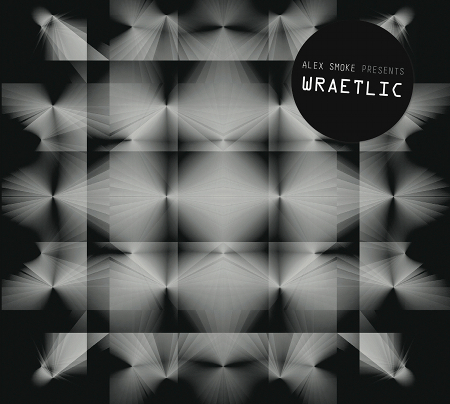
Convex Industries is set to release multifaceted electronic producer Alex Smoke‘s debut album as Wraetlic next February, and has shared a video for “Rats,” a song from the eponymous LP, ahead of its due date. Leaning toward the deeper, darker side of techno, Wraetlic features both bass-heavy, club-oriented numbers and raw, wraith-like material, in addition to remixes from label head Jon Convex, dBridge, and Paul Rose (a.k.a. Scuba) operating as SCB. The 14-track offering will be released on 10″ vinyl and digital formats on February 4, but you can check out its tracklist and preview a few of its tunes, as well as watch the “Rats” video, below.
1. Anothering 2. Scunner 3. PintleGrist 4. There Without 5. Refrain
6. Skinflint 7. Hymn To The Departed 8. The Dearth 9. Better The Devil 10. Rats 11. The Watchful Eye
Montreal-based DJ/producer Tiga has released a new music video for “Plush,” the single from his recently released Tiga Non Stop mix album. Directed by Berlin-based Alexandliane, who also directed Tiga’s “Shoes” video a few years back, the piece for the Turbo label boss is part still life, part fashion photoshoot. XLR8R recently caught up with Tiga in our The Art of the Mix CD feature, where the longstanding artist mentions, “In general, with DJing, I’ve always thought the shorter the set the harder it is to pull off.” About the music video, Tiga shares that “‘Plush’ was inspired by ’80s dance TV shows like Pelvic Gold and The Bandana Patrol, as well as my undying love and respect for the city of Detroit,” leaving us without any clue as to what those shows may reference (Solid Gold, perhaps?). The track, produced as part of what Tiga hopes is the first of many collaborations with Ghostly stalwart Matthew Dear, features a bobbing bass line, monotone vocals, and—of course—plenty of ’80s-sounding synths.
Just yesterday, the Gulls-helmed Boomarm Nation imprint dropped a full-length casette from Portland-based sonic adventurer Strategy. Taken from What If?, “Valentines Dub” perfectly exhibits the budding talent’s proficiency with analog hardware and sonic manipulation, as he warps a simple guitar line and a bouncing, dub-like beat into over seven playful minutes of refracted electronics.
FACT reports today that Ewan Robertson, the Scottish-born Big Dada artist known to most as Offshore, has passed away. On the website for the London imprint is this statement:
“It is with great sadness that we have to tell you that Ewan Robertson (a.k.a. Offshore) has died. Ewan has been a stalwart of the Big Dada label for many years, first as a volunteer while he studied graphic design at St. Martins, secondly, with Oscar Bauer, as one of the greatest designers ever to work for Ninja Tune or Big Dada, responsible for iconic covers such as the Wiley ‘black playground’ image for Playtime Is Over, the Roots Manuva slime-head for Slime & Reason and Bonobo’s Black Sands triptych. Lastly, Ewan became one of Big Dada’s recording artists as Offshore, when he played us some of the music he was working on and we were once again blown away by his talent and the originality of his vision.
An incredibly subtle man, part of his talent was to make difficult things look easy. His recent record, Bake Haus, was one such example, apparently thrown off without breaking a sweat, but actually the result of considerable thought and skill – the minimalism a deliberate choice, beautifully delivered on. He was also, in addition to his many talents, one of the finest individuals we have had the honour of working with – straightforward, positive, funny and understated, he was a proper gent. We will miss him terribly and send all our love to Jen and his family, whose loss is so much greater.”
Robertson’s work has appeared on XLR8R for over two years, as his productions always offered a unique spin on the hip-hop-inspired realm of electronic music. His most recent appearance was with the stately opening track from Bake Haus, “Breeze.” Listen to the entirety of Offshore’s mini-LP below.
Highlighting many of his favorite tunes from over the years and dropping plenty of unreleased goodies, Numbers‘ Jackmaster has unveiled a special, absolutely free two-hour mix. A brief chat that the Glaswegian DJ had with FACT sheds a bit of light on the music featured in the DJ set, why there’s no published tracklist, and what’s been going on with Numbers throughout 2012. You can stream Jackmaster’s mix, as well as download it for the price of an email address, below.
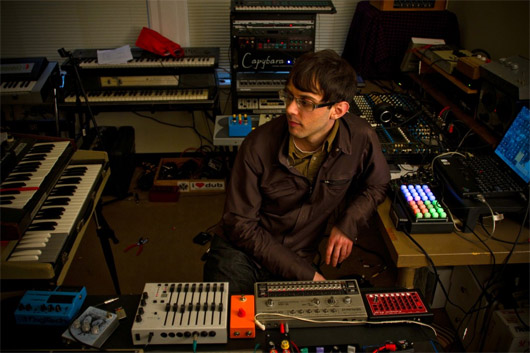
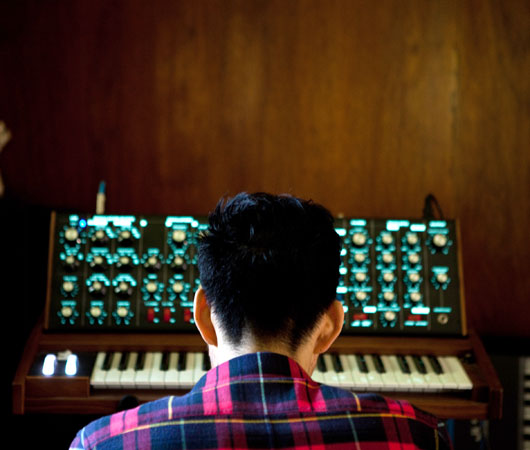
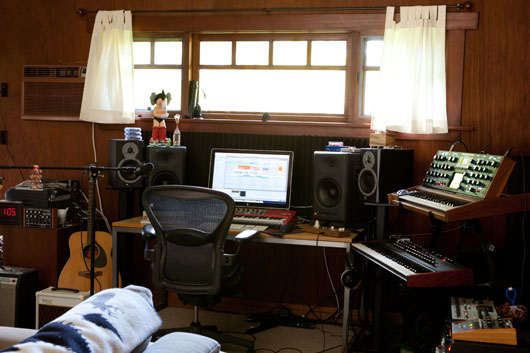
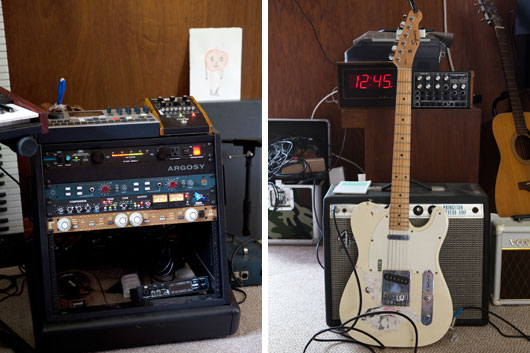
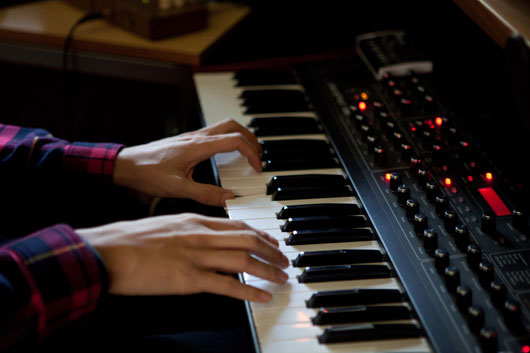
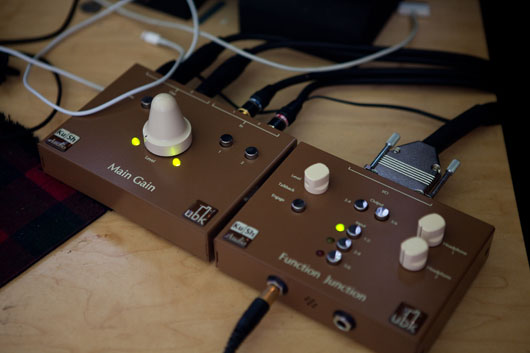
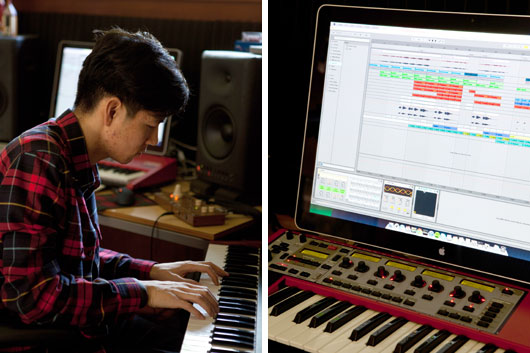
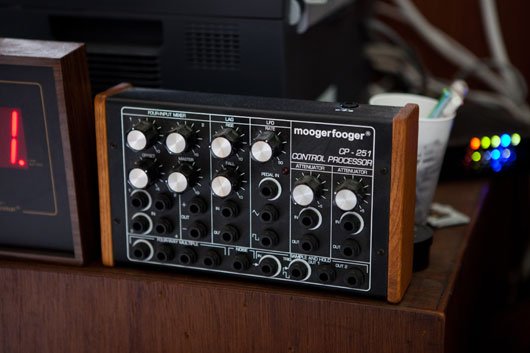
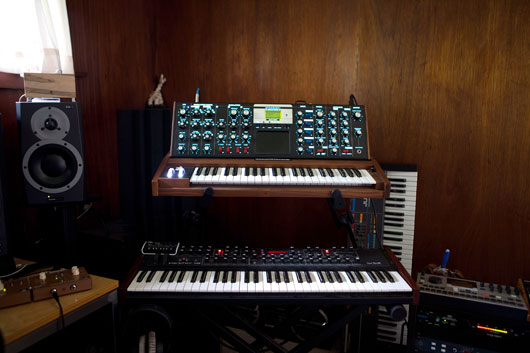
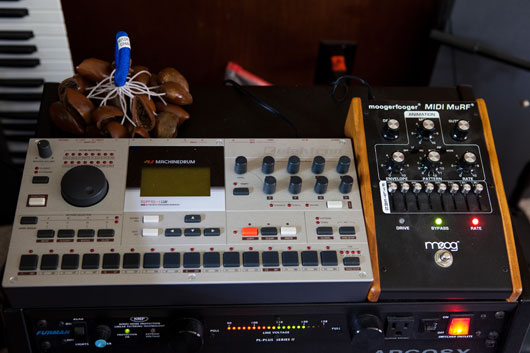
In many ways, Jason Chung (a.k.a. Nosaj Thing) is an archetype for promising bedroom producers. Like many, he began making tracks in his room as a teenager, initially piecing together hip-hop-inspired instrumentals in a room at his parents’ house before evolving his craft towards the more sophisticated electronic music that would eventually propel him to the forefront of LA’s beat scene and yield a pioneering debut LP, Drift. Somewhat unsurprisingly, Chung still prefers to produce in a simple home studio, which is now based in South Pasadena, just outside of LA proper. XLR8R recently payed Chung a visit to find out more about his current set-up, his ever-present interest in evolving music technology, and the process behind his forthcoming sophomore (and appropriately titled) LP, Home.
XLR8R: Have you always had a home studio? Nosaj Thing: Yeah, pretty much. I think I would always want to keep it that way, because that’s where I feel most comfortable. I don’t want to dress up just to go make music.
And you started producing just in your bedroom? Yeah, I was a freshman in high school—I think I was 13. I had some older friends that were into house music and one of them hooked me up with copies of Fruity Loops and Reason. At that time, I was actually more into DJing, but I did have a keyboard—a Roland JX-305 that was kind of hard to use. I grew up with computers, so it was a lot easier, especially visually, to use software [instead].
You have a lot of hardware now though, when did you start adding those pieces to your studio? Right after high school, I got a job at a music store and tried to save up to get the gear I needed. After a while, I got an MPC—I was going to community college at the time and I got a grant which I just used to buy it on Craigslist. [laughs] I had always wanted an MPC since high school because of DJ Shadow, Prefuse 73, and DJ Krush, but once I got it, it wasn’t what I had expected it to be. I had different melodies and ideas in my head, and after starting out with software, it just seemed so slow; it felt like I was going backwards.
Was there anything you liked about it? In some ways, I did really like it because the design was amazing and it was fun to not use software—it makes you think differently. Every piece of gear and every different software you use I think affects your music. I feel like a lot of different genres are inspired by the software [the producers] use. For example, I’ve noticed that a lot of the dudes who make trap beats use Fruity Loops, and that program’s whole UI is based around a 16-step sequencer. How would you not come up with hi-hat patterns like that when the whole program is based around the step sequencer? For me, the software I use, and even the colors of the program, affects the way my music comes out.
Now that you have both hardware and software, how do you strike a balance between the two? Is there a particular point where you transition from one to the other or are you working in both worlds all the time? What inspires me most is just sound in general, so I usually start off with sound design—whether its hardware or software. I don’t think hardware is necessarily better than software or vice-versa; both are just so advanced now that whatever sounds good, you should just use. For me, I like to use a lot of software, because it’s convenient and the workflow has gotten so fast that there’s nothing that interrupts your process. I was thinking about this recently, especially with all the new iPad apps, and I think that gap between having your idea and getting it out is more transparent now. The more the tools develop, I’m not thinking about things in technical terms [anymore].
You’re mostly an Ableton user now? When did you start using that program? I started messing with Ableton in 2003—I just had a demo version. I mainly used it for time-stretching, and I would use it more as a separate tool than a DAW. I was drawn to the interface—it was so different [than the other programs at the time]. Ableton is really mindful of its aesthetics and for some reason I was really drawn to that. I had used Logic to write the first EP and at the same time I was using Ableton to perform, and as Live developed, I was getting tired of bouncing all my stems from Logic to Ableton. Ableton seemed to be focusing more on creation than just sound. I was really drawn to that and switched over right when I began writing the first album.
How involved are your Ableton sessions? Do you automate a lot and get very detailed with the software? I don’t really do too much automating—I’ll do that all at the end, just minor tweaks—and I don’t even really use EQ, actually. I rarely EQ.
What about filters? Yeah, I tend to use filters instead. I just like starting out with a certain sound palette and then finding sounds to fill certain gaps.
So you don’t just try to build the song by musical components. Is it more based on filling in the spectrum of sound? I see it visually. If I start out with a pad, I see it in the middle of the spectrum, and then I fill those gaps left in the rest of the spectrum.
Is that an approach which developed over time, or is that the way you’ve always seen music while producing? I feel like I was always gravitating towards that technique, and then once people were hearing and commenting on my mixes, that’s when I noticed it. I think that’s the beauty of electronic music—you have full control of every sound. If you have a kick drum that needs to be a lower or higher frequency, you can easily make that change. You’re not working with the same rules as traditional instruments.
The “Eclipse/Blue” single features a vocalist. Are there more vocal collaborations on the new record? There are a couple more. Elin Kastlander from jj did some stuff, more background vocals, for a couple of songs, and there’s a song with Toro Y Moi too.
Was incorporating vocals into your work a challenge? Yeah. Once you bring vocals into the mix, the whole focus of the song changes. It was a challenge to mix as well as arrange, but it was something I’d been wanting to do for a while. Right now, I’m still learning, but I hope to do more of it. I did get really lucky with this record and all the vocal sessions went very smoothly. With Kazu [of Blonde Redhead href=”http://www.facebook.com/blonderedheadofficial”], we recorded her vocals over one full day. I was in New York, and we got to record her vocals at Electric Lady Studios [originally Jimmy Hendrix’s studio], and we were able to knock it out in one session. She sent her vocals to a friend of hers, Drew Brown—who engineers for Radiohead—and he did the vocal processing on the song and really brought it to life.
You’ve been a home-based solo producer for a long time now, how do you keep things fresh? What really helps me is just experimenting. Once you feel like you have a certain routine, [you have to] change that up. Sometimes I’ll get in routines and I’ll have a system and it will start getting boring, I’ll just make the same type of song everyday. That’s when I get the reality check and I’ll change the tempo, change how I start the songs, or something like that. That’s how I’ve learned and come up with new tricks—you have to try new plug-ins, flip the snare and kick around, or reverse your usual chord progression. That’s how I stay inspired.