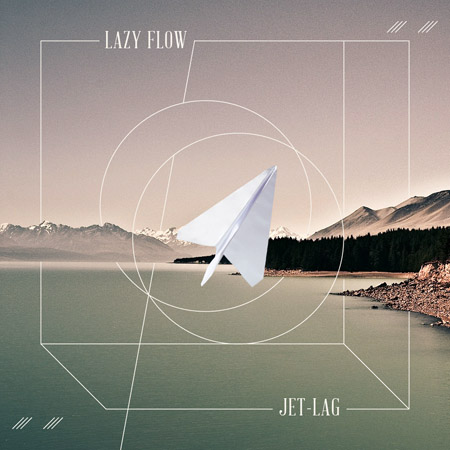
Next week, the budding Parisian producer Lazy Flow will drop a new EP full of house music with a so-called “worldwide” flavor, calling it Jet-Lag. A remix of the record’s “Ogazma” track has arrived before then from East Coast club boss DJ Sliink, who delivers a proper New Jersey-style rework full of chopped breaks, big drums, and enticing percussion loops. Sliink’s remix—along with other versions from Slap in the Bass, Big Dope P, Boogaloo, and more—can be found on Lazy Flow’s forthcoming EP for Moveltraxx when it hits the streets on December 11.
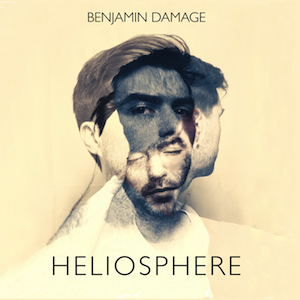
Though we’ve heard plenty of talk about the first solo album arriving from rising London technoist Benjamin Damage, the full details of that record have finally been unveiled today. The 10-track record is called Heliosphere and will be made available on February 22 via Modeselektor‘s 50Weapons imprint, who also released Benjamin Damage’s solid “Swarm” b/w “Headache” 12″ in October. Though that two-track record clearly indicated the producer’s command over dark, techno bangers, Heliosphere seems like it will contain lighter, more melodic pieces in addition to some proper dancefloor tunes. You can preview a snippet of opening track “Laika,” as well as check out the artwork and tracklist for the forthcoming album, below.
1. Laika
2. 010x 3. Delirium Tremens 4. Extrusion 5. Together 6. Spirals 7. End Days 8. Light Year 9. Swarm 10. Heliopause
While UK trio Darkstar readies the release of its second LP, News from Nowhere, for early next year via Warp, the band has taken the time to talk with Your Truly about the music and perform one of the album’s cuts at Halls Place Studios in Leeds. After a brief chat, James Buttery, James Young, and Aiden Whalley go through a live rendition of “A Day’s Pay for a Day’s Work,” a subdued number full of warbling keys, stripped-down beats, and soft vocal melodies. You can watch Darkstar’s new video before News from Nowhere is released on February 4, below.
XLR8R Couldn't find the embed function for type: "vimeo" and source: "<iframe src="http://player.vimeo.com/video/54752456?title=0&byline=0&portrait=0&badge=0&color=fd1652" width="530" height="298" frameborder="0" webkitallowfullscreen="" mozallowfullscreen="" allowfullscreen=""></iframe>".
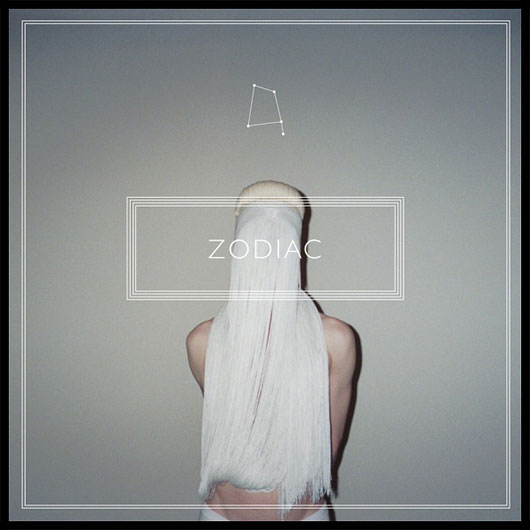
Like many young artists, 23-year-old Canadian producer Zodiac (a.k.a. Jeremy Rose) has a lifelong love and appreciation for computers. He remembers being seven or eight years old when his father came home with a Commodore 64, and the experience of gaming and dismantling that old machine with his father turned him on to tinkering with electronics and paved the way for a career in music production. “Once I figured out how to get sound out of them,” he says, “I found something new to do with the computer and just took off with it.”
Rose began making music around 14 or 15. He picked up a guitar and started experimenting with rock music, inspired by an early appreciation for Nine Inch Nails. But he soon realized that making a good rock song required collaborating with other people, and all of his friends were jerks. “I was a jerk too,” he explains. “So it was hard to work with other people.” He soon discovered digital workstations, and quickly abandoned his guitar and band-oriented music for more solitary, computer-based pursuits. “I’ve always found the collaboration thing kind of difficult,” says Rose. “It’s a performance anxiety, like, ‘Ugh, I don’t want you to watch me mess around with stuff because it takes me awhile to get things sounding good.'”
Growing up surrounded by cornfields in a small town in Ontario, Rose didn’t know where he could find an audience for his new sounds—his friends certainly weren’t interested. As a teenager, he hung out with a bunch of metalheads, and the only genre they could find some common ground on was hardcore techno. The best compliment he ever got from his inner circle? “Oh, this actually sounds like music!”
The first person to give his music a chance was his piano teacher—Rose took about six months’ worth of lessons, his only formal training—who enjoyed by his weird sound collages. “It was mostly unlistenable stuff, but he was entertained by whatever I brought in,” he says. At that point, music was still a hobby, nothing he seriously contemplated as a career. “I went through an IDM phase, which wasn’t very well done,” Rose explains. “Then I got into soundscapes, textures. I went through a lo-fi phase.” At this point, his musical vision was clearly far from settled.
After high school, Rose started began working in television as a video editor—he wanted to transition into the film industry—and toyed with photography, but soon decided that those fields required more formal education and training than he was willing to put himself through. “I tried going to school, but I just don’t work well in those environments. In Canada, if you want to do film, there’s just a lot of… work and stuff that I wasn’t willing to do.” He continues, “The music stuff started taking off and I just went with it because it’s the least tedious option.”
His first big break—or what should’ve been, anyway—came after meeting Toronto singer Abel Tesfaye, who was then an American Apparel employee. Rose had envisioned a dark R&B duo as his next project, and after hearing Tesfaye freestyle over some of his beats, he thought he had found the right person for the job.
The first three tracks that they released as The Weeknd, “What You Need,” “Loft Music,” and “The Morning (Original Version),” generated a lot of blog buzz. Drake discovered the tracks and posted them to his blog—and that’s when The Weeknd blew up, with profiles in The New York Times, Pitchfork, and other major publications. But by that point, the project had been rebranded as a solo endeavor of Abel Tesfaye, and The Weeknd’s highly publicized debut mixtape, House of Balloons, attributed production credits to Doc or Illangelo, with Rose’s name nowhere to be found.
By the time Rose was unveiled as the mysterious force behind The Weeknd’s groundbreaking early works and aesthetic, his involvement in the project was already over. He came forward in a now infamous interview with Vice, detailing the creative differences and messy financial disagreements that ultimately ended his involvement with The Weeknd:
“[Abel] was pushing for some things I didn’t want to do, and it got to the point where he wouldn’t respect my opinion. He wanted me to produce for him without any of my input. And I was like, ‘Well then, what’s the point of being a group?’ and he was like, ‘You can just be my producer,’ and I said, ‘Are you going to pay me?’ Then [I realized he was] not going to pay me. That’s why I backed out. I was like, ‘You can have those three or four tracks, I’ll give you the stems, just take ’em, but I don’t want to work with you anymore.’ I was really congenial about it, but I told him, ‘Just make sure that you give me credit,’ and that’s where things went sour.”
Rose won’t talk about the details of the split from The Weeknd anymore; he insists it’s not about bad blood—he’s just moved on, and doesn’t have time or interest in rehashing the past. (His publicist did warn that there was a “very strong chance” Rose would hang up if questioned about the Weeknd drama, though.)
After he got some distance from the Weeknd controversy, Rose started making waves under his own Zodiac moniker. He linked up with fellow Canadian Jacques Greene, the first person to ever remix one of his tracks, and soon signed to Greene’s Vase label. In September, Rose released his solo debut, a dreamy 5-song EP that built on the striking, moody beats that propelled his Weeknd tracks. With the exception of “Come” (which featured Jesse Boykins III), the self-titled release was without vocals. “It was a nice quiet point, so it was a good time to just get some stuff out there because I’m about to get really busy,” he says. “I won’t have much time for solo work for a bit.”
His recent output caught the attention of Paul Epworth, the multi-Grammy-winning producer who’s worked with everyone from Adele and Cee-Lo Green to Bloc Party and The Rapture. Epworth—who’s currently at work on Azealia Banks’ debut LP—got in touch with Rose’s manager, and quickly made Rose the first signee to his brand-new Wolf Tone label.
It seems that perhaps Rose’s time has finally come—he’s certainly on his way to some pretty big things if artists like Epworth are coming out of the woodwork to track him down. He’s fairly secretive about the nature of his upcoming work—at the time of our interview, he was several days away from flying to London to meet with Epworth in the studio—but does reveal that he’s inked a writing deal in which he’s responsible for 16 tracks over the next year, possibly spread over several projects.
“Epworth has a lot of experience doing what he does, and I think he wanted to bring in something different and see where that could take us both,” Rose says. “It’s more fun to mix it up and see what we can do. I’m really excited about it because it’s a completely new experience for me to work with someone like Epworth and the people he’s going to have me meet.” Naturally, Rose is excited, but he hasn’t lost his head. “I don’t really have too many expectations,” he says. “I just want to go in open and learn as much as possible and do my best to make great music.”
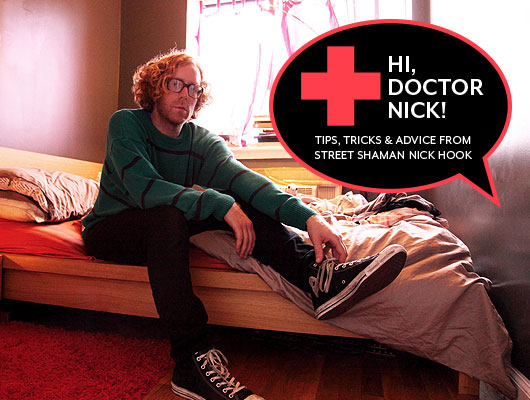
The holiday season is upon us and winter is right around the corner, but there’s no deterring XLR8R‘s resident street shaman, Nick Hook. Every Thursday morning, Doctor Nick takes on questions from the XLR8R audience, and lends his thoughs about music, travel, recording, mastering, love, romance, and more. Those looking for help should drop him a note in at doctornick@xlr8r.com.
Yo. What’s good? My roommate is writing this emo song on his Rhodes right now. I’m feeling all sappy, so forgive me if I shed a tear while writing this week’s column.
First though, I must give eternal shout outs to Hudson Mo, Lunice, Dom LuckyMe, Oneohtrixxxxx, Kanye for running out and air rapping, and Shabadu for one of the greatest 9 a.m. YouTube sessions I’ve ever been a part of. I’m so happy my crew is my crew.
Hi Doctor Nick, How can I self-release my tunes and get people to listen? Me and a friend are about to start our own label so we can release our own music, but I’m curious as to what should we be thinking about as we start this venture. What makes a record label a record label and what makes a good record label a good record label? Ryan
There are mad ways to release your music. The easiest is that TuneCore thing, but there are a bunch of boutique digital distribution services out there. My favorite is called Seed. They basically become another teammate of yours with contacts at all the places you wanna be (Beatport/iTunes/Juno/Boomkat/etc.) and secure you coverage on the front pages of the appropriate sections when your music comes out. This is really important—again, TuneCore just puts it up there… if a tree falls in the forest…
As for what makes a good record label… I’ve had the good fortune of watching three amazing groups of people start labels and really turn them into something special: Fool’s Gold, LuckyMe, and Night Slugs. If you look at the things they have in common, there’s an aesthetic in the art, a cohesiveness in the music, and a general sense of trying to do something new. I know it’s hard to do something new, but I can say from knowing these guys that their labels are all reflections of their personalities and it’s coming from an extremely genuine place. Fool’s Gold and LuckyMe saw light years ahead with Danny Brown and HudMo. It’s the same with Night Slugs for really the whole roster. It might not be as commercial, but it’s pushed so many boundaries that people have had to water it down so it could be processed by a wider audience.
Also, I feel like investing in making a release makes it feel like a release is extremely important. I want to feel like someone made a body of work they want to give me. Artwork, curation of the remixes, tangible stuff—it all makes me take notice. It’s so fucking easy to make music now and put it out, but does it feel special? If it doesn’t, don’t bother. Make sure there is some sort of quality control. Just cuz you finished something, is it really ready to go out? Could you make 20 more tunes and beat that one? It’s all important, because your first impression is everything.
The good thing is that people have short attention spans, so put things out and keep growing. Hope that helps.
Hi Doctor Nick, How do you make your tracks sound so big for the club? Is it essential to pay someone for mastering or can I just crank up the limiter in my DAW? Do you mix all of your tracks yourself? I’m just trying to get my material up to industry standard. Ferd
Hey Ferd, thanks for writing. I feel like I am still an infant with the whole mixing thing and I don’t know if I’ll ever perfect it. I think that is why I enjoy it so much. Most of my stuff I mix myself, but recently, I’ve partnered with Joey Raia to mix some of the more key outside projects. We complement each other in a lot of ways and it’s been exciting cuz of the thing I always preach about in my column: teamwork. We can talk about things, both of our ears respond to different things and usually we work fast cuz we can both work towards the end goal.
I just did acoustic treatment in my studio and it has helped so much. It’s allowed me to listen at much quieter levels and to get more accurate every time. They say 85 dB is where you hear all levels the best, but I can’t help making my ears bleed sometimes when shit’s ill. It’s called the Fletcher-Munson curve if you feel like learning more about it.
As far as cranking up the limiter, you can do that, but I’ve found that one of the best assets for me is the relationship I’ve built with the people that master my stuff. I generally use The Lodge in New York, and also Precise in the UK. Also, I always send Joe my mixes beforehand so he can critique them. Sometimes, he will ask me for stems so he can make them better. You have to think that mastering dudes ONLY master for a living and their room is set up to be the perfect listening environment. Think how many “studios” you’ve been to where you have no idea how it’s going to translate the second you leave. To me, it’s worth the investment. But I do have to say that the iZotope stuff is amazing, as well as the Waves stuff. Just remember that there aren’t any rules. I’ve heard about how Gesaffelstein masters off 320 MP3s with some laptop speakers and I think all his stuff sounds incredible. A lot of the cats that are using Fruity Loops are going straight out of the box and it sounds good too.
I showed this in an earlier column, but if you are new or don’t feel like going back, I highly recommend this book. Put it in your bathroom and read a few pages whenever you go. The dude is a maniac. Here is the book as a movie.
Hi, Doctor Nick! appears every Thursday on XLR8R. Do you have a question for Doctor Nick? Please submit your inquires to doctornick@xlr8r.com. Nick Hook can help you.
Apparently, KRTS (a.k.a. Kurtis Hairston) explored some pretty dark themes on his latest effort, The Dread of an Unknown Evil, such as doubt, sorrow, and fear of the unknown. Yet, the album’s title track seems to suggest a merrier disposition for the Brooklyn-based producer. While the bassline sinks into deep registers and lo-fi sound effects—like the sounds of a camera shutter and a hellish jump rope—keep the mood subdued, harmonizing vocals, playful handclaps, and a heavy cymbal rhythm bring a much brighter hue to the song. The Berlin-based Project: Mooncircle label will release The Dread of an Unknown Evil on December 10.
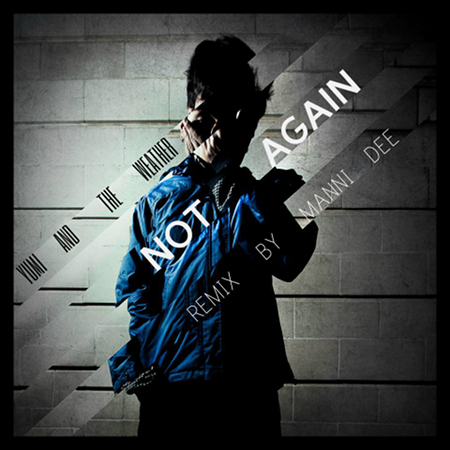
Brighton producer Manni Dee has put his spin on fellow Brighton producer and singer Yumi and the Weather‘s heavily melodic vocal-pop tune “Not Again,” turning the bass up to 11 and looping his own aquatic beatwork enough times to stretch out the music an extra two minutes. He also carefully mellowed out the melody of the original, leaving us with a subtly driving and relaxed vibe.
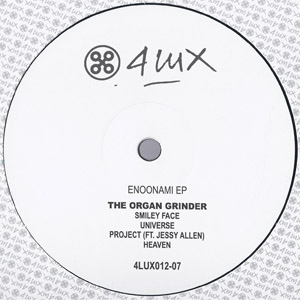
There’s no beating around the bush when it comes to the music of Cayne Ramos (a.k.a. The Organ Grinder)—the Cardiff-based producer makes music that is deeply indebted to the sound of classic house. Still, to characterize Ramos as an artist who’s simply rehashing the familiar aesthetics of that genre would be unfair, as his limited discography has so far shown that The Organ Grinder project is capable of tastefully harkening back to the sounds of classic Chicago, Detroit, and New Jersey, all while infusing the productions with a modern touch.
Following his two releases for the UK-based Catapult label (the first of which housed “Obesession,” a track that gained traction after standing out in Move D‘s Bolier Room set earlier this year), the Enoonami EP marks The Organ Grinder’s debut on Gerd‘s 4lux imprint and the producer’s most extensive record to date. Fortunately, both the new outlet and the extended listen serve to further highlight Ramos’ skill and craftsmanship. Across the EP’s four tracks, Ramos proves himself capable of constructing solid low-end foundations, on top of which vintage chord structures, playful melodies, and even some atmospheric vocals are left to lead the processions.
Although the four tunes here are all likely to get some dancefloor consideration, two in particular stand out—the opening “Smiley Face” and the vocal-led “Project.” Both come from different angles of Ramos’ classicist sound, the latter employing a more jacking approach with stabbing chords and a matching bassline while the former rolls out delayed synth lines and occasional vocal hooks (courtesy of Jessey Allen) that ride along the beat with a bit more swing. These tunes land The Organ Grinder somewhere between fellow UK contemporaries like Citizen and Bicep—it’s a mix of sexy house and old-school vibes that, at times, cleverly dips into house’s more indulgent calling cards. And, similar to the path of his aforementioned contemporaries, Ramos’ rise is likely to continue yielding impressive productions that are ripe for the dancefloor.
XLR8R Couldn't find the embed function for type: "vimeo" and source: "<iframe src="http://player.vimeo.com/video/52496063?badge=0" width="530" height="298" frameborder="0" webkitallowfullscreen="" mozallowfullscreen="" allowfullscreen=""></iframe>".
In the sixth of eight videos scheduled to accompany NY-via-LA producer Dreams‘ Lost Kingdom LP (you may remember the first piece we posted last month), 6BIT‘s in-house video artist PXL explores imagery apparently inspired by some interpretation of a lost aquatic city. The piece is decidedly abstract, beginning with an intergalactic cruise before hinting at spiky sea creatures and slimy, rainbow-tinted slugs. A nondescript skull gets the full web-art treatment—complete with chaotically mismatched colors and an abundance of computerized patterns and textures—toward the end, helping make the connection between both the human and robotic themes throughout “Black Hole City.”
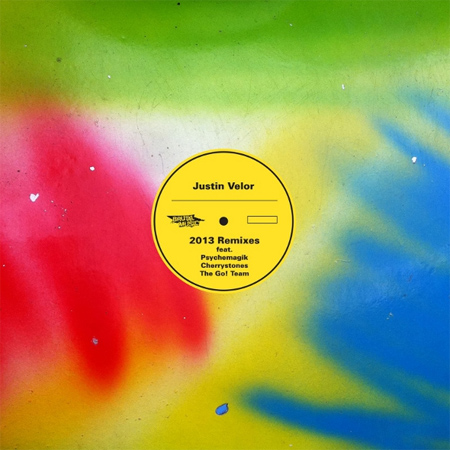
Justin Velor—the alter-ego of Dom Thomas, the head of Manchester-based label Brutal—emerged earlier this year as a project keen on exploring spacestation disco with loads upon loads of percussive elements and spiralling synth work to match. Thomas is in the midst of prepping the debut full-length for his Justin Velor project, which is set to see a release in February of next year under the incredibly appropriate title 2013. But before then, his label has issued a 12″ of remixes (artwork above) for three of the LP’s tracks, including this rework from fellow UK producer Physchemagik. While it’s impossible to compare this version to the original at this point, it seems safe to assume that Psychemagik’s remix takes things a bit further into the realm of deep space across its nine-plus-minute runtime.