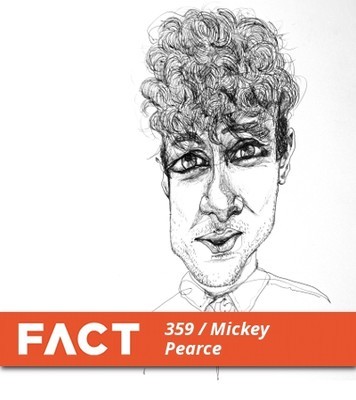
The peculiar London beat maker Mickey Pearce (a.k.a. Richard Attley, formerly known as Shortstuff) has offered up the newest installment of the FACT mix series. Having released his off-kilter and slightly eccentric 12″ for Swamp81 just a few weeks, Attley’s new mix boasts a collection of similarly strange dance grooves, acid lines, and unique samples. With no tracklist and commenters adding little to its contents, Mickey Pearce’s unnamed selections explore an array of sometimes awkward, sometimes heady, and consistently bouncing numbers perfect for the dancefloor. You can stream and download the whole DJ set in the player below.
Following on the heels of his recent Steam Days LP for Border Community, Nathan Fake has released an EP of remixes featuring fellow UK producers Lone and Lukid. Both remixers are tasked with taking Steam Days‘ opening track, “Paean,” into their respective worlds; Lone’s rework is both cosmic and touched with classic house vibes while Lukid pushes the tune through layers of overdrive. You can stream both versions, along with a brief piece of the tune in its “Coda” form, below. The Paean Remixes EP is out now digitally and will see a limited-edition 10″ vinyl release on December 10.
Berlin-based producer and Hotflush affiliate Jack Dixon has just unveiled a three-track EP for free download. Dixon, who released his 10997 EP through Leftroom just last month and was featured in the XLR8R podcast series this past May, continues his smooth bass work and polished techno beats on 1, creating a sense of lonely dance tunes heard as the morning comes in. You can listen to snippets of the music below and download the full EP here. And be on the lookout for a follow-up release, appropriately called 2, early next year.
This year, Arizonan producer Terminal 11 (a.k.a. Michael Castaneda) broke a silence that spanned several years to release a handful of records. The latest addition to his discography, the Skyscraper on a Megayacht EP (artwork above), arrives this week via Halocyan parent label Phthalo, and Castaneda has offered us a remix of “Heather in Japan” from San Francisco producer Exillon (a.k.a. Jay Fields). The rework—which will soon be released along with a vinyl-only single via Jack Tone—starts with a dubby clomp and tick, and develops into an itchy, pulsing kind of acid-techno.
For the third time this year, the one known as Burial has announced the impending release of his next record only a couple of weeks before it’s actually available. Hyperdub is once again behind the dubstep mystic’s latest offering, a 12″ which comprises two tracks collectively clocking in at 25 minutes. We currently don’t have even so much as the track titles, let alone previews of the music, but you can pre-order Burial’s new record over on Bleep before it drops on December 17, here.
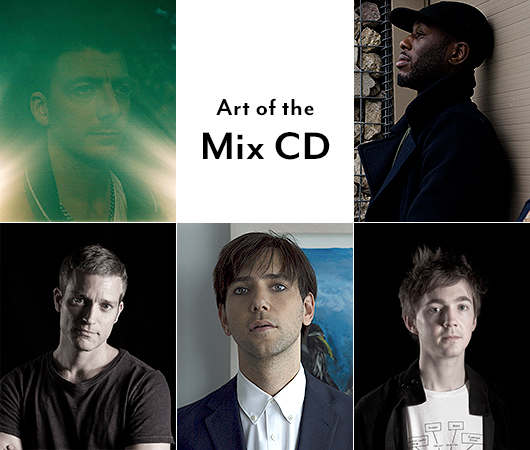
Transitioning into the current decade has been a turbulent experience for physical media. Panasonic is reportedly no longer producing the Technics SL-1200 turntable, Pioneer has switched the focus of its CDJ line towards USB sticks, and people are increasingly consuming music through less tangible, internet-based sources. One institution that’s managed to survive—though who knows for how much longer—is the anachronistic concept of the commercial mix CD. There’s something charming about these 74-minute works that grants them a status distinct from web content. In some instances, mix CDs—particularly from the larger, more established institutions—serve a role similar to an LP, with all the attention and promotional weight that entails. Official mixes have a relatively long tradition within DJ culture, one that’s long enough to have its own internally referential history. Yet as physical media continues its decline over the next few years, the mix CD as it exists now will soon be outdated, if it isn’t already. In hopes of better understanding where the mix CD fits in as 2012 comes to a close, we caught up with some of our favorite artists—all of whom have recently or will soon release high-profile mix albums—and asked them to weigh in.
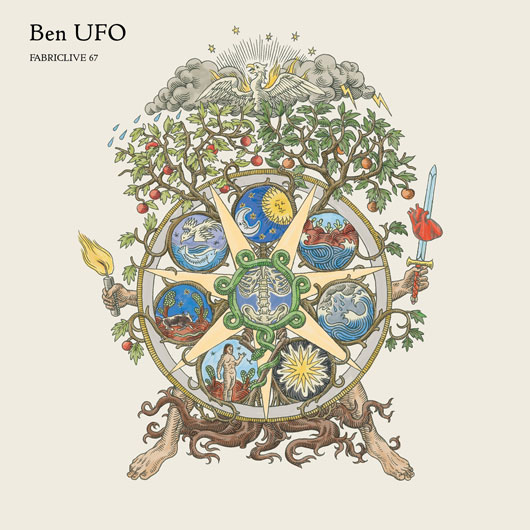
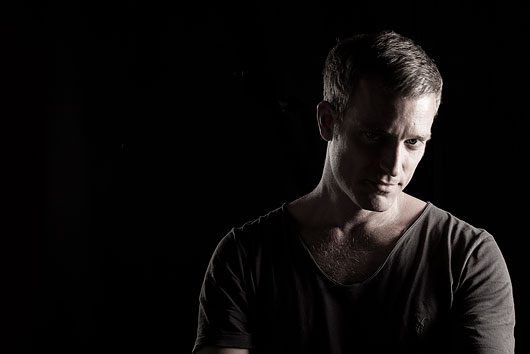
Hessle Audio co-founder Ben UFO will be releasing his Fabriclive 67 mix in January, and still sees value in the format, at least when the mixes are composed properly. “Commercially released mixes have to justify their price, and their existence as physical objects. They have to be good, they need to be interesting, they need to stand up to repeated listens, and I think they should be ambitious. Whereas in the past they might have served as approachable primers for inaccessible singles-based dance music, they’re now essentially as niche a product as the records they consist of. They need to be interesting to people who have more tools at their disposal to learn about and consume music than ever before.”
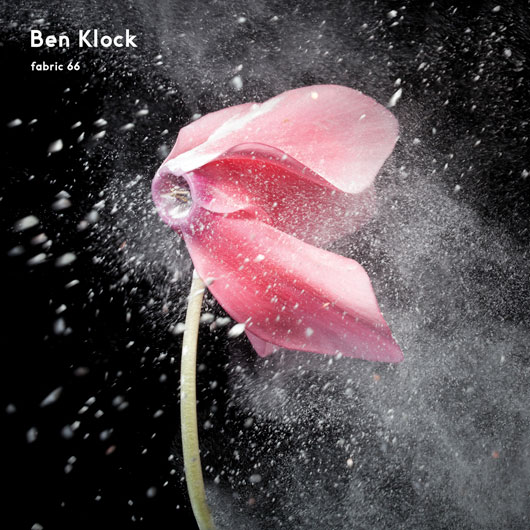
German techno auteur Ben Klock, who offered up the excellent Fabric 66 just last month, agrees. He says, “Mix CDs are different from podcasts. Mix CDs have a higher ranking, so I put much more effort and time in it. I think a CD is still something, or should be something more… something timeless.” He goes on, “I do think the proliferation of podcasts has had an effect on mix CDs. Now you really have to think about what you can do to stand out. Like, ‘What can I do to stand out from all the other free download mixes?'” Untold (a.k.a. Jack Dunning) puts it more succinctly while speaking about his new label compilation, Hemlock Recordings: Chapter One: “If you’re going to listen to something for an hour, it had better be the real deal. A real music listening experience.”
Ben Klock (by Jimmy Mould)
Naturally, that raises a simple question: what is a real music listening experience? “It needs to tell a story,” says Dunning. “Going back to another format, it needs to have that narrative, just like when old people used to make mixtapes for each other and tape and overdub and tape stuff off the radio and put that stuff on a side for someone. It was painstaking, it used to take hours. Cherry picking stuff and then figuring out how you’re going to stitch it together and make the music work together and make the individual blends tell a story from within themselves. It’s got to say something, it can’t be an obvious collection of tracks.”
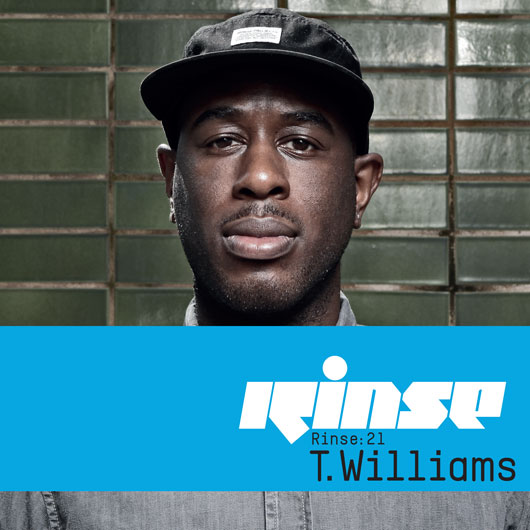
“A good mix captivates you,” says T. Williams (a.k.a. Tefsa Williams), whose Rinse 21: T. Williams dropped last month. “I think a good mix needs to be able to educate—musically educate and give an insight into the musical influences and sounds that the person is trying to convey. For myself personally, it always needs to be forward thinking. New music, stuff that’s left of that genre. Not playing it safe.”
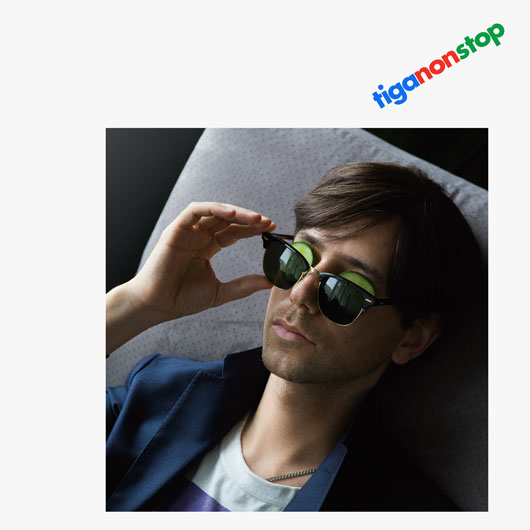
Education is also a major factor for Turbo label head Tiga, whose Tiga Non-Stop just dropped. “Sometimes you hear a mix and it’s just, like, right. Maybe it’s just an hour long but it nails a sound and you’re like, ‘Whoa, I want all those records.’ I remember a long time ago, with I-F, Mixed-Up in the Hague. That was a big one. My brother brought it back from New York and I knew shit about Italo. Almost every record on that was new to me. Not new to other people, but new to me. It was an eye opener. It was like, ‘Holy shit, what is this?’ Mr. Flagio and Space Invaders, those were seminal for me. For me, it just comes down to hearing records you don’t know. It’s also important what a DJ ends his mix with. It’s usually a bit of a statement. A guy’s not going to end with something unless he thinks it’s something really special.”
At this point, Tiga’s speaking about curation, and a process that’s unique to the mix CD format. T. Williams explains, “There’s a lot more elimination of tracks. I had loads of tracks around me and loads of people I wanted to showcase as well, but because of the time restrictions, you only get 60 to 70 minutes to work with. With a podcast, you get an hour and a half or even two hours. An hour and a half is usually a good time. I don’t even play DJ sets that are 60 minutes, like, ever. So really stripping things back and being really brutal about what tracks made the mix and what didn’t is a really big part of the process going into it. It makes [the mix] way more curated.”
Mix CDs’ limited timeframe is definitely one of their defining factors, as Tiga explains. “In general, with DJing, I’ve always thought the shorter the set the harder it is to pull off,” he says. “[When DJs play long sets,] people always say, ‘How does he do eight hours?’ When these guys like Danny Tenaglia get up and play 16 hours, that’s even easier. I’m not saying it’s easy to do, but strictly from a programming angle as a DJ, it’s okay. It’s just a marathon, you have so much freedom. No one’s waiting for fireworks. If you want to go into gospel for a while, it’s okay. [People at the club] paid their admission, that’s part of the deal. An hour set—in a mix CD—it’s much harder to come up with something good.”
Complicating matters is the fact that “something good” these days generally means something built around exclusive tracks. Untold explains,”I sounded people out—especially people who aren’t in the industry— and asked, ‘Why do you buy a mix CD? What’s the point?’ And the vibe I got was that it’s people who don’t have a vinyl player but want exclusive stuff. I thought it was good for me to include not only my own stuff, but things from other people as well.” Ben Klock says something similar, “With a podcast, it’s different. It’s not my approach to present unreleased stuff so much, but with mix CDs—a commercial format—I want to have something extra. I use a lot of unreleased stuff and collect these tracks and form a picture in my head.
Untold
Another limiting aspect is the licensing required for a commercial mix CD. Online, the unrestricted nature of web content has meant that things like podcasts have evolved into something that’s closer to a live experience. Tiga elaborates, “In general, what’s happened to [online] mixes is that the quality is phenomenal now. When you don’t need to license stuff, when you get semi-official mixtapes in the form of podcasts and Boiler Room or whatever it is, you’re getting things that are closer to live performances, and, in a lot of cases, are probably closer to what an artist wants to do. If he wants to play a Prince record, he can put a Prince record on. If he wants to put some strange bootleg on, he can. I mean the quality has probably gone up. Mixes period have gone up. It’s still one of the best ways to find out about new music.” On the other hand, this has created a unique challenge for artists working in the mix-CD format.
These limitations require a special set of tactics, prompting Ben Klock says, to advise, “You should license more tracks than you need. You have to make the mix out of a pool, which is large enough to make a good mix. If you just have 15 tracks and you have to put in 12, then it’s just not enough things to choose from. And it’s good to do all this licensing stuff before you start mixing, because when you have the mix together, and the puzzle is finished, and [the label] says, ‘We can’t license this track,’ then you need to change everything because you can’t use that track. The whole house of cards falls apart.” T. Williams adds, “Licensing tracks is really hard. Especially with older tracks when they’re all old underground white labels. Some of the tracks I really wanted just couldn’t make it on because we couldn’t find the owner of the original. It’s like being a detective and trying to get to the bottom of who actually made the track and who owns the license. So you go up to someone and say, ‘Do you know this person?’ And they say, ‘No, I know someone who used to know or used to work at the label.’ It’s a really long process. It’s fun though.”
At the same time, in some ways the internet has made the process of licensing less of a headache. Tiga explains, “It’s easier now because people don’t expect much money, so it’s like a blanket or a quick one-off price. Or some people even just let you do it for free now. People are less uptight.” Describing a typical deal, he says, “In my experience, it runs from zero—the people that are like, ‘I’m just happy to be involved’—to the symbolic advances—where it’s like, ‘We really like your music, here’s 200 to 500 [dollars].’ I think when it’s 1000 [dollars] is when it’s really serious. You really do that only when you have a track you really want. In the old days, you’d hear of things going higher, but you really don’t hear that now, and I can’t imagine anyone paying much more than that. I’m talking about the semi-underground. I don’t know what David Guetta does. Once you get into those worlds, they’d probably be willing to pay you.”
If all of this sounds like a comparatively laborious task, that’s because it is. So why bother in 2012? Jack Dunning responds, “Availability, isn’t it? We chose to do Hemlock: Chapter One, we chose to do the mix CD, and we wanted to market it. It’s kind of the old industry way, but for me, just by doing it, it’s a statement. It’s an accessible format that at stores and larger chains, someone could walk up the aisles, get their eye caught by [the CD], and go and be introduced to a load of music they never would have [heard otherwise]. I think for that reason alone, it’s a good thing. I mean, those people wouldn’t go into an underground record store and buy a 12″. For me, the CD is like this domestically accepted format.” Surely taking into account the fact that physical record stores seem to be disappearing as well, he sums up the state of the commercial mix CD in 2012 fairly nicely: “[I’m] kind of glad that we got this one out this year, because in one, two years’ time, I don’t know if it’ll be viable from a distribution point of view.”
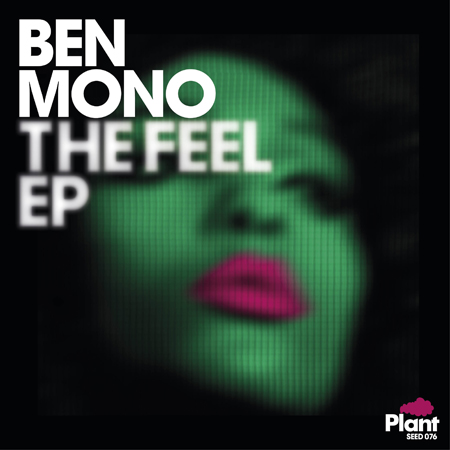
Throughout the past decade, German producer Ben Mono has been making a name for himself in Europe with steady releases on the Munich-based Compost label, and now he has prepped his US debut with a release for New York outlet Plant. His record, titled The Feel EP, features two originals and four remixes, two of which were crafted by London duo CSY & Stripes. “How It Is (CSY & Stripes Remix)” focuses more on low end than the original production, which boasts a garage-tinged beat and some uplifting vocal samples. The duo’s version tames the spoken samples into wispier and more robotic-sounding forms, and showcases a rumbling, oscillating layer of bass speckled with whirring synth chords. The Feel won’t see a full release until December 4, but you can pick up an early copy here and stream the record in full after the jump.
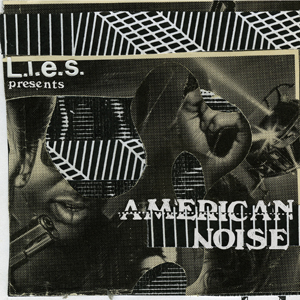
Few labels have been more representative of New York in the past few years than L.I.E.S. (a.k.a. Long Island Electrical Systems). Starting in 2010, its large discography of limited-edition 12″ releases established an underground reputation built on a raw approach to the dancefloor. Scarce in stores and difficult to source on the internet, it has quickly become a cult favorite for DJs and listeners interested in hardware-fueled abrasiveness. That said, the sheer volume of tracks coupled with a lack of availability has meant that the label has been somewhat inaccessible for casual listeners. American Noise, the imprint’s first compilation, rectifies that situation by providing an easy, two-disc entry point that contains one disc of previously released out-of-print favorites and a second of all-new material.
The first disc goes into the archives and pulls out 11 tracks that are mostly highly regarded b-sides and album cuts from records that now fetch high prices on the second-hand market. More than just a greatest hits, it also manages to get across the breadth of the label. Jahiliyya Fields’ “Servant Garden” and Steve Moore’s Frigia” begin the compilation by invoking a somber and spaced-out mood that plays to the ambient side of the label’s output. This atmospheric thread is a dominant aspect of the overall sound, with bare arrangements given a sense of depth by murky tape degradation.
Yet it’s in the fusion of ambiance and dancefloor appeal that the L.I.E.S. approach really shines. An example of this is Maxmillion Dunbar’s “Cassette Arabic,” which fuses sounds and voices evocative of the Middle East with a contorting TB-303 bassline. Its weird atmosphere and less-opaque background noise make it a perfect track out of leftfield—it sounds like it belongs on some long-lost DJ remix service EP from the 1980s. Similarly club approved is Two Dogs in a House’s “5th Floor,” the popular b-side of its Dog House EP. It’s a freaky immersion with a menacing bassline that pushes through warping percussion and strange melodies.
Maybe the most dance-inducing track on the first disc is Svengalisghost’s “Deep Into Memory.” Just as noisy as everything else, it’s a bouncing ride aboard jacking house rhythms and an acid bassline that continually threatens to spill over. What makes this track is the way in which everything seems to move with its own internal logic. Sounds and patterns come in and out of the background abruptly, without regard for standard bars, as though someone is working an MPC’s track mutes.
The second disc offers up 12 previously unreleased tracks that manage to maintain the standard of quality established by the first disc. In fact, it mostly surpasses it in style, as the 12 tracks feel closer to where L.I.E.S. is residing in 2012. Torn Hawk’s “This is Crime & Lace” starts up in an insane place, with blasts of noise riding over a chugging house rhythm married to occasional glimpses of guitar. It’s obviously sample based, but the loop plays like it was roughly chopped and thrown together, giving it an appealing dimension that’s lacking in more conventional edits. This style of bizarre editing plays a role throughout both discs, but finds its apex on “Journey,” a song by an uncredited artist. It’s a re-edit of some cosmic Afro track with synthesizer flourishes and tribal drumming made strange by psychedelic delay and mastering job that sounds like its been pushed down to a tenth-generation cassette tape.
Weirdness abounds. Bonquiqui’s “Sansoftime” stops mid beat, Professor Genius’ “Alamut” sounds like the soundtrack to an ’80s horror film, and Beau Wanzer’s “Jail Lock” could almost pass for the work of Throbbing Gristle. Yet it’s L.I.E.S. newcomer Delroy Edwards who provides the highlights of the second disc. First it’s “Feelings,” a gritty house song in the vein of Hieroglyphic Being that wheezes metallically over a mess of hi-hats and sci-fi noises. As abrasive as anything on the release, its more conventional sense of structure gives it a dancefloor appeal in spite of its harshness. His remix of Xosar’s “Tropical Cruize” is less abrasive, but just as good. It takes on ’90s house revivalism by appropriating the rhythm and symbolism of the past, while contorting it into something new. Xosar’s characteristically muffled singing is used here in a way that both parodies and mimics those faceless house divas of the past. And maybe that’s a good way of thinking about the label as a whole. While still using the palette—and even equipment—of the past, it’s somehow managed to move beyond pure revivalism and break into something entirely contemporary. It’s this aesthetic that’s conveyed so fully on American Noise, and that’s why it’s an essential release of 2012.
The virtually unstoppable force that is Maya Jane Coles seems to not even be willing to let up for the year’s final month, as the London DJ/producer is set to drop a new EP next week, which is now availible to stream in full on XLR8R. The forthcoming Easier to Hide is said to “further illustrate just how broad Maya’s musical palette is” across its four tracks, the first of which will also appear on the artist’s forthcoming debut full-length, an effort that appears to still be in the works from what we can tell. And just because Coles really wants to hammer it into our heads that she can pretty much do it all, the EP appears on her own newly minted I Am Me label and features artwork crafted by the multi-talented artist herself. You can stream the whole EP before it officially drops on December 16, below.
Broken Haze‘s “Air Castles” is a topsy-turvy rollercoaster that plunges down a descent of arpeggiating synths, spins through a cartoonish steel drum melody, and bounces along with a quickly skipping bassline. With the help of a wailing vocal sample and an intensely layered synth line, the tune’s wild carnival vibes are at full tilt. “Air Castles” is taken from Broken Haze’s recently released Lightning Flash EP, which you can preview in the player embedded after the jump.