Night Slugs announced the launch of its new mix series back in April with a set from co-owner Bok Bok, and the second installment has just arrived courtesy of the label’s other head, L-Vis 1990. His mix contains goodies from Night Slugs and Fade To Mind alumni like MikeQ and Girl Unit, as well as several of his own brand-new productions. In addition to the new and unreleased cuts, L-Vis 1990’s mix—which you can download below—showcases some of Night Slugs’ key influences from the 1990s, like DJ Booman and DJ Hyperactive.
01 – L-VIS 1990 – In this Motherf**ker ft. TT THE ARTIST (Acapella) 02 – KW GRIFF – Y’all Aint Safe (White) 03 – GATEKEEPER – Treedrum (TOTAL FREEDOM Debt Stalking Version) (Hippos in Tanks) 04 – L-VIS 1990 – Not Mad (Night Slugs) 05 – MIKEQ & DJ SlIINK – The Bitch (Fade to Mind) 06 – L-VIS 1990 – Temptation Ha (Night Slugs) 07 – MIKE DUNN – Frantic Machine (Muzique Records) 08 – ERRORSMITH – Free for All (White) 09 – PAUL WOOLFORD – Erotic Discourse (L-VIS 1990 XXX Remix) (Night Slugs) 10 – JAM CITY – …Now We Relate / L-VIS 1990 – FDAU ft. TT the Artist (Acapella) (Night Slugs) 11 – PRINCE – Batdance (L-VIS 1990 Laser Gun Edit) 12 – SOUNDHACK – Devils Run (Soundhack) 13 – PAUL JOHNSON – Work Me (Djax records) 14 – L-VIS 1990 – Ballad 4D (Night Slugs) 15 – DJ HYPERACTIVE – I am the Beat (Communique Records) 16 – L-VIS 1990 – Wires (Clone Jack for Daze) 17 – TRONCO TRAXX – C.U.N.T (Henry Street Music) 18 – BOK BOK & TOM TRAGO – The Hole Driller (Night Voyage) 19 – DAT OVEN – Icy Lake (L-VIS 1990 Refix Pt 1) (Night Slugs) 20 – DJ BOOMAN – Too Pumped (White) 21 – HINDZY D – Soundwave (White) 22 – DJ D-MAN – What time is it? (JAMMIN GERALD Mix) (Underground Construction) 23 – ROBERT HOOD – Red Passion 3 (Duet) 24 – DAT OVEN – Icy Lake (L-VIS’s Fire Alarm Refix Pt 2) (Night Slugs) 25 – L-VIS 1990 x THOMAS BANGALTER – Spinal Ha 26 – GIRL UNIT – Double Take Pt 2 (Night Slugs)
Montreal-based DJ/producer Poirier has started producing under the new moniker Boundary. His latest project apparently started as a way for him to explore new sounds and styles that don’t fit the Poirier aesthetic, and he’s done exactly that, as “Free Violence” firmly attests. The tune is pretty much the polar opposite of the kind of dancehall or dub sounds the artist usually explores; it’s also considerably darker, perplexing, and harder to categorize. Lying somewhere between post-dubstep, hip-hop, and soundtrack music, Boundary starts “Free Violence” off with sweeping choir vocals and a dirty UK grime bass, which are quickly overcome by a particularly foreboding acoustic piano and synthline that carry the production through its short-but-sweet two and a half minutes.
Parisian producer Bambounou (a.k.a. Jeremy Guindo) has shared precious few tastes of his upcoming full length, Orbiting, since announcing its release via 50Weapons back in September. 50Weapons label founders Modeselektor have unveiled a few clips from the album, and “Mass” also appeared on his recent Cobe EP, but today Bambounou has unleashed a full stream of the record on Resident Advisor. As promised, Orbiting combines throwback techno influences with a touch of bass music—you can check it out here before the LP drops on November 23.
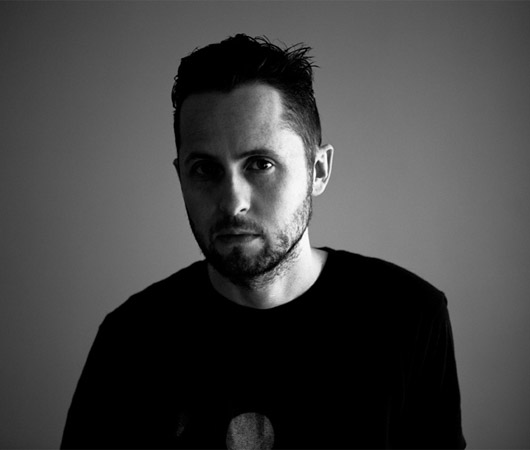
For most budding artists, finding one’s own style and voice can be a long and even frustrating process, and this has certianly been the case for Graham Bertie, the Canadian producer who now crafts robust techno tracks as Nautiluss. Beginning as a DJ in the mid ’90s before eventually taking an interest in production sometime around 2001, Bertie has tried his hand at a number of styles—early on crafting downtrodden hip-hop-inspired beats as Metrix before striking success with racous, MC-led party anthems as one half of Thunderheist (an outfit that enjoyed a fruitful three years signed to the Ninja Tune sub-label Big Dada). As it turns out though, Thunderheist’s success was an unexpected stop along Bertie’s path to finding a production voice that suited him, and in the past two years, he’s launched an increasingly noteworthy career piecing together thick, UK-indebted techno and sturdy rhythms as Nautiluss.
“I wasn’t super proud of most of the music we put out, it was actually more part of my learning process,” says Bertie of his time making tracks alongside the female MC Isis Salam as Thunderhiest. “It was weird to learn by releasing music rather than to make a bunch of music that nobody hears, but it was a necessary step to get where I am now.” In truth, there is plenty to be proud of when it comes to the music Bertie and Salam made together—while perhaps a bit short on subtleties, the productions were certainly well crafted and in the three years of the group’s existence, Thunderheist built quite a respectable following. At a certain point though, Bertie tired of touring and chasing after bangers. “I had my share of mindless party stuff,” he explains, “and being that kind of producer, you have to follow whatever is trendy. It’s just an endless cycle. There is always a chance that you’ll cash in and do well, but I decided I wanted to make music that I actually wanted to make and not just to ride the hype, even though it may be the harder and slower route.”
With that, the Thunderheist project was disbanded in 2010, and with no particular plan in mind, Bertie began exploring what would happen with him producing again as a solo artist. After a few months, London vocalist Lord Skywave (a.k.a. Simon Lord) came knocking in search of some tracks to use on a solo full-length of his own, so Bertie offered one of the first tunes that had been completed during these new solo experimentations. Ultimately, Lord’s LP would not come to fruition, but Bertie’s contribution found its way to Untold—who had also offered up productions for the Lord Skywave project—and, paired with a solo b-side, Nautiluss’ first release arrived on Hemlock in September of 2011 as the “Ultraviolet” b/w “Bleu Monday” 12″. While the a-side landed somewhere between cloudy bass music and avant-pop (with the help of Lord’s vocals), the instrumental b-side was more in line with the loaded, low-end-focused fare Untold’s imprint is known to offer. Displayed across the two tracks were Bertie’s precisely arranged rhythms and infectious shuffles, which provided “Ultraviolet” and “Bleu Monday” with their dancefloor nods while somber chords and understated melodies gave the tunes an introspective mood. “[My original aim] was definitely a conscious effort to balance out home listening music versus club music,” says Bertie, “but to do so in a way that was still interesting.”
Bertie seems to have been just a bit surprised by the amount of attention his Nautiluss debut had received. Given the pair of songs used were some of the earliest experiments he had finished upon returning to his solo work, “Ultraviolet” and “Bleu Monday” weren’t necessarily representative of where he thought the Nautiluss project could go, and in the time between those tunes’ creation and ultimate release, Bertie had been steady crafting music that was more appropriate to “play out.” Earlier this year, the ?lpha EP would set the record straight. Marking the producer’s debut on Tiga’s Turbo imprint, the record showed a tougher side to Nautiluss across four techno-rooted tracks marked by the constant tweaking of sequnced synth lines and heavy-handed compression. As the story goes, the EP’s lead track actually found a home at Turbo just an hour after being bounced from Bertie’s computer. First, “Mixed Numbers” was played for fellow Toronto resident/proudcer/DJ Kevin McPhee, who then decided he wanted to make a dubplate of it (Bertie assures us that is “something [McPhee] does”). Taking this as a good sign, Bertie then fired off the song to friends with connections at Turbo, and an hour later, the label had asked him to hold the track.
Still, despite the fast—and considerably positive—response “Mixed Numbers” received, Bertie was still a little nervous about its release, admitting that he rarely gets the chance to hear his songs in a proper club atmosphere prior to their release. In part, this stems from the situation in Toronto (his place of residence for five years now) and the scene there, which—despite its recent wave of budding house/techno producers such as McPhee, Gingy and Bordello, and more—he views as somewhat fractured between a number of different camps, and not at all immune to North America’s somewhat lackluster appetite for underground dance music. “It’s weird to live in North America in that I can’t really play my music here in most situations,” he explains, “and it’s terrifying because I don’t get [the chance] to try out my tracks and adjust them accordingly.”
It would appear that this perceived hurdle has done little to affect the quality and dancefloor potency of Nautiluss’ music, a fact further evident on the man’s second EP, Habitat, released earlier this month, again through Turbo. Without a doubt, the four tracks offered on Bertie’s most recent effort make for the most distinctive and muscular Nautiluss release to date; the rhythmic pilings and thick sonic constructions he’s proven adept at crafting are displayed in full force across its entire 20-plus-minute run. In Bertie’s own words, Habitat is “definitely the most aggressive stuff I’ve done in a while,” and having gotten the chance to hear the tunes in an ideal club setting during a few recent dates in Europe, he sounds satisfied with the results.
Still, he is reluctant to think that his latest EP signifies that an exact sound has been landed on for his solo project, saying, “I don’t want to give off the impression that I’m banging these things out all the time,” before adding, “I can’t really just write club music. I’ll go a little crazy if I concentrate too much in one direction.” To that end, Bertie tells of some “more melodic things” that he’d like to release in the future and his plans to continue releasing just EPs and singles for the time being—his past goal of putting together a Nautiluss full-length appears somewhat unrealistic to him for now. In the end, it would seem that it does not really matter if Bertie is still on a path to finding a sound or style he’s comfortable with, or if he ever does. So far, the journey which has led to his transformation into Nautiluss has proven rewarding enough in and of itself.
This tune is so busy it’s almost as though Monolithium dropped every drum, synth, and trick up his sleeve into it. “Bounce 4 Life” starts out with innocent enough intentions, with a vocal sample shifting pitches alongside polyrhythms and electronic notes. However, the song quickly begins to recall the Fantasia soundtrack. The Canadian producer, like Mickey Mouse, when left to his own devices, has a little too much fun, and the sounds multiply uncontrollably as he empties buckets of synths, chopped vocal samples, and trap-like drum hits into the mix before the ending offers a bit of peace to the listeners. Bounce 4 Life—which features a collaboration with Prison Garde and well as remixes from Ryan Hemsworth, KingThing, and H-SIK—will drop on December 10 via Error Broadcast, but you can check out the artwork and tracklist, as well preview more of Monolithium’s EP, before then, after the jump.
01 Bounce 4 Life 02 Lancashire Hammer 03 Pavillionaire (feat. Prison Garde) 04 Spiral Face 05 Sleepy Beauty 06 Bounce 4 Life (Ryan Hemsworth Remix) 07 Bounce 4 Life (KingThing Remix) 08 Bounce 4 Life (H-SIK Dub)
The past few years have seen both Tim Hecker and Daniel Lopatin (a.k.a. Oneohtrix Point Never) making big waves within the relatively intimate confines of ambient electronic music. Each has attracted, quite rightly, no shortage of critical respect and a steady flow of new listeners thanks to impressive solo outings—Lopatin for the confrontational synth experiments of Returnal and the atmospheric collages of Replica, and Hecker for his high-concept, beautifully textured Ravedeath, 1972. As such, it’s hard not to see the potential in a collaborative project from the pair. Unfortunately, Instrumental Tourist frequently fails to live up to that potential. Despite scattered flashes of brilliance, too often it’s an album that feels unambitious, as though it’s content to dwell in the middle ground where the two producers’ back catalogs intersect rather than forge something new.
Whereas each artist’s recent solo endeavours have come across as detailed, meticulously thought-out works, Instrumental Tourist is an intentionally looser, free-flowing affair. For its conception, the pair opted to head into the studio with as little preparation as possible, relying instead on jazz-inspired methods of improvisational composition and a sound palette exploring (in their words), “the acoustic resonance of digitally sourced instruments of the world.” Herein, it seems, lies the album’s main weakness; while the desire to try more ambitious methods of working is entirely admirable, one can’t help but feel that this jam-session approach fails to get best out of either artist. When in top form, both Hecker and Lopatin create soundscapes that are capable of regularly surprising and challenging the listener, but here, it’s often easy to pinpoint where each artist is falling back on familiar ideas and previous successes. The chaotic, digital distortion of “Intrusions,” for example, bears a notable resemblance to Returnal opener “Nil Admirari,” while “Vaccination (for Thomas Mann)” plays out like a digitized rework of the choral atmospherics Hecker used throughout Ravedeath, 1972. Crucially, the music throughout Instrumental Tourist unfolds slowly and somewhat predictably, creating textures that are more often soothing rather than surprising, and as a result, it’s very easy for the listener to let the whole album drift by without ever really engaging with it.
It would be unfair to imply that the record is entirely without its charms though. Opener “Uptown Psychedelia” hits upon some moments of genuine greatness as the hollow twang of (what sounds like) the slap-bass preset of some retro sound module bursts through layers of distorted digital drone. The brilliantly titled “Racist Drone” treads similarly interesting territory, breaking up the melancholy hum of a cheap-sounding synth pad with repeat aggressive interjections from a vaguely oriental-sounding synthesized instrument. Meanwhile, listening to the weary, nostalgic melody of “Ritual for Consumption” fight an ultimately futile battle against a growing wave of digital static is genuinely mesmerizing. Still, for the most part these snatches of brilliance merely emphasize the missed opportunities elsewhere on the album. There’s certainly plenty of potential in combining the skills of Hecker and Lopatin, but ultimately, Instrumental Tourist fails to live up to the sum of its impressive parts.
In anticipation of its forthcoming Future Daughters EP, Future Dollars (a.k.a. Sam Smith and Jake Nadrich) sent over “Proto Party” as a hint of what’s to come. The track offers a myriad of unconventional drum samples, all of which bounce alongside a sputtering synthline and disguised guitar sounds from the duo’s jam sessions. The NY-via-LA transplants, who nonetheless remain a cornerstone of SoCal audio-visual collective 6BIT (you may remember “Lost Kingdom” from fellow 6BIT artist Dreams, a tune that made our list of Top 20 Downloads last month), will drop the rest of Future Daughters via their crew’s label sometime next month.
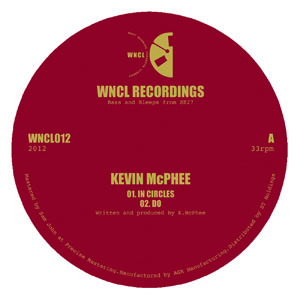
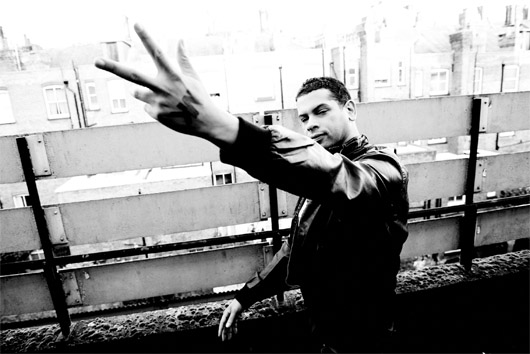
Maybe this goes without saying, but Kevin McPhee‘s production approach seems nowhere near the end of its evolutionary period. Since appearing on the scene early last year, the Toronto-based artist has undergone a fast-paced transformation, shedding the R&B-touches and spacey chords of his earliest output for tougher, more dancefloor-aligned tracks. His debut for West Norwood Cassette Library is the latest documentation of such; existing somewhere between hard-edged techno and shuffling bass music (with some classic dubstep nods thrown in for good measure), McPhee proves again to be a talent who’s not constricted to any specific genre.
In WNCL’s brief notes that accompany the four-track EP, the record is described as McPhee “[getting] his clonk on,” and while that may be a rather ambiguous statement, it does somehow ring true. Often on these four efforts, the various clanks and clunks of off-kilter percussion—both sampled and synthesized—lead the way, creating atonal loops and phrases that ride atop the rugged drum programming. The opening “In Circles” fits an uncountable number of crackling hits and rolling hand drums in between its massive four-on-the-floor, and the b-side cuts, “Pumpkin” and “The Blind Whirring of Machinery,” feature patterns of metallic and industrial-sounding hits that ride the line between space-age percussion and sequenced synth.
Whether or not it’s because McPhee utilizes actual analog hardware (we’d like to imagine he does), this entire EP somehow manages to tap into the untamed sound that is usually the result of tweaked noisemakers who aren’t controlled directly by a computer. Similar to the work of KiNK or Cosmin TRG’s more recent efforts, there’s a thin layer of overloaded haze that marks the more present elements—the kicks, snares, and occasional synth or percussion leads that momentarily spin out of control—and furthermore, the overall product is thrown through some heavy-handed compression in the process. But these songs never come off as too aggressive or over-the-top, even when “Do” unleashes a monstrous—dare we say wobbly—bassline and dubstep skip or “Pumpkin” ceaselessly pushes deeper into its stuttering shuffle. Without a doubt, this EP houses the most edgy and forceful tunes McPhee’s made to date, but it still goes to show that the young producer is an impeccable craftsman while serving as another of his absolutely solid outings.
Throughout the week, a whole lot of material gets posted here on XLR8R. And while we know—and love—that some hardcore readers will eagerly pour over every single news story, interview, podcast, video, and MP3 download that appears on the site, we also realize that for most people, it’s impossible to see everything, which means that some quality XLR8R content is likely to get missed in the hustle and bustle of everyone’s daily lives. In the interest of making it easier for everyone to catch up, every Friday we present The Lowdown, a weekly wrap-up of the top 10 tidbits from our site.
1. Before it drops next week on Hotflush, we hosted an exclusive stream of Living with Ghosts, the debut full-length from Sigha.
2. Fresh off the release of his new LP, masked German producer Redshape put together a surprising mix for this week’s XLR8R podcast.
3. It was a busy week for online mixes, as Tuesday saw new offerings pop up from Flying Lotus and Jamie xx.
4. An interesting video surfaced of Ghostly-inked beatmaker Shigeto talking about drumming, production, and his musical philosophy.
5. We posted a free download of “Honeycomb,” a tune from newly solo UK producer Stumbleine, who was previously making music as part of Swarms.
6. “Mating Dance,” a new track from London’s fLako, features jazzy drums and the vibe of an island-inspired Zelda game. It’s available for free download.
7. This Saturday, Locked Groove will be spinning at Berlin’s Pueblo party, and he put together a new mix to help spread the word.
8. Last week, XLR8R traveled to Turin, Italy to check out the city’s annual Club to Club festival. Our review scored the whole thing on a strict pass-fail scale. See which acts made the grade.
9. Our week-long Labels We Love series kicked off with an in-depth feature on the Modeselektor-helmed 50Weapons imprint. Give it a read and check out the rest of the Labels We Love coverage here.
10. Veteran vocalist Spaceape, best known for his collaborations with Kode9, gave away a free EP of new music.
An expanded version of the The Lowdown is also available via a weekly email newsletter. Those interested in an even more in-depth round-up of XLR8R content, including a complete listing of all the free downloads we’ve offered in the past seven days, should sign up by entering their email address below.
At this point, it seems safe to say that Marc Kinchen (a.k.a. MK) is not camera shy. Just last month we shared a pair of videos in which he detailed the process for crafting his patented MK dubs, and now a new interview has popped up, this time with the legendary house producer taking on a wider range of topics including his early days in Detroit, the heyday of ’90s NY house, and his plans for the future. Sitting down with Audio Doughnuts, MK fills us in on some interesting bits of his history as a producer and even lands on some words of wisdom along the way. The whole six-minute interview can be watched in full below.