
The Portland-based house revivalists of The Miracles Club have released a new video to accompany “The Wheel,” the group’s contribution to the inaugural release for its Ecstasy label. The clip showcases some of the most charming aspects of The Miracles Club, like its fun-loving and goofy sense of psychedelia and love for over-the-top, theatrical dance moves. There’s a lot of body paint and glitter in the clip, too, which features people decked out in pre-modern garb and flamboyant costumes wiggling in front of backdrops that look ripped from The Miracles Club’s MacBook Photobooth. The lo-fi imagery in the video matches the vintage feel of “The Wheel,” which draws inspiration from early ’90s analog house rhythms throughout its thumping, swirling aesthetic.
Bullion, Kenton Slash Demon, and Pachanga Boys to Feature on John Talabot Remix EP
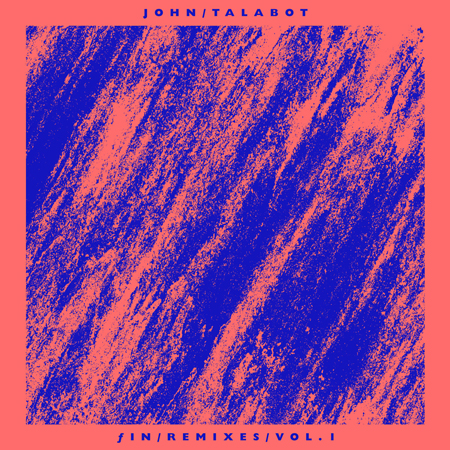
Barcelonan breakout producer John Talabot has announced the forthcoming release of a remix EP for some standout tracks from his recent debut album, the XLR8R Pick’d Fin. The five-track offering—which features reworkings by the Pachanga Boys (a.k.a. Rebolledo and Superpitcher), Denmark-based duo Kenton Slash Demon, and UK talent Bullion—will drop on October 12 via Permanent Vacation in the form of two vinyl records. One 12″ will feature the three contributions helmed by the Pachanga Boys, who crafted “Purple,” “Red,” and “Blue” remixes of John Talabot’s “When the Past Was Present.” The accompanying 10″ is split between Kenton Slash Demon’s take on “Last Land” and Bullion’s version of “Destiny,” which apparently replaces Pional’s orignal vocals with Buillon’s own singing and lyrics. Seeing as how John Talabot’s remix record is denoted as Vol. 1, we expect more installments of the series in the near future.
Jessie Ware “Sweet Talk (Saux Remix)”

Amsterdam-based producer/DJ/musician Saux (a.k.a. Jurian van deer Hoeven) has offered up a remix of “Sweet Talk,” one of the sultry songs from Jessie Ware‘s recently-released LP, Devotion. Saux morphs the R&B sashay of Ware’s original into an easygoing and warm house bounce, opting to cut up the soulful chanteuse’s vocals almost beyond recognition. Certain lines surface from the beat, like the main refrain, “You give me the sweet talk,” but in Saux’s hands, Ware’s melodies are draped in shadows and stretched thin, like the robust pop singer’s friendly ghost.
Video: Schlachthofbronx “Everyday of the Week (feat. DJ Assault)”
The high-energy Munich-based production outfit Schlachtofbronx has unveiled a video for “Everday of the Week,” a cut from its latest album, Dirty Dancing. The clip matches a rasta-tinged juke beat and husky vocals from hip-hop veteran DJ Assault with shots of a ballerina’s dance moves and a measured board game between two men, two markedly placid subjects for a track with so much unadulterated enthusiasm. But the video bites back at the fastest part of the song, when it explodes with some artful pyrotechnics to match the fire-starting pace of the break.
Randy Barracuda “Onaina”
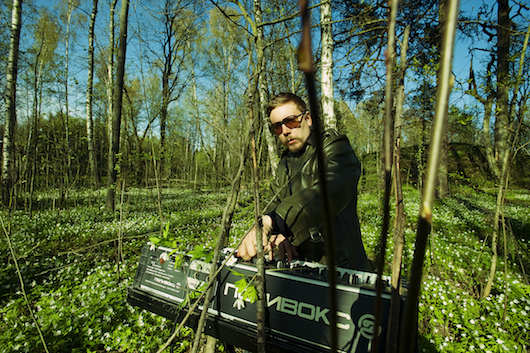
Today, Helsinki-based producer Randy Barracuda released his latest record via Losonofono, an LP aptly titled Random Works of Randy Barracuda Vol. II. As it turns out, the album’s title is a bit misleading, as the eight-track offering is a focused and consistent collection of original tunes that combine smooth funk rhythms and melodies with chaotic sound effects and undercurrents of the avant-garde. Like the volcano in the music video for Randy Barracuda’s “Vuoristotie” (you can watch that after the jump), both elements of meticulous order and random disarray flow seamlessly throughout his music, but as album cut “Onaina” demonstrates, the artist obviously has a command over both sides of his sound.
XLR8R Couldn't find the embed function for type: "vimeo" and source: "<iframe src="http://player.vimeo.com/video/48815700" width="530" height="424" frameborder="0" webkitallowfullscreen="" mozallowfullscreen="" allowfullscreen=""></iframe>".
Breach Delivers FACT Mix
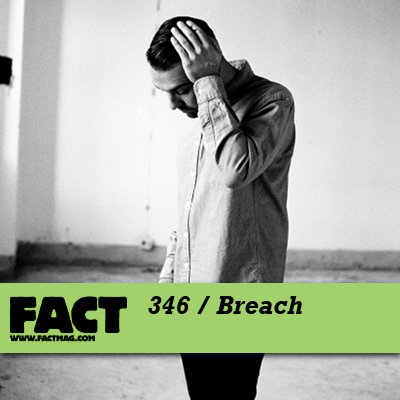
Ben Westbeech has returned to FACT’s mix series with a set under his moniker Breach. The Bristol-born producer last helmed a mix for FACT in 2010, and dropped a contribution to XLR8R‘s podcast series last year, just before the release of his sophomore album, There’s More to Life Than This. This year, Westbeech announced the launch of his own imprint, Naked Naked, which he inaugurated with the Breach single “You Won’t Find Love Again” (read our review here). His celebratory FACT mix features a forthcoming track on his nascent label, a collaborative release with London beatmaker Midland due out in November, as well as tunes from the likes of Photek, Disclosure, Last Magpie, and fellow XLR8Rpodcast contributor George FitzGerald. You can stream the DJ set and peruse the tracklist below.
1. This Torment is thought – Longreybeam
2. Trapped bootleg – Unknown
3. Bring Joy – Midland’s 2012 refix
4. Who Knows Where Love Goes – Last Magpie
5. I’ll never give up – Esteban Adame
6. Untitled 2 – Midland and Pariah
7. Mountains – Pedestrian remix – DjRum
8. Gliding – Deepchord
9. Nothing else – Detroit Swindle
10. Your’s – Medlar remix – Steffi
11. Past Present – Andrea Di rocco
12. Beserk – Daniel Bell
13. Come on – J. Bevin
14. Rain – Kerri Chandler
15. Variation 2 – d’Eon
16. What’s in your head VIP – Disclosure
17. Stone Cold – Groove Chronicles
18. Comb Over – Shadow Child and James Talk
19. It’s alright – Lorca
20. Horizons – Etch
21. Your My Own – Sello
22. Wake – Indigo
23. Fusion 45_33 version – Photek
24. Love Philtre – Citizen mix – Brabe
25. Keep the fire burning – Shadow Child edit
26. Waves Dub – Drums Of Death
27. Room Service – Citizen
28. 101 – Breach and Midland
29. Needs You – George Fitzgerald
30. Wolf Club – Desvverre
Listen to How to Dress Well’s New Album

We’ve been looking forward to the release of lo-fi R&B crooner How to Dress Well‘s second LP, Total Loss, since it was announced with the excellent “Ocean Floor Everything” single, which was followed up last week with another beautiful track from that album. Now, we can listen to the entirety of singer/producer Tom Krell’s new full-length before it drops on September 18 via Acéphale. Check out the 11-song Total Loss in the player below. (via Complex)
Deep Inside: Mala ‘Mala in Cuba’
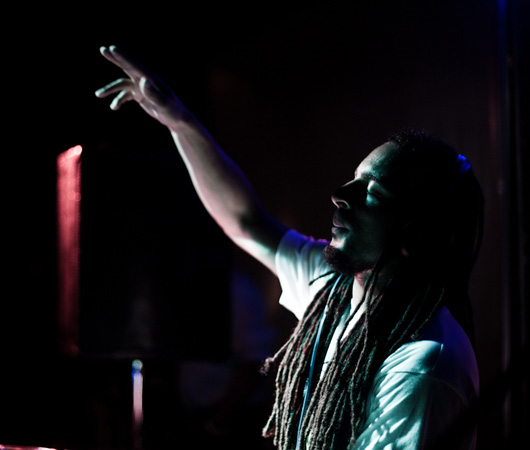
Cuban music plays heavily with percussion and goes mental for melodies, but rarely does it meditate on bass weight. By contrast, British producer Mala (of Digital Mystikz/Deep Medi fame) has spent nearly his entire career experimenting with the way bass, sub-bass, and drums can work together to rattle minds and stoke dancefloor fires. On Mala in Cuba—a collaboration between DMZ’s proud lion and traditional Cuban musicians—live instrumentation is incorporated within a loose dubstep framework, but Mala keeps a firm hold on the reins. Rather than trying to match the lively, uptempo energy of the Cuban sounds, he envelopes Latin elements in a thick London fog, pulling melancholy from beneath tinkling ivories and adding mystery to reverbed salsa rhythms.

Though Mala went to Cuba to make the record—at the urging of Brownswood label head Gilles Peterson (and as part of his ongoing Havana Cultura initiative)—he didn’t do much writing or arranging there. Rather, he played skeletons of 140 bpm beats to musicians, including Robert Fonseca and his band, singer Danay Suarez, and percussionist Changuito. The players freestyled over the beats, with Mala and an engineer capturing every nuance via tape into a top-of-the-line SSL mixing desk. “I came home from Cuba with about 60 gigs worth of live playing,” he recalls. “It was just so much information to process and to go through. The level of musicianship was phenomenal—so good, it made me feel very uncomfortable and inferior. I don’t understand music in that way. Ask me to hum a C or a D and I can’t do it… but I will hear a C and a D and feel it. I just had to make music how I feel it and this is how it came out. I can only bring what I do, so I guess the record is really me trying to translate my experience of Cuba.”
Perhaps to the dismay of the serious steppers out there, there are times when this record feels just like Mala sending you a postcard from Havana. It’s written in his voice, but the scenes are distinctly pastel and totally tropical, hazy memories of whitewashed churches and street-corner conga jams. “The Tourist” saunters like a pair of faded madras shorts around a dusty square at high noon, sunny strings reverberating from a nearby alley, shakers and güiras galloping at the pace of horses hooves. “Como Como” and “Changes” blaze with a contained but palpable energy; the former with the tangerine pulse of a highly caffeinated cortado hitting your morning veins, the latter a liquid pink sunset shot through with breezy blue piano echoes, slowly building to the anticipation of nightfall in center city.


But Mala’s not really that comfortable being a tourist—no matter what country he goes to, he’s going to be the guy standing in shadows of the club, taking it all in. It’s this deep thought and an almost Shaolin-like minimalism (plus the aforementioned “bass weight”) that’s made classic tracks like “Bury Da Bwoy” and “Anti-War Dub” reverberate far outside the hermetic South London environment in which they were made. In similar fashion, the most interesting tracks on Mala in Cuba abstract and absorb Cuban percussion as a means of finding new ways to ride his signature rhythm. The smoky purple salsa of “Mulata,” the hardcore-refracted swell of “Revolution,” and “Ghost”—a mesmerizing ebb and flow of pensive pianos and layer upon layer of tribal handclaps nestled in a sea of elemental low end—contain that inimitably haunted and dubby Digital Mystikz touch. They are a postcard from a country that doesn’t exist; missives from an emotional hyperspace between sea and sky, soundsystem and studio.
Having sampled numerous reggae, jazz, and soul records, Mala is no stranger to the appeal of organic sounds—indeed, he’s thought to be one of the few keeping the word “dub” in dubstep. But sampling is a far cry from working with live takes, which Mala says revolutionized his view on music-making. “I’ve grown up playing computers, Nintendo, Playstation, Sega. For me, it’s all about that: electronics behind the computer. I didn’t necessarily think it was important to incorporate live music into the style of music that I make, but having done so, it’s totally changed me. You know those optical illusions where you look at something but you can’t see it? And then all of a sudden your eyes focus and you can see the image. That’s almost what it’s been like for me. What these musicians do is something that can’t be recreated—it can be recorded, but even the recording isn’t the real thing. I don’t think I can ever go back. The whole process of making this album has totally changed my thinking and the way that I will approach making music in the future.”
The process of making dance music can be overtly mathematical, but the source material here encouraged Mala to move farther off the grid. “Some of the grooves, especially the in-between grooves, I left unquantized,” he recalls, “especially the congas and the timbale. This guy came in [to record] called Changuito. I don’t know how old he is but he walked into the studio like such a don: white Kangol, pink shirt, he had this chain on and his arm in a plaster caster. He set up his timbale and just started playing over the beats I had made. When I was making that album there was always a time where I was like, ‘Ahh, it’s missing some stuff! I need to add something.’ I forgot I had all these Changuito recordings. And I would just lay him on it and I didn’t even have to quantize it. The way he would fit in between the grooves! You can’t create that. It has to be somebody doing it. With that human element, there’s an energy, there’s a spirit, there’s a being behind it. All these things have been stored in the milliseconds of sounds that make up the entire track. If you would have asked me this a year ago, I would have said it maybe it doesn’t matter, but actually I think I understand the difference now.”
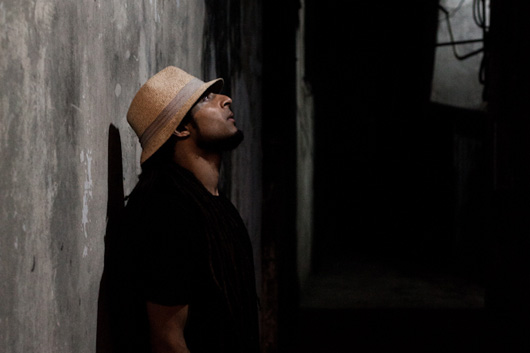
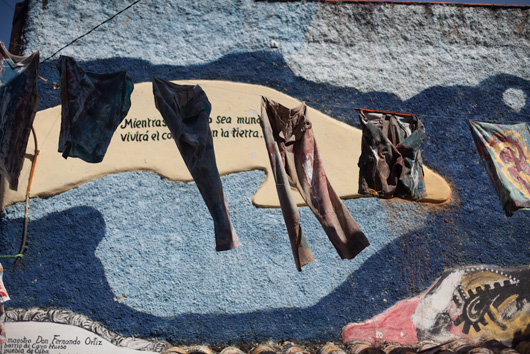
There’s no cool way to say this, but Mala in Cuba is a mature album. Some will see it as an open-minded victory in the war against the current wave of wobble-and-drop-obsessed dubstep; others will take it as evidence that Mala’s forsaken the dancefloor. (Though, to be fair, he’s known for playing fast and loose with anything coming close to a dubstep formula.) What is clear is that Mala is one of the only people in his genre who could pull off such a fusion and keep it from sounding forced, in part because he is not always preoccupied with making the club shake.
“When you get to being 32, you can actually have a conversation with people that you couldn’t have when you were 16 years old. When you’re 16, 17, 18 years old, you just wanna go out and ‘ave it. Everything has changed in my perspective now. I still love tearout music, I love hard music, I love music that makes me freak out and want to just skank out. But on an energetic and on an intellectual or spiritual level, when I’m sitting at home alone in my studio, I’m not trying to have a rave anymore. I’m trying to make music for my environment that I’m in.”
“I can listen to something extremely gnarly and aggressive but when that inspiration makes me create, it’s never going to come out that way,” he continues. “But it doesn’t mean that the two things can’t coexist in harmony; something extremely ravey and tear-out can be alongside something that is deep and meditative. Ultimately, it’s all the same thing. It’s all frequencies that we’re manipulating.”
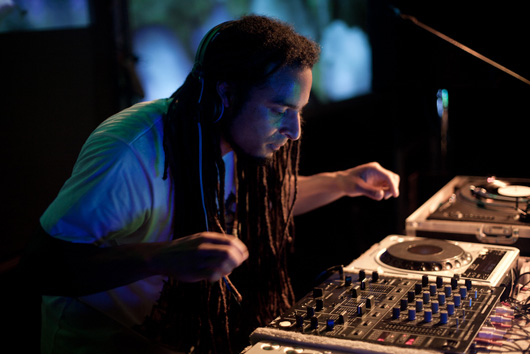

Though there’s nothing as resolutely ravey as “Eyez” on here, rolling and dubby drum workouts “Cuba Electronic” and “Changuito” and “The Tunnel,” with slinky technoid bass that’s simply cobra-deadly, are sure to nice up sophisticated dancefloors. Mala’s rep is built on his deeper flavors, so it’s easy to forget that DMZ (the label he runs with longtime friends Coki, Pokes, and Loefah) was a dance organization first and foremost—Mala has arrived at this point in time and space by traveling through the continuum of rave music.
“I’ve always felt it’s important just to follow what it is that you do,” he explains, telling the story of how he started as a jungle MC at the age of 14. Under the name Malibu, he and his partner Coke (now Coki) and their friend Poker (a.k.a. Sgt. Pokes) would play under-18 parties every week, chatting over sets from legendary DJs such as Kenny Ken, Jumpin’ Jack Frost, and DJ Rap. By the time he was 17, Malibu had moved into MCing in the UK garage scene, though it became clear to him that he wasn’t cut out for its consumerist leanings. “I didn’t like the bling-bling, I wasn’t about all the champagne drinkin’ and all that. The lyrics I used to say were on a conscious vibe but people in that scene didn’t want to hear no reality—they wanted fantasy and entertainment. I always felt like a bit of an outcast.”
Nevertheless, he landed a record deal for his garage MC skills. “As a 19 year old, when a major label comes to you and offers you x amount of money and says, ‘This is the shit,’ you build your life’s dream on it. And that’s what I did, you know. We got signed to EMI and they took the piss. You understand what the majors are about—they’re about money, business. They don’t care about personal development, they don’t care about your dreams. If they don’t see a quick return, they drop you. It was madness, madness, madness to experience it, but it was an absolutely crucial learning experience because it made me realize that is not for me.”
“I got really depressed and that’s when I really started channeling my energy into making music. I locked off the whole MCing thing because I had nothing more to say. Then it was like, ‘How can I connect with people?’ Alright, I got rid of the words. Now, let’s just deal with sound. And that’s when I started making music.”
These experiences have also made Mala notoriously careful about what he puts out and who he gets involved with, rarely releasing anything outside of his DMZ or Deep Medi camps. “I’m very militant in some ways in the way I like to go about doing music,” he admits. “I just work on stuff on my own and I put out stuff quite quietly.” But when Gilles called last year with an offer to go to Cuba, something about the timing seemed to dovetail with Mala’s own musical path. “I was slightly apprehensive [about this] because it was blatantly out of my comfort zone,” he says, “but it just felt like a really genuine offer and something that I probably shouldn’t pass up.”
“I felt really at home in Cuba, I really did,” Mala continues. “The people I met [there] do music for the same reason I do it—because they love it. They don’t do it because they think they’re going to be successful or famous, they just do it because its something within them that they have to do. That’s the beautiful thing for me about all of this. It’s not about finishing music or being able to sell a record. It’s just really about exploring and discovering new things. For me, that’s really where the joy is in all of this.”

Mala in Cuba is out now on Brownswood.
Dimensions Festival: Hits and Misses

Last week, XLR8R was invited to trek all the way to Croatia for the inaugural edition of the Dimensions Festival. Put together by the same folks behind the massively successful Outlook Festival, Dimensions featured a remarkably refined line-up, one focusing mostly on house, techno, and various strains of UK-flavored bass music. Taking place in an abandoned fort in the coastal city of Pula—the exact same location where Outlook happens each year—Dimensions presented dozens of artists over the course of four sunny days and three long nights. In terms of the musical talent on hand, the festival organizers left little to be desired. That said, the festival was far from perfect, and some major kinks will need to be ironed out if Dimensions is going to continue and be truly successful in the years ahead. In an effort to impart our readers with a sense of the Dimensions experience, we’ve cataloged some of the highlights and lowlights.
Before cataloging the highs and lows, it should be reported that despite all the good things that happened at Dimensions over the weekend, an attendee apparently died at some point on Saturday night/Sunday morning. Rumors told different tales of what happened, and official details are still nonexistent, but signs posted around the festival grounds on Sunday referred to an “incident” as the reason that some of the Sunday line-up, including an appearance by John Talabot, was cancelled. Oddly enough, DJs continued playing throughout the afternoon and into the evening, so it’s not entirely clear what festival organizers were thinking. (UPDATE:Resident Advisor did some digging and found this police report [in Croatian] that confirmed the death and stated that the victim apparently drowned.) All that being said, Dimensions didn’t actually feel unsafe, and a police/security presence was certainly visible—but not obtrusive—throughout the festivities. No matter how many precautions are taken, sometimes deaths happen at festivals, a probability that increases exponentially when drugs, alcohol, the dark, open water, the wilderness, and thousands of people are mixed together. Dimensions may not be to blame, but a death during the festival certainly marred what was largely a pleasant weekend. (Editor’s note: This paragraph was initially listed as a “Miss,” but has been altered slightly out of respect to the victim’s family.)
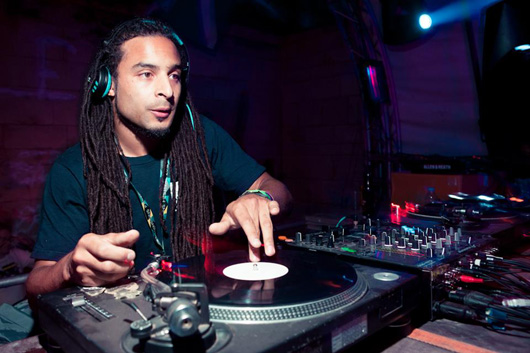
HIT: Mala
As the festival came to a close and the various attendees took stock of their favorite performances, it felt like everyone was talking about Mala. The dubstep don continues to command attention, even from those who have largely abandoned the genre, and his set on Thursday demonstrated why. Simply put, the man is a master of his craft, and knows how to unleash seriously heavy basslines without veering into cartoonish or obnoxious territory. Opening his set with a five-plus-minute ambient cut, he seemed to have a clear understanding that dubstep works best when there’s a push-and-pull dynamic. In Mala’s hands, the genre feels vibrant, as he recognizes that his patience behind the decks ultimately intensifies the low-end wallop of his music. Make no mistake though; for all of his restraint, Mala certainly wasn’t shy about bashing everyone over the head when the time was right. When he played “Anti War Dub,” the crowd simply erupted.
Mungo’s Arena
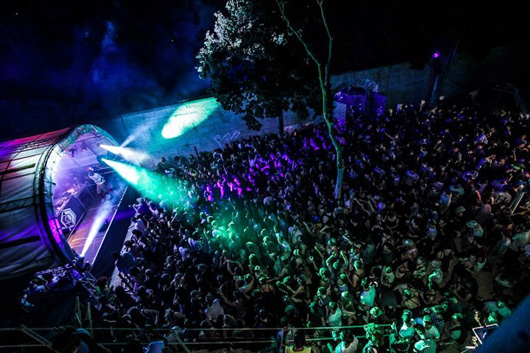
MISS: Festival scheduling
Unfortunately, seeing an amazing set like Mala’s often came at a cost. Granted, most festivals suffer from this problem, but the imbalance was particularly pronounced at Dimensions. For instance, watching Mala’s one-hour set meant missing all or major parts of sets from Nicolas Jaar, Four Tet, Shackleton, Surgeon, Benji B, George FitzGerald, and Visionist. It would have been nice to see at least some of those artists. Thursday night was particularly stacked with big names, as the vast majority of the festival headliners performed that night. Friday was not much better, with “bass music” being overrepresented as stages hosted by R&S (Space Dimension Controller, Lone, Pariah, Untold), Hessle Audio vs. Swamp 81 (Ben UFO, Boddika, Loefah, Pearson Sound, Zed Bias, Pangaea, Midland), and Leisure System (Machinedrum, Jimmy Edgar, Gold Panda, Addison Groove, Objekt, Nathan Fake) all happened simultaneously. With that kind of competition, it was nearly impossible to see even a sizable fraction of the acts one might like to see. Most attendees either resigned themselves to a single stage, or bounced around, usually landing on whatever stage had the shortest line.
In contrast, Saturday night’s line-up, which featured a pronounced house/techno slant, was surprisingly weak. While this made choosing the night’s itinerary a much easier task, it also meant that certain stages, particularly the Decibel stage with Theo Parrish and Moodymann, were uncomfortably crowded and very difficult to enter. As mentioned in the intro, Dimensions wasn’t short on talent. Unfortunately though, the organizers’ poor programming made seeing all that talent a challenge, to say the least.
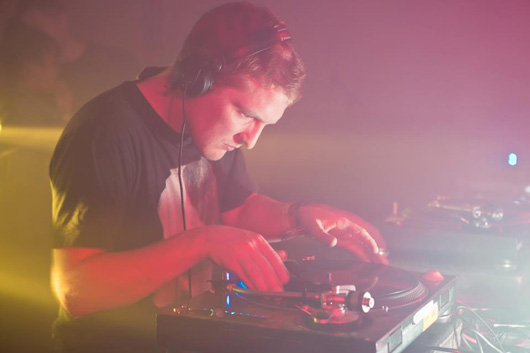
HIT: Eglo Records Showcase
Despite competing with Mala and a Sub:stance showcase (Scuba, Shackleton, Surgeon, Blawan, Sigha, Locked Groove) on Thursday night, the Eglo Records stage absolutely stole the show. Offering a funk- and soul-injected alternative to the more straight-laced sounds that dominated much of the line-up, the Eglo crew put together a night where quality music and hip-shaking fun went hand in hand. Fatima performed live, her sultry and soulful voice proving just as potent in real life as it is on record. Floating Points (pictured directly above) was especially good, kicking off with some old-school funk and soul before nimbly working his way into some choice disco and house cuts. He then gave way to Detroit youngster Kyle Hall, who kept things pumping until dawn. Throughout the night, it was striking just how musical, for lack of a better word, Eglo’s selections were. These artists are more than just DJs, producers, and performers; they see what they do as an extension of a long musical history, and pay homage to the past while smartly moving things forward. Seeing them put this kind of perspective into action on such a large scale was truly special.
MISS: Marcel Dettmann and Ben Klock
In fairness, a whole lot of people were losing their shit when this pair of German techno veterans closed out Fort Arena 1 (which served as the main stage) on Saturday night. Perhaps it’s a question of stylistic preference, but the duo’s back-to-back set was not an example of techno at its finest. Granted, both of these guys have put in their time at places like Berghain, where hard, one-note techno can offer an amazing experience. But in the Croatian moonlight, even on a solid soundsystem, the set came off as boring and seriously lacking in soul. Robotic precision and subtle changes can be fine, but Dettmann and Klock chose to punctuate their set with trance-like melodies that veered dangerously close to Ibiza territory. Basically, it was big-room rave techno, and when combined with some slightly clunky mixing, it wasn’t an ideal way to wrap up the Dimensions experience.
Blawan at the Data Transmission Boat Party
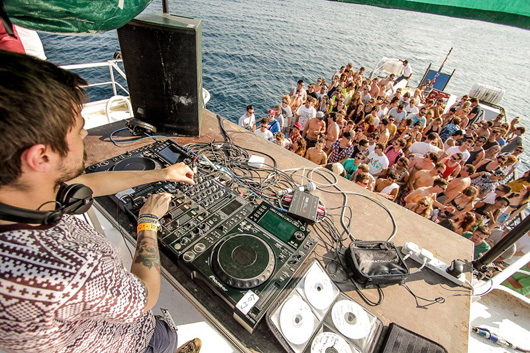
HIT: Boat Parties
Taking advantage of the festival’s seaside location, Dimensions organizers smartly organized a series of boat parties that featured many of the weekend’s top-tier acts. While the parties required an additional entrance fee and were undoubtedly too long (four to five hours, when two to three hours would be more than sufficient), it’s hard to complain about an afternoon in the sunshine (or an evening in the warm summer air) on a boat in the Mediterranean with quality DJs. There were nearly 20 boat parties in all, two of which we attended. Although we’re admittedly biased, the XLR8R boat party was a lot of fun, as Koreless, Dark Sky, Machinedrum, and Shawn Reynaldo (that’s me) played on a Funktion-One soundsystem for an enthusiastic crowd. Immediately afterwards, we hopped on another boat for the absolutely rammed Resident Advisor party, where Ben UFO and Boddika both delivered lengthy sets.
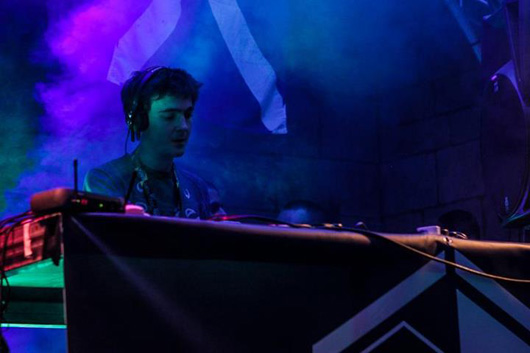
HIT: Ben UFO
Speaking of Ben UFO, any conversation about the world’s best DJs needs to include his name. Frankly, the guy is always impressive behind the decks, and that held true at Dimensions. His set aboard the Resident Advisor boat party was easily superior to Boddika’s, as he recognized the need to inject some fun into the proceedings. After all, it was a boat, so his house and garage went down a little smoother than the dark pulse which preceded him. Afterwards, Ben shot over to the Hessle Audio vs. Swamp 81 showcase at Mungo’s Arena. Sharing the bill with bass heavyweights like Loefah and Zed Bias (artists he most likely worshipped in his younger days), and facing a crowd thirsty for banging low end, he didn’t shy away from the opportunity. On the contrary, Ben UFO took the stage at midnight and dropped a set full of hard, rinsing techno and slamming house, once again displaying his unique ability to tailor his sets to an audience without losing himself in the process. It’s an impressive feat and the mark of a masterful DJ, one whose musical knowledge and confidence in his records runs deep. Ben UFO’s ascent has been gratifying to witness over the past few years, and after seeing him do his thing at Dimensions, it’s safe to say that his reputation with the masses is finally starting to catch up to his high regard within DJ circles.
MISS: Food
There’s no delicate way to put this. The food was fucking terrible at Dimensions. We know that quality Croatian cuisine exists, but somehow it failed to penetrate the festival walls. Instead, there was an endless array of sub-par hamburgers and assorted fried items, not to mention the worst smoothie in history. Worsening matters further, it was all exorbitantly priced and could only we purchased with special food-and-drink vouchers, the procurement of which often involved waiting in a massive line. Let’s put it this way: we skipped a lot of meals, and didn’t feel too bad about it.
Outside the Fort
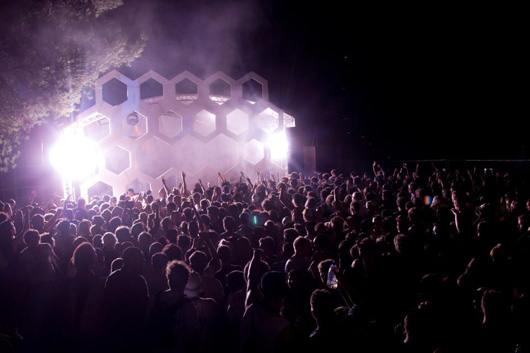
HIT: Sound quality
With acts spread across as many as eight stages throughout the day, Dimensions is to be commended for maintaining such a high level of sound quality. As stated earlier, the festival took place inside an abandoned fort, meaning that many of the stages were erected in locations that were less than ideal in terms of acoustics. Nevertheless, festival organizers went out of their way to bring in massive systems and tune them properly, which made all the difference. As such, the weekend was full of big, clear sounds and gut-rumbling bass. The music was loud, but never piercing, and even after long nights of raving, we woke up each morning without our ears screaming in protest.
HIT: Levon Vincent
The great sound certainly boosted our enjoyment of nuanced artists like Levon Vincent, who performed at the Fort Arena stage on Saturday night. Following a lively outing from Ryan Elliott, Vincent began his set in surprisingly banging fashion. It was an unexpected move from an artist who usually treads in deeper waters, but it sounded great and kept the area packed, even as Theo Parrish’s much-anticipated set (which was happening simultaneously at another stage) threatened to lure away the crowd. Of course, Vincent wasn’t going to simply bang it out for nearly two hours, and he gradually downshifted the energy and brought a lot more drums into the mix. Even as things got really deep, Vincent kept control of the floor, and skillfully proceeded to put together one of Dimensions’ standout performances.
Fort Arena 1
MISS: Organization
After years of successfully running Outlook on the exact same site, one would think that Dimensions would run like clockwork, particularly given its significantly smaller crowd size. Unfortunately, it often felt like the opposite was true. Perhaps the staff was tired, grumpy, or simply run-down after going through Outlook the week before, but Dimensions suffered from a myriad of minor gaffes that affected everyone’s festival experience. For instance, the XLR8R boat party was listed at the wrong time on some people’s tickets, which meant that half the crowd didn’t show up for a sold-out event. Similarly, the Resident Advisor boat party, arguably the most anticipated boat party of the entire festival, happened on a boat with a notably sub-par sound system, which was unfortunate given the overall stellar sound quality of the rest of Dimensions. There were several last-minute line-up changes that weren’t well publicized, meaning that many attendees missed artists like Todd Terje. Granted, Dimensions often announced these changes on Facebook and Twitter, but with most people coming from other countries to attend, they were not going to be checking their online social networks too often, if at all. Some additional signage would have been a huge help, particularly when it came to stage schedules, which were virtually invisible on the festival site. Instead, festivalgoers were forced to purchase schedules or programs, which felt like an unnecessary gouge.
Behind the scenes, artists, journalists, and other other industry folks were consistently swapping stories about a lack of communication from festival organizers, which meant there was a whole lot of confusion about basic things, such as where people needed to be and how they were going to get there. Add in the numerous reports of problems with travel and accommodation, and Dimensions was a bit of a mess for the professionals working there. In fairness, these kinds of things rarely affected the experience for the average attendee, so perhaps Dimensions is to be lauded for prioritizing the masses over the VIPs.
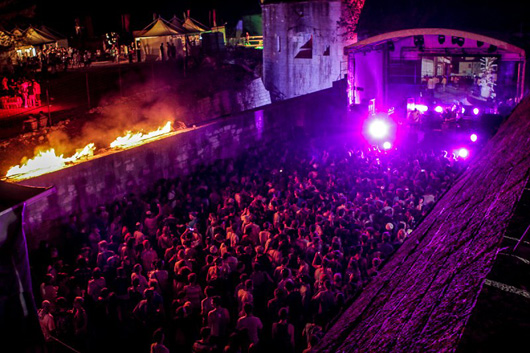
The Moat
HIT: Venue
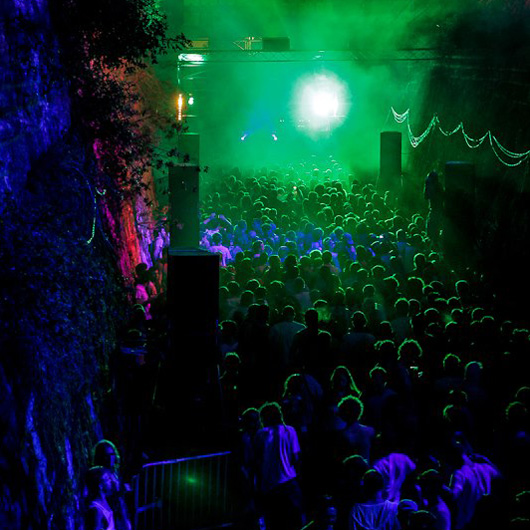
As we’ve said, Dimensions literally happened in an abandoned fort, one that’s located right on the Mediterranean Sea. Yes, the surroundings were a bit rustic, and urban dwellers may have found trudging around the festival’s rocky terrain a little more laborious than the average concertgoing experience, but anyone who couldn’t find some enjoyment in Dimensions’ unique environment wasn’t taking a good look around. Attendees could easily hop down to the beach, or simply stop and take in some incredible vistas around the site. Apart from the natural wonders, Dimensions also featured a fair share of impressive man-made highlights, most notably the various stages and performances areas. Most were enclosed by stone walls, but several of the rooms were open-air spaces, the night sky adding an extra sense of wonder to the proceedings. The area denoted as Outside the Fort probably had the best overall sound, but spaces like the Mungo’s Arena and The Moat were solid as well. The latter was also Dimensions’ most innovative space, as massive sound cabinets were staggered throughout a rather narrow passageway. Whether attendees were two feet away or 200 yards away, the sound in The Moat was exceptional, and the entire stage offered an interesting alternative to the more typical “big sound in a big room” experience.
HIT: Kassem Mosse
Germany’s Kassem Mosse may have performed at an early hour (he took the stage around 9 p.m. on Saturday night), but he nonetheless dropped one of Dimensions’ most thrilling sets. Performing live with a small bank of gear in Fort Arena 1, he quickly riled up the relatively sedate crowd with his hypnotic house rhythms. Working primarily in the lower registers, he gradually unfurled layer after layer of percussion and bass, building intricate and complex tunes that were heady without sacrificing their suitability for the festival floor. Fans of his music were likely already familiar with his penchant for subtle changes and aesthetic restraint, but Kassem Mosse put that formula to work on a grander scale at Dimensions, and it worked to perfection. Allowing the crowd to percolate for lengthy stretches of time, Mosse would periodically bring things to a boil with a flurry of energy or a particularly thick drum sound, at which point the appreciation of the audience would become palpable. In short, he was excellent.
HIT: Machinedrum
Even after the explosion of the juke/footwork sound on an international level, it’s usually safe to assume that most DJs (in particular those who aren’t from Chicago) aren’t actually capable of playing an enjoyable footwork set. Following his perfomances at Dimensions, we can vouch that Machinedrum is an exception to the rule. As mentioned before, he performed at the XLR8R boat party, and actually held the headlining slot. He immediately started playing juke and footwork, and the crowd ate it up. But it wasn’t just the music; Machinedrum tours constantly and plays a lot of shows, and that experience was evident here, as he displayed a real familiarity with his tunes and equipment, one that allowed him to playfully tweak the music with filters and effects and drop in edits (most of which were his own) of pop, hip-hop, and R&B cuts. Anytime the dancefloor began to lose steam under the weight of the rapid-fire 808 sounds, Machinedrum would play one of those edits, and the crowd would be bubbling all over again. Even his forays into jungle sounded great, the rapid-fire breakbeats providing some nostalgia-based enthusiasm without taking the tempo below 160 bpm. Interestingly, the boat party ended up being about 30-40 minutes longer than scheduled, which meant that Machinedrum unexpectedly had to play a longer set. Once his juke and footwork resources had been exhausted, he changed it up, moving into old-school R&B, disco, acid house, and what he got on the mic and referred to as “proper boat jams.” It was all fun, and a great way to wrap up a sunny afternoon on the water. Unfortunately, we didn’t make it to Machinedrum’s set that night at the Leisure System showcase, but based on the number of dudes we overheard saying,”Whoa, did you see Machinedrum?” on Saturday and Sunday, we’re guessing it was similarly impressive.

MISS: Garage bros
In the US, fans of UK garage think of the genre as something special, this innately British sound that doesn’t really exist in America, at least not on a grand scale and certainly not on any sort of pop level. Hell, most Americans hear the word “garage” and probably think of garage rock. As such, it’s easy to fantasize about the UK garage scene as a world full of sophisticated music fans who truly appreciate the genre’s combination of syncopated rhythms with bits of light-hearted R&B. Well, being at Dimensions proved that theory dead wrong. The crowd here was stuffed with Brits, many of them dudes in their early to mid ’20s. Let’s put it this way; once we heard a couple of shirtless, sunburned bros in cargo shorts screaming “I FUCKIN’ LOVE GARRRIDGE!!!” into each other’s faces, all of our UK garage sentimentality came to a screeching halt. Apparently, jockish dudes can ruin just about anything, including UK garage.

HIT: The crowd
Rowdy bros aside (and quite honestly, the list of festivals that aren’t plagued by bros is a short one), the crowd at Dimensions was rather tolerable, even pleasant to be around. (There was an alarming amount of face paint happening, but we’re willing to let that slide. It was certainly preferable to all the candy-raver-meets-stripper nonsense happening back home in the US.) As one might have expected, there were plenty of people getting fucked up and partying excessively, but it never felt like the bulk of the audience was there specifically to go on a bender. Furthermore, with a line-up like this one, it’s no surprise that a lot of genuine music fans made the trek. It was also an older crowd than one would usually find at a European festival, which made a big difference. As such, the entire weekend had a relaxed feel; the air was rarely sullied by indiscriminate screaming, and many attendees appeared to be more focused on relaxing and having a good time than seeing every single artist who struck their fancy. When lines for a particular stage got too long (a frequent occurrence and one of Dimensions’ most frustrating aspects), most attendees (ourselves included) simply shrugged and moved on. The sunny weather and coastal setting certainly helped, but Dimensions was permeated by a distinctly mellow vibe, a refreshing change from the usual mania that surrounds large-scale music events. Following the mixed bag offered by the festival’s first run, it will be interesting to see if the organizers try it again next year. Dimensions may not be a great festival yet, but it does have plenty of potential.
Futurewife “Shutter Release”
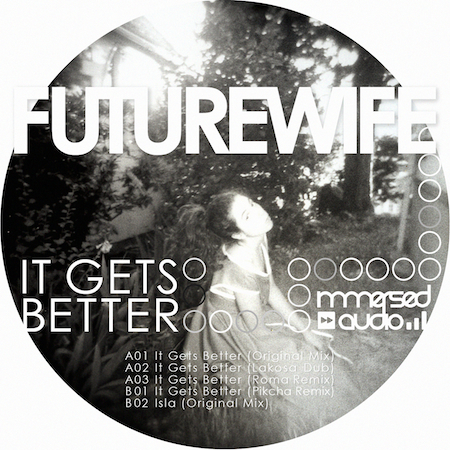
Seattle-based DJ/producer Futurewife just sent over this one-off tune ahead of the September 12 release of his new EP for Immersed Audio, It Gets Better (artwork above). Though not on that record, “Shutter Release” is basically an extension of that forthcoming record, as it fuses the sounds of house, disco, and R&B. Futurewife’s production effortlessly combines elements of ’80s dance music with the sounds of more contemporary club tracks—albeit on the slower end of that spectrum—like the infectious, bleepy vocal hooks that help propel the tune into a more melodic and synth-laden groove.
