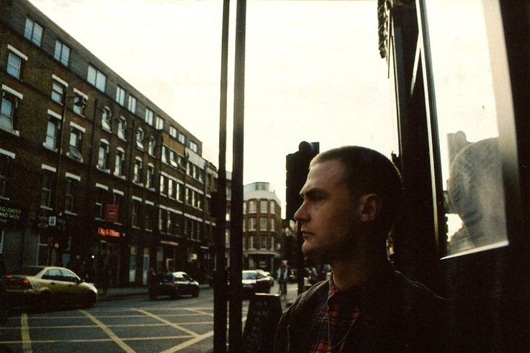
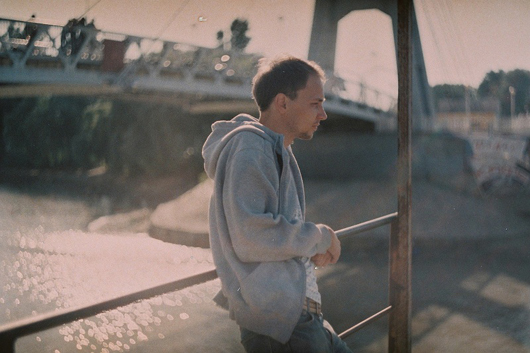
Brainfeeder artist and Essex resident Lapalux (pictured above) just handed over his remix treatment of “The Commission,” a tune by the UK’s Breton. Lapalux’s “Aquatic Centre” rework will be featured on Breton’s upcoming remix collection, and lives up to its name with a wavy production that sounds like the soundtrack to a journey under the sea. Synth notes bubble up, deep pads surge like currents, and robotic vocal samples rock to the ebb and flow of Lapalux’s slow-paced beat. “The Commission (Lapalux’s Aquatic Centre Remix)” arrives just before Breton starts a North American tour next month, the dates of which you can check out after the jump.
9/4 – Washington, DC @ DC9 * 9/5 – Philadelphia, PA @ North Star Bar * 9/6 – New York, NY @ The Bowery Ballroom ^* 9/7 – Cambridge, MA @ The Middle East ^ 9/8 – Montreal, QC @ Casa Del Popolo ^ 9/9 – Toronto, ON @ Rivoli ^ 9/11 – Detroit, MI @ Magic Stick Lounge ^ 9/12 – Chicago, IL @ Empty Bottle ^ 9/13 – Vancouver, BC @ Electric Owl 9/14 – Seattle, WA @ Barboza 9/15 – Portland, OR @ Rotture 9/18 – Los Angeles, CA @ The Echo 9/19 – San Francisco, CA @ Brick & Mortar Music Hall
Remaining as vague as possible, Hyperdub boss Kode9 took to Twitter today to “announce” his latest single with a YouTube link and the words “HYP011 Kode9 – Xingfu Lu.” The clip itself appeared last month on Hyperdub’s most recent Rinse FM showcase, and exhibits a more juke-slanted production approach than we’re used to hearing from the label head. So, instead of looking at the artwork, tracklist, or release date for Kode9’s forthcoming record, listen to the brief snippet of “Xingfu Lu” below. (via FACT)
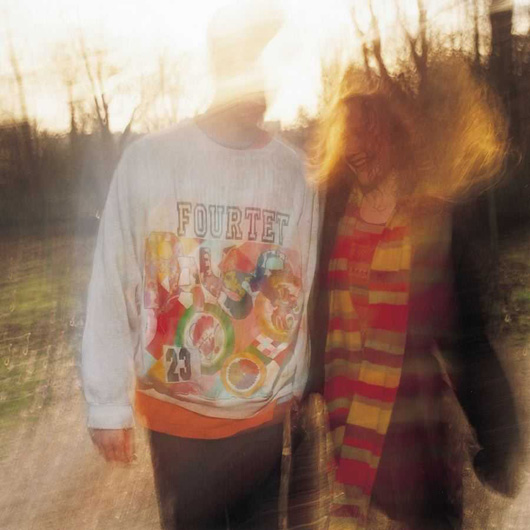
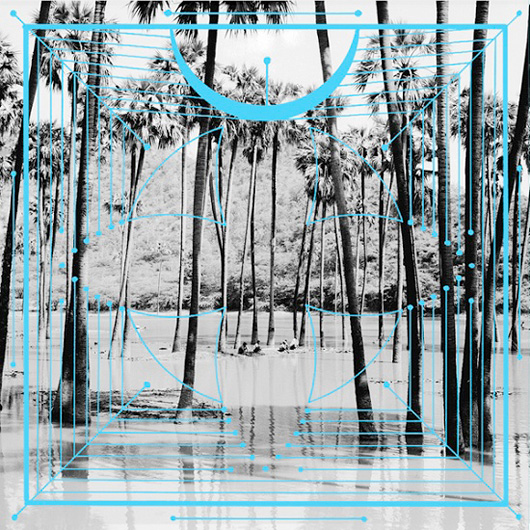
Kieran Hebden, better known as Four Tet, has a considerable, not to mention incredibly consistent, back catalog. In addition to producing his own acclaimed records, the London-based producer has worked with late jazz drummer Steve Reid, folk singer-songwriter Vashti Bunyan, Burial, and Thom Yorke of Radiohead, while remixing countless others. Following the 2010 release of There Is Love in You, Hebden released a series of 12-inch singles that he’s now compiled into a new, album-length release called Pink, which he’s releasing through his own Text label. Over the phone from his home in London, Hebden gladly jogged XLR8R through his releases, starting with the nearly 37-minute-long track Thirtysixtwentyfive all the way through his latest singles. The Four Tet aesthetic, while identifiable, has taken a number of daring, radical turns, each quite enthralling. His newest material is some of his best yet, and undoubtedly his most club oriented.
At one point in our conversation, he remarked, “One of the things I’m really happy about with my back catalog is that my musical journey is very, very well documented, from the most naive beginnings of what I did right through. It’s all there in a clear way for people to see.”
Thirtysixtwentyfive (1998, Output) Even before [my old band] Fridge was happening, and while Fridge was going on, something I had always done was make music in my bedroom at home. I had a four-track tape recorder and would play around with ideas—learning my chops, I guess, as a producer. When I got to college, I got my first computer, and was able to start doing sampling and looping and all those sorts of things. That’s when the Four Tet project basically started. I didn’t think about releases particularly; it was just something I was doing. I played the stuff for Trevor Jackson, who ran the Output label and was putting out Fridge records; he was into it and ended up putting it out. The first-ever Four Tet thing that came out was a track called “Field” that was on this compilation album on Leaf Records, [Invisible Soundtracks Volume III]. I wasn’t thinking in terms of long-term project or side project or anything at all—I was just like, “Oh, yeah, here’s some kind of music.” I was so young at the time, and in retrospect, everything was just done in a pretty mellow and natural sort of way. Thirtysixtwentyfive was one of the first things I did that got quite a lot of radio play, which is weird because of the length of it.
Dialogue (1999, Output) The response to Thirtysixtwentyfive was good, so I started making a bunch more tracks. I started thinking I should try and get enough of these things together to make an album. I was at university at the time, and busy with Fridge as well, because that was my main thing around then. The whole concept of the [Four Tet] project was that I wanted to make something very influenced by jazz music, but the much more cosmic and ferocious end of jazz. The whole “new jazz” thing was happening at the time, and a lot of the dance records that claimed to be jazz influenced were quite polite, as far as I was concerned. I wanted to do something that was more about the darker ends of jazz, and that’s why the project was called “Four Tet,” like “quartet.” I’ve even got this European jazz record that says “Four Tet” on the front. The idea was to make it to fit in with all these European free-jazz records I was collecting. I was buying all the records on MPS and ECM and all these things, learning about all this music. DJ Shadow had just come out with Endtroducing… I was already interested in hip-hop, but to hear somebody make a record out of sampling 20 records rather than just one or two was really inspiring to me. Around the same time, Bundy K. Brown put this 12-inch out as Directions called Echoes, which kind of was the blueprint for the Four Tet thing. I heard that record and was just like, “This is genius—this is taking the whole concept of what people like DJ Shadow are doing and making a modern-day take on spiritual jazz out of it.” There was a lot happening around that time that definitely was inspiring me in a big way.
Pause (2001, Domino) Dialogue got this quite positive response, people seemed into it, and then Four Tet was as big as the Fridge thing. When I decided I was going to make another record, I had a big criticism of the first one at the time—maybe I still do, in some ways—which was that it was essentially a product of its influences. I felt like I had got a handful of records I was really into and squashed them together, and that’s all it was, whereas the music that I respected most was creating its own sound. People like Timbaland were putting out these incredibly futuristic records, and I felt like, “I’ve got to do something that counts.” When I started to work on Pause, I wanted to have a much broader sonic palette and do something much different. The R&B thing was a massive influence—Timbaland was putting out records with flutes and tablas on them that were worldwide smash hits. That’s when I started looking for much weirder instrumentation to use, and started buying loads of folk records and stuff. After buying loads of folk records to sample, I started to discover that there’d be really nice sounds on there, but not the heaviness or depth I was hearing in jazz records I really liked. Those were things I wanted to bring together: the sounds of harps you might hear on a folk record with the kind of drums you might hear on a Pete Rock record, bringing all those influences together.
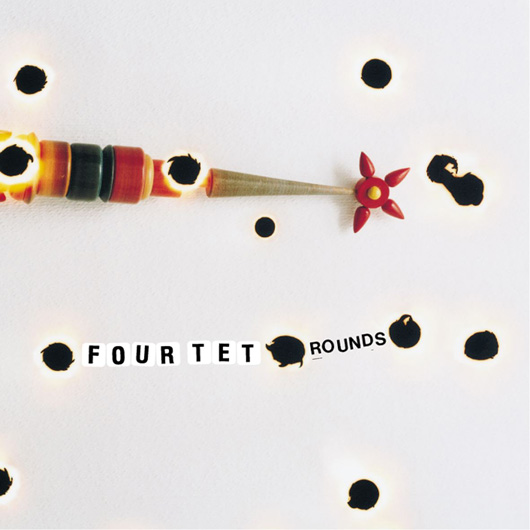
Rounds (2003, Domino) I remember finishing the record and telling the record company, “Well, it’s not a huge development from the previous one, hopefully people will be into it.” I didn’t anticipate the sort of reaction it got. It was definitely the turning point—people seemed to get into that one in a totally different way, which I understand more now when I listen back. I think the concept on Rounds was to take this idea of trying to develop my own sound even further. When I did Dialogue, I was just younger, and didn’t even know why I was making the music. It would get to the process of titling the songs, and I would just give everything any old random name. By the time I did Pause, I was thinking about everything loads more. I was very wrapped up in this idea that making electronic music had become part of my day-to-day life, the same as brushing my teeth, watching TV, seeing friends—making music had become part of that completely. I started to be very conscious of very personal things hidden in the record. Pause had come out, and people had really identified with the song titles and things like that. I noticed people were looking for meaning in my music for the first time, and that made me think about the meaning of it all and what I was trying to achieve. When I listen to Rounds now, it’s like reading an old diary for me—this very specific time in my life, very specific people I was hanging out with, relationships, places I was traveling to, all wrapped up in a record. There are sounds on there of everything from family members to friends, and all the titles were completely relevant to things that were going on with me.
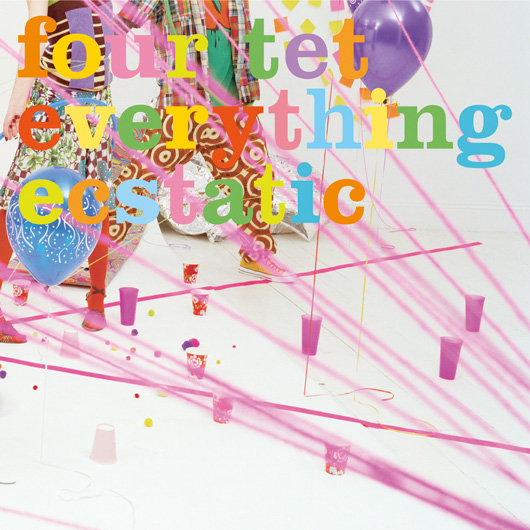
Everything Ecstatic (2005, Domino) Everybody was suddenly going on about how I was very connected to folk music. I felt it was really missing the point—”Well yeah, there is a folk music influence there, but no more than techno or hip-hop or soul. What about all those other things going on?” So I wanted to get these other influences back in there… The other thing that happened was that, after Rounds came out, I started touring very extensively. At that point, live electronic music—there were very few people doing it, and it was considered quite a weird thing to get up there on stage with a laptop. There was Aphex Twin and a handful of other people doing stuff like that, but not loads. I got really interested in the idea of doing real-time electronic music and improvising.
Everything Ecstatic was made with live performance in mind. The beginnings of the tracks had come out of the live shows I was doing around the Rounds period, which were so much more hardcore and noisy and crazy than any of the music on Rounds. The jazz influence was still there, and I was listening to people like Fennesz, and Jim O’Rourke, who was making all these crazy electronic records. I also discovered all that classic electronic music: Stockhausen, Pierre Henry, that more crazy stuff.
Ringer (2008, Domino) Everything Ecstatic was the biggest tour I had ever done: six weeks in America, a month in the UK, Europe, loads and loads of stuff. I hit this point at the end of that tour, “I’ve had enough.” I did this big show in London—my biggest show yet—and my feeling at the end of it wasn’t, “Let’s try and do a bigger one,” it was more like, “I’ve done this now. I’ve had this experience. What’s next?” I wanted something to push me in a totally new direction—I kind of wanted to feel scared again by music. And that’s when I met Steve Reid and got really, really into that whole project with him… it was a huge musical epiphany. It took my whole interest in live improvisation full force ahead. At that point, I was kind of doubting that I’d ever make another Four Tet record.
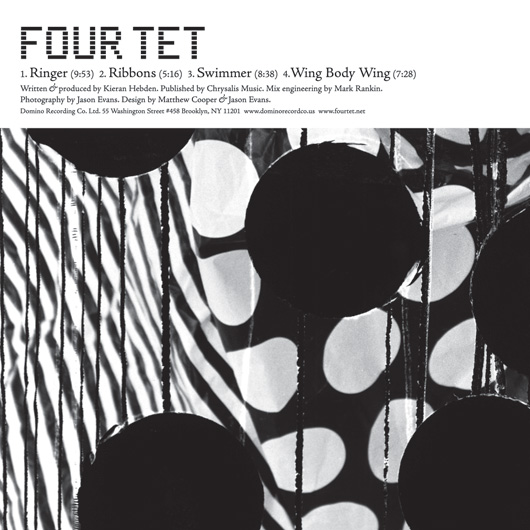
The one thing I got back into was DJing—purely because it seemed like dance music was having a quiet kind of moment. It was kind of uncool. I went to play in Ibiza with Timo Maas, and then he invited me to come and do this residency with him at this club in London. It seemed so different from everything else; it just felt refreshing. There was something really unpretentious about it as well. I was just someone supplying music and people were there to dance, it just felt very natural. Then I met James Holden from Border Community, and started listening to a lot more house and techno music than I had in a while. I hit a point where I was DJing all the time and I finally was just like, “I want to make some of my own music to play in these clubs.” That got me making solo electronic music again. I knew the music would be really different at that point, with the combination of the DJing and the stuff I was doing with Steve Reid. An EP felt like the right thing to do because I hadn’t put anything out in 3 or 4 years. [Ringer] opened the doors for me, really, in terms of making this kind of 4/4, dance-oriented music.
There Is Love in You (2010, Domino) Once I decided to make an album, it became a really massive project. I thought, “If I’m gonna put out another record at this point, when I’ve done so much stuff, it’s got to really, really count.” I spent well over a year on There Is Love in You, working on the tracks—I felt like it had to be totally right. Before Plastic People, I was doing James Holden’s night at this club called The End—that’s where I did Ringer. The End closed down, and I thought, “What am I going to do now?” Then Plastic People, which was a club I loved, said I could do something there. The Plastic People residency lasted like a year and a half, and I made There Is Love in You during that time—I was testing out all those tracks the whole time. The whole experience of the club, the records I was playing, everything that was going on with that club night was basically the whole driving force and concept behind that album. I was making that album, and Dan Snaith was making that last Caribou record, Swim, and we were trying out all the tracks for both records every month at this club. I think for the both of us it was a really defining kind of moment.
Pink (2012, Text) After There Is Love in You, one of the things I decided was that I didn’t want to go into that whole album process again: hiding away for 18 months making a record, having to do all the press associated with it, and the touring… I decided to just think in terms of singles. For all the 12-inches I’ve been putting out over the last year, I made the tracks and put them out, not thinking about what was gonna happen next. It had all been vinyl only, and it just hit a point where I had quite a few tracks. I was like, okay—there’s a good collection of stuff here, let me group it together into an album.
I’m trying to eliminate the kind of things that don’t feel natural to me anymore, rather than force myself through them… I was doing 12-inches because it was a quick way to get it out, and it’s the right format for it. I’d send it to a lot of DJs before I’d send it to anyone else. I was really making music for other DJs to use as well.
I moved to New York for a year and came back to London a few months ago. It did have a big impact on a lot of these tracks—a lot of these tracks I made in New York. Once I got away from the UK, I got more interested in the music scene here. When I’m in London, I’m wondering what’s going on in Berlin, and when I was in New York, I was listening to Rinse FM all the time. New York gave me to an opportunity do something more of London.
Atlanta-based producer Distal has sent over his version of “Keep It Up,” a cut from Blackbird Blackbird‘s forthcoming Boracay Planet EP (artwork above) for Lavish Habits. Distal’s remix balances bright, flashing chords with churning low end and booming drum hits. At times, the vocal snippets start to sound like synths themselves, giving “Keep It Up (Distal Remix)” an upside-down dizziness when paired with the fluttering electronic chirps. This rework will soon be paired with two other remixes, each by San Francisco artist Grenier, on a remix EP set for release via Lavish Habits.
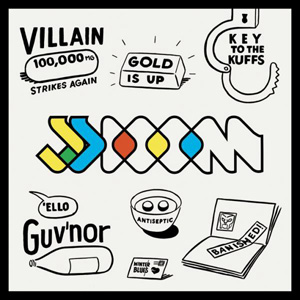
Late last year, Lex Records posted up “Retarded Fren,” a track created by Thom Yorke, Johnny Greenwood, and MF Doom (a.k.a. Daniel Dumile). The song was featured on the label’s 10th anniversary compilation, and has now resurfaced on MF Doom’s most recent collaborative effort, a 15-track LP crafted in tandem with Brooklyn-born producer Jneiro Jarel. Working together under the moniker JJ Doom, Jarel and Dumile filled in the dry silences on the original version’s sparse, industrial beat with a flourish that recalls Flying Lotus thanks to its lurching pulse, blossoms of watery keys, and film of quiet noises.
The updated version of “Retarded Frend” boasts a pretty flair and an abstract suppleness that the original lacks, but Doom’s dry-throated flow can be hard to make out amongst the cluttered beat. Many of the beats on the album demonstrate a similarly loose, busy, and murky aesthetic, which tends to overpower Doom’s verses. The grinding murkiness of Jarel’s beat on “Banished,” for instance, is so loud and unfettered that it acts more like a cloud that envelops Doom’s voice than an anchoring rhythm for his manic thoughts.
After all, Doom’s rhymes are often hard to follow, even when delivered sans beat. The UK native sometimes employs the tricky rhyming style known as “rhyming slang,” which can be hard to explain and even harder to understand for anyone unfamiliar with it. The practice served as the namesake for the song “Rhymin’ Slang,” which finds Doom tossing out lines about the rap game with a nonsensical stream of consciousness, stating “Rarely scarcely scary, glaring stare/Best be very clear, MCs is very air,” which might his way of saying that other rappers are scared of him. “Borin Convo” is one of the few tracks where his voice is able to rise above the murky melee of Jarel’s production, clearing the way for slightly political verses about the “supervillain” foreigner in America.
Doom’s rant about an immigrant’s plight while trying to blend into an alien culture isn’t the only politically charged track on the album. “Guv’nor,” which features one of the most tangible and head-nodding beats on the record, contains a cluster of colonial puns about drugs and the declining value of the dollar, while “Winter Blues” ends with a lengthy sample of a woman arguing that all humans need “a direct conscious relationship” with the melanin molecules in their bodies. It’s an interesting assertion, but it’s hard to ignore that Doom’s dissection of sociopolitical affairs contains ideas that seem a bit half baked; for instance, the minute-long sample in “Winter Blues” about how all humans have melanin in their biochemical makeup feels apropos of nothing, and doesn’t appear to be part of any coherent ideological philosophy. As such, maybe it’s not always a bad thing when Jarel’s production smothers Doom’s flow.
Nevertheless, although his political ideas may be rough hewn, Doom’s latest effort stands out from some of the major releases in his discography, as his rhymes on Key to the Kuffs are less concerned with “doing bong hits on the roof in the West Coast.” Furthermore, his words here have an intriguing new backdrop crafted by Jarel, whose sonic experimentation matches Doom’s ambitious conceptual moves step for step. The combination may not always work perfectly, but the effort rarely ceases to be interesting.
Fuselab, one of the Russian outposts we profiled this week in our Welcome to…Russia feature, has offered up a compilation featuring some of the artists on its roster—including 813, Monokle, and WOLS (a.k.a. Evgeny Shchukin, pictured above). According to Shchukin, who is also a labelhead at Fuselab, each of the tracks on this free offering will be featured on future releases from the imprint; Frunk29, for instance, contributed one of the cuts from his upcoming vinyl EP. You can download the label sampler for absolutely free, here, and stream the whole thing below.
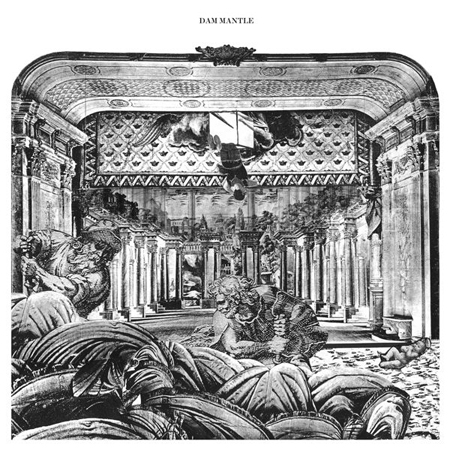
Glasgow’s Dam Mantle (a.k.a. Tom Marshallsay) has announced the October 16 arrival of his new album, Brothers Fowl(pictured above), via Gold Panda‘s Notown label. In anticipation of that day, the beatmaker has unleashed “Canterbury Pt. 1,” a rising and spiraling cut that serves as the LP’s lead single. Its unstoppable ebullience bears some resemblance to the work of fellow Glasgow producer Rustie, but the track eventually settles into a more jazz-influenced groove in which gliding instrumentation collides with the more staccato elements—like flickering synths—of Dam Mantle’s production. The producer has also offered up the single’s b-side, “Full Moon and Moth,” which can be downloaded for free, here.
It’s hard to listen to the output of Brooklyn imprint Let’s Play House without thinking that the label is carrying the torch for DFA. Yes, it was LCD Soundsystem that called it quits, not DFA, but the group’s retirement still felt like the end of an era. Considering that LPH head Jacques Renault released some of his earliest records (as Runaway with production partner Marcos Cabral) on the famed indie-dance label, and that co-owner/A&R man James Friedman also runs the Rapture’s Throne of Blood imprint, there’s certainly no shortage of connections between the two camps. That said, Let’s Play House isn’t rehashing, nor is it overshadowed by its more prominent neighbor. This label sampler, which showcases some of the brighter talent Let’s Play House is cultivating, is a case in point. Crisscrossing through cut-and-paste disco, deep house and live boogie, the artists featured all follow in the footsteps of James Murphy’s mirror-ball-loving heart, but more importantly, they represent the new faces of the nu-disco and house sound.
Take low-profile Leeds producer The Dead Rose Music Company. Much like early Mark E or The Revenge, he displays an uncanny ability for splicing up dusty dancefloor gems from the ’70s and reconstructing them into hypnotic, loopy groovers. He makes the sort of tracks that wrap listeners up in the fuzzy warmth of vintage R&B and reverb, but still command attention at the discerning club nights that the Let’s Play House collective is known for organizing. TDRMC’s debut release for the label offered up four tracks of deep boogie delights, and his contribution here, “Your Kisses,” continues the trend, setting the sampled refrain “time to get back” on repeat while funk bass, strings, back-up singers, and crisp percussive patter all crescendo around it. It’s such heavily sourced music that it’s hard not to call it an edit, but the term falls well short of fully describing this sexy, updated form of dance music.
Pushing things into late-night house territory, New York LPH affiliate Pixelife channels the deeper offerings of Damian Lazarus’ Crosstown Rebels imprint into “Mystery Clock.” The punchy bass and straight-ahead drum kick that serve as the track’s backbone feel similar to the electro funk being championed by acts like Danny Daze and Art Department, but instead of toughening up over time, myriad atmospherics—from cosmic chirps to stuttering and stunted synth bleeps—echo in and out, and eventually hang around to lend a space-age sheen. As much as it helps propel a new trend in the music, in terms of sonic textures, Pixelife’s contribution also harkens back to Orbital’s knack for cosmic acid and techno, and Manuel Gottsching’s stretched-out organic dance layering.
London-based duo Bicep maintains the EP’s deep and referential appeal with “Echo Vibes.” Aptly titled, the song flexes Bicep’s ability to reconstitute classic dance rhythms, this time Jersey garage’s boompity beat and Italo disco’s arpeggiated synths. Burying them within the mix, “Echo Vibes” doesn’t smack of either one; rather, it updates and dubs its influences out for the late, late set. More interesting to dissect than listen to, the cut does more to further the label’s musical mantra—especially when it’s sandwiched between The Dead Rose Music Company’s glowing disco and the live-band threat that is Midnight Magic.
Much like fellow Gotham-city boogie troupe Escort, or even the analog-obsessives of Holy Ghost (now that the group has gone live), Midnight Magic equates to a disco version of The Dap-Kings. The nine-person outfit prides itself in making disco, boogie, and old-school electro sounds for a modern scene. Poppier than the underground dusty grooves of the aforementioned funk revivalists and led by bold frontwoman Tiffany Roth’s simmering voice, “Same Way I Feel” exemplifies Midnight Magic’s potential crossover appeal. Distorted sitar and trumpets conjure images of belly dancers and the haze of hookah smoke, while electronic flutes and plucky guitar riffing recall Men at Work. Moody and quirky, this final cut proves that Let’s Play House is more than just another house label. If it can continue to release a similar caliber of music that’s at once this eclectic and unified, it could easily become a prominent voice for retro-futuristic dance music in New York, and, of course, the party scene that goes with it.
Toronto-based duo Southern Shores (a.k.a. Jamie Townsend and Ben Dalton) has given us the first leak from its upcoming EP, New World, which drops on October 2 via avant-pop label Cascine. “New Love” boasts much of the same heavy atmospherics, mellow vibes, and pillowy soundscapes we loved on tracks from the pair’s first EP, like “Night is Young,” but with an extra dollop of tropical flavor from the brightly colored synths and punchy percussion. Southern Shores’ cheerful melodies also lend “New Love” a fresh energy that retains a certain sensuality thanks to the breathy vocal samples and warm bassline which bolster the airy groove. Before the seven-track New World EP arrives this fall, you can check out its artwork and tracklist, after the jump.
1. Marazul 2. Sankasa 3. New Love 4. Flashes 5. Breathe 6. Purple Skies 7. Natural High
The second mini-documentary to appear today about an artist on the verge of dropping a long-awaited album (watch the one about Mala here) features Los Angeles beat guru Flying Lotus. Watch as the cameras follow the producer born Steven Ellison jetting about from festival to festival and talking about his touring habits, his fans, his live show, and his upcoming fourth LP, Until the Quiet Comes. (via Pitchfork)