XLR8R Couldn't find the embed function for type: "vimeo" and source: "<iframe src="http://player.vimeo.com/video/47809024?title=0&byline=0&portrait=0&color=ffffff" width="530" height="298" frameborder="0" webkitallowfullscreen="" mozallowfullscreen="" allowfullscreen=""></iframe>".
As he is wont to do, Shlohmo (a.k.a. Henry Laufer) has amped up the moodiness, sensuality, and low end for his remix of the title track from the LOL Boys‘ Changes EP, which was given an equally murky visual accompaniment by Video Marsh. The mundane black-and-white shots of pretty girls smoking cigarettes and taking a shower seem tender and packed with emotion, especially when coupled with the swells of bass in Shlohmo’s rich and layered remix. At times, the clip cuts in time to the beatmaker’s flickering rimshots, disintegrating into swirling smoke to match the track’s brooding sexiness.
Swedish-born, London-based vocalist Fatima has returned from working in the studio with UK tunesmith FunkinEven with “Phone Line,” a hissing roller for Floating Points’ and Alexander Nut’s Eglo label. A brightly colored video for the new single was released today, which outfits the blurry beat with shots of Fatima and others singing into phones that look like shiny, colorful hard candy. The clip is more entertaining than it sounds, actually, especially because FunkinEven’s upbeat production keeps the mood light and easygoing. “Phoneline” is out now as a digital single and vinyl release.
Like its “The Feeling” tune from a couple months ago, 2400 Operator‘s “Projects” opens with a big, thumping kick that sets the tone for the moody electro cut. The song—lifted off the Danish duo’s forthcoming NV Electro EP—begins to soar as layers upon layers of screeching synths enter the lofty soundscape, all which is grounded by the deep bassline at its core. As the tune takes various turns, shuffling and ascending melodies pair with flitting hi-hats to take control of 2400 Operator’s groove, effectively bolstering the tune’s dancefloor potential. Look for the rest of the NV Electro EP when it drops on August 26 via Tartelet.
As both heavyweight tunesmiths are on the cusp of releasing new albums, Mala and Four Tet have each unveiled never-before-heard tracks from Mala in Cuba and Pink, respectively. “The Tunnel” is the first clip of streaming audio you’ll find below, and represents one of the darker moments on the UK dubstep don’s forthcoming LP. Underneath that sub-centric tune are “Lion” and “Peace for Earth,” two very different tracks featured on Four Tet’s new album (which is actually available digitally now) that weren’t originally released as singles. (viaFACT)
Although XLR8R makes an effort to regularly cover numerous strains of electronic music from around the globe, occasionally we recognize the need to take a closer look at a specific scene. In hopes of making these ventures a tad more organized, we’ve launched a new feature series, Welcome to…, in which we dig deeper into the sounds of a particular locale, speaking with the key players and exploring its various nuances.
It’s been over 20 years since the Soviet Union collapsed and Russia was effectively reopened to the world. Yet somehow, the musical output of this massive country has largely remained a mystery to those of us in the West, and even the mighty internet has only managed to chip away at the divide. However, over the past two years, a slow trickle of forward-thinking Russian beats and bass has surfaced, slowly revealing a previously unheard wealth of beatmakers. Granted, electronic music in Russia is nothing new—as recently as 2009 we detailed the explosion of synth bands in Moscow—but this new wave of producers appears to be crafting beats and bass music while taking stylistic cues from their hip-hop- and dubstep-informed peers in present-day London and Los Angeles. A handful of these artists have become increasingly visible, but the details of their scene have largely remained unclear, prompting XLR8R to do a little digging and give some context to this growing population of significant beatsmiths coming all the way from—what is to us—the complete other side of the world.
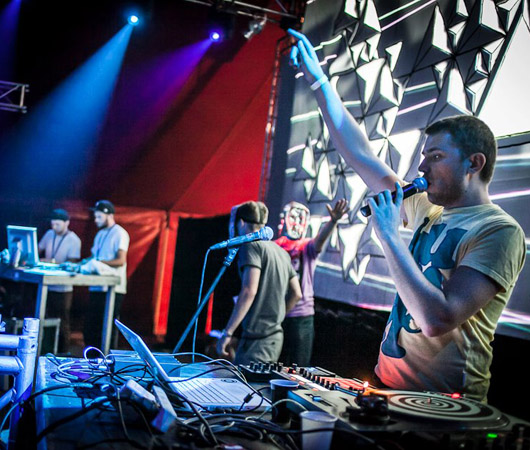
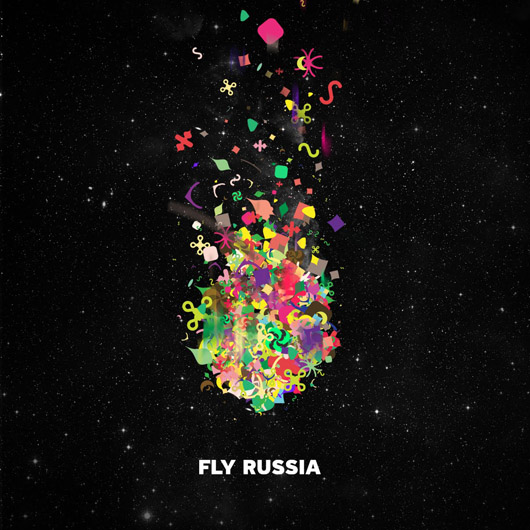
Beyond the initial flashes of these Russian-made beats that appeared across the web, the release of the Fly Russia compilation in 2010 made for the scene’s first substantial push beyond its own borders. A joint collaboration between the Italian Error Broadcast imprint and the now-largely inactive Siberian collective/blog/label Gimme5 (which was, at the time, run by Hmot), Fly Russia gathered up an impressive roster of homegrown producers, showcasing 16 burgeoning talents across 17 tracks of leftfield beatwork. The compilation made for a concrete statement without tying itself to one particular sound, and for many, the comp served as the first appearance of the names that would become the group’s most prominent ambassadors—Pixelord, DZA, and Nocow among them. “When they released this compilation, it was like the circle had just started,” explains Pixelord, a Moscow resident and now one of the main heads behind the city’s Hyperboloid label/crew, “Some people had projects before, but this was one of the first releases with the new generation, with the new names on it.”
In part, the roots of this particular Russian production scene can be traced back to abstract hip-hop and IDM, sounds which many of its members explored before taking up their current crafts. Coming of age in a ’90s culture which opened a new, less constrained arena for the country’s popular music and coincided with an explosion in the exchange of pirated tapes and CDs (which, in the case of the eventual beatmakers, brought access to albums from labels such as Warp, Ninja Tune, and others), there was a greater flood of international influences available to budding music connoisseurs than there had been in decades. Eventually, these young music fiends would move on to try their hands at making tunes of their own, mostly landing the would-be bass producers further out towards the edges of electronic music. DZA spent time crafting experimental hip-hop instrumentals (most notably for crews such as the US’ Shadow Huntaz), while others were putting together more avant-garde electronic productions. In the meantime, locally curated online outlets began to pop up—sites like Drugoy Hip-Hop (which ostensibly translates to “another” hip-hop) began mixing in Low End Theory-style beat music and other stripes of electronic boom-bap with their coverage and later on, the blog arm of the aforementioned Gimme5 outfit became a prominent Russian voice for the growing bass- and beat-music movement.
These locally based sites (and others like them) combined with their international counterparts to make the internet the most substantial venue for the influx of sounds that would shape the scene. Evgeny Shchukin (better known simply as Vega), a producer who goes by the name of Wols and serves as co-head of the Fuselab label (based in the southern city of Krasnodar), assures that his countrymen had the same access to forward-thinking sounds as did the rest of the globe’s music heads. “We always checked what everyone else checked,” he explains. “There was the internet, so we always knew what the rest of the world knew about this music. There were no borders in terms of information and world hype; we were always connected.” In the same manner, budding artists were also able to utilize the same web tools other comparable scenes had access to, using MySpace (towards the tail end of its relevancy), SoundCloud, and other social networks to push their music and begin connecting the dots. “SoundCloud played a big role in the beginning,” explains Vega. “For that period of time, it was a very hyped service and everyone checked new artists there. Guys like 813, Lapti, Myown [(a.k.a. Vtgnike)]—they raised a lot of attention through SoundCloud.”
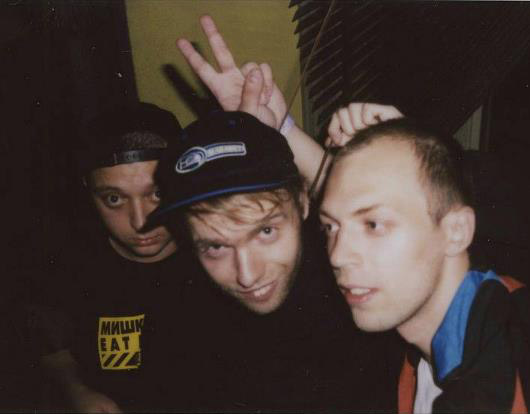
Moscow producers Lapti, Vtgnike, and OL (Photo by Alina Gutkina)
Today, the scope of the scene presented on Fly Russia remains largely intact—especially in Russia’s capital city—and with the exception of a few names, the compilation has served as a reliable blueprint to the still-growing world. “It’s always the same people you hear about from Moscow and Russia, you can just count them on your hands,” says Pixelord, one of the earliest producers to gain a rep outside of the city. “It’s about 10 or 20 people in general. It’s changing, but the circle is pretty much the same as it was in 2010.” Still, it would be misleading to think of all these artists together as one cohesive unit. First of all, artists such as Nocow, Wols, and Kontext reside outside of Moscow, and the city’s remaining producers make up a number of different, albeit interconnected, crews. Considering those who call Moscow home reside in a city of well over 11 million people, it’s not surprising that the web still plays a vital role in terms of communication. Pixelord explains, “There are a few different circles and everyone has their own community, their own label. We meet a lot at gigs around Moscow, but most of the activity is on the internet—we chat on Skype and we’re all friends on Facebook.” Furthermore, a glance at any SoundCloud post from a Russian beatmaker is likely to reveal the names of their contemporaries, usually adding words of encouragement in the tunes’ comment bar. In a scene where most of the members agree that the music is still “middle underground,” and has so far received more international than local attention, the various Russian beat and bass heads clearly feel like they are in this together, and despite the various divisions between crews and labels, a collaborative spirit binds them.
Pixelord
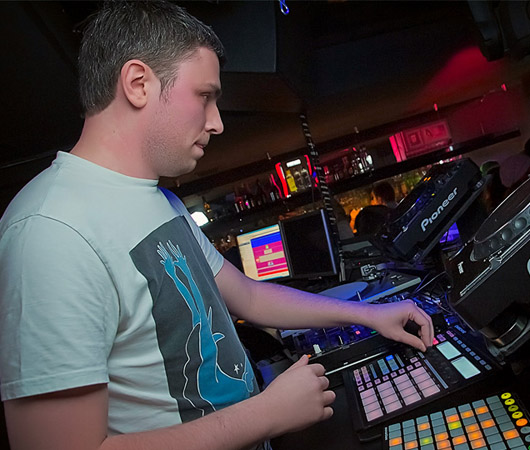
Pixelord and Hyperboloid An Ableton user since Version 1, Pixelord’s previous excursions into avant-garde and lo-fi electronics left him well equipped to make the jump to more beat-oriented music. His warped early takes on sample-heavy, 8-bit-fascinated sounds made him one of the first Moscow producers to build a reputation outside of the city, landing EPs on the stateside Car Crash Set label as well as Error Broadcast. “I switched to beat music because I wanted to play in clubs,” says Pixelord. “I wanted to make something more positive.” Nevertheless, his work to date has been anything but the house and techno that dominates Moscow’s nightlife, with his tunes at first favoring the videogame-tinged possibilities of lop-sided boom-bap, while more recent efforts for Berlin’s Leisure System, Hit and Hope and, again, Car Crash Set have found him folding in more influences from the silkier side of UK bass. It’s safe to assume his forthcoming EP for Civil Music will continue in the same direction.
Along with his international successes, Pixelord is extremely active locally, as he’s keen to cultivate and grow the community which he represents. This he largely hopes to accomplish through Hyperboloid, a digital (and occasionally cassette-releasing) imprint he runs alongside fellow Moscow DJ/producer Acid Mafia, which has dropped EPs from Damscray (a prominent champion of Russian juke and footwork) and Koloah (a Ukrainian producer who has nonetheless become a part of Russia’s production circle), among others. To Pixelord, the Moscow scene is still considerably overlooked within its own city limits, a point he doesn’t hesitate to gripe about. “The scene is small, and even the crowd can be small. It’s always the same people that come to the gigs.” He continues, “It grows, but slowly. I’d like to see more new talents, more new live acts, for it to grow faster.” Just last month, the Hyperboloid crew took what it thinks is a substantial step in the right direction, launching Hyperboloid Talks, a Russian-language internet radio/webcast show in which local producers are invited to share and talk about various tracks. Pixelord hopes that by creating this forum for discussion in his native language, it will prove more inviting to the new and so-far-still-unknown producers of his country, encouraging them to send in songs and get involved with the scene on a larger scale. Stating the bottom line more succinctly, the Hyperboloid boss says, “It’s all in Russian because it’s local and we need more local people to know about us.”
DZA (Photo by Valeriy Belobeev)
DZA and How2Make “All my friends told me, ‘Hey, you have to do something like Flying Lotus, this is the future of music,'” says DZA, another artist to garner international attention early on in the scene’s existence. Born in the small city of Luchegorsk, DZA spent his earliest days as a producer in Moscow crafting adventurous hip-hop beats for MCs, eventually moving on to make tracks of his own and landing a spot at the Red Bull Music Academy‘s London session in 2010. A manic beat tape full of gritty head-nodders for Error Broadcast entitled Five-Finger Discount followed, later joined by a 12″ for that same label and another for Project: Mooncircle the next year. 2011 also saw DZA relaunch How2Make, a label which he originally founded in 2004 that had previously gained a healthy reputation around Moscow while serving as an outlet for DZA’s various early guises and those of his friends. So far, the relaunched imprint has mostly provided a home for the man’s newest productions, most notably the Surrender EP—a whirlwind collection of spiralling melodies, clattering rhythms, and percolating blips and bloops that just might be the artist’s most distinctive release to date.
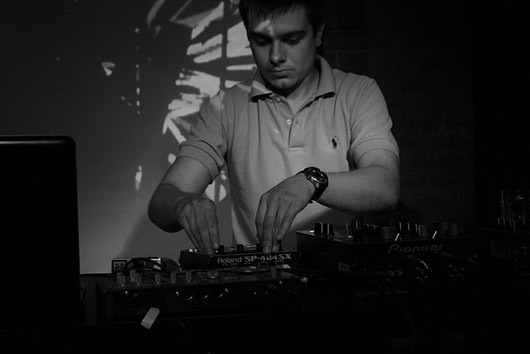
Across the prolific run of releases and remixes he has put together in the past two years, DZA has proven to be an adept shape-shifter, capable of crafting everything from dusty, sample-laden instrumentals to videogame-inspired bass music. This may be due in part to his constantly evolving taste in gear, which has over time included various MPCs, Roland samplers, analog and digital hardware synths, and, eventually, Ableton Live. “For a long time, I made music with the Boss SP-303 sampler while most everyone was using Ableton,” explains DZA. “Now I use the SP, turntables, and a whole lot of gear—my favorite being the [Elektron] Octratrack.” In the same way, DZA has sought out gear to make his live set unique, even enlisting his friends from the Hermutt Lobby collective to develop a Max for Live patch which allows him to play drums using the controller from a Playstation. He explains, “I turned to visual performance more [because] just pushing buttons is boring. When you play drums with a game controller everyone is impressed, like, ‘Wow, he’s playing the drums with Playstation!'” (Side note: You can take a quick peak at DZA’s studio set-up here.)
813
Lowbob and Miracle Libido
RAD No discussion of Moscow’s beat scene would be complete without a mention of RAD. The collective of producers and DJs (which also claims DZA amongst its ranks) began in 2009 as a group which threw beat-minded house parties but quickly evolved. “We realized that we were surrounded by talented, future-thinking musicians with unique sounds and decided to continue our development as a label,” explains the crew in an email. “But still, we prefer to think of ourselves as a community, or even a local movement.” In addition to DJ/promoter Lowbob—who serves as one of the group’s “key strategists”—the collective is home to a number of notable producers that cover a wide breadth of styles: 813 puts a warm, disco/boogie flip on his beats; OL and Vtgnike (a.k.a. Myown) can usually be found piecing together soulful mutations of juke and trap; Lapti mines the brighter ends of warbled instrumental hip-hop; and Miracle Libido accounts for the collective’s more abstract productions. With a handful of releases (or, as the crew members call them, MOOD Episodes) to its name as an imprint, RAD’s role in the scene still largely revolves around its parties and nights, which include a somewhat regular local gathering (thrown alongside the Hyperboloid label) at Moscow’s Rodnya venue, shows at city clubs such as 16 Tons and Solyanka, and—perhaps most importantly—a continued dedication to the DIY ethos that fueled its initial run, now seen in the events thrown on rooftops, at all-day BBQs, and as part of other similarly unique experiences. “RAD is always looking for fresh locations, avoiding permanence and stability on purpose because that is how really special events go down.”
RAD Homeparty, 2009
RAD BBQ Party, 2011
XLR8R Couldn't find the embed function for type: "vimeo" and source: "<iframe src="http://player.vimeo.com/video/29026008" width="530" height="398" frameborder="0" webkitallowfullscreen="" mozallowfullscreen="" allowfullscreen=""></iframe>".
St. Petersburg Moscow is, of course, not the only city in Russia with a modern music culture, and St. Petersburg—which sits over 400 miles from the capital city—has offered its own crop of forward-thinking producers in the past few years, including noteworthy artists such as Kontext (sometimes spelled simply Kntxt), Monokle, and Milinal. But the country’s second-largest municipality has largely been put on the map by Nocow, a somewhat mysterious producer who diverges away from much of the neon-infused sounds of his Russian contemporaries in favor of an aesthetic that is more aligned with the dark, textured skitterings of post-Burial UK bass, with threads of understated techno and house weaved underneath.
Nocow (Photo by Juli Noca)
Nocow’s enigmatic mystique may be due as much to the ghostly qualities of his music as it is his hard-to-track output. His work has been seen across a number of records for various European and Russian net labels, in addition to a stacked list of contributions to compilations from imprints based all over the world. His more concrete efforts have taken shape as a 10″, the Fort EP, for Moscow-based Ethereal Sound last year. This year, his Ruins Tape album, arguably his most buzzed-about work to date, has been reissued on vinyl after originally seeing an online release through the now-semi-defunct Gimme5 label. Still, as far as Nocow sees it, St. Petersburg does not have a scene in the same sense as Moscow, and despite the fact that there are a few semi-regular nights for local talent and a steady influx of touring acts (for instance, he’ll be joining a bill which includes Jeff Mills and Shed this month), no sort of concrete connections or efforts have come to fruition in his city. He explains, “Such a thing as the St. Petersburg electronic scene does not exist, in my opinion. Anyway, I can’t call myself a representative of that scene, because I don’t see it.”
Yuri Vasilchenko of Fuselab
Wols
Fuselab From the smaller, southern city of Krasnodar, Yuri Vasilchenko and Evgeny Shchukin (a.k.a. Wols) run the Fuselab net label, an effort that came together after years of directing various other projects, including a more ambient-focused imprint known as Passage and the Russian podcast series Jumble (which continues in its new form simply as the Fuselab Podcast). Over the past two years, Fuselab has proven to be one of the more consistent Russian-grown beat labels to reach Western shores. Although its catalog is not entirely made up of producers from its own country, Russian beats have been well represented on its releases, which include EPs from more established producers such as Moa Pillar, Milinal, Monokle, and label co-founder Wols, as well as budding Russian talents like Phil Gerus. Of course, the Fuselab crew has its own slant on the music, as Shchukin puts it, “We try to be close to the dancefloor but still a bit weird, deep, and obscure, maybe. Because we started mainly from electronic and ambient—that’s our roots, so we have less dancefloor bombs.”
Much of the same crew that makes up Fuselab is also behind the Dubtarelka parties, which have showcased touring and Russian-born beat- and bass-music talents for the better part of the last five years. Originally bringing in Western dubstep acts, the parties eventually evolved and began focusing on the kind of forward-thinking bass music that now defines the scene. Along with friends from the Dubraw Soundsystem crew (which is active, for the most part, through outdoor and camp-type events), this makes up for much of the live presence of beats and bass in the south.
When one considers the size of Russia and its millions upon millions of inhabitants, it quickly becomes apparent just how small the current beat- and bass-music scene really is. Even with widespread internet access and a steady presence of top-notch touring producers and DJs in the country’s major cities, the core of the scene boils down to just about 20 people, almost all of which fall under the category of 25-plus-year-old males. Clearly, there is ample room for growth and evolution as the current crop of producers pushes onward. The scene has yet to land on a concrete sound or definition for its output (aside maybe from its artists’ perhaps nostalgic penchant for videogame-esque tones). Furthermore, it’s a scene that so far has not produced a flagship release, instead building much of its international reputation on its web presence alone. This all may change soon though, with Nocow’s proper debut LP not too far off and artists like DZA, Pixelord, and—more recently—813 sharpening their crafts to more distinctive ends. Still, it may just take time, not to mention another wave of undiscovered beatmakers, to really cement Russia’s place as an international hub for adventurous electronic sounds. As DZA puts it, “Electronic music here is so young… and the next generation of 15-year-old producers should show something really interesting. I’m betting on guys who grew up with Ableton instead of Street Fighter.”
The 2 Bears, the UK duo made up of Raf Daddy and Hot Chip’s Joe Goddard, has had a fair share of its songs remixed by the likes of Totally Enormous Extinct Dinosaurs, Midland, In Flagranti, and Toddla T, but the latest batch of reworks will arrive from NYC house icon Todd Terry. The veteran DJ/producer will soon release an entire EP featuring versions of The 2 Bears’ “Ghosts & Zombies” tune, one of which is the “Freeze Dub.” The remix holds a consistent groove between the crashing cymbals, claps, and funky bassline, but is also a rollercoaster ride between its quieter side—characterized by filtered horns and vocal samples—and the moments of exploding synths and louder brass stabs.
Arriving almost exactly two years after Teengirl Fantasy‘s debut full-length, Tracer is as much an indication of the pair’s progression as it is the pace at which the electronic-music spectrum has moved forward in that time span. Where 7AM had its share of chillwave remnants and hints of a Balearic touch—the subdued textures and hazy sonics very much in line with production tendencies of the time—the duo’s sophomore album is stunningly crisp and bright, decisively hi-fi, and expertly sculpted. Still, to imply that Teengirl Fantasy has fit perfectly within the moving trends of the underground electronic-music world is misleading. In fact, the pair of Oberlin graduates has always seemed set on at least spinning the tropes of the day on their sides, if not bucking them almost entirely while nonetheless remaining completely relevant. Tracer continues in that vein, pulling inspiration from sources often deemed off limits by the outfit’s contemporaries and yet managing to craft an album that not only appropriately fits, but outright succeeds within the current electronic-music spectrum.
Tracer brings Teengirl Fantasy’s affection for ’80s-era, computer-based new age to the forefront more than ever before. Where its debut would bathe the keyboard-generated choir pads and pan-flute patches in murky reverbs, this LP sees those same tones placed much more towards the front of the mix, utilizing a sound palette akin to a modernized Art of Noise. In the same way, the duo’s love of ’90s R&B and freestyle is clearer than ever, often being heard in both the tones and corresponding patterns impressed on the drums, along with the occasional Jimmy Jam-esque bass slide. But despite these somewhat kitschy points of inspiration, Tracer is an album executed with seriousness and intelligence, and although it is never outright contemplative, the record is never jubilant either.
The six instrumentals here serve as the backbone of the record, and although the sonic aesthetic has been updated since 7AM, these tracks take a similar shape to their earlier counterparts in the sense that they are presented more as journeys than straight-up songs. The opening “Orbit” wraps one of the pair’s familiar formulas in a digital upgrade, laying trickling arpeggios and warm pads atop punchy toms and a tricky half-time skitter. The pair even succeeds in its attempt to include a drumless excursion with “End,” a lush, piano-driven ambient piece that builds and decays in engrossing movements. Songs like “Eternal,” “Vector Spray,” and “Timeline” push towards the dancefloor, at times sounding like a friendlier, less detuned Lone. While these instrumental efforts may not account for the most memorable moments that Tracer has to offer, they are largely captivating from beginning to end and serve as the best examples of how far Teengirl Fantasy’s production talents have come.
With the exception of the Panda Bear-featuring “Pyjama”—an underwhelming outing that accounts for the record’s only real slide into overindulgence—the vocal-based songs heard on this LP are truly exceptional. First, Los Angeles vocalist Kelelam contributes a gorgeous performance to “EFX,” which benefits from a thorough arrangement of harmonizing and pattern-forming vocal layers and an acute sense for dynamic range displayed by both Kelelam and the track at large. Later on, Laurel Halo‘s soaring, weightless voice accompanies “Mist of Time,” adding an ethereal touch to the otherwise inviting and floaty tune. And lastly, the instantly recognizable stylings of Romanthony take the front seat on “Do It,” belting out potentially tounge-in-cheek dance-music clichés (lines like, “I’ve got the feeling in the club tonight/And if you feel it you know it’s alright/Let’s come together/Explode/It’s now or never/Ready set go”), which combine with the pop-minded organ stabs for Tracer‘s most boisterous song. Still, “Do It” never propels into overdrive and proves to be another example of Teengirl Fantasy’s knack for implementing smart—but catchy—vocal arrangements into its artsy electronic music.
In some ways, Tracer goes in the opposite direction taken by most groups still finding their feet in the current electronic-music climate. As many outfits move towards crafting more club-oriented music with time, Teengirl Fantasy seems comfortable staying outside of that realm. True, Teengirl’s music is definitely inspired by and surely not inappropriate within the club-music context, but this LP comes without any “big tunes” or surefire dancefloor tracks. Instead, these are compositions, tracks that are ceaselessly adventurous and without question well crafted; in truth, they may even be a bit risky. That said, Teengirl Fantasy’s lofty artistic inclinations have yet to steer the duo awry, and have yielded creatively unique results across two full-lengths.
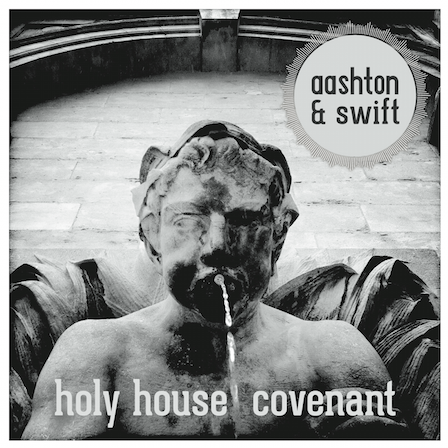
Ahead of Aashton & Swift‘s upcoming Holy House EP, we’re treated to an airy track driven by a heavy bassline from the Bristol-based duo. The resonance of the mix makes it sound like “Covenant” could have been recorded in a church, as layers of drum hits and what sounds like piano stabs are doused in reverb and echo throughout. The song’s surprising funkiness picks up towards the end, which is complimented by vocal samples and busy synthline that builds with intensity. Before Aashton & Swift’s new records drops on September 3 via Body Work, you can stream the whole thing after the jump.
Gappy Ranks‘ debut single “Stinkin Rich” may have dropped back in 2009, but three years later, NYC DJ/producer Thornato (pictured above) has stepped forward to give the dancehall cut some new flavor. Thornato’s already made a name for himself as a proficient mix maestro, both solo and as part of NYC’s purveyors of Latin, Caribbean, and booty bass sounds, Cumba Mela. Here, the producer does away with the original track’s slow riddim, throwing in a bleeping-and-blooping reggaeton backbeat beneath Gappy Ranks’ drawling Patois.
Renowned Detroit producer, DJ, and instructor (most notably at the city’s Youthville program) Mike Huckaby has offered up a quick tutorial on setting-up and generating ideas with Native Instrument‘s Maschine. As part of a larger series of instructional videos for Dubspot, Huckaby gives some insight into how he arranges Maschine in order to use it as an idea generator, yielding a littany of usable patterns and rythyms in a matter of minutes. Sure, he’s a Detroit legend with decades of experience under his belt, but it’s hard to deny that he really does make it all look so simple.