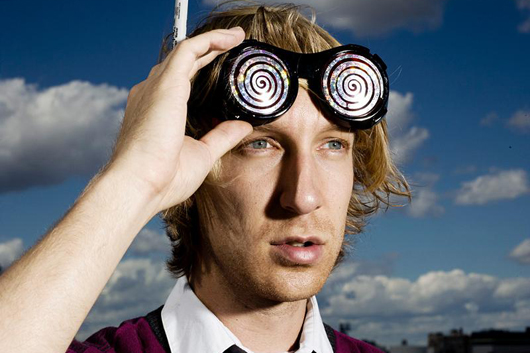
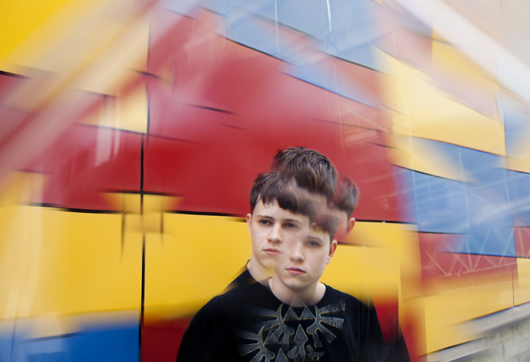
UK record hub Ramp has announced its next release, a two-song 12″ from Icelandic producer Hypno. After dropping two records via Ramp and sublabel PTN in 2010, the Reykjavík resident will drop “Kancourde” b/w “K2” on September 19. You can check out snippets of each tune before then, below.
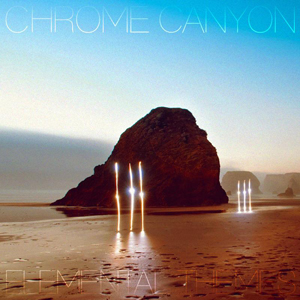
NYC-via-California producer Chrome Canyon is one of the latest non-hip-hop Stones Throw signees, and has recently shared “Generations,” a track off his upcoming album, Elemental Themes. The tune resonates with a retro pulse; ’80s-tinged arpeggios and theremin sounds soar above the funky mix of live drums and bass. Chrome Canyon’s quest to revive the retro sounds of his youth even led him to seek out the late great mastering engineer Nilesh Patel (this was actually one of the last records he mastered before passing away last December), who mastered Air‘s seminal Moon Safari as well as countless other electronic music records throughout the ’90s and into the millennium. You can check out the cover art and tracklist for Elemental Themes, which drops on October 9, after the jump.
01 Beginnings 02 Pluze 03 Legends 04 Branches 05 Elemental Themes 06 Cave of Light 07 Generations 08 Chasing The Dead 09 Sacred Mountain 10 Memories of a Scientist 11 Signs from an Old World 12 Carfire on the Highway
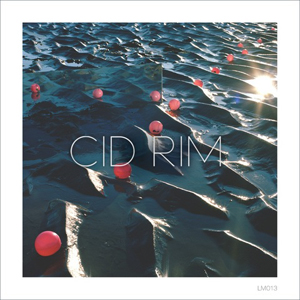
Although fresh LuckyMe signee Cid Rim (a.k.a. Clemens Bacher) hasn’t yet signed to Warp, nor is he Scottish, it’s hard not to notice that his self-titled mini-LP has a lot in common with the 2011 album by Glaswegian producer Rustie, Glass Swords. Both artists have a penchant for bright synth stabs and noisy productions that come to life with soaring melodies and buzzing synth euphoria, which is perhaps why the Dorian Concept remix of Cid Rim’s “Draw” (at the time, it was titled “JazzJazzJazz”) was such an easy fit into Rustie’s recent Essential Mix.
That said, in Glass Swords‘s brilliant light, the self-titled effort by Vienna resident Cid Rim does seem somewhat subdued. Both records use bright, bustling enthusiasm as a pervading aesthetic, but Cid Rim’s mini-LP is smoothed over by a sensibility likely harbored from his work as drummer for jazz-electronic fusion group JSBL. Where Glass Swords built unrestrained vigor around the structure of programmed dance beats, Cid Rim uses drumming to construct a new skeleton for his ecstatic melodies.
For instance, the first drums heard on the album are the rumbling thuds and ticking hi-hats of a jazz break, which rolls under a fluttering, Victor Wooten-style bass solo and rising synth chords. It’s strikingly similar to the blazing sunlight and rollicking musicality of Brainfeeder‘s bass guitar wizard Thundercat, and from there on out, Cid Rim contorts dance beats with a flare that seems improvisational. “Six Hundred” rests on a lurching rhythm that frequently cascades into mini-breaks and rolls, as if a live drummer were composing the beats from behind a drum kit.
However, Cid Rim’s focus falls as much on the melodies as it does the percussion. At times, the eye-popping synth stabs on songs like “Six Hundred,” “Manage Expectations,” and “Danger Ranger” overwhelm the other elements of the mix, which can make Cid Rim’s enthusiasm seem unmanageable. The flashing chords sound like they were indeed stabbed out of the synth, and the squealing notes sound like a mixture of ecstasy and agony. The effect is potent, but the emotions on Cid Rim can occasionally feel a little overbearing and heavy handed. For instance, the stuttering samples cradled by the bass notes on “Danger Ranger” eventually reach a tempo that’s so fast, it’s sure to shred through any mood other than blind ebullience.
At its most ecstatic, the album can feel like a beautifully styled run-on sentence. It was clearly arranged by a skilled hand, but there are too many ideas and too many emotions crammed into the mix. It’s hard for a rhythm to be anything but neck-jerking when it’s careening through cymbals, heavily edited samples, flickering notes, and clicking hi-hats. On the slower tracks, like the woozy “Fall For Two,” Cid Rim’s sounds and moods are clearer, more lucid, and less artificial. The extra space affords the producer enough room to show off his creative flare for jazz-flavored percussion, and without squeaking synths or vocal samples that have been contorted beyond recognition, the songs seem less denatured and more lucid.
This contrast is apparent in album interlude “Optimistic Minor,” which acts as a polite, introspective foil to the aforementioned—and brazenly noisy—remix of “Draw” by Cid Rim’s JSBL bandmate Dorian Concept. While “Optimistic Minor” tickles watery keys and swirling melodies with a soft loveliness akin to Actress songs like “Ascending” or “Holy Water,” the rework of “Draw” amps up the loud drum hits and lively samples into a stomping, gleaming automaton of a song. Even without a beat, the slower and more lush soundscape suits Cid Rim’s penchant for sonic overload without crushing the listener underneath tidal waves of boundless energy.
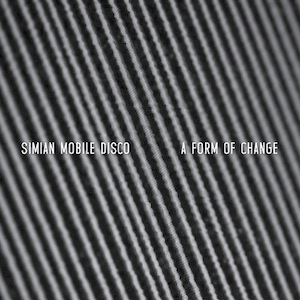
This fall, longstanding UK duo Simian Mobile Disco will release a new EP and debut its new live show at FYF Fest in Los Angeles. The A Form of Change EP is scheduled to drop via Wichita on October 2, which will be followed by a North American tour in December. SMD’s new record is said to feature four tracks taken from the same recording sessions that spawned the pair’s XLR8R Pick’d Unpatterns LP, and represent “another sterling example of Simian Mobile Disco’s restless creativity.” Before A Form of Change is released, you can check out the record’s artwork and tracklist, as well as stream its title track, below, where you’ll also find the full list of SMD’s upcoming tour dates.
1 A Form Of Change
XLR8R Couldn't find the embed function for type: "soundcloud" and source: "<embed allowscriptaccess="always" height="81" src="https://player.soundcloud.com/player.swf?url=http%3A%2F%2Fapi.soundcloud.com%2Ftracks%2F55472330" type="application/x-shockwave-flash" width="100%">".
2 Unfixed 3 Breaking Time 4 Everyday
Sep 1-2 Los Angeles, CA – FYF Fest Dec 01 San Francisco, CA – Mezzanine Dec 02 Portland, OR – Wonder Ballroom Dec 03 Seattle, WA – Neumos Dec 04 Vancouver, BC – Venue Dec 06 New York, NY – Webster Hall Dec 07 Philadelphia, PA – Making Time Dec 08 Washington, DC – Rock N Roll Hotel Dec 11 Boston, MA – Paradise Dec 13 Montreal, QC – Club Soda Dec 14 Toronto, ON – Hoxton Dec 15 Chicago, IL – Bottom Lounge Dec 16 – 19 Bahamas – S.S. Coachella Dec 19 – 23 Jamaica – S.S. Coachella
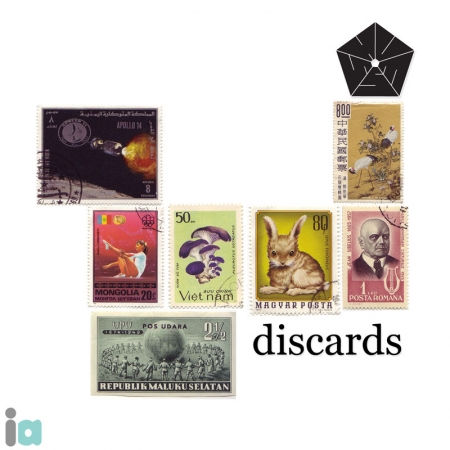
More than a year since his last release, What It Cost, Huess is finally back with the aptly named and newly released Discards EP, an offering of four thematically distinct tracks that had been originally doomed to languish on Huess’ hard drive before he’d compiled them for this record. But don’t get it twisted; this ragtag collection of beats still bumps, especially on closing tune (not counting a remix by Big Mister Doom) “Not Afraid,” on which rambunctious rhythms made of pounding kicks and heavy snares resonate with such beat-heavy vibes that one might be tempted to mistake the UK tunesmith for a born-and-bred Southern Californian. Huess manages to keep things exciting, however, by piling layers of cosmic synths onto his beat before finally capping it off with a wonky, video game-inspired lead. After you check out “Not Afraid,” you can stream the rest of the EP after the jump.
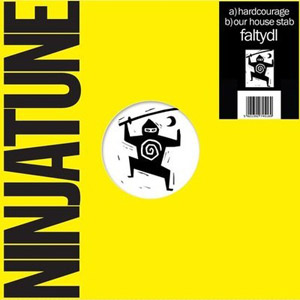
Since his landmark 2011 LP, You Stand Uncertain, so effectively displayed FaltyDL‘s ability to bring together wide-reaching ends of the electronic music spectrum, the NYC producer’s output has been—understandably—all over the place. It’s not just merely in musical terms though, as the work which has followed his sophomore LP has appeared across a number of different labels as well, including releases for RAMP, Swamp 81, All City, and Ninja Tune. Now, FaltyDL has returned to the UK super-label which housed his earlier Atlantis EP, issuing a two-track single of dense dancefloor fare.
Considering this single is not sheepish about its straightforward focus on the floor, it’s not exactly the kind of release one would usually expect to see on Ninja Tune. Both “Hardcourage” and “Our House Stab” are resolutely dance tunes; granted, they are smart and a bit adventurous in their search for enticing rhythms, but nonetheless sound a little out of place in the imprint’s stable. Perhaps the jazz flavors that bob just above the surface or the touch of old-school, NY-style house that graces each track made them appeal to the Ninja Tune A&R (and alternately informed the art direction as well), or maybe the label was just happy to get its hands on something new from the respected tunesmith. The latter seems more likely, but either way, the release certainly makes for a welcome addition to the varied run Ninja Tune has put together so far this year.
Both “Hardcourage” and “Our House Stab” come complete with a jacking swing, led by upfront hats and a slew of almost-overdriven kicks and snares that bite through the mix with their largely unaltered drum-machine tones. The a-side slowly slinks into place, bringing up a bubbling organ sequence as the beat constructs, and eventually laying down a bulbous bassline (which jumps between as many notes as it can fit into its two-bar loop). Between the ever-so-slightly fuzzed bass, retro drum machines, dry percussion, and stabbing organs, “Hardcourage” is almost too nostalgic, but FaltyDL brings just enough modern tricks to the table to render the tune into more than just old-school admiration. The b-side, “Our House Stab,” is approached in much of the same manner, sliding to a slightly mellower tempo while filling out into a wider sonic space with dense chorded stabs and slow-brewing atmospheres.
Again, FaltyDL seems to be in fine form, displaying his uncanny ability to connect untraceable influences into effortless hybrids. At this point, he’s earned the right to venture wherever he pleases with his productions.
Rustie, one of Glasgow’s beatmaking elite, has announced his second North American tour this year, which is set to begin in September. The tunesmith, who wowed us with his XLR8R Pick’d debut LP Glass Swords (which we also named the second best album of 2011), completed a tour through the US and Canada in May, and this time around, he’ll be making stops in San Francisco, Toronto, and Chicago after returning to NYC for two performances. You can peruse the tour’s exact details below, and while you’re at it, check out a vocal version for his track “After Light” featuring Aluna of AlunaGeorge.
Friday, Sept 7 – Webster Hall – New York, NY Saturday, Sept 8 – MoMA PS1 – New York, NY w/ Atoms for Peace, Holy Other Sunday, Sept 9 – Middle East Downstairs – Cambridge, MA Wednesday, Sept 12 – Wrong Bar – Toronto, ON Thursday, Sept 13 – Smart Bar – Chicago, IL Friday, Sept 14 – 103 Harriet – San Francisco, CA
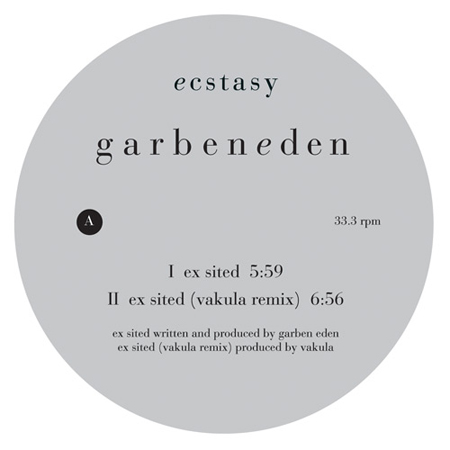
Germany’s “dancefloor-inspired electronic musician” known as Garben Eden released an EP called Ex Sited this week via The Miracles Club‘s Ecstasy label, which also featured his croaky stomper “Feel Good Agency” on its recent compilation. Now, we’re treated to this remix of the EP’s title track from Ukrainian artist Vakula, who adds ample space to Garben Eden’s original mix by filling the head-nodding rhythm with breaths of white noise and a clicking beat.
While he gears up for the August 27 release of his latest LP, Beams, Matthew Dear has seen fit to give away another of that record’s 11 tunes. “Earthforms” is the second track featured on Beams after lead single “Her Fantasy,” and shows the multifaceted tunesmith working with a kind of post-punk-slanted dance-pop that’s relatively unfamiliar to his repertoire. You can stream the track in the player below, or, for the price of your email address, download it from the same widget for free.
Propellerhead‘s Reason software can be a divisive topic amongst producers; some swear by it as their be-all and end-all production DAW, while others refuse to liken it to anything other than a toy. Detractors of the software have long pointed to the fact that third-party plug-ins (VSTs, Audio Units, and the likes) could not be used inside the program, arguing that this made for a less-professional product. Now, Propellerhead has attempted to meet those calls halfway with the introduction of Rack Extensions—offering a host of third-party synths, effects, and more developed specifically for Reason.
From the onset, there are a few really smart things that Propellerhead has implemented here. First of all, as these plug-ins were developed specifically for Reason, their implementation into the program is virtually seamless. The devices (once downloaded and installed—an incredibly painless process in its own right) are instantly usable and act just like any other unit in Reason, even including the wiggly patch cables in the back of the rack. Secondly, each Rack Extension a user purchases can be downloaded an infinite amount of times through one’s Propellerhead account, to be used on their registered copy of the software. This means that even if your computer crashes and loses all of its data, you’ll still be able to re-download all of the extras that you purchased (along with the program). And, perhaps best of all, each Rack Extension is available as a fully functional 30-day demo, giving you ample time to assess whether or not you’re ready to drop between $15 and $149 on a specific audio tool.
Given that there are already 27 of these bits of software available (with more likely on the way), we thought we’d pick out a few of the highlights and disappointments of the bunch, in order to give a better idea of what’s being offered.
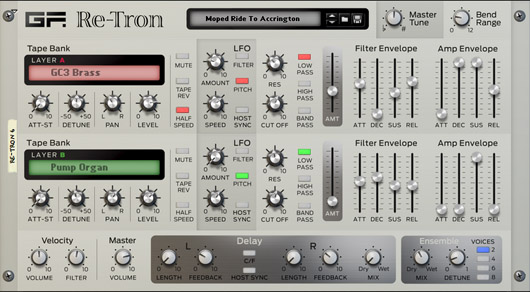
Re-Tron by GForce; $75 This synth claims to take inspiration from the legendary Mellotron keyboard (a ’60s instrument that utilized polyphonic tape relays to play back sound, essentially a precursor sampling keyboards), and while it does bear some resemblance with that machine’s warbly, ghostly tones, this device is really more like a Mellotron on steroids. This hybrid results in a really interesting array of sounds that are easily tweakable, and out of all the sound generators offered as Rack Extensions, the Re-Tron is one of the most unique out of the box.
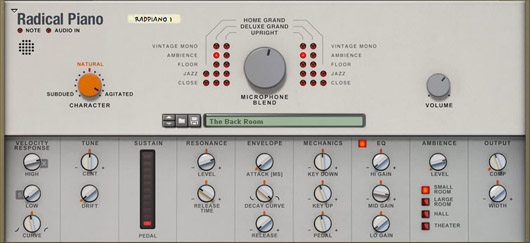
Radical Piano by Propellerhead; $99 Although most would rightly argue it’s damn near impossible to get a fake piano to sound like a real one, Radical Piano does an admirable job. Sure, you’re not going to trick anyone into thinking you went to a professional studio and sat at a Steinway, but with a good amount of knob turning and effects editing, you can get a pretty realistic tone, or—better yet—a really unique, quasi-piano sound. Best yet, this plug-in has an external input option as well, allowing you to run any signal you want through its crystal-clear signal path.
Resampler by Blamsoft; $15 The Resampler is a one-trick pony with bitcrushing on its mind. The amount of knobs it takes to get this done (admittedly just three) is maybe a little bit of overkill, but it doesn’t take much to make this guy sound great. Although, anything more than $15 would be asking a bit much for this feature.
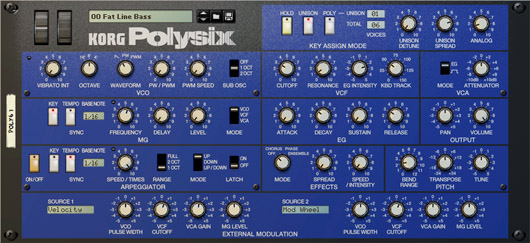
Polysix by Korg; $49 (pictured at top) Whether or not this plug-in is a faithful reproduction of Korg’s classic Polysix synth is something for nerds of greater esteem to debate. For the user not necessarily concerned with recreating a “true” vintage sound, this Rack Extension is just not very rewarding or fun to use. The presets get you started in decent spots, but at times, certain parameters seem unresponsive and don’t yield the results they did on a previous patch. More likely than not, this one just takes more time to get the hang of, but we’re talking about a $49 plug-in here—you quickly start to wonder if it’s really worth the effort.
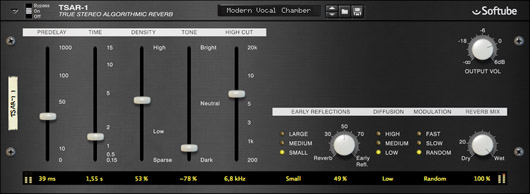
TSAR-1 Reverb by Softube; $149 Currently the most expensive Rack Extension available, the TSAR-1 Reverb does offer an impressive array of options with useful points of customization and a rich, natural sound quality. Furthermore, its interface is simple, clean, and just plain easy to use, making it possible to land on a distinct tone in no time. For those on a budget, there’s also a $49 version available with fewer customizable parameters.
AF-4 Analog by Synapse Audio; $49 Another simple unit that packs a lot of power, the AF-4’s best feature is its “Drive” knob, which adds a tasteful warmth to most signals. The only drawback to this device is that there is no option to change the filter type to high-pass or band-pass, it is permanently only a low-pass filter. However, there is a side-chain input option, which helps make up for that fact.
ABL2 Bass Synth by Audio Realism; $59 Making a digital emulation of the legendary 303 has never been an easy feat, and the ABL2 is yet another attempt that falls short of capturing those distinct tones in plug-in form. The “Drive” and “Distort” knobs—along with a considerably responsive filter section—do help a lot in this effort, and certain combinations can yield tones that squelch and growl in a similar fashion, but no self-respecting connoisseur of electronic sounds would be fooled into thinking the ABL2 was the real deal.
Overall, the addition of Rack Extensions is a welcome expansion to the sonic possibilities within the Reason platform. Still, one has to wonder if the price of these add-ons is a bit inflated—for a program that costs around $400, spending almost half that amount on a reverb plug-in (which, admittedly, would cost more in its VST/AU form) seems a bit unlikely, especially when you consider that, unlike normal VST and Audio Unit plug-ins, these Rack Extensions can not be used in any other program. In the end, Propellerhead’s Rack Extensions are an empowering tool for existing Reason users, but not something likely to attract a lot of converts to its platform.