Listen to Bicep’s New Aus 12″

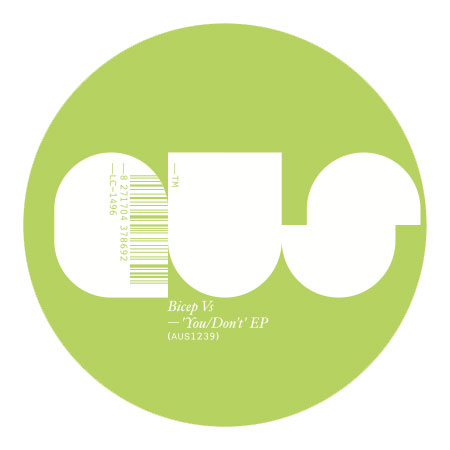
Belfast-born duo Bicep seems to be well on its way to making 2012 its own. Between the solid “$tripper” 12″ and the forthcoming Bicep Presents Throne of Blood compilation, DJ/producers Andy Ferguson and Matt McBriar have just begun staking their claim, an effort which will be bolstered even further by the pair’s forthcoming collaborative 12″ for Aus. The You / Don’t EP sees Bicep working separately with UK producer Ejeca and Omar Odyssey of Waze & Odyssey on a couple of bulbous house productions that simultaneously toy with stripped-down and lush aesthetics, with a remix from Steffi to finish off the collection. You can have a listen to all of those tunes before they drop on July 16, below.

The XLR8R Music Player requires Adobe Flash Player version 9 or later. Click here to install.

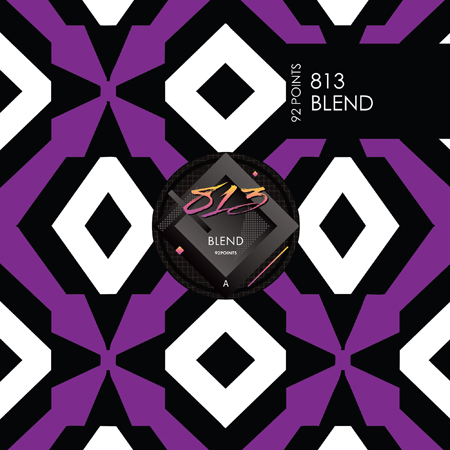
813 “Pleasures”

Nascent Brixton label 92 Points is one week away from the release of its third record, 813‘s Blend EP, and has offered up a bonus cut from the Russian producer to celebrate. At just over two minutes long, “Pleasures” isn’t a whole lot more than a clip of a track, nonetheless, it’s positively brimming with maximalist emotivity. The bubbly, bright sounds of fluttering synths nearly hide a hint of foggy vocals and make for a bright-eyed addition to 813’s forthcoming record, his first release since Donky Pitch unleashed the Spectrum Riff EP back in January.

Pleasures

Nguzunguzu Warm Pulse EP

Nguzunguzu is an outfit that has always been hard to pin down. The Los Angeles pair surely lands somewhere along the Night Slugs lineage, but has nonetheless always come to the table with a unique perspective, folding influences from modern R&B, coke rap, juke, dubstep, G-funk, grime, trap, and even new age into its sonic formula. The resulting productions fit the mold of what has become a largely Stateside take on bass music, one that offers more pieces of half-time boom-bap than pounding club affairs, yet still injects those efforts with neverending skitters, chopped-and-pitched vocals, and rolling kicks and snares. Fortunately, Nguzunguzu has always managed to approach its craft with a touch of eccentricity, a tendency which appears to be alive and well on its latest outing, the Warm Pulse EP.

Unexpectedly, this EP does not come via Fade To Mind—the predominantly Kingdom-run label that counts Nguzunguzu as part of its core—but instead on fellow LA imprint Hippos in Tanks, which has served as a jumping-off point for Laurel Halo, Hype Williams, and more in recent years. With that in mind, it seems Nguzunguzu could have taken the opportunity to explore more indie-minded or experimental productions, or maybe even invited some guests to mark its appearance on a label slightly outside of its normal territory. Fortunately though, the duo does no such thing, in the end delivering five songs that, although a bit darker and spookier than much of the group’s other work, is true to its established sound (which clearly still has plenty of fruitful space left to explore). To its credit, Hippos and Tanks’ A&R shares responsibility for this wise choice, as Nguzunguzu, in a recent interview with XLR8R at this year’s Sónar festival, pointed out that the label had granted the pair total freedom in putting together the EP.

As such, the Warm Pulse EP should be mostly familiar fare for anyone already acquainted with Nguzunguzu’s established catalog. All but one track here operates around the 130- to 140-bpm range, cutting the tempo in half with heavy, half-stepping kicks and claps (and the occasional snare) as the gaps left in between are filled with stuttering hats and shakers, space-age FX, and lush combinations of ’80s-reminiscent bells and pads. There’s also the occasional vocal sample, which, it should be said, is never the focus but is more often used for its rhythmic properties, as opposed to its melodic or lyrical content. The combinations that hit best are “Smoke Alarm” and “Drop Cage,” two tracks that beautifully draw connections between cosmic beatsmithing and adventurous club music with just the right touch of gangster lean. While “Smoke Alarm” keeps its sights on gliding synth melodies, 808s, and finger snaps before drifting off into a looser swirl of delays and reverb, “Drop Cage” is more aligned with the Fade to Mind sound, pitting machine-made FX with a clattering procession of claps and a main synthline that could have been sampled from the X-Files theme; if not, it surely must have come from the same keyboard patch.

It seems that if one was to try to assess the differences between America’s slant on bass music and that of its counterparts across the Atlantic, one of the main points of distinction would be that US producers tend to display the influence of commercial hip-hop a bit more prominently. Often, this ends up contributing to a production’s downfall, as it can often seem like a put-on. (A guy in his bedroom chopping up Aaliyah samples in front of a computer doesn’t exactly scream “street” in the most genuine of ways.) Somehow, Nguzunguzu has continually evaded this pitfall, crafting tunes that have as much for the lean-backers and the head-nodders as they do for the dancefloor crowds. In the process, the pair has also hit on what makes the bass-music hybrid so alluring; by connecting the dots between various club-music genres, Nguzunguzu continues to invite more people of different tastes to share in the experience.

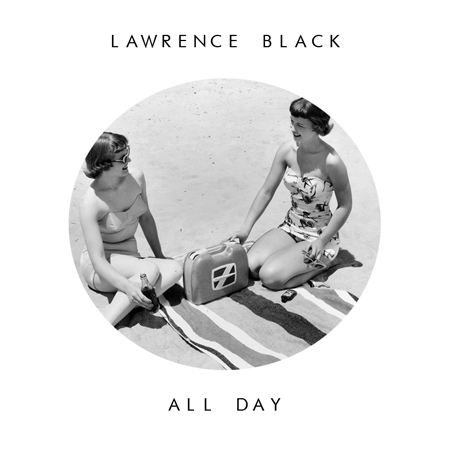
Lawrence Black “All Day”

With only four releases under its belt, the newly-minted Amadeus imprint has already dove into the deep end of carefully rendered atmospherics and smooth house sounds. A prime example would be Lawrence Black‘s sultry remix of “Glass Plates” for labelmate Tomas Rubeck, which emerged back in March. Now, Black is back with a sound more suited for the light of day than late-night dancefloors in the form of “All Day.” Arriving with hints that he has an upcoming EP on its way via Amadeus, the producer’s latest tune scales back to near-silence before building back up into a full-body, disco-flecked groove as if resurfacing from underwater.

All Day

Moritz von Oswald Trio Fetch

When a collaboration involves back catalogs packed with names like Basic Channel, Rhythm & Sound, Vocalcity, Mutila, Sun Electric, and nsi., it’s natural to expect something equally epochal. The Moritz von Oswald Trio has been delivering on that promise quietly while challenging our sonic expectations since debuting with Vertical Ascent in 2009. That said, even for confirmed fans of the group’s core participants—Moritz von Oswald, Sasu Ripatti (a.k.a. Vladislav Delay), and Max Loderbauer—there’s no retreading past achievements happening here. This is still dub techno, but the project works within an improvisational, exploratory framework that belongs to jazz more than a sequencer grid, and listeners have to relearn how to move through this seemingly alien space every time they take the plunge. Now four albums into its run, the Trio is still demonstrating that there’s always something new under the sun, even for these decorated techno veterans. The music is startlingly different on the surface than what we expect, but its existence, and the level of quality maintained over the outfit’s releases, make for an elegant gob of spit in the face of an ever-accelerating culture that increasingly appears to have less and less to say.

Fetch is the name of the latest installment, opening with the 18-minute “Jam.” It’s a functional, literal title that replaces the group’s former utilitarian track-naming technique (“Pattern 1,” “Structure 2,” “Nothing 3,” etc.). “Jamming” has most recently been a byword for visceral, handmade electronic music of the Blondes and 100% Silk varieties, a thread leading younger artists back to the clunky propulsion of early, raw house and techno but which often leaves little space for sounds to unfold in. “Jam” is as dark and suggestive as the album’s cover photograph, its debt to jazz underlined by inky fusion trumpet lines provided by Sebastian Studnitzky and double bass from ECM’s Marc Muellbauer. Max Loderbauer is joined by nsi. bandmate Tobias Freund to add live FX, snatching and refashioning bits of Oswald’s and Ripatti’s bare-bones electronics and their collaborators’ acoustic instruments to create a sense of scale, space, and boundary. As with dub, the interest isn’t just in the ghostly double trailing in the background or the skeleton up front, but the dialectical push and pull between the two. “Club” and “Yangissa” also top the 10-minute mark, but with a greater sense of linear progression in comparison to “Jam”‘s swirls and eddies; “Dark” comes closest to conventional dance music, but its menacing pace and slo-mo pachinko sound effects make it feel like it’s being played at the wrong speed. Yet try playing it at 45 and you’ll find that the atmosphere has evaporated on you.

So, like previous MVOT releases, Fetch has an unresolved feeling across its four tracks. It’s not an unsatisfying lack of resolution, rather the sensation that more avenues have been opened up than can be explored on two sides of vinyl. The music’s restrained enough that it could bubble along pleasantly for twice its actual length without complaint. It exists with quiet defiance outside of the economy of attention, buzz, shareability, and curation that makes up the current listening environment. But if the listener lets his or her attention stray, the music can quickly become irritating—all that can be heard is arid drum-machine patter. Those looking to properly share Fetch will have to invite their friends over, sit down on the same couch with some nettle tea, and let things happen in the fullness of time, as opposed to simply flinging the album into a Spotify inbox. The music grows in richness with ritual, an evolution from the material scarcity and obscurity of Basic Channel releases (with CDs famously packaged in metal boxes that would effectively destroy them); now, we’re confronted by our own lack of patience. Regardless of genre, that kind of challenge isn’t something that’s leveraged too often in music these days. Perhaps in another few years, deep-listening improv dub techno will be a codified genre unto itself, but for now, it’s developing into a flexible new musical vocabulary, one guided by the light touch of a few geniuses just hanging out and seeing what happens.

Kahn “Angeles”

Over the 18 months that have passed since his debut release, Bristol-based producer Kahn has proved a difficult presence to pin down. That debut—the Punch Drunk-released “Like We Used To”—was a note-perfect exercise in clean, hook-laden garage, a track that was energetic and catchy to the point of sounding like some long-lost UK garage edit of a turn-of-the-millenium R&B classic. The tunes that followed however, saw Kahn stepping back from garage to plunge headlong into mood-soaked tones of early dubstep; “Way Mi Defend” was pure 2-step dubplate classicism, while the Eastern samples of “Tehran” brought to mind vintage Pinch. Add to that his varied collaborations with fellow Bristol resident and Sureskank boss Neek—the bare-bones grime of “Percy” and the all-out dub revivalism of the pair’s work as Gorgon Sound—plus his association with the ambient-leaning Young Echo collective, and you start to get the (somewhat confused) picture.

Miraculously, where lesser producers would lose themselves amidst all this genre hopping and homage paying, Kahn has managed to single himself out as one of the UK’s most promising new talents. He’s maintained a singular identity without allowing himself the luxury of returning to the same ideas twice—until now, at least. Granted, Kahn already returned to garage in 2012, albeit in the more downbeat manner of his two-part “Margeaux” release, but “Angeles” is effectively a sister piece to his debut single. The track repeats every trick that made “Like We Used To” so infectious; there’s the unashamedly nostalgic 2-step shuffle underpinned by dark, brooding synths, the broken and repitched joyous vocal, and the melodic, rhythmic mid-range. Thankfully, the combination is equally as potent the second time around, once again resulting in a tune that packs all the emotive punch of modern R&B into a package dense with subtlety and complexity.

The remix on the reverse, from fellow Punch Drunk alumnus Superisk, doesn’t deviate too far from the original source material. It keeps much of the vocal and the general feel of the beat intact while allowing some more cinematic synth parts to unfurl, going slightly deeper than the a-side without losing its immediacy. It’s a fitting companion that doesn’t outshine the original, but isn’t left in its wake either.

Whether this repeat trick signifies Kahn settling on a sound or not remains to be seen, but as long as his genre experiments continue to generate such consistently laudable results, there’s no need to complain.

Ango Announces Forthcoming Free LP

Montreal resident Ango (a.k.a. Andrew Gordon McPherson) has chosen to release his upcoming album, Serpentine, entirely for free on his website. The LP, which will be available via Ango’s website on July 17, is “loosely a concept album” which aims to establish McPherson as a singer/songwriter as much as a production talent, and features collaborations with notable artists the likes of Jacques Greene and Kuedo. According to Ango, his decision to hand over his 10-track record free of charge is not only a gift for his fans, but an expression of “artistic freedom” that has allowed him to explore creative avenues that wouldn’t be available to him on a commercial release (like, say, royalty-free sampling of Mogwai’s “Auto Rock,” as heard in the clip below). Serpentine will be his first release since LuckyMe dropped the Another City EP back in January, not to mention his collaborative EP with Lunice and Prison Garde. Before Ango gives away that record, you can check out its tracklist along with a teaser video, below.

1. The Lie
2. Aquaphobia
3. Make it Count
4. Really Really
5. True Blue (Prod. by Jacques Greene)
6. Paralyzed (Prod. by Prison Garde & Eames)
7. Out Of Your System (Prod. by Kuedo)
8. Anchor (Prod. by Numan)
9. Losing You (Prod. by Mike Din)
10. Woman, Get Out Of My Life

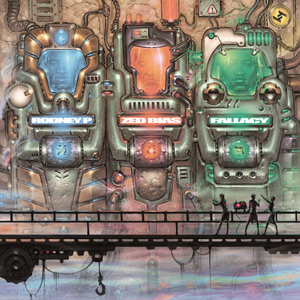
Sleepin’ Giantz Sleepin’ Giantz

With the Sleepin’ Giantz project, legendary garage and broken beat producer Zed Bias joins forces with two heavyweights of UK hip-hop, Rodney P. and Fallacy, to explore the fertile sonic territory between Top 40 radio and raving. The combination of Bias’ dancefloor sensibility with Fallacy’s and Rodney P.’s head-nod-inducing verses creates a propulsive sound that is equal parts chart material and sweaty rave workout. Sleepin’ Giantz glamorizes the lifestyle of young urban England, and makes it sound like a hell of a good time.

The project’s vocal additions breathe new life into dubstep, while tracks like “Mucky” and “Badungdeng” display a new template for hip-hop, uniting lyrical creativity with more innovative club sounds. “Mucky” pairs a growling dubstep bassline with the type of bragging lyricism typical of mainstream rap cuts, resulting in a sound that could easily find a home on the radio. “Badungdeng” is a throwback to the turn-of-the-century heyday of London’s 2-step scene, bouncing along on a muscular beat that feels like the late ’90s while updating the sound for a post-dubstep world.

On “MC Pt. 1,” Sleepin’ Giantz revisits the best of speed garage’s champagne-and-bullets era. The lyrics—a blow-by-blow recounting of an MC’s experience at a rave—are on the cheesy side. As is the synth line. And the bassline. But somehow, when thrown together, some real dancefloor fun results. With lyrics like “We hit them with the bass and the drum/I forgot that’s where it’s from,” Sleepin’ Giantz seems capable of uniting generations of bass-music aficionados, from classic drum & bass heads to fans of today’s mutating club sounds.

The album finishes with “Final Curtain,” featuring Jenna G, one of the most recognized vocalists in the drum & bass and garage worlds. The tune leans epic, with the type of reflective lyrics one might expect from Jay-Z. The combination of forward beats and the more straightforward lyrical delivery is what makes this song—and the rest of Sleepin’ Giantz—really work.

Clark Readies New EP, Shares Title Track

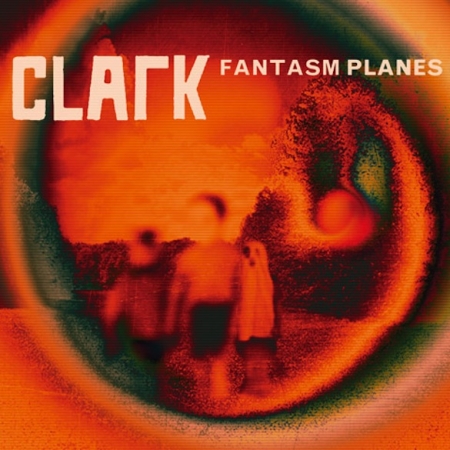
We might not have been head over heels for the latest long-player to be issued by Berlin-based IDM stalwart Clark, but we’re nonetheless interested to hear what the restless producer delivers on his follow-up EP, Fantasm Planes. The six-track record is scheduled to drop on September 4, and is purportedly a “counterpart” to Iradelphic, as it features new variations on three of that album’s tracks and three brand-new productions. Clark also says of Fantasm Planes, “This EP is more about conjuring the full mind-distortion that you get when you hear this music on loud soundsystems… Refocusing the album into the context of metric rave gear.” You can listen to the title track from Clark’s upcoming EP and check out its tracklist, below.

1. Fantasm Planes
2. Henderson Swooping
3. Com Re-Touch / Pocket for Jack
4. Brigitte
5. Secret Slow Show
6. Dove In Flames

Gulls “Running Times”

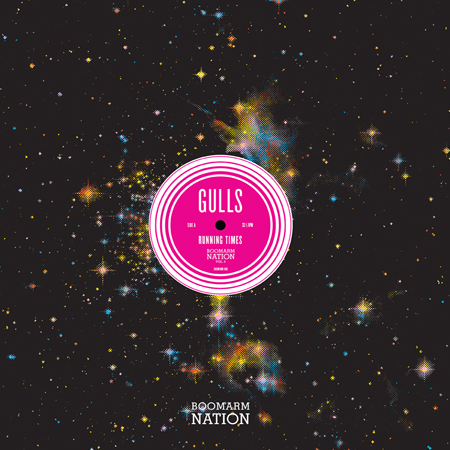
The founder of Portland-based label Boomarm Nation, Jesse Munro Johnson, has just released the Running Times EP under his alias Gulls. Prior to that (last month, to be exact), we brought you the zappy “SOID,” and today we have the record’s title track. “Running Times” prominently features a sassy bassline that bubbles up from an abyss of ambient mist and metastasizes into a bouncing rhythm accompanied by a waggling, horn-like synth melody. So far, Gulls’ EP is only available as a limited-edition vinyl record or even-more-limited cassette tape, but you can stream it now over on Boomarm Nation’s Bandcamp ahead of the record’s digital release on July 31.

01 Running Times

Page 2001 of 3781
1 1,999 2,000 2,001 2,002 2,003 3,781