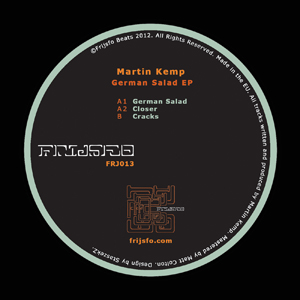
Though most of the XLR8R faithful undoubtedly knows the elder Kemp brother, Rob (a.k.a. Brackles), his younger sibling Martin has demonstrated some serious chops of his own as both a DJ and a tunesmith. Back in 2009, he released the wonky, genre-bending “No Charisma,” as well as a few singles via the now-defunct Blunted Robots label. He also put together a stellar XLR8R podcast featuring a smattering of UK-slanted house, funky, and garage, but after the release of his most recent single, 2010’s “Wot U Got,” Martin faded into relative obscurity, leaving much of the bass music world wondering what happened—until now. While we may never know exactly what the reasons behind his two-year hiatus were, we can safely say that it’s now come to an end with the great news that Kemp is putting together a mix to promote his forthcoming German Salad EP, which will be released in July via Frijsfo Beats. Before then, you can check out the artwork and tracklist for Martin Kemp’s forthcoming record, below.
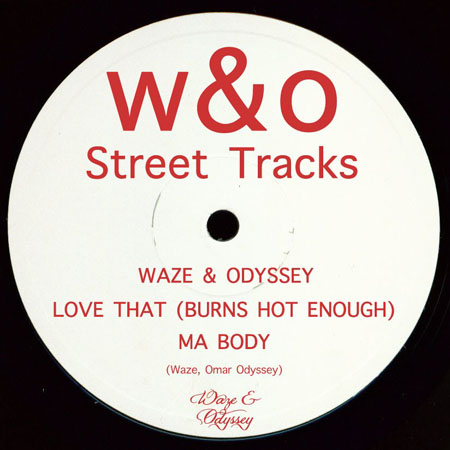
The two producers behind Waze & Odyssey have revealed their identities alongside the news that they will be launching a label together. Londoners Serge Santiago and Firas Waez comrpise the duo, and will issue the inaugural release from W&O Street Tracks, their own “Love That (Burns Hot Enough)” 12″ (artwork above), this fall. Clips of the tune and its b-side, “Ma Body,” are now available to stream, and are joined by this unreleased, full-length tune from the production pair. Waze & Odyssey’s “How It’s Gotta Be” buoys sliced-and-diced vocal clips on waves of surging synths, and accurately represents the kinds of uplifting, piano-driven house that the UK outfit often creates.
When we last checked in on Todd Terje, the Norwegian producer had released his stellar, XLR8R Pick’d It’s the Arps EP. Now, he’s shared a video for the record’s lead track, “Inspector Norse.” The video, which first premiered on Pitchfork, takes excerpts from the Kristoffer Borgli film Whateverest, and follows the adventures of a character—presumably Inspector Norse himself—who’s got as much of a penchant for drugs as he does for awkward, flailing dance moves. Midway through the piece, our intrepid protagonist does his best Walter White impression as Terje’s spacey disco vibes help set off a wild night that culminates in a solo beach dance party that lasts well past dawn.
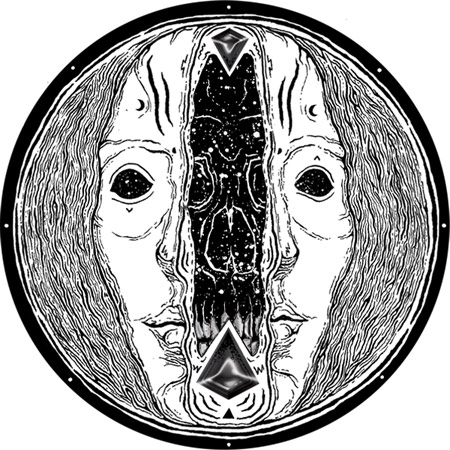
It feels as if our inboxes here at XLR8R are overflowing with tunes from Croydon youngster Deft these days . The bass producer just released his Clotting EP earlier this month, has multiple songs coming out soon on Raised By Records‘ Terrain compilation, and is now announcing yet another EP, Masquerade (artwork above), which will be availabe through Rwina at the end of July. To top all of that off, we just received exclusive tune “Supa Dupa” from the producer. The quantity of his output doesn’t appear to be affecting its quality, however, as “Supa Dupa” displays solid production techniques and songwriting skills. The track doesn’t hit as hard as most of Deft’s dubstep-influenced jams, instead taking a more atmospheric slant that features a sparkling wash of synthesizers and twinkling hi-hats. But if it’s heavy low-end with a touch of wobble that really gets your rocks off, we encourage you to take a listen to the streaming preview of Deft’s Masquerade EP, after the jump.
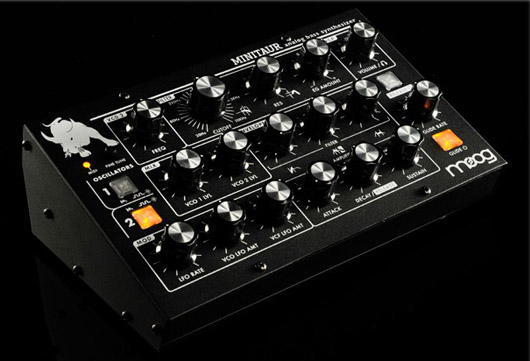
In the past few years, the synth builders at Moog have made valiant attempts to make their legendary synths much more affordable and accessible to a larger group of users without losing their excellent, continually sought after sound quality. Rather than using cheaper materials, however, the company has achieved its goal by manufacturing truncated versions of their products, dropping features and shaving off a number of bells and whistles to accomplish a new price point. The Minitaur is such a unit, designed after the sound-generation components which make up the Tauras 3 bass synth, a piece that was recentely discontinued.
First off, the Minitaur is a very compact unit, taking up 8.5″ x 5.25″ of table space and making it smaller than any hardware synth (with or without a keyboard) that Moog has manufactured to date. In fact, the Minitaur takes up about as much space as one of the brand’s Moogerfooger pedals turned sideways. Fortunately, with this smaller surface area, Moog was still able to fit a dedicated knob or button for each and every adjustable parameter available on the Minitaur. The two oscillators can individually toggle between sawtooth (the original Taurus shape) or square waveforms, and from there can be ran through a standard signal path that includes a low-pass filter section, standard envelope controls, glide, and LFO-based modulation—all with large, smooth-turning knobs assigned to each particular point of customization. The Minitaur also comes without a keyboard, instead giving the user MIDI and USB ports on the back of the unit to allow the control to come from an external keyboard or directly from one’s production software. The Minitaur does not offer much in the way of options beyond these controls���after all, it is made to be a bass synth, and the ethos here seems to be one of simpler is better. There is no individual octave control for the oscillators, and although the second oscillator’s pitch can be tweaked and detuned (which can help achieve some really thick bass sounds), both oscillators are always in the same octave range. The oscillators can only go up to a certain pitch as well, meaning that even if your MIDI keyboard can access those higher octaves, the synth will eventually not be able to keep up with it, tapping out somewhere around a mid-range lead. Of course, this is bass synth though, and the sacrificing of those higher tones is no doubt due to an emphasis by the designers on the lower end of the sonic spectrum.
But what we really want to know is: Does the Minitaur sound like a Moog? Truthfully, it’s hard to say whether the unit is a faithful representation of the original Taurus (or even the more recent Taurus 3), but the Minitaur definitely does have that warm, full Moog sound that you would expect. Furthermore, maybe the absence of the options that one would be used to finding on the company’s other units (like the Voyager and the Phatty) actually ends up helping achieve this rich, massive sound. In addition to the thickness inherent in the oscillator’s wave shape, the low-pass filter is largely responsible for this sound, and what’s more, the Minitaur does allow for an external audio input via a quarter-inch input jack on the back of the unit, so you can run any sound source through the filter and modulation sections.
The Minitaur is not a versatile synth by any stretch of the imagination. Like all Moog hardware units, it’s monophonic, and compared to a lot of other pieces on the market for around the same price, its feature list is a bit on the short side. That said, the focus at Moog has always been on sound above all else, and the Minitaur surely delivers in that respect. Given its sonic capabilities and its ability to integrate into the modern studio, the Minitaur is yet another Moog unit that finds a great balance between quality and affordability while staying true to the company’s time-tested reputation.
Kevin McPhee considers himself an electronic newbie. The 22-year-old Toronto native got his ID in order to start going to clubs a scant three years ago. A couple of years before that, friends at university introduced him to drum & bass and dubstep. Otherwise, the closest he ever got was Radiohead, Björk, and the instrumental, hip-hop-esque beats he’d been making in his bedroom since he was 12. While none of this equates to outsider status, it does give him a viewpoint that’s not tethered to a particular movement within electronic music.
His productions, which sit comfortably in the currently popular grey area between discerning bass music and shuffling techno, display both the foggy vocal refrains and polyrhythms of artists like Burial or Four Tet and, more recently at least, the leftfield dancefloor stomp of labels like Hessle Audio and Hotflush. They began popping up on specialty imprints like Naked Lunch and Idle Hands early last year and have been met by near-unanimous positivity, with journalists throwing around terms like “highly intricate and intimate,” “truly stunning,” and “mesmerizing” to describe McPhee’s music.
That’s pretty high praise for a guy who says, “I didn’t even really think to start sending stuff out until maybe a year before my first record came out.” McPhee’s attitude toward his initial success as a producer is surprisingly casual. “It was never my intention to get signed,” he continues. “Now, I can see sound-wise how it worked out. Basically, when I started, Naked Lunch was the only label I wanted to be on, so I aimed for them right away.”
An English major who just graduated from Toronto’s Ryerson University, McPhee’s path as a producer is more heavily influenced by the record bin than the dancefloor. Never really one to go out, he says that he’s only now coming to understand scenes and artists who stake a career on a singular sound, like house or techno. Instead, it is respected vinyl outpost Play De Record, located a stone’s throw from campus, that is helping populate his musical world. “I would find myself justifying going to school just to go to the record store,” he says. The fruits of these trips established his initial interest in drum & bass and vintage UK dubstep à la Digital Mystikz.
Surprisingly, as much as he gets compared to post-dubstep originator Burial, McPhee doesn’t include him in his list of favorite discoveries. “I own one Burial record,” he clarifies. “I moreso listened to it and then, as a result, got into the stuff that influenced [him]. That’s had a bigger impact on me than him.” He’s even gone so far as to make conscious decisions in the studio to avoid undue comparisons. “I had a feeling, you know. Pitched vocals, swingy drums, apparently that’s Burial and that’s all it is. It’s influential in the sense that it’s gotten me into other stuff, but his sound, if anything, I’m trying to push away from that now.”
You can hear it in his recent work for Tectonic and Hotflush, which has a much sturdier techno backbone. It’s also less reliant on the tweaked-out R&B samples that were beginning to seem like a permanent trait. While his music is still predominantly sample based, it’s mostly for his drum hits and textures. “For a while it was a crutch for me,” he says of the vocal snippets. “I’d be like, ‘Time to add that vocal.’ Now, it’s something I try to avoid. I think I’ve got that in a comfortable spot, so I’m trying to include more vocal samples again, but when it needs it, not just for the sake of it.”
Late last month, he mixed an edition of Resident Advisor’s podcast series. Featuring mostly original work, it’s a pristine snapshot of McPhee’s current sound. Ratcheting up from about 110 bpms to close to 135 bpm, it shows the more atmospheric, post-dubstep influence but places it in the 4/4 framework McPhee prefers these days. “My sound, if I can say that, is not stable yet because I’m still learning,” he explains. “I’m still taking in a lot, so I’m not sure what I’m going to be doing next.” As his popularity continues to grow, he’s finding himself with more DJ gigs, where he likes to show off new material, which has more dancefloor appeal—and that he often sends off to the UK to be cut to dubplate. He’s even starting a new monthly called Threshold with Grahmzilla (a.k.a. Nautiluss a.k.a. the production half of Thunderheist) and one-half of Fool’s Gold duo Nacho Lovers.
“With music picking up, I’m going to pursue it to some degree for a bit, just to see where I can go with it,” he says. He claims to already have accomplished more than he imagined he would, but when he set out to get his music signed he had three labels in mind: Naked Lunch, Brainmath, and Deep Medi. A 10″ is in the pipeline with Brainmath, so there’s still one to go. That said, he doesn’t see himself plying the trade in the long run. “I don’t want to speak too soon, but I’d rather get something set up here and if a gig pops up or I feel like creating some songs, I’ll do it. Whatever.”
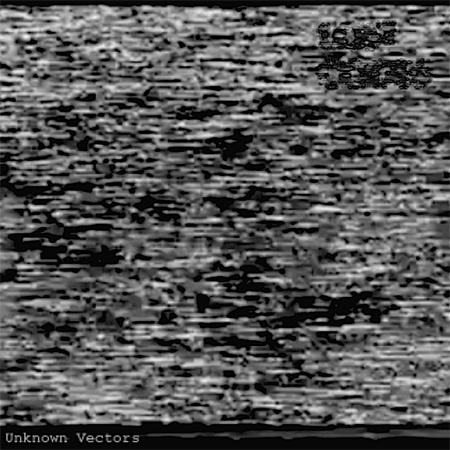
London producer Visionist (a.k.a. Louis Carnell) has really come a long way. Back in February, we featured him in our Bubblin’ Up series as he rode the wave of popularity gained from an EP and single for Diskotopia and 92 Points, respectively. Now, he’s back again, and this time with his own digital label called Lost Codes, which he’s introducing to the world by offering this exclusive cut by American beatmaker Sd Laika. “36” is an unabashedly bass-heavy banger that sounds inspired in equal parts by grime and similarly minded Americans, like Starkey or Eprom, and features dirty synths that constantly change octaves, as well as a fair amount of gun cocking littered through the beat. Sd Laika has also been slated to produce the first release for Lost Codes, a six-track EP called Unknown Vectors (artwork above), which is set to drop in July.
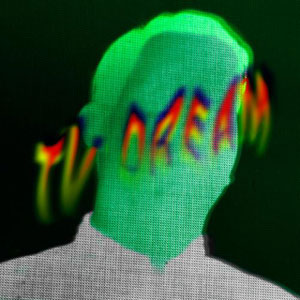
Young Jasper Patterson has been doing his thing as Groundislava for some time now—roughly four years, actually. Most of that timespan has seen the producer toying with blippy 8-bit video game sounds and punchy instrumental hip-hop, attempting over and over to find the perfect balance between that kind of niche pop-culture nostalgia and the most nod-worthy of beats. Truthfully, it’s relatively familiar territory, especially for an LA-based artist making tracks with a computer. His self-titled LP for SoCal imprint Friends of Friends, which is over a year old now, exhibited 12 examples of that same pairing over the course of about an hour, and yielded a fair amount of surprises, despite the fact that Groundislava was working with well-worn ideas. But it appears that the LP was more than enough to get this stylistic impulse out of his system, as Patterson’s latest record, the TV Dream EP, eschews shoehorning more hip-hop tropes into his emotive synth melodies in favor of a focus on refashioning elements of ’80s synth-pop.
Even for an EP, TV Dream is short—five songs over the course of 14 minutes—though its brevity serves the purpose of both presenting Groundislava’s new sound quickly and giving reason to spin the record at least once more after the first listen. The title track’s dense chords, roomy drum patterns, and subtly infectious chorus—delivered in a soft vocoder voice by Clive Tanaka—warrants another listen-through in and of itself. The sullen “Salt of Love” is a two-and-a-half minute production which sounds like a slow-mo version of “Take My Breath Away” (that’s actually a compliment) that could rightly go on for at least twice as long. Closing track “Reflecting” and bubbly opener “Weekend in the Tropics” bring to mind the punch-drunk synth work and buzzing preset bass tones of fellow nostalgia champion Com Truise, albeit for half the usual length of his hyper-compressed jams.
M83’s Anthony Gonzalez has said before that he wants to make a hip-hop record in his own style of exuberant ’80s-pop references, but it would appear that Patterson has sort of beaten him to it. Though TV Dream doesn’t feature the outright hip-hop rhythms found in Groundislava’s earlier work, there’s still enough bounce and slap woven into these cuts to cite it as an influence, and the abundance of poignant themes and reverberated drum machines align his sound closer to that of the French auteur than ever before. With word of an LP coming from Patterson later this year, there’s reason to believe he’ll continue working in this newfound headspace, and potentially deliver a more sizeable portion of his sugary confections. One full-fledged single and a few brief instrumental tracks may not be sufficient for fans and newcomers in the meantime, but at least Groundislava’s EP offers a sampler of some very strong ideas.
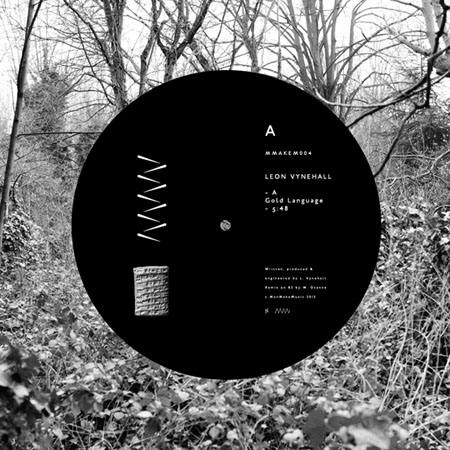
London’s George Fitzgerald opened this week’s XLR8R podcast with two slices of soulful, bass-heavy house from his label ManMakeMusic. One of them, “Don’t Know Why” by Brighton-based producer Leon Vynehall, will be included on the imprint’s next release, which also happens to be Vynehall’s second record. The three-track 12″ consists of two original tunes from the Brighton artist, along with a remix of a-side “Gold Language” by fellow bass-minded Brit Gang Colours, and will drop on July 9.
The ticking beat, rising tides of low end and ghastly vocal samples that The Range (a.k.a. James Hinton) uses in “Nothing Left” arouse a heavy-hearted energy in the Rhode Islander’s production. Although the vocals are hard to place at first, the lyrics (“Til the lights go out, til the smoke clears out”) make the sample easier to identify; they’re lines form Nate Dogg’s contribution to Eminem’s “Till I Collapse,” pitched up and diced to the point that the words are nearly unrecognizable. “Nothing Left” will be officially released in late July, when The Range unleashes his five-track Disk EP via Donky Pitch.