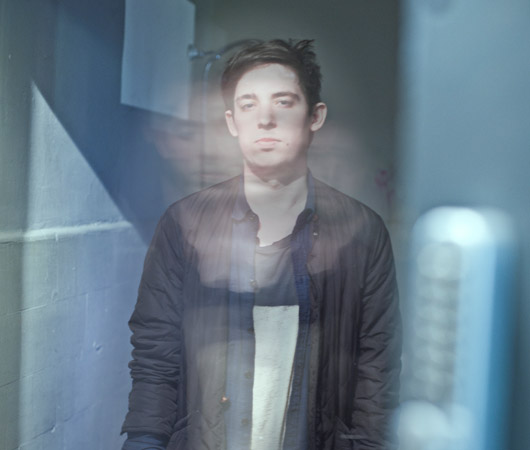
We’re still at least a couple of weeks away from the release of Nguzunguzu‘s Warm Pulse EP for Hippos in Tanks, but today, we’re treated to the first taste of that record’s five tunes. Below, you can stream “Delirium,” a bouncy but relatively low-key production from the LA global-bass duo. Look for the rest of the Warm Pulse EP to drop on July 3.
Yesterday, Dre Skull‘s tropical-flavored Mixpak imprint released the first ever solo effot from UK producer Famous Eno. The single is called “All Good FM,” (artwork above) and comes with a Jersey club remix courtesy of DJ Sliink, a version from Arveene & Misk, and this edit from Famous Eno himself. The original track prominently features rave-worthy synth chords and a sizeable run on the mic from MC Stich, which gives it the feel of a hyperactive summer anthem, while this reworked production is a lean and funky cut that boasts a forceful bassline, military snares, and truncated bits of the vocalist’s hot-footed performance.
In anticipation for this week’s Sonar festival in Barcelona, online music retailer Bleep has once again partnered with the event and curated a free four-track sampler EP featuring exclusive offerings from some of the artists scheduled to perform at the gathering. Tunesmiths such as Amon Tobin, Lapalux, Om Unit, and up-and-coming Red Bull Music Academy alumnus Nightwave have each delivered exclusive tracks for the downloadable package, but act fast, as it’s only available to nab for 24 hours (until 3 p.m. GMT tomorrow), here. You can also stream all four tracks in the player below.
Croatia’s upcoming Dimensions Festival is still a few months away, but the good folks behind the four-day event have teamed up with the London-based production school Point Blank and SoundCloud to announce a competition for aspiring producers, in which the grand prize is—among other things—an all expenses paid trip to the festival this September.
To enter, participants are required to make an original production and upload it to SoundCloud where they will try to garner attention and await the final decision of a panel of “special guest judges from the industry.” In addition to the aforementioned grand prize, the winner of the competition will also receive two exclusive dubplates of their tune, a Pro Producer Course of their choice from Point Blank, and the option to have their tune digitally distributed and promoted. One runner up will receive a pair of tickets to Dimensions (though, sadly, not an all expenses paid trip), along with a Pro Producer Course of their choice. The first round of submissions closes on June 29, so fire up your weapons of choice and read up on the full details here.
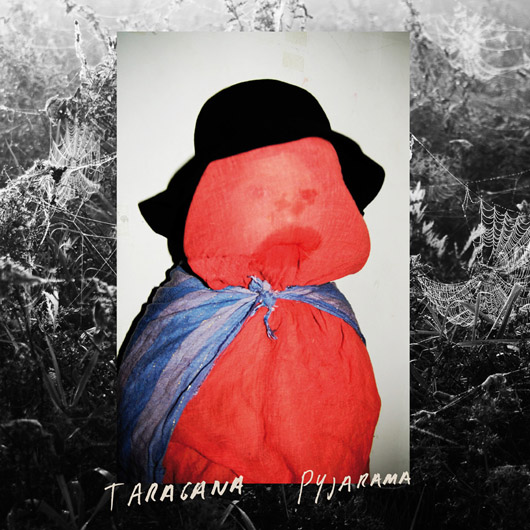
Nick Eriksen was all of 19 years old when his first foray into the production world, under the guise of Eim Ick, garnered a good deal of praise for its handful of summery, dance-worthy beats. But Eriksen eventually got over this initial burst of “hype,” as he calls it, and became a bit frustrated, feeling that the majority of the attention Eim Ick had received was too focused on his age, and not as much on his music. Taragana Pyjarama was born from this frustration, as Eriksen sought to shift the focus back to his talent as a burgeoning producer, throwing a single tune, “Girls,” up on a MySpace page under his newly minted mouthful of a handle. Through the magic of the internet, the track landed in the hands of French label Fool House, and an impressive debut EP followed. Now, the Copenhagen resident is in the midst of taking his next step as a producer, adjusting his aims slightly for his debut full-length—a massively expansive journey through dense soundscapes and intricate synthesizer lattices for the ubiqitious Kompakt imprint.
Growing up just 20 minutes outside of central Copenhagen, Eriksen took a shine to music at a fairly young age, at first picking up a guitar, then trying his hand at drums, and eventually pursuing some classical theory training. But eventually, he came to the realization that all those avenues just weren’t for him, and a growing interest in electronic music (Eriksen points to names like James Holden and Four Tet as early inspirations) coincided with some poor grades in his music theory course. He explains, “Arranging notes and all that wasn’t really for me, so I thought I’d just do it on a computer. Just make a whole track by myself, so I wouldn’t have to involve all the other people that didn’t care about what I liked anyway.” Following the necessary regimen of learning how to produce music on a computer and a lengthy period of exploratory experimentation, Eriksen eventually landed on a sound somewhere between glistening, warm electronics and subtle, sophisticated techno—an aesthetic that came into its own in the spring of last year with his self-titled EP for Fool House.
“Ocean” from the Taragana Pyjarama EP
After “Girls” first made its way around the blogosphere, Eriksen eventually put together two more tracks of similarly watery electronics to make up his debut outing as Taragana Pyjarama. Although the tracks were made during separate periods—”Girls” was constructed on a whim while “Sudanese Blonde” and “Ocean” only came after he agreed to do a full release—the tunes flow together in a remarkably cohesive fashion. Each track is bathed in warm, aqua textures, sharing some key components with the chillwave genre—mainly, a summery glow, heavy use of reverb and delay, and tuned samples, which have been buried and filtered below the surface. Still, Eriksen was careful not to overindulge in these elements, showing a certain restraint and patience in his compositions that render the EP somewhere along the lines of a blog-friendly, more exuberant version of The Field.
Although Taragana Pyjarama did turn heads when it made the rounds last year (not the least of which was that of the venerable Kompakt imprint, which promptly signed the man up for his debut LP), Eriksen doesn’t consider it the truest of artistic statements. When he looks back on the process of putting the release together, he admits it was a bit “forced,” going on to say, “The EP was just me trying to make something after [Fool House] liked ‘Girls.'” Truthfully, it’s hard to hear anything but a solid record when you play through the five-track endeavor (with remixes from Ricardo Tobar and Teengirl Fantasy completing the tracklist), but that didn’t stop the Copenhagen producer from spending a considerable amount of energy in order to evolve his sound to a place he’s more at peace with.
That said, Erikson assures that he had no overarching concept in mind for his debut album, Tipped Bowls. Instead, a series of conceptual guidelines shaped the production of the LP. “It’s not so much that I’ve been thinking of a big meaning for the album, it’s more like, I make a track because I like how it sounds in the moment,” adding, “I knew I wanted the record to be a bit random, have mistakes and stuff. I like when things are a little bit messy in their arrangement.” Nevertheless, despite Eriksen’s augmented approach, the resulting LP is driven by many of the same fundamental pieces as his previous release: Layers of rich melodies trickle in and out focus while understated beats push and pull the record in constantly changing directions. But the underwater tones that colored in his EP are largely absent, replaced with warm yet sharp arrays of synths, a combination Eriksen arrived at using borrowed hardware along with his normal, mostly software-based set-up and, by the same process, significantly reducing his reliance on sampling. At a certain point, the Copenhagen resident reveals that for his LP, he found inspiration in the work of soundtracks, even crafting Tipped Bowls‘ closing cut, “Terror Paradise,” to a specific piece of film. Furthermore, this influence can be heard largely in the pace the record takes, using almost half of its runtime to explore pockets of glistening synth ambience and slow, peculiar sonic textures. “I wanted the album to be an experience, more of a journey than just a couple of singles,” says Eriksen.
“Lo Ng” from Tipped Bowls
With his debut LP’s imminent release, Eriksen’s future plans seem keen on continuing to cultivate his live set, something he accomplishes with the assistance of a fellow synth wizard and a live drummer. “When I made the album, I knew I wanted it to be something that could translate to more than just me and my computer on stage,” he says. “But the tracks are so different when we play them live, we basically make the songs from scratch again, and the other players add their take. It becomes more something you can dance and have a good time to.” Fortunately for those of us who don’t reside in central Copenhagen, it appears Taragana Pyjarama’s live trio feels it will have to take to the road to find more appreciative audiences, as Erikson explains, “For what I make, there’s not really a scene as I see it in Copenhagen. There’s electronic music, but it’s more house or electro-pop.” Still, with artists like Erickson pushing his own forward-thinking sounds to wider recognition, and fellow Copenhagen residents like Jatoma and CHLLNGR—who lends a hand on Tipped Bowls‘ opening cut, “Four Legged”—turning out similarly unique and interesting takes on electronic music, one can’t help but think there’s bound to be one soon.
Taragana Pyjarama’s Tipped Bowls LP is out on June 18 via Kompakt.
San Francisco-by-way-of-Portland beatmaker Devonwho recently unleashed seven tracks via Bandcamp. The songs are, as he says, “a few things from my live set that I decided to let go this summer.” The lead track from Perfect Strangers Vol. 1, “Fronteras” draws on the kinds of blazed vibes Devonwho concocts so well; its glossy synth sweeps and fluttering, funk-influenced bassline matching with a quietly clattering beat as the producer reaches for a groovy state of nirvana. A second volume of the Perfect Strangers series should be on its way later this summer, preceding the release of an LP which Devonwho has said should arrive via All-City this fall.
Arthur Cayzer’s third single as Pariah is, without question, his most cryptic release to date. It’s a bit difficult at first to get a grip on what the London-based producer is angling for here. Several listens deep, however, the fog begins to dissipate, revealing a record that, while erratic, is a bold, newly darkened expansion of Cayzer’s previous aesthetic.
According to the label, these three tracks were originally constructed around samples of shortwave radio recordings. It’s hard to pinpoint where, exactly, these samples figure into the finished product (if they do at all), but Rift certainly has the spooky, disembodied feeling of a crackly foreign-language radio broadcast.
This is especially the case on the title track. It’s a major departure from his previous work, partly in terms of how it’s constructed, but especially in its eerie, borderline oppressive atmosphere. The spare, shuffling opening doesn’t build toward an obvious climax; instead, an eerie array of synths overtakes the track, guiding it into an unsettling and shadowy realm. Permeated with dread and paranoia, “Rift” cultivates a tense air not unlike the fever dream soundscapes of Demdike Stare, or, to reach a bit further back, Goblin’s soundtrack work for filmmaker Dario Argento.
“Signal Loss,” the second track, is similarly intriguing, moving at a similarly midtempo pace but working in a more longing mode. Here, Cayzer pairs a clipped male vocal sample with fragments of piano and what sounds like a children’s choir for a creepy, wistful effect, accentuating the crackling background noise and providing some relief from the (admittedly engaging) paranoia of the opening track.
As strong as the first two tracks are, the single’s closing track, “Among Those Metal Trees,” is an uneasy, unfortunately skip-worthy three minutes of hissing murk. Coming across as a stab at an elegiac ballad of some kind, it that doesn’t particularly add to the record. It’s easily forgivable, however, given the relative strength of the preceding tracks.
Rift ultimately feels like a transitional record. While not as immediately enchanting as the highlights of his previous work, it’s compelling in subtle, completely new ways, and reveals Cayzer as a multifaceted, adventurous producer.
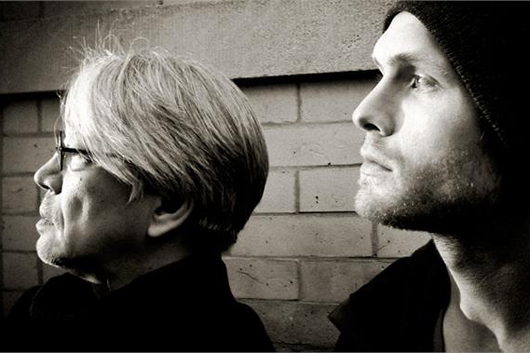
Christopher Willits (who, we should mention, once contributed to XLR8R‘s pages) continues to showcase his production handiwork and penchant for creating intricately lush soundscapes on a forthcoming collaborative album he crafted with visionary composer Ryuichi Sakamoto, with whom he worked on 2007’s Ocean Fire. The new album is called Ancient Future, and will be available via Ghostly on August 6 in Europe, with a worldwide release to follow the next day. The tracklist and artwork for Willits’ and Sakamoto’s forthcoming LP can be found below, along with a stream of the its closing composition, the aptly titled “Completion.”
01. Reticent Reminiscence 02. Abandoned Silence 03. I Don’t Want To Understand 04. Levitation 05. Releasing 06. Completion
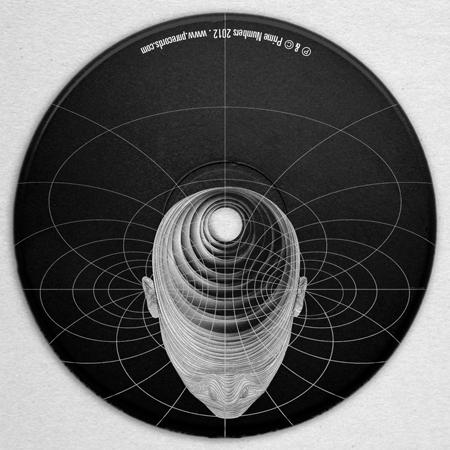
If Manchester native Nick Sinna is actually trying to kick a habit, his tune “Kick the Habit” probably has enough percussive force to help him do the job. While the song is busy with lots of sounds—zaps, whistles, hoots, sirens, chimes, bells, etc.—its hard kicks barely take a break from driving the scatterd cacophony throughout the entire eight minutes. “Kick The Habit” is one of four tracks Sinna composed for his forthcoming EP on Trus’me‘s Prime Numbers imprint, all of which are available to preview, after the jump.
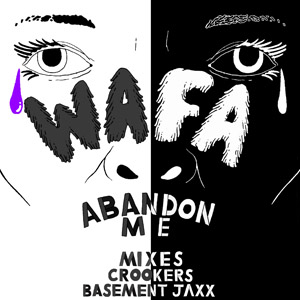
London producer Wafa follows up his Lucky Strike EP for Grizzly with a ridiculously over-the-top single, sampling Rose Royce’s classic “Love Don’t Live Here Anymore” for a bombastic tune with questionable trappings. Three different remixers do their best to save the effort, but they can only do so much.
The first minute and a half of “Abandon Me” is a cruel tease. Floating strings and a shuffling beat meet the filtered sample, building toward what seems like a soulfully grooving, space-age house track, something that might even be perfect for the summer months ahead. Then, the production is flipped on its back, making space for a heavy beat and a stomach-churning electric guitar sample that seems culled from, or inspired by, the depths of hard-rock machismo. Not only is the guitar incredibly unfitting, but it essentially takes over the tune. While pieces of the filtered sample continue to occasionally slip through, the screaming guitar assures that they remain only vaguely related to the rest of what’s happening. In short, “Abandon Me” is a terribly misguided attempt at a banger and a surprising disappointment considering Wafa’s production career so far.
The EP’s three remixers do their best to make something worthwhile of this mess, and it’s telling that none of them do more than drop a hint of the electric guitar—not even the brash electro poster boys of Crookers attempt to seriously incorporate the questionable riffs. Still, Basement Jaxx makes a rare and impressive remix appearance (albeit one that’s less surprising given that the Abandon Me EP is dropping on the duo’s own imprint), twisting Wafa’s tune into a classic Jaxx-style excursion with fragments of house twisted around infectious melodies and a funky, swinging low end. Perhaps the best effort comes from a remixer by the name of FHR, who somehow erects a sturdy production from the shambles of the original, half-timing the beat and adding a dreamy assemblage of swirling pads, chords, and reworked vocals for a rewarding tune that lands on the more emotive side of UK bass. Unfortunately, these two remixes are the only things worth their weight on this outing, which leaves an unnecessary and hard-to-ignore blemish on Wafa’s otherwise worthwhile track record.