According to Trouble & Bass’ website, this week’s release from Nottingham duo Ursa Major is “one of [the label’s] moodiest releases to date,” but “in the best way.” “Whitecaps,” the a-side of Ursa Major’s new record for the New York label, takes a melodic approach to UK garage with moments of jazzy chords collapsing into rattling percussion and robust low end. The track eventually sinks into a grime wobble, balancing the pleasant synth stabs and glittering tones with gritty intensity.
Tiger Beer’s Hidden Depths series continues its exploration of prominent UK record labels this week with Hyperdub. On June 13, Hyperdub founder Kode9 will perform at KOKO in London alongside roster mates Cooly G, DVA, and Laurel Halo (as well as non-Hyperdub artists Actress and Rashad & DJ Spinn) for the second installment. Ahead of that event, Tiger Beer and London online music hub FACT have put together a five-minute video of interview clips with Cooly G, DVA, and King Midas Sound producer The Bug to help present the history and development of Kode9’s iconic imprint. The interviews also illuminate some of the inner workings of Hyperdub—according to Cooly G, they were “like a family from the beginning,” and DVA encourages producers that Kode9 might still be listening to your tunes even if he never emails you back—as well as previews of two tunes from Cooly G’s upcoming albumPlayin’ Me.
Last month, when Annie Mac debuted Voyeur‘s remix of Santigold’s “The Keepers,” she described it as “perfect for a sunny evening.” The same could be said for the UK duo’s rework of “Can’t Hold Back,” the centerpiece of the latest EP from Kerri Chandler’s Madhouse label—that is, until a few minutes in, when the intensity generated by the croaky bass synths and silky vocal loops starts to build. Voyeur’s remix steeps the original production in stormy sounds, transforming Jonathan Meyer‘s and Anna Cavazos‘ polished deep house into a screwed burner that pushes the track toward techno territory. “Can’t Hold Back” will be released on June 25, along with Voyeur’s rework and other mixes by Issac Christopher and Major Notes, but you can stream it all now, after the jump.
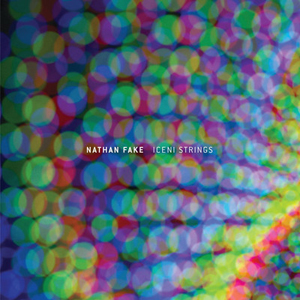
Nathan Fake‘s records never fail to be truly synesthetic affairs. Arguably, the thread of continuity through his every release is the thick, shoegaze-like effect of his production, regardless of whether the track is more dancefloor oriented or aimed directly at the brain (as his tracks often are). This new single—the UK artist’s first release since 2009’s excellent Hard Islands mini-LP—is techno to the core, but is also disorienting and delightful in a way that is quite novel, even in light of the odd, innovative impulses that often marked his previous releases.
“Iceni Strings,” the punchy opening track, is dazzling and lush; it’s starry-eyed, thoroughly dreamy, and whimsical in true Border Community fashion. Perhaps the track is too intellectual for the dancefloor, but it’s utterly ecstatic cranked through headphones or a stereo. The first single from his upcoming full-length, Steam Days, the song draws its name from the Iceni, a Celtic tribe that dwelled in what is currently Norfolk, where Fake is from. Stuttering its way into a sparkling conclusion, the production bodes very well for the forthcoming album.
The two tracks on the b-side are likewise terrific. Kicking off with the feverish rush of “Sense Head,” Fake overwhelms what is a fairly straightforward house beat with crackly, dizzyingly arranged synths. It’s psychedelic and rave-ready, whereas the following track, “Bauxite Dream,” is considerably more subdued. About halfway through this moody closing cut, Fake gingerly introduces synths that nudge the track into the same sparkly headspace that characterizes the rest of the record. It provides a contemplative, downbeat counterpoint to what came before, nicely rounding out this very strong EP’s 15 minutes. Given the all-around quality of this release, Steam Days, due out in late August, can’t arrive soon enough.
The most recent FACT mix comes from a man of many names and many influences—so many, in fact, that the DJ/producer was allowed nearly three hours to show them off. Hieroglyphic Being (a.k.a. Jamal Moss, I.B.M., IAMTHATIAM, The Sun God) recorded his lengthy mix back in March at the Musicbox in Lisbon, but has only just unveiled it today. The Chicagoan artist rolls through what seems like every sound imaginable, weaving together strands of stark percussion, noise, tribal chanting, house, and nearly everything in between. As an artist, radio host at WNUR, and label boss at Mathematics Recordings, Hieroglyphic Being has a talent for navigating diverse sounds with superior control, which he deftly showcases in his truly epic FACT mix. There’s no tracklist available, but you can absorb its myriad influences here.
Coming off of the heels of its Cardiac Arrest EP released back in March, British duo Mista Men are back with a new offering out on June 18 via DJ Haus’ Unknown to the Unknown label. On the new record, simply titled UTTU EP, producers Mella Dee and Woozee craft three hard-hitting tracks influenced in equal parts by techno, house, and garage. One of the record’s standout tunes, “Forget U,” is a four-on-the-floor-style stomper that resonates with stabs of vocal samples as well as a simmering, gurgling bassline.
This summer, Kompakt will be circling back to Looping State of Mind, the latest album (not to mention XLR8R Pick and our 17th favorite album of 2011) by Axel Willner’s The Field, in order to give it the remix treatment. The new versions—which were crafted by Canadian duo Junior Boys, Brooklyn’s Blondes, and Wolfgang Voigt’s new project, Mohn—will be released on June 30 as Looping State of Mind Remixe.
This cruncy, hard-edged tune is a joint production from Geiom (pictured above) and My Panda Shall Fly, the former hailing from Nottingham and the latter calling London home. The UK pair evokes the sound of old-school IDM from the likes of Gescom (or even early Autechre, for that matter) across “Telephone Telepathy,” and imbue those skittering rhythms and fractured melodies with a more straightforward sensibility that should work well on contemporary dancefloors.
As we have done a handful of times before, we offer you today a peek at the next release coming from Tiga‘s Montreal-based imprint Turbo. But this release is, as you’ll find, a bit different from Turbo’s previous records; New Jack Techno is a 10-track compilation featuring cuts from the likes of Locked Groove, Nautiluss, Sei A, and Gingy & Bordello. It’s also sort of a mission statement, offering the kinds of forward-thinking techno, house, and bass music that Turbo aims to continually bring to the table. You can get your fill of those sounds after the jump.
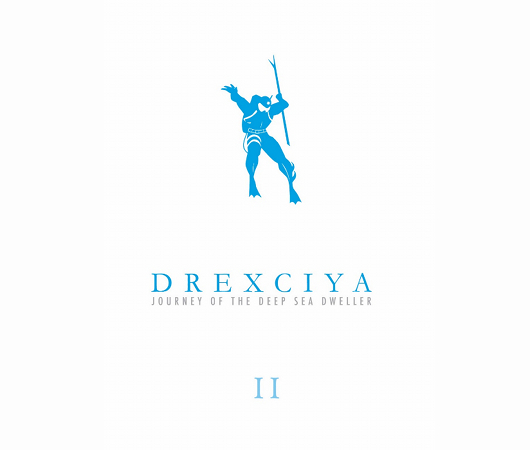
There’s only a handful of artists that can justify a four-part series of full-length reissues: Elvis, Jimi Hendrix, the Beatles, and (of course) Drexciya. Even though pretty much no one would agree with that statement for various reasons, you have to admire Rotterdam’s Clone Records for knowing exactly what they like. Journey of the Deep Sea Dweller II is the latest in Clone’s Drexciya retrospective, and like the first edition, Journey II takes songs from the Detroit band’s 10-year existence (1992 to 2002) and builds a tremendous case as to why its singular “techno from the deep” is more relevant now than ever. If electronic music’s sea of genres has dissolved into a sea of icononclasts, Drexciya populated those waters first.
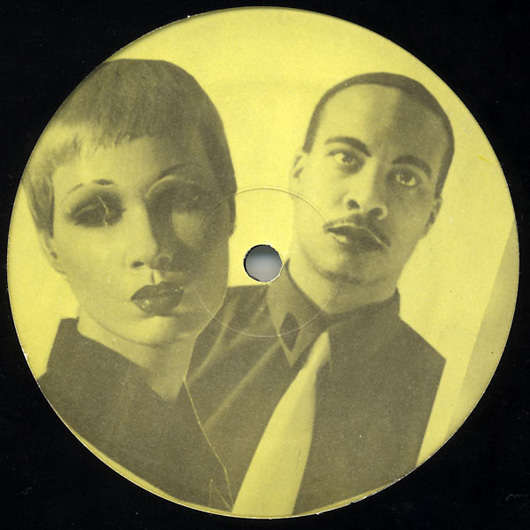
Even at its peak, Drexciya was never a likely candidate for wide popularity—its music was too hermetic and weird, falling somewhere between punk and Kraftwerk funk via 808 drum machines and flickering, diminished chords. The personalities behind Drexciya didn’t help much, either: founding member James Stinson purposely isolated himself from Detroit’s techno scene, while proclaiming the evils of Richie Hawtin’s exploitive “Caucasian Persuasion” in Melody Maker. Meanwhile, Stinson’s partner, Gerald Donald, was fascinated with black fascism and technological eugenics; his other aliases such as Dopplereffekt tried to sneak in SS insignias on label art, paired with lyrics like “we had to sterilize the population.” These were not exactly the moves of careerists, let alone torchbearers for Detroit’s techno scene.
Donald’s SS pin blacked out on the collar
Drexciya’s anti-social waterworld was sealed away, disconnected from the party. The duo didn’t seem to take in new influences, but rather fed off the ghosts of old ones. Juan Atkins and Kraftwerk obviously loomed heavily, along with dark disco and P-Funk. But Drexciya was too individualistic to make copies, its music carrying the DNA of early electro and techno, but with the extravagance of pop song structure stripped out. In its place was a comic-book world called Drexciya, where Darthouven Fish Men and Neon Falls were described like rippling animations.
In classic comic-book style, Journey II begins where the first compilation’s “Dehydration” ends: with a security checkpoint sequence in the form of “Intro,” where an ominously pitched-down vocal declares, “Welcome to the fusion zone.” From there, song titles move in a chronological adventure—from the surface waves of “High Tide” to “Danger Bay,” whose underwater “Ha”‘s sound like some kind of Drexciyan warning before approaching the clearly dangerous “Anti Vapour Waves.” Journey II‘s sequencing speaks to Clone’s obsessive engagement with the Drexciyan myth—there’s some filler on the album, but it serves this particular quest’s story arc.
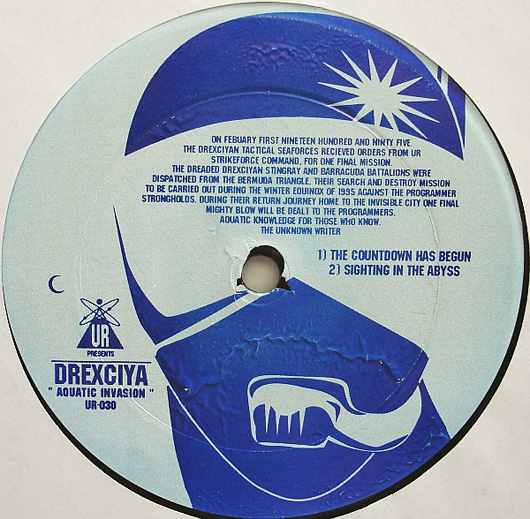
Coverage of Drexciya has always tended to fixate on specifics of the band’s underwater world, further playing up the idea that no one knew who they were until James Stinson’s death in 2002. While it’s cool to imagine that was the case and it certainly fit with their underwater concept, the members of Drexciya weren’t complete masterminds of their destiny. Militaristic narratives by “The Unknown Writer,” found on Drexciya’s three records for Underground Resistance, seem slightly out-of-character in retrospect—as if Drexciya was adapted to fit UR’s agenda. Likewise, the band’s compilation The Quest on UR’s Submerge label suggested the mysterious Drexciyans were descendants of pregnant African women thrown overboard during the Middle Passage. These were fascinating ideas for sure, but the music itself never really addressed them. Drexciya was too playful for Terrordome-style confrontation; see “Bang Bang” for further proof.
“[Drexciya is] not really in disguise” Stinson told Liz Copland on Detroit Radio, a couple of months before his death in 2002. “It’s just more or less given us our own territory, it’s more about being isolated to where you can go about your own daily business… and not really be involved, like an isolated community. If you look at some of the other documentaries about undersea life or whatever it just looks so peaceful down there, beautiful, no sunlight, total darkness.”
For Drexciya, deep sea’s isolation was a creative trick as much as a narrative one. In their attempt to document the Drexciyan deep, Stinson and Donald created a world that was essentially a series of constantly evolving, conflicting, and unfinished vignettes. None of it ever really made sense, but it didn’t matter because Drexciya was best at invoking a vibe; its sound was more suggestive than literal. Listening to the music can be like hearing a Rorschach test: the diffused ripple of voices and swirling high hats on “Danger Bay” personally recall the experience of treading right on the edge of water and air; the droning bassline on “Anti Vapour Waves” clings to the sea floor like a drifting underwater vessel dodging jagged reef.
“We don’t make songs based on a concept,” Stinson told the Detroit Free Times in 2002. “We make the songs first and deal with the concept around the songs. After the music is created, we’re building a concept around it: moods, emotions and feelings from the music helps build [that]. Basically, what we do is listen to the record and then your mind starts to wander and images come to your mind. Hopefully, people that buy the record feel the same thing. When you listen to the music and read the title, you basically have to run with it. The images have to go with the themes.”
As boundless as the water imagery was, the actual methods behind the music were considerably more terrestrial. “We do everything freestyle” reads the declaration on the one-sheet for The Journey Home EP. “We program as little as possible, and the little we do program, we manipulate as much as possible.” In other words, Drexciya tracks were the product of jamming—something that’s not hard to believe given the tiny mistakes and oddly phrased arrangements that litter most of the group’s songs. Recorded straight to a Tascam 4-track with no computer edits, Drexciya’s looseness sounds thrilling next to most electronic music made today; it’s unpredictable, raw, and very much analog. The remastering job of Journey II does little to “repair” that; Clone’s Alden Tyrell didn’t go back and fix the 13-bar intros for easier DJ use, nor did he crush the mix.
Brendan M. Gillen of Ectomorph recently called Drexciya the techno equivalent of Syd Barrett and Daniel Johnston, “actual mentally disturbed individuals” whose identities became lost within their music. It’s an apt comparison. For all intents and purposes, the members of Drexciya lived in their underwater world, and their sound was totally unmistakable as a result. Newer artists can (and have) copied the trivial parts of Drexciya’s sound, biographical smoke screen, and “lo-fi” production technique. But it’s not enough—you have to go too deep first. It’s Drexciya’s world, we’re all just visiting.
A huge thanks to the Drexciya Research Lab, which has compiled the most complete archive of Drexciya information available, in addition to updates on Gerald Donald’s many projects.