Reid “Miami”

Dancefloor tracks that seemingly provide the perfect accompaniment to a late-night drive through the winding hills of Southern California or the neon-streaked streets of South Beach aren’t exactly a new idea, but the fact remains that these updated ’80s templates continue to provide compelling tunes. Furthermore, they are quite the stage for young producers to show off their production prowess and melody work, as we see on “Miami,” a wistful number from Irish artist Reid. His track hits all the familiar touchstones including a hefty, rounded kick that propels glassy keys and a chugging bassline into a tropical-tinged sunset. Heavy compression and some spacious vocal textures add a sense of depth and verve to the proceedings, placing us in the cockpit with dark shades at the ready.

Miami

Dabrye, Ikonika, Om Unit, and More on Illum Sphere Remix EP

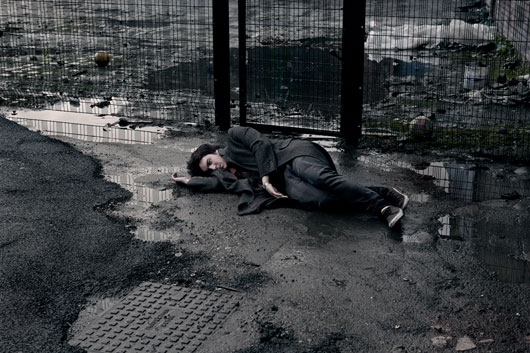
Manchester tunesmith Illum Sphere (pictured above) has commissioned a handful of choice remixes of tunes from throughout his discography, and will soon release them via Fat City. Among the five contributing producers are elusive beat-making veteran Dabrye, juke-obsessed Londoner Om Unit, and dubstep experimentalist Ikonika. Illum Sphere Remixed is scheduled to drop on May 21, but you can check out its artwork and tracklist, as well as previews of each cut, before then, below.

1. Agent White (Kidkanevil’s Agent Black Remix)
2. An Old Escape (Dabrye Remix)
3. Chasing the Midnight Moth (Ikonika Remix)
4. Never Lie Twice (Om Unit Remix)
5. One For Dimlite (Scumbag Remix)

Bam Spacey “Vi Delar Samma Grav (RxGibbs Remix)”

Here, we see two young artists (Sweden’s Bam Spacey and Michigan’s RxGibbs) and two young labels (NY’s Ceremony and NY/London imprint Cascine) combine forces on a spacious remix of “Vi Delar Samma Grav” from the Swedish producer’s latest single. Armed with loads of reverb and shimmering synth pads, RxGibbs delivers a subtly driving cut peppered with plenty of his trademarked angelic vocal coos and light-footed percussion. You can catch the flip of this remix trade off, RxGibb’s “Silver (Bam Spacey Remix),” after the jump.

Vi Delar Samma Grav (RxGibbs Remix)

Grab Another Free Mixtape From d’Eon

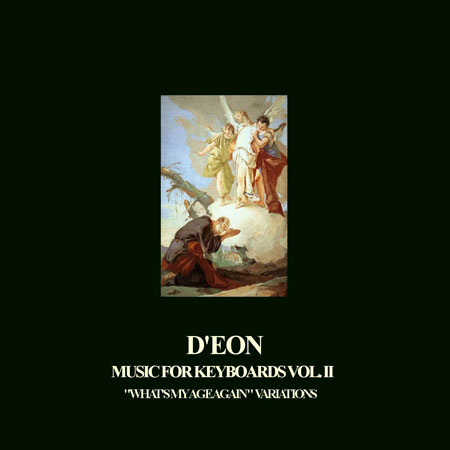
Today, Brooklyn-based website Stereogum premiered a free mixtape from Montreal artist d’Eon, his second installment of the Music for Keyboards series. Below, you can stream the 14-track offering, all of which is comprised of variations on the melodies from—wait for it—Blink 182’s “What’s My Age Again.” As odd as that sounds, these “piano exercises” are quite good, and are free to download, here. d’Eon’s debut LP, LP, will drop on May 5 via Hippos in Tanks.

Py “Lungs (Produced by George FitzGerald)”

A purveyor of warm, sensuous house music, George FitzGerald has collaborated with London singer Py on this emotional and mood-driven number, “Lungs” (artwork above). A staple of both the Hotflush and Aus Music artist rosters, FitzGerald has a distinct way of engineering his productions around a central vocal motif, giving his samples room to breathe amidst his dreamy, plushly cushioned instrumentation. Working here with a live vocalist, he begins the percolating tune with a high-octave arpeggio before an enveloping chord sequence takes hold, providing ample footing for Py’s longingly desperate crooning. It’s the sixth song off her forthcoming new mixtape, Tripping On Wisdom, which will be available on May 21 and feature additional production work from Damu, Breton, Raffertie, and more. Their contributions can be heard on Py’s Soundcloud, alongside her recent collaboration with Throwing Snow for Raffertie’s Super Recordings.

Lungs (produced By George Fitzgerald

Monty Luke Readies New EP

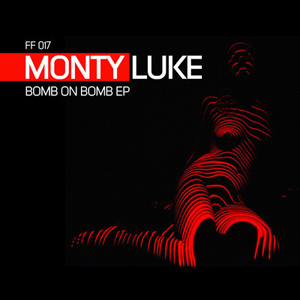
Former XLR8R scribe and current right-hand man at Carl Craig‘s Planet E label, Detroit-by-way-of-San Francisco producer Monty Luke has prepared a new, three-track offering for Denver-based Full Flavor Music. Bringing a “funky, raw eclectic sound to the techno underground,” Monty Luke has previously delivered releases for Planet E, Mothership, and his own Black Catalogue imprint, but the Bomb on Bomb EP claims to offer his most varied output yet. Featuring the driving peak-time and late-night dub versions of “In Love With A Dancer,” the classic acid-house of the EP’s title track, and a smooth, downtempo finisher in “13th City Stranger,” the record is set to drop on May 22. In the meantime, the cover art and a streaming preview of the Bomb on Bomb EP can be found below.

1. In Love With A Dancer (ML Tronik Edit)
2. Bomb On Bomb
3. In Love With A Dancer (ML Future Dub)
4. 13th City Stranger

Review: Polyplayground for iPad

MSRP: $5.99, Mike Gao Mobile

Los Angeles beatsmith Mike Gao has designed an iPad app aimed at allowing users to easily create complex chord structures and melodies using color-coded buttons and geometric patterns rather than a traditional piano keyboard. The result is a program that is part MIDI controller, part music-theory lesson, and part music-making mind fuck. In other words, not your average app.

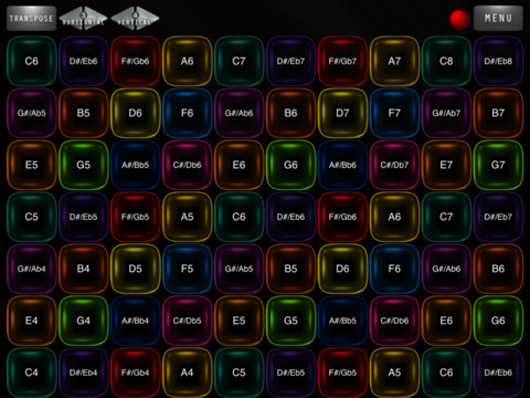
Polyplayground’s interface seems simple enough at first glance. A grid is laid out with buttons clearly labelled according to the note and octave they represent, and each is color-coded in a fashion meant to highlight the sonic properties of the notes available. Red, orange, and yellow notes relate to each other more than their blue, green, and purple counterparts, allowing you to navigate the field of notes off the bat with a bit of (somewhat false) confidence. Certain patterns then yield a number of chord structures depending on how your grid of notes is set up (the app automatically starts off with perhaps its easiest grid, the 3×4 “Balzano Space”). These Tetris-like shapes take a minute to discover, but once you land on them, it becomes easy to anticipate the chord changes, which move from minor and major triads to seventh chords and even ninth chords (if you can manage to use five fingers). It’s truly impressive how easy it becomes to use these patterns once you’ve established them. The only problem becomes moving on to other grids—like a 3×5 or an 8×2 or, really, any combination you can think of—as every time the grid changes, so do the patterns that represent the chords you’re looking for. As you continue to explore these expanded grids, the concept behind the app becomes more and more murky, but this is where the color code becomes even more vital, as it gives the user the simple clues as to where to start building their patterns from.

Although there is an internal synthesizer included with the app, its real purpose is as a MIDI controller. After some tinkering with your iPad and the app’s settings, MIDI can be sent to and from Polyplayground using Virtual MIDI or an iPad accessory to convert the signals into readable MIDI notes for other hardware or software synths. This is perhaps Polyplayground’s greatest feature, as you can then record the MIDI notes it creates straight to your DAW or plug directly into a hardware synth and utilize its unique chord voicing capabilities with a much more powerful sound bank.

Truthfully, Mike Gao’s app seems like a production tool that most benefits users who come to it with a strong understanding of music theory, as approaching more than the default grid setup and its few related variations can prove to be quite a daunting task—considerably confusing and frustrating to those on the less-informed side of the musically trained spectrum. With that said, Polyplayground’s use of shapes and colors to represent chord structures and the relation of notes is still very intriguing, and could lead to some rewarding results if its user is willing to put in a good deal of time and exercise a modicum of patience. It appears to be the kind of app that is fun enough on the surface, but has a larger breadth of discoverable possibilities for those willing to dive in. Hopefully, a training video or written guide is on its way to help the beginners out.

Affctns “Like You”

This soulful selection comes out of Santiago, Chile courtesy of Affctns, a new audio-visual duo working under the Diamante banner that includes Daniel Klauser, a producer we’ve postedaboutbefore. “Like You” rolls out with well-selected samples of R&B that act as percussive intonations rather than the focus of the track, which is itself saturated with Hotflush-style chords and fleeting, accented displays of saccharine melody. Many artists have been ensnared by the softly biting genius of ’90s R&B, but when the referencing of such heartfelt, lovingly-constructed memories is well done, as it is here, bits of compelling originality seep through the nostalgic nods to the past. Check out the rest of the free Ginger Gyal EP (artwork above) on Klauser’s Bandcamp, and be sure to scope their video for the title track after the jump.

Like You

Soul Clap E-Funk

For those who have paid close attention to the rise of Boston’s Soul Clap duo, from its days as a party-starting East Coast entity to its role now as an international unit with countless remixes and an excellent DJ Kicks contribution to its name, there is a lot riding on this debut album. Unfortunately, Soul Clap falls short of expectations with E-Funk, delivering an LP that takes its wide range of influences and turns them into an uncomfortably diverse set of songs that barely fit together, with a handful of highlights and some surprisingly low points strewn throughout.

Looking back, Soul Clap is an outfit that’s always had a penchant for the weird. In fact, it’s a place where the duo has shined many times before, displaying a masterful ability to combine disparate elements into smooth, cohesive tracks. Worthy examples of this include songs like the hauntingly off Auto-Tuning of “Lonely C” or the woodwind-section-meets-percussive-house remix of Grag Paulus’ “Suchashame,” both of which appeared on the pair’s 2011 DJ Kicks mix (which was put together alongside like-minded NYC duo Wolf + Lamb). Yet, for one reason or another, the stranger inclinations which have defined Soul Clap don’t seem to coalesce properly on E-Funk, as the album’s combinations somehow seem forced.

Where past releases found Soul Clap opening up its bizarre production with slow builds and vast pockets of space, the flow here seems rushed. This may be due to the fact that the majority of the album’s cuts are intended as proper “songs,” their aim set somewhere between avant-pop and disco-house. True to the pop formula, these efforts usually clock in at less than five minutes and jump into their verses without engaging the listener in anything more than a cursory intro. Worsening matters, the vocals employed often obtrusively dominate the mix while Soul Clap’s expert production unfortunately takes the sideline. For instance, the spacey, sleek dance-pop of a song like “Let It Go” gets overrun with ideas—the robot vocals instantly give way to melodies, which in turn hands things off to the vocals, and so on. This trend takes a variety of shapes throughout the LP, as Soul Clap jumps around from early-’90s-style breakbeat hip-hop on “Let’s Groove On” to looped, basement funky house on “The Clapping Song” and even touches on a shamelessly retro slow jam with “Ecstasy.” Through it all, there’s no patience, no lurching anticipation, just intro, song, outro, leading to a disorienting listen with few spurts of palpable momentum. For a group that made its name by effortlessly tempting the listener into the darker, more abstract corners of house (and its relative offshoots) by dressing them up with smooth, jazzy trimmings, this inability to capture a distinct mood is certainly surprising.

Still, there are a handful of instances when the pair’s ideas work. “TroubleTroubleTrouble” finds just the right balance where its counterparts fail, sounding like a song stuck inside an ’80s-era Prince or Rick James intro. Later on, “Need Your Lovin” turns in a winning combination by pitting piano and vocal samples (credited to Mel B, but singing the lyrics to The Korgis’ “Everybody’s Gotta Learn Sometime”) against an Afrika Bambaataa-reminiscent breakbeat, complete with DJ scratches and hypeman countdowns. The LP does end on a high note, as Soul Clap closes out with a five-plus-minute—mostly instrumental—jam filled out by a mass of layered woodwinds. “Islands in Space Pt. 2” is the kind of floating, understated space-house outing that most listeners likely expected to populate a sizable portion of E-Funk; it’s unfortunate that it only appears in the album’s closing moments.

In fairness, E-Funk is a debut full-length from a pair of producers operating within a genre that’s arguably better suited for singles and EPs. That said, though the album comes a bit heavy on the retro vibes, its biggest shortcomings all seem to stem from the fact that there are just too many ideas at work over the course of the record. Ultimately, E-Funk proves to be an effort that finds its creators trying to pull in something that’s just beyond their reach.


Watch Nicolas Jaar Perform Live

XLR8R Couldn't find the embed function for type: "mtvnseries" and source: "<embed src="http://media.mtvnservices.com/mgid:uma:video:mtvmusic.com:756740" width="530" height="298" type="application/x-shockwave-flash" allowfullscreen="true" allowscriptaccess="always" base="." flashvars="">".

A new video of underground lightning rod Nicolas Jaar performing live with his Darkside cohort, Dave Harrington, and Will Epstein (of Yours Truly) has surfaced courtesy of MTV Hive. As polarizing as the work and outspoken ideologies of Jaar have been since his debut album, Space Is Only Noise If You Can See, was released last year, it’s hard to find fault with his penchant for experimentation and willingness to delve deeper into the possibilities of live electronic performance. The track executed in this video, termed simply “Variations,” features plenty of acoustic and electronic trickery from its three participants, mixing the two worlds into a homogenous blend of slow-motion house, blues, and jazz. The collaborative piece, recorded in Austin during SXSW, also features short clips of an interview with Jaar.

Page 2053 of 3781
1 2,051 2,052 2,053 2,054 2,055 3,781