The latest record to come from the excellent Numbers label is the debut release from London producer Slackk, a three-song jaunt entitled Theme From Slackk. “Crucial Love” isn’t one of those next-level, so-called “eski-house” burners, but the track does find the producer in similarly funky territory. While samples from New Edition’s “Crucial” tune are toyed with at the core, a slow, booming dance beat carries the funky guitars, buzzing synths, and low-bit electronics that make up the rest of the song’s instrumentation. Slackk’s “Crucial Love” is probably a bit too slow for anyone’s peak-hour playlist, but it’s certainly a weird one that’ll bring you down in style. You can get more info on Slackk’s new EP, not to mention pick up your own copy of the record, here.
Yep, it’s that time again… but no, we’re not going to wax rhapsodic about the year that was. We’re simply going to let the music speak for itself, and ply you with XLR8R‘s most downloaded MP3s of 2010. Today’s list just accounts for numbers 26-50, so check back tomorrow for the absolute top 25. Without further ado…
Do steel drums—or their digital approximations on various synthesizers—ever sound bad? In all honesty, the answer is probably yes, but in the right hands, like those of 23-year-old Polish producer The Phantom (pictured above), not to mention those of the beatmaker handling remix duties here, the UK’s Hackman, they can be absolutely devine. The original version of “Night Game,” taken from the just-released Phantom EP, is a punchy slice of tropical 2-step led by a darting synth melody and a heavy helping of steel-drum sounds. Hackman has elected to stretch the song out, doubling its length while swapping out the lead synth for some ominous pads while turning up the percussion and inserting some additional low-end hum. It’s a just one of several solid efforts from the EP, which also includes remixes from Brenmar and Poland’s Zeppy Zep alongside a couple of additional originals from The Phantom. One of those originals, “Connect the Dots,” even has its own saucy video; check out the song and the PG-13 sexual suggestiveness after the jump.
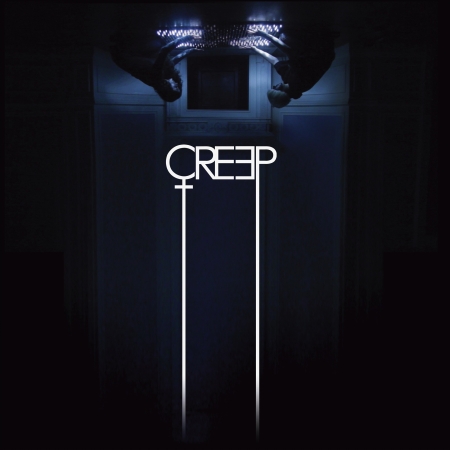
Brooklynites Lauren Dillard and Lauren Flax are Creep, a DJ/production duo currently being touted along with folks like oOoOO, Salem, Stalker, and others in the so-called witch house realm. The burgeoning outfit has been hard at work on its debut single for a while now, and come January 25, the Young Turks label will release “Days,” a slow, brooding pop tune that features the inimitable vocals of Romy Madley-Croft of The xx. Along with the original track, remixes from Deadboy and Azari & III will be included in the release, which will be available in 12″ picture disc and digital download formats. You can check out both “Days” and the preceding “Intro” in the player below.
XLR8R Couldn't find the embed function for type: "soundcloud" and source: "<embed allowscriptaccess="always" height="225" src="http://player.soundcloud.com/player.swf?url=http%3A%2F%2Fapi.soundcloud.com%2Fplaylists%2F439177&show_playcount=true&show_comments=true&show_artwork=true&color=000000" type="application/x-shockwave-flash" width="100%">".
A while back, we shared news about New York global-bass hub Dutty Artz dropping a new compilation, appropriately titled New York Tropical, which featured the likes of Nguzunguzu, Matt Shadetek, DJ/rupture, Maga Bo, and more. Well, that thing has been out for a month now, but we just came across this free tune taken from the release, and thought you’d like to get your hands on it, too. It’s a remix by Brooklyn DJ/producer Kingdom of “Los Poderes,” which was originally by Dominican singer Rita Indiana (pictured above). Underneath and around Indiana’s colorful voice, Kingdom keeps things moving in a slick fashion; synths swell and rise with intensity, bass frequencies drop in intermittent bursts, and a plethora of percussive sounds propel the remix further into the bass-music spectrum. (via Pitchfork)
About six years after French electro-house weirdo Mr. Oizo released his sophomore album, Moustache (Half a Scissor) (pictured above), via F Communications, and went on to join the ranks of the elite Ed Banger Records crew, that second LP is about to see a re-release. Steven Ellison (a.k.a. Flying Lotus)—who, incidentally, did a great remix of the “Stunt” track from Moustache a few years back—will be issuing a fresh edition of 1000 vinyl copies of that record through his own Brainfeeder imprint on January 10. On the upcoming re-release, the producer/label honcho says, “The original label that put it out thought it was unlistenable at the time, they didn’t quite believe in it, but it was way ahead of its time. It’s an honour for Brainfeeder to re-release this record, it’s one of the most inspiring electronic records ever made.” You can watch a short clip announcing the re-release below, pre-order the LP here.
XLR8R Couldn't find the embed function for type: "vimeo" and source: "<iframe src="http://player.vimeo.com/video/17583401" width="530" height="298" frameborder="0"></iframe>".
The members of party-starting Portuguese outfit Buraka Som Sistema may have inadvertently become the poster children for kuduro, but even they openly admit that they’re putting their own spin on the energetic Angolan sound. In that same spirit, last year the band’s Enchufada label tweaked its Hard Ass Sessions series and began inviting producers from around the globe to cook up their own version of kuduro. Past participants have included Bok Bok, Toy Selectah, Douster, and Zombies for Money, and the latest installent includes efforts from Dubbel Dutch, Canblaster, Seiji, and more. The new EP will see wide release next week (impatient folks can cop it now exclusively through Juno), but in the meantime, take a listen to all four tracks below. And if you’re looking for a fright, you can also check out the spooktacular video for Martelo vs. Canblaster’s “Cannibal,” which is posted underneath the audio player.
The XLR8R Music Player requires Adobe Flash Player version 9 or later. Click here to install.
As one of the owners of the monumental music download hub Beatport, Brad Roulier works with tunes made by the world’s top electronic producers and DJs on a regular basis. As owner of the Denver, CO, nightlife hotspot Beta Nightclub, Roulier regularly brings some of those same acts to his hometown, but now, one rival club owner claims Roulier’s business practices are unfair and monopolistic. Regas Christou, owner of Denver nightclubs like The Church, Vinyl, and Bar Standard, has filed a suit against Roulier, claiming more than $1 million in losses as a result of Roulier’s practices. The basis of Christou’s claim, according to the Denver Post, is that performers are being bullied into playing at Beta because of its connection to Beatport. Some artists have allegedly received threats of having their catalogs pulled from the download service if they play a rival club, while others, including the likes of Deadmau5, DJ Dan, and Sasha, are just afraid of angering Roulier. But Roulier’s lawyer thinks it could just be jealousy, saying, “I think that Mr. Christou is really mistaking Beta’s popularity among the artists and the public as being unfair competition. That’s what this suit may well be about.” The lawsuit’s trial is still pending, but if/when it happens, Christou hopes to put an end to unfair practices and recoup his damages.
From the XLR8R TV archives, here’s a lost episode with UK producer and label head Jack Dunning talking about London’s exploding Bronze Age Future Step scene.
Jack Dunning, who produces as Untold and heads up Hemlock Recordings, comes up with some preferable terms for the ever-shifting genres currently rattling cars and clubs in London. When we sat down with him in Brooklyn earlier this year, Dunning broke down the various UK micro-scenes for us, revealed the secrets behind his crossover club hits, and admits to his past as a Hendrix obsessive.
So how do you make a classic, fat rave bassline? If you’re Moby you go out and buy Joey Beltram’s old analog synth. “About 18 years ago… there used to be a store called Rogue Music [in New York], and I bought this Jupiter 6 that no one wanted,” the techno legend recalls between mixing sessions for his new, as-yet-untitled album. “I saw Joey Beltram a few days later and I told him about it, and he told me that days before that he had gone in and sold his Jupiter 6 to Rogue Music, so I inadvertently bought his!” While it certainly isn’t the only way to make a killer bassline, Moby has over the years carved out a reliable method for doing such things. Want to make a ’90s hands-in-the-air club jam? Here’s what Moby recommends.
1 – Buy Joey Beltram’s old Roland Jupiter 6 synthesizer The Jupiter 6 is basically an old Roland analog synth. It has, I think, three different oscillators. It’s a big, heavy monster. Analog synths all kind of do the same thing, but this one just has some really weird filters and processors that do very bizarre things to the actual sound. I think Joey’s iconic rave tracks all used this synth. On my first single, “Go,” I did a remix called the Rainforest Mix, and it had this monstrous, noisy, distorted bassline on it that was made with the Jupiter 6. There’s nothing tasteful about it. Like, if you were a well-mannered house producer and you wanted a delicate, subtle listen bassline, you wouldn’t use [this synth]. If you wanted something that sounded like shards of glass bouncing around in someone’s brain, that’s what this is designed for.
2 – Plug it into a Zvex distortion pedal and/or an Electro-Harmonix pitch-shifting box Zvex pedals are made by this one guy, and he hand-silkscreens the art on all the pedals. They have really great circuitry so they sound wonderful… The actual synth itself makes some really interesting sounds, but I recommend [combining it] with some Electro-Harmonix pitch-shifters. I like taking effects pedals that are designed for guitars and using them with synths. You just end up with completely random, odd results… There was an old rave track I made called “Thousand,” and I’m pretty sure I used an Electro-Harmonix pitch-shifter on that.
“Thousand”
3 – Run it through a DBX compressor A lot of producers, when they try to make basslines, they think the key is to keep adding low end to it. And there’s a really strange, subtle relationship between how effective a bassline is and how much low end it actually contains. If it has too much low end, no one can play it. Compressors actually take a big low-end-y bassline sound and make it more usable. If there’s too much bass, it actually means that you won’t hear anything else in the song. For me, the simple combination of a good old analog synth, a couple of guitar distortion/pitch-shifter pedals, and a good compressor is what you’d ideally need to make interesting basslines. Again, not for making smooth, tasteful R&B basslines. It’s more for making iconic, three o’clock-in-the-morning-hands-in-the-air insane basslines.
4 – Make sure nothing digital is involved in the signal path The truth is there are a lot of plug-ins and digital synths that make remarkable old rave basslines, and I think that they’re amazing. But for the purpose of this article, it’s almost too easy to use a plug-in to make a great-sounding rave bassline. It’s a lot more satisfying if you have an old analog synth that barely works, some crummy effects pedals, and a weird old DBX compressor—it’s going to have a personality and a character that will be untouchable by anything that would exist in the digital realm.