For the latest installment of its ongoing podcast series, Glaswegian label Numbers posted a live mix by UK DJ/producer Deadboy from a performance in Barcelona this past June. The excellent DJ set finds the mixmaster working his crowd with a tasteful bunch of garage, bass, and house tunes, though an actual list of the tracks isn’t available. You can listen to and download Deadboy’s podcast here before he joins Redinho and Goodhand this Friday, September 17, in the Numbers showcase during the Turning Point Festival at the Roundhouse in Camden, London.
A decade has passed since !!!‘s debut album took a snapshot of the sweat, noise, and antsy groove those guys hashed out in overcrowded parties and basements across the sleepy state capital of Sacramento. Fortunately, Strange Weather, Isn’t It? proves they won’t be doomed as quaint hipster schlock from the “dance punk” movement of yore.
This album is !!!’s leanest, funkiest, and most accessible work ever, as well as their darkest—the deaths of their drummers Jerry Fuchs and Mikel Gius loom high in the atmosphere. Frontman Nic Offer often dwells on betrayal and isolation. “You can roll up the window/But you can’t drown out the wind,” as he puts it on opener “AM/FM.” The band later channels Public Image Ltd’s death-disco vibe on “Jump Back,” where somber, koto-like guitar riffs and Offer’s graveyard imagery blanket a disco rhythm exhaled from the Paradise Garage. Guitarist Mario Andreoni deftly anchors such mood swings again on “Jamie, My Intentions Are Bass,” jumping from gothic textures to bright, Chic-graced licks before ending the tune on a melancholic note through chords that drip like a rainshower. The closest thing to a centerpiece, “The Most Certain Sure,” dives from a narcotic dancefloor groove into a dub-echo space where Offer’s hazy vocals float upon the ether as if easing out of heartbreak.
Such uplift from dread makes Strange Weather a fitting party record for our age when so many American Dreams, lived and fantasized, are falling apart. Pass the bottle.
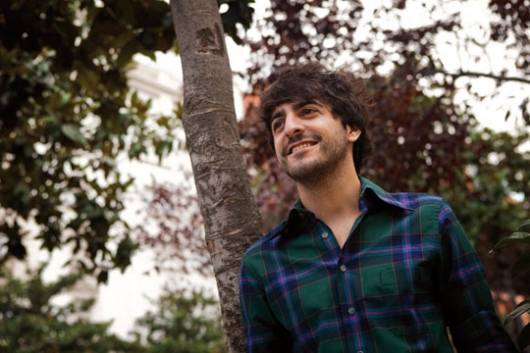
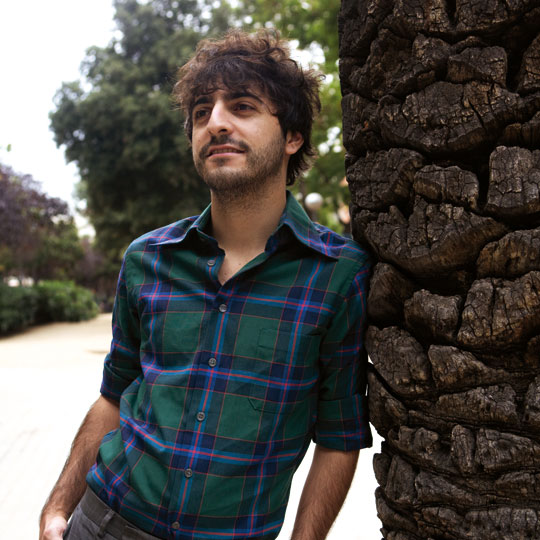
Diaz-Reixa, the soft-spoken fellow behind El Guincho, needed to start his interview about one and a half hours later than was originally planned. “I had the chance to ride a black horse!” he tells me over the phone, having driven to a small town outside of his current hometown, Barcelona, to ride the steed in question. “It was like a dream. I had to take that chance.” This explanation unwittingly gives voice to the possibility that the arduously molded, rhythmically mesmerizing Pop Negro, the newest El Guincho full-length, might be the dark-horse candidate for the year’s best record: It’s immediately engaging, but more moody and mysterious than his prior work, and only gradually revealing its nuances.
In early 2009, Diaz-Reixa met with some friends at a beachside Barcelona restaurant specializing in paella and seafood. It was at this restaurant that he spotted what appeared to be a fortuitous pairing of words. “I was kind of hung over and started reading the menu,” he explains. “‘Pop,’ in Catalan, means ‘octopus.’ At one point, I read ‘Pop Negro.’ It was like ‘Pop’ was one line and the other was ‘Arroz Negro’ [‘black rice’]. I misread it and I started thinking about ‘pop negro’ as a music concept.” Wondering what “pop negro” would actually sound like, he decided that day that the phrase would be the guiding principle behind his next album—he would make the “greatest hits” for this imaginary style, figuring it out as he went.
Work quickly began on the album, which would be written and recorded over several months in what ended up being four different locations. Going into the process, he already had a few songs written, including “Bombay,” the album’s lead-off track, and “Soca del Eclipse.” These songs would be finessed to fit into the still-nebulous “pop negro” sound, for which the intensive recording would happen in Berlin, where Diaz-Reixa flew in May 2009. His work schedule there divided nearly all of his time between the studio Planet Roc and a small portable recording set-up in the place he was renting, and he more or less eschewed a social life altogether. “When I was doing the record, I missed so much music. I couldn’t listen to anything else,” he explains, claiming it was a cycle of real studio, home studio, dinner, sleep, studio, and so on. After those two months, which yielded 10 or 11 songs with about 100 audio tracks within each, he flew to Madrid to visit friends and re-work this sizeable pile of material.
This second phase in Madrid, and each subsequent one, would involve erasing and re-working arrangements, opening up the songs to breathe a bit, and restructuring as necessary. The next step came when he went on vacation to Las Palmas de Gran Canaria, his home in the Canary Islands off the coast of northwest Africa. As it turned out, a friend of his had just started a studio in Gran Canaria, to which he invited Diaz-Reixa to listen back to the working tracks on his massive system. “I thought, ‘Wow, these songs sound really cool when you turn the kick drums and basslines up really loud,” he recalls. It was a breakthrough of sorts for the record, leading ultimately to the crisp, heavy rhythms of the end result. He would finish the album where it started, back in Barcelona, where he decided to record a couple more songs, finishing with the twisted ebullience of “Ghetto Facil,” the album’s third of nine tracks.
XLR8R Couldn't find the embed function for type: "soundcloud" and source: "<embed allowscriptaccess="always" height="81" src="http://player.soundcloud.com/player.swf?url=http%3A%2F%2Fapi.soundcloud.com%2Ftracks%2F4998288%3Fsecret_token%3Ds-Els9F&secret_url=false" type="application/x-shockwave-flash" width="100%">".
“Ghetto Facil”
Writing and recording, which happen more or less concurrently for El Guincho, occurred in a much different fashion for Pop Negro, his second album proper for Young Turks/XL, than it did for 2008’s highly acclaimed Alegranza!. With this first album (not counting the folksy, limited 2007 record, Folías, which he didn’t intend for wide release), Diaz-Reixa had to go through a lengthy sample-clearing process, which pushed back the US release of the LP significantly. “I love sampling as an artform, as a way to make music,” he says, “but for this album I just got so tired of all the talking with the publishing companies and clearing the samples… I just thought, ‘I’m just gonna make a straight synthesizer-and-drum-machine record, and try to make interesting sounds by myself.'”
Whereas songs on Alegranza! would begin with four or five loops blended in a sampler, everything on Pop Negro started in the drum machine—recording kick drums, snare, and hi-hat sounds, Diaz-Reixa would make drum patterns and put together melodies on his synthesizers. In every studio but the one at Gran Canaria, he was joined by producer Alex Mazoni, who played bass parts and engineered throughout. Together, they worked in a mode that Diaz-Reixa considered to be fairly straightforward and ‘pop.’ “We’d drop a drum beat, play the chords on top of that, play some synthesizer arrangements, and work on the lyrics.” On this album, too, he tended towards using line recording for guitar and bass sounds, preferring that straight-to-line sound to that of the small amps he had been using before.
This method was something he picked up out of what he claims were his greatest influences while writing and recording this new album: not so much particular artists or records, but a pair of books—The Mixing Engineer’s Handbook and Behind the Glass, two fairly technical tomes containing interviews with renowned and respected producers and engineers. “I read these books and started listening to the records they made and produced—that was the biggest influence,” he explains. In his reading, one engineer with whom Diaz-Reixa felt a certain affinity was Jon Gass, who was interviewed in The Mixing Engineer’s Handbook. “I loved the approach he had to the sound—the way he explained that he was more like a music guy than a proper engineer, and how he got all his sounds improvising and trying stuff he wasn’t supposed to do,” says Diaz-Reixa. Interestingly enough, he finds Gass’ work on Babyface’s track “Tender Lover” especially enthralling. “That record sounds so huge. The stereo image is amazing; so wide.” Writing an unsolicited inquiry to Gass via his website, Diaz-Reixa managed to get him to mix Pop Negro. To Diaz-Reixa’s surprise, Gass happened to enjoy both Alegranza! and these new recordings, even asking him for production tricks for aspects of the record that he liked.
XLR8R Couldn't find the embed function for type: "soundcloud" and source: "<embed allowscriptaccess="always" height="81" src="http://player.soundcloud.com/player.swf?url=http%3A%2F%2Fapi.soundcloud.com%2Ftracks%2F4825266%3Fsecret_token%3Ds-wvm4R&secret_url=false" type="application/x-shockwave-flash" width="100%">".
“FM Tan Sexy”
Babyface’s name alone should be a tip-off that this record was sonically inspired by less-than-obvious sources. As much of the rest of the electronic pop music world began to catch up with where El Guincho was at two years ago, Diaz-Reixa found himself listening to early Luther Vandross records, including Busy Body and Forever, for Always, for Love, as well as a number of Spanish pop productions from the ’80s—in particular, the work of Spanish producer Paco Trinidad, who produced for a mainstream, female pop-rock singer named Luz Casal. “This song he produced for her sounds amazing,” notes Diaz-Reixa, “[with its] synthesizer sounds, the super-weird compression, and the super-big, loud drums.” Meanwhile, he says that the sounds of synth-bending Spanish hit-makers Mecano had a bearing on his songwriting, idiosyncratic as it is in its structure.
So what do these greatest hits of the “pop negro” style sound like? Not much like the R&B and Spanish pop that Diaz-Reixa name-checks, but every now and again the listener might pick up on a production technique that he borrowed from that somewhat esoteric oeuvre. Although coming from a similar aesthetic sensibility as that of Alegranza!, Pop Negro is warm in a different way—bright, lean, beat-heavy, and vibrant. Genre-wise, it’s as summery and obstinately eclectic as what’s come before—saxophones, African highlife guitars, steel drums, Diaz-Reixa’s cheery, expressive voice, and a wide array of keyboard sounds collide to conjure an exciting, unconventionally seductive sound. The lyrics, although entirely in Spanish, are worth attempting to translate. “Muerte Midi,” for instance, the name of which was inspired by its original filename, “Muerte.midi,” finds him singing about death as a cruelly fast, cold affair. Diaz-Reixa felt that the experience of a death had a peculiar resonance with the media type in question, which itself has a kind of cold quality to it. This sort of wire-crossing lyrical/thematic synesthesia seems indicative of the El Guincho body of work as a whole—difficult to ascribe to any particular genre or geographical region, a collision that could only have occurred in Diaz-Reixa’s wandering mind.
Parallel to the Pop Negro project, and showcasing an almost entirely different side of Diaz-Reixa’s musical personality, is the Piratas de Sudamérica series. The first EP was released by Young Turks in July, kicking off a series of releases featuring El Guincho covers of select South American folk songs. All the recordings for this series took place back in 2008, back when Diaz-Reixa bought the synthesizer he uses on Pop Negro.
El Guincho on
XLR8R TV
These recordings, which have a warm, mysterious air about them, were originally meant to serve as signposts for his musically inclined friends towards the folk music he so loves. He had been listening to the songs in question for years—this was the first music with which Diaz-Reixa knowingly became acquainted as a boy, songs he would hear at home with his father in Gran Canaria. What inspired the actual Piratas recordings that Diaz-Reixa made was his realization that none of his music fanatic friends in Barcelona had heard any of this music. The artists he covers on the first EP include Orefiche y Valdespi, Miguel Matamoros, and Felix Benjamin Caignet, and rather than playing these songs straight, he decided to employ production techniques that he thought his friends would enjoy. “To me, they’re classics,” he says. He originally imagined the process as “write, record stuff to tape, mix it down to four-track, and release it as a white label, cassette, MP3, etc.” Luckily for the listening public, these songs caught the ear of his label, and are being gradually rolled out as EPs. They’re really beautiful-sounding recordings, sweetly arranged and swaddled in an iridescent, psychedelic production. These recordings end up doing more than just Diaz-Reixa’s friends a service, allowing El Guincho fans an introduction to a deep, rich well of music likely unfamiliar to his listeners.
As his recording pseudonym suggests—”El Guincho” comes from the name for a bird native to the Canary Islands that always flies alone—Diaz-Reixa seems to perch on his own musical plane, sounding little like anyone else in Barcelona or elsewhere, and drawing inspiration from things that don’t seem to inform his sound in an obvious way, whether Vandross or Babyface or South American folk. He’s just as excited (if not more) about the music of musicians he admires as he is about his own music—an enthusiasm especially palpable in the Piratas series—and if he’s as adventurous as his pre-interview horse-hopping suggests, he’ll soon carve out another genre as compelling as “pop negro” all over again.
Did you hear the podcast Boston’s Soul Clap did for Resident Advisor this week? If you haven’t, you really should. We’ll wait… Okay, now that you’re up to speed, here’s a fresh cut from the duo that serves up more of the same kind of bubbly, disco-flavored filter-house. “Fallin’ From the Sky” comes from a free EP of exclusive productions by the likes of No Regular Play, NavBox, and Death on the Balcony, which was curated by DJ/producers Charles Levine and Eli Goldstein, called The Clap & Friends FreE.P.. The free download was put together in light of the duo’s impending take over of Fabric’s Room Three this Saturday, September 18. Of their complimentary offering, Soul Clap says, “It’s basically a compilation of some of our [and our friend’s] favorite edits we played all summer that we want to share with you.” On this track, they reworked Camp Lo’s classic hip-hop jam “Luchini (a.k.a. This Is It)” into a slow-burning, deep tune barely recognizable from its original form. The rest of the FreE.P. closely follows suit, and you can download them all here.
If one were to make a list of debut albums that have truly been a long time coming, they would have to include this one from “The Godfather of DFA,” Shit Robot. Irish DJ/producer Marcus Lambkin has been in the NY label’s stable of artists for four years, releasing only a handful of singles before finally putting the finishing touches on his full-length record, From the Cradle to the Rave. Sure, Lambkin isn’t exactly a wordsmith (Really, does he get his titles from a pre-pubescent nephew, or something?), but he is an excellent producer of disco, house, and just about all other synth-heavy genres in between. And Rave has a load of notable vocal contributions to boot, including post-hardcore/indie-soul vet Ian Svenonious, Hot Chip’s Alexis Taylor, DFA label head James Murphy, LCD Soundsystem/The Juan Maclean starlet Nancy Whang, and Juan Maclean himself. Before Shit Robot’s opus drops on September 21, we’ve got a full stream of the record, along with its robo-referencing artwork, below.
The XLR8R Music Player requires Adobe Flash Player version 9 or later. Click here to install.
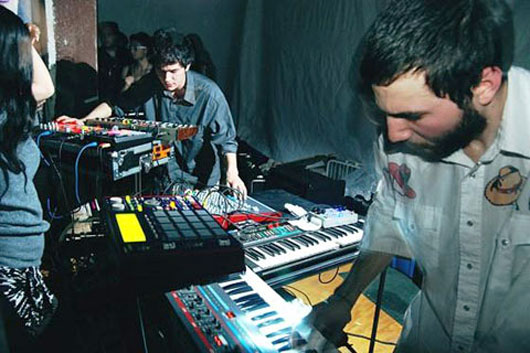
Hot on the heels of dropping its debut LP, 7AM, which we’ve got streaming here, Oberlin’s Teengirl Fantasy (pictured above) deliver this unique take on a tune by London/Berlin outfit The Chap. The duo’s version of “Even Your Friend” is strikingly different from the fidgety pop of the genre-jumping original—it’s all thick pads, synth filters, drum-machine percussion, floating melodies, and blurred-out vocal samples. There are a few blips of a recognizable baritone utterance from The Chap’s song in the beginning, but that’s the extent of an obvious connection, save for the title. But what else would you really expect from Teengirl Fantasy? Those fellas have been building their small-but-solid discography out of re-orienting pop tunes into their own hazy house format.
One of electronic and dance music’s more anticipated releases of 2010—phrases like “year-end contender” have already been floating about—is the debut full-length by Oberlin production duo Teengirl Fantasy. That record, entitled 7AM, is out today via True Panther / Merok, and our pals over at FACT have got a stream of the whole thing on their website. We went ahead and embedded that for you below. Enjoy!
XLR8R Couldn't find the embed function for type: "soundcloud" and source: "<embed type="application/x-shockwave-flash" width="100%" height="265" src="http://player.soundcloud.com/player.swf?url=http%3A%2F%2Fapi.soundcloud.com%2Fplaylists%2F315216%3Fsecret_token%3Ds-FIjqO&secret_url=true" allowscriptaccess="always">".
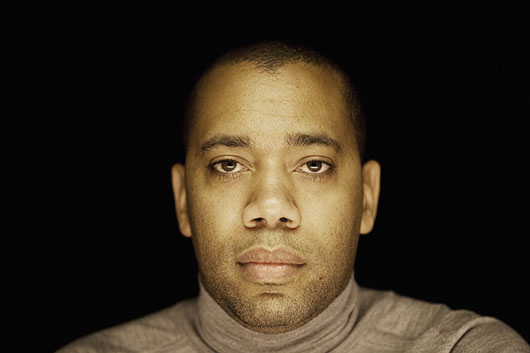
Carl Craig is going on tour. What else can we say? The iconic DJ/producer is taking his classic tunes and fresh productions around the world throughout fall, kicking off tomorrow in LA with a free show (with RSVP) alongside hotly tipped newcomer Kyle Hall. Craig’s tour takes him back and forth between North America, Mexico, and Europe with stops at choice music festivals and infamous club nights. We’ve got the full spread of dates listed below.
15 Sep – Scion House Party, Roxy, Los Angeles, USA (w/ Kyle Hall) FREE 17 Sep – Macumba, Madrid, Spain 18 Sep – Scopitone Festival, Nantes 23 Sep – Base @ Vessel, San Francisco, USA 25 Sep – Decibel Festival, Seattle, USA 01 Oct – Planet E Label Night (w/ Paul Woolford), 02 Academy, Leeds, UK 02 Oct – Das Schiff, Basel, Switzerland 03 Oct – Pacha, Ibiza, Spain 08 Oct – Loft, Barcelona, Spain 09 Oct – Maestros @ Las Vegas Club, Melgar-Burgos, Spain 10 Oct – Footwork, Toronto, Canada 15 Oct – Ego Club, Hamburg, Germany 16 Oct – Chibuku Shake Shake, Barfly, Liverpool, UK 20 Oct – D25/ ADE, Melkweg, Amsterdam, Netherlands 23 Oct – Uto Kulm, Zurich, Switzerland 06 Nov – Extretech Festival, Extremadura, Spain 08 Nov – Plastic People, London, UK 12 Nov – Warehouse Project / RA, Piccadilly Train Station, Manchester, UK 18 Nov – Bar Americas, Mexico 19 Nov – Smart Bar, Chicago, USA 20 Nov – Sullivan Room, New York, USA 22 Nov – Deep Space @ Cielo, New York, USA 26 Nov – Awakenings, Netherlands 27 Nov – Groove City, Brussels, Belgium
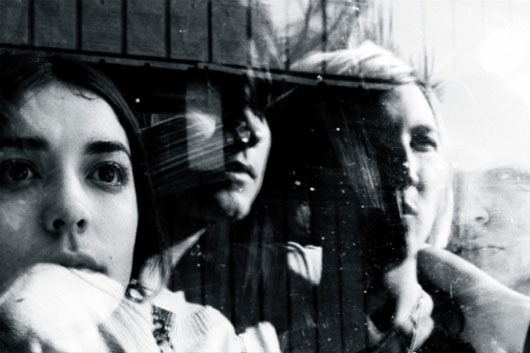
LA’s femme-filled lo-fi-pop quartet Warpaint is gearing up to release its debut album, The Fool, on October 26 via Rough Trade, and this dreamy number is that record’s first single. “Undertow” evokes many feelings and sounds in its four minutes. The song starts with a subdued drum beat, reverberated bass strums, and softly cooed vocals, bringing to mind the likes of early tunes from indie vets Mirah or Julie Doiron, but eventually turns into something more grandiose and cathartic like Warpaint’s contemporaries Glasser or even Beach House. (Incidentally, that “What’s a matter? / You hurt yourself?” lyric reminds us of Nirvana’s “Polly” every time we hear it.) The comparisons may be simple and straightforward, but so is the music—and it should be. Warpaint exercises its right to employ a small number of instruments, play a handful of simple chords, and craft a song with four basic movements because it can do so and still fill “Undertow” to the brim with an emotion and immediacy that surpasses most acts attempting the same feat. (via Gorilla vs. Bear)
XLR8R Couldn't find the embed function for type: "vimeo" and source: "<iframe src="http://player.vimeo.com/video/14872769" width="530" height="298" frameborder="0"></iframe>".
File this under “not surprising at all”: LA beat producer Dibiase likes to smoke. At least that’s what the video for “Skullcrack” seems to indicate, although it also displays an affinity for cartoon insects and ghosts. The animated clip for this Nintendo-flavored track is a nice teaser for Dibiase’s new album, Machines Hate Me, which comes out today on the Alpha Pup label.