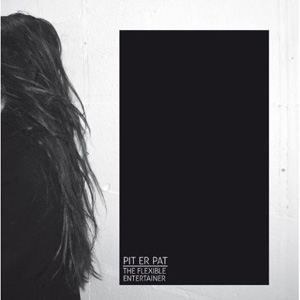
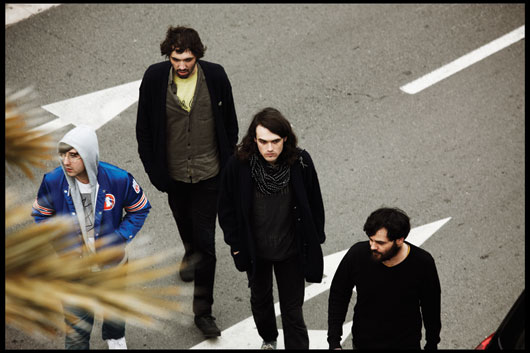
After a couple of albums of drab post-rock, Chicago’s Pit Er Pat blossomed into a much more interesting proposition on its 2008 full-length High Time, and that bloom continues on The Flexible Entertainer. Similarities between Pit Er Pat and Gang Gang Dance exist, mainly in Fay Davis-Jeffers’ narcotized-siren vocals and Butchy Fuego’s lopsided, postmodern dub rhythms that push each track down unpredictable routes. After a bizarre illbient anti-fanfare, the disc shifts into its most radio-friendly song, “Water,” whose wonky, exotically whimsical dubstep lope casts an unexpectedly beguiling spell. “Emperor Of Charms” stands out here for its rampaging spaghetti-western rave-up, coming off like a Morricone score backed by the Royal Drummers of Burundi. But the bulk of The Flexible Entertainer is animated by psychedelic effects and a no-wave angularity, both filtered through 21st-century dub sensibilities. Pit Er Pat achieve a genuinely distinctive hybrid of styles and this album positions them among America’s most interesting groups.
Following two earlier releases of remixes from Claude VonStroke’s latest album, Bird Brain, comes this third installment to the 12″ series from San Francisco’s Dirtybird label. Remix EP Pt. 3 features a remix each from Bruno Pronsato, Stimming, and Christian Martin, one of “Storm on Lake St. Claire” and the other two of Bird Brain opener “Monster Island.” The tracks’ styles range from minimal techno to throwback electro, and all feature that certain Dirtybird flavor. You can listen to a preview of Remix EP Pt. 3here.
Music geeks and tech heads, brace yourselves. VBS.tv off-shoot Motherboard, an online video blog/network that focuses mainly on technology and its effects on culture, premiered a new episode of its Electric Independence program that features the man behind Depeche Mode, Yazoo, and Erasure, Mr. Vince Clarke. This amazing interview takes place in Clarke’s fortress of solitude (read: studio) in Portland, Maine where he harbors a veritable arsenal of enough synths, sequencers, and drum machines to make James Murphy blush. Clarke talks about his early days with Depeche Mode, points out the gear used throughout his recording career, and reveals enough secrets to enlighten the most educated electronic music fiend. Don’t miss this great piece of online video, embedded below.
There’s a scene in Steve Goodman‘s new book, Sonic Warfare: Sound, Affect, and The Ecology of Fear (MIT Press), that burns deep into the memory. He places the reader in a 2005 incident where Israeli fighter jets shocked residents in a Gaza Strip neighborhood by flying low above their homes and firing a “sound bomb”—a resonating sound so powerful that it could suffocate your body. “You look around but see no damage. Jumping out of bed, you run outside. Again you see no damage,” Goodman writes. “What happened?” Nosebleeds, anxiety attacks, and sleeplessness reportedly followed. The Israeli government assured that such a bomb was “preferable to real ones,” Goodman later notes.
Welcome to a world where raw sound and music are used either as opiates, repellents, or a call to arms—drifting through the air like viruses. Goodman, who besides pioneering dubstep as Kode9 is a lecturer in music culture at the University of East London, ventures deep into the psychological dread evoked by sound in his provocative and often troubling book. “I wanted the reader merely to be aware of the power relations going on with every act of listening,” he says. His writing was heavily influenced by the notorious scene from the movie Apocalypse Now where General Kilgore blasts the operatic wails of Wagner’s “The Ride of the Valkyries” to terrorize a Vietnamese village while his fleet of helicopters blasts them to kingdom come. But similar tactics that Goodman discusses in the book are hardly fictional: Throughout Sonic Warfare, he points to military weapons used to blast high frequency sounds to drive away looters in the ruins of Hurricane Katrina as well as “Mosquito” street devices that emit an irritating noise that only teenage ears can hear—the same tool sold to scare away rodents.
Kode 9 and The Spaceape – “Curious”
Goodman’s explorations zigzag across history and science fiction, leaving behind a dizzying, often labyrinthine path for the mind to follow. Rather than simply documenting uses of sonic weaponry, Goodman views the war through the lens of various philosophers and artists in an attempt to make sense of how vibrating sounds and their hidden messages affect the subconscious, whether it be the travels of loud dub reggae basslines from Jamaican sound systems or the “earworms” that Muzak uses to tempt listeners into consuming products. And while he doesn’t mention his own music in the book, Goodman is quick to point out that he has “learned a lot from any music that relies on frequencies at the edge of audibility, like dubstep used to with regards to sub-bass.” And since sonic terrorism is invisible, Sun Tzu’s notion of war as an act of deception particularly resonates here.
Goodman wisely avoids writing an anti-sonic war manifesto since there are too many sound viruses in the air—he simply wants to awaken you to that fact that you’re caught in the crossfire. And there’s no cease-fire in sight.
A percussive sample loop introduces us to Keepaway and the first song on the band’s debut EP, Baby Style. The Brooklyn-based indie trio has penned a sweeping and poignant song with “Yellow Wings”—one that isn’t afraid to utilize new technology and sonic approaches in its tried-and-true sound. Reverberated guitar textures meet with snare and tom rolls while the vocals declare, “I think I finally know what I want/I want to be in two places at once.” It’s a fitting statement for the song’s accompanying music video, which features the hilariously low-budget performance of an amateur magician.
Preceding his release with Wolf + Lamb, the forthcoming Chicago EP, London’s jozif offered up this unreleased cut of straight tech heat. “Me Loko” has plenty of great things going for it: a hard-hitting dance beat, bouncing reverberated percussion, random brass flourishes, and dollops of rumbling bass spread all throughout the track. It provides an interesting counterpart to the more soulful, antiquated acoustics to be found on jozif’s new EP, set for release on April 5.
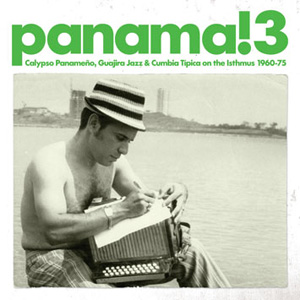
Among Caribbean nations known for producing music, Cuba and Jamaica tend to soak up most of the attention, yet Panama has also proven to be particularly fertile ground for indigenous rhythms, as this latest collection of Isthmus-originated songs proves. Beginning with Lord Panama’s “Fire Down Below,” Panama! 3 sambas, calypsos, cumbias, and guarachas its way through 23 seminal Panamanian classics, all culled from the ’60s to mid-’70s. Like its Caribbean cousins, Panamanian music blends native, Latin, American, and European influences into a backbeat-heavy, eminently danceable groovefest. Every song is good, so picking out favorites is pointless; it’s perhaps more worthwhile to realize this cultural ancestor of today’s Caribe-Latin fusionistas still packs a potent tropical punch.
Read the March/April issue of XLR8R for free right now by either downloading the PDF or viewing it online at Issuu. As well as huge stories on Delorean (pictured), Todd Edwards, and the New Sound of Detroit, we’ve also packed this issue with a ton of multimedia extras, so git yr download on ASAP!
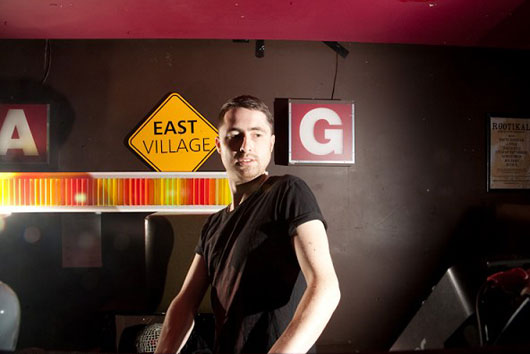
Minneapolis might not be known for its electronic music scene, but for the Minneapolis edition of our City Guide podcast series, the City of Lakes’ Mike 2600 shows us that there is a secret aural history hiding in all those frozen bodies of water. From the sexy synth-pop of Prince and the off-kilter folktronica of Dosh to the proto-college rock of The Replacements and the ’80s funk of The Jets, Minneapolis actually has a more interesting music history than more traditionally ‘seductive’ music towns. The current hip-hop scene keeps things interesting, too, as evidenced by all the Rhymesayers tracks featured in the mix. Mike 2600—who also runs the design outfit Burlesque of North America—has been DJing in the area since 2003, where he constantly works the decks with a mix of hip-hop, disco, electro, and funk. Producing psychedelic hip-hop as well, he’ll be making several appearances at this week’s SXSW. You can check out his schedule here, or better yet, follow him on his Twitter.
01 Frisco Disco intro 02 Twin City Rapper “Twin City Rapp” (Twin Town) 03 FiC “I Rep Minnesota” 04 I Self Devine “Ice Cold” (Rhymesayers) 05 Freeway & Jake One “Throw Your Hands Up” (Rhymesayers) 06 Brother Ali “The Magnificent” (Rhymesayers) 07 Willie & The Bumblebees “Dipstick” (Sweet Jane Limited) 08 Herb Pilhofer “Tuna Helper” (Sound 80) 09 Big Quarters “Wipe the Dust feat. Crescent Moon” 10 Big Quarters & Mux Mool “Dragon Princess” 11 Dosh “You Can’t Make Me Cry” (Anticon) 12 Alexander O’Neal “What’s Missing” (Tabu) 13 Gigamesh “Red Light feat. Amanda Love” 14 BK-One & Benzilla “Tema do Canibal feat. Hypnotic Brass Ensemble” (Rhymesayers) 15 P.O.S. “Savion Glover” (Rhymesayers) 16 Mike 2600 “Now Here’s a Funky Beat” (Crossfaded Bacon) 17 Fog “Ditherer” (Lex) 18 P.O.S. “Bleeding Hearts Club (acapella) feat. Slug” (Rhymesayers) 19 Fog “Ditherer” (Lex) 20 Morris Day & The Time “I Don’t Wanna Leave You” (Warner Bros) 21 S.O.S. Band “Take Your Time (Do It Right)” (Tabu) 22 The Jets “Crush On You” (MCA) 23 Prince “Take Me With U” (WEA) 24 Alpha Consumer “Lifesize Voodoo Doll” (Staticstation) 25 Mike 2600 “Fuck You Pay Me” 26 Belles of Skin City “A Case of Rather Unfortunate Stage Presence” (Totally Gross National Product) 27 Jimmy 2 Times “Errbody Drunk” (BRLSQOTHEQUE) 28 The Litter “Action Woman” (Scotty) 29 The Replacements “Left of the Dial” (Sire) 30 Atmosphere “Scapegoat” (Rhymesayers) 31 Twin City Rapper “Twin City Rap (reprise)” (Twin Town) 32 New Kids on the Glock “When Doves Cry”
The Yay Area’s E-40 has two new albums, Revenue Retrievin’ Nightshift and Dayshift, coming out at the end of March, and in celebration, he’s hosting a remix contest of the record’s first single, “The Server.” Contestants can either use “The Server” vocals on a different beat/track of their choice or they can take “The Server” instrumental track and spit their own verse alongside 40’s. Once the process is done, contestants should send their remixes here before April 8. The vocal and instrumental stems are available for download here. Happy remixing, because if your piece wins, your remix will be released digitally by E-40!