Deceptikon is a recent transplant to the Bay Area, and he’s brought with him a new album, Mythology of the Metropolis, from which “Kinyoubi” is taken. Thick, wet handclaps and deep kicks dominate the track’s percussive element, with an interesting move from a more dubstep feel to a slow-motion house beat towards the piece’s end. Starry main synths, gut-rumbling bass, and beautifully unintelligible vocals provide the melodic backbone of “Kinyoubi,” making for an exciting and versatile slice from this upcoming producer.
To call “Sandstorms,”Christian Prommer‘s cover of the Carl Craig classic, ominous would be an understatement. A droning organ sound is the first and last thing heard in the nine-minute piece, and not once does it let up. Instead, elements are layered atop the pulsing drawl; pattering drums and percussion, subtle yet funky bass riffs, and all sorts of analog weirdness bubble to the surface. It’s a little difficult at first to draw a direct line between Craig’s original and this reinterpretation, primarily because the new version is made almost completely of live instruments and focuses more on atmosphere than groove, but that’s how it fits so well onto the second installment of Prommer’s project, a collection of jazz-influenced covers of electronic music icons called Drumlesson Zwei.
Still a little chilly in your part of the world? No Anthony “Shake” Shakir or Kyle Hall or Todd Edwards or Mosca to keep the dancefloor hot and sweaty? Then let us heat things up for you, as Barcelona-based dream-rockers Delorean grace the cover of our March/April issue and tell us all about their upcoming LP, Subiza. And if that’s not enough, dancehall songstress Natalie Storm brings the heat in Kingston, NYC promoter Todd P bakes in the Mexican sun, and LA photographer Julia Galdo jumps into action with a spring-loaded style spread. Can you feel the temperature rising? Read it all here, or view online at Issuu.
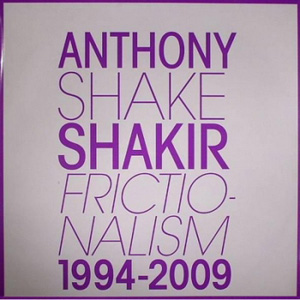
Real Detroit techno heads have long been repping Anthony “Shake” Shakir‘s work, but only a few outside of that small scene have given him his proper due, if only because his profile’s rise has been restrained by health issues and limited-run releases. A rhythm master in the truest sense of the phrase, his many skills are displayed here: There’s the jacked electro-funk of “The Floor Filler,” the dusty Dilla-like beats of “Detroit State of Mind,” and the dubby techno hypnotics of “Perseverance.” Paired with tracks like “Assimilated,” a hissy predecessor to today’s UK funky, or “Arise,” which incorporates what might be the best Steely Dan sample in dance music history, Frictionalism guarantees that Shakir’s amazing work will never be overlooked again.
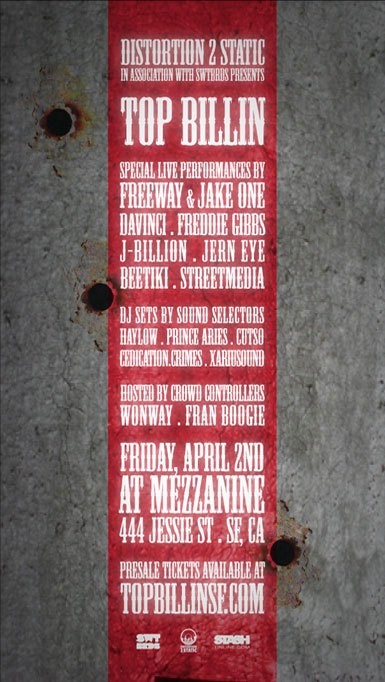
Bay Area MC and Fillmore district native DaVinci has just dropped his long-awaited debut album, The Day the Turf Stood Still, on the SF-based SWTBRDS label. Oddly enough, you can opt to purchase the record of gritty sample-based hip-hop, as per usual, or download the 17 tracks for absolutely free, legally, here. The Day‘s first single, a love letter to his increasingly gentrified neighborhood called “What You Finna Do,” has a beautifully shot video that we’ve included below. DaVinci will also be featured in an upcoming epic concert at SF’s Mezzanine along with Freeway + Jake One, Freddie Gibs, J-Billion, and many other MCs and DJs. Check the flier for that shindig below.
XLR8R Couldn't find the embed function for type: "vimeo" and source: "<embed src="http://vimeo.com/moogaloop.swf?clip_id=9666613&server=vimeo.com&show_title=1&show_byline=1&show_portrait=0&color=00ADEF&fullscreen=1" type="application/x-shockwave-flash" allowfullscreen="true" allowscriptaccess="always" width="530" height="298">".
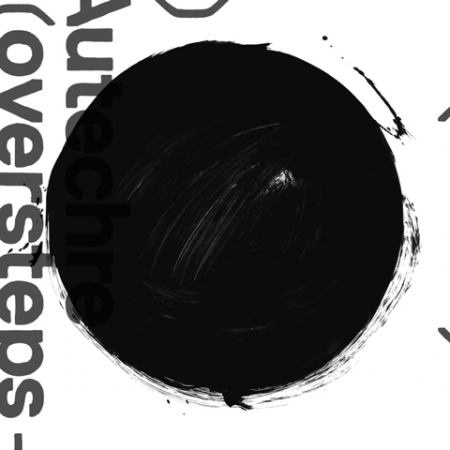
We’re pleased to bring you an exclusive stream of Oversteps, the latest on Warp from celebrated British duo Autechre, available in its entirety below. And though the official release of the record isn’t until next Tuesday, it’s currently available as a digital purchase over at Bleep.
Note: Track one is silent for the first few seconds!
The XLR8R Music Player requires Adobe Flash Player version 9 or later. Click here to install.
One of the latest additions to the UK’s ever-growing bass music scene, fledgling label Blunted Robots last week unveiled its third release: a double single featuring Night Slugs boss Bok Bok on one side and Brackles & Shortstuff on the other. Both tracks, “Citizens Dub” and “Pipey D,” explore the limits of UK funky and bass in their own distinct ways—managing to remain equally club-ready and sonically diverse all the while. With his single out now, Robots label head Shortstuff is taking his DJ skills stateside for a couple of choice tour dates. First up is a set at the infamous Dub War NYC this Friday, with an appearance at San Francisco’s Icee Hot the following Saturday. Check out a preview of the new Blunted Robots single below, along with Shortstuff’s tour dates and the Icee Hot flier.
Tour dates: 03/19 – Dub War @ Love (179 Macdougal St. @ 8th St.) – NYC 03/27 – Icee Hot @ 222 Hyde (222 Hyde St. @ Turk St.) – SF, CA
Looks like Tigetbeat6‘s East Coast-reppin’ bad boy, Cex, is back to his old tricks. Not long after his return to the now-Berlin-based label with the glitchy ambience of 2009’s Bataille Royale, Rjyan Kidwell pays his dues on the Tigerbass mix series. Cex’s addition, Archbroseph of Berlintimore, follows mixes from Genuine Guy and Sly 1, and features all kind of bass-laden, rave-ready jams from the likes of Brackles, Eskmo, Joy Orbison, and Ginz & Joker, not to mention some sweet samples from Deadwood. Stream or download the magic here, and peep the full tracklist below.
Silencer – “Dirtbag” Bruce Stallion – “Bad Pillz” Brackles – “Rawkus” BADXMAN – “Drop Dead Funk” Dukeyman – “Hoody Hoodrat” Elemental – “Metal Funk” Starkey – “Last Chance” Virgo – “Puzzle” Cardopusher – “Carne Sentada” Youngsta & Seven – “Masai Mara” Scottie B – “Money Lotion Track” Hyetal – “Gold or Soul” Dexplicit – “Me Nuh Run From Dem (feat. Stush)” Gritt – “Found It” El-B – “Digital” J Beatz – “Head Screwed On (Instrumental)” Emalkay – “Heroics” Monstr – “Come on Mate” 12th Planet – “28 Hours Later” Stenchman – “Sound of the Future” Kanji Kinetic – “New Era” Saviour – “Sound of Love” Reso – “Beasts in the Basement” Radikal Guru – “Ahmed” Eskmo – “Agnus Dei” Skream – “Trapped in a Dark Bubble” Eskmo – “We Have Invisible Friends” Nubreed – “Cerebral Cortex” Get Em Mamis – “Shake it All Night” Maniac – “Skeng’d Out” Joy Orbison – “Hyph Mngo” Cloaks – “Against” Swindle – “Things on My Mind” Ginz & Joker – “Re-Up” Octopush – “Deixa” The Faun – “Game of 3 Halves” Kryptic Minds – “Distant Dawn”
There is an oft-repeated truism in the Detroit dance underground that goes something like this:
If you’re an artist, say a producer or DJ with tunes so good the buzz follows you all over the world, never forget that you come from a place that doesn’t care about who you are or what you do. A star on the decks in Bremen or Brussels is just like everybody else at home: struggling to hold it together in a tough town where celebrity status strokes the ego, nothing more. There are no adoring fans, no lucrative residencies, scant local media attention. The scene you represent is what you carry around in your head, heart, and soul, baby. It gives a whole new meaning to the term “indie,” once interchangeable with an ideal called “community.” Not here. Not this time.
For a city that has historically produced so much stunning, globally endorsed music—post-WWII blues, gospel, Motown, radical space jazz; The Stooges, The MC5, and late-’90s garage rock; experimental hip-hop and electronic dance music so revered that it’s simply called “Detroit” everywhere else—it can be one static and lonely place. But one where no one bothers to care what you do, making it a perfect milieu, it turns out, for creativity of all sorts.
Things here are so wide open that massive tracts of land have literally returned to nature, often leaving the city’s sounds muffled, vague, and disembodied. Voices in an alley, feral animal squawks in empty fields, the clang of unseen machinery, a crash somewhere in the distance; echoes and effects, reverb and delay, grimy, low-end junkyard crunch: all surrounded by spectral silence.
It’s one of the most alien urban landscapes in the world, shaped by (failed) imperial industrial destiny and alluring, hyper-documented decline. People have been leaving since the middle of the last century, when two million inhabited the city proper; now some are returning in a trickle, lured by the possibility of “anything goes.” Psychogeographers, futurists, new millennial pioneers, seekers of fertile (un)real estate, activist-designers, poet-revolutionaries, dreamers, schemers, sculptors, filmmakers, artist-farmers: making it feel a bit like New York did around 1975, a delirious and magical place. But only just, mind you, a glimmer.
Anthony “Shake” Shakir – “Detroit State of Mind” (2000)
Life is not all phantasmagorical ponderings in Detroit, of course. There are slightly more practical matters, like tracking down the soul and inspiration seemingly embedded in the heartbeat of the city. It’s here, of course, but where? The proof is in the product, surging once again, breathing new life into a variety of scenes and styles in the UK and continental Europe. You can hear it in the sounds of Berlin’s mysterious Redshape, in the soulfully efficient grooves of Stuttgart’s appropriately named Motor City Drum Ensemble, even in the futuristic techno-dubstep crossover of Bristol’s Peverelist. But to actually locate the sound on its native soil, you have to turn over every rock in a city so physically huge that urban downsizing advocates are fond of saying that Boston, San Francisco, and Manhattan Island could all easily fit into its 143 square miles.
For our purposes, we start on Detroit’s northwest side, an extraordinary place, not by physical appearance, but for its many gifts to the dance music imagination. This is the neighborhood where Robert Hood, Kelli Hand, Mike Huckaby, and Anthony “Shake” Shakir grew up. Juan Atkins once lived a few blocks away, after leaving his suburban Belleville home (about 25 miles west of Detroit) to go pro in the big city. Kyle Hall, the freshest face in Detroit house music to come along in a generation, lives nearby. His lessons came in stages: from a musical family at an early age, formal academics at the Detroit School for the Arts, and after-school training at Youthville, a nonprofit community development center where he was mentored by Huckaby, and others, in music technology, composition, and practice.
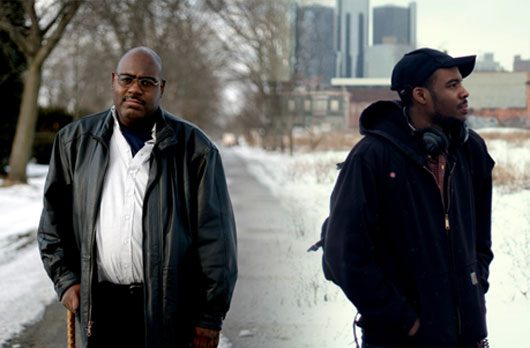
In Shake’s spare-bedroom studio—which contains vinyl stacked from corner to corner, a mixer, two turntables, and a single speaker—he answers the question perfectly before I can even ask it. “I found the vibe through Eddie Fowlkes, he was the first one. Then Derrick (May) asked me to be part of the Detroit scene,” Shakir says. “But I can’t find it anymore, man. Maybe it’s just me, but you can’t go looking for it. It has to find you.”
Well, amen. There might be no one better suited to unravel Motor City mystification than Shakir, who’s been producing since about 1981, which dates his work alongside projects launched by first generation producers Atkins, May, Fowlkes and Kevin Saunderson. His track, “Sequence 10,” was on the seminal Techno! The New Dance Sound of Detroit, a comp organized by Virgin Records’ scout Neil Rushton that broke the sound worldwide in 1988.
Anthony “Shake” Shakir – “Sequence 10” (1988)
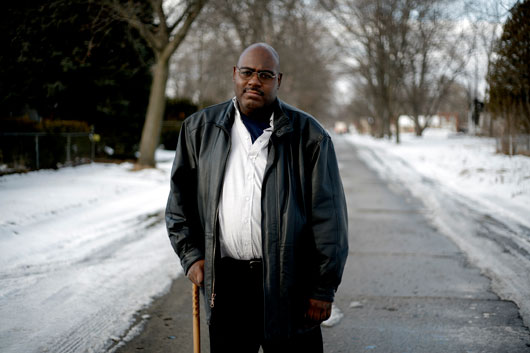
Shakir collaborated with Kenny Dixon Jr. (a.k.a. Moodymann) and Sherard Ingram in the electro-funk experimental group Urban Tribe, worked with then fledgling artists “Mad Mike” Banks, Dan Bell, and Claude Young, and did edits for Carl Craig. Set back by a diagnosis of multiple sclerosis in 2000 (“I felt a tingling in my hands. I started falling down,” he says), Shakir walks with a cane but has still played out as a DJ over the last decade, though his original works ceased.
His talents have come into proper perspective with the release of a massive three-CD set on the Dutch Rush Hour label called Frictionalism 1994-2009, which collects hard-to-find genre-bending jams like “Here, There and Nowhere,” “Fact of the Matter,” “Detroit State of Mind,” “Mr. Gone is Back Again,” and dozens of others, including white-label rarities. He was one of the few in the Detroit scene to use a sampler (Craig being a notable other), embrace hiphop techniques and electro, break up and roll out ill beats, and call out house and techno as being two sides of the same coin.
“Everybody was going to Chicago back then to check out that shit, man, but I didn’t make there it until 1986,” Shakir says. “I wasn’t a self-starter like Juan, Kevin, and Derrick. I didn’t go to parties; still don’t. Just went my own way. Could’ve done more, I guess, but I wasn’t the adventurous type. I didn’t sell out either. Maybe too stupid to do that,” he says with a laugh.
No, he didn’t; and no, he isn’t. Shakir might be one of the last of the great underground soul-jazz-pop survivors, whose ear brought him as close to Michael Jackson, Prince, and Coltrane as it did to Daft Punk, Heaven 17, and Radiohead. The road back to soulstirring dancefloor authenticity can start with Shake, it can be argued, whose crossover productions paved the way for younger European artists like Scuba, Ramadanman, and Martyn to do the same.
The next day, Shakir was on a plane to New York to play the Unsound Festival with ~scape’s Barbara Preisinger and fellow Detroiter Huckaby, all part of a program at the Bunker at Public Assembly in Brooklyn celebrating a “house renaissance worldwide.”
On the phone a few days later, Huckaby told me “it was good, real good.” A versatile, invaluable player in the scheme of all things Detroit-related (producer/DJ/instructor/ambassador) over the past 20 years, Huckaby was cited by Omar S as one of the major inspirations (Scott Grooves the other) for his stripped-down dub-house production and DJ style.
Mike Huckaby – “Luv Time” (1995)
Most recently, Huckaby has released house and dubtechno tracks on his own Deep Transportation and SYNTH imprints, and has remixed Loco Dice, Vladislav Delay, Pole, Mikkel Metal, Losoul, Deep Chord, and Atkins on ~scape, Echocord, Echospace, Playhouse, Third Ear, and others. When asked why the Detroit techno soul vibe was alive and kicking in 2010, Huckaby, known for his direct, no-bullshit responses shot back: “Is it alive and kicking? Honestly, I’m so immersed in what I do, I don’t even look up to notice sometimes.”
Have you noticed a change in the programming at clubs like London’s Fabric or Berlin’s Berghain, from what became generic minimal that dominated the ’00s to something more authentic and real?
“Be careful when you say ’minimal,’” cautions Huckaby. “The original sound of minimal techno was made by artists like Rob Hood from Detroit, and Basic Channel from Berlin. The minimal sound of today has blended fashion, drugs, and sex into the definition, leaving the listener in a haze without any connection to the music, or to its history.”
And the authenticity of Detroit music? Reality or myth?
“Everything is a DIY approach in Detroit. From release to release, there is always a struggle. Struggling to get a good cut, a flawless master, and the financial means to release the music,” Huckaby says. “So in the end, the music that you hear released is always something that is someone’s best production. It’s too expensive to release mediocre music. You can always hear that element regarding the quality of a Detroit music production.”
Huckaby says the Detroit work ethic matched “the German model of efficiency,” creating relationships with Berlin crews from Tresor and Hard Wax in the 1980s and 1990s that remain intact to this day.
He uses those approaches as a teacher at Youthville, an avocation that Huckaby says “is the sole reason I have not moved to Europe. I’d rather be in an environment where I have a positive impact on someone’s life, not just being where popularity exists.”
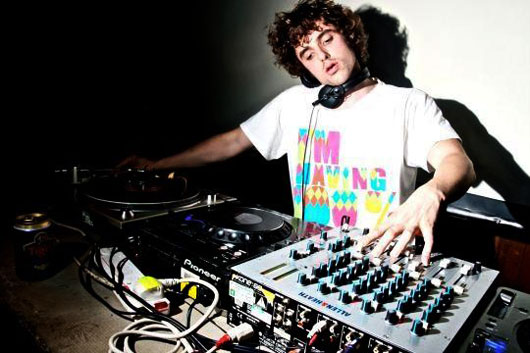
Impact was assured when one of his students, the 18-year old Hall, broke out in 2009 on some of the world’s biggest stages for electronic music performance. Hall remixed one of the year’s quirkiest singles, Darkstar’s “Aidy’s Girl is a Computer,” for Steve Goodman’s London-based Hyperdub label. He’d already recorded an EP (for Omar S’s FXHE) in 2007, another for Mike Grant’s Moods & Grooves in 2008, and started his own Wild Oats label the same year. Hall recently played Fabric and Berlin’s Panorama Bar and appears at a showcase this month celebrating 25 years of Detroit dance music domination at Miami’s Winter Music Conference. The party includes pretty sweet company: Kenny Larkin, Stacey Pullen, XLR8R scribe Monty Luke, Theo Parrish, Saunderson, Atkins, Craig, and Dixon Jr.
Darkstar – “Aidy’s Girls is a Computer” (Kyle Hall Remix)
He has new tracks out this year on Hyperdub (“Kaychunk” b/w “You Know What I Feel”), Instra:mental’s, Nonplus, Warp, and Craig’s Planet E. In addition to Huckaby’s mentoring, Hall has been the beneficiary of practical instruction at the hands of Detroit house vets Rick Wilhite, Marcellus Pittman of Three Chairs, and the hard funk influences of Pirahnahead, the multi-talented Maurice Herd whose career began as a teenage guitarist with one of George Clinton’s P-Funk All-Stars lineups.
“Being around all these guys just prepares me for what to expect from different situations in this [dancemusic] world,” says Hall, who started DJing when he was 11. “I’ve just been around house music all my life. I remember hearing it at home when I was five. Now it’s an everyday thing, and I’m working on it all the time.”
Work is the operative word around here, even in the midst of the city’s harsh economic realities. But resourceful artists are taking advantage of opportunities in Detroit that might not be affordable or sustainable elsewhere, driven to make something out of nothing.
Aaron Siegel, an independent business owner in his late 20s who started a company called FIT—a label and distribution enterprise he runs out of building on Detroit’s near west side—is on a mission to get vital Detroit music into the hands of people around the world. FIT’s first release is an EP by Pittman, “Erase the Pain.” Parrish has new product (the Suggested Use mix CD) on his Sound Signature label; Andrés (a.k.a. DJ Dez)—a protegé of both the late J Dilla and KDJ—crosses over from hip-hop to silky house on II, his 2009 full-length on KDJ’s Mahogani Music. And Aaron-Carl, who broke out of the underground in the mid-1990s with homo-erotic club hits “Down” and “Dance Naked” is producing, performing, and—most importantly, he says—engaging the Detroit dance communities by reminding them just why they got in the business. He’s not content to be a lone wolf in the urban wilderness. He wants to see the music gather steam here, and be that much stronger when Detroit rolls out its talent around the world.
Aaron-Carl – “Down”
“We don’t love each other the way we must to keep moving our scene forward,” Aaron-Carl says. “We get so much of what we need overseas that we believe we don’t have to work at it when we’re home. But we do.”
So Aaron-Carl decided to turn up the temperature and form a collective called W.A.R.M.T.H.—what he calls a revolutionary movement bringing techno and house closer together on its home turf. Yes, that warming trend you feel spreading out over global clubland is an organic product of Detroit’s basic DNA. But it’s getting a little help from its friends who want to make sure homegrown vibes keep coming at you in the right direction.
“I feel I’m in a good position in my life to do this now,” he says. “Detroit has a spirit that you can’t really see but you can feel it. The only way I can put it is it just is. We don’t have marketing or media, unless we do it ourselves. We primarily just make the music, sometimes by accident, because it comes from some place I can’t explain. Can you?”
No, but I like where this is going. Scratching it out with little money and more love, pushing the Detroit vibe by any means necessary to who knows where. But they’ll know when they feel it, Aaron-Carl says.
“People need real soul music in their lives. They are hungry for it because they can’t find the real thing anywhere else,” he says. “It’s something unique inside us we can share. And we do it through house music and funky techno. Take our emotions. It’s a gift, from us to you.”
Aaron-Carl says W.A.R.M.T.H. has already hit a nerve in Europe, where chapters are forming in the UK, France, Spain, and Sweden. The group has tentative plans to buy a building in Detroit for parties, talks, memorabilia.
“Our goal is to bring music back to where it belongs, back to people who have passion in their hearts for it,” he says. “That’s how it first happened in Detroit. People started with nothing but love, and look what we made out of it: something that keeps getting deeper and stronger—something we believe just never goes away. It’s finding people all over again.”
If Rob Threezy‘s membership in the Chicago’s Ghetto Division isn’t enough proof that his tracks represent the new vanguard of the Chicago sound, then perhaps this astounding remix from Finland’s Top Billin’ will convince doubters. Given the original’s stems, Top Billin’ somehow make “The Chase” even more of a Windy City club banger, channeling the monstrous kicks of Cajmere, the sampling style of early Larry Heard projects, and even a bit of Adonis’ acid. In no uncertain terms, this is a perfect house track, and one hell of a remix.