Exclusive Holy Ghost! Interview

Here’s our exclusive interview extra with 2009 faves Holy Ghost! Make sure to read the full article here.

XLR8R: When did you guys meet?
Nick Millhiser: We met when we were seven.

Alex Frankel: And when I was six… 20 years? That’s fuckin’ awesome.

And you guys went to the same elementary school?
NM: Yeah, we both grew up in the Upper West Side in Manhattan, and we went to school together.

What point did you guys start making music together?
AF: Um… Well, our first band was in Ms. Preston’s elective rock-band class in fourth grade.

That was a class?
AF: Yeah, we went to a really liberal, weird school. And for four weeks out of the year, instead of doing real classes, you’d do weird things like knitting or puzzle-solving. So we took this rock band class and we played classics like “Lean on Me” and “59th Street Bridge.” And as a reward for learning all these songs we got to write and play one of our own.

And what instruments did you guys play?
NM: I played drums and he played piano.

And then you guys just kept making music after that?
NM: Yeah, Alex and I started a band called Automato, which we started when we were about 14 or 15 and that continued through high school. And then we got signed when we were still in high school and it continued ’til we were about 22. That’s also how we met James and Tim from DFA. They produced that band’s record. So we’ve always kinda been playin’ together.

So were you guys always kinda hip-hop heads?
NM: Uh… just kinda music heads, ya know?
AF: I wore my hat to the side.
NM: Yeah, I definitely wore my hat to the side. Parachute pants and all.

Do you still follow hip-hop?
NM: Yeah, we still follow it, but we’re both definitely less excited about hip-hop than we were. It was just such a great time for hip-hop. Mid-’90s/late ’90s. There was a lot more going on.

AF: Even the mainstream and radio hip-hop, too.

Do you feel that being into hip-hop has an influence on what you’re doing now? Even from a philosophical standpoint?
AF: Definitely. Everything has to do with drums for us, which is rooted directly in hip-hop. And also trying to not get too fancy. It’s all about keeping things simple. We also still use the same language to describe things we like. I guess the tempos have increased and stuff, but I think we still have the same approach to music. And we’re still trying to make stuff that sounds old. ‘Cause, like, in our old band, we were a live band trying to make music that sounded like samples, and now we’re trying to make music that sounds like disco. And there’s not much difference in the two, ’cause a lot of the samples are the same. It’s related in that the sound is the most important part.

NM: And we still reference hip-hop producers that have made a huge impact on us, like, we reference Dilla and Pete Rock.

So at what point did disco and electronic music start coming into your lives both as fans and musicians?
AF: We’ve always both been pretty open-minded about music in general. We had a unique experience growing up in New York where the hip-hop kids would go see indie rock shows or play in indie rock bands. There was a good foundation so as not to segregate your taste. But later, just by buying records of all sorts, when we were looking for samples, looking through dollar bins, we would find old disco stuff to sample. And when we started working with James and Tim, they saw us leaning toward that side a bit and they encouraged us to pursue the disco side of things further. They let us know that is was okay to like it.

NM: Yeah, like he was saying, the same kids who were going to see Pavement were also going to the raves and shit like that. Meeting James and Tim was a major turning point in sort of solidifying our love of dance music.

AF: And getting into the production techniques of it all.

At what point did you guys become Holy Ghost! and start making disco and electronic music?
NM: Well, very soon after Automato broke up, Alex and I continued working on music together—initially with the idea that we were going to keep doing hip-hop stuff but we didn’t have a rapper. So Alex started singing and then we just started working on songs with more proper vocals and poppier arrangements. The name Holy Ghost! came a couple days before we had to go for pressing for the [first] single.

So that came out like, what, three years ago now?
AF: Two! October 30th, 2007!

So you guys pretty much have the “Hold On” single, the “I Will Come Back” single, and a few other remixes… How come there isn’t more?
NM: We work very, very slow.

AF: There’s more. More on my computer… I guess we’ve spent the last few years making an album. When “Hold On” came out, it wasn’t the lead single to an album. It was kind of just the lead single to the project. There was nothing there. So we had little things going, like demos and ideas, but we’ve spent the last two years making an album. We just work slow, I guess.

NM: We’ve also done a shitload of remixes, too.

AF: Yeah, 13 remixes, a few singles, and we toured non-stop.

So, you guys do have an album? Do you know when that’s supposed to come out?
NM: No. We’re in the process of finishing it. We’ll finish it in a few months. Then it’ll sort of go into record-industry purgatory. Ya know, once you hand in a record, it might take eight months to a year to be out. So it’s sort of out of our hands at that point.

Even on DFA?
NM: Yeah, even on DFA. It’s just the nature of the beast. I mean, we both want it. We’re both shooting for it to be out by the summer, which I don’t think is overly ambitious but there’s no definitive release date yet.

AF: There’ll be a new single before that, though.

Alright, I want to switch gears and actually talk about gear for a bit. When did you guys seriously start acquiring studio gear?
NM: In Automato. Probably around when we were 17 or 18.

AF: When we signed that record deal, we had a little bit of a gear budget. And simultaneously we got into Radiohead. So I blame them and Nigel Godrich largely for our gear addiction. So it started there with [Roland] Space Echoes and stuff like that, and just trying to figure out what kind of effects and keyboards they were using. We also practiced in a building that housed a music-equipment store, so we always got to try new stuff out. So it started with Rhodes and Space Echoes, and has grown into modular synths and other stuff.

At this point, are you guys still acquiring new stuff?
AF: Yeah, we’ve been buying a lot of shit to play live. Because we have like a sound that came from the [Sequential Circuits] Prophet, but we can’t take that out to play live for a number of reasons. So we’ve been buying stuff that isn’t necessarily that exciting, but functional, like new analog synths that do a good job of replicating a real analog synth for the road.

And when you guys are getting new stuff, is it like you search for new pieces or do you just hear about someone selling some synth that you end up getting?
NM: I’d say 90% of the stuff we buy is something we’ve been keeping an eye out for for a while. There’s been a couple times where I’ve walked into a music store and been like, “Oh, what’s that?” and I’ll end up liking it and buying it on the spot. But for the most part, it’s stuff that we’ve either heard on a record or something that James from DFA has and we’ve decided we really like.

Do you have any favorites?
NM: Yeah, these Space Echoes, which are tape delays, which we basically use on everything. There are these compressors from the ’70s called the DBX 162, which we also record and mix everything through. And as far as synths, our modular synth is pretty much used on everything.

AF: And guitars and Rhodes and basses… We have a couple cool keyboards—two of ’em—Yamaha CP-60s. They’re like electrified acoustic pianoa. We played with these back in Automato. They’re just a piano, not much else, but they sound awesome. Sometimes the simplest stuff is the best.

So what’s the recording process like for you guys? Do you just jam on your equipment or do you bring in a loop sound and build off that?
AF: It depends. Sometimes it’ll start out with a piano idea and sometimes it’ll start with a drum track. The album is turning out to be half and half. There’s stuff that starts out as beats and we’ll build on it with a bassline or keyboard line. Then the other half of the stuff will be nuggets of songs, like the chorus or a piano melody, then we’ll build on it. We don’t really have one way of writing a song but, generally speaking, we focus most on sounds and the beat more than anything conceptual with the songwriting.

Do samples come into play at all, or is everything original sounds?
NM: 99% original sounds.

I know you guys are pretty analog-focused, but are there digital components to the production process?
NM: Yeah, we use Pro Tools as our recording tool. We have a four-track, too, though.

On that Vice thing, you guys were showing different pieces of the song and Alex, you started showing certain parts of the song that were off but couldn’t be fixed because of the recording process. Could you elaborate on that?
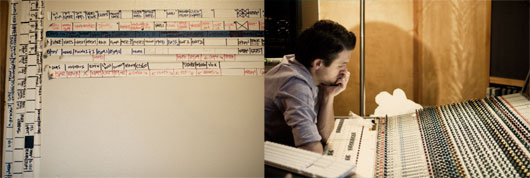
AF: Well, we record everything through a board and we do stereo mixes. So once we move on from the song, we can’t recall all the settings on the board, and certain things get lost. We try to always make finalized versions of stuff instead of leaving sessions open. So, in reality, we could go back and try to get the mix up, but it’s easier to just leave that loud hand clap the way it is.

So, Alex, you do all the vocals on the records?
AF: Yeah.

Do you have any vocal training or did you just start singing?
AF: Yeah, I just started singing.

So how do you approach it with skill but without being a trained singer?
AF: Hmmm… That’s still up for debate. Sometimes it takes a long time ’cause I don’t have a naturally trained voice. If we want something to sound polished, it can take a while, but sometimes we end up just going to the first mixes that are pretty raw….

Speaking of trained vocalists, didn’t you guys just do a song with Michael McDonald?
AF: Yeah, he’s definitely a trained vocalist. We just did a song with him. And by “did a song” I mean he just resang the hook of the song. His vocals are interesting. They are truly insane. One day we should just make a Mike-a-pella.

Is that song going to be on the album?
AF: Yeah, it will be. It’s got a name but we can’t say it ’cause this is one of the songs that actually has a sample.

So, this question is a little more philosophical. Your sound can be described as kind of retro with a lot of disco and electro elements. Is this intentional? How do you make old-sounding music in a modern context without it coming off as dated?
NM: It’s unintentional in the sense that we’re not trying to sound retro or old for the sake of old. Those disco records just happened to be the records we like. And ever since we started becoming comfortable in the studio, our tendency was to basically rip off whatever we were listening to at that time. So it really just comes from a very sincere love of those old records. And we just don’t really like the way modern records sound. Ya know, records made between 1975 to 1985 are the best-sounding recordings ever made. And a large part of that has to do with the equipment being used, which harkens back to our obsession with gear. So, it’s deliberate and undeliberate.

AF: It’s also the music we grew up with at home. So there’s an emotional, nostalgic component to it. It’s the stuff we’re still drawn to. I can’t really listen to most new music. There’s a lot of good new music; especially now, things seem like they’re changing. But most music made on the laptop just doesn’t do anything for me. Neither does electronic music. It just doesn’t do anything for me.

You guys mention that you’re working on building a live show. Do you have any tours planned, or are you still learning?
NM: Nah, we’re still learning. We knew it would be a big undertaking, so our plan was to start without the pressure of anything looming directly in front of us. So, yeah, there is the vague plan that we will be touring in the new year, but nothing is booked yet.

AF: Except for maybe Corsica. That’s our first confirmed date. There’s a festival called Calvi on the Rocks that we went to earlier this year to DJ, and it was like a heaven-on-earth kinda place. So they asked us to play live and we said yes without any idea of how to play live. We’ve been asked before and have said no, but we couldn’t refuse this festival.

So when you guys are going through the process of translating your studio gear to a live set-up, how are you guys doing it? Are you going with more pre-recorded stuff or more analog with a live band and stuff?
NM: It’s gonna be a five-person band. With everybody playing and using every available limb.

AF: Some of it is hard ’cause it’s like playing one part with your right hand, one part with your left hand, and singing at the same time. We brought in these guys, Tyler and Michael, who are in this band Classixx, and they’re doing a lot of the hard stuff. They’re very, very good, though, so it’s been easier than we thought. So before we even started figuring out how we were going to do this, we had some guidelines, the largest of which was that we really wanted to do something that wasn’t just a glorified DJ set or stuff that came largely from track. We wanted it to look and sound like a real band. So we approached the thing basically without any backing tracks.

NM: And we both come from live backgrounds. We’ve both been playing in bands since we were kids so we missed doing that. And these songs, as much as they were written in the studio and written into a computer, in a way, they were written to be played live. The instrumentation isn’t so outlandish or so overly produced that it would be such a challenge to be played live.

AF: Most of it was tracked by a human, too. There’s not that much MIDI on the record. It’s not that we have anything against that, but we just don’t work that way. It’s largely guitars, Wurlitzers, live drums, pianos, etc. It sounds like there’s six people playing, so the challenge was to get from the sound of two people to the sound of five or six. Then it was just about finding the right people and the right gear and do it such a way that you could get on a plane and have it sound like a modular or Prophet without the risk of destroying your precious tunes.

So, when you record live drums, are you good enough drummers to record it in or do you have to quantize the tracks?
AF: [Nick’s] a really good drummer. He has a great touch. But we also had the pleasure of working with Jerry Fuchs—who played with Juan Maclean and !!!—and is basically the best drummer on earth.

NM: Flawless timing.

AF: Yeah, like when you look at him on a grid, there’s barely any quantization needed. It’s scary.

NM: I was doing a mix of some of the drums that he recorded and it took me an hour to realize that I had opened the wrong session and that the drums I was listening to were not quantized. It was just a live performance front to back and it was nearly perfect. He’s that dead-on.

So, Alex, you used to be Moby’s assistant? Do you still do that?
AF: [laughs] No…

Could you talk about it a bit?
AF: Sure, what do you wanna know?

Was it working with him on music stuff or more just like picking up his dry cleaning?
AF: I started working with Moby in an audio-related capacity. It started as a three-month job to help him with his album and then it turned into more of an assistant job where I was kind of like a wingman for all sorts of projects non-audio-related. No dry cleaning, but I did drop off a DVD of Twin Peaks once.

Last thing, in 2010, you guys have your album coming out. Is there anything else coming up like new releases or something?
NM: We have a mixtape coming out in cassette only; sort of a bootleg compilation of all our remixes. Then we have a couple remixes that we did a couple months ago that are blooming and should be coming out soon. Then, once the album comes out, we’ll do some more remixes.

Can you say who those remixes were for?
AF: Kings of Leon, Datarock, and Van She. The Datarock one is already out. It’s a dub version, weirdly enough.
Rustie “Keesha Resmak”

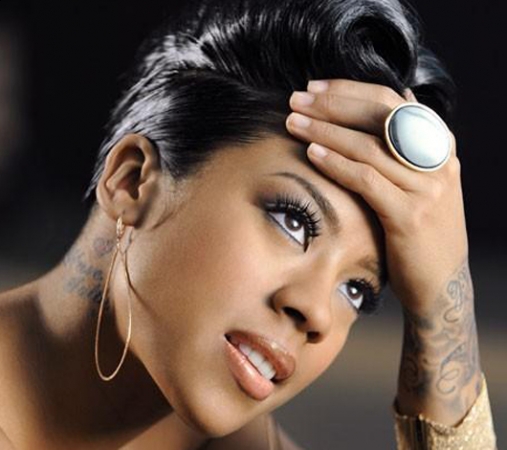
The injection of soulful R&B diva vocals into a track is rarely, if ever, a bad idea, and this re-fix of Oakland’s Keyshia Cole (pictured above) is no exception. In fact, it lends some humanity to the often cold dubstep-bass hybrid that Rustie has mastered. The prolific Glaswegian dropped this song as a free download on his Myspace page, and with a catchy four-note descending melodic bassline forming the track’s instrumental backbone and Cole’s gorgeous harmonies swelling above it, one can definitely understand why this re-fix has been so highly anticipated: it is a sickly good slice of dancefloor gold. (via Sonic Router)

Keesha Resmak 2

Keesha Resmak 2

Souls of Mischief “Proper Aim”

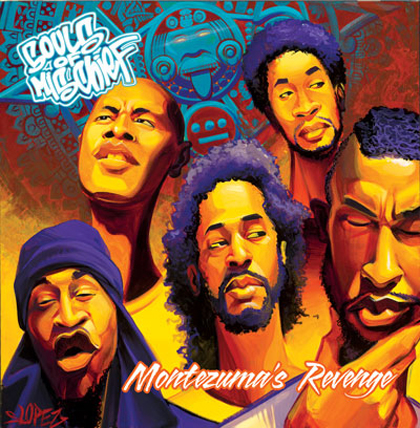
Oakland’s Souls of Mischief are finally returning with a new album after almost ten years away. The flows have never stopped, though, as “Proper Aim” finds the quartet of MCs elegantly spitting while Prince Paul’s jazzy, old-school production style helps the piece maintain a refined sense of what hip-hop is really about: dusty drum loops, great samples, and excellent vocalized poetry. Culled from Montezuma’s Revenge, which comes out today, “Proper Aim” also has a new video which fans can peep here.

Proper Aim

Boys Noize/Vitalic Power/Flashmob

Two electro-house giants fail to assuage fears that their genre has hit a creative wall.

The rise of electro-house marked an interesting shift in electronic music, as youthful DJs and fans, largely fueled by a burgeoning network of music blogs perpetually offering the latest wave of raved-up indie-dance tunes, threatened to reinvent dance music culture for Generation Web 2.0. Within a short time, genre leaders like Justice and Simian Mobile Disco were hailed as new-school pop savants, labels such as Ed Banger and Kitsuné became electronic music powerhouses, and the bombastic sounds of electro-house flooded onto dancefloors around the globe. Yet the very medium which had nurtured this movement—the internet—soon threatened to kill it, as bedroom producers and sonic copycats, driven by fantasies of following in their new-found heroes’ footsteps and becoming the internet’s “next big thing” themselves, let loose a spew of cookie-cutter productions. Predictably, electro-house found one formula and stuck to it—distorted synths, heavy bass, “party, love, dance, party” themes, and ad nauseam four-on-the-floor beats. And with each successive banger, the genre furthered its transformation from cause célèbre to punchline.

So now, as electro-house stands on its creative last legs, Boys Noize and Vitalic, two respected veterans of the scene, are each releasing new albums. While hopes run high that these guys could breathe some creative life back into the sound, their records only serve to perpetuate the notion that electro-house has grown stagnant. Power, the sophomore full-length from rave-obsessed German producer Alexander Ridha (a.k.a. Boys Noize), finds him rehashing ideas from previous singles, remixes, and his debut album, Oi Oi Oi. “Kontact Me,” Power‘s first real rave-up, features massive synths and a robot vocal loop ripped straight from Deadmau5’ repertoire, and the track’s occasional slap ‘n’ pop basslines sound suspiciously like something out of Justice’s sample bank. Not until midway through the album do we get an inkling of something unfamiliar, as the cave-drop percussion and handclaps of “Nerve” offer a short break from the incessant onslaught of frantic noise. The stomping “Trooper” and the more playful “Drummer” also begin with something more sonically alluring, giving the listener a vision of new territory his music could pioneer, but these reprieves are ultimately short-lived, as Boys Noize seemingly itches to introduce buzzing waveforms whenever possible.

On the other hand, Vitalic (a.k.a. Pascal Arbez) has been in the game long enough to know that a good hook can go a long way. Maybe due to his history in the more song-oriented electroclash scene—his debut Poney EP came out on International Deejay Gigolo in 2001—the French beatsmith is certainly more thoughtful with his productions. Whereas younger artists tend to suffocate their listeners with claustrophobic noise and mind-numbing beats, on Flashmob, Vitalic’s sophomore album, the seasoned producer manages to trade in fuzzed-out electro without sacrificing his penchant for conventional pop songwriting. The album is full of hummable pop melodies, memorable song structures, and even the occasional human voice. “Poison Lips” comes across like a Kylie Minogue B-side, while the cowbell percussion of “Terminateur Benelux” could be some sort of warped tribute to the fellow dancefloor acolytes of DFA. Still, even some of the more interesting romps on Flashmob, such as the vocal hook-heavy “One Above One” and the Crystal Castles-indebted “Your Disco Song,” sound very old-hat, and any track worth repeated listens is sure to eventually be filed under “guilty pleasure” for the non-fanboys.

Despite their well-produced attempts, both Boys Noize and Vitalic seem unwilling, or perhaps unable, to avoid beating the proverbial dead horse. Boys Noize takes the, um, noisy front on Power while Vitalic’s Flashmob represents the more melodic side of electro-house, but each fall back on routine more often than they further a tired sound.

Boys Noize Power: 4/10
Vitalic Flashmob: 6.5/10

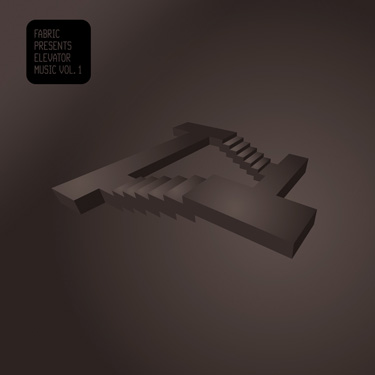
Fabric to Release Exclusive Bass Music Compilation

In the past two years, a certain nebulous genre has multiplied like mushrooms in the UK. Somewhere between dubstep, grime, and garage, much of the music coming from the likes of Rustie, Caspa, Untold, and others has simply been referred to as “bass” music, but now, London’s Fabric has come up with a cheeky new name for the bass-driven, dancefloor-scorching sounds: elevator music. On volume one of the synonymous compilation, Fabric has gathered some of the biggest talents in this eclectic scene to create exclusive pieces, culminating in a huge party at the infamous club on January 8 featuring the artists mentioned above along with Martyn, Joy Orbison, Hudson Mohawke, Vista, Mosca, and a scad of cohorts. And with advanced purchase of the compilation, fans get free entry to the event! More details here, and a full tracklisting after the jump.

Elevator Music Vol. 1 comes out January 8, 2010.

Tracklisting:

1: Hot City – If That’s How I Feel
2: xxxy – Sing With Us
3: Doc Daneeka – Drums In The Deep
4: Hackman – Pistol In Your Pocket
5: Julio Bashmore – The Moth
6: Untold – Bad Girls
7: Octa Push – Doctor Bayard
8: Shortstuff – Behave
9: Skinnz – Ukraine
10: Mosca – Gold Bricks, I See You
11: Martyn – Friedrichstrasse
12: Vista – Elixir
13: Caspa & Rusko – One Of The Same
14: Om Unit – Encoded
15: Starkey – Black Monolith
+
16: Shortstuff & Brackles – Melvin Blue (Digital Bonus Track)
17: Hackman – Pistol In Your Pocket (Hypno Remix) (Limited Digital Bonus track)

Enter Our DROP THE LIME DROPS BY Contest by Friday

In case you forgot, you’ve still got four more days to enter our DROP THE LIME DROPS BY contest. Tell Luca “Drop the Lime” Venezia where you’d love to see him play, and he just may be dropping by to get crazy with you and nine friends in the months to come. Check out a few recent entries after the jump.

Dear Dreamy Luca,
Please play my apartment. No need for guestlist or drinks on the house. It’d be so easy. Greenpoint needs a Drop The Lime house party to happen! Plus I feel like we would be bff if we ever met. I mean that in the least creepy way possible.

Dear Luca–
1103, also known as “jimmy valentine’s lonely hearts club” is def one of the mellowest bar/club/afterhours spot in DC to party late and listen to good dance/electronic music in a very casual atmosphere. It’s been around a few years now, it’s relatively out of the way in north east DC on the edge of a sleepy but casual part of town called Trinidad—this bar has no signs, takes no credit cards, and there’s no hassle about the way you dress.

See all the contest entry details here, and make sure to enter by Friday, December 4th.

Emika “Drop the Other (Scuba’s Vulpine Remix)”

The onslaught of sultry and atmospheric dubstep-esque tunes coming from the other side of the Atlantic shows no signs of abating—not that we here at XLR8R are complaining. Here, Hotflush label boss Scuba gets his hands on the debut single from Berlin’s Emika, transforming the rumbling trip-hop of her original into an ominous and serpentine labyrinth of skittering low-end. Simply put, we likey.

02 Drop The Other (Scuba’s Vulpine Remix)

02 Drop The Other (Scuba’s Vulpine Remix)

02 Drop The Other (Scuba’s Vulpine Remix)

XLR8R’s Favorites of 2009: Holy Ghost!

As their debut album nears completion, NYC’s Holy Ghost! delve into disco’s past without irony.

Plenty of bands sport members with long personal histories together, but Alex Frankel and Nick Millhiser of NYC disco outfit Holy Ghost! really go way back—the guys have been friends for 20 years. Meeting as wee tots at what they describe as a “liberal, weird school” on the Upper West Side of Manhattan, it didn’t take long for the pair to begin collaborating musically. “Our first band was Miss Preston’s elective rock band, which was in the fourth grade,” says Millhiser. “It was in a storage cage,” adds Frankel. “We played classics like ‘Lean on Me,’ ’59th Street Bridge,’ and then, as a reward for learning all these songs, we got to write and perform one of our own.” Apparently Miss Preston had quite an effect on the boys, as Frankel and Millhiser have been working together on music ever since. In high school they formed Automato, a six-piece live hip-hop group that operated in a similar sonic space as fellow East Coast outfits like The Roots and A Tribe Called Quest. Automato’s 2004 self-titled debut album was produced by the DFA and received a smattering of critical acclaim, but the group eventually dissolved, leaving Frankel and Millhiser to soldier on as a duo.

“The second Automato broke up, Alex and I continued working on music together, initially with the idea that we were going to keep doing hip-hop stuff,” says Millhiser. “But we didn’t have a rapper, so Alex started singing.” Soon thereafter, the tempo increased, pop arrangements came into play, and Holy Ghost! was born. The duo cites the influence of DFA producers James Murphy and Tim Goldsworthy as an obvious factor in their move toward disco and electronic music, but their listening habits had always been diverse, even in their younger, baseball-cap-to-the-side hip-hop days. “I bought [Daft Punk’s] Homework when it came out, when I was like, 15,” says Millhiser. “[Growing up in New York,] the same kids who went to Pavement or Lyricists Lounge shows were also the same kids who went to raves.”

Late 2007 saw the release of “Hold On,” Holy Ghost!’s debut single on DFA. A near-perfect slice of pop-disco, “Hold On” was simultaneously modern and true to the classic analog-synth work of disco legends like Giorgio Moroder. The track thrust the duo into the spotlight and made them in-demand remixers—Panthers, Curses! (a.k.a. Drop the Lime), In Flagranti, Cut Copy, Phoenix, and even electronic music legend Moby have all come calling for their services. (Frankel actually worked as Moby’s assistant for a time, although he claims “there was no drycleaning, but I did return a DVD of Twin Peaks once.” Overall, he describes it as an “awesome experience.”)

Not surprisingly, all the remix work, not to mention the sudden demand for their DJ services around the globe, has left precious little time for producing new Holy Ghost! material. The group’s second single, another offering of pitch-perfect electro-disco entitled “I Will Come Back,” was only released this past summer—strangely enough, as a free download on the Mountain Dew-sponsored Green Label Sound label. “We were anxious and nervous about working with a corporation,” says Frankel before adding, “[it was an] amazing experience.” Millhiser adds, “We were right about to release ‘I Will Come Back,’ just as a second 12-inch on DFA.” Frankel continues, “The package was ready to go, and they were able to come in last minute, give it a big push, and offer support that DFA couldn’t do on its own. Working together, DFA and [Green Label Sound] proved to be a really good team.”

Questions of distribution model aside, the fact remains that to date, Holy Ghost! has only released two proper singles and a number of remixes—a fact Frankel and Millhiser are certainly aware of. “We work very, very slowly,” begins Millhiser before Frankel cuts in, “There is more! There’s more on my computer. We’ve spent the past two years making an album.” He continues, “When ‘Hold On’ came out, it wasn’t like that was the lead single to an album. That was the lead single to the project—there was nothing [else]. We joke about it ourselves—when we only had ‘Hold On,’ that was even worse because then people would be like, ‘You only have one song out,’ and we’d be playing somewhere like Israel, and they’d be like, ‘How the fuck did you get to come here?’”

These days Holy Ghost! has more of a discography, but the production focus has shifted entirely to finishing their debut album, tentatively slated for release sometime in 2010. Production is something the duo takes seriously, as they’ve also acquired a budding reputation as gear hounds. Frankel and Millhiser began seriously collecting equipment as teenagers in their Automato days, as Frankel explains, “We signed a record deal and we had a little bit of a gear budget and simultaneously we got into Radiohead. I blame [the record company] and Nigel Godrich largely for our gear obsession.” That obsession continues to this day, as the pair has amassed an impressive arsenal of instruments and studio gear. Favorite items include Roland Space Echo tape delays, ’70s-era DBX162 and DBX165 compressors, Yamaha CP60, CP70, and Rhodes electric pianos, and their modular synth.

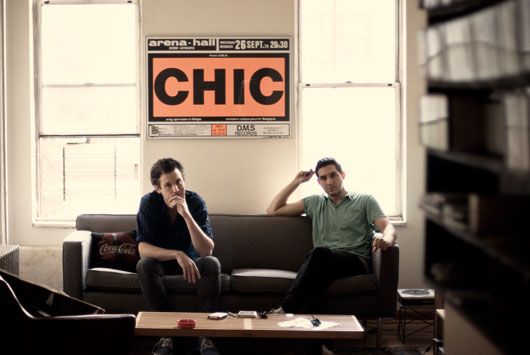
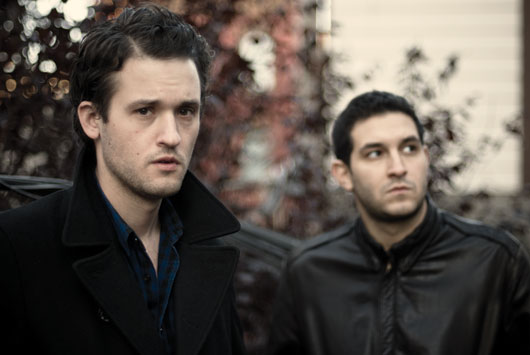
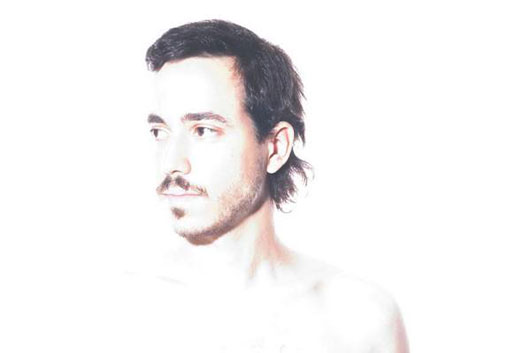
Nick Milhiser and Alex Frankel

While Frankel and Millhiser openly cop to their passion for vintage studio equipment and musical instruments, there is a method to their madness. “We just don’t like the way modern records sound,” says Millhiser. “Records made between 1975 and 1985 are just the best-sounding recordings ever made, and a large part of that has to do with the equipment that was used, so that’s where a big part of our obsession with gear comes from.” And despite their studio-geek tendencies, the guys are not trying to simply re-hash the days of disco past. Millhiser explains, “We’re not trying to sound retro, or old for the sake of sounding old.” While elements of nostalgia factor in to the creative process and the guys admit to borrowing ideas from their favorite disco and early electro records, Frankel boldly proclaims that Holy Ghost! makes music “without irony.” That even includes when the guys are enlisting the vocal services of Yacht Rock legend Michael McDonald, who sings the hook on one of the tracks from their forthcoming album. “His vocals are insane,” says Frankel. “One day on the 12-inch we should just make a McDonald-pella that’s just his [vocal] tracks because they are insane-sounding.”

Speaking of insanity, besides finishing the debut full-length, Holy Ghost! is also in the midst of tackling another challenge—performing live. Much of the band’s vintage equipment isn’t exactly tour-ready, so the gear acquisition is now focused on smaller, stable, and functional items for the road. Rather than relying on pre-recorded tracks and performing a glorified DJ set, Holy Ghost! is attempting to keep the live show as ‘live’ as possible. “It’s going to be a five-person band, everyone playing, everyone using basically every available limb,” Millhiser explains. Frankel adds, “Some of it’s very hard because it’s like playing one part with your left hand, another with the right hand, and singing at the same time. We brought in these guys Tyler [Blake] and Michael [David] who are in the band Classixx, and they are doing a lot of the hard stuff.” While there are no concrete tour dates yet, Holy Ghost! does have one confirmed show—at next year’s Calvi on the Rocks festival in Corsica, a “heaven on earth” spot where they DJed earlier this year. “They asked us to [come back and] play live and we said yes without having any idea how to play live,” says Frankel. “You can’t say no to this festival.” Millhiser adds with a laugh, “And there’s no money involved.”

Read the entire transcript of this interview here.

Inbox: Etienne Jaumet

XLR8R’s Inbox touches base with jovial French tech-house producer Etienne Jaumet, who has just come back from sharing the deck with Dirty Soundsystem on a Cosmic Cruise around an artificial lake in Paris. Jaumet gushes about Carl Craig, compares himself to crayon colors, eats too fast, and sets his sights on the next gubernatorial race in California. Jaumet’s Night Music is out now on Domino.

XLR8R: What’s the weirdest story you have ever heard about yourself?

Etienne Jaumet: People always imagine that I need to take drugs all day long to make my music… hahahaha!

Does the mood you’re in effect the music you choose to play, or does the music you hear effect the mood you’re in?

I don’t control myself very well, and don’t think too much. I don’t have an analytic approach to music; I just love to lose myself in the sensations and the emotions given by the music. The music feeds me.

What was your favorite song when you were 15?

“10:15 Saturday Night” by The Cure.

What has been your most disastrous live show experience?

One time we played last in a festival in Spain with my band Zombie Zombie. We could only play one song because they had a lot of late [acts] in the [lineup] and only 10 minutes left before the curfew—so frustrating for everybody!

If you could spend an hour in any city right now, which would you choose?

Benares, India.

Favorite studio toy?
Easy: my (tape echo delay)!

Which of the following Crayola crayon colors best suits you: “Atomic
Tangerine,” “Desert Sand,” “Inchworm,” “Laser Lemon,” “Macaroni and Cheese,” “Mauvelous,” or “Raw Umber”?

“Raw Umber” (because it reminds me [of] The Stooges album).

How would you describe your sense of style?

Old-fashioned modernist! Or post-traditionalist, if you prefer.

What was it like working with Carl Craig?

He don’t need anybody! He only does what he wants to. He knew so well the music and the sound! He’s a master!

What did you always get in trouble for when you were little?

Eating too fast. It’s still the same.

Which other artist would you like to work with next?

Brian Eno.

What’s the last book you read?

The Dice Man by Luke Rhinehart.

Complete this sentence: In the future…

I will be the governor of California. 😉

Describe your current surroundings in one sentence.

“Information is not knowledge. Knowledge is not wisdom. Wisdom is not truth. Truth is not beauty. Beauty is not love. Love is not music. Music is Best!“—Frank Zappa.

What’s next on your agenda?

We have to make a live soundtrack for the movie Potemkin Battleship of Eisenstein with Zombie Zombie! The premiere will be at La Cité de la Musique in Paris on December 12.

Majeure “The Dresden Codex”

As one half of prog-horror instrumentalists Zombi, drummer A.E. Paterra knows his way around propulsive rhythms and analog synths, not to mention epic songwriting. Here, the Pittsburgh musician uses the name Majeure to focus on his sci-fi-obsessed cosmic-disco efforts with the 13-minute jam “The Dresden Codex.” It’s a stunning opener for Paterra’s debut album, Timespan, as it starts slow with spacey, arpeggiated melodies and cold atmospherics that recall Tangerine Dream’s Risky Business movie score before morphing into a beat-heavy, analog synth explosion rivaling just about any song written by his other band.

01 The Dresden Codex

Page 2609 of 3781
1 2,607 2,608 2,609 2,610 2,611 3,781