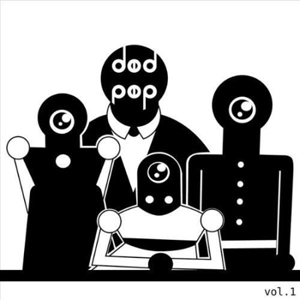
Skweee is still strange to many ears, but that’s a shame given all the attention wonky and Flying Lotus are getting, given that the ideas are similar—only skwee turns the synthesizer knob up to 11. Dødpop is the newest label on the Scandinavian “Conflict R&B” scene, and its output is pure genius. Label stalwarts Beatbully and Sprutbass turn in an impressive myriad of jerky beats and crazy filtered synths, all bathed in a hip-hop feel. Fulgeance and Sadat X also offer credible performances, but it’s the relatively unknown artists who truly shine, from Melkeveien’s “Yo!” to Daniel Savio’s smoother “Smokeless Fire.”
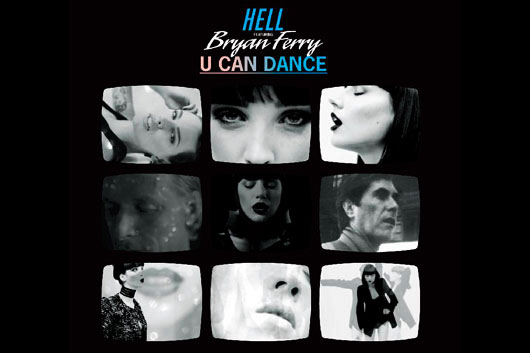
German producer/DJ/label head DJ Hell has finished his work on a collaboration with Roxy Music’s Bryan Ferry, a reinterpretation of an unreleased song by Ferry entitled “U Can Dance.” The idea for the song was born when Hell met with Brian Ferry in London to discuss his desire to rework a Roxy Music song. Fast-forward four years and we’ve got the burning disco of Hell’s instrumental (with a little help from Peter Kruder of Kruder and Dorfmeister) matched with Ferry’s impeccable vocal performance, not to mention some remixes from Carl Craig, Simian Mobile Disco, and DFA production guru Tim Goldsworthy, coming out late-January on Hell’s International DeeJay Gigolo imprint. Also, keep your eyes peeled for the track’s accompanying video very soon.
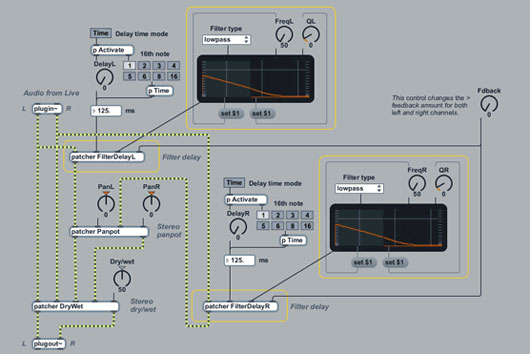
From the music-production and live-performance software giant Ableton, in conjunction with the masterminds that brought you Max/MSP, Cycling ’74, comes the long-awaited Max for Live, released today. This monumental pairing takes the potential of Max/MSP (which allows users to create their own instruments and devices) and seamlessly integrates it with the flexible and easy-to-use Ableton program (our friend Christopher Willits explored the release not long ago). If you’re not too interested in building your own devices, however, Max for Live comes complete with a collection of choice instruments and effects, already put together and ready to be used. Max for Live is currently available straight from the Ableton web shop and selected music retailers starting at $299 USD.
XLR8R Couldn't find the embed function for type: "vimeo" and source: "<iframe width="1170" height="658" src="https://vimeo.com/7802692"></iframe>".
The duo’s new mini-album and live show are a collaborative acid trip, UK-style!
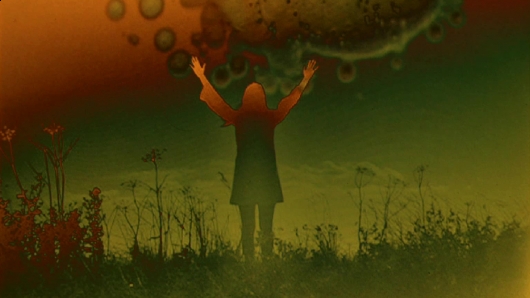
Broadcast‘s first release since 2006’s The Future Crayon is a conceptual mini-album collaboration with The Focus Group (a.k.a. British designer/filmmaker Julian House), and their recent live show incorporates a 20-minute improvised soundtrack to one of House’s films. As James Cargill, the male half of the band, explains, the project was borne out of a lot of half-remembered children’s television shows of the early 1970s, drug parties from Hammer films, and a couple other cultural references that Americans might not get. Here, he explains what inspired him and bandmate Trish Keenan, and how a full appreciation of their new project might require a certain adjustment of expectations.
With his growing reputation—and the promise of a debut full-length—Bristol’s Joker takes it one day at a time.
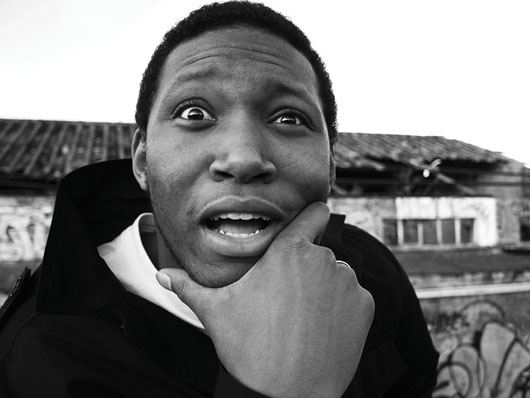
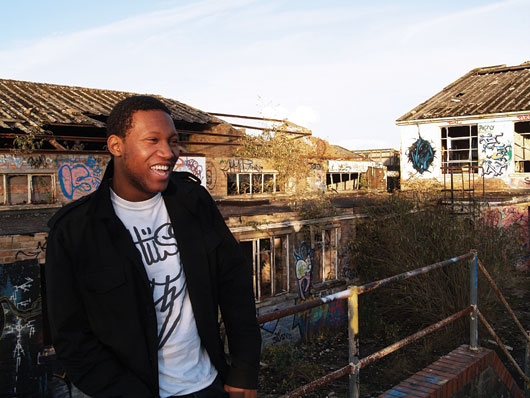
Months before he’ll complete his debut album and probably longer until it will reach listeners, Liam McLean is holed up in his home studio, stressed. A string of thrilling singles has branded the 20-year-old Bristolian, known as Joker, dubstep’s next great producer, and the pressure that accompanies that title is clearly wearing on him. Mostly, though, he just misses his bicycle. “I used to ride my bike a lot,” he says. “Do dirt-jumping and stuff. But within the past few months, things have gotten hectic and I haven’t ridden my bike for ages. Couldn’t say the last time I’ve been on it. I’m just stuck in my room or stuck in a club or stuck on a plane. I’m pretty mind-rocked.”
That might seem like an odd complaint for a guy who seems to have the world at his fingertips, but Joker isn’t your average artist. With a shyness that borders on the defiant, he is, like Brian Wilson or Burial before him, a studio rat with perfectionist tendencies (and very possibly a genius streak), the kind of dude who prefers quietly making beats in his bedroom to just about anything else. He likes movies and cooking, and isn’t too thrilled about playing live sets (“Right now it pays the bills,” he tells us). So how did Joker come to be seen as the man to possibly redefine dubstep and help carve out a new subgenre—wonky—in the process? First, remember that he’s been making tunes since he was 14.
Joker came up in Bristol, the culture-rich port city in Southwest England—home to such greats as Robert Wyatt, Portishead, and Massive Attack—where he still resides today. Feasting on a healthy diet of grime and garage at a young age, Joker joined a hip-hop crew as its resident DJ around 14 and quickly saw an opening for his burgeoning production skills. “I seen them start to make tunes and I thought, ‘If I’m going to be the DJ for them, I could, like, be the producer as well,’” he says. “So that’s kind of when it started.” But even then, Joker felt like there was something missing in the records he was buying and spinning—an opening for him to inject his own style. “I would get to a certain bit [of a track] and wish that things would go on a bit longer or have extra sounds I’d never heard,” he says.
Eventually that urge to hear fuller and more exciting sounds would result in the creation of Joker’s own material, and a stunning series of 12’’s that combined modern dubstep with Nintendo blip, ’80s funk, and ’90s hip-hop. Singles trickled out over a few years, beginning with 2007’s “Stuck in the System,” notable for its crisp melodies and marriage of grimy low-end wallop with lush orchestration, and “Snake Eater,” which ran videogame samples through Neptunes bounce. The tracks dovetailed with the rise of similar sounds in the UK and abroad—a thread can be woven through the work of Glasgow’s Hudson Mohawke and Rustie, as well as Hyperdub’s Darkstar—which prompted UK journalist (and occasional XLR8R scribe) Martin Clark to name the budding movement “wonky,” characterizing its mid-range as “being hijacked by off-kilter, unstable synths.” Meanwhile, Joker’s cuts were growing stronger and more singular with each release, but it wasn’t until recently that folks outside Bristol began to take notice of his prodigious talent. ?
If there are two tracks that put Joker on the international map, they are “Purple City” (a collaboration with pal James “Ginz” Ginzburg) and “Digidesign,” both released this year on Joker’s Kapsize imprint and Hyperdub, respectively. Alongside Joy Orbison’s ebullient “Hyph Mngo,” they represent the most exhilarating dubstep-affiliated tracks of 2009, and though traces of their parent genre remain, the songs ultimately represent a new brand of future-pop that seems equally suitable for the clubs as it does headphones. “It’s sort of like dubstep meets hip-hop meets R&B meets grime meets funk, if that makes sense,” Joker says of his own work. Part of the appeal of the material is inscrutable—the way he’s able to twist and bend synth lines into compelling melodies—but part of it is simple structure: He likes a good hook. “I just can’t stand shit that sounds like one tone; it doesn’t bring you nowhere,” he says. The other component is his commitment to using what he calls “real” equipment, namely hardware over software. ? “I used to make my tunes in Reason,” he explains. “But when I listened to, like, more established music in the scene, there was a big difference in quality in how wide the sound was—just sonically massive. There was a certain point in Reason that it just wouldn’t go past. I think that’s where you have to come out of the computer.” It’s not about what you can’t do with software, Joker says, but that there’s a higher quality of sound he’s able to achieve with physical equipment. “For instance, if I have to get a sine wave with a square wave on top of it, just for, like, a simple bass, the difference between that coming from a hardware and a software would just sound completely different,” he explains. But even if he’s been able to refine the nuts and bolts of song creation, that doesn’t mean tracks like “Digidesign” come easy.
Joker’s “Digidesign”
And, of course, there’s that album to think about. “I’ve been working on it every day but I’m going to stop that now,” says Joker. “It kind of puts me in a certain working mode where I’m trying too hard. So I’m just going to relax and make beats as normal and then figure out the album when I’ve got a certain amount of tracks together.” But that might be easier said than done. There’s a note of exasperation in his voice when he talks about the record, and with a busy touring schedule and more than a few remix commissions on the table, time is short. “There’s just no time for rest,” he says. And part of the weight of expectation, it seems, is self-imposed. He turns to his computer to check the status of the as-yet-untitled LP. “I’ve got a folder called ‘Album’ and there are 119 files in that folder. I probably like one of them.”
With that kind of quality control, one gets the sense that the Joker full-length could very well exceed expectations; it’s just a matter of getting there. Joker knows what he wants it to sound like but won’t give away too much (“I’m not good at explaining tunes, definitely not my own tunes,” he says). He knows he wants it to be a capital-A album. “I want it to be very listenable instead of just straight tear-up-the-clubs kind of shit. With, like, a beginning, middle, and end—you can listen to it all the way through.” In the meantime, though, he’s simply looking for equilibrium between the life offered to him by dubstep superstardom and his much quieter one in Bristol. “It’s a sacrifice,” he says. “I’m still trying to find the right balance of me being okay and doing the things I want to with music.”
The Toronto duo of Bonjay certainly know how to make dancehall, but they also know how to make it extremely weird—”Gimmee Gimmee” sometimes features more than three different vocal phrases happening simultaneously, not to mention gauzy distorted elements and an orgasmic, delayed scream at the end that reverberates long after the track is over. The group’s just-released EP also features remixes from Grahmzilla of Thunderheist, Poirier, and Smalltown Romeo, so there are plenty of reasons to jump on this new group.
Sometimes, a remix sounds so little like the original that it’s a bad thing, and sometimes, the opposite is true. Zombie Disco Squad‘s remix of Swedish pop wunderkind Erik Hassle falls firmly into the latter category, as it takes an embarrassingly derivative piece of emotional schlock and transforms it into a house track that includes bits recalling Derrick Carter’s vocal cut-ups on his remix work. We’re sure that Hassle fans won’t be into the remix as much as we are, but then again, they’re probably too busy crying in their rooms to notice that the remix exists.
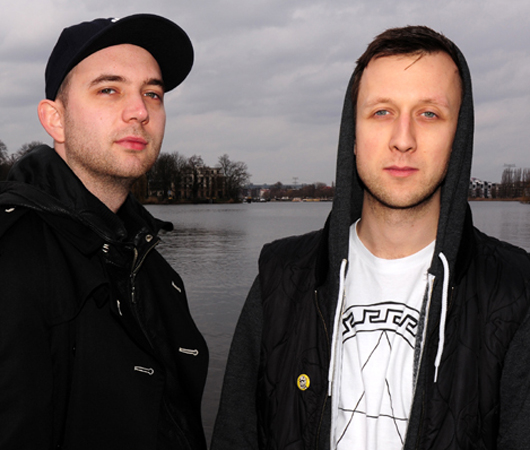
It might be kind of a dubious honor, but no other techno/dubstep/grime/hyphy/etc. producers make better mix CDs than Modeselektor. Completely populist while still bleeding edge, Body Language Volume 8 wasn’t strung together with 100% exclusive tracks or eight turntables—Modeselektor just takes a lot of the best stuff out there and makes it seem like it was part of the duo’s vibe all along. Take, for instance, the seamless run between the early dubstep of Horsepower Productions’ “Let’s Dance,” which sneaks into Rob Hood’s raw, minimal anthem “Unix” before dropping into the corporal snare rolls and futuristic dancehall of Major Lazer’s “Pon De Floor.” Individually, all of these tracks are defining songs of the genres from which they come. But in the space of this mix, it all just seems like Modeselektor.
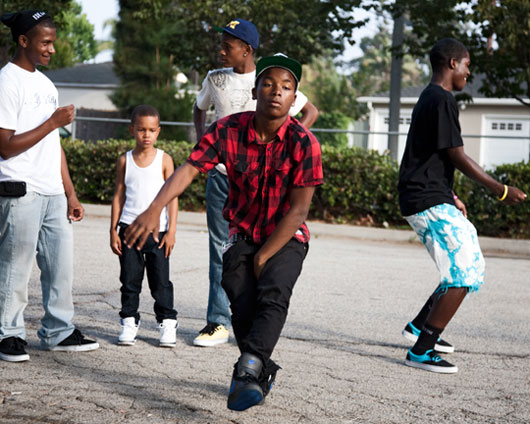
Over the past year, a new hip-hop subgenre has bubbled up from the streets of Los Angeles. Known as jerkin’, the scene is largely populated by internet-savvy, skinny-jeans-wearing teens whose favorite artists are often like-minded young MCs and producers who operate almost exclusively on MySpace and only perform at raucous all-ages shows for throngs of wilding-out fans. With a minimal, synth-driven sound reminiscent of Bay Area rappers The Pack, jerkin’ has crept up and down the West Coast, primarily on the back of underground hits like “You’re a Jerk” by LA’s New Boyz.
BB The Jerk from UCLA Jerks with Young Ace from Kream Kids
But apart from the music, the jerkin’ movement has gained just as much attention for its youthful exuberance, bright colors, skate-inspired style, and coordinated dance moves that often resemble the Running Man in reverse. With the help of Angeleno Sharriff Hassan—who’s currently producing a jerkin’ feature film—XLR8R brought together three different jerkin’ crews—Team Dummy, Kream Kids, and UCLA Jerks—on a Sunday afternoon at Stoner Park in West Los Angeles. Photographer Mathew Scott documented the crews doing what they do… and captured a bit of what being a jerk is all about.
DJ Star Eyes (a.k.a. former XLR8R editor Vivian Host) is featured in the newest installment of New York on the Clock, where she talks about her genesis as a DJ and member of NYC’s Trouble and Bass crew. Check it!