BMSR: Over the Rainbow

The nicotine-stained frontman of Pittsburgh’s Black Moth Super Rainbow explains the means behind the band’s electronic freak-pop, and the reasons for their smokescreen.

It’s a Thursday in March and Tobacco, the anonymous founder and lead entity of Pittsburgh’s Black Moth Super Rainbow, is in Cleveland snagging a new purchase: a keyboard owned by a member of ’70s rockers James Gang.

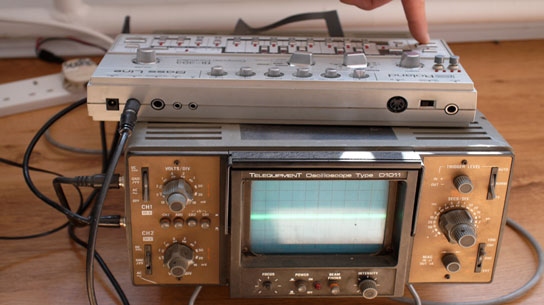
It’s the latest addition to the deceptively small arsenal of analog synthesizers, keyboards, and other gadgetry used to create Black Moth’s distinctively woozy, spacey sound. But rather than remaining a simple relic from guitar rock’s history book, this synth is about to be transformed—no longer to play second fiddle to Joe Walsh on “Tend My Garden,” but rather to helm Black Moth’s ride way into the future, a sound in which lazer-bright vocoders mingle with lo-pass percussion—a sound that just keeps getting bigger with every time at bat.

The band recently completed Eating Us, its fourth LP but first proper “studio” album, working with renowned producer and ex-Mercury Rev bassist David Fridmann. “I always thought studios were kind of a waste,” Tobacco admits. “But I think it was just time to change what the stuff sounded like, and I think Dave is just the right guy to do it. [Eating Us] is the first Black Moth album where I sort of knew people were gonna hear it. [With] the last album, Dandelion Gum, I didn’t think anybody knew who we were [and] I was probably pretty right. This was the first one where I knew people were gonna hear it, and I should probably be a little more conscious—maybe not be so self-indulgent.”

MERCURY RISING
Working at Fridmann’s Tarbox Studio also enabled the band to experiment with a new set of sounds and recording techniques. “We had these big chimes that we used,” recalls Tobacco. “[Fridmann] had a bunch of little toys and noise machines and stuff that we were able to play around with. He would leave at midnight every night, and he would just let us use the studio and the computer and everything all night long ’til he came back.”

Fridmann’s distinctive touch is immediately apparent on Eating Us, beginning with the booming, echoing drums that anchor “Born on a Day the Sun Didn’t Rise,” reminiscent of the brash percussion scattered throughout the Flaming Lips’ discography. But Fridmann doesn’t gloss over any of Black Moth Super Rainbow’s lo-fi eccentricities, retaining the group’s signature ethereal vocodered vocals and fuzzed-out, acidic keyboard washes.

While Black Moth’s sound is hard to describe and even harder to plop into a specific genre, it’s often been broadly referred to as psychedelic, a term that Tobacco has abhorred until recently. “I guess I’m coming to terms with it,” he admits begrudgingly. “It is whatever people think it is. It’s not supposed to be psychedelic, but if that’s what you hear, then that’s what you hear, and that seems to be what 99% of people hear, unfortunately. I always think of it as, like, pop. I hate The Beatles, but the way The Beatles wrote songs, they were just trying to come up with sounds and textures and hooks that would stick. That’s really all that we’re trying to do; it’s just [that] the kind of stuff I have at my disposal just makes it seem psychedelic.”

PRIVATE PARTS
With Eating Us, BMSR seems poised to capitalize on the buzz that’s been brewing online over the past two years—an unexpected step for a group that so dearly values its privacy. Tobacco and his bandmates, it seems, have been obsessed with staying purposefully below the radar.

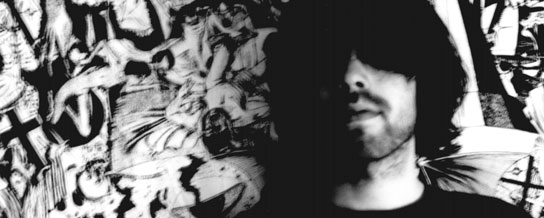
The band emerged from satanstomping-caterpillars, a Pittsburgh-based band that Tobacco formed in 2000 with co-member Powerpill Fist. Black Moth Super Rainbow was born three years later, and released Falling Through a Field shortly thereafter, crediting themselves in the liner notes with cryptic aliases: Tobacco, Powerpill Fist, Father Hummingbird, Iffernaut, and The Seven Fields of Aphelion. They continued to release work on their own label, 70s Gymnastics Recording Company, largely retaining their mysterious and elusive reputation, refusing to reveal their legal names, and appearing in photographs and onstage with partially obscured faces. A career-defining performance with their friends Octopus Project at South by Southwest in March 2007 launched their name into the blogosphere. “That was totally, totally unexpected,” Tobacco recalls. “We knew people liked the Octopus Project in Austin, but I just wasn’t expecting what was gonna come from that.”

Dandelion Gum, the band’s third LP, was released on Graveface Records shortly after their appearance in Austin, and legions of new fans suddenly aimed their cyber-sleuthing skills at Black Moth’s enigma. “People dug up all of our real names,” Tobacco recalls, with chagrin. “It’s all on Wikipedia now. It kind of sucks because we try so hard to keep that stuff separate, and people just want to know everything. I guess that’s a good sign, but I don’t always want people to know everything. It’s like, the more you give, the more people want, and the less you give, the more people want right now. Without the internet and all these insane avenues for communicating, I think we wouldn’t be known at all right now, but at the same time it’s just too much.

“I think we get called ‘evasive,’ but I don’t know if that’s the perfect word for it,” he continues. “[Black Moth] just are private people and we don’t like talking, we don’t like doing interviews. It’s not that we don’t appreciate doing interviews and our fans coming out to our shows, we’re just more reserved. For the most part, I’ve always liked the idea of not mixing who we are with what we do. We’re not embarrassed of what we do; I’m really happy that people like this and want to know things and want to talk about it, but I feel awkward running into people that I know—that I knew before I was doing this stuff—and they know everything about me and everything about the music from what they’ve been reading online.”

HYPE BEAST
Tobacco seems to long for a different era, like the days of 1980s indie rock, when buying and discovering music was an inherently DIY process fraught with SASEs, carefully concealed $1 bills, and poorly photocopied catalogs. “When I was younger, when I was listening to music, I obsessed over the recording,” he says. “Something would come out, I would find out about it, like, maybe a couple weeks or couple months later, and I would buy it. And I would listen to it, and I would obsess over the sound. But it seems like now, people are way more obsessed with the hype and stories leading up to the release; once the release hits, it’s like, it’s over and we can move on to something else. It’s completely backwards.”

This time around, Black Moth Super Rainbow seems grudgingly better prepared to contend with the proclivities of an online fan base and the fickle snap-judgments of bloggers. Tobacco, especially, seems to have acquired a degree of comfort with the trappings of minor fame, based on his experiences following Fucked Up Friends, his 2008 solo release for Anticon. “I’m getting used to it; it’s getting easier,” he says. “I’m glad that [Eating Us] is done and that I can stop worrying about making it and now just worry about people liking it.”

illustration Tobacco
_________________________________________________________________________________________
Tobacco Habits
A few more of the BMSR frontman’s recent fixations.

?Bibio
Vignetting the Compost (Mush)
“He’s acoustic but really, really weathered-sounding. I don’t know if he records on Dictaphone or really old tape recorders or what, but he’s really interesting. I found him back in the day because I read that Boards of Canada discovered him or something. If Boards of Canada was all acoustic guitars and flute recordings and stuff, they’d be like Bibio.”

Scott Weiland
Happy in Galoshes (Soft Drive)
“This is a weird one, but the Scott Weiland solo album… I love it so much. It’s really, really, really corny, but there was this one Stone Temple Pilots outtake from one of the later albums that I always used to love, and he remade it on here. I’m not a Bowie fan but there’s a remake of “Fame,” and it’s a really corny remix, but it’s so good. I wouldn’t put my reputation on the recommendation but, for me, there’s something really sick about it.”

Principles of Geometry
Lazare (Tigersushi)
“I don’t know the best way to describe it. It’s a lot of really cool analog synth stuff and I don’t really understand it, but Vast Aire makes an appearance on it. It’s a really, really strange CD because it’s all analog synth stuff—I’d almost compare it to the Tobacco album I made last year, but it doesn’t make a lot of sense. I guess my record didn’t make a lot of sense, having Aesop Rock on it, either.”

Podcast 101: Labels We Love: Modern Love

As part of our ongoing Labels We Love podcast series, we shift our focus to the gritty streets of Manchester, where the Modern Love crew has been turning heads since 2006 when Claro Intelecto began dropping his Warehouse Sessions 12-inches. Also home to artists like Move D, Echospace, Pendle Coven, and Andy Stott, the label is perhaps best known for its combination deep techno sounds with down-and-dirty Detroit basslines, but also dabbles in house and even dubstep and jungle (via sister imprints Daphne and Hate). For this mix, they’ve tapped fellow Manc and frequent label contributor MLZ to survey the Modern Love sound.

01 Demdike Stare “Haxan Dub” (Modern Love)
02 Andy Stott “Peace Of Mind” (Modern Love)
03 Claro Intelecto “Dependent” (Modern Love)
04 Move D “Drøne” (Modern Love)
05 Andy Stott “Brief Encounter” (Modern Love)
06 MLZ “One State” (Modern Love)
07 Deepchord Presents Echospace “Untitled” (Modern Love)
08 Pendle Coven “Exigen” (Modern Love)
09 Claro Intelecto “Rise” (Modern Love)
10 Millie “Gunshot” (Daphne)
11 Andrea “Temper Tantrum” (Daphne)
12 Andrea “Black Hammer” (Daphne)
13 Unknown “Pretty Boys Don’t Survive Up North” (Hate)

Download MP3
Download M4A (iTunes enhanced)
Subscribe to Podcast (RSS)

Podcast_Mix_2009_08_27

Dixon Drops New Mix

On October 26, Innervisions co-conspirator Dixon (a.k.a. Steffen Berkhahn) will release Temporary Secretary, his first mix CD since 2007’s Body Language Volume Four. Focusing on the Berlin-based impresario’s majestic construction of new sounds rather than over-hyped throwaway tracks, the CD features some Innervisions superstars like Âme and Henrik Schwarz alongside more esoteric acts like Fever Ray and Icasol. What’s more, many of the tracks featured have more than one ID tag, so it is certain that this is a true mix. To coincide with the release, Dixon is doing sets throughout the fall in Europe and North America.

Dixon’s Temporary Secretary will come out October 26 on Innervisions.

Tracklisting:

Icasol – “Ongou”
Fever Ray – “If I Had A Heart”
Roland Bocquet – “Exotique” with Ame – “Tube Beat”
Jazzanova – “Let Me Show Ya (Henrik Schwarz Remix)” with Daniel Paul – “Something About You (Instrumental)”
Precious System – “The Voice From Planet Love” / Ben Klock – “In A While”
Junior Boys – “Hazel (Ewan Pearson’s House Mix)”
Butane – “Inferno Jack (Kalabrese Remix)”
Peter Kruder – “Law Of Return”
Kiki – “Good Voodoo (Visionquest Remix)”
Code 718 – “Equinox (Henrik Schwarz Mix)”
The Machine – “Fuse”
Cortney Tidwell – “Watusii (Daphni remix)”
Ame – “Setsa”
Tokyo Black Star – “Sepiaphone”

Dixon Fall Tour Dates:

Sep 13 – Berlin – Berghain Panorama Bar
Sep 27 – London – Secret Sundaze
Oct 2 – Miami (TBA)
Oct 3 – NYC (TBA)
Oct 4 – LA (TBA)
Oct 22 – Amsterdam Dance Event
Oct 31 – Barcelona – Nitsa
Nov 6/7 – Southport Weekender
Nov 28 – Offenbach – Robert Johnson
Dec 26 – Amsterdam – Trouw

Abe Duque and Blake Baxter “Let’s Take It Back (King Roc Mix)”

Lauded as a “techno kingpin,” NYC’s Abe Duque has been hard at work proving his title on his latest single with fellow DJ/producer Blake Baxter, the entrancing “Let’s Take It Back.” On King Roc‘s remix, the song is given more room to breathe as he pulls the beat and bass into the background and pushes the vocal track and percussive elements to the forefront.

03 Let’s Take It Back (King Roc Remix)

Jamie Jones “Soak”

As a teaser for the new album from U.K. house producer Jamie Jones, Don’t You Remember the Future, we were sent the non-album bonus track “Soak” to pique our interest. Well, PR Agent, you’ve succeeded. The track’s minimalist groove, ethereal vocal samples, and arpeggiating synth work create the kind of tension we think the dancefloor could always use. You can consider us officially looking forward to your client’s next album.

Soak

Labels We Love: Dirty

Every day this month we’re rolling out a new feature on XLR8R‘s Labels We Love of 2009. Whether it’s the eye-catching aesthetics of Type or the model-for-the-future approach of Interdependent Media, these cut-making selections of the best in underground electronic, indie, hip-hop, and experimental imprints punch way above their weight. Feast your eyes on the features and then download many of the labels’ related podcasts here.

Gettin’ into the mix with Paris’ lost-groove fanatics.

Call them Dirty Records, Dirty Edits, Dirty Sound System, what have you… They’re just D-I-R-T-Y to us, and for the past few years, the men behind the DJ collective, the Discodeine label, the Dirty Edits production house, and the Alainfinkielkrautrock blog—Clovis Goux, Guillaume Sorge, and Pilooski (a.k.a. Cédric Marszewski)—have been turning the world on to everything obscure and editable, be it Balearic, kosmische, disco, or lost soul and rock, and bringing the underground edit phenomenon to the masses. Need proof? Pilooski’s currently remixing LCD Soundsystem and Jarvis Cocker, and his bootleg edit of Frankie Valli & The Four Seasons’ “Beggin’” went from being an on-the-downlow, 1000-pressed slab of vinyl to showing up in Adidas ads and getting released as an official remix by Warner U.K. We hit up Pilooski, Dirty’s resident edit king, to get the lowdown on how he spins dancefloor gold from scratchy AM radio hits.

Don’t Limit Yourself
Basically there are no rules when it comes to choosing a song to edit. I could go for a Lebanese pop track or a joint from Greece. I go for the bizarre or leftfield stuff more than things like disco tracks. I love the intensity of Arabic music as much as the deepness of a soul track, and I wouldn’t necessarily go for beat-oriented tracks, as I usually re-do the rhythms and basslines, trying to stay close to the original production. To me the whole process comes out of curiosity; I gotta keep it playful, and it’s often very childish.

Be Scratch Happy
When I have found a good track to edit, I’ll go down to the basement and record it from the original source, either from vinyl or tape. Generally, I prefer the original source to be as dirty as possible; I have a real problem with clean and over-produced music in general—it doesn’t sound natural to me. When it comes to equipment, if it’s vinyl, I’ll use a very basic Ortophon cartridge—as long as it sounds crispy.

In the Mix
I usually use this software a friend developed for me called Waffleton. It’s a mix of Vega (PC-based video software) and Acid. The setting is very basic, with no real possibility of plug-ins (which doesn’t really matter as I don’t usually use them anyway) or anything. I just use it to cut and lengthen parts. I like things hypnotic, but it’s always a case of lengthening in the right measure—it can be a rhythmic part but it also could be just a few words from the original lyrics.

Keep the Structure Snappy
Ten-minute edits rarely work for me, as I like to keep the intensity of the original track. (Having said that i just did a nine-minute-long one for RVNG of the Nerds in New York.) Most of the songs I love are two and a half minutes long, but I still try to make things a bit more psychedelic, so I’ll usually use a Maestro Echoplex tape delay or some bending effects pedals. I’ll play or jam with the bits I took from the original and record them on tape, then put them through FX again or valve compression and so on until I start to structure the whole thing.

Added Effect
I usually add some extra synths (analogs like Korgs and Rolands or live percussion parts) to take it into another direction and make it more personal. Once the structure is finished, I’ll put the final track on tape again. The whole process might take from two hours to a week, depending on how inspired I get. Sometimes it sounds like shit, and it’ll never leave the tape. I’d rather not release something I’m not 100% satisfied with.

Dirty French Psychedelics is out now on Dirty.

pictured Pilooski

Artist to Watch: Memory Tapes

Who:Memory Tapes
Where: New Jersey

28-year-old Dayve Hawk isn’t your average musician. The one-time frontman for defunct Philly post-punk outfit Hail Social now spends his days as a stay-at-home dad in rural Southern Jersey, where he lives with no phone, no car, and plenty of time to make lo-fi new-wave disco that recalls the emotive pop sounds of New Order and Cocteau Twins. The Memory Tapes moniker is actually a combination of two projects which date back to Hawk’s teenage years—Weird Tapes and Memory Cassette, the latter cooked up as a “feminine” alter-ego to the former. After releasing a series of tracks and remixes online, not to mention the official Call & Response EP as Memory Cassette, he has officially merged the two projects and dropped a full-length album as Memory Tapes, Seek Magic.

Listen: “Bicycle”

Download This Track

Watch: “Surfin’/Body in the Water”

XLR8R Couldn't find the embed function for type: "vimeo" and source: "<embed src="http://vimeo.com/moogaloop.swf?clip_id=5902648&amp;server=vimeo.com&amp;show_title=1&amp;show_byline=1&amp;show_portrait=0&amp;color=00ADEF&amp;fullscreen=1" type="application/x-shockwave-flash" allowfullscreen="true" allowscriptaccess="always" width="500" height="281">".

Illegal Art Introduces Junk Culture

The long-running but seldom-releasing Illegal Art label is back with a new signing. After bringing the world huge releases from Girl Talk, Steinski, and others who explicitly push fair-use boundaries with their sample-based music, Illegal Art now adopts the young Deepak Mantena into their roster as Junk Culture. The Portland-based polymath’s first EP, West Coast, blends live drums, euphoric vocals, and synths to give a feeling of both bliss and schizophrenia, and he performs live with his brother in a trippy but tightly woven blend of film, music, and art. Look for his LP in 2010.

Daniel Meteo Gets to Work

The wonderful thing about Berlin-based producer Daniel Meteo is that he doesn’t make electronic music solely with the club in mind, but, instead, crafts his songs with consideration for those of us that need to stay in after a long, arduous day working in the coal mine. With that sentiment, Meteo has prepped his follow-up to 2006’s Peruments, the forthcoming sophomore release, Working Class. The 11-track long-player runs the gamut of Meteo’s thoughtful house, dub, electronica, and IDM production work, making plenty of leftfield pit stops along the way. Those looking forward to the blue-collar dance party can spend their hard-earned duckets when Working Class gets its release via Shitkatapult October 2. The tracklist is below.

1. The Beat of the Heart
2. Return of the Pure
3. Charlie
4. Working Class
5. On the Corner
6. Grace
7. Signals
8. In the Mood
9. Schön Feddich
10. Reclam
11. Opene

Artist Tips: Greg Davis

Like a fine wine, Greg Davis’ work as a minimalist composer has aged well, evolving over the years from folk revivalist hunched over a laptop computer to drone wizard. Whether working as a solo artist or paired with frequent partners Keith Fullerton Whitman, Sebastien Roux, or Steven Hess, Davis’ end results are always blissful, as he manipulates and mutilates an array of beautiful sounds through the use of acoustic instruments, spare electronics, and field recordings. Mutually Arising (Kranky) is the latest in a very long line of superb experiments from the Chicago-based musician, channeling the spirits of John Cage and Pierre Schaeffer through two meaty compositions that expel like a thick, hazy puff of cloud before slowly ascending to breathtaking heights. Here, Davis lets us in on some of the tools that made it all come to life.?

1. 27″ Wuhan Chau Gong
?The resonances of gongs have always fascinated me. I think of pieces by La Monte Young, James Tenney, Rhys Chatham, or Stockhausen that really turned me on to their various sonic possibilities. I bought this particular gong for a tour that Sun Circle (my project with Zach Wallace) did with Joe Grimm (a.k.a. The Wind-Up Bird) back in 2007. We each bought a large gong and had the idea to do an acoustic gong trio at the end of each show. The way that large gongs can fill up a room-—like pouring sound into a large cube—is truly amazing. The three gongs were louder than any PA I’ve ever heard in my life.??

2. Max/MSP Software
?There is simply no other program that is as flexible and customizable. I’ve built up a set of unique and personal patches and plug-ins over the years that I use for all of my live performances. I remember one of the first large-scale tours I did back in 2002, laptops had finally gotten fast enough to handle a bit of live processing/DSP in real time. Keith Fullerton Whitman and I both had patches that we were using for our live sets and we used to bounce ideas off each other and brainstorm throughout the whole tour.??

3. Khen Mouth Organ?
I first heard the sound of the Khen from an Ocora Records LP from Lam Saravane. It is a free-reed instrument with origins in Laos, Thailand, and Cambodia. One of my favorite things about the instrument is that it can be played continually because it makes sound on the out-breath as well as the in-breath (like a harmonica). It’s very easy to sustain long tones and chords with it, which taps into my deep interest in drone music. The bright, shimmering overtones and slight microtonal variations coupled with the physical and spiritual act of the breath make the Khen one of my favorite instruments to play.??

4. Alesis ModFX Pedals?
This is a set of stereo effects pedals that Alesis made quite a few years ago, and are sadly out of production now. I’m a big fan of stereo effects and spatialization. They make a phaser, flanger, tremolo/panning, resonance filter, a multi-effects pedal (with ring mod, bit reduction, distortion, comb filter, and frequency shift), and more. All of them are great, and provide a software plug-in-type of process in a physical pedal form with tweakable knobs.??

5. Chimera Synthesis bC16 Patchable Synth
?This is a very small, circular-shaped, battery-powered digital synthesizer, about the size of a CD and about one inch tall. It’s a really compact modular synth that uses small banana-clip-type patch cords to make various synth patches and connections. It has a couple of VCOs, VCF, VCA, ring mod, ADSR, LFO, and a few other features. It is a great source for a really wide variety of sounds, and an excellent portable instrument for live performances.

Page 2653 of 3781
1 2,651 2,652 2,653 2,654 2,655 3,781