Massive Attack Returns With EP, Album

U.K. trip-hop and future-jazz pioneers Massive Attack are releasing a new four-song EP, Splitting the Atom, this October, featuring appearances from dub legend Horace Andy and TV on the Radio frontman Tunde Adebimpe, among others. With remixes from Fever Ray producers Van Ray and The Subliminal Kid, the EP is a teaser for Massive Attack’s fifth studio album, which is due for release in February 2010 and features a star-studded cast of guests, from Damon Albarn to long-time collaborator Martina Topley-Bird. On top of all that, the group is headlining this year’s Bestival in London on Friday, September 11.

Massive Attack’s Splitting the Atom EP drops October 6 on Virgin Records.

Tracklisting:

1. Splitting the Atom
2. Pray For Rain
3. Bulletproof Love (Van Rivers and The Subliminal Kid Remix)
4. Psyche (Flash Treatment)

Isa GT Drops Carnival Mix

Girlcore-fave and carnival-hypestress to be, U.K.-based DJ Isa GT, has posted a new mix in preparation for her appearance at this year’s Notting Hill Carnival in London. The party-starting mix deftly melds buzzing, club-ready jams with eclectic world influences to create a cornucopia of sounds liable to make any biped itch for the dancefloor. You can get ahold of the free download here and check out the tracklist below.

Daniel Haaksman – Jesus feat. Tati Quebra Barraco (Schlachthofbronx Remix)
Boy 8-bit – A City Under Siege
Genghis Clan – Quero Buceta feat. DJ Panko & Dudu Siri
Major Lazer x Afrojack x Partysquad – Hold the Line (Douster Hold the Drop Edit)
Silverlink ft. Badness & Jammer – Message is Love (L-Vis 1990 Dub Remix 2009)
Busy Signal – Da Style Deh (Douster Dagga Remix)
Drop the Lime – Tabac Theme
Renaissance Man – What Is Guru (Riva Starr Remix)
Black Box – Everybody Everybody (Toy Selectah’s Quick Fix)
8GB ft. Fauna – Piolaboy
Toddla T ft. Serocee – Manabadman
Noob & Brodinski – Peanuts Club
Lauren Flax ft. Sia – You’ve Changed (War Games RMX)
Mumdance & Brodinski – Eurostarr (ZDS RMX)

Exclusive: Udachi and Jubilee “Paypur”

XLR8R exclusive! A super-fun club mash-up from the new collaboration between Jubilee of Nightshifters and Udachi of Trouble and Bass (among other things). Its ripsaw synths and cut-up vocals run over a truly bumpin’ beat that changes up ever four bars, and a healthy dose of rave feel rounds out the fun. If you like it check the other remixes on the EP that’s out Sept. 8. Read more here.

Paypur_Udachi_Jubilee

Nightshifters Unleash Club Insanity

The Nightshifters label, the unholy but lovable brainchild of Jason Forrest (a.k.a. DJ Donna Summer) and New York’s Jubilee, brings some crazy heat with their 10th release, due September 8. Well within the realm of the label’s “insanity club music,” Udachi and Jubilee collaborate to bring you “Paypur/Smoke Rings,” with Udachi’s trademark ripsaw basslines blurting all over the place. Almost an album’s worth of remixes are here as well from an all-star line-up, including Cardopusher, Grahmzilla (of Thunderheist), Dre Skull, Luna C (the founder of Kniteforce!), and Nick Catchdubs. It’s sometimes hard to know where this stuff will get played outside of New York, but god bless Nightshifters for pushing it out there. Check the MP3 here.

pictured Jubilee

Various Artists An Anthology of Chinese Experimental Music

Exhaustive in its scope, this four-disc collection of music from 1992-1998 might be one of the most amazing compilations of recent years, featuring more than four hours of music by 48 artists. The depth of the Chinese underground music scene is vast and widely varied, and until recently, quite inaccessible to westerners; by releasing this compilation, the Sub Rosa label has done the world a great service. Featuring pioneers like Dickson Dee and Dajuin Yao alongside more contemporary acts like Stingrays and Li Jianhong, the sonic eclecticism of the scene is on full display. From the Yellow Swans-like pulsating noise of Torturing Nurse to the ambient lullabies of Cheewei, there is much to offer here—even some non-electronic acts are represented, such as the utterly bizarre wailing garbage-folk of Z.S.L.O., which recalls Sun City Girls’ most fucked-up moments. A real gem, give this to an experimental music nerd and watch the pants tent grow tall as a sequoia.

Labels We Love: Interdependent Media

Every day this month we’re rolling out a new feature on XLR8R‘s Labels We Love of 2009. Whether it’s the eye-catching aesthetics of Type or the model-for-the-future approach of Interdependent Media, these cut-making selections of the best in underground electronic, indie, hip-hop, and experimental imprints punch way above their weight. Feast your eyes on the features and then download many of the labels’ related podcasts here.

Three Oakland-based hip-hop industry heads band together for a new kind of conglomerate.

Detroit rapper Finale’s highly praised A Pipe Dream and a Promise dropped in April. Yet, only a few months out, his record label keeps getting asked, “Well, what’s he got going on now?” The response: “He just dropped a dope fucking record. What do you want—a sex tape?” asks Ian “ID” Davis, co-founder of Oakland-based Interdependent Media. “No one wants to build an artist anymore.”

With cats dropping new mixtapes each week (*cough* Charles Hamilton) and artists uploading viral videos of themselves dancing like jackasses for Big Macs in Paris (looking at you, Pharrell), it’s refreshing to see a label that takes the time to push quality product and let the music speak for itself. Rather than focusing on dollars and first-week sales, Davis and partners Evan Phillips and Dominic Del Bene merged minds in 2006 to create a gimmick-free, artist-driven label.

The founders themselves have paid more than their fair share of dues within the industry. Davis is responsible for bringing then-unknown Little Brother to ABB Records and executive-producing the group’s acclaimed debut, The Listening, while working as an A&R for the label. Del Bene previously ran Loud Minority Records, releasing Tanya Morgan’s 2006 debut, Moonlighting, before partnering with Phillips, an artist himself who performs under the moniker Truthlive. Phillips comes from a family background in the organic food industry, and he approaches his business with the same logic: “The organic food culture did things with integrity and collaboration. It provided a healthy alternative to the shopper, and we do the same thing with music,” he says.

“To a fault, we’re a little bit ahead of the curve,” Del Bene adds. Prime example: they released So Cal electro-soul duo J*Davey’s acclaimed double EP The Beauty in Disortion/Land of the Lost last July. Their video for “Slooow” didn’t make mtvU’s Freshmen pick until April of this year.

But even successes like that don’t necessarily translate to sales. “Finale can get a 90/100 review on OkayPlayer, but unless he’s having beef with Dipset or punching Charles Hamilton in the face, it’s not newsworthy,” says Del Bene. “Our label, and hip-hop fans, have had their perspectives shaped by great music, and now great music means dick to radio, buyers, and [other industry types].”

While noted for their recent hip-hop releases, IM isn’t bound to a single genre. “We consider ourselves a lifestyle label,” Phillips says. “It speaks more to a type of person than a type of music.” Studying their small but growing catalog, this type of person needs to have very eclectic tastes, as their diverse releases have so far run from African folk-hop (K’Naan) to electro-soul (J*Davey) to boom-bap rap (Tanya Morgan) to deep house (Windimoto).

The label’s also clever with its marketing. For NY trio Tanya Morgan’s summer smash, Brooklynati, they created a fictional virtual city where fans could even apply for a Brooklynati driver’s license. And to promote Finale’s record, they made “Super Finale,” a Mario Bros.-themed online game where players can unlock an 8-bit version of a song off the album.

In the end, the label heads just want respect and recognition for their artists. “We have actual CDs, not digital files for your recycle bin,” Davis says. “The biggest compliment is to not see our CDs in the used bin… and I don’t.”

CanibusThe C of Tranquility lands later this year on Interdependent Media, as does Truthlive’s collaboration with Jake One.

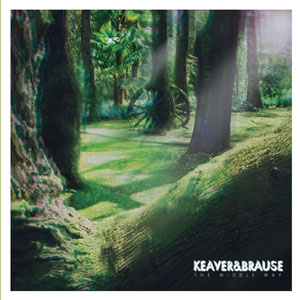
Keaver & Brause The Middle Way

Sample-based albums are nothing new, but the U.K.’s Keaver & Brause go above and beyond—off-kilter timing, record pops, loop stops, and sound clipping are littered throughout the surprisingly smooth future-hop of their debut album, The Middle Way. Songs like the piano- and flute-riddled “Bounce” and the harp and bass-synth number “Laastic” show that Keaver & Brause have the chops to compete with Flying Lotus, but the duo also knows how to grind it up—“Csnr” and “Fision” pay homage to Autechre, while “Happy Happy” travels deeper down the rabbit hole into the spooky psychedelia made famous by Boards of Canada. Although The Middle Way falls short of being an epic piece of next-wave instrumental hip-hop, it’s nonetheless full of wonderful ideas.

Anticipate Ambient Mix For Download

Anticipate label head Ezekiel Honig has made a new mix of the label’s more ambient sounds available for free download. Featuring the gauzy works of M. Templeton and aA. Munson alongside the watery atmospherics of Nicola Ratti and Sawako, the mix is certain to put listeners into states of melancholic reverie. As if one mix were not enough, Honig has also made his May set from MUTEK available for free download. Click on these links and get dreamy!

Anticipate Mix #1 is available here.

Tracklisting:

1. M. Templeton + aA. Munson – It’s OK to Fall
2. M. Templeton + aA. Munson – Safer
3. Nicola Ratti – Voluta Musica
4. Sawako – Purple Sky Coming
5. Ezekiel Honig – Past Tense Kitchen Movement
6. Nicola Ratti – Coconut
7. Mark Templeton – Please Take Me
8. Morgan Packard – Untitled
9. Mark Templeton – From Verse to Verse
10. Klimek – Sound of Confusion
11. Klimek – For Marvin Gaye and Russell Jones – Dedications

Ezekiel Honig’s MUTEK set is available here.

BMSR: Over the Rainbow

The nicotine-stained frontman of Pittsburgh’s Black Moth Super Rainbow explains the means behind the band’s electronic freak-pop, and the reasons for their smokescreen.

It’s a Thursday in March and Tobacco, the anonymous founder and lead entity of Pittsburgh’s Black Moth Super Rainbow, is in Cleveland snagging a new purchase: a keyboard owned by a member of ’70s rockers James Gang.

It’s the latest addition to the deceptively small arsenal of analog synthesizers, keyboards, and other gadgetry used to create Black Moth’s distinctively woozy, spacey sound. But rather than remaining a simple relic from guitar rock’s history book, this synth is about to be transformed—no longer to play second fiddle to Joe Walsh on “Tend My Garden,” but rather to helm Black Moth’s ride way into the future, a sound in which lazer-bright vocoders mingle with lo-pass percussion—a sound that just keeps getting bigger with every time at bat.

The band recently completed Eating Us, its fourth LP but first proper “studio” album, working with renowned producer and ex-Mercury Rev bassist David Fridmann. “I always thought studios were kind of a waste,” Tobacco admits. “But I think it was just time to change what the stuff sounded like, and I think Dave is just the right guy to do it. [Eating Us] is the first Black Moth album where I sort of knew people were gonna hear it. [With] the last album, Dandelion Gum, I didn’t think anybody knew who we were [and] I was probably pretty right. This was the first one where I knew people were gonna hear it, and I should probably be a little more conscious—maybe not be so self-indulgent.”

MERCURY RISING
Working at Fridmann’s Tarbox Studio also enabled the band to experiment with a new set of sounds and recording techniques. “We had these big chimes that we used,” recalls Tobacco. “[Fridmann] had a bunch of little toys and noise machines and stuff that we were able to play around with. He would leave at midnight every night, and he would just let us use the studio and the computer and everything all night long ’til he came back.”

Fridmann’s distinctive touch is immediately apparent on Eating Us, beginning with the booming, echoing drums that anchor “Born on a Day the Sun Didn’t Rise,” reminiscent of the brash percussion scattered throughout the Flaming Lips’ discography. But Fridmann doesn’t gloss over any of Black Moth Super Rainbow’s lo-fi eccentricities, retaining the group’s signature ethereal vocodered vocals and fuzzed-out, acidic keyboard washes.

While Black Moth’s sound is hard to describe and even harder to plop into a specific genre, it’s often been broadly referred to as psychedelic, a term that Tobacco has abhorred until recently. “I guess I’m coming to terms with it,” he admits begrudgingly. “It is whatever people think it is. It’s not supposed to be psychedelic, but if that’s what you hear, then that’s what you hear, and that seems to be what 99% of people hear, unfortunately. I always think of it as, like, pop. I hate The Beatles, but the way The Beatles wrote songs, they were just trying to come up with sounds and textures and hooks that would stick. That’s really all that we’re trying to do; it’s just [that] the kind of stuff I have at my disposal just makes it seem psychedelic.”

PRIVATE PARTS
With Eating Us, BMSR seems poised to capitalize on the buzz that’s been brewing online over the past two years—an unexpected step for a group that so dearly values its privacy. Tobacco and his bandmates, it seems, have been obsessed with staying purposefully below the radar.

The band emerged from satanstomping-caterpillars, a Pittsburgh-based band that Tobacco formed in 2000 with co-member Powerpill Fist. Black Moth Super Rainbow was born three years later, and released Falling Through a Field shortly thereafter, crediting themselves in the liner notes with cryptic aliases: Tobacco, Powerpill Fist, Father Hummingbird, Iffernaut, and The Seven Fields of Aphelion. They continued to release work on their own label, 70s Gymnastics Recording Company, largely retaining their mysterious and elusive reputation, refusing to reveal their legal names, and appearing in photographs and onstage with partially obscured faces. A career-defining performance with their friends Octopus Project at South by Southwest in March 2007 launched their name into the blogosphere. “That was totally, totally unexpected,” Tobacco recalls. “We knew people liked the Octopus Project in Austin, but I just wasn’t expecting what was gonna come from that.”

Dandelion Gum, the band’s third LP, was released on Graveface Records shortly after their appearance in Austin, and legions of new fans suddenly aimed their cyber-sleuthing skills at Black Moth’s enigma. “People dug up all of our real names,” Tobacco recalls, with chagrin. “It’s all on Wikipedia now. It kind of sucks because we try so hard to keep that stuff separate, and people just want to know everything. I guess that’s a good sign, but I don’t always want people to know everything. It’s like, the more you give, the more people want, and the less you give, the more people want right now. Without the internet and all these insane avenues for communicating, I think we wouldn’t be known at all right now, but at the same time it’s just too much.

“I think we get called ‘evasive,’ but I don’t know if that’s the perfect word for it,” he continues. “[Black Moth] just are private people and we don’t like talking, we don’t like doing interviews. It’s not that we don’t appreciate doing interviews and our fans coming out to our shows, we’re just more reserved. For the most part, I’ve always liked the idea of not mixing who we are with what we do. We’re not embarrassed of what we do; I’m really happy that people like this and want to know things and want to talk about it, but I feel awkward running into people that I know—that I knew before I was doing this stuff—and they know everything about me and everything about the music from what they’ve been reading online.”

HYPE BEAST
Tobacco seems to long for a different era, like the days of 1980s indie rock, when buying and discovering music was an inherently DIY process fraught with SASEs, carefully concealed $1 bills, and poorly photocopied catalogs. “When I was younger, when I was listening to music, I obsessed over the recording,” he says. “Something would come out, I would find out about it, like, maybe a couple weeks or couple months later, and I would buy it. And I would listen to it, and I would obsess over the sound. But it seems like now, people are way more obsessed with the hype and stories leading up to the release; once the release hits, it’s like, it’s over and we can move on to something else. It’s completely backwards.”

This time around, Black Moth Super Rainbow seems grudgingly better prepared to contend with the proclivities of an online fan base and the fickle snap-judgments of bloggers. Tobacco, especially, seems to have acquired a degree of comfort with the trappings of minor fame, based on his experiences following Fucked Up Friends, his 2008 solo release for Anticon. “I’m getting used to it; it’s getting easier,” he says. “I’m glad that [Eating Us] is done and that I can stop worrying about making it and now just worry about people liking it.”

illustration Tobacco
_________________________________________________________________________________________
Tobacco Habits
A few more of the BMSR frontman’s recent fixations.

?Bibio
Vignetting the Compost (Mush)
“He’s acoustic but really, really weathered-sounding. I don’t know if he records on Dictaphone or really old tape recorders or what, but he’s really interesting. I found him back in the day because I read that Boards of Canada discovered him or something. If Boards of Canada was all acoustic guitars and flute recordings and stuff, they’d be like Bibio.”

Scott Weiland
Happy in Galoshes (Soft Drive)
“This is a weird one, but the Scott Weiland solo album… I love it so much. It’s really, really, really corny, but there was this one Stone Temple Pilots outtake from one of the later albums that I always used to love, and he remade it on here. I’m not a Bowie fan but there’s a remake of “Fame,” and it’s a really corny remix, but it’s so good. I wouldn’t put my reputation on the recommendation but, for me, there’s something really sick about it.”

Principles of Geometry
Lazare (Tigersushi)
“I don’t know the best way to describe it. It’s a lot of really cool analog synth stuff and I don’t really understand it, but Vast Aire makes an appearance on it. It’s a really, really strange CD because it’s all analog synth stuff—I’d almost compare it to the Tobacco album I made last year, but it doesn’t make a lot of sense. I guess my record didn’t make a lot of sense, having Aesop Rock on it, either.”


Page 2652 of 3781
1 2,650 2,651 2,652 2,653 2,654 3,781