Bitter Bastard: Portland’s 10 Worst Things

All the things you’ve heard about Crapscadia are true! BJ “Bitter” Bastard gets depressed just thinking about it…

The weather
The “artist types” will tell you it’s good for their creativity, but try waking up for the 100th day in a row to bleak skies and a light, annoying drizzle and see if you don’t get all Elliott Smith up in this biatch.

Depression session
If you had SAD and were broke you’d be depressed too. But the culture doesn’t help. There are the saddest commercials for clinical trials on the radio and even places have names like Failing Street and Unthank Park.

Local radio
You can’t even find a classic rock station to listen to on local radio, and the “urban” station only plays six songs (instead of the usual 10 in big markets), three of which are Miley Cyrus-type pop joints. Community broadcast station KBOO can’t save you, and chances are none of your friends’ cars here have CD players.

City slogan
The government officially changed the city nickname from “The City of Roses” to “The City That Works.” Okay, we didn’t even see one rose growing the entire time we were there, but the latter is just laughable. Do you notice all those kids hanging out in coffee places all day because they work one day a week at a record store? No sirs, Portland most definitely does not “work.”

Secretly spendy
“Spendy” is PDX slang for “costly” or “expensive.” Cascadians say it a lot, probably because the cost of things in Portland does match peoples’ paltry salaries. Restaurant meals are on par, price-wise, with San Francisco and the stuff in the fancy food markets is just ludicrous. $7 for a basket of blueberries?

Junkies suck
Is it any wonder that Gus Van Sant made My Own Private Idaho and Drugstore Cowboy after he moved to Portland? There are so many parks here full of heroin-loaded former hipsters skiving off Food Not Bombs handouts and lurching around like zombies. Oh yeah, they like to steal stuff, too.

Don’t techno for an answer
Aside from raves, the electronic music landscape has always been kind of poopy in the Northwest. Techno shows (especially experimental stuff) are poorly attended, and local acts like Let’s Go Outside, Copy, and Strategy are underappreciated compared to the latest art-punk phenoms or DJs playing Justice tracks.

Everyone is white
This town is 78% white, and the remaining Vietnamese, Ethiopian, and Latin communities are so far out on the numbered avenues that they might as well be in a different city. This also explains the pathetic, collegiate honky pathos that sometimes lays like a wet Kleenex over Portland. Sometimes you look around and feel like you’re in a scene from a sci-fi movie…or Reality Bites.

The “scene”
The “scene” in Portland is soo small. No matter how positive everyone makes it seem, it is rife with guttersniping and ill will–everyone has stolen someone else’s gig, girlfriend, or idea for that super-crazy art-folk band. If you move here, you will know everyone in a week, and probably hate them in a month.

Crafty stuff
You know a lot of that horrible stuff they sell at indie craft fairs and on Etsy? Hand-knit arm warmers and felt iPod cozies with whale appliqués–generally the kind of stuff you should not own if you’re over eight years old? Well, Portland is the granddaddy when it comes to people trying to make a living off popsicle sticks, yarn, and a hot-glue gun.

Håkan Lidbo “Sandviken By Night”

From Middle to North is pop/dance producer Håkan Lidbo’s latest helping of house music in via a new 12″. Lidbo, who has managed labels like MNW Dance, Deck Deli, and Left < > Right, also now has over 50 records to his name across genres, ranging from the deepest underground to the cheesiest pop. In this case, his first single off the new record, Sandviken By Night, features electronic gurgling, dark quirks, and hits of high bell tones rooted in a satisfying 4/4 pulse. Let Lidbo bring you to his floor with this compelling tech-house track. Lulu McAllister

Hakan Lidbo – Sandviken By Night

Game Over

Game Over” is a real day in the life of a rapper, Doomtree-style. The video begins with a busy convenience store employee, Doomtree MC Mictlan, laying it all out while he goes about ringing up purchases, chilling with Vitamin Water in the cooler, stocking inventory, taking out the trash, and connecting with sympathizers around the store. “Welcome to the future! Rap won’t save you!,” he tells a dumbfounded customer while bagging his groceries. After following Mictlan on his trip home from work, we witness him cooking a Food Network-worthy meal for his honey and then rocking onstage at a packed show. Lulu McAllister

D. Gookin “Glad I Met You”

“Glad I Met You” is the first single off D. Gookin’s first EP, When You’re Lonely Everybody’s a Celebrity. This balmy neo-disco song rolls along seamlessly, with twinkles of chime and sweet flute, until some well-placed scratching reminds you that Mike Birnbaum (D. Gookin) is there making it all come together. A high-pitched electrified soloist fades in and out for the chorus, giving way to a shiny group chant on repeat. The retro synths and funky rhythms make this upbeat track one for the good times.

The talented drummer, vocalist, and DJ will be heading out on tour with label mates Worst Friends and Mux Mool on Oct. 2, beginning in New York, then heading west. Lulu McAllister

13 Glad I Met You

Daniel Menche: A Northwest Noise Master

Portland is a beautiful city; it contains one of the largest urban wilderness areas in the world (Forest Park). But even on days when you can see all three of the mountains that surround Portland, when its two rivers feel like actual forces of nature rather than landmarks, you can still get lost in the Portland scene and, well, miss the forest while chilling with the young creative trees.

Portland, like so many Northwest towns, has shaped itself in relation to its terrain. And it’s the local landscape that shapes the music of Daniel Menche, an enigmatic, masterful, and incredibly prolific drone craftsman who has been making music in the city for 15 years.

“If I put my body in a physical state in nature–that’s the gasoline that I rely [on],” Menche says. “Nothing against community and friends,” he adds.

Menche’s music, as documented on an untold number of physical and digital releases, is unified by both its density and its chaos. The strata and activity within each piece, mostly generated from contact-mic’d surfaces, is almost overwhelming; even at its most abrasive, it’s entrancing, while too dense to ever really feel sharp or painful. If this music has a creed, it’s Menche’s tagline: “What does blood sound like?” The motto is also beguilingly literal: A Menche performance sometimes consists of the extremelyfit musician contact-mic’ing his own arteries and heartbeat as source sounds for noise drones.

“Everything is always growing [in my music,]” says Menche. “It’s like watching a forest in time-lapse. Everything is coming and going so fast. It’s like seasons. It’s letting the sounds live on their own; letting them grow on their own.”

Several years back, Menche made an interesting transition into percussive composition; he was aiming to make music “as animalistic as possible–music that can outrun,” he explains. “If I listen to it while running, it would break me.”

This led to what would eventually become 2006’s Concussions on the now-defunct S.F. label Asphodel. “A few versions I was able to outrun, [and] I was like, ‘This isn’t good enough,’” he says. “After many attempts, many hours, I got this two-hour mix. I started running and got into this static state of intensity of spiritual violence. I came off the trail punching trees. I came out of Forest Park crawling, with all of these scratches and bruises. Other joggers were looking at me like I was insane.”

Favorite Portland artist:
Eric Stotik. Any time he shows his paintings in the gallery, it’s like Slayer comes to town.

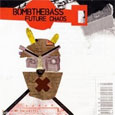
Bomb the Bass Future Chaos

Twenty-one years since Tim Simenon’s seminal “Beat Dis” 12-inch, 13 years since his last album, Clear, and seven years since a low-key EP for Morr Music, the Bomb the Bass moniker has been resurrected for a new album of “electronic music with soul.” That limited editions of Future Chaos come packaged with re-versions from the likes of Gui Borrato and Michael Fakesch hints at a change in aesthetic. Though the album title reads like a crass Bobby Gillespie invective, Future Chaos is relatively understated and the best tracks revel in their lack of clutter or disarray. Gauche collaborations with Mark Lanegan and Jon Spencer weigh down the album, but Future Chaos is thankfully front-loaded with Simenon’s stronger work with Corker/Conboy’s Paul Conboy to produce an album that partially aligns him with the likes of Swayzak and Massive Attack.

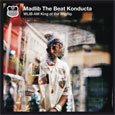
Madlib WLIB AM: King of the Wigflip

An AM station strewn with Roc C’s or Frank N Dank’s unapologetic vulgarity is a bit of a longshot, but wouldn’t a weekly Madlib radio gig be sweet? Punctuated by enigmatic Beat Konducta instrumentals and blissful soul one-offs for Stacy Epps and Frezna, Madlib’s sizzling BBE Beat Generation contribution simmers with muted organ loops and hard, crackling beats. The Guilty Simpson pairups add considerable viciousness to an extensive King of the Wigflip. Guilty’s mopey “Blow the Horns on ‘Em” finds Madlib’s chopped brass in cheerful form, but alongside the grim synths that pad Guilty’s threats on “Go!” the “Blow” backdrop could work for Raffi. King is fierce and all over the map—the sleeve wouldn’t say Madlib if it weren’t.

Forbidden Love

Over blissful, Bladerunner-style chimes, UFO!’s video for the track “Forbidden Love” zooms in on a futuristic, industrialized San Francisco. The footage is like an old flickering black and white movie cut up with subtle animation and illuminated as though viewed through those glasses that throw rainbows everywhere. In time to a pulsing heartbeat rhythm, joyless humans march in lines and complete menial tasks with their computer co-workers. Amid signs reading “Emotion is malfunction,” racing clocks and intense video surveillance, one of these resigned male employees and his lonely computer co-worker have an exchange over an ink cartridge refill that blossoms rapidly into a “forbidden love” over dancefloor techno beats. As the song progresses, the two enjoy a private dinner and lie out on the grass together. Will their unlikely romance survive their hardened world? Lulu McAllister

Vivian Girls “Blind Spot (Daisy Chain Cover)”

Vivian Girls, that three-part-harmony-singing, loft-pop-making trio of ladies from Brooklyn causing a stir on the blogwaves of late, recently dropped a new 7″, the b-side of which is this, a cover of Daisy Chain’s “Blind Spot.” Supposedly. Debate has been brewing over the web since the track was leaked last week as to whether or not “Blind Spot” is in fact the name of the song, and apparently there was more than one band that went by the name Daisy Chain. Whatever. If lo-fi, shoegazey guitars and ghostly vocal harmonies suit your palate, this one’s worth a listen.

Vivian Girls – Blind Spot

Portland Peeps: Honey Owens

Even full-time vibe warriors need part-time jobs, so we dedicated two episodes to that very subject. Last week, we tagged along with Adam Forkner (a.k.a. White Rainbow) on his wine-delivery route. This week, we visit Rad Summer, the vintage clothing store co-owned and helmed by Valet’s Honey Owens. Honey talks Jackie-O Motherfucker, scamming people, and finding a Valet of her own.

Page 2840 of 3781
1 2,838 2,839 2,840 2,841 2,842 3,781