Get Physical Hosts Remix Contest

Patrice Bäumel‘s referred to his techy dance music as “mutant pop” in the past, which fans of the Amsterdam-based DJ and producer can interpret as they see fit with Get Physical‘s new remix contest.

Partnering with Juno, the label has made the parts to Bäumel’s recently released single, “Roar,” available for download. Fans are encouraged to remix the track than submit a new version of it via email.

Listeners at the label’s site will be able to vote on their favorite remix, and the winner will get “a special surprise package,” of which we know nothing of the contents. Entries are due by Tuesday, September 9. Get mutant.

Photo by Joe Rickard.

Arabian Prince “Let’s Hit the Beach”

From spending his days with Egyptian Lover to hanging out in the West Coast hip-hop scene and working with N.W.A., Arabian Prince was constantly merging the worlds of rap and electro. Born Mik Lezan, he released his first solo album, Situation Hot, in 1985 and dropped records up through 1993 that explored this sound.

Stones Throw, a label constantly digging up little pieces of hip-hop history, has compiled tracks from Lezan’s discography and placed them on a single release entitled Innovative Life, and the crew just leaked this track to rev fans up for the collection’s release, which is today. The disc will come packaged with a 20-page booklet documenting the rise and fall of the Los Angeles electro-rap scene, with previously unseen posters and photos. Throw this number on as a soundtrack to your reading.

Innovative Life
01 Strange Life
02 Beatdabeat
03 It Ain’t Tough
04 Take You Home
05 Lets Hit The Beach
06 Innovative Life
07 Innovator
08 Situation Hot
09 Panic Zone
10 Professor X Saga
11 Freak City
12 Simple Planet

Arabian Prince – Let’s Hit The Beach 1

Muxtape Temporarily Shut Down

“Muxtape will be unavailable for a brief period while we sort out a problem with the RIAA,” is what the virtual mixtape’s site currently states. No information as to what exactly the issues are is known, though anyone familiar with the site, which hosts more free music than a large record shop, could take a guess. Muxtape’s blog has also posted a note that says, “No artists or labels have complained. The site is not closed indefinitely. Stay tuned.”

Here’s hoping Muxtape and the RIAA come to an agreement, because we were just about to post our latest breakup mix and it was really good.

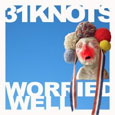
31 Knots Worried Well

Portland trio 31 Knots’ musical focus has grown in recent years to encompass wide swaths of modern R&B, Broadway swagger, and electronic experimentalism, which supplements their bedrock of severe, intricate art-rock. Worried Well finds the group utilizing its prismatic musical resources to astonishingly varied effect. “Compass Commands” falls somewhere between Gilbert & Sullivan and “Hey Ya,” while “Upping the Mandate” glides on a carriage of hand claps and Dr. Dre-worthy synth lines. When all of these elements reach true confluence, as on the spidery, arpeggio-driven “Strange Kicks” and the lovely, elegiac “Opaque/All White,” 31 Knots prove themselves one of the most dramatically adept power trios going.

Hercules, Love Affair & Being a Dork

In seemingly a matter of months, Andy Butler went from being a bedroom disco-house producer to leading Hercules & Love Affair, an eight-piece band featuring three vocalists (Antony Hegarty, Nomi Ruiz, and Kim Ann Foxman), a two-man horn section, and Shayne Oliver, a legendary dancer in the New York voguing scene. Here, Butler talks about his path from being a dorky teenage fanboy DJing in Denver gay bars to his current role as a rising New York art-disco superstar.

The Bug London Zoo

As soon as you try to grasp The Bug’s latest, London Zoo, it careens off in unexpected directions, with beats, lyrics, reverb, and bass recreating themselves in endless new permutations with each consecutive track. By refusing to be nailed to one genre, The Bug has created a blazing, blistering document that’s true to the bass ethic while smashing its boundaries. Is it dancehall? The Tippa Irie-voiced “Angry” might sway you in that direction. Is it dubstep or grime? Sure, “Poison Dart” and “Skeng” were legitimate hits in those scenes, but only because their brutal sonics sounded nothing like other dubstep tunes. With London Zoo, The Bug hits his stride.

Dub Gabriel “Chasing the Paper feat. Jah Dan”

Dub Gabriel has returned, and he’s brought a boatload of artists with him this time. The forthcoming Anarchy & Alchemy, due out September 11, sees everyone from Michael Stipe to Dr. Israel making a guest appearance. The result of all this collaboration is a dancehall-meets-breaks-meets-hip-hop fest, with all sounds held firmly in place by heavy, rumbling basslines. “Chasing the Paper” features Brooklyn-based MC Jah Dan.

Dub Gabriel – Chasing The Paper feat. Jah Dan

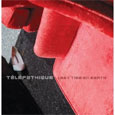
Télépathique Last Time on Earth

The trio of producer Erico “DJ Periferico” Theobaldo, vocalist Mylene, and an Apple laptop, Télépathique has been active in their hometown of São Paulo, Brazil for several years. Only now is the group seeing the North American release of its 2006 debut, with its 11 tracks of guitar- and synth-striated robo-funk. The human duo excels in sounding like patch chords and live PAs–the pleasurably forward tones come across as quarter-inch stereo, not 96 kHz digital. There’s an echo of manually triggered immediacy that ties this release more to the progressive breakbeat of the ’90s than any contemporary scene. Following the man-machine timeline from Kraftwerk to favela soundsystems, Télépathique hybridizes to clap, clap those thighs-ez.

Brian Roettinger: Hand Held Heart

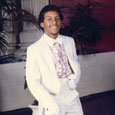
Though it sounds sweet and innocent, the name Hand Held Heart is a literal interpretation of a gruesome H.R. Giger painting used as brutal album art by grindcore legends Carcass. It’s an apt name choice for L.A.-based designer Brian Roettinger, whose work can be heartfelt, hardcore, and everything in between.

Roettinger started Hand Held Heart in 1998 to release a 7” by screamo luminaries Orchid. The project quickly expanded to include a wealth of unexpected endeavors, like silk-screened album art, redesigning public signage, and music, among other things. “When I came up with the name Hand Held Heart, I realized that it wasn’t always going to just be a record label,” he explains. “I thought that having a title or a moniker would be nice to have as the platform for anything I make. Whatever my interests are, it falls under that.”

Maintaining a day job as the art director for the Southern California Institute of Architecture, Roettinger’s attention to detailed lines and choice fonts has crossed over into his design work for friends like No Age and Liars; similarly, his unique ability to balance financial stability with community-oriented output stems from his punk roots. In the late ’90s, Roettinger was the bassist for This Machine Kills, a Southern California hardcore fixture that featured Steve Aoki on vocals.

“You really felt like you were a part of something important, and you were involved and responsible in every aspect of your endeavors, whether it was booking shows, making t-shirts, or releasing records,” says Roettinger of the DIY movement’s lasting impact. “It’s a very self-reliant, skill-sharing community. That’s the primary quality that still influences my work and how I live my life today.”

Brian Roettinger has an exhibit at Echo Park’s Hope Gallery this month.

How would you describe Hand Held Heart?

It’s about collaboration not competition. It’s about staying up late. It’s about communication. It’s about getting pissed. It’s about thinking critically. It’s about not taking yourself too seriously. It’s about getting your hands dirty then washing them. It’s about listening to what others have to say. It’s about supporting what your friends are doing. One day it may be about something else.

How did you first become interested in art?

As a kid, and still to this day, I was excessively eager and curious for just about everything around me. My grandfather was a clockmaker, my father was an avid photographer and illustrator, and my mother painted. Me, I would break things, fix things, steal things, return things, take things apart, and basically get myself into trouble. I would ask a lot of questions: “How did you make that?” “What is this?” “Can I make one of those?” I was a dreamer, and ultimately just started making things, mostly drawings, at home and in school.

What did you learn in your four years at the California Institute of the Arts?

I know this will sound very academic, but it taught me to listen, distinguish sense from nonsense, and how to think critically and develop ideas. By the time I was finished, I was very aware of what I did and didn’t want to do with design.

Describe your artistic process from start to finish.

I learned this from the Dutch designer Hans Gremmen: 1) Do one thing at a time (which I have a hard time doing). 2) Know the problem. 3) Learn to listen. 4) Learn to ask questions. 5) Distinguish sense from nonsense. 6) Accept change as inevitable. 7) Admit mistakes. 8) Say it simple. 9) Be calm. 10) Smile.

How do you know when you’ve finished a piece?

I try not to over-analyze but when there is absolutely, positively no more time left to continue working then I am done, and if there is no more time and I feel it’s not complete, well, then it’s going to be late. I think the more things you make, the more comfortable you are with your work and knowing when something feels right or feels done. It’s not always that it looks done, but that it just feels done.

What does a day in your life look like?

I rarely eat breakfast. I spend about an hour in the morning reading and responding to emails. I spend most of my day at Southern California Institute of Architecture, either working on the current publication or a new series of public-program posters. I drink a lot of green tea. I try to never wear the same shoes two days in a row. I eat a late lunch. I wear all white on Wednesdays. I sometimes wear a suit on Friday (formal Fridays). I have so many projects that my days range based on what I am working on, but it often includes getting frustrated, confused, excited, and tired.

What is a classic album cover that you would re-design if you could?

David Bowie’s Ziggy Stardust and the Spiders From Mars. I like the existing design, but it’s something that I wouldn’t mind seeing with a solely typographic solution.

What’s your favorite album cover of all time?

There are so many I could call favorites, but The Day the Country Died by The Subhumans was the first punk record I remember buying because I loved the cover, so it’s a bit nostalgic.

What do you like to listen to while you work?

Animal Collective, Panda Bear, No Age, Liars, Glenn Branca, The Ramones, Mötley Crüe, AC/DC, Shotmaker. Sometimes I just listen to sports radio.

Who do you consider your influences, artistic or otherwise?

The early 20th century avant-garde for their experimental and innovative respect to art, culture, and politics. Ian Curtis for his musical and lyrical vision. William S. Burroughs for his words and social criticism. Robert Brownjohn for his wit and conceptual approach to design. Charles and Ray Eames for their timeless, simple, and brilliant approach to thinking. Dieter Roth for the fact that he never seemed to stop working, and finally John Cassavetes–the true DIY thinker.

What would you be doing if you weren’t an artist?

I would probably be doing something else and trying to pass it off as art.

Do you still play music?

Occasionally Aaron Hemphill from Liars and I will collaborate and make tracks. We have a few hours’ worth of material that we never do anything with.

How do you stay financially secure without compromising your DIY ethics?

I try to stick strictly to arts-related cultural organizations or institutes. Most of the stuff has been for smaller galleries or museums and bigger publishers, but no real large corporate stuff. Right when I was out of school, I worked for Motorola and I couldn’t hang, really. It was hard to come up with ideas and make things. You have these great ideas, and they’re like, ‘That’s great, but we’re not gonna make that yet. Let’s just put that to the side, and maybe we’ll use it in the future.’ It just seemed like a waste of my time.


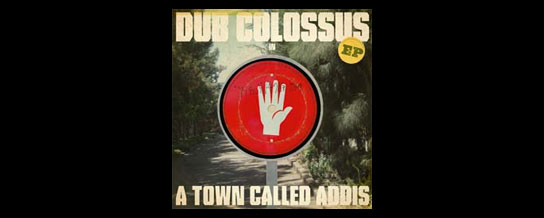
Dub Colossus Releases Album, EP

The connection between Ethiopia and Jamaica dates back to the 1930s, when Jamaican Leonard Howell founded the Rastafarian movement. Inspired by Marcus Garvey’s teachings, Howell propagated that Ethiopian Emperor Haile Selassie I was the black Messiah. Selassie visited Jamaica in 1966 and the Ethiopian Amharic language has been taught on the island for decades. Musically, the two nations have not collaborated often, although there are Ethiopian reggae bands, as well as Jamaican Rastas, living on land in Ethiopia donated to them by Selassie.

In recent years, Ethiopia’s 1960s and ’70s jazz and traditional pop music roots have been revealed to new audiences via the multi-part Ethiopiques compilation series. These rare tracks inspired British producer Dubulah (a.k.a. Nick Page) to link with contemporary Ethiopian musicians and create Dub Colossus, a new collaborative project that blends Azmari singing, ’70s reggae and Ethio-pop in a true mesh of Ethiopian and Jamaican sounds.

Dub Colossus’ new EP, A Town Called Addis, dropped in June, while the project’s debut album, partially recorded and mixed at Peter Gabriel’s Real World studios, is out soon. Page recorded the bulk of the music in the Ethiopian capital city, Addis Ababa, in August 2006. Previously, Page had co-founded world music-meets-dub-dance groups Trans-Global Underground and Temple of Sound and worked with artists Natacha Atlas and Cheb I Sebah. Catch the jazzy, breezy sounds of Town Called Addis now, featuring exclusive tracks not on the forthcoming album.

A Town Called Addis
01 Azmari Dub
02 Shegye Shegitu (One Drop mix)
03 Neh Yelginete
04 Ambassel In Box

Page 2871 of 3781
1 2,869 2,870 2,871 2,872 2,873 3,781