Various Don’t Stop: Recording Tap

Numero Group’s latest finding is from New York’s forgotten Tap label. The obscure songs range from early hip-hop (“Rub a Dub Dub”), soul (“We’ve Had Enough”), funk (“So Nice”), and disco (“Invisible Wind”), and are packaged with a booklet detailing the characters and stories behind the music. The tunes are lively and reflect a time when those genres all proudly coexisted. Bonnie Freeman’s ballad “Does He Really Mean It” is achingly soulful, while Missy Dee & The Melody Crew’s “Missy Missy Dee” is an early female rap anthem that never was. The sound quality is superb, while the liner notes document the painstaking process behind the making of the compilation. Numero does it again with class and quality.

Entertain Us: The State of Electronica

It’s 2008, and Moby’s made up his mind. He’s done with touring. Not DJing or public appearances in general, but performing the kind of Sweating to the Anthems shows he did during his post-Play period–the ones that opened with a thrash-techno version of “Machete” and closed with a Christ-like pose and the sputtering bpm stunt of “Thousand,” the “World’s Fastest Song.” In other words, Moby’s done staging festivals with David Bowie, New Order, and OutKast, done pretending he’s a rock star that sprints across amphitheater stages and plays six instruments within one song, and done sticking his iconic dome out into the wild like an egg that must be cracked.

“At some point during the Hotel or 18 tours, I came to the realization that I was miserable,” says Moby. “Which is weird, as it seems like every musician’s dream is to do big venues and long tours, but the bigger the venues got, the less I enjoyed touring. Performing itself was fun. I just didn’t enjoy waking up in a parking lot on a bus every day and being away from home for six months.”

To restore some semblance of order to his life, Moby did the unthinkable. He returned to his late-’80s roots by DJing at small New York City clubs such the postage-stamp-sized Alphabet City haunt known as Nublu.

“I quickly realized that I had more fun DJing records for 75 people at Nublu than going on tour and performing for 10,000 people a night,” explains Moby. “I can imagine if I have children at some point, they’re gonna say, ‘Okay, college is $200,000 for four years and you need to pay for it.’ And I’ll say, ‘Maybe I could… if I’d toured more instead of DJing at Nublu.’ From a financial perspective, I’m an idiot.”

Moby’s newfound credo is simple: Spinning records for an intimate crowd is more fulfilling than entertaining a faceless, seething mass of thousands. But let’s be honest; it’s also troubling/telling in terms of what it says about electronic music’s place in American popular culture these days. After all, if Moby, a one-time activist/tea peddler/concert promoter/restaurateur/producer/DJ won’t do the music industry’s monkey dance anymore, who will?

That’s what we set out to examine on the eve of XLR8R‘s 15th Anniversary: whether the Top 40 takeover “electronica” promised in the mid-to-late ’90s ever amounted to anything. As it turns out, some of dance music’s biggest icons are more ambivalent about their fame–and the hype surrounding electronic music–than you might think.

Winding Up
More than a decade has passed since July 1, 1997, the day The Prodigy topped Billboard‘s album chart with The Fat of the Land‘s unprecedented–in terms of electronic music at least–first-week sales of more than 200,000 copies. The group’s third LP would eventually go double-platinum in the U.S., largely thanks to the four-alarm beats of Liam Howlett and the sneering and shouting of a Johnny Rotten-ized Keith Flint on such crossover singles as “Firestarter” and “Breathe.” It would also help herald the “New British Invasion” to some, and define the ether-borne “electronica” scene to others.

“Now I understand why [the electronica trend] had to happen, but we were disgusted about it at the time,” explains Howlett, speaking from the studio as he finishes up The Prodigy’s fifth full-length. “Like, ‘What the fuck man? Let it be! The worst thing you can do right now is pigeonhole us.’ None of us cared if electronica broke through or not, we cared about whether we broke through or not.”

This is understandable. The Prodigy had been trying to invade the States since the early ’90s, when they split headlining duties with Moby on a tour that was “terrible” but entertaining for a tour bus full of 19-year-olds, who were already being called “kiddie rave” leaders in their native England thanks to such seminal hardcore techno singles as “Charly” and “Everybody in the Place.”

“Some people totally got it and others were more like, ‘What the fuck?'” says Howlett of the group’s first U.S. trek. “We kinda liked being misunderstood, though.”

Born Slipping
Underworld had a hard time appealing to American audiences in the late ’80s for another reason. “We were crap,” says vocalist Karl Hyde matter-of-factly, referring to what fans call “Underworld Mk1,” the electro-pop phase that predated the one-two punch of 1993’s Dubnobasswithmyheadman and 1996’s Second Toughest In the Infants. Back then, Underworld produced two records they’ll never perform again, all in hopes of becoming pop stars, right down to a tour with the Eurythmics. It didn’t work at all, so the duo of Hyde and multi-instrumentalist Rick Smith disbanded briefly before recruiting DJ Darren Emerson and reforming as “Underworld Mk2.”

“Our experience in the ’80s was of catering to the music industry, and in the ’90s we dismissed that [idea],” explains Hyde. “We said, ‘You know, that’s not for us. We’re an independent act on an independent label. We want to make music for ourselves–music we’re excited by, not the kind of music we thought might get us on the charts.”

That relaxed, committed-to-quality attitude earned Underworld one of the U.K.’s first success stories with club kids and indie rockers–an LCD Soundsystem for 1993, if you will. However, they didn’t truly break into the U.S. market until the sudden success of “Born Slippy [NUXX],” a b-side that took on a second life when it was featured in the era-defining heroin-chic drama Trainspotting. Arriving in 1996–nearly a year before The Prodigy’s breakthrough disc–the film’s soundtrack positioned such classic rock ‘n’ roll icons as Iggy Pop and Lou Reed alongside such important electronic acts as Leftfield, New Order, and Underworld. Oozing hipness, Trainspotting–a sort of Quadrophenia for the burgeoning Ecstasy generation–made club culture seem like the logical “next big thing” to follow the alt-rock takeover of the early-to-mid-’90s. (Especially since Kurt Cobain had died nearly two years before the film’s release, robbing alt-rock of its leader and leaving listeners stunned by a procession of sub-par grunge bands like Sponge and Candlebox.)

Spaced Invaders
“The media was suddenly left writing about Jewel,” remembers Moby, whose Everything Is Wrong LP was named the best album of 1995 by Spin, right in front of Tricky’s Maxinquaye. “They needed something that had a degree of legitimacy to it, so writers suddenly got excited about electronic music–about acts like Underworld and The Chemical Brothers–at least, until Limp Bizkit started making records.”

“I remember hearing the term ‘the new British invasion’ [in 1997] and thinking, ‘We don’t want a part in any invasion, let alone this one,'” adds Hyde. “Something about that era in the ’90s seemed like the kiss of death in a way because British electronica was held up to be the next big thing to replace grunge. It was really, really odd that people chose something that was so not guitar music to follow something that was straight-ahead guitar music.”

In many ways, this is where the media broke the ground for electronica’s early grave–the second some know-it-all critic gave a stack of dance music niches one homogenous name. As it turns out, the American public was mostly interested in dance tracks that played like rock or hip-hop songs, rather than the intricacies of jungle, house, techno, and trip-hop. Remember the “Buzz Clip” status of songs like “Block Rocking Beats,” “Setting Sun,” and “Firestarter”? How about MTV’s Amp show and its accompanying compilations? The trajectory of electronica’s rise and fall somewhat mirrors Amp’s greenlight in 1996 and eventual cancellation in 2001, as KoRn and Limp Bizkit captured the interest of frat boys and future Tiësto fans. It’s also telling that while the heavy metal-centric show Headbanger’s Ball was killed in 1995–just before electronica’s supposed takeover–and resuscitated in 2003, Amp has never seen a resurgence in any way, shape, or form.

We Are the Night
“We wanted machines to sound like they were sweaty and deranged and wild—things people associate with rock music,” explains Tom Rowlands, one-half of The Chemical Brothers (alongside Ed Simons). “[Our first official single] ‘Leave Home’ wasn’t named after a Ramones record for nothing!”

“We didn’t do this in a misguided hope of attracting people who didn’t like dance music,” Rowlands continues. “It was just how we wanted to make records. We love acid house, techno, hip-hop, My Bloody Valentine, Skinny Puppy, New Order, psychedelia–all these things feed into our approach when we are in the studio.”

The brash eclecticism of 1997’s Dig Your Own Hole–Schooly D samples! Fractured folk from Beth Orton! Jonathan Donahue, oh my!–couldn’t keep the Chems from enjoying their sole gold record in the U.S., but their continual evasion of easy categorization has gone over most people’s heads in the years since. So much so that Rowlands told me he was pretty much over doing the American leg of the press/tour dance in 2005, around the release of their Push the Button full-length.

“The hard facts of it is that there’s a whole world out there which is more switched on to electronic music at the moment,” says Rowlands. “As from the start of our band, we go and play where people want to see us–our gig is complicated and expensive to put on so if we can play to 15,000 people in Milan on a Tuesday night as opposed to 1,500 in St. Louis, then I think the decision really becomes obvious. That’s not to say it won’t change. Maybe the success of Daft Punk at Lollapalooza will persuade promoters that two guys with some synths, computers, and a light show can entertain a big crowd just as well as a traditional rock band.”

Drop the Beat
Karl Hyde isn’t so sure. “A bunch of kids showing up with machines doesn’t look like real music to some people,” he says. “It’s not that blood, sweat, and tears. [It] didn’t help our cause that we chose machines over guitars, drums, and rocking out. Plus we were white kids making dance music, which is a pretty confusing picture. It’s hard to get excited about two guys behind banks of machinery, unless those two guys are The Chemical Brothers.”

“Music in the United States has always been artist driven, driven by faces and personalities,” adds Moby. “Apart from maybe The Chemical Brothers and The Prodigy, electronic dance music has been made by faceless producers in bedroom studios. That’s part of the beauty of the scene, but music being so anonymous makes it hard for corporations to get behind it.”

Of course, this isn’t always true–one could argue that its precisely electronic music’s anonymity (and frequent lack of lyrics) that makes it so suited to sell things like cars and films. But even if an electronica act like Dirty Vegas made top dollar off Mitsubishi–who used the duo’s “Days Go By” in their 2003 “girl-pop-locking-in-an-Eclipse” spot–that doesn’t necessarily translate to big commercial success. In fact, many pioneers seem to feel the music industry didn’t push the genre hard enough–perhaps it’s just that they didn’t know what they were pushing. Certainly, it’s easy to understand why major labels might have been hesitant to recruit a revolving door of pasty beat conductors, many of whom wanted nothing to do with anything but the dancefloor.

But, XLR8R reader, did you ever want this music to go totally mainstream?

“I don’t,” says Howlett, when I ask him that same question. “It’s meant to be underground and in the clubs, where people are taking drugs and escaping.”

“Rick and I used to say dance music in the late ’80s and early ’90s was ‘more punk than punk,'” explains Hyde. “Because kids were making music in their bedrooms on their computers and filling warehouses with 10,000 people, not just a squat with a couple hundred. The cool thing about the scene is it was no big deal. It was one foot in front of the other–sell more 12s, tour, get on with it. For goodness sake, MTV didn’t matter to us. In fact, the problems came when they started to play our music.”


Top 10: Flying Lotus, Arc Lab, Free Kitten

Flying Lotus
Los Angeles
Warp
Release Date: June 10

Steven Ellison pays homage to his hometown of Los Angeles with his highly anticipated follow-up to the Reset EP, his inaugural release for Warp. In Ellison’s version of the City of Angels, soft melodies float and hover over deep, glitched-out beats, sinister basslines, and tongue-in-cheek titles like “Beginners Falafel” and “Sleepy Dinosaur.” This one should ensure Ellison sticks around on the Warp roster for some time to come.

Indian Jewelry
Free Gold!
We Are Free
Release Date: May 20

“Maybe if Suicide had long hair and wore big sunglasses, they’d be a psych band, too,” seems to be what Indian Jewelry is saying with this album. “Too Much Honkeytonking” re-imagines Gram Parsons as industrial-goth and “Pompeii” throws a couple of minutes of folk-pop into the dark, reverberating mix. Prior to listening to Free Gold!, I had never asked myself, “Is that a didgeridoo or a Korg synth?” I asked myself that question twice while listening to this album. Wyatt Williams

Various
Nigeria 70: Lagos Jump
Strut
Release Date: May 13

You don’t have to be a connoisseur of world music to enjoy this compilation, which gathers a wide range of styles and selections from the Lagos metropolis. But if you’re interested in the history, the sounds on this disc are primarily from post-independence Nigeria, which simultaneously experienced the exuberance of growing wealth and political oppression in the 1970s. Tracks here represent that juxtaposition, with influences that encompass everything from rock and jazz to Fela Anikulapo Kuti’s Afrobeat and a certain somberness that no doubt was prevalent during the era.

Sian Alice Group
The Dusk Line
The Social Registry
Release Date: June 17

We gave props to Sian Alice Group’s 59:59 release a few months ago, and were equally excited when The Dusk Line EP was announced a little later. The four tracks here are taken from the 59:59 recording sessions, but contain a much narrower focus. Sweeping piano melodies and hushed vocals make up the bulk of the musical arsenal, but such restraint doesn’t lessen the enjoyment of listening to this group. Rather, it only proves the group is capable of resonating emotionally in a minimal soundscape as much as it does in its more grandiose moments.

Arc Lab
The Goodbye Radio
n5md
Release Date: Out Now

This is the third full-length for Medard Fischer under his Arc Lab guise, and it finds the producer constructing endless layers of radio static, field recordings, eerie, vocoder-processed vocals, and his signature drum programming. Throw in a harpsichord and some lyrics about the Russian space program and female serial killers, and you’ve got a intricate, pensive album that makes us hope this isn’t the last we hear from Arc Lab, despite the title of this release.

Truth Universal
Self Determination
Dragon’s Breath
Release Date: Out Now

Truth’s working-class Caribbean upbringing is evident on his debut album, as he jumps between lyrics about racism, self-determination versus self-hatred, revolution, the Bush regime, and numerous other political topics. The beats are consistently sharp, and he gets some help in the lyrics department from Wise Intelligent, Doodlebug of Digable Planets, and Stic.man of Dead Prez.

The Lexie Mountain Boys
Sacred Vacation
Carpark Records
Release Date: June 10

Five women from Baltimore sing in The Lexie Mountain Boys, and if you think that name is confusing, wait ’til you hear the band’s record. Recorded in the warm, reverberating sanctuary of a Baltimore-area church, Sacred Vacation is an acappella vision quest that explores the limits of human voices without overdubs or effects. I can’t tell if they’re more influenced by Appalachian shape-note singing, The Beach Boys, Destiny’s Child, or just B-more clubs, but it doesn’t matter because the result of this combination is totally unique.Wyatt Williams

Free Kitten
Inherit
Ecstatic Peace!
Release Date: May 1

We’ve been hearing and seeing a lot about rock reunions from early ’90s lately, and it’s been great, even if we’re just watching Dinosaur Jr. and My Bloody Valentine pay off their mortgages. Free Kitten is another member of the Lollapalooza ’93 crowd, with Inherit being its first full length in 11 years. Just don’t jump to call it a reunion. The band has always been a side-project for Sonic Youth’s Kim Gordon, Pussy Galore’s Julie Cafritz, and Boredoms’ Yoshimi, and they’d rather you think the project was on the back-burner rather than broken-up. Either way, songs like “Erected Girl” and “Free Kitten on the Mountain” make this another welcome album of fuzzed-out guitars, understated vocals, and killer drums from an era that apparently isn’t finished.Wyatt Williams

Various
Disco Italia
Strut
Release Date: May 27

Italo-disco’s influence on electronic music is well documented today, and we’ve seen it surface in many different forms over the years. This comp takes the genre back to its roots, with rarities by some of the leading producers of the time. Better yet, many of the tracks here appear on CD for the first time re-edited and compiled by Chicken Lips’ Steve Kotey. Pick up the physical disc and you’ll also get a booklet of rare photos, original sleeve artwork from the releases, and some comprehensive linter nights by dance music writer Bill Brewster.

Foul Mouth Jerk
Streetlight Music
Streetlight
Release Date: Out Now

Foul Mouth Jerk’s fourth full-length claims to be an homage to “the earliest days of hip-hop, when jams were thrown in the park.” Does it live up to this promise label? In this age of throwback albums, it’s hard to tell, but this is a hell of a fun release regardless, complete with bouncing beats and lyrics packed with plenty of attitude and a lot of references to growing up in Jersey, FMJ’s home state. Masta Ace, Murs, El Da Sensei, and Grandmaster Caz show up for guest appearances, tossing lyrical duties back and forth with an energy and enthusiasm that, well, actually does call to mind the early days of the genre.

Last Week’s Top Ten

Photo by Theo Jemison.

Elaste 2 Comp Offers Superb Space Disco

With electronic music cluttered with myriad hybrids and subgenres, some readers may wonder, is there really room for another disco offshoot? After all, Norway’s Lindstrom and Prins Thomas have popularized their psychedelic cosmic-disco, Germany’s Get Physical and Systematic labels trade in bass-driven electro-disco, and acts like LCD Soundsystem, Headman, and The Rapture brought disco-punk to the masses.

Rather than try and update disco’s funky forms, Compost Records has chosen to take it back to original and often overlooked European purveyors.

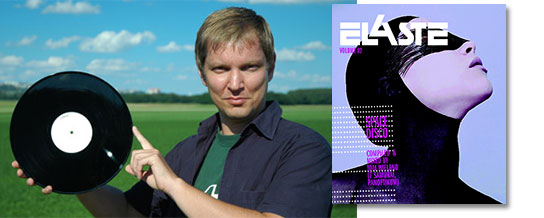
So what exactly do European acts Jagg, Leb Harmony, and Stroer have in common with Nigeria’s Tony Allen and U.S. soul act Rufus & Chaka Khan? You can find out when Compost issues Elaste Volume 02: Space Disco, a look at obscure ’70s and ’80s dance gems. Compiled and mixed by Vienna-based producer and radio host Tom Wieland (7 Samurai, Panoptikum), Elaste Volume 02 charts how American ’80s electro-soul met Italo-disco on a dark, stainless-steel dancefloor somewhere in Bavaria.

“When you´re digging deep in the crates of late 1970s underground disco, Kraut electronica, proto-techno, Euro-boogie, or New Wave funk, you can find plenty of un-classics that still sound fresh today and showcase the roots and influences of the likes of Metro Area, Prins Thomas, and many more,” says Wieland. “Most of these titles were fairly unknown when they were released, some became almost famous, and this is what this compilation is about. lost space disco gems and soulful Euro-boogie–the good side of the early 80s in Europe.”

Weiland and Panoptikum production partner Marc Frank contribute their modern tribute tune “Elaste” to the compilation.

A previous compilation, 2007’s Elaste Vol 1: Slow Motion Disco, kicked off the series and earned critical accolades. Elaste Volume 2: Space Disco is out June 13 on Compost Records.

Tracklisting
1. Zodiac “The Other Side Of Heaven”
2. Selection “Rebel On The Run”
3. Jagg “Take Time”
4. Hippolytes “Blow You Out Tonight”
5. Two Man Sound “Que Tal America”
6. Curt Cress “Sundance”
7. Panoptikum “Glückskugel”
8. Leb Harmony “Feeling Love”
9. Stroer “Don’t Stay Till Breakfast”
10. Alan Hawkshaw “The Speed Of Sound”
11. Panoptikum “Elaste”
12. Vulcans “Star Trek”
13. Tony Allen “Nepa Dance Dub”
14. Rufus & Chaka Khan “Ain’t Nobody (Hallocinogenik Version)”

Nalepa “Monday (The Glitch Mob Remix)”

The Glitch Mob got ahold of this track from fellow L.A.-based noisemaker Nalepa and turned the ambient composition, which is taken from his forthcoming Flatlands release, into an electro-infused glitch fest that would wake even the heaviest sleeper up on a Monday morning. Forget coffee, this is what you need when you roll out of bed at the beginning of the week.

This week also marks your final chance to enter some beats for Glitch Mob’s contest. The winner will open for the crew at their S.F. show on May 9.

Monday (The Glitch Mob Remix) 1

Does it Offend You, Yeah? You Have No Idea What You Are Getting Yourself Into

Does the band name make any sense to you, yeah? Didn’t think so. It’s a Ricky Gervais quote from The Office (which doesn’t make it much better). But you’ll make sense of the music. It’s everybody’s favorite French electronica mixed with first- and second-generation post-punk from across the Channel. The vocoder hook on the cocaine sex jam “We Are Rockstars” is vintage Daft Punk, while “Battle Royale” references Justice’s anthemic synths. The phenomenal “Dawn of the Dead,” on the other hand, is the missing link between Duran Duran and Bloc Party, with its slappy bass and whiny guitar. Still, influences are just influences, and despite wearing them like a bad hangover, this Reading quartet makes for a hell of a night out.

Jamie Lidell Jim

It was moving, but the music on Jamie Lidell’s Multiply was mostlya platform for his oversized voice and charisma. Who else can make wearing suits lined with mirrors–a human disco ball–look not only effortless but somehow appropriate? He flexes his irrefutable voice and charm on Jim, but it’s the contributions of collaborators like Gonzales and Mocky that really stretch things out, generating a warmer, funkier, and more eclectic backdrop that Lidell swings over with style. The positively sunny “Another Day,” with chirping birds and schmaltzy strings, begins a streak of loose jams, including disco vamps and upbeat, Stevie-style soul.

Sonic Sum Films

Progressive Bronx-based act Sonic Sum released one of the most criminally slept-on albums of the indie hip-hop boom: 2000’s The Sanity Annex. This atmospheric LP was followed up with Films in 2002, but to critics’ and fans’ dismay, it was only available overseas. To spare everyone the ridiculous import prices Def Jux is re-releasing Sonic Sum’s sophomore set, which in comparison is more complex but not always as pleasing as The Sanity Annex. Frontman Rob Sonic’s observational poetry is certainly more intricate yet his raps and production can become too jumbled. The best material comes when Rob and his crewmates allow a little sonic breathing room, as they do on the outstanding and well-paced cinematic track “Negatives.”

Page 2950 of 3781
1 2,948 2,949 2,950 2,951 2,952 3,781