Team Robespierre Everything’s Perfect

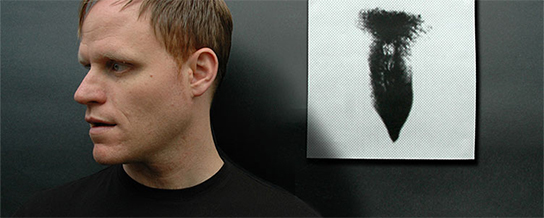
A potent blast of short, choppy dance rock, Everything’s Perfect is indeed a perfect dose of energized noise. From the whirlwind guitars of “Ha Ha Ha” to the synths-and-drums maelstrom of “Laika,” Team Robespierre’s breakneck sonics sound like what would happen if Milemarker experienced a head-on collision with The Minutemen. The sing-along stomp of “Black Rainbow” and “88th Precinct” could have been scooped up from Freedom of Choice’s killing floor, while “Death Smells” should have been left there. And sure, Team Robespierre has a formula: Jam synths, call-and-response shouts, and kinetic rhythms into the blender, shred, and repeat. But it works just fine, and is far from boring, especially with lines like “I want gasoline/Leave the lead in it.” Smartasses.

Artist Tips: The Plastician

While Chris Reed (a.k.a. The Plastician) cut his teeth playing U.K. garage, grime, and dubstep on London’s pirate-radio circuit (and later on BBC1 Xtra), his productions on his own Terrorhythm label show his restless spirit and desire to push his style in all directions. The Plastician’s dark, lurching beats–from the atmospheric Occidental noir of “Japan” to the booming “Intensive Snare” (featuring MC Skepta)–are versatile, techno-tinged DJ tools that fit perfectly next to all your favorite bass monsters. His secret weapon? A simple PC-based program called Fruityloops. Here Reed offers five solid tips on getting the most out of the software, but for a taste of what he does with it, check him out on rinse.fm every Monday from 11 p.m. until 1 a.m. GMT.

1. Build a sample library.
One of the key things you’ll need when making beats in Fruity is a good collection of samples, particularly of drums. You’ll be pretty limited to what you can do if you only use the preset drum kits offered by the program. Other samples and FX can come in handy to add interesting parts to your tracks, too, so scout around online, record straight from your own collection, or purchase sample CDs to build a library.

2. Exporting loops as audio.
If you find Fruityloops is eating up your CPU, it’s important that you export as many MIDI patterns as possible into audio loops. These loops can then be used in separate audio channels in the timeline, which will take up a lot less CPU than the original MIDI sequences do. Make sure that you get a good level of volume on your loops so that they are easy to mix down and will ensure you get the best sound.

3. Master your tracks.
A lot of people comment on the “tinny” sound they get out of Fruity when compared to programs like Cubase or Logic. I find a good mix of EQ and compression can really help the overall sound of your tracks before they are exported to WAV files. There are loads of effects modules included in the program, so play around with them and take time on your mix-downs and eventually you’ll obtain the fatness of other powerful production tools.

4. Use the correct drivers.
Another CPU problem that pops up as your tracks become more busy can be easily sorted out by selecting the correct driver for your sound card. There are various free drivers available online. I used the free ASIO driver, which I obtained from asio4all.com. This runs smoothly and ensures you’ll have fewer problems with memory.

5. Make use of VSTs.
One of Fruity’s great attributes is that it supports the usage of external VST plug-ins. Having a wide selection of virtual synths will add further dimension to your arsenal of sound-production capabilities. There are plenty of places online where you can download freeware virtual synths. A good place to start is vstplanet.com, which has a wide selection of synths and effects units to choose from.

Mochipet “Hope Again feat. Mykah9 and Taiwankid”

Turning hip-hop on its head once again is Mochipet, as he gathers his electronics and MCs together for Microphonepet. The album is a collection of Mochi’s beats made between 2003 and 2008, and features some of the finest lyrical talent in the Bay Area, including Casual and Opio of Hieroglyphics, Raashan of Crown City Rockers, Mykah9 of Freestyle Fellowship, and a few others. Variety reigns supreme here, as the crew dabbles in glitch, jazz, funk, dubstep, noise, and, of course, some good old fashioned hip-hop.

Mochipet – Hope Again feat. Mykah9 and Taiwankid

Chessie “High Line”

Stephen Gardner and Ben Bailes, along with their army of gutiars, drums, synths, organs, and horns, traverse every genre known to man on their fourth full-length under the Chessie moniker. Manifest comes six years after the highly praised Overnight (named of of the best albums of the year by New York Times), and the duo’s sound has changed considerably since, to a rawer, subtler one that’s less dance and more pensive–in the best possible way.

Chessie – High Time

Q&A: No Kids

As the former frontman for Vancouver-based indie-rock quartet P:ano, Nick Krgovich has built a powerful hybrid of classic pop and modern R&B with his new project, No Kids. The band’s debut record, Come Into Our House, is thickly layered with innovative melodies and arrangements. Nick recently caught up with XLR8R to explain the difference between his bands, his songwriting process, and the beauty of innocent band names.

XLR8R: When and why did P:ano end and how did it evolve into No Kids? What is the difference in terms of the line-up?

Nick Krgovich: P:ano played [its] last show in the spring of 2005. We were in Barcelona and then we went home and Larissa [Loyva] left the group. Basically, Julia, Justin, and I all wanted to continue working together in some way, but felt it was important to begin something that would be new to everyone, as we felt that the ideas we were exploring with P:ano had all been drawn to a fairly satisfying close with our last release, [Ghost Pirates Without Heads].

It wasn’t until early 2007 that I had enough appropriate material for a new project, so there was a period of inactivity before Julia, Justin, and I began working on the No Kids record. I made four-track demos and arrangements for most of the songs, just so I could hear them, and then the three of us, with the help of eight or nine musician friends, [recorded] them over the next eight months. We are still learning how to adapt the songs to a live setting, but it seems to be working so far.

The sound has evolved a lot since P:ano. How did you change your approach to songwriting and recording with No Kids?

I often change my approach to making up songs; it’s important to me to keep things from becoming rote. Although, I do feel that once I commit to writing in a certain way, it’s a priority to work within a fairly rigid set of guidelines, just so things are not too wide open. I used to mainly write at the piano, or with an instrument nearby, and that is something that I rarely, if ever, do these days. I usually write the lyrics and a top-line melody in my head, while I’m at work, or driving or something. But this is bound to change. I was really interested in making this batch of No Kids songs very structured. This was pretty much the first time that I had a group of songs that were so concerned with having discernible choruses, especially ones that would repeat more than once or twice.

I’d say the “new sound” was born out of the fact that I tried to base the music around things that got a big reaction from me in some way. I tried to put the feeling I get when watching the opening segment of Douglas Sirk’s Written on the Wind with the feeling I get when the strings come in on Amerie’s “One Thing.” [I tried to] make it all one thing.

With P:ano, you were relatively unknown outside of Canada, but with No Kids you are on a world-renowned label and have a pretty buzzed-about record. Why do you think you are getting so much more attention than you did with P:ano?

I feel that in general, No Kids is a lot more harmonious and deliberate, and I think we’re committing to this [project] in a way that we never did with our other group. I’m still very proud of the work that P:ano did. I just feel that, for some reason, we have forged a much healthier approach to doing what we’re doing and it seems to be amounting to some pretty special things. Like working Tomlab, for example.

Does living in Vancouver inform your work in some way

I personally do not feel like the fact that we’re from Vancouver puts us in any sort of significant context. Especially with the No Kids material, because it’s almost entirely based on this weird romanticized idea of New England I subconsciously cobbled together. I got a bit caught up romanticizing something that doesn’t even need to be romanticized because it’s pretty inherently dreamy.

Vancouver, geographically, is still a wonder. However, as a city, it’s kind of off-putting at the moment. Vancouver groups like Black Mountain and Destroyer have more to say about this city than No Kids do at this point. I’d like to see how living in L.A. would change our music. I’d like to make a weird L.A. record someday. Part of our song “Bluster In the Air” is about that weird L.A. feeling.

It contains your initials, but other than that, what is the significance of the name, No Kids?

No Kids was originally a “band” that my friend Stefan and I started in 2001. When it was time to think of a new name for all of this, No Kids seemed to be this highly underused thing I always quite liked [that was] just hanging there. We ended up re-appropriating it for this project, and I think it works. It does contain my initials, and to me represents this kind of weird signifier for certain kinds of people. “You know he’s quite a terrific person, but he lives all alone, no kids, strange really….” I’ve always been a fan of fairly inoffensive band names, like Beat Happening or Marine Girls or something. There is no Aids Wolf record on my shelf.

Who do you look up to as songwriters? Who are your influences, musical or otherwise?

I could go on forever. In relation to “Come Into My House,” I’d say there are many references to things I love that I was trying to acknowledge in the songs. I love Alex Katz’s work, and I still can’t quite believe that he agreed to let us use one of his paintings for the album cover. Douglas Sirk’s films were huge. I was reading F. Scott Fitzgerald’s first novel, This Side of Paradise, while I was making the songs for this album, and that was very inspiring too. Musically, I thought a lot about the “Buddhist pop” sensibilities that Arthur Russell was working with, which, in a lot of ways are still a mystery to me, and likely always will be. I cannot even say how many times I listened to “Distant Plastic Trees” and “The Wayward Bus” while we were making this album. Also, I was listening really hard to things like Amerie’s album, Touch, and her wonderful vocal arrangements. Then there’s the never-ending list of R&B singers like Mary J. Blige and Cassie and Mariah and Janet Jackson’s Control album, and Aaliyah. I also obsessed over this record called High Priority by a singer named Cherrelle. I could seriously go on forever.


Ghislain Poirier Preps Tour

Bounce, bass, and beats king Ghislain Poirier will show off his DJ chops this month with a handful of tour dates that start today. The French-Canadian DJ and producer will hit major U.S. cities and share the stage with the likes of Scottie B, DJ Flack, Megasoid, Cadence Weapon, Grand Analog, and others. Those headed to South by Southwest should catch the Ninja Tune showcase, where Poirier will play his one live set of the tour and hopefully showcase material from his recently released album, No Ground Under.

Tour Dates
03/07 New York, NY: Love
03/08 Chicago, IL: Subterranean
03/09 Baltimore, MD: Taxlo Dance
03/10 Boston, MA: Enormous Room
03/12 Austin, TX: SXSW
03/13 Austin, TX: SXSW (Live Set)
03/14 Austin, TX: SXSW
03/15 Annandale-on-Hudson, NY: Bard College

Q & A with Ghislain Poirier

Download “Blazin” feat. Face T.

Adultnapper Mixes Second Audiomatique Compilation, Tours

Following its 2006 1.0 compilation, Audiomatique Recordings will soon unleash Audiomatique 2.0, with Brooklyn-based ex-punk rocker Adultnapper on the mixing board.

For the compilation, which will showcase new, exclusive, and unreleased material from the Germany-based label, the DJ, producer, and former PHD student has gathered tracks from the likes of Martin Eyerer, Alexi Delano, Robert Babicz, Martinez, and many others. A full tracklisting has yet to be released, but in the meantime, check the dates below, as Adultnapper embarks on a brief tour of North America and Europe.

03/14 Chicago, IL: Vision
03/15 Mexico City, MX: Park Alemeda Poniente
03/20 New York, NY: Cielo
03/23 London, UK: The End
03/29 Miami, FL: WMC
03/30 Miami, FL: WMC
04/19 Southamption, UK: Junk Club
05/02 Leeds, UK: Mission Club
05/03 Lille, FRA: Kioske Club

Cadence Weapon Afterparty Babies

When most indie MCs coming off a sleeper-hit debut would keep true to their form, 21-year-old Edmonton, Alberta rapper Cadence Weapon (a.k.a. Rollie Pemberton) can’t help but fuck with the format. On his second disc, his Anti- debut, Pemberton throws his spitfire verses atop self-made disco and electro-house beats with aplomb. Tracks like “In Search of the Youth Crew” (an easy pick for first single) bob and weave with slick bleeps and hypertext-literate verses delivered in the most proper of over-enunciated Canadian accents. It may be a little jarring for second or two, but once it settles in, you’ll soon to fall victim to his not-so-hidden weapon–that undeniable flow.

Tommy Guerrero “40 Summers”

Tommy Guerrero is something of an icon in the Bay Area. The producer is known for his soulful and atmospheric recordings, as well as his abilities as a multi-instrumentalist. The recently released Return of the Bastard finds him playing bass, guitar, percussion, and other instruments throughout the album’s fifteen tracks.

Tommy Guerrero – 40 Summers

Valet’s Vibe Revolution

Honey Owens is a vibe entrepreneur. When she’s not redefining the psych-blues template as Valet, the Portland-based, California-bred artist channels divine noise with heavy psych outfit Dark Yoga. A self-proclaimed “psychic surfer,” she spent 10 years in the Ecstatic Peace band Jackie-O Motherfucker, eight years with Nudge (alongside Paul “Strategy” Dickow and Kranky Records promo man Brian Foote), and one year with the lesser-known project World. While weaving this cosmic interlocking circle of eclectic, often improvised jams, Owens also manages to co-run the record store/boutique Rad Summer and, up until a few years ago, was the booker and co-owner of popular Portland bar Dunes.

In January 2006, Owens finished and decided to self-release the first Valet full-length, Blood Is Clean (later reissued on Kranky). She turned to partner-in-vibe-crime Adam Forkner (a.k.a. White Rainbow), and together they reinvigorated their Yarnlazer imprint.

“Adam started the label in 2003 as a DIY limited-edition handmade clothing-and-music thing,” Owens offers via iChat, “but a month later, he went on tour with Devendra Banhart and then went on tour with me in Jackie-O, so by the time we got home the energy was lost.” Since being reborn, the label has released a number of interstellar albums from the likes of Rob Walmart, Galactic Core, and, of course, Valet and White Rainbow.

Owens’ sophomore record, Naked Acid (Kranky), finds the veteran experimenter wielding a less “jam-based” energy, and creating her first album of arranged songs. “I thought that I should maybe write a ‘songs’ record instead of falling back on jams, which come really naturally,” says Owens. “I got together with Mark Burden (Silentist) and started laying down tracks–he played drums, guitar, and bass. I like his dark side.” The result is a cacophony of strategically honed drones, reverb-saturated guitar rhythms, and Owens’ humbly transcendent underwater vocals (think Cat Power with a sack of peyote on a search for inner peace).

Owens’ vibe has doubtlessly been shaped by formative years spent in Berkeley, CA. She dropped out of high school to hang out at legendary indie venue 924 Gilman Street and took up residence at the San Francisco office of the Maximum Rock ‘n’ Roll zine–basically, living the punk dream while keeping burn-out and sell-out status at bay. “I was hella punk,” Owens reveals. “I am a super-late bloomer, which is why I’m so old and doing music still.”

Now she’s immersed in a mature, family-oriented scene, collaborating and touring with the likes of fellow Kranky labelmate Atlas Sound (Deerhunter’s Bradford Cox), and finding herself smack in the middle of a fleet of projects she happily maintains, despite an absence of fiscal profits. “We sacrifice large quantities of money for large, sweet vibes,” she states, only to question: “When is my benefactor going to show up?”

Page 2982 of 3781
1 2,980 2,981 2,982 2,983 2,984 3,781