Droppin’ Science: Samples From Blue Note Lab

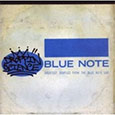
Even today, listening to jazz saxophonist Donaldson’s 1969 take on Johnnie Taylor’s chitlin-circuit banger “Who’s Makin’ Love (To Your Old Lady),” it’s a stretch to locate the primordial DNA of ’90s hip-hop in the mix. But just as Donaldson swiped a funky backbeat and a Blue loop guitar lick from soul music, once you slow things down and pump up the bass, there’s Marley Marl and “Droppin’ Science” stealing it right back. On Droppin’ Science: Greatest Samples From the Blue Note Lab, the venerable jazz label not only touts its place in 1990s hip-hop history, but reexamines the jazz-funk that couldn’t save the label from its first demise (in 1979), yet proved to be one of its most important legacies.

From 1988 and “Droppin’ Science” through to Dr. Dre’s 1999 track “The Next Episode,” Capitol/Blue Note’s ’70s back catalog provided the blueprint for hip-hop’s expansion–into textural and textual subtlety–just as James Brown and Chic had done for hip-hop’s foundation. Samples like “Who’s Makin’ Love” as well as “It’s Your Thing” by Donaldson, the basis for “Punks Jump Up to Get Beat Down,” Donald Byrd’s “Think Twice,” and Lonnie Smith’s “Spinnin’ Wheel” (both used extensively by De La Soul and A Tribe Called Quest), and a multitude of others made Blue Note a crate digger’s cri de coeur during the glory days of hip-hop sampling.

No one knows this better than Eli Wolf, Blue Note Records V.P. for A&R. A thirty-something jazz saxophonist and hip-hop-phile, Wolf has had a hand in much of Blue Note’s extensive history of embracing its own sample- and remix-ability, from dabbling on the New Groove projects to co-producing Madlib’s Shades of Blue, to compiling Droppin’ Science. “It was a change [in hip-hop],” says Wolf of what he calls the music’s Blue Note era, “but really it was more of an evolution. As a hip-hop fan and a jazz fan at that time in the late ’80s and early ’90s, I really saw the two coalesce–with the Native Tongues era, for example, there was a transition, going from straight soul and funk to more jazzy sounds.”

To illustrate that era, Wolf has assembled a collection of recordings judged on two qualifications: the cultural impact of the music each is sampled in, and how the song stands on its own. Blue Note’s breaks contributions and seminal acid-jazz sounds have been touted on compilations for years, for example on the Blue Break Beats series, but Droppin’ Science succeeds in two ways in which others have often failed. As a look back at the broad creativity and production genius of 1990s hip-hop, Science shows us producers and crate diggers willing and able to ignore old hip-hop standards in order to find sounds more aligned to their increasing musicality and studio maturity.

Perhaps more importantly, however, Science provides a new look at Blue Note’s own 1970s output. In his 2003 book, Blue Note Records: The Biography, the late, great jazz curmudgeon Richard Cook devotes mere pages to the label’s entire ’70s existence. “The label floundered around in search of a direction,” he says, dismissing the likes of Donald Byrd’s Mizell Brothers-produced ’70s albums as “increasingly silly.” Maybe so, to an avant-gardist like Cook. To the rest of the world, those productions provided the dramatic and orchestral jazz-funk sounds that defined the time when hip-hop became the most commercially and artistically important music in the world, and gave voice to everything from Dre’s Gs-and-drama swathes of sound to J Dilla’s reinvention of the hip-hop producer.

Podcast 30: Dubstep Goes South

São Paulo-born DJ, producer, and party king Bruno Belluomini reminds us that dubstep isn’t just for the pale faced Brits and California hippies. This selection of tracks, many of the unreleased, showcases how producers near and in the Southern hemisphere are interpreting the dubstep sound.

Belluomini’s tracks have been championed by BBC Radio 1’s Mary Anne Hobbs, Kode9, DJ Mag, as well as by several publications and festivals in his native Latin America. Learn more about him here.

Subscribe to this podcast: iTunes or mp3 format. For help, click here.

Tracklisting
1. Los Palmeras “Bombom Asesino (Daleduro Version)”
2. Cardopusher “Homeless”
3. Pacheko “Done With The Zine”
4. Zardonic “Dead Miracles”
5. Thark “Blue (Thark Space Remix)”
6. Dysord Sith “Everything I Touch Dies”
7. Thark “Strange Feel”
8. Daleduro “Heavy Shit”
9. Dubstalker “Bun Out Da Wicked”
10. MPC “Rio Dub Style”
11. Buguinha Dub “Liberate”
12. Digital Dubs “30 Head Riddim (Bruno Belluomini Remix)”
13. Pacheko & Cardopusher “Harp Shaped Box”
14. Subcut feat. Jimmy Luv & Anão “Paga Pau (Uptempo Vocal Mix)”
15. Pacheko & Cardopusher “Lemna”

Download MP3
Download M4A (iTunes enhanced)
Subscribe to Podcast (RSS)

Podcast_Mix_2008_03_06

Calvin Harris Tours Stateside

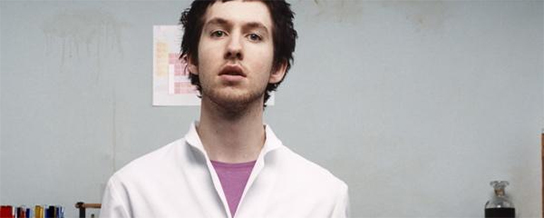
He may not have actually created disco, as the title of his 2007 album claims, but U.K. DJ and producer Calvin Harris definitely knows how to bring the party with him when he plays his synth-heavy disco anthems live.

Harris will kick off a short U.S. tour at the end of March, beginning with a few WMC dates, then moving on to major U.S. cities and an appearance at this year’s Coachella festival.

I Created Disco is out now on Almost Gold.

Dates
03/28 Miami, FL: Raleigh Hotel
03/29 Miami, FL: Ultra Music Festival
03/29 Miami, FL: White Room
04/23 Los Angeles, CA: Henry Fonda Theater
04/24 San Francisco, CA: Popscene
04/26 Indio, CA: Coachella
04/28 New York, NY: Bowery Ballroom

Design a T-Shirt for Hot Chip

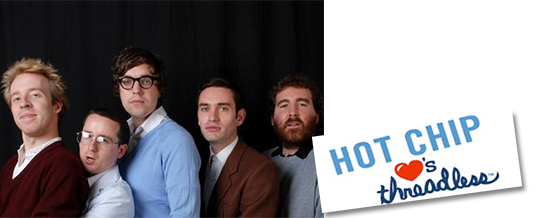
Design savvy ans of Britain-based dance outfit Hot Chip have the chance to create an original t-shirt for the band and win a wonderfully ridiculous amount of prizes.

The theme for the “Hot Chip Loves Threadless” competition is “Made in the Dark (Glow-in-the-Dark Ink). Take that for what you will. The point is that fans can design any style of shirt they like, so long as it’s Hot Chip-inspired, and submit it to threadless.com to be in the running for prizes.

The grand prize winner will receive $2000 in cash, a MicroKorg keyboard, a $500 Threadless gift certificate, a signed 2′ x 2′ album image of the band’s Made in the Dark release, Hot Chip’s full catalog, and a gift pack from Astralwerks. That’s worth entering for, even if the extent of your artistic endeavors has only ever been doodling on a bar napkin with a Bic pen.

Check Hot Chip’s page on the threadless site for more information.

Triclops! “Freedom Tickler”

Hailed by many as one of the best live acts in the Bay Area, the four members of Triclops! make acid-punk packed with quivering basslines, thrashing guitar riffs, and distorted vocals. The band’s forthcoming debut, Out of Africa, was recorded by the Melvins’ engineer Kurt Schlegal, and has ensured their place among modern acts like Comets on Fire, The Locust, and others.

03FreedomTickler

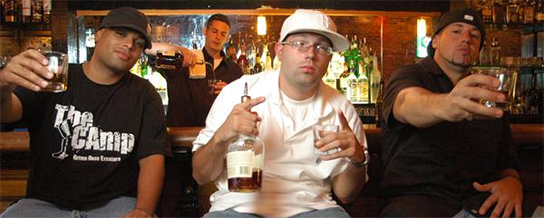
The Camp Signs to Commonwealth, Preps Debut Album

Massachusetts-based Commonwealth Records has announced its latest troupe of signees to the family. Dense, Grime Tha MC, Excetera, and DJ Hevan, who collectively make up The Camp, will release their debut album, The Campaign on April 1.

Apathy, of the Demigodz, played the role of executive producer on the album, which also sees appearances from J Cardim, Jaguar Skillz, Teddy Roxpin, and others.

Head to the group’s MySpace page to check out videos, downloads, and other wonderful freebie items.

Tracklisting
1. The Campaign
2. Gentleman Needs feat. Apathy
3. Calm Down
4. So High feat. Sweetie Irie
5. Little Story feat. Slaine
6. Return of the Boom Bap
7. Walk On By
8. Number 1
9. Like it or Not feat. Sha Stimuli
10. Cruise Control
11. Forget What it Was
12. Get Gone feat. Q Furb
13. Grab the One feat. Oak Lonetree
14. Moving Up
15. 1 Million
16. Lazy as Hell
17. Why

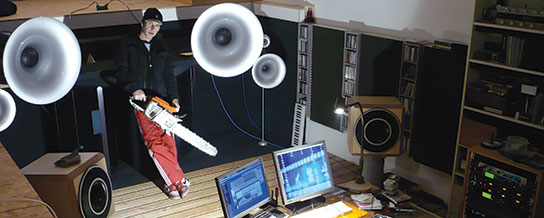
Thomas Brinkman in the Studio

Minimal techno icon Thomas Brinkmann is probably more of a gearhead than he lets on. A peek into his studio reveals some of the most high-tech stuff we’ve seen, but it’s the last thing he wants to talk about–if pressed on the topic, he’ll more than likely lie his way through it (tongue in cheek, of course) to get to talk about his artistic process.

Over the course of countless albums, 12-inches, and high-art sound experiments, the German native has established himself as the Dalai Lama of thinking-man’s techno. His thoughtful soul and funk deconstructions as Soul Center bring more than just James Brown and African-American spiritual samples to the dancefloor, just as his reinterpretations of Mike Ink’s and Richie Hawtin’s minimalist works (crafted with his home-modified three-tone-arm turntable) could hardly be considered simple remixes. So what does he have in store for trimming the fat from pop music? His latest album, When Horses Die, released on his own Max Ernst label. It’s a paean to Nine Inch Nails, Joy Division, and Suicide, where he exposes pop’s insides, and swaps in his own goth-y vocals and poetic verses from the likes of Robert Smithson. Here, we do our best to get behind the complex structure of Brinkmann’s studio approach.

XLR8R: Where is your studio?

Thomas Brinkmann: In the Eifel region of Germany [near Cologne]… Nobody knows, really! It’s just a big forest and a nature reserve. More trees, less people, no city, no village–and no Beefheart.

What is your basic studio set-up?

I use Martion speakers–the one and only. Nobody knows them in the States except that Canadian, Mr. Hawtin. Some computers–both PC and Mac. A Rickenbacker bass, Fender Stratocaster, Gibson Les Paul Custom, Gretsch drums, stupid name-dropping [laughs]… all the gear I could never play… I don’t care much about studio set-ups. They don’t fit in a notebook [computer]. I do not have one of these guitars or drums in reality, but in my mind. Pro Tools, ahhh! Eventide, oooh! Gibson, wow! I listen to music done with nothing and it’s more touching. That matters. All this gear is a crutch to get there.

What influenced When Horses Die?

I mention some on the cover–Trent Reznor (“Right Where It Belongs” and others) and Winston Tong–but [you won’t] find something of theirs on the album (except Tong’s lyrics)… I just listened to them, Stina Nordenstam, Joy Division, Viktor Zoi, Zemfira, and some others.

Where did the desire to use your own vocals come from?

From poetry… and ’cause I cannot sing. You can find vocals in my other productions, but not the way I use them on Horses. It’s another step.

Did the tracks come about relatively quickly, compared to your techno tracks?

They did come quickly, but it took me a lifetime, really… You have to end up here with the whole story [already written]… I don’t wanna talk about techno, though. It’s boring to talk about it. Better to play it.

Do you try to separate musical art-making from making dance music, or do you see them as the same thing?

Art is art and everything else is everything else, like Ad Reinhardt said. But I also agree with Joseph Beuys or John Cage by saying the contrary, [that everything can be art]. Merce Cunningham, Cage, and dance music… fortunately, there is more to it than just Detroit or Cologne, techno, house, hip-hop, or whatever.

So they’re equally important?

It’s like asking, do you see Norman Foster and carton architecture [homeless people using plastic and packaging], let’s say, in Tokyo, as equally important. For who? For the people inside? For visitors? For representation? I just care about my needs, and if there is a hypothetic alter ego somewhere who can share this or use it in a way, that’s a good thing.

In the past you’ve carved into records and used custom-made turntables to create new sound sources. Were there any similar techniques used on When Horses Die?

While I was producing this album, lots of electronics around me died… The generator in my car, my mobile phone, a Vestax filter, two transformers, one hard disk, a monitor, a buzz saw.

How about software? Is it still working?

Finally the Native Instruments hotline helped me to install the Akoustik Piano. It was driving me crazy. Also the guy from HGF was nice. I use their ProtoPlasm, Shuniji, and STS 26 synths.

On “Meadow,” are those all electronic instruments or some real ones too, like live bass?

That’s a funny question, about virtuality: If your senses don’t get it, there is no reason to ask me whether it’s “real” or not. It seems you took it to be real and you should maybe doubt your senses. There are “real” instruments but I don’t know what real means anymore.

Subtle Yell & Ice

A collaborative reinterpretation of their last disc For Hero: For Fool, Subtle’s repurposed Yell & Ice is new to you. Which is to say that its origins have been recombined, remixed, and revised within an inch of their cerebral yet funky lives, with the help of Hood’s Chris Adams, TV on the Radio’s Tunde Adebimpe, and more. The result is another set of banging jams built from either side of the tech spectrum, whether you’re talking the digital thump of “Falling” and “Middleclass Haunt” or the spaced beatboxing of “Sinking Pinks.” Subtle’s sonic atmospheres emerge from their computers almost fully formed, even when they’re manhandled by their friends’ talented paws. A must-have for the visualizer generation.

Page 2983 of 3781
1 2,981 2,982 2,983 2,984 2,985 3,781